


‘You have delivered a stunning blow to the empire of the rising sun…
…Today over sixteen square miles of his capital is in smoking ruins and is ravaged by still burning fires.’
– Maj Gen Curtis LeMay to the B-29 returning crews, March 10, 1945 –
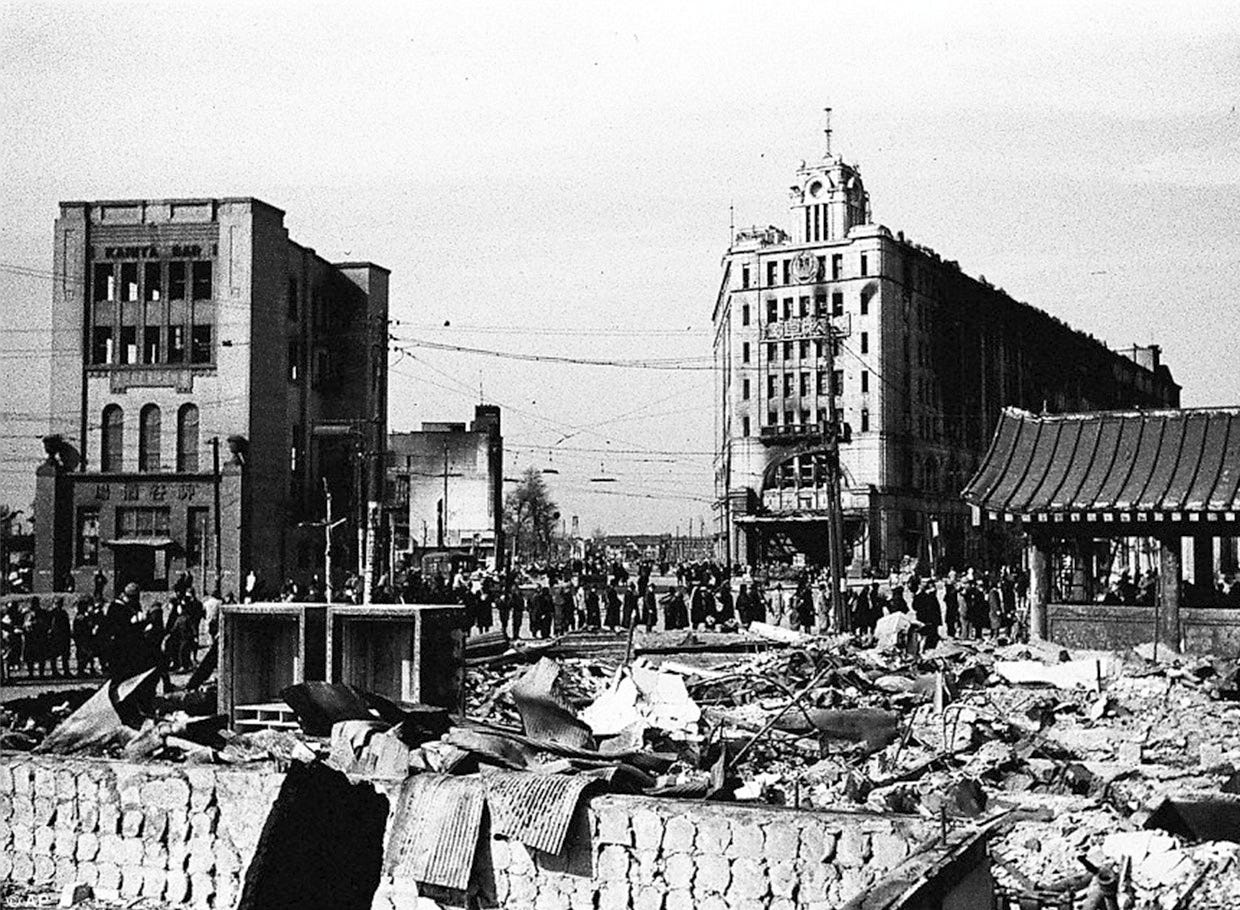
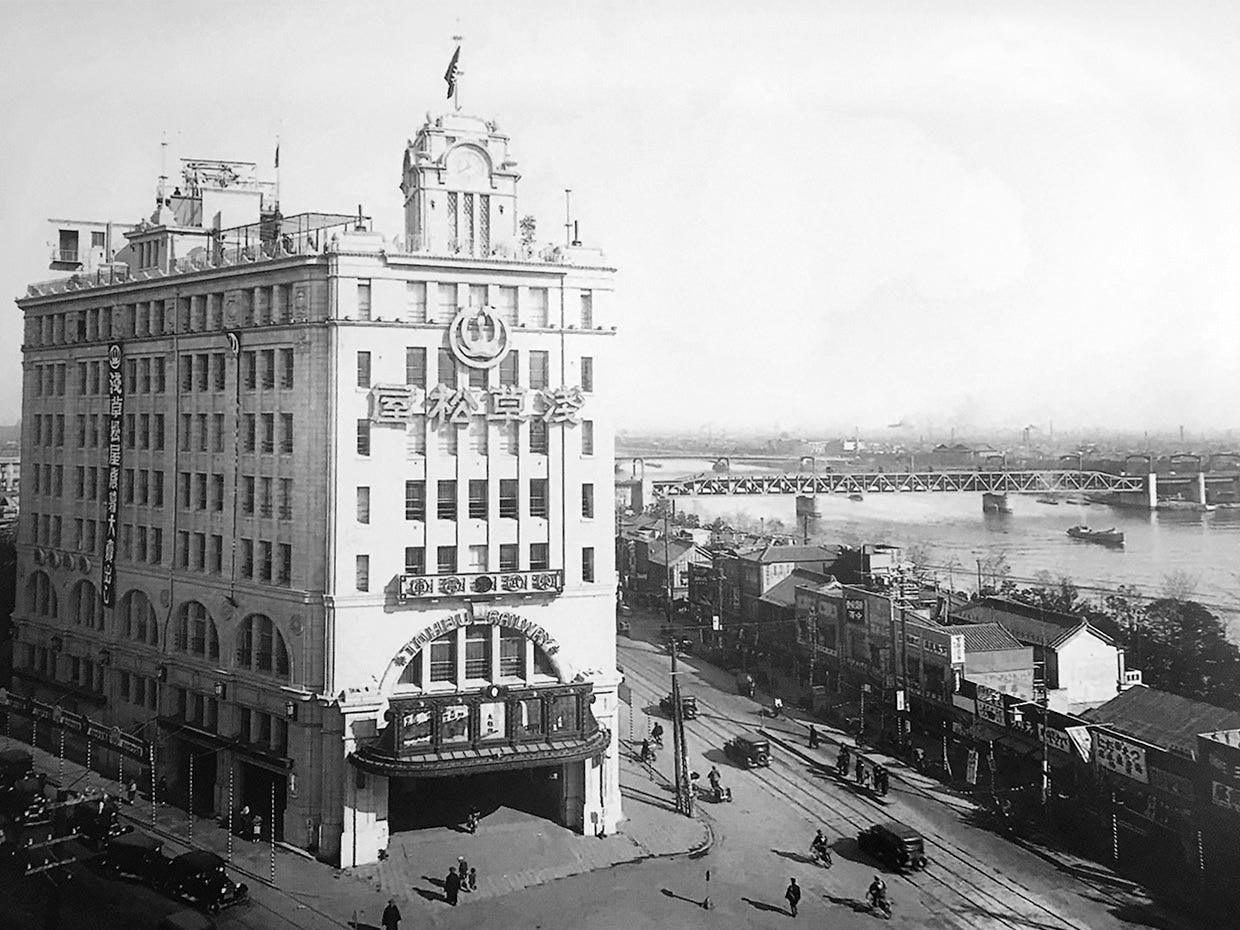
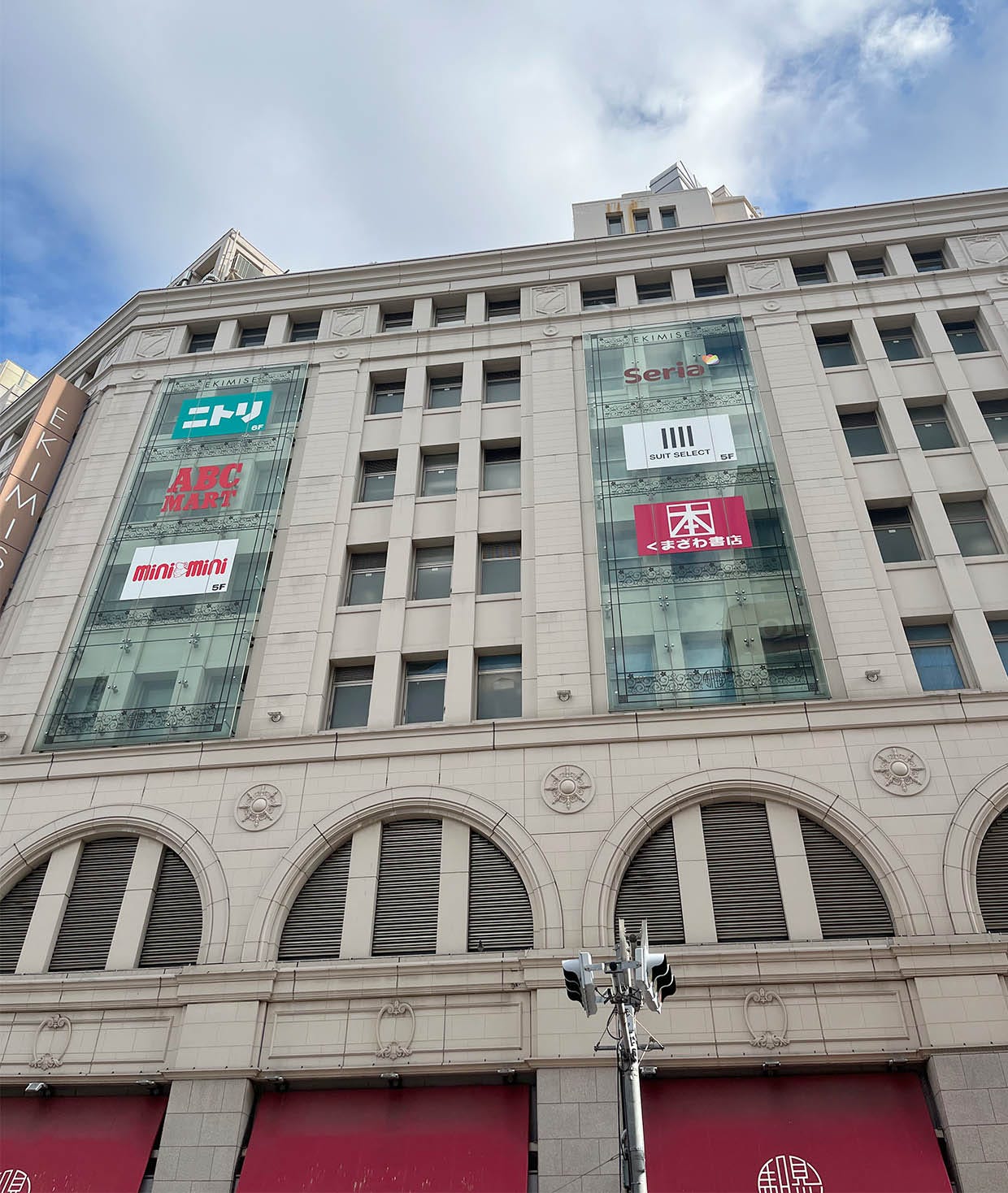
During our recent two-week trip to Japan we spent five days in Tokyo. I was so lucky that our hotel was located in the Asakusa district, near to one of the famous 1930s landmarks of the Japanese capital: the Matsuya Tobu Asakusa. Apart from its architecture, what caught my attention was the tragic incident that ocurried there during the first great fire raid against Tokyo.
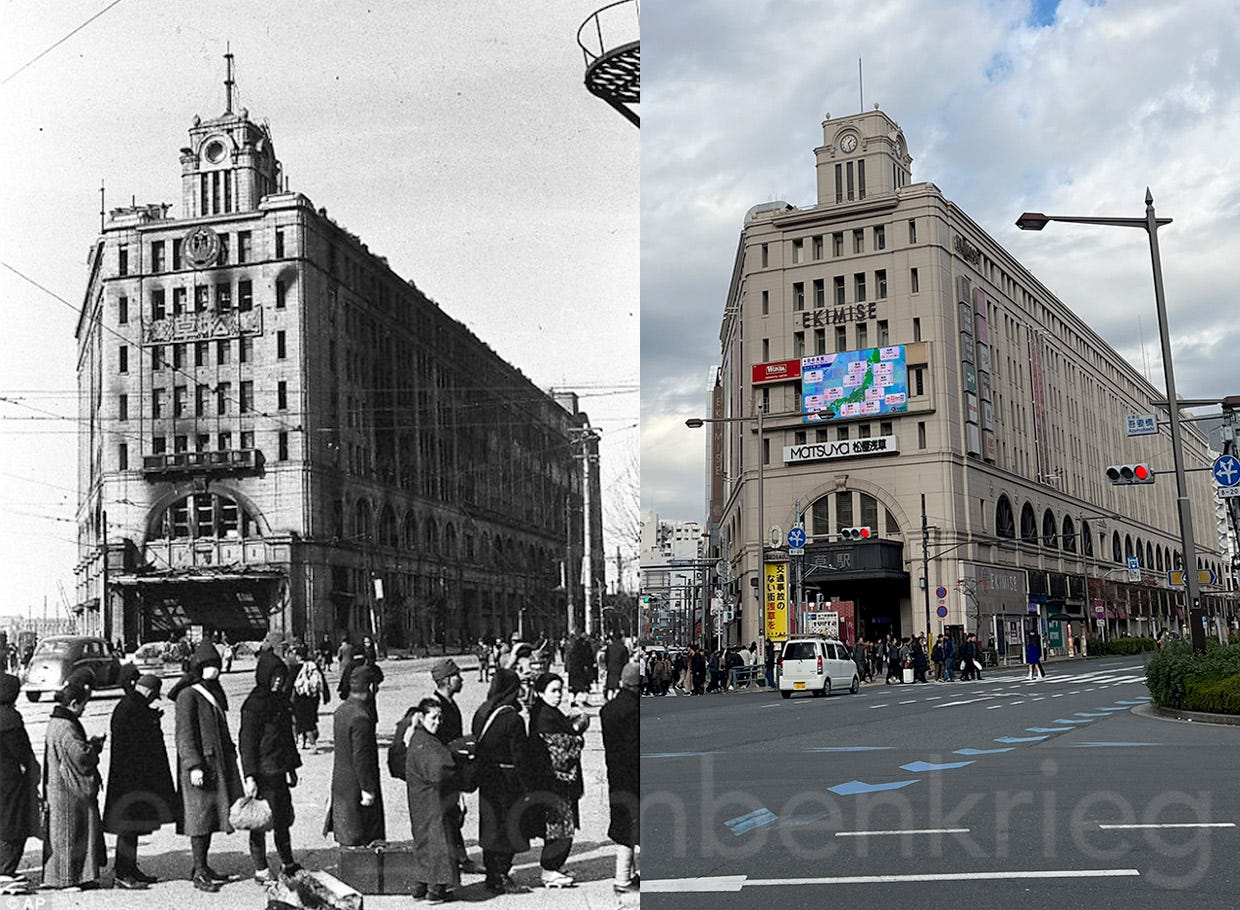
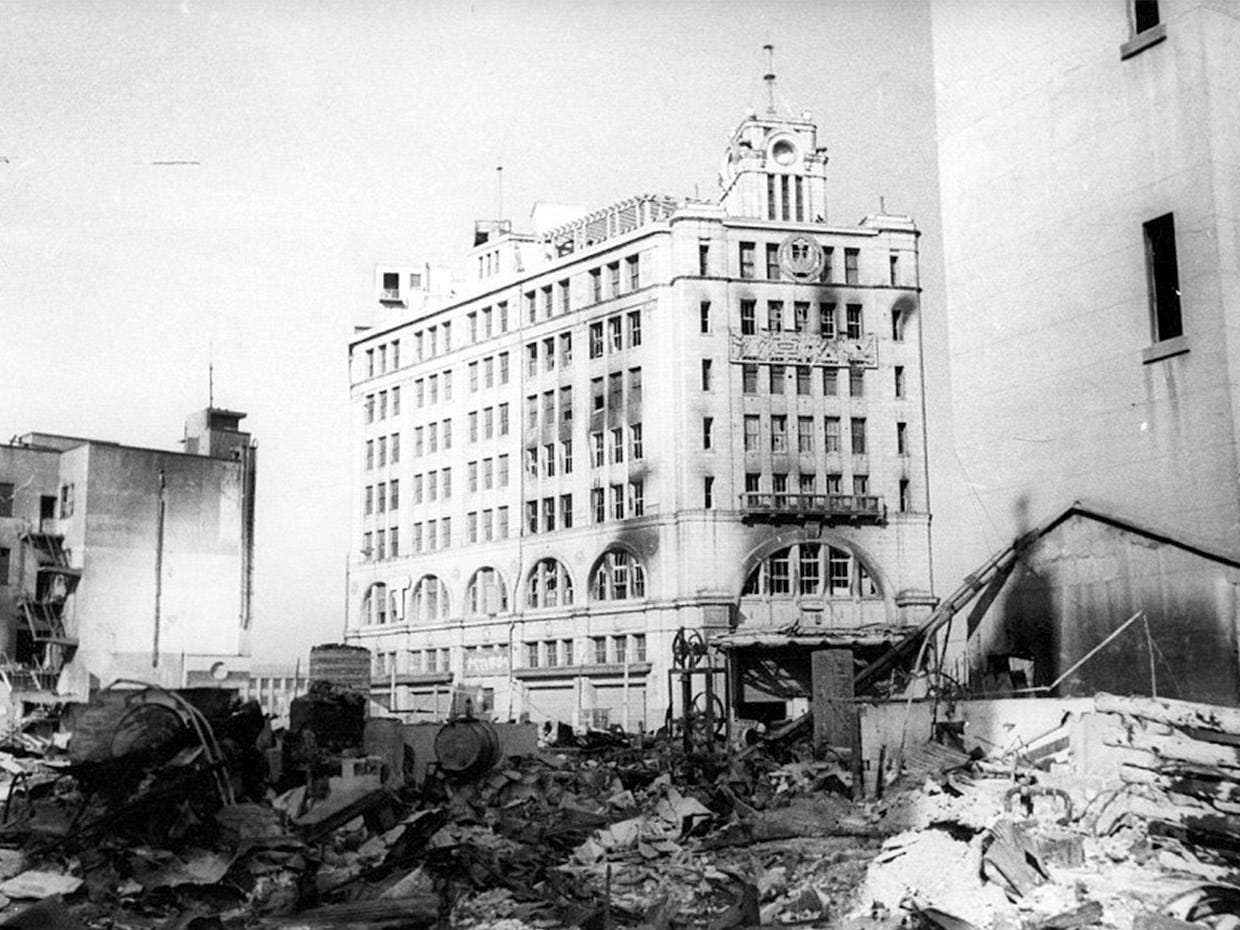
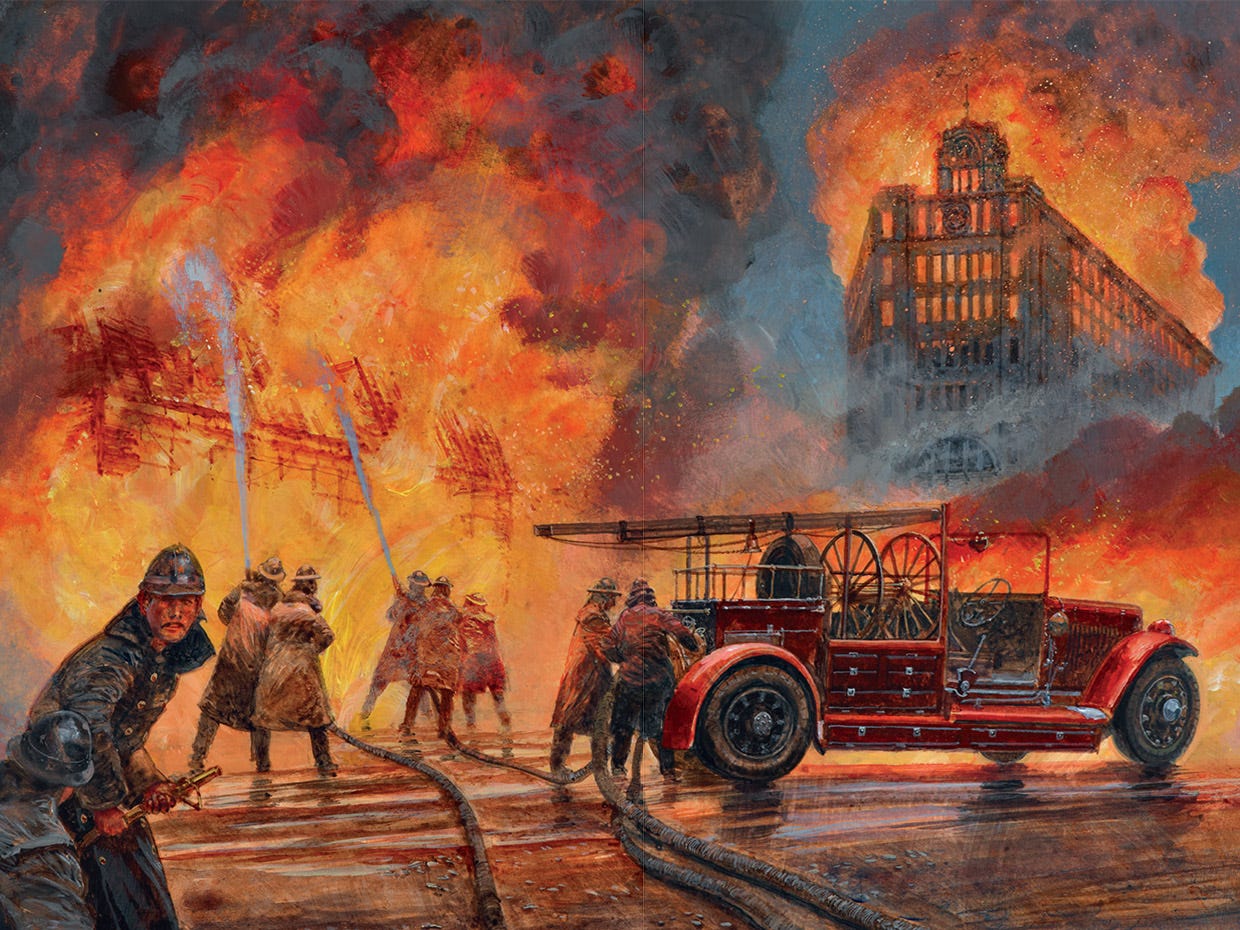
On March 9/10, 1945, (80 years ago) ‘Operation Meetinghouse’ or the Great Tokyo Air Raid as it is known, left the entire Asakusa district incinerated by US bombs. It was the deadliest air raid ever, often overshadowed by the Atomic Hiroshima and Nagasaki raids. When the sun rose the following morning, 16 square miles (41 km2) of the capital, including the most crowded and heavily built-up area, was ashes. Used as an improvised air raid shelter on that terrible night, this building survived the raid and the war, but the outside fires, growing uncontrollably, consumed all of the oxygen in the building killing all inside.
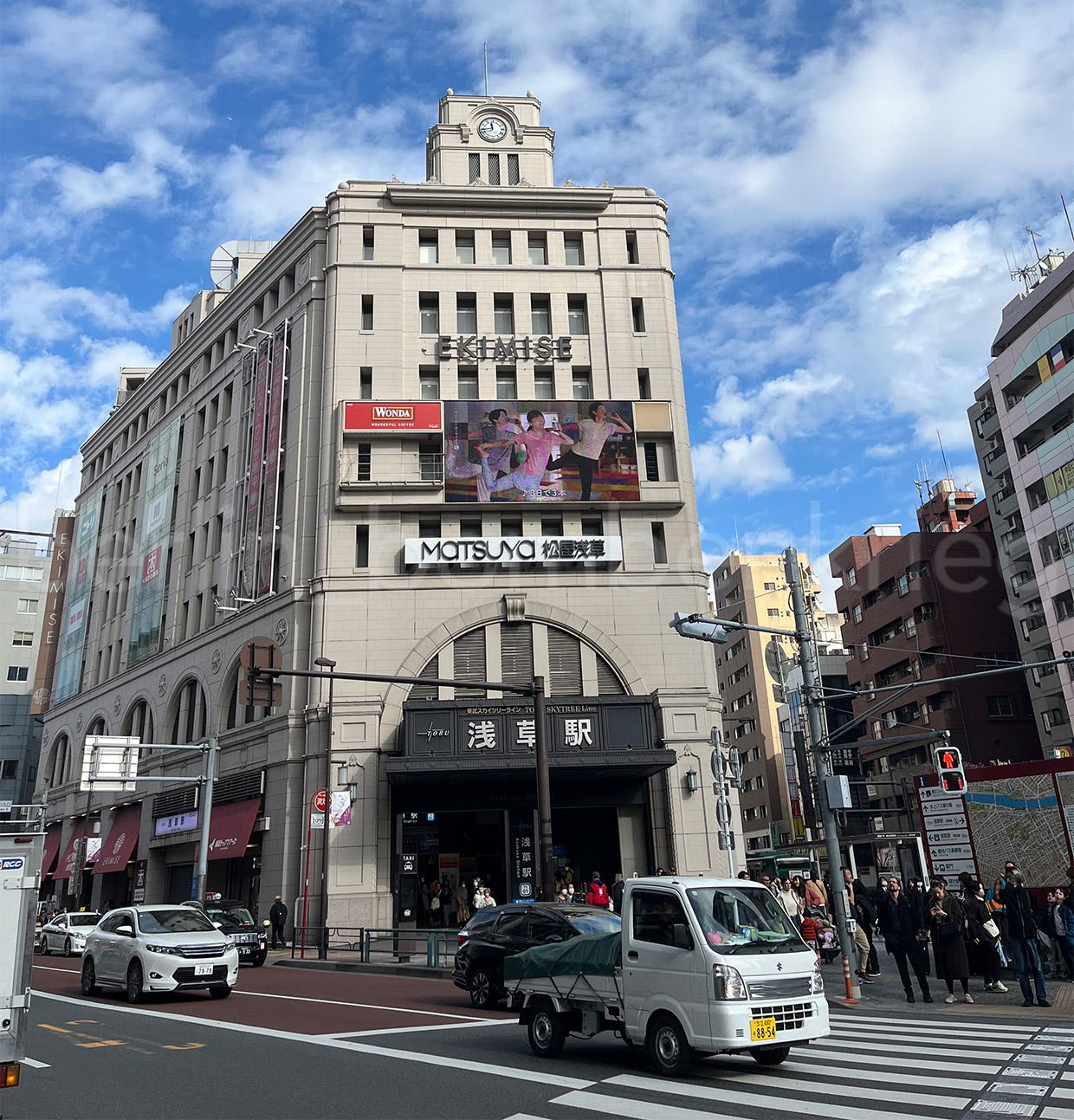
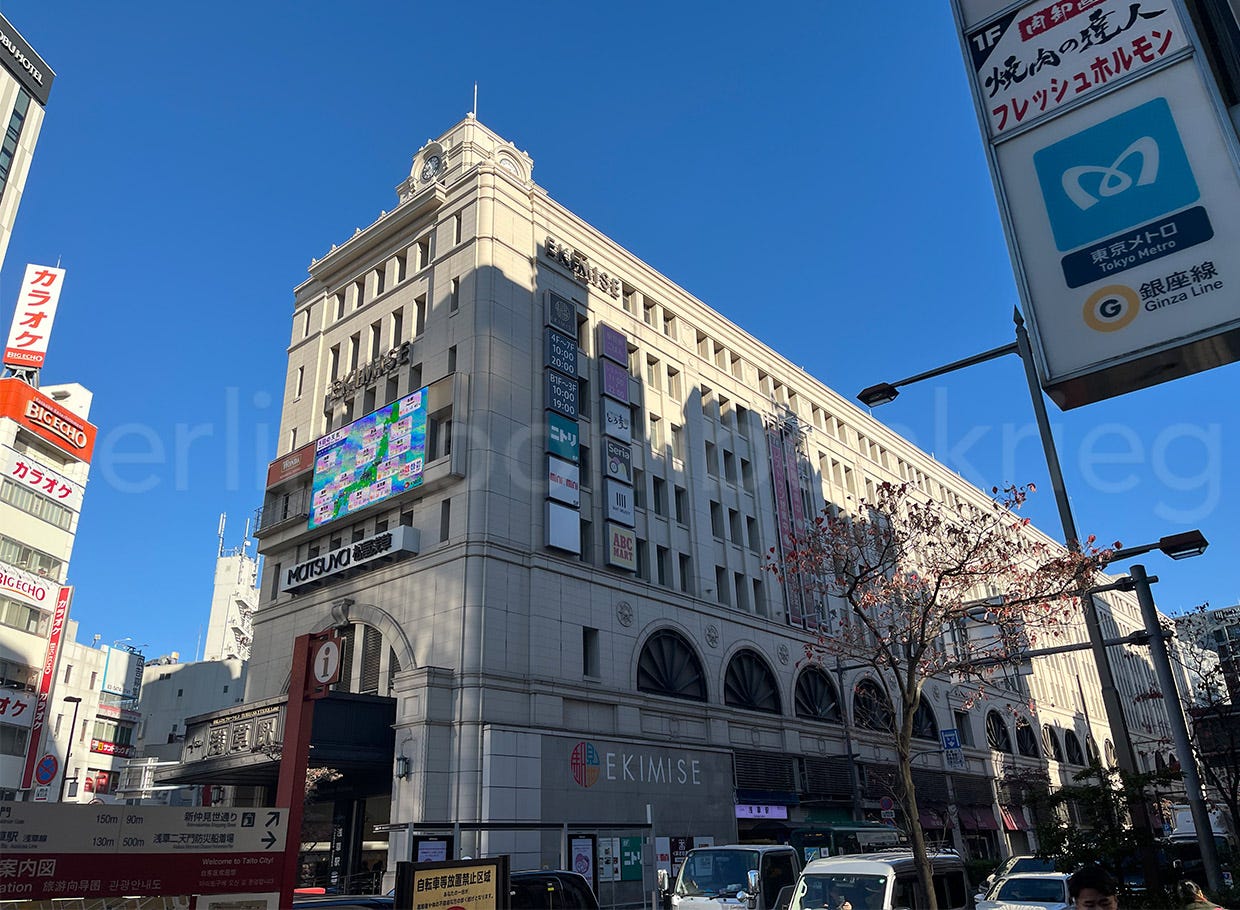
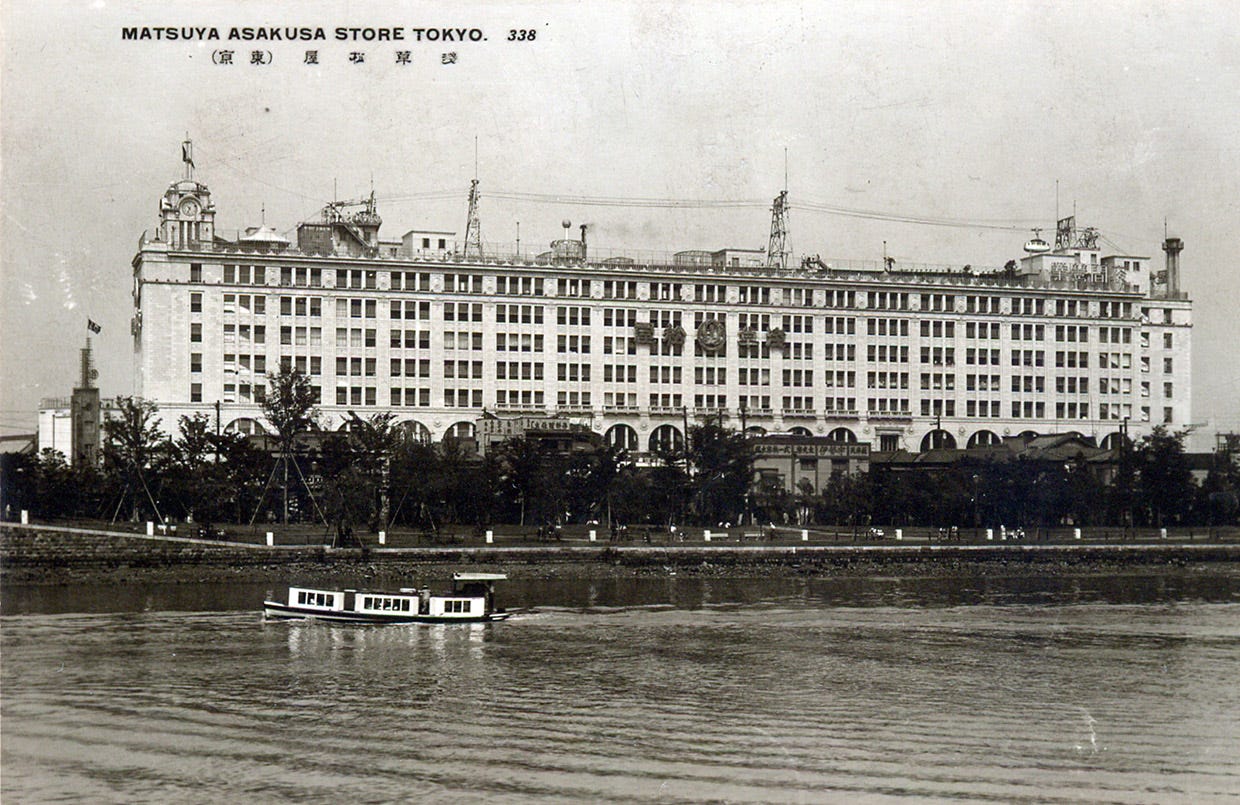
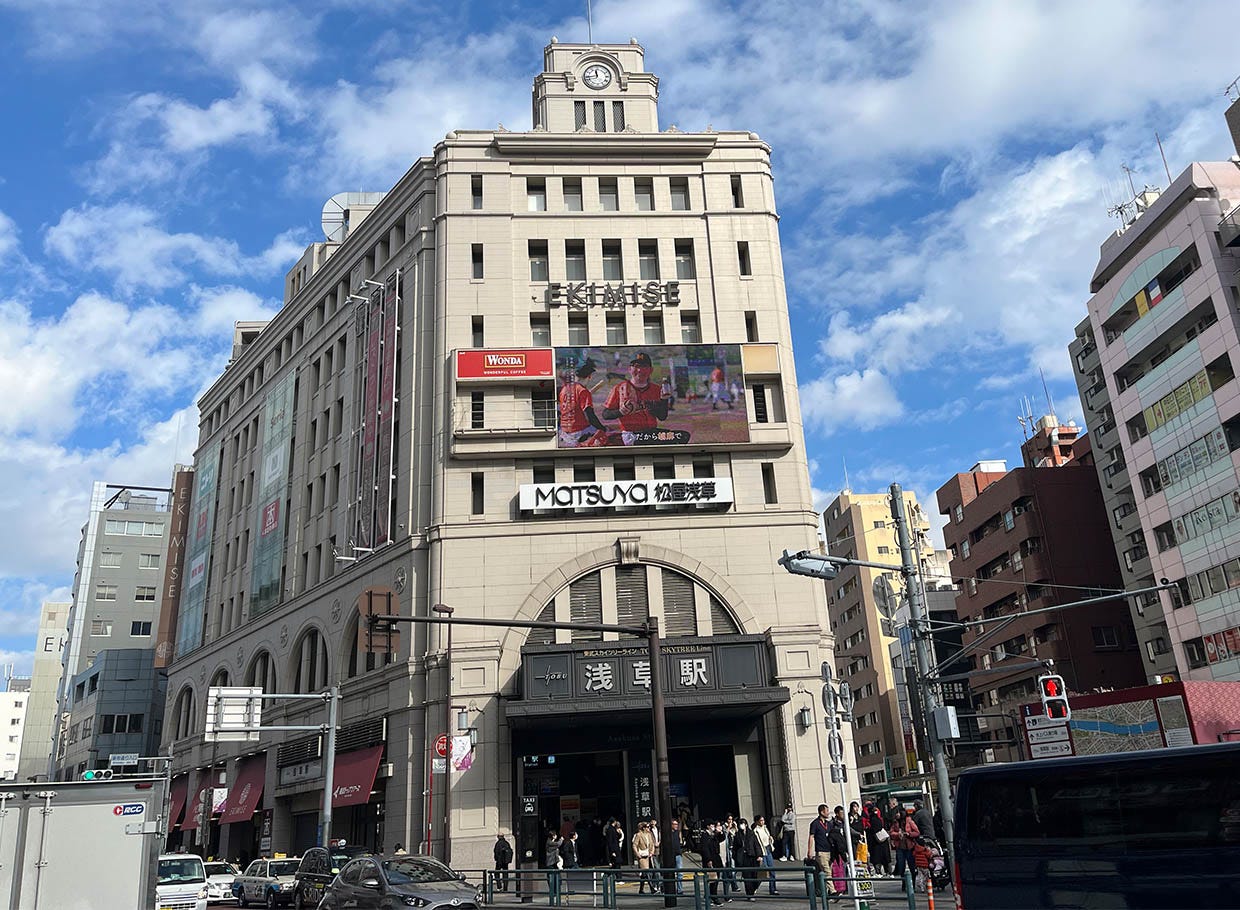
80 years are between these two images of the Asakusa Tobu, September 1945 - December 2025.
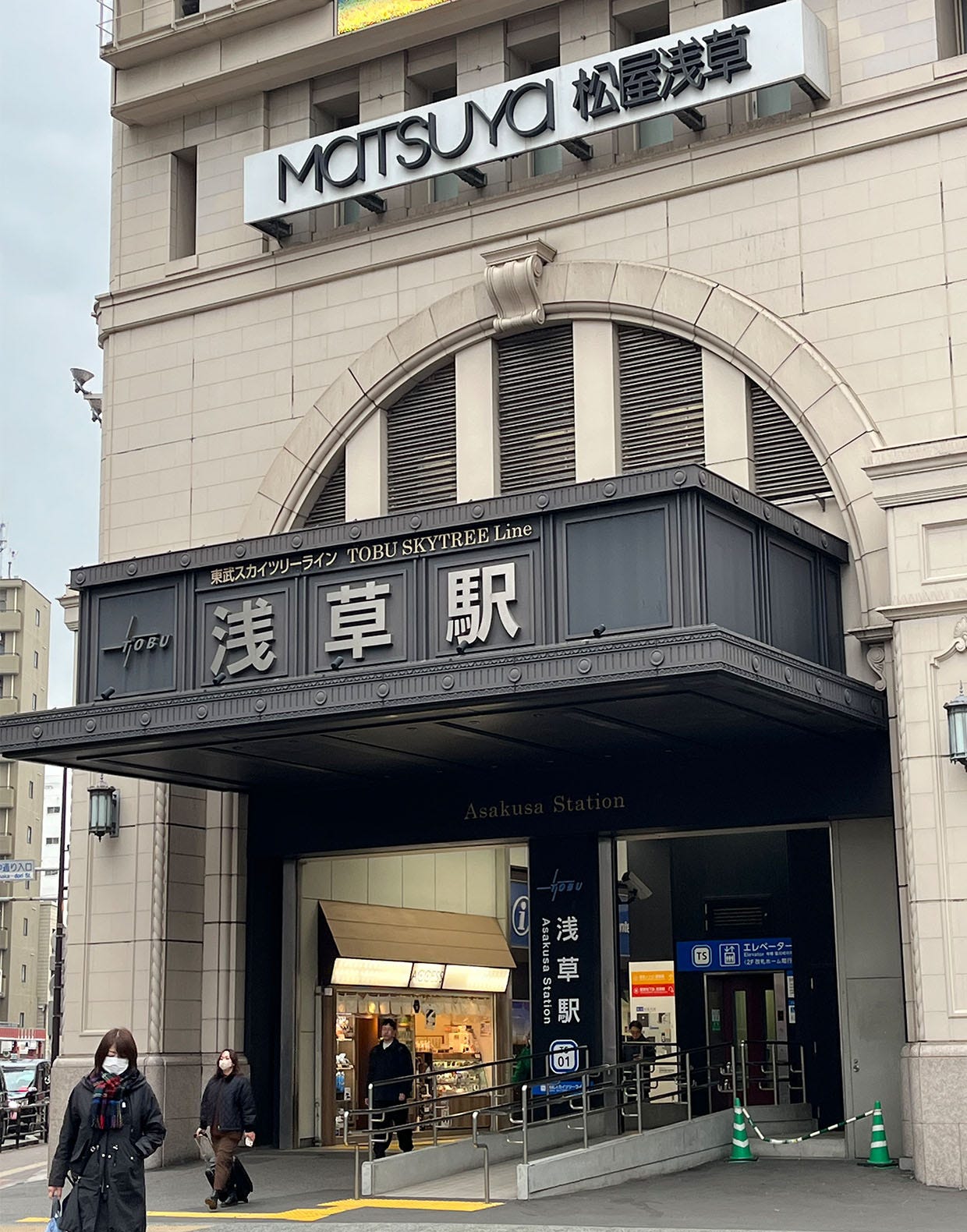
This elegant Neo-Renaissance building is located at the intersection of Umamichi-dori Street and Edo-dori Avenue and was opened in May 1931. Its innovation came from its dual purpose: it was designed to include the Tokyo terminal (Asakusa Kaminarimon Station) of the Tobu railway, linking Tokyo with Nikko as well as a department store —the Matsuya Tobu— in the upper floors, the first one of its class at the time. The building even contained an amusement park on the rooftop, with gondolas and a pet zoo also. It was renamed Asakusa Station in 1945 following the end of the war. The site is located next to the Sumida river, a 5-minute walk from the famous Nakamise Street and the Sensō-ji Shrine, the oldest Buddhist temple in Tokyo with over 1,300 years of history.
Target for the bombers were the Asakusa and Sumida Wards. This district was one of the oldest in Japan’s capital, crowded with wooden buildings in narrow alleys, on the east bank of the river. This residential area was full of home factories and familiar industries that provided material to the major factories around Tokyo, subcontrators and home machine shops used later by the main aircraft industry with parts and assemblies. Located next to the river there were some major industries and refineries also. The average population density in that area was 103,000 habitants per square mile, 135,000 in the case of Asakusa (proof of this is that roof area was 40-50 percent of the total area).
Two views of the elegant Asakusa Matsuya department store building in the 1930s, before the war’s firestorm. Note the Playland amusement park on the rooftop with the gondolas.
More pictures of today’s appearance of Tokyo’s Asakusa Tobu building, as seen in December 2025. The station and building were renovated in the 1960s.
Civilians Become Targets
In February 1945 Maj Gen Curtis LeMay, who was recently appointed in charge of the XXI Bomber Command, was urged by Washington to achieve some success in the —by then— failed strategic bombing campaign against Japan which had achieved little by high altitude formation bombings, so he changed its tactics: this time the raid would be a low-level (5,000 to 8,000 feet instead of 33,000) nighttime area strike with the bombers fully loaded with incendiary bombs. Target: the urban area of Tokyo. USAAF bombers had already switched their precision bombing policy to carpet bombing a month before over Berlin (February 3rd raid) but this time the attack would be of unprecedented fury against Tokyo’s people. It was not a last-minute idea, XXI BC had spent months preparing maps of urban targets and conducting technical tests on how to better incinerate cities and typical Japanese houses.
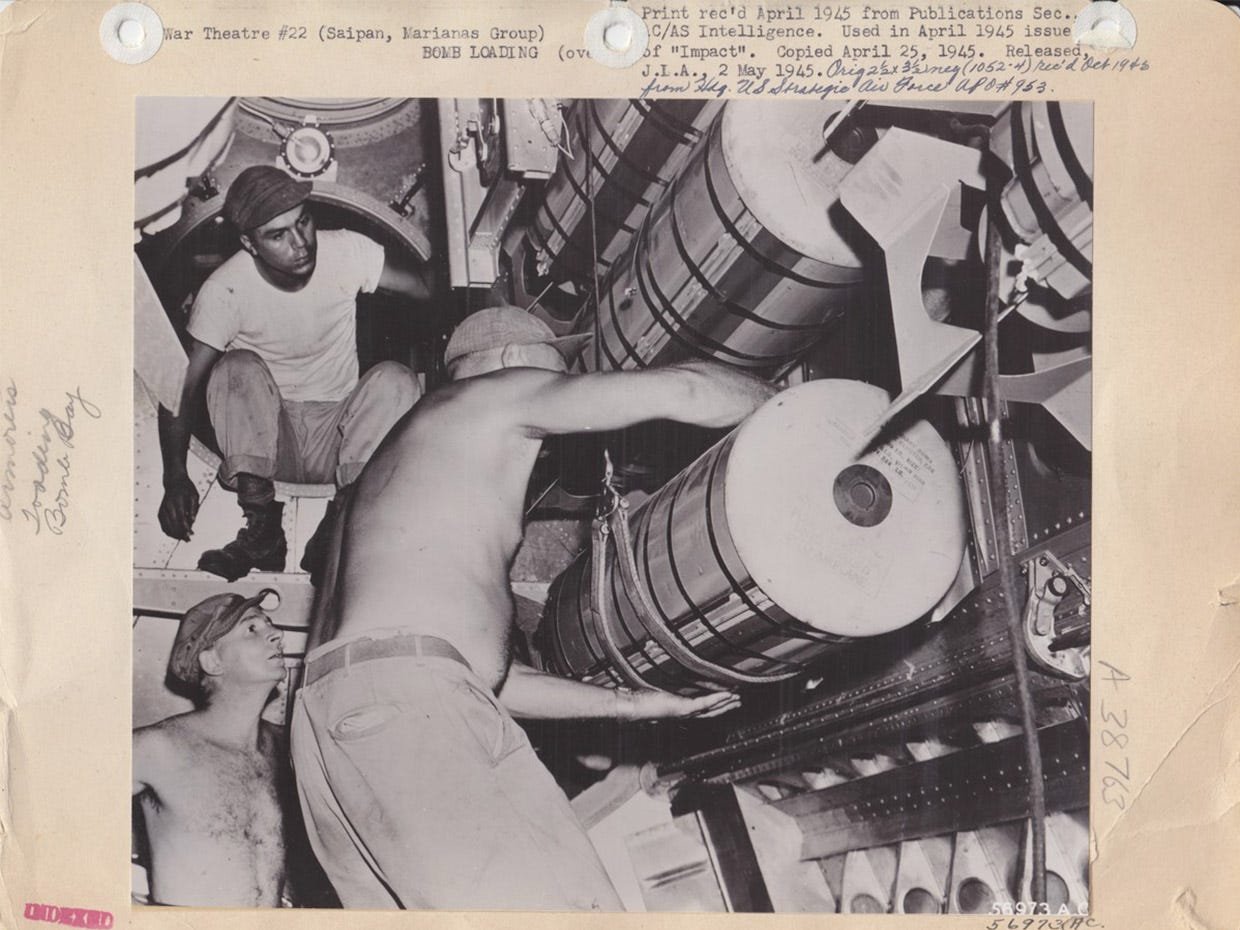
On March 9th, LeMay sent nearly 300 B-29 heavy bombers from the Marianas bases to set ablaze the capital. Arriving over Tokyo past midnight, each B-29 pathfinder carried 184x 70lbs M-47 incendiary bombs and started to drop their bombs to mark with a huge flamed “X” the ‘Target Zone 1’, the densely populated area of Shitamachi (downtown) which included Asakusa and other zones. Follow-on aircraft arrived in the next hours at the target area with a payload of 24x 500lbs clusters of M-69 incendiaries, dropping bombs on surrounding areas next to the aiming point, spreading new fires across the city. For nearly three hours, US B-29s dropped 1665 tons of incendiary bombs.
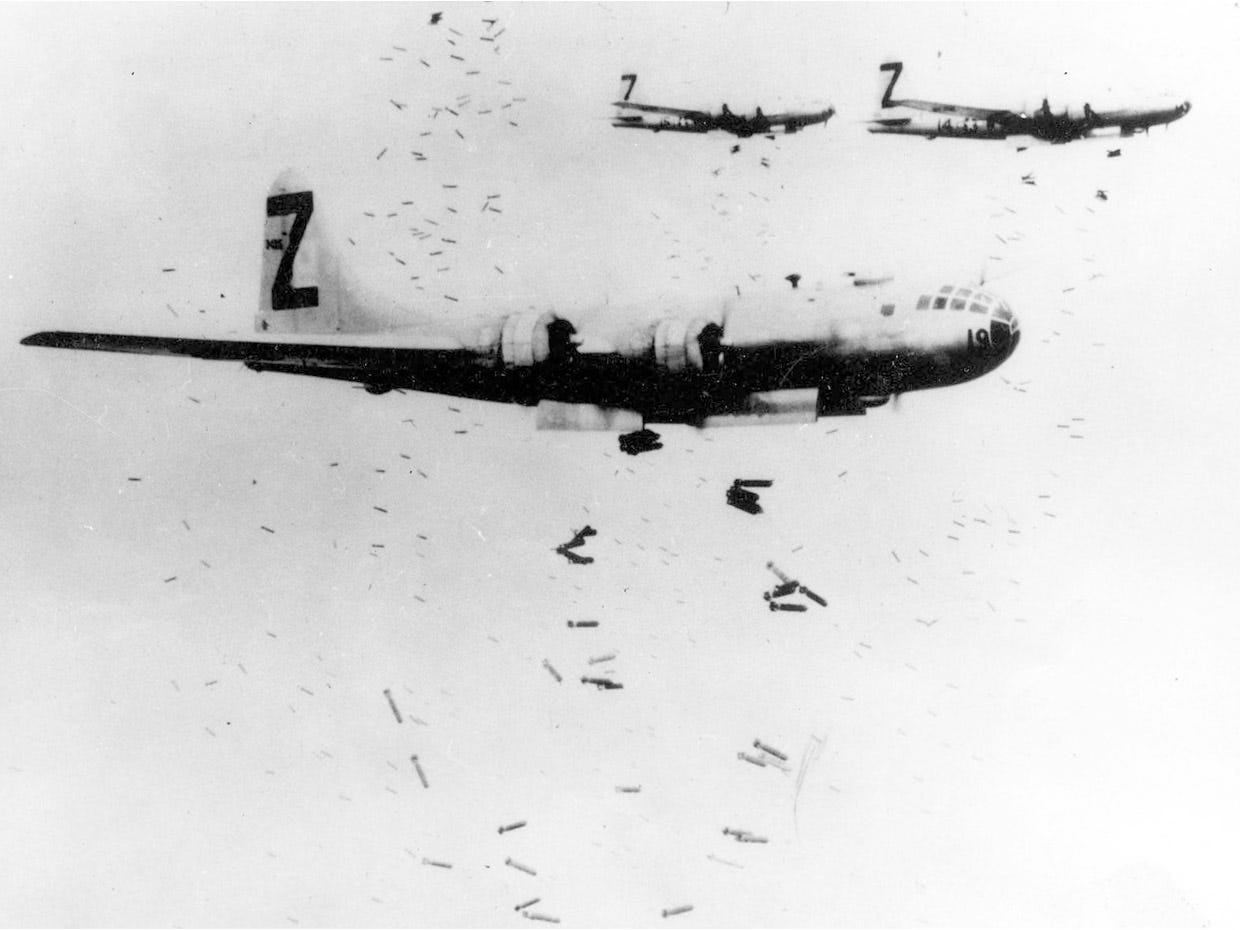
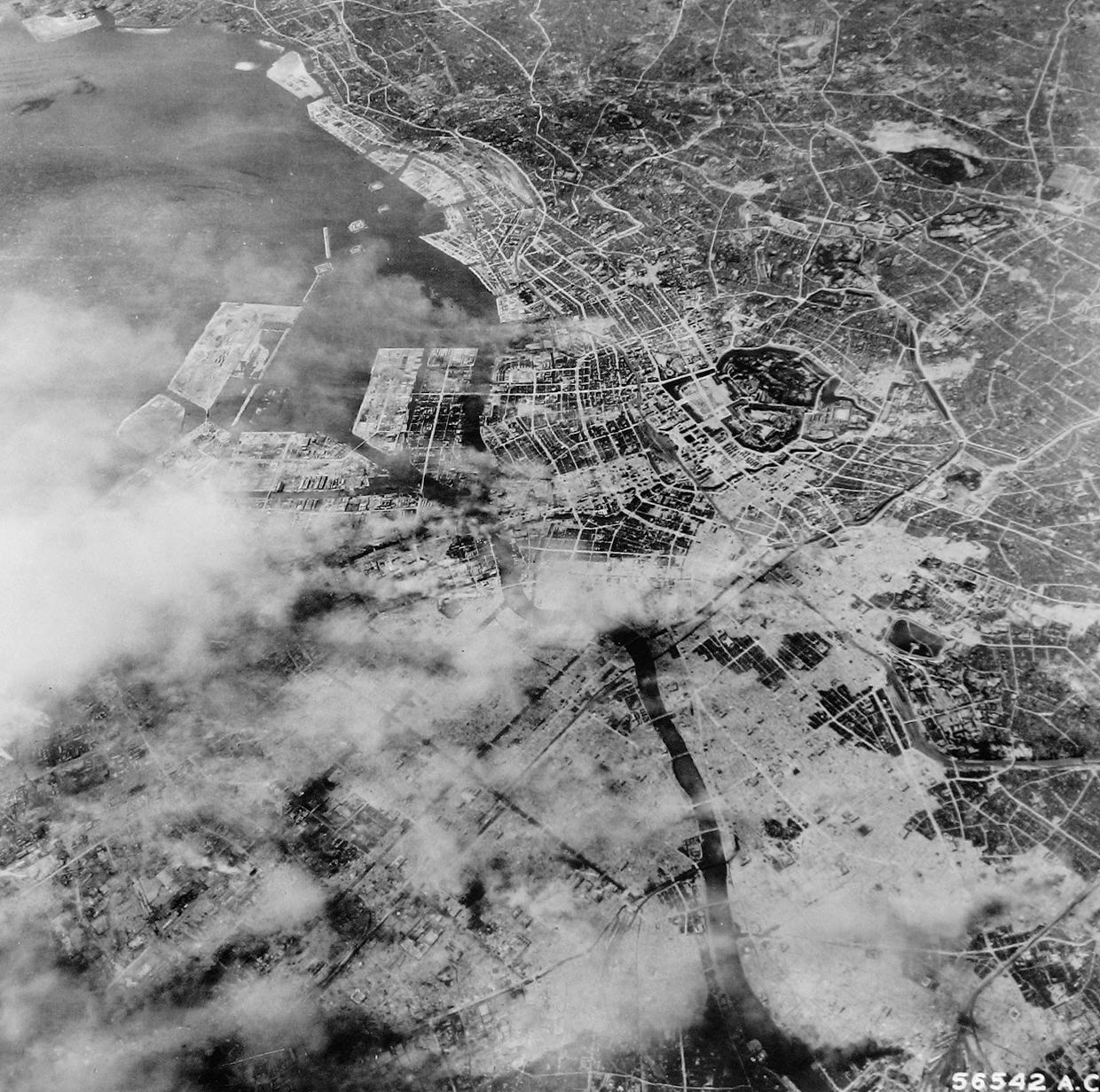
The fires, increased by extraordinary northwestern high winds (near gale force), grew up quickly creating a powerful firestorm and overwhelmed the firefighters and the city’s civilian response. Returning US tail gunners reported seeing the glow of the city’s fires 150 miles from Tokyo and fires continued well until midday of March 10th.
It was a complete success. Undisturbed by enemy nightfighters and with the confused Japanese AA gunners and aiming radars searching for the bombers at higher altitudes, LeMay achieved more damage in this sole raid to the enemy’s war effort than in the previous 8 months of “precision” high altitude bombings on the important Mushashino aero engine factory located in the outskirts of the capital —although the plant itself had not been damaged. Just 13 B-29s were lost during the mission. Post-strike photos and reports provided visual evidence that the AAF had destroyed much of the city, beyond planners’ most optimistic predictions.
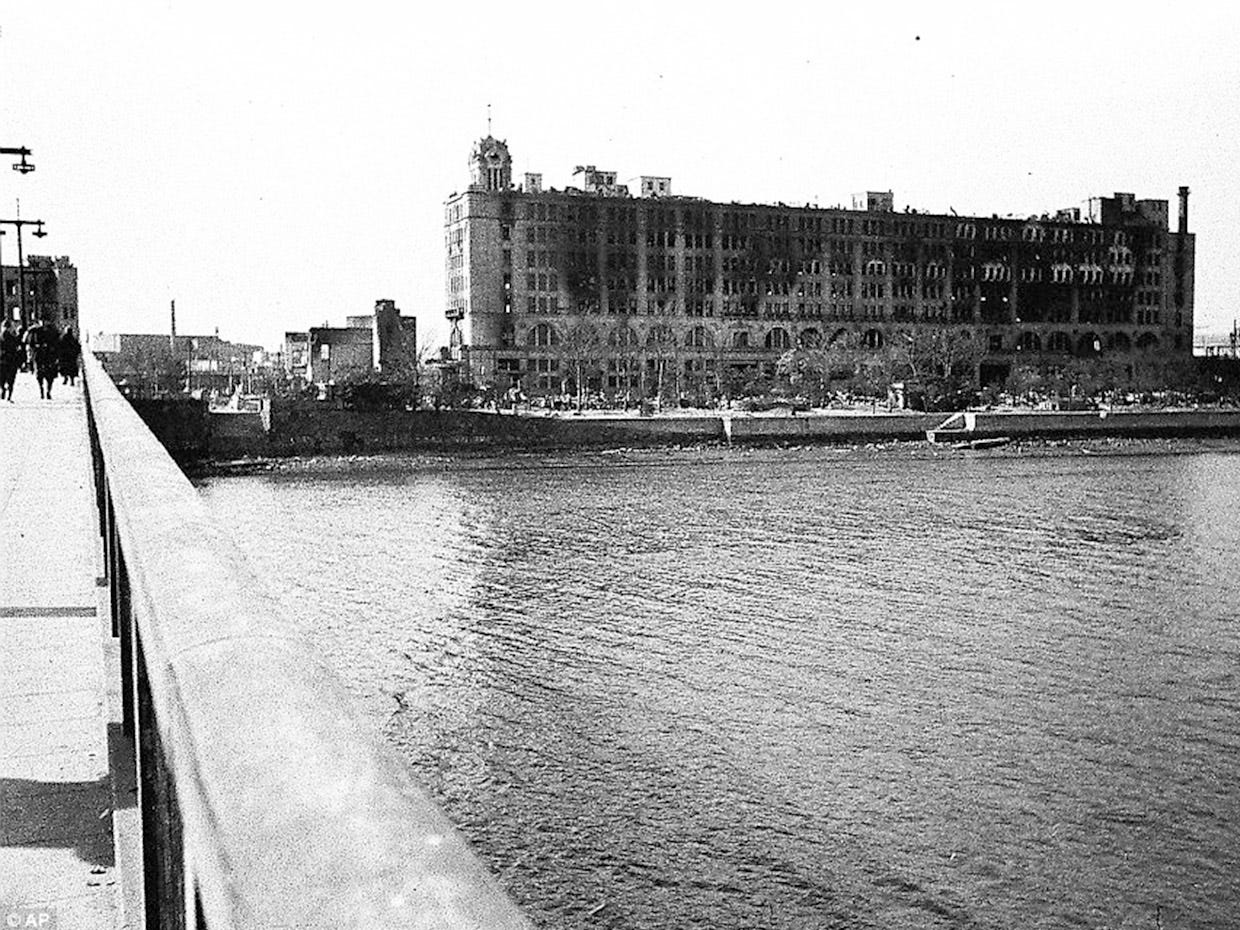
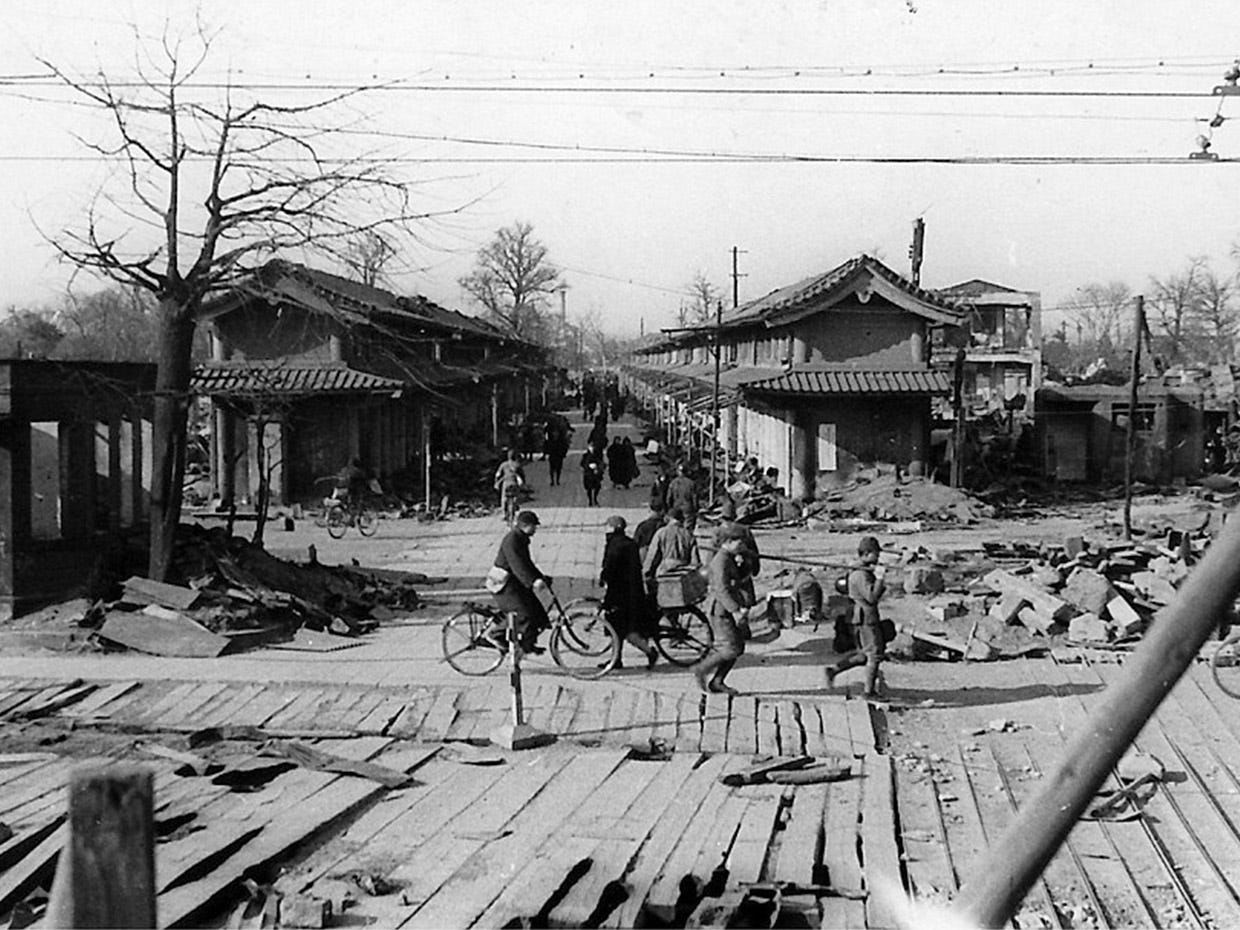
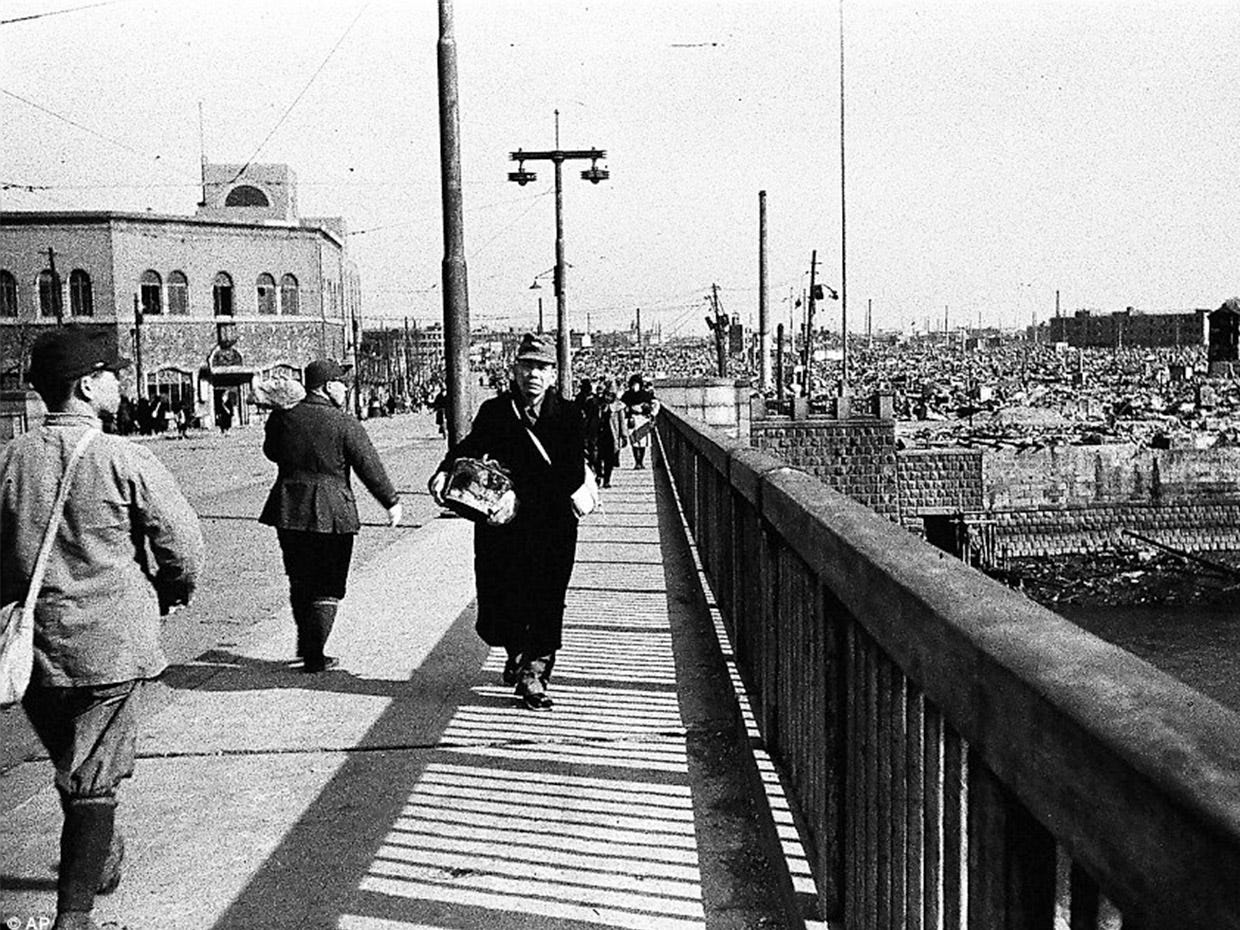
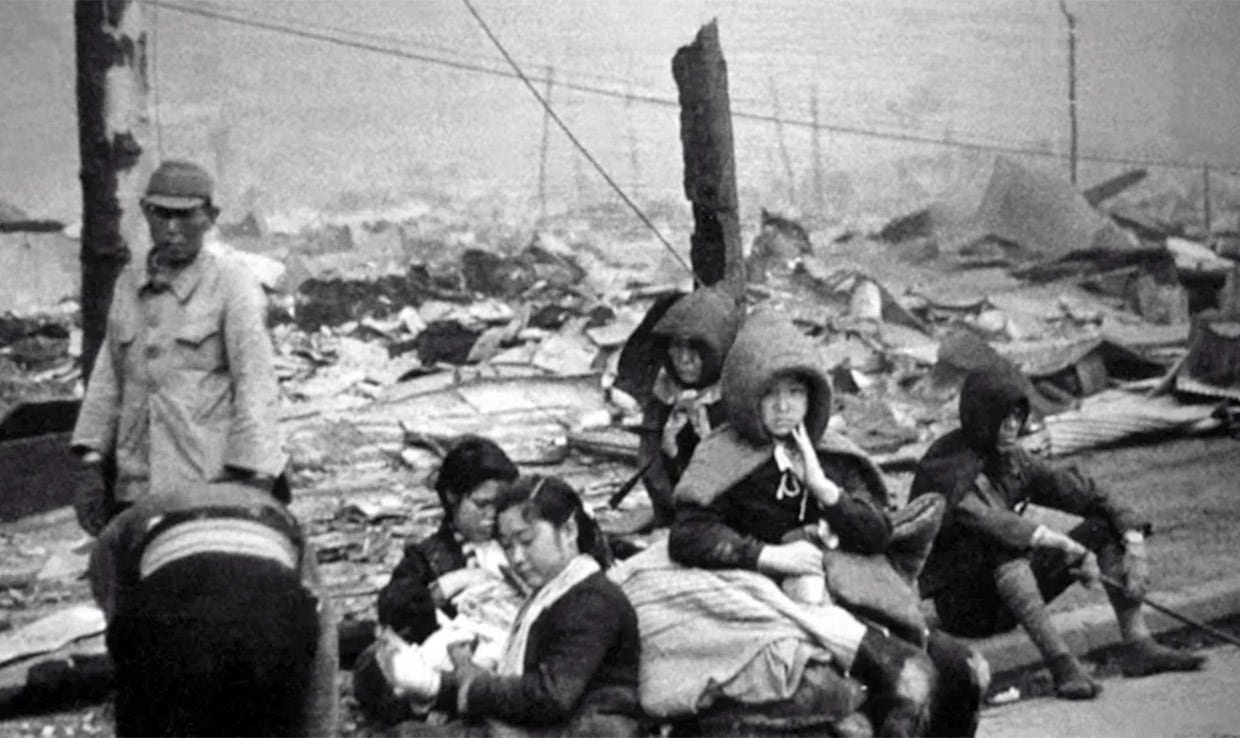
The postwar United States Strategic Bombing Survey (USSB) —which registered the efficacy of the air war waged against Germany and Japan— estimated that the fires created by the air raid had killed at least 83,793 people and injured 40,000, but most modern studies concluded on a most probably well over 100,000 death figure (of a 6.6 million figure of wartime population). One-quarter of Tokyo’s buildings were lost on that night (267,171), and the raid made one million homeless. Literally one-fifth part of the Asakusa district was gone, incinerated overnight by fire bombs.
The death toll was unusually high. That night, Tokyoites made the same way as done before on previous raids: instead of runaway, they took cover on air raids shelters or concrete buildings, but this time this proved fatal, the huge firestorm engulfed most of the area, cremating everything around and creating numerous death traps in buildings and cellars. More people were killed in the Tokyo firebombing of March 9-10 than in the atomic bombings of Hiroshima and Nagasaki five months later.
An aerial USAAF post-strike bomb damage assessment photo of the still burning Great Tokyo area following the 9/10 March raid (looking south, Asakusa is at lower centre) and a damage map of the firebombing affected areas of Tokyo, March-May 1945.
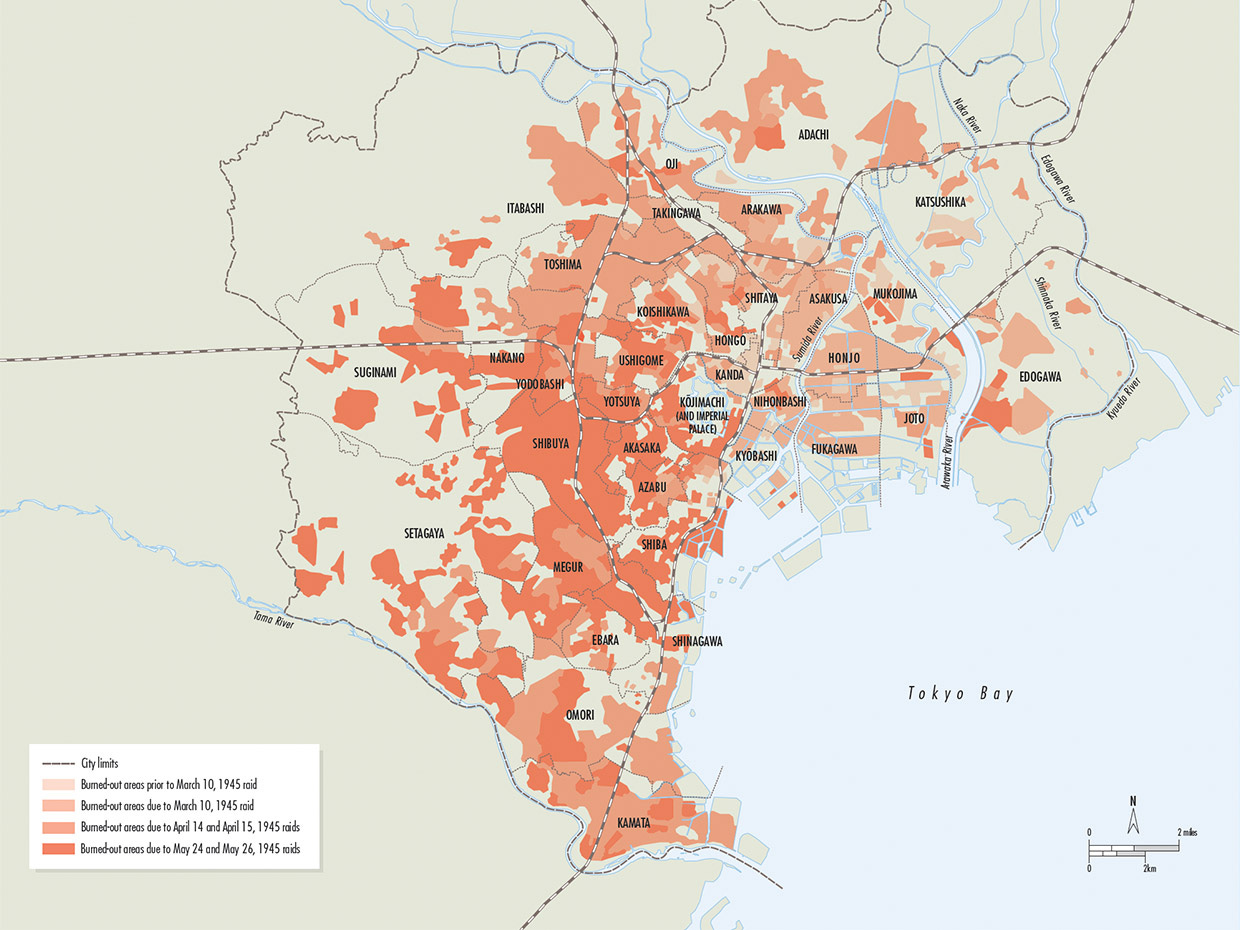
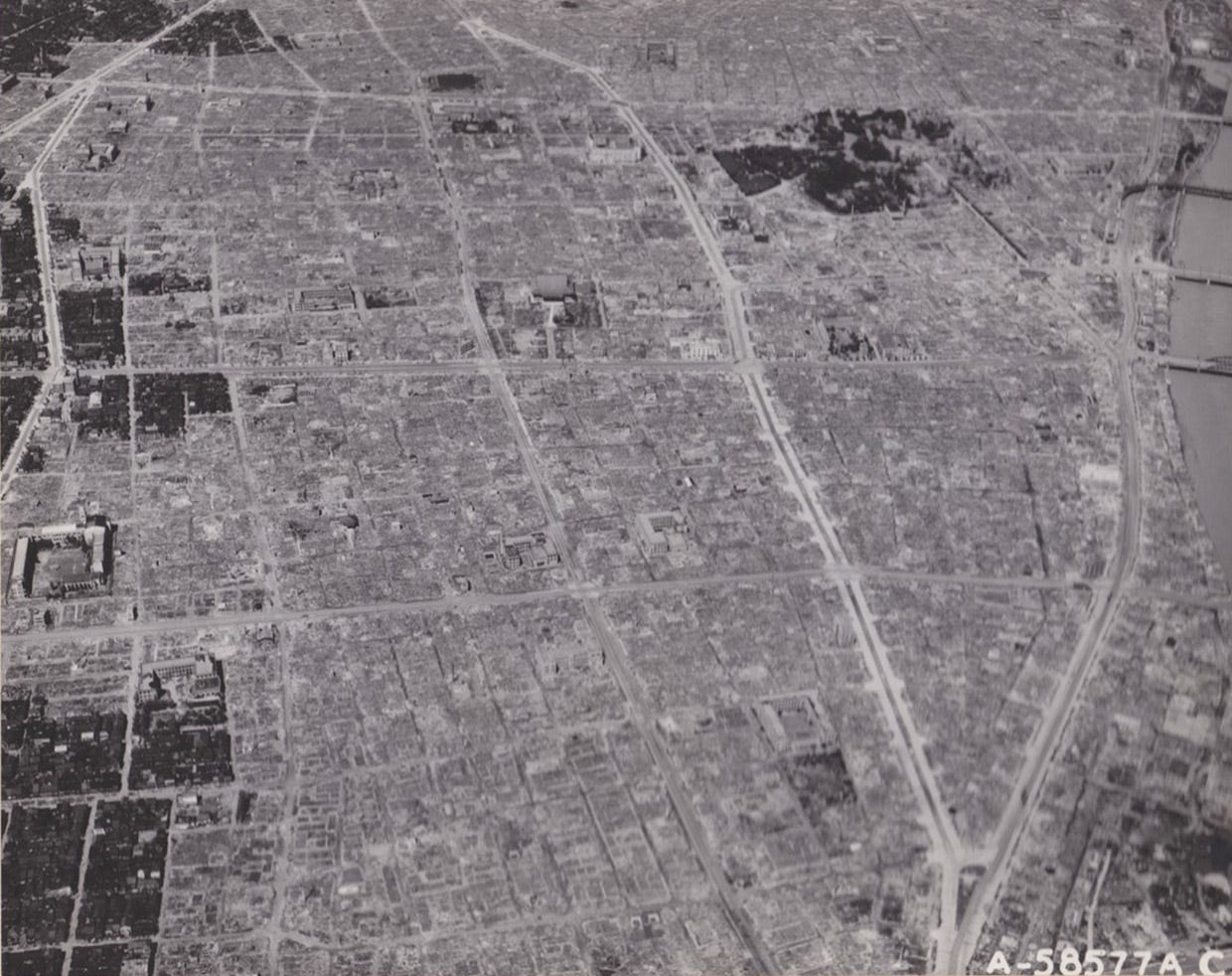
Tokyo would receive five more fire raids from March to the end of May 1945, which destroyed nearly 51% of the great city, leaving 2.8 million homeless. These air raids and its memories can be studied deeply thanks to the work of Japan Air Raids, an exhaustive digital archive created by Bret Fisk and Cary Karacas.
_______________
Sources and Bibliography:
Asakusa Station Guide. Tobu Asakusa Station Orientation & Facilities. [accessed December 2025.]
Dorr, Robert F. B-29 Superfortress Units of World War 2: 33 (Combat Aircraft). Osprey Publishing, 2002
Dorr, Robert F. Mission to Tokyo: The American Airmen Who Took the War to the Heart of Japan. Zenith Press, 2012
Fedman D, C. Karacas C: A cartographic fade to black: mapping the destruction of urban Japan during World War II, 2012. Journal of Historical Geography. Volume 38, Issue 3, July 2012, Pages 306-328
Karacas, Cary. “Place, Public Memory, and the Tokyo Air Raids.” Geographical Review 100, no. 4 (October 1, 2010): 521–37
Kohn, Richard. Strategic Air Warfare: An Interview With Generals Curtis E Lemay, Leon W Johnson, David a Burchinal and Jack J Catton (USAF Warrior Studies). United States Govt Printing Office, 1988
Lardas, Mark. JAPAN 1944-45. LeMay’s B-29 strategic bombing campaign. Osprey Publishing, 2019
Lardas, Mark. TOKYO 1944-45. The destruction of Imperial Japan’s capital. Osprey Publishing, 2024
Old Tokyo. Matsuya (Asakuksa) Department Store & Tobu Railway, c. 1930. [accessed December 2025.]
Takai, Koji & Sakaida, Henry. B-29 Hunters of the JAAF: No. 5 (Aviation Elite Units). Osprey Publishing, 2001
Thank you for reading Berlin Bombenkrieg by Pablo López Ruiz. Please subscribe, if you haven’t yet, to comment, follow and share. All images used for non profit / educational purposes.