


‘Goering is Blown Off the Air by the R.A.F…
…Explosions Heard Over Wireless. Only one Bomber Missing’
– The Observer, January 31, 1943 –
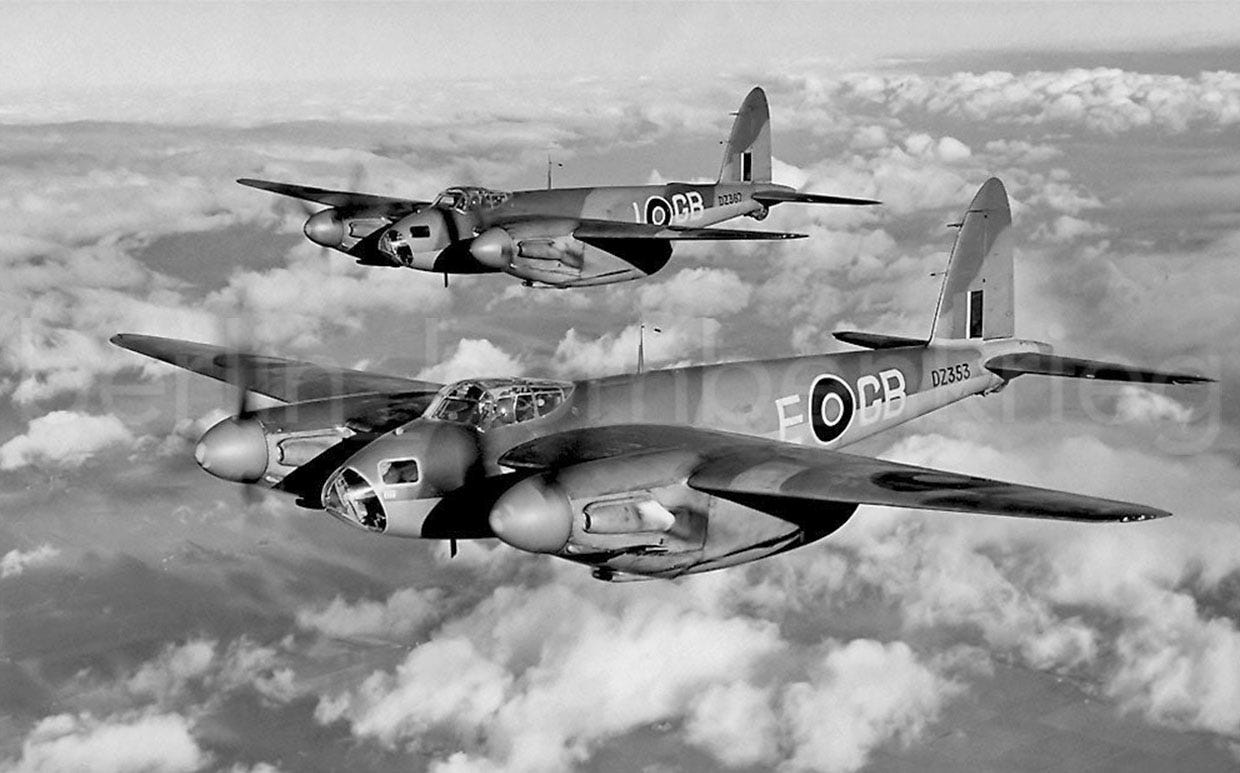
Today, 83 years ago (January 30, 1943), RAF Bomber Command sent twelve men to bomb the heart of the Third Reich alone in broad daylight. It was a special mission aimed to embarrass the Nazi hierarchy and to obtain a powerful morale victory.
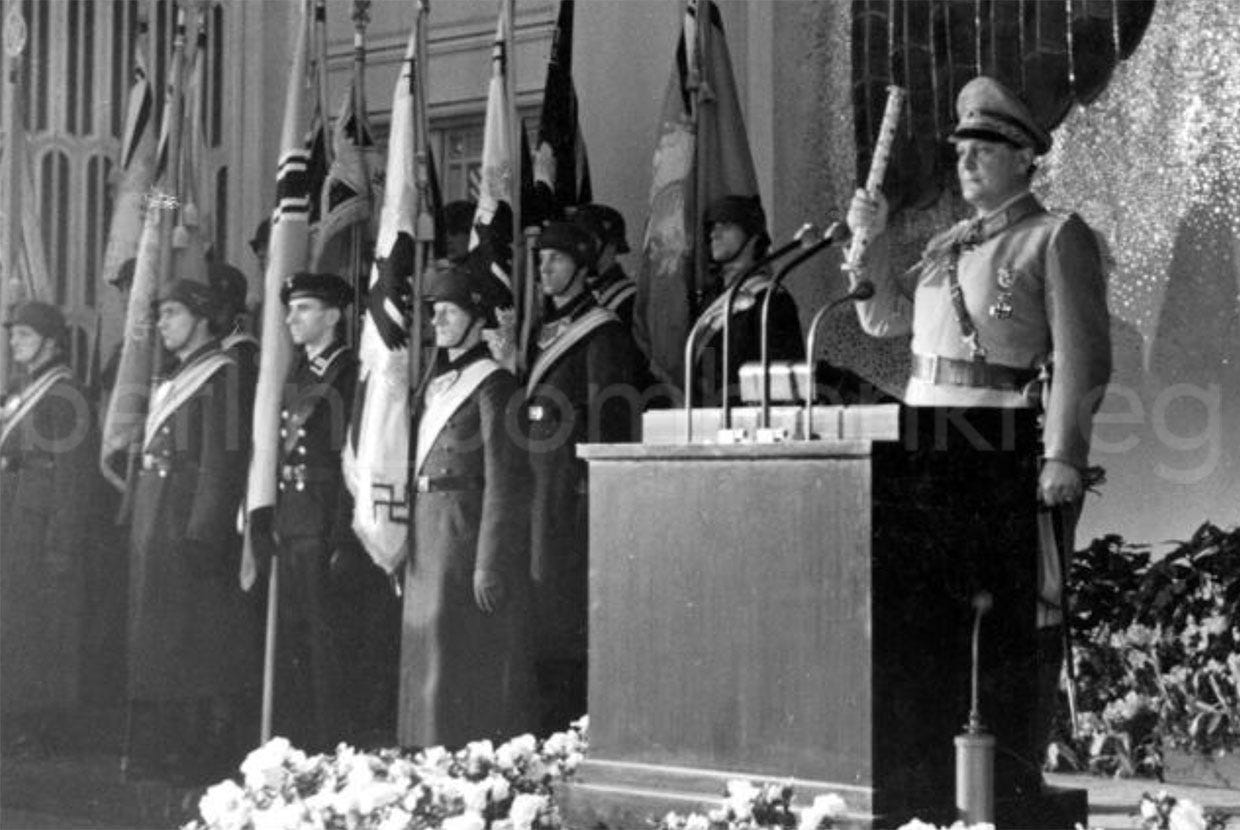
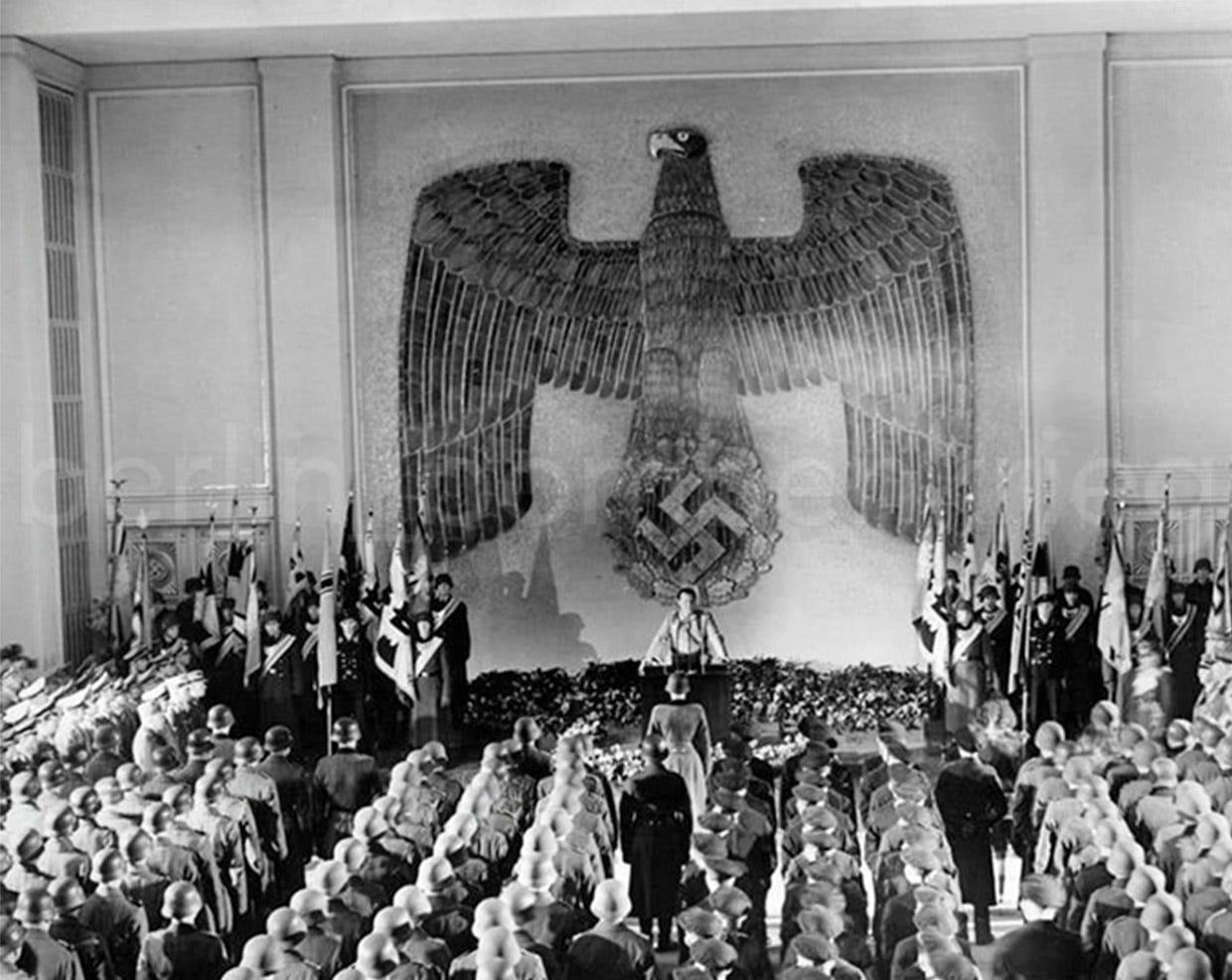
At Berlin, it was 11 hours of that Saturday morning when Reichsmarschall and Luftwaffe chief Hermann Göring was about to start an official speech from the Air Ministry building. That day marked the 10th anniversary of the Nazis seizure to power (‘Machtergreifung’) and major celebrations and parades were scheduled, including this speech, which was to be broadcast nationwide. Another radio address was scheduled for the afternoon, this time at the Sportpalast by Reichsminister of Propaganda Joseph Goebbels. Suddenly, air-alarm sirens began to crawl all over the city, and the speech had to be abruptly interrupted.
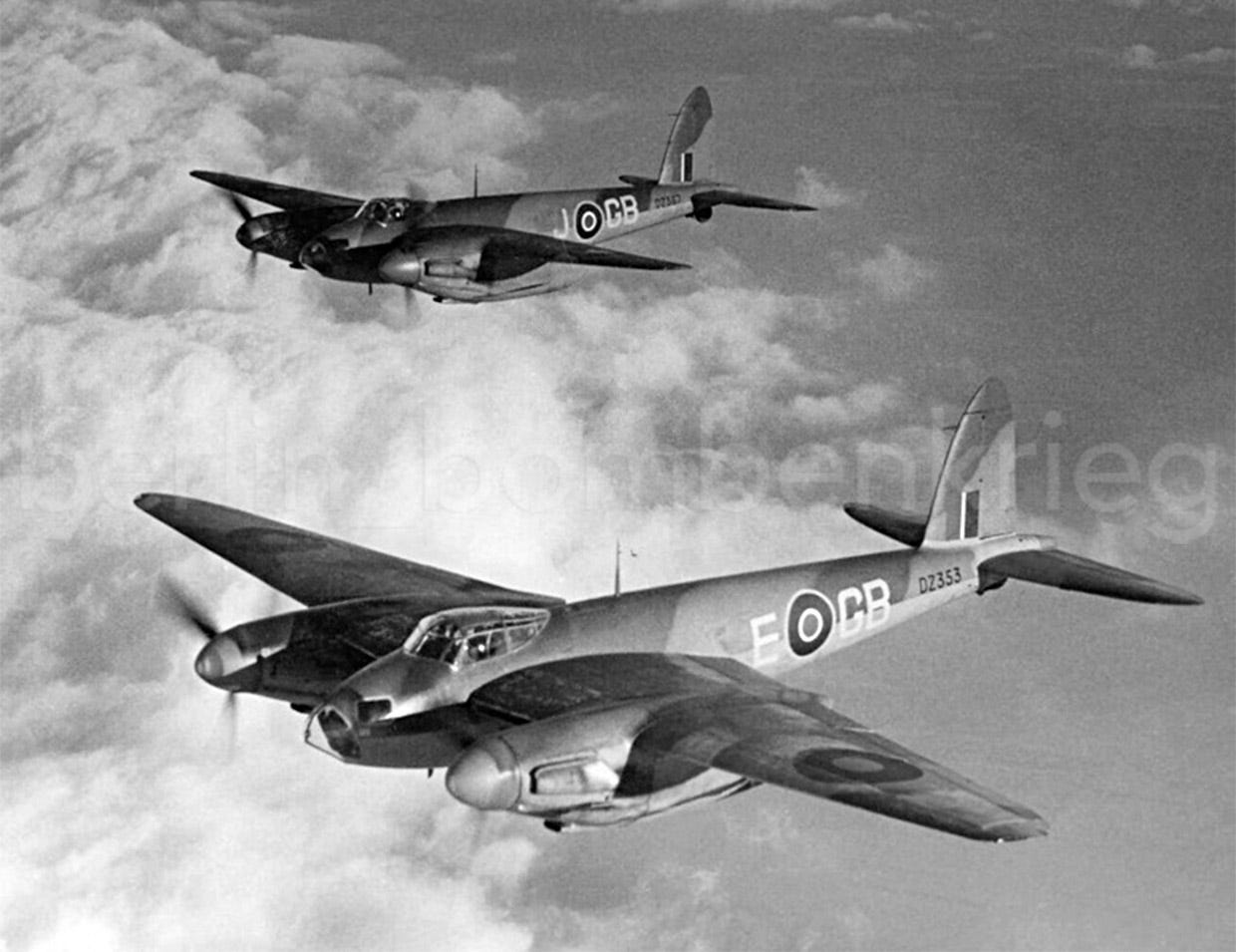
The RAF, meanwhile, had planned to spoil the party with an audacious daylight bombing raid on the German capital. Six Mosquito bombers would bomb Berlin on two separate raids, exactly timed to disrupt both speeches by the Nazi leaders. Armed just with bombs, and relying on speed for protection, the new British fast-bomber and her crews made possible this “special blow” at the heart of the enemy, that would be a great publicity action —if succeed— back home.1
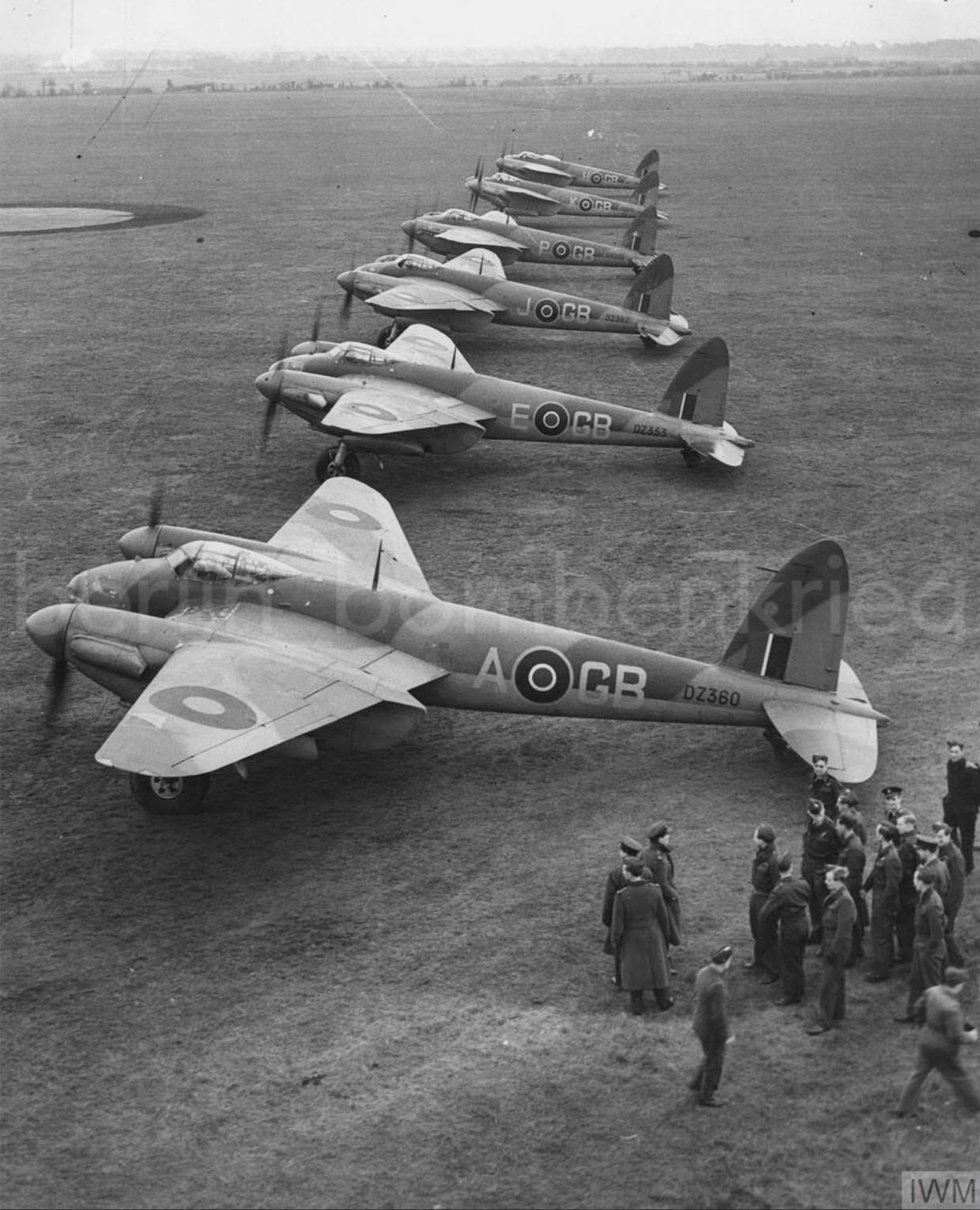
The ‘Big City’ (as RAF crews refer to Berlin) had been hit already for two consecutive nights by RAF aircraft on the previous week —January 17 & 18th, first time since November 1941 when heavy losses caused to halt the air offensive against the capital. It would be also the first time during the war that Berlin would be bombed (successfully) by daylight.2 London had cancelled daylight raids following unacceptable losses suffered during early years of the war, much less attack Berlin, the most heavily defended and feared target for Bomber Command pilots, in broad daylight. Now RAF had a new light and fast bomber: the revolutionary all-wooden and unarmed Mosquito. Mosquitoes had started to penetrate Occupied Northwestern Europe in low level day attacks just a few months before (from late May 1942) and this long range double-raid would be a great publicity achievement also.3 The daylight bombing concept over Berlin was settled originally to September 19, 1942, but bad weather hampered the mission.4 The new year and the new bombing directives (the one derived from the Casablanca conference) bring a new opportunity to deliver a great blow to the enemy.
The 30th January double-strike on Berlin has been widely mentioned in every RAF or Mosquito reference book. Bomber Command’s operational handbook (Middlebrook, 1985) as usual provides a detailed, day-by-day account of the air campaign, a reference to set the overall figure of the night operations; the most complete narration of the raid can be found online on the RAF’s Memorial Flight blog. For their part, the Mosquito monograph led by Clifford (1997) describes briefly the attacks although the raid date is wrong: January 31st instead of the 30th. In the latest book narrating the Berlin bombings, the infamous one “written” by Bowman (2023), the bombing is mentioned in a short way too, despite being focused on the early RAF raids (1940-43) on the city, meanwhile other books by the author (dedicated to the Mosquito, 1997) the action receives more attention and text lines.5 On the German side, the extensive analysis of the air bombings on Berlin city, led by Dr Demps, erroneously listed the number of attacking planes as being six and three, respectively.6 Finally, Berlin Story’s book about the Berlin air bombardments and their witnesses (Ed. Giebel, 2015), lists both attacks on the book’s city raids record but provides no further information about them.7
First raid - “Meier trumpets”
Six crews were picked up from the two Mosquito operational units at RAF Marham, Nos 105th and 139th Squadrons, then part of Bomber Command’s 2 Group. The exact target is not known, or at least neither the operation record books (ORB) nor Group orders indicate specific targets for them, just to drop bombs over the Berlin area by ‘dead reckoning’ to harass the Nazi anniversary.8 The Air Ministry February 1942 bombing directive indicated (in the case of Berlin) that“your operations should be of a harassing nature, the object being to maintain, the fear of attack over the city and to impose A.R.P. measures.”9 Anyway, the Royal Air Force’s blog states that target “was the Haus des Rundfunks, [Charlottenburg] headquarters of the German State broadcasting company”10 which is completely feasible too.
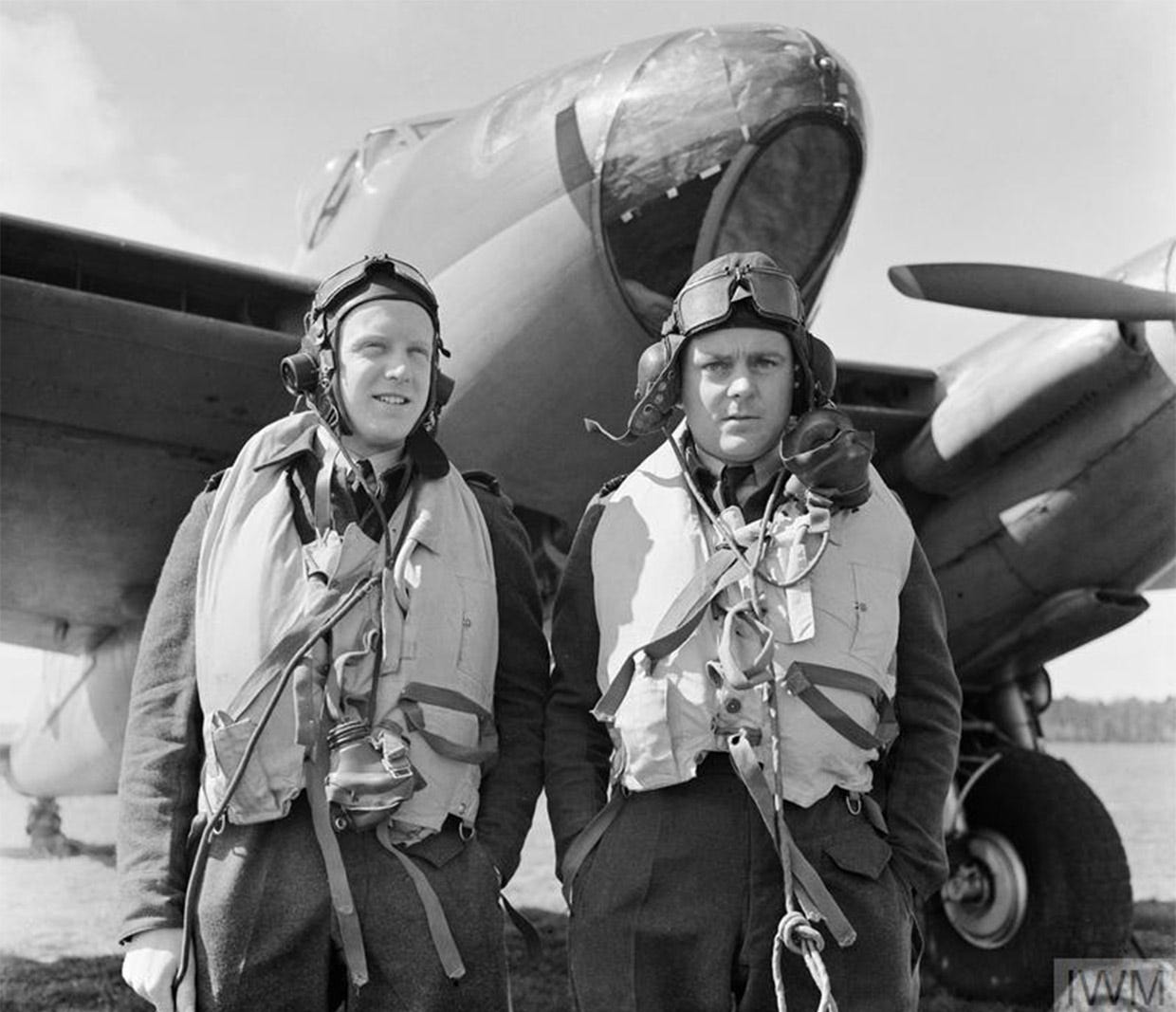
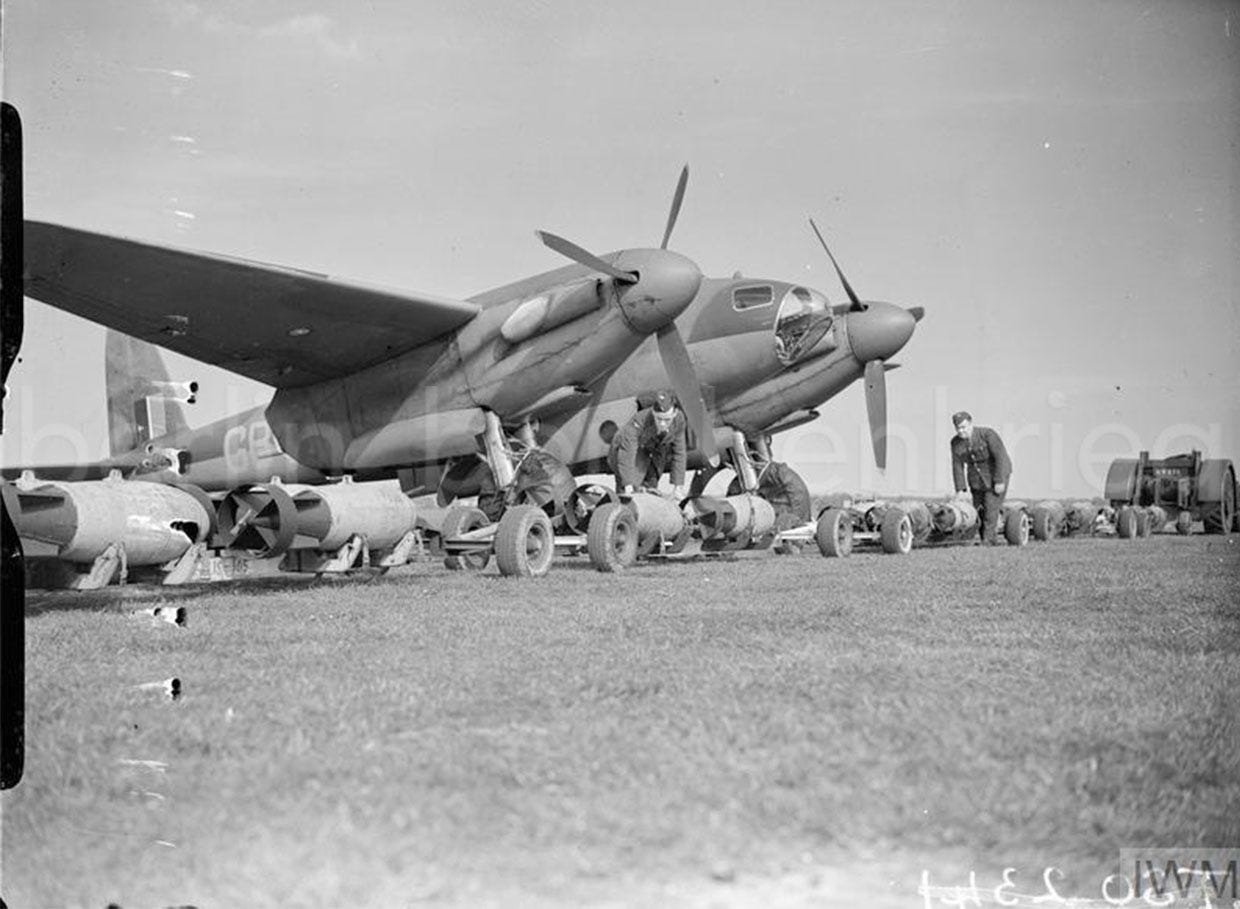
The first attack was made by three Mosquitoes from 105 Squadron, led by Squadron Leader ‘Reggie’ Reynolds DFC, with his navigator Pilot Officer Ted Sismore. They took off from Marham in B.IV DZ423 at 08.45 hours, accompanied seconds later by Mosquito DZ408, crewed by Flight Lieutenant John ‘Flash’ Gordon and Flying Officer Ralph Hayes, and by DZ372, flown by F/O Tony Wickham with his navigator, P/O Bill Makin.11 Each bomber was armed with three 500-lb MC high explosive bombs.
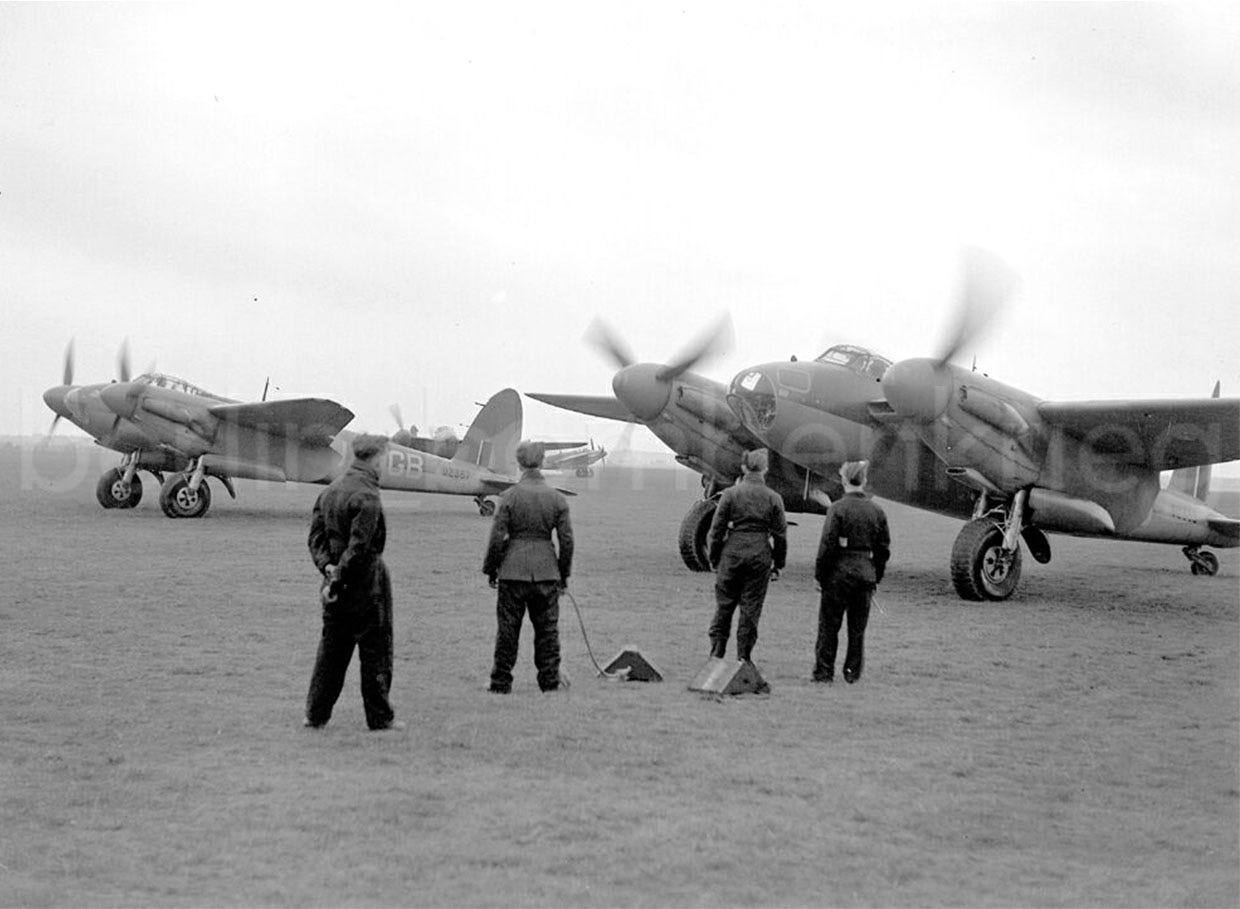
They flew at “wave top” height across the North Sea, before climbing to 25,000 feet entering German airspace to find the city covered by clouds. All three crews claimed to have successfully bombed Berlin’s northern area at ETA 11.00 hrs at that same height, exactly on time to disrupt the speech but bomb results were unobserved due to heavy overcast. Gordon and Hayes recognised the city thanks to the western Berlin lakes and a built up area seen through a gap in the clouds. By 13.52 hours all three crews were back in Marham unscathed.12
Planned to be an eulogy speech for the survivors of the German 6th Army trapped in Stalingrad, Göring was about to start his broadcast radio message in the Reichsluftfahrtministerium building at Wilhelmstraße in front of some Wehrmacht representatives when striking air sirens forced to halt the act. Most sources claim that the speech was delayed for an hour before the Reichsmarschall returned and speak to the microphone again, probably based on the Associated Press note released the following day.13 (the complete speech can be hear here) RAF’s blog goes further and assets that “the broadcast engineers shut down the transmission and listeners were instead treated to a scratchy recording of classical music for over an hour, before an apparently furious Goering was able to return to the microphone.” but no source is cited in their narration. Hours later and thousand of miles away, General Paulus would surrendered what left of his army to the Soviets finally —barely 91,000 survivors of the 250,000 encircled in the Stalingrad area since November 1942 .14
The Second Blow
A few minutes before the 105 Sqn trio landed back at Marham, the three Mosquitoes of 139 (Jamaica) Squadron took off from there and bound for Berlin, crewed by Squadron Leader Donald Darling DFC with his navigator F/O Bill Wright in Mosquito DZ367, Sgt Joe Massey and Richard Fletcher in DZ379, and Flight Sergeant Pete McGeehan (RNZAF) with F/O Reg Morris in DK337.15 Each one carried three 500-lbs MC bombs with a 25-second time delay fuzes.16
The bombers followed a similar route to the German capital at low level, becoming inland at Heligoland before climbing to 20,000 feet flying over the clouds until reach the target. They found Berlin in “brilliant sunshine at ETA with cloud having broken abruptly.” Massey/Fletcher dropped bombs at 15.52 on the southwestern part of the city with McGeehan/Morris doing the same at 16.00 hrs (“we had no difficulty in sighting the target and dropping our bombs just after the leading Mosquito” recalled the New Zealander), observing one burst aprox 1/2 mile to south of city centre. By then defences were on full alert and intense Flak received the raiders, seeing two enemy fighters too, which were evaded using clouds as cover. Both returned to base crossing Germany and Holland at low level without further incident.17
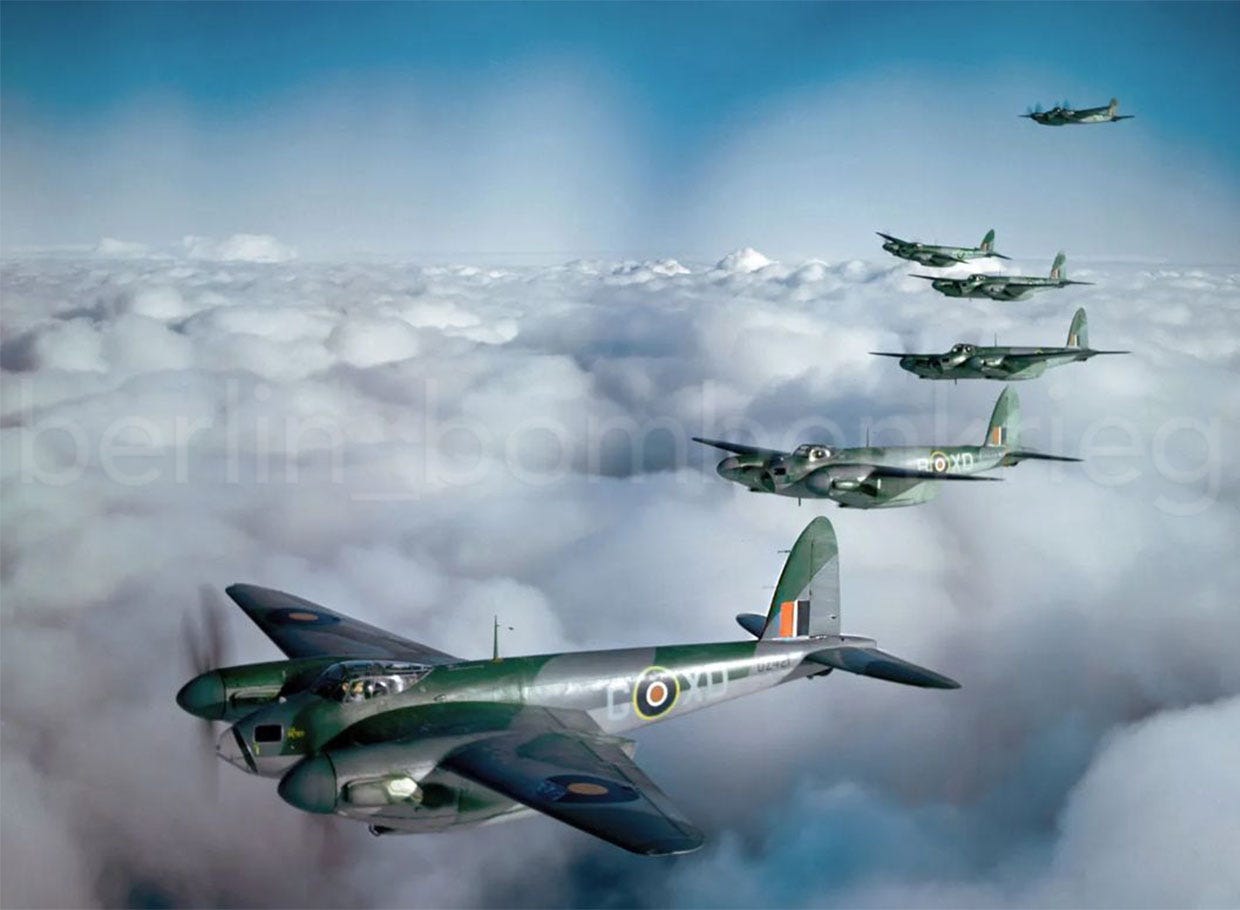
The third Mosquito (DZ367), flown by Sqn Ldr Darling and Wright, was hit by German anti-aircraft fire, crashing near Altengrabow, some 50 miles southwest of Berlin. Both the 24-year-old Londoner Darling and 34-year-old Wright, from Bedford, were killed and now rest side by side at the Berlin 1939-45 Commonwealth War Cemetery at Heerstraße.18
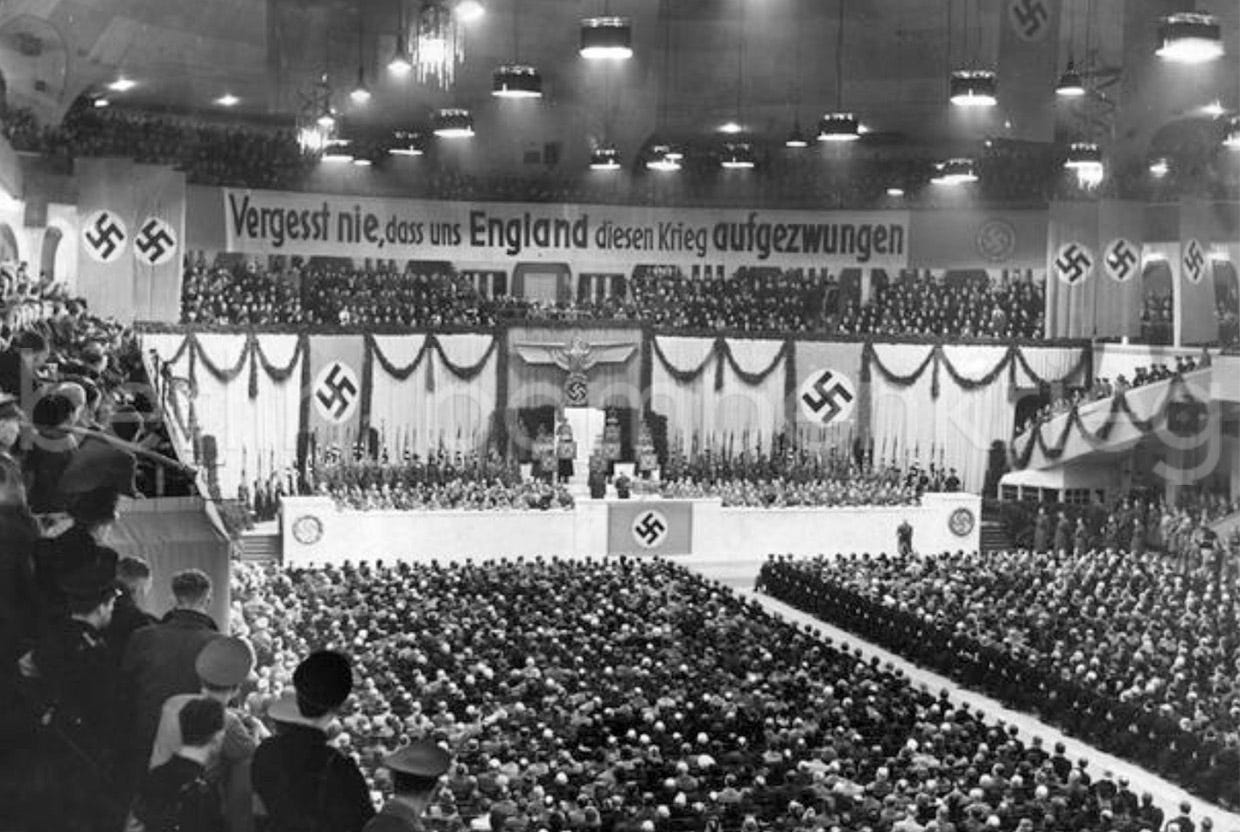
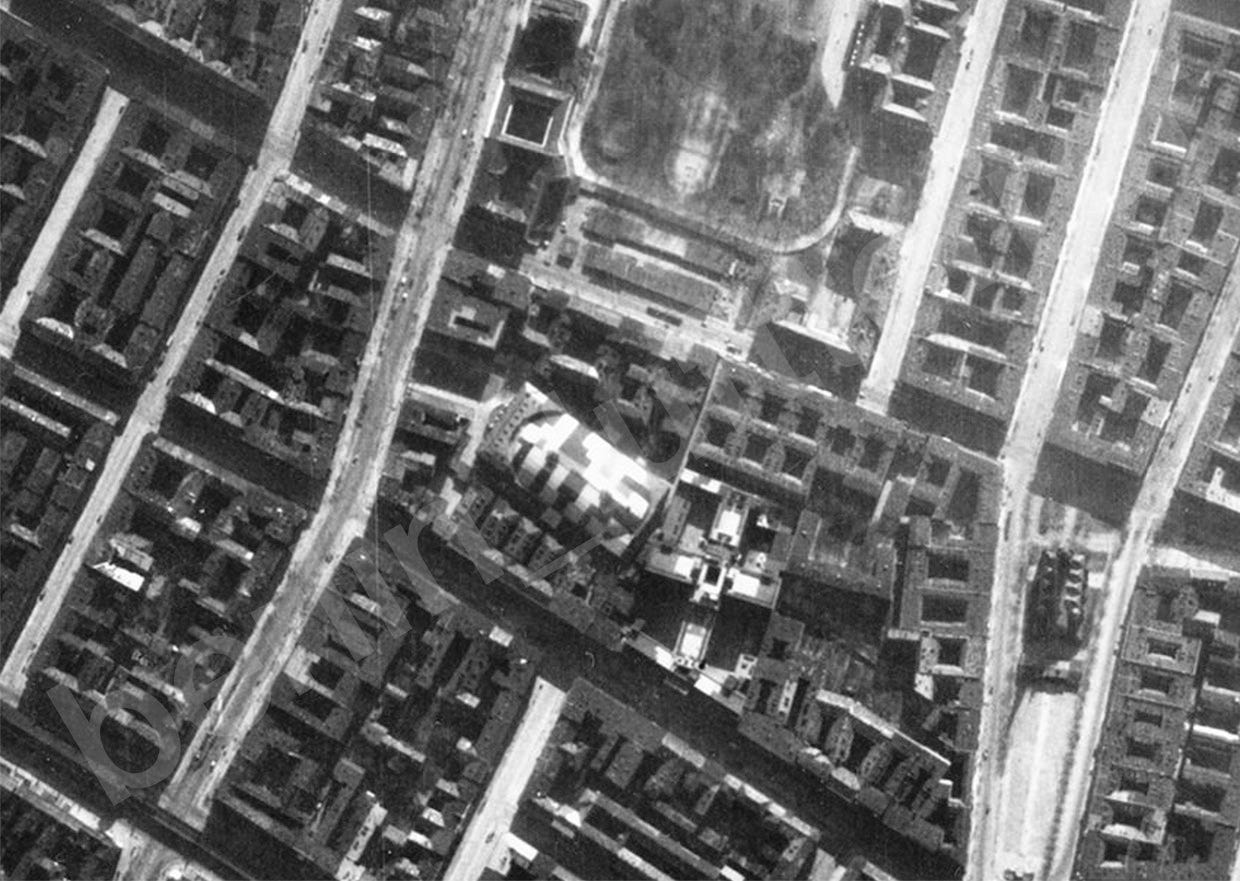
This second attack was set up to coincide with Goebbels’ address at the Sportpalast in the Schöneberg district. Berlin’s biggest indoor sports and meeting venue, the Sportpalast was full with a crowd of thousands reunited there expecting to hear the speech by Berlin’s Gauleiter at 16.00 hours. Most chronicles relate that when air alarms sounded again “the radio broadcasting engineers stayed with Goebbels, who delivered his address punctuated by the faint sounds of bomb blasts, roaring Merlin engines and anti-aircraft fire”, what appears to be more of an embellished account of what happened there than a realistic one, and surely drawn from AM/press reports of that day.19 (You can watch the complete speech here).
A bombing success - Jubilation in Britain
The bombing was inaccurate and did little damage, with any of the RAF bombs hitting the Sportpalast or the RLM building, but in both raids the morale blow effect was widely achieved. If we check the city’s bombing damage reports recorded on that day, seven high explosive bombs (five of them unexploded) were listed falling at Charlottenburg (Reichssportfeld), Lichtenberg and Reinickerndorf districts, all with minimal damage. Ironically, all damage recorded from the second raid came from some German Flak shells falling in Treptow and Steglitz areas. The attack left one woman injured and 1,700 people temporarily displaced to several public shelters (mostly in the Reinickendorf district) until some of the ‘duds’ were defused.20 By 16.26 hrs the all-clear alarm had already sounded.
Back in Britain, and following the mandatory post operation debriefing, crews were called to the Air Ministry at Whitehall to be decorated, with a follow up press conference and some official portraits taken. Sqn Ldr Reynolds was awarded the Distinguished Service Order (DSO) medal, meanwhile rest of the officers each received the DFC (Distinguished Flying Cross) and finally Flight Sgt. and Sergeants received DFMs all.21
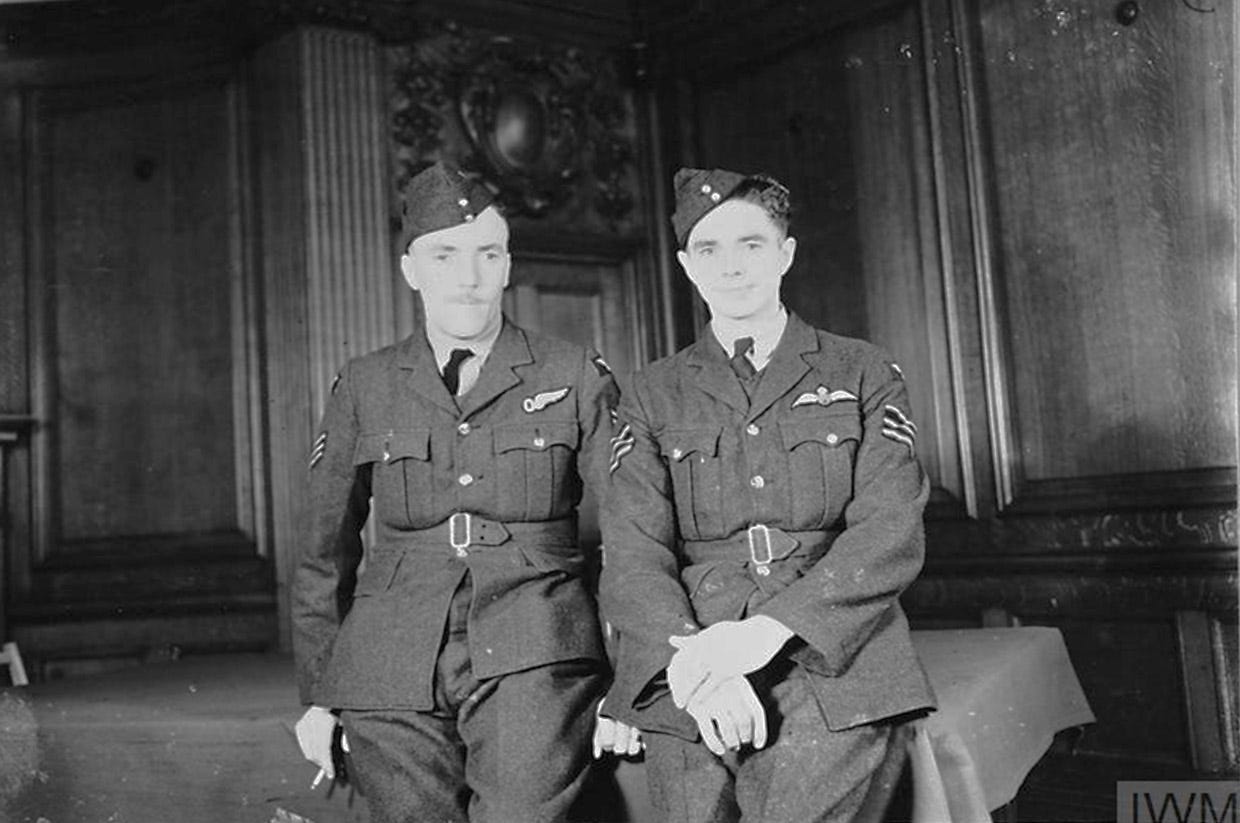
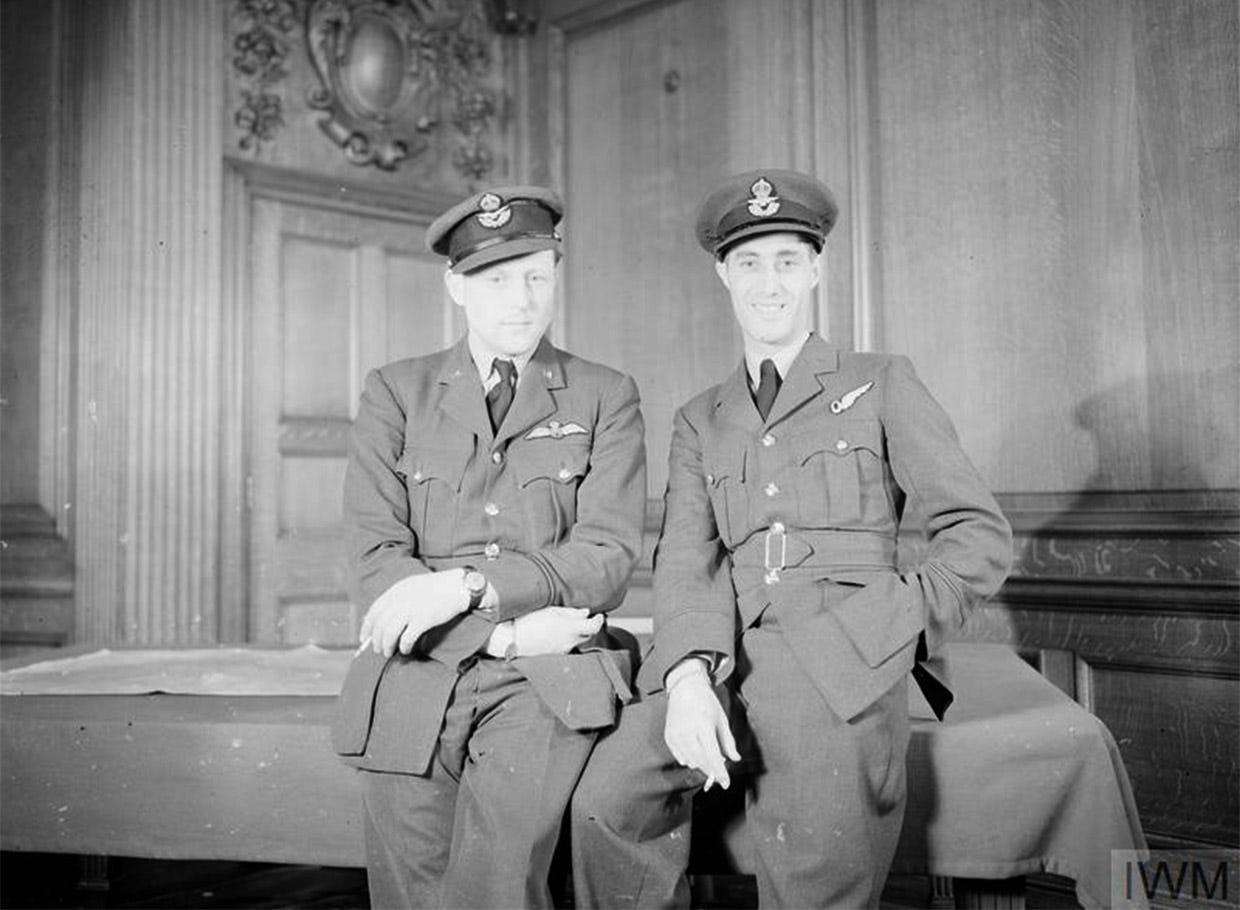
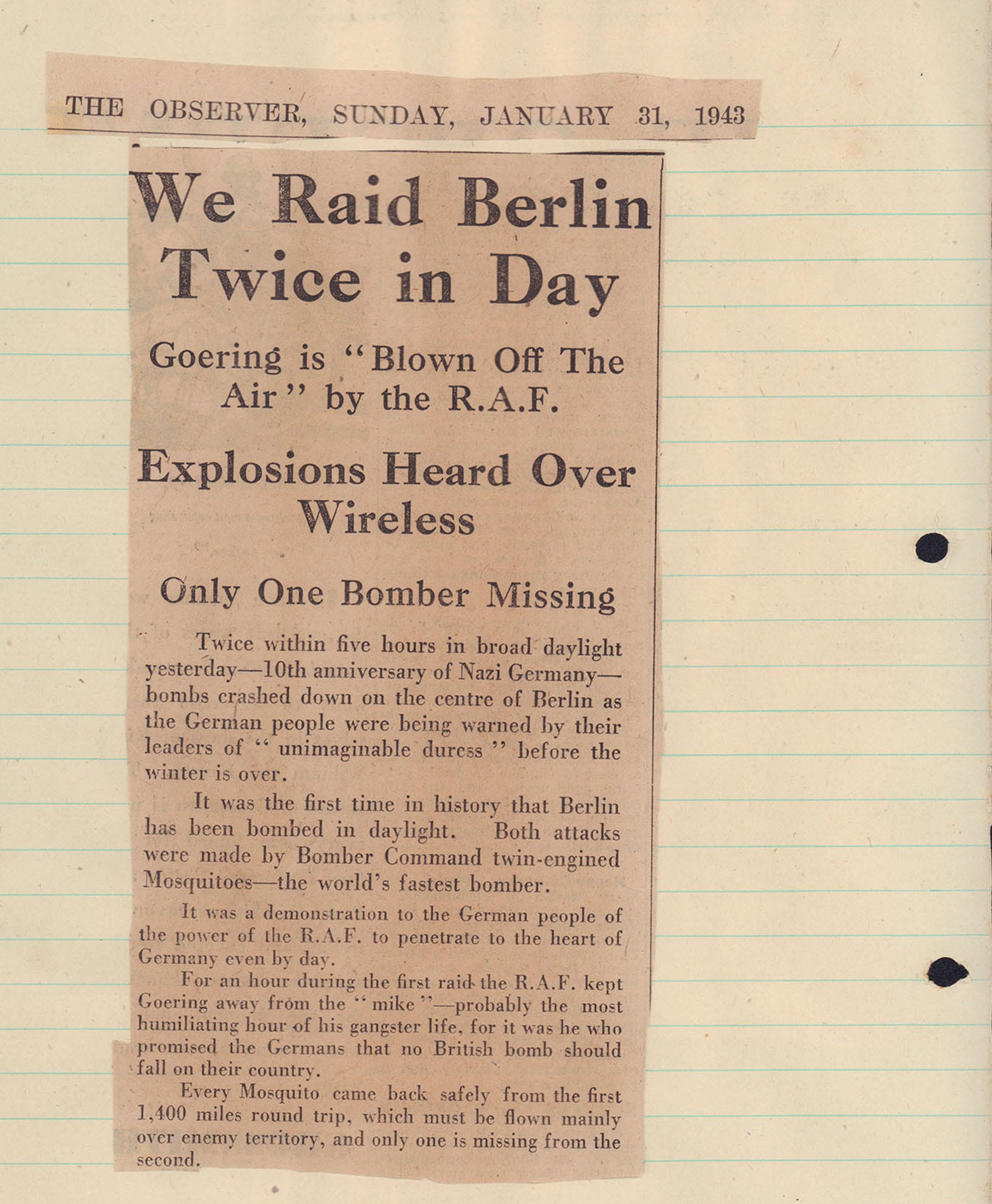
The action was widely narrated in the Allied press all across the home territory and overseas, quoted as an “spectacular raid” and “probably the most humiliating hour of his gangster life, for it was he [Göring] who promised the Germans that no British bomb should fall on their country.” Some crews testimonies were included also: ’’The cloud ran out and, bless my soul, we were over Berlin,” recalled one observer. “We started unloading our contribution to the festivities.”22
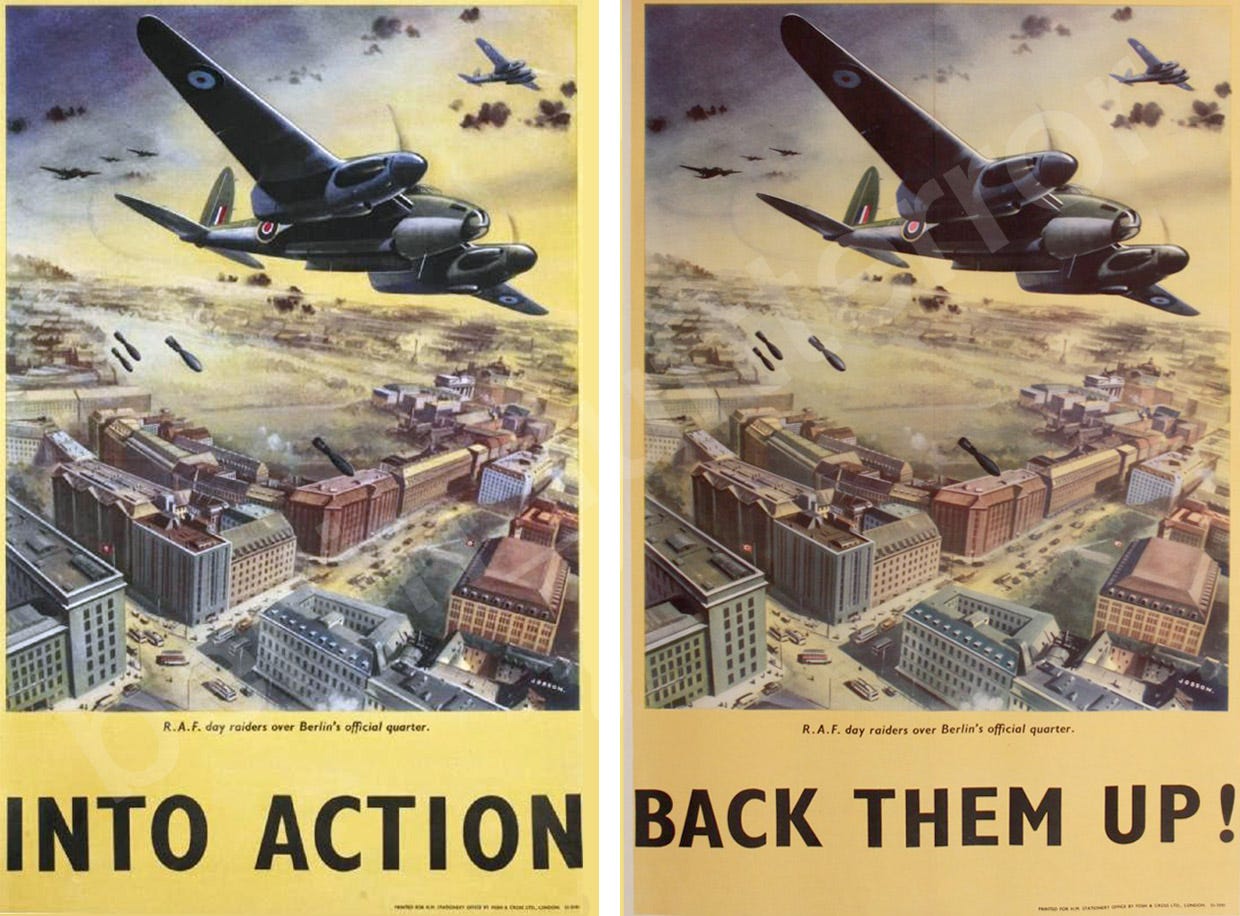
The official press conference at the Air Ministry in London was also recorded on film, with the Mosquito surviving crews narrating the daring raid on the Third Reich’s heart. (Video source: British Pathé 1075.11.)
The raid had significant propaganda value back in Britain despite the limited damage it caused on the German capital or in the military targets assigned. In any case, the Mosquito itself had proof its value as a daily intruder over highly defended targets and added a new menace for Berliners, who watched by themselves that RAF aircraft were able to fly unopposed over the Reich in broad daylight, a taste of what was to come in the next months.
Following the attack, it is often quoted that Göring claimed: “…it makes me furious when I see the Mosquito. I turn green and yellow with envy.”23
_______________
Bibliography:
BRITISH BOMBING SURVEY UNIT. The Strategic Air War Against Germany 1939 - 1945 - The Official Report of the British Bombing Survey Unit. Frank Cass, 1998
Chorley, W R. Bomber Command Losses 1943. Aviation Books Ltd, 2025
Hiestand, William E. Stalingrad Airlift 1942–43: The Luftwaffe’s broken promise to Sixth Army: 34 (Air Campaign). Osprey Publishing, 2023
Key Military. Embarrassing the Reichsmarschall. Britain at War. (accessed January 2026)
“LITTLE OPPOSITION. RAIDS ON BERLIN .” Waikato Times, Monday, February 1, 1943
Overy, Richard. The Bombing War: Europe, 1939-1945. Allen Lane, 2013
Thank you for reading Berlin Bombenkrieg by Pablo López Ruiz.
Please subscribe, if you haven’t yet, to comment, follow and share. All images used for non profit / educational purposes.
RAF Memorial Flight Club. Mosquito daylight nuisance raid on Berlin – 30th January 1943. (accessed January 2026)
MIDDLEBROOK, Martin. The Berlin Raids. R.A.F. Bomber Command Winter 1943/44. Cassell & Co, 1988, pp 344-46. 201 and 187 bombers were sent to Berlin respectively
For a complete description of the development and combat career of the de Havilland Mosquito bomber see CLIFFORD, Chris (Ed). Mosquito, Combat Machines No. 07. Key Publishing, 1997, and BOWMAN, Martin, Mosquito Bomber/Fighter-Bomber Units 1942–45. Osprey Publishing, 2013
MIDDLEBROOK: op cit, p 310; BOWMAN: op cit, p 12. Just one Mosquito reached the city and bombed through overcast in what the crew though it was Berlin area; one raider was lost and a third one bombed Hamburg
MIDDLEBROOK: op cit, pp 349-50; RAF Memorial Flight Club: op cit, (accessed January 2026); CLIFFORD: op cit, pp 40-4; BOWMAN, Martin W. The Berlin Blitz By Those Who Were There: 25/26 August 1940-september 1943. Pen & Sword Aviation, 2023, p 94; BOWMAN: op cit, 1997, p 19
DEMPS, Laurenz. Luftangriffe auf Berlin. Die Berichte der Hauptluftschutzstelle. Ch. Links Verlag, 2014, p 246
GIEBEL, Wieland. Bomben auf Berlin: Zeitzeugen berichten vom Luftkrieg. Berlin Story Verlag, 2015, p 195
see The National Archives of the UK (TNA): AIR-27-827-1 and AIR-27-965_02 © Crown Copyright. That will be a task for future researchers who have further access to the Kew archives than we today
AIR HISTORICAL BRANCH, AIR MINISTRY. THE R.A.F. IN THE BOMBING OFFENSIVE AGAINST GERMANY VOLUME IV, A PERIOD OF EXPANSION AND EXPERIMENT (March, 1942 - January, 1943) pp 379-80, available at
https://www.raf.mod.uk/what-we-do/our-history/air-historical-branch/second-world-war-campaign-narratives/raf-in-the-bombing-offensive-against-germany-vol-iv-a-period-of-expansion-and-experiment-march-1942-january-1943/
RAF Memorial Flight Club: op cit (accessed January 2026)
see TNA AIR-27-827/2, RAF 105 Squadron Operation Record Book, January 1943
see TNA AIR-27-827/1, RAF 105 Squadron Summary of Events, January 1943; TNA AIR-27-965_02, RAF 139 (Jamaica) Squadron 1942-1943 Operation Record Books Appendices
MIDDLEBROOK: op cit, pp349-50; BOWMAN: op cit, 1997, p19; RAF Memorial Flight Club: op cit (accessed January 2026)
for further reading see the comprehensive ANTILL, Peter. Stalingrad 1942: 184 (Campaign). Osprey Publishing, 2007
see TNA AIR-27-960-11, RAF 139 (Jamaica) Summary of Events, January 1943
see TNA AIR-27-965_02
see TNA AIR-27-960-12, RAF 139 (Jamaica) Squadron Operation Record Book, January 1943; The Wings Over New Zealand Aviation Forum. The First Mosquito Daylight Raid on Berlin - Kiwi’s Story. (accessed January 2026)
Aircrew Remembered. 30/01/43 No 105 Squadron Mosquito IV DZ367 GB-J Sq/Ldr. Darling DFC. (accessed January 2026)
RAF Memorial Flight Club: op cit, (accessed January 2026)
see Landesarchiv Berlin: LAB, A Rep. 046-08, No. 58
RAF Memorial Flight Club: op cit, (accessed January 2026)
ibid; The Wings Over New Zealand Aviation Forum: op cit (accessed January 2026
The People’s Mosquito. 30th January 1943 – Mossies put the kibosh on Herrs Göering & Goebbels. 29th Jan, 2014. (accessed January 2026)