


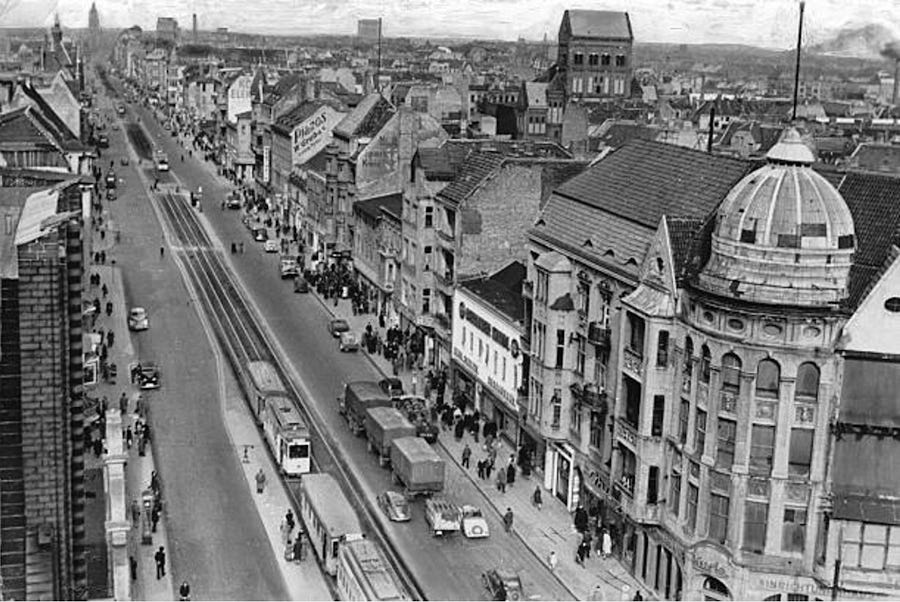
In the aftermath of the war, Berliners began the long and arduous reconstruction task. From August 2, 1945, the suburb of Steglitz became part of the administrative US sector of the city, in the new division of Postwar Germany decided by the Western Allies and the Soviet Union during the Potsdam Conference celebrated days before (from 17 July to 2 August 1945). The Soviet troops retreat from the district on 4 July 1945, taking over control the newly arrived US forces led by the experienced 2nd Armored Division and their tanks.
The photo shown above was taken in 1950 from the top of the Rathaus, looking northwards to Friedenau, and allow us to appreciate how effective was the reconstruction of the Steglitz district, without any doubt due to be located within the US occupation zone. But the reconstruction was caused not only by the economic aid of the American giant, but much effort and work for the surviving Berliners, who tried to return to normal after the disaster of the war.
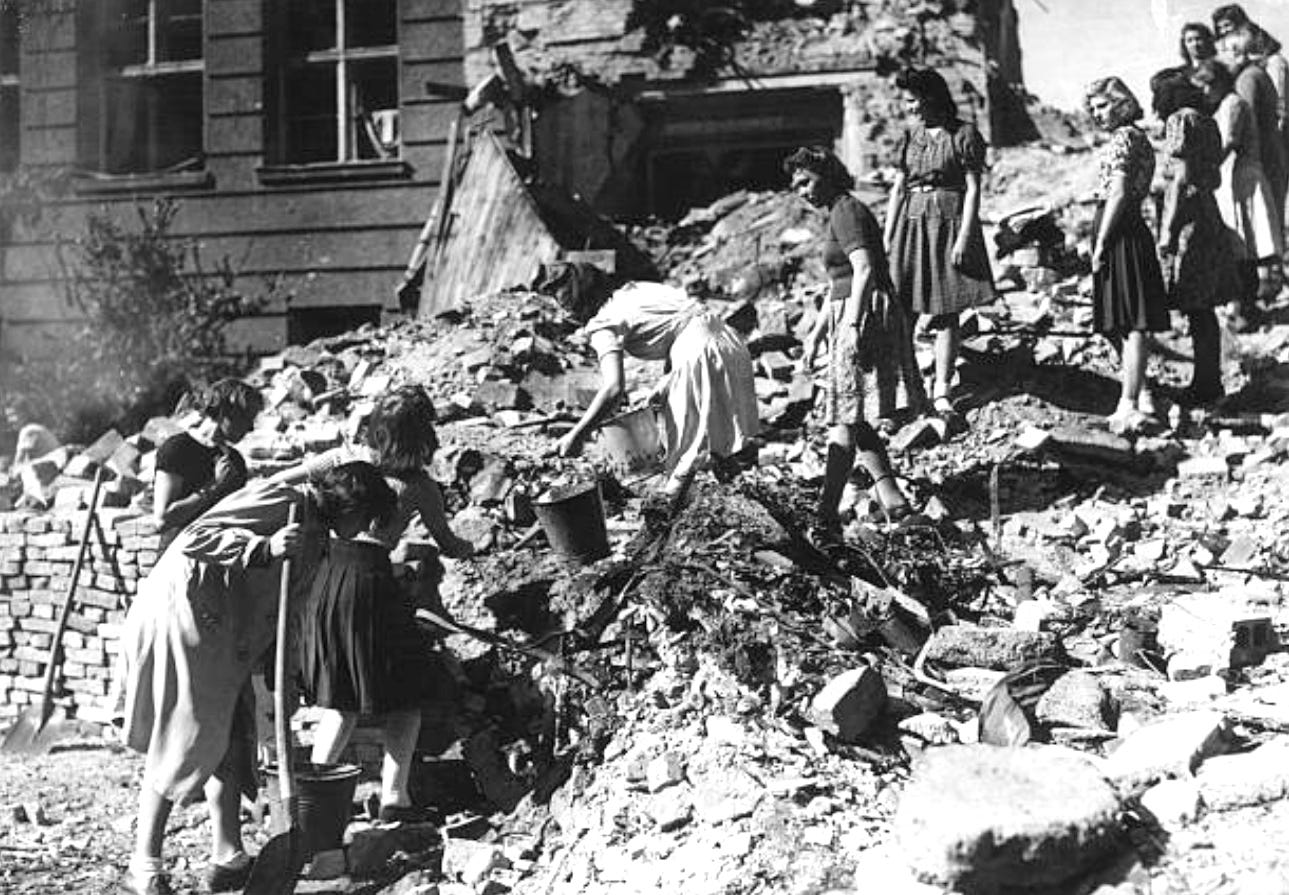
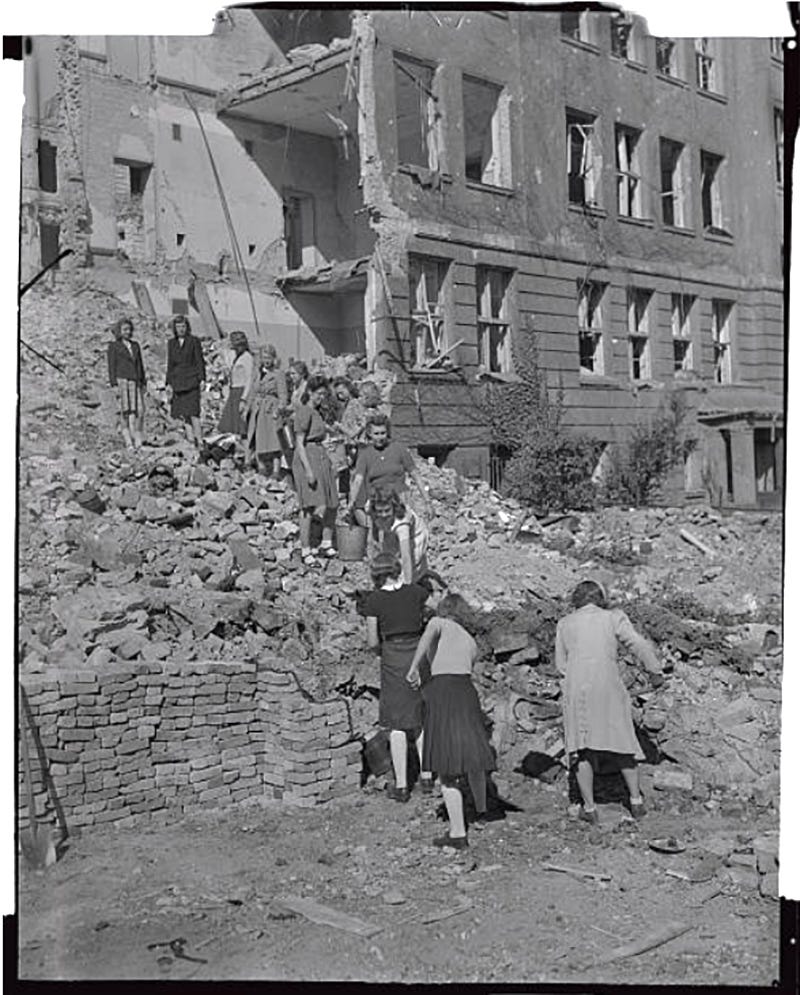
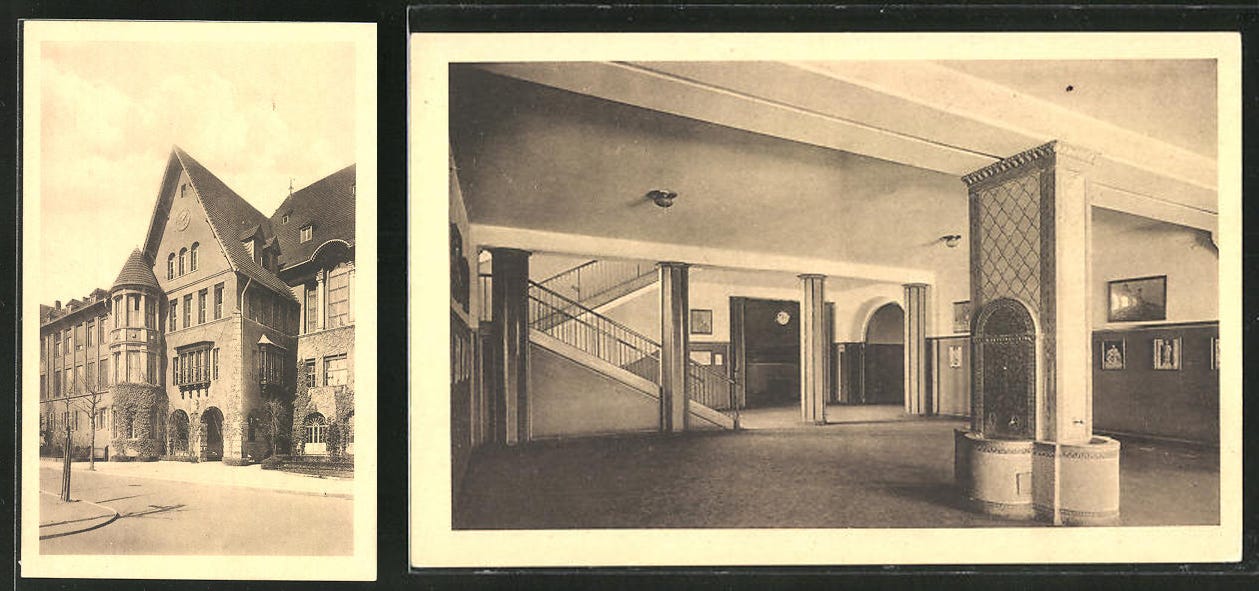
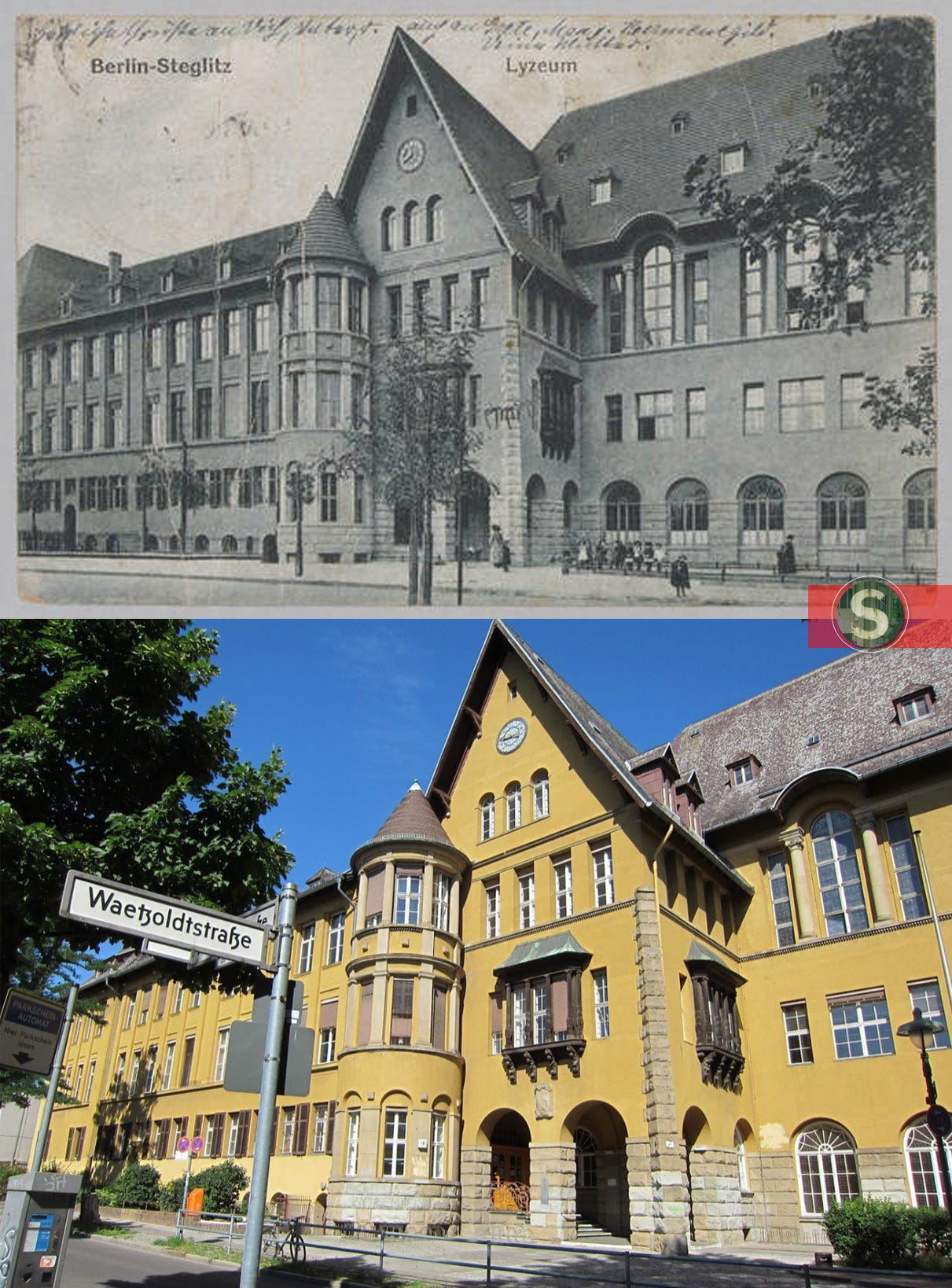
This Then/Now image shows the Augusta-Viktoria-Schule as seen before the war and the destruction caused by bombings, and below in recent years.
Days after the end of the war, back from the exile in Moscow, the Communist Party (KPD) established this office in the Berlin district. This image of the main entrance of the office was taken before control of this district of the capital was handed over to US occupation forces. The Order No. 2 of the Soviet Military Administration in Germany (SMAD - Sowjetischen Militäradministration in Deutschland) of 10 June 1945 made it possible to found or re-establish German anti-fascist parties in the new Berlin. The slogan shown refers to a call made by the KPD to the German people to build an antifascist-democratic Germany and reads ‘Die Einheit aller Antifaschisten ist die Garantie fürden Aufbaueines demokratischen Deutschlands’. Notice Soviet Union and United States flags raised in front of the entrance.
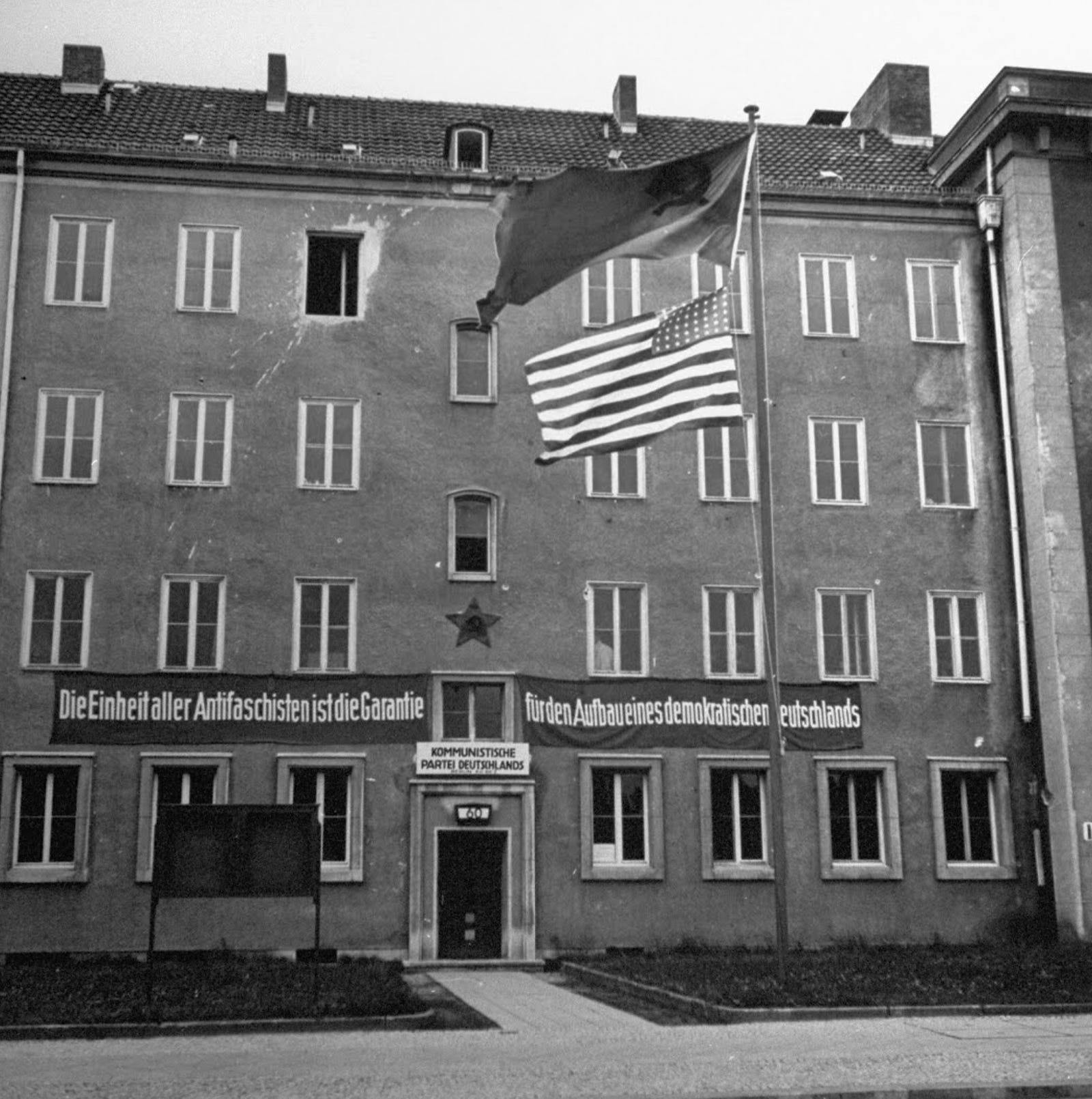
Both countries maintained good relationship although keeping in mind that a new ‘war’ had already begun.
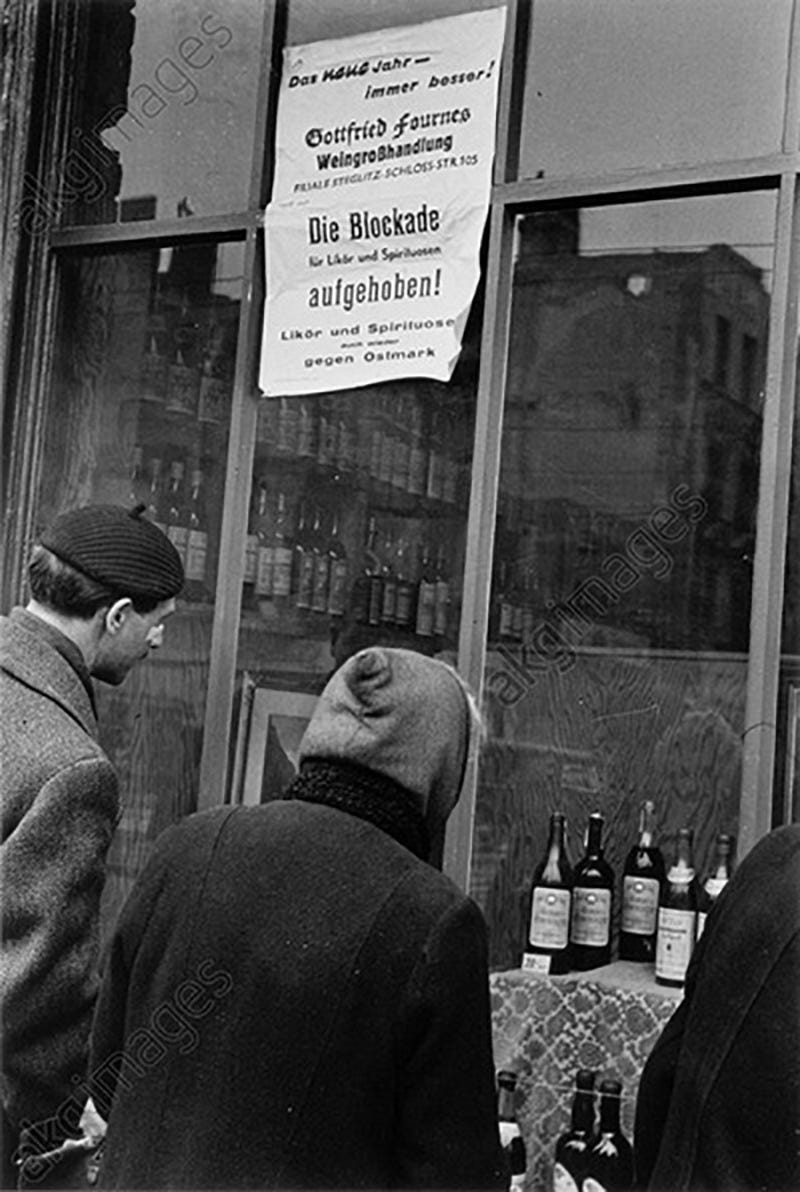
The existing tension was going to rise until provoking the first great crisis of the city in the postwar period. On 18-20 June 1948 a reorganization of the monetary system took place in the Western occupation zones of Germany, directed by Ludwig Erhard. The Western Allies reform intended to eliminate the money overhang and stop the black market, and lay the basis for a functioning market economy, which finally succeeded eliminating the Nazi-Reichsmark (used from 1924), still circulating after the war but nearly worthless due to massive inflation. The new ‘German mark’- Deutschemark DM was born, and every West Berliner received 40 marks. The Soviet Union reaction was to carry out their own currency reform (the ‘Ost-mark’) on the Soviet occupation zone but failed in obtain the same improvement and this led to a greater division between the three Western zones and the East. Four days later, in a great and desperate measure, the Russians started the so-called Berlin-blockade.
On March 20, 1949 the US military government declared the Deutschemark as the only valid currency in the Western sectors.
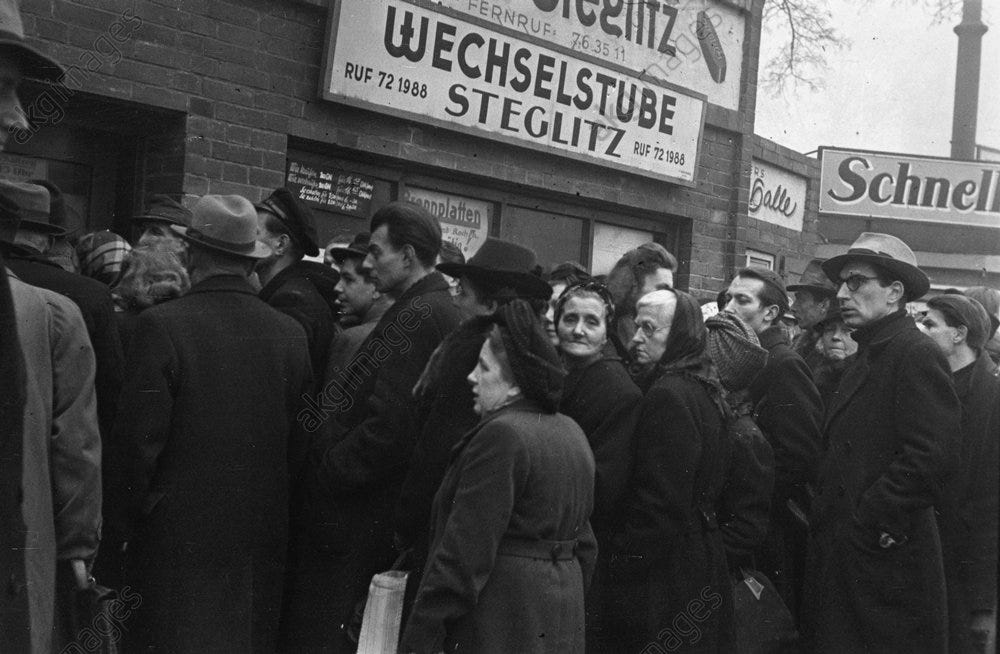
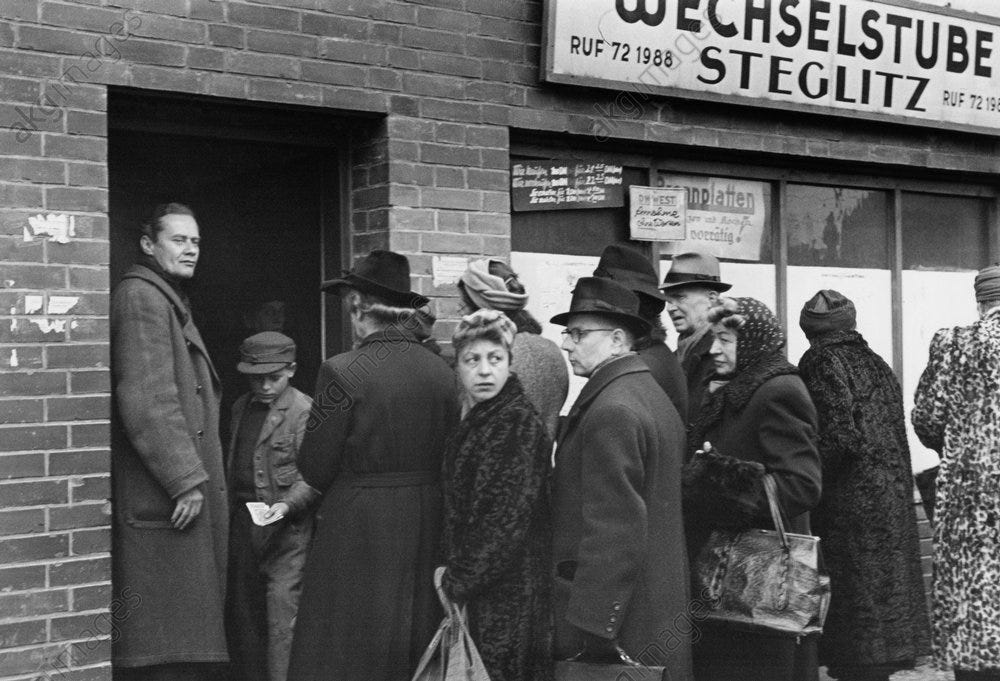
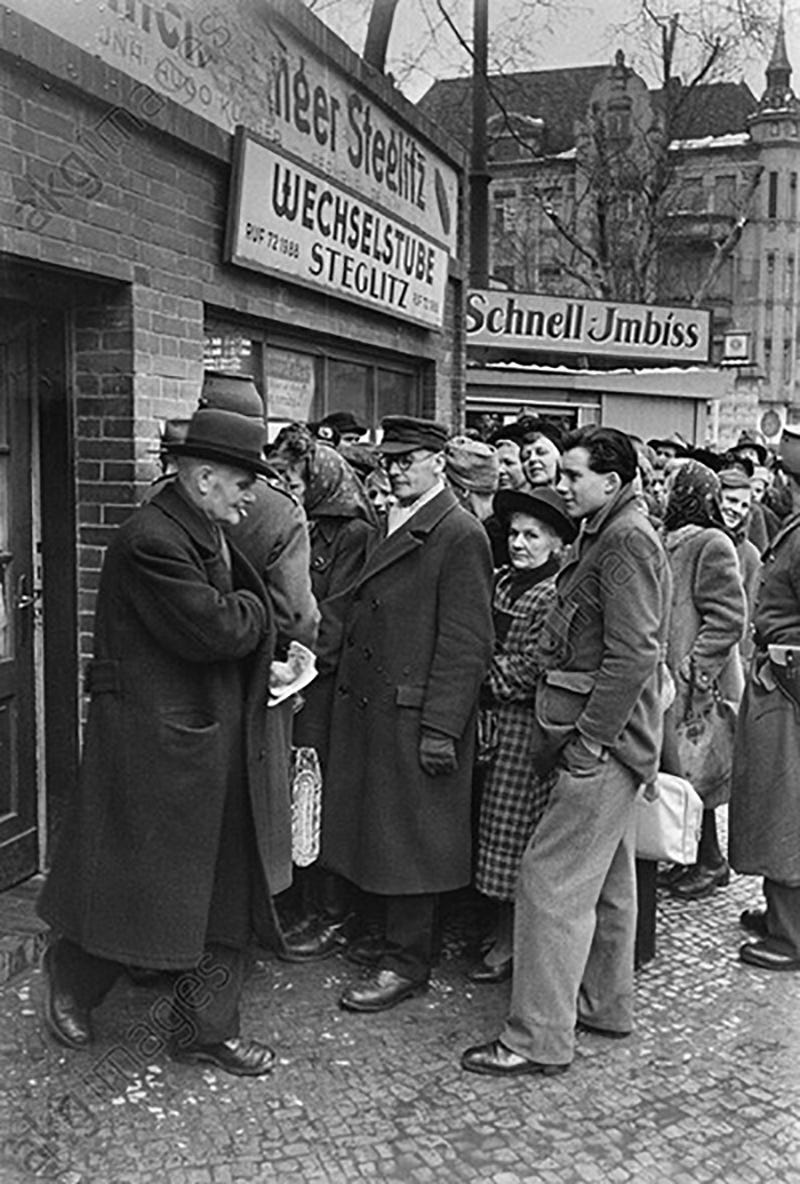
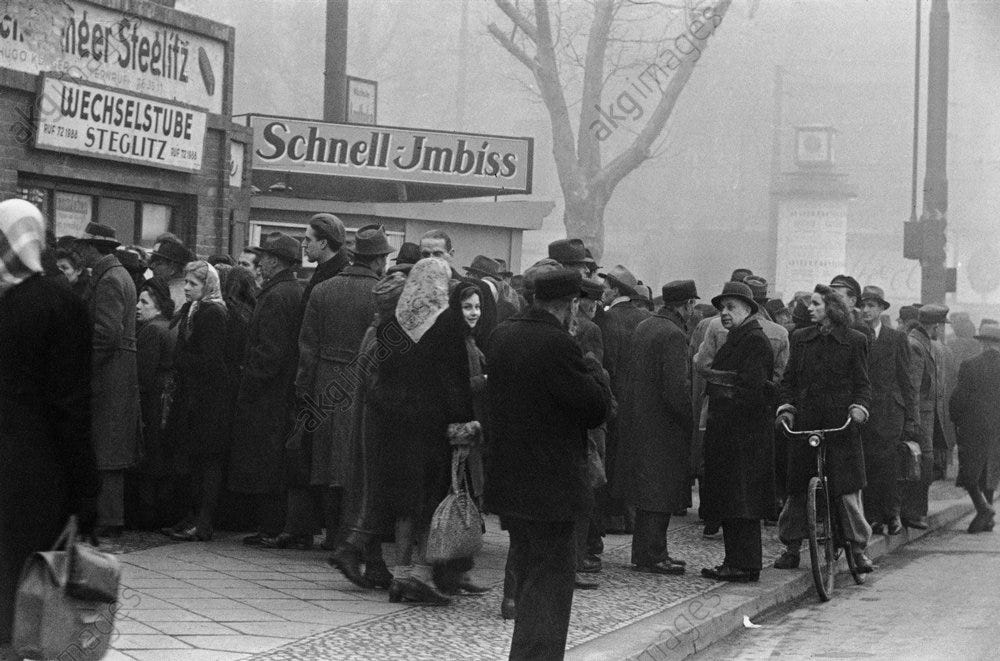
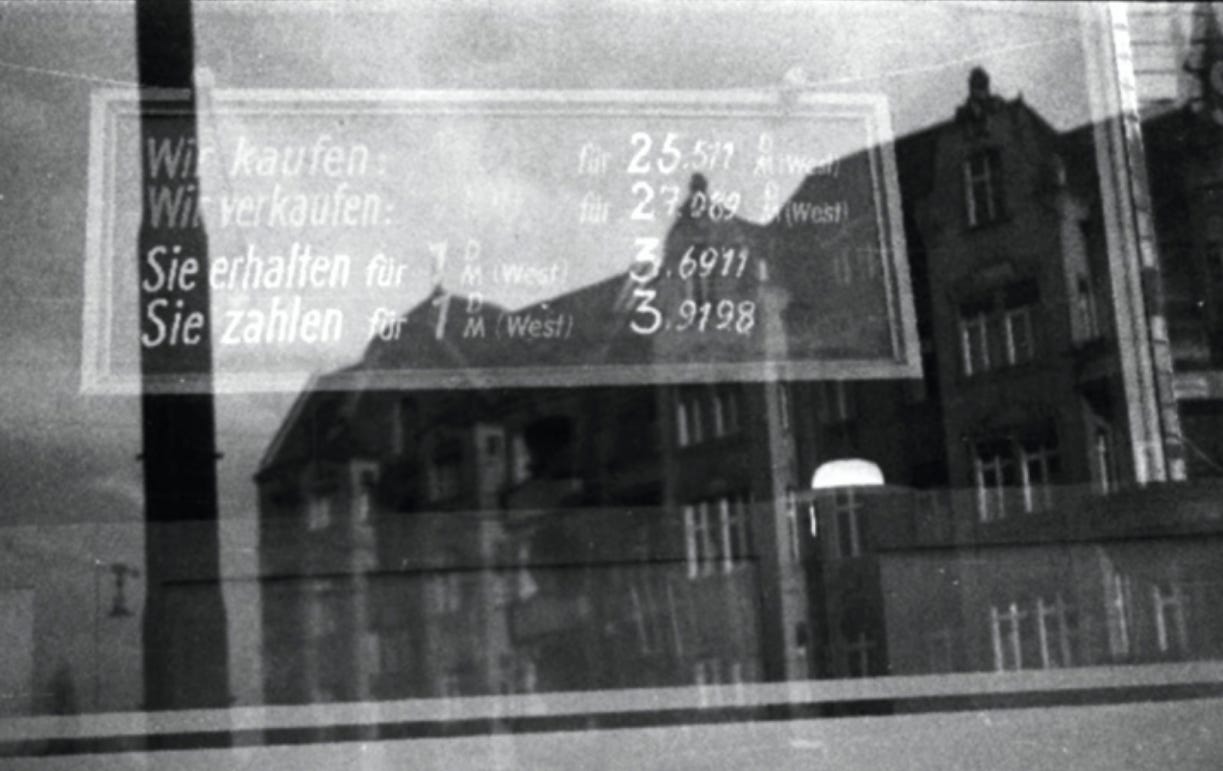
The rising tension in the city led to a nearly war-status, after the Soviets have blockaded all the roads isolating the Western sectors.
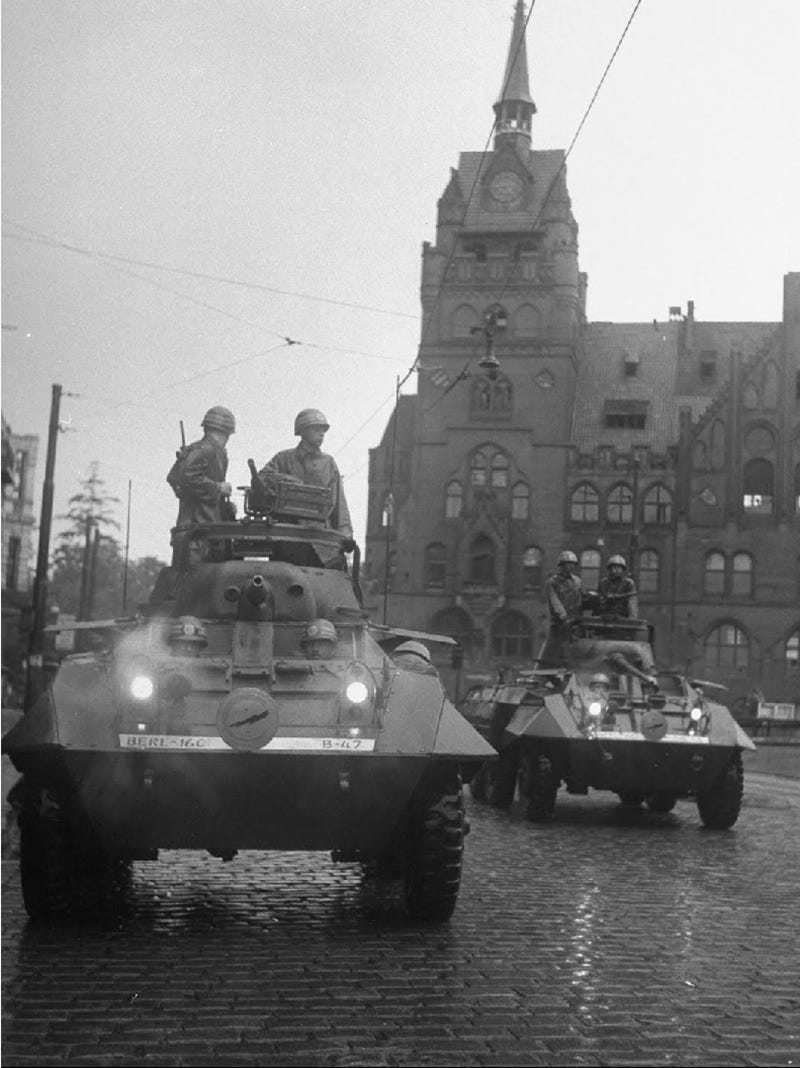
On the US sectors, the force in charge of maintaining order and peace were the Constabulary, highly mobile mechanized security force units created by Gen Eisenhower after the war. Using armoured cars, tanks, jeeps, motorcycles and other vehicles outfitted with full radio and signal equipment will be organized soon in occupied Germany on an experimental basis. Units will specialize in patrolling and liaison with other control forces, checkpoints guards and control the population of West Germany. It was officially activated on 1 July 1946 and the unit fell under the command Major General Ernest N. Harmon. The Germans referred to them as the “Lightning Police” because of the insignia unit (a red lightning on a yellow background circled blue with a letter C in the middle being in blue) while the US servicemen called them the “Circle C Cowboys” because of their numerous horses.
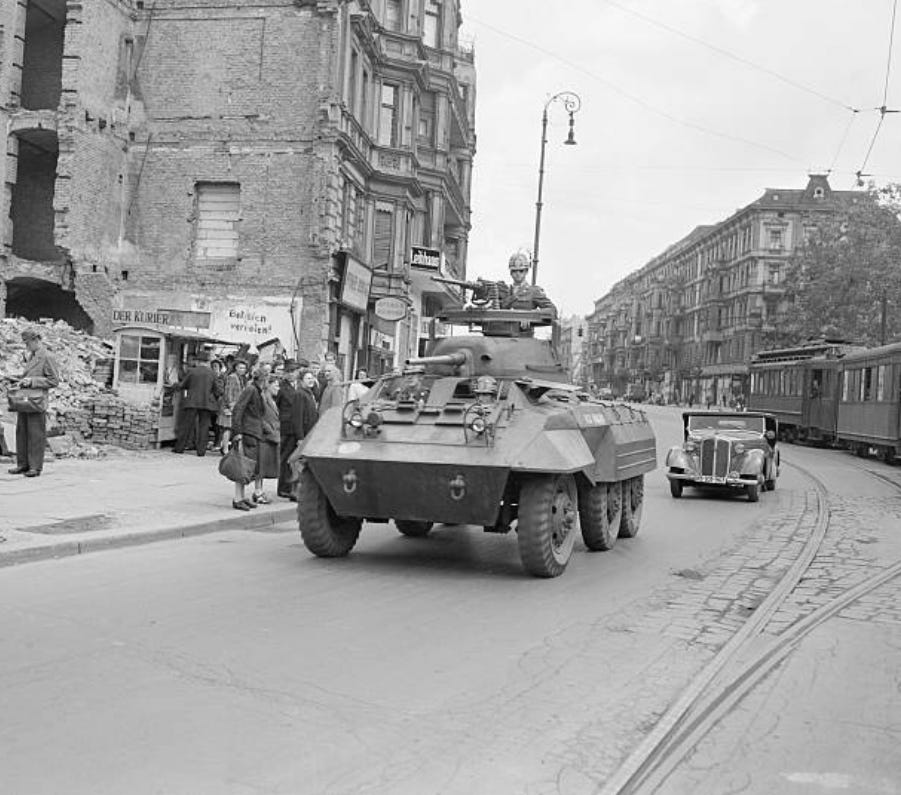
West Berliners back to normality after the soviet blockade has been lifted in May 1949 thanks to the Airlift, the famous Berlin Luftbrücke.
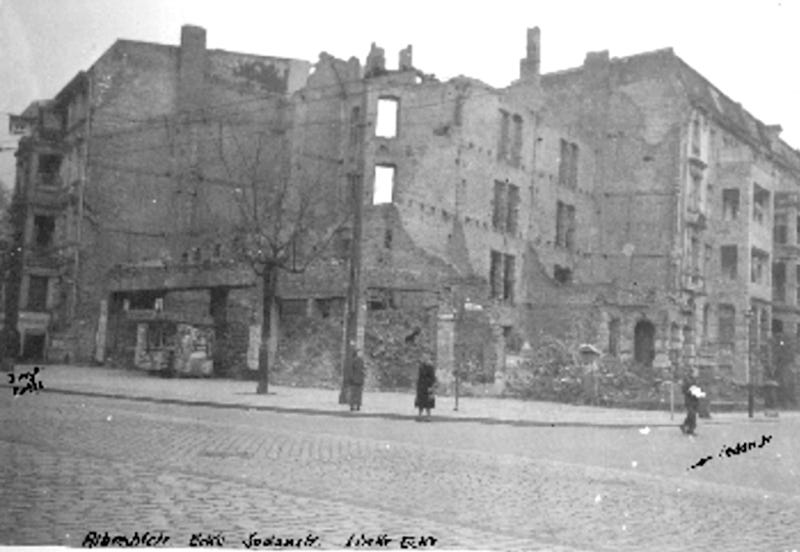
But despite the American help and money, rubble and ruined buildings are the daily panorama seen by West Berliners during many years after the end of the war, and certain areas of Steglitz suburb remained so affected until well into the 50s, mostly left in ruins.
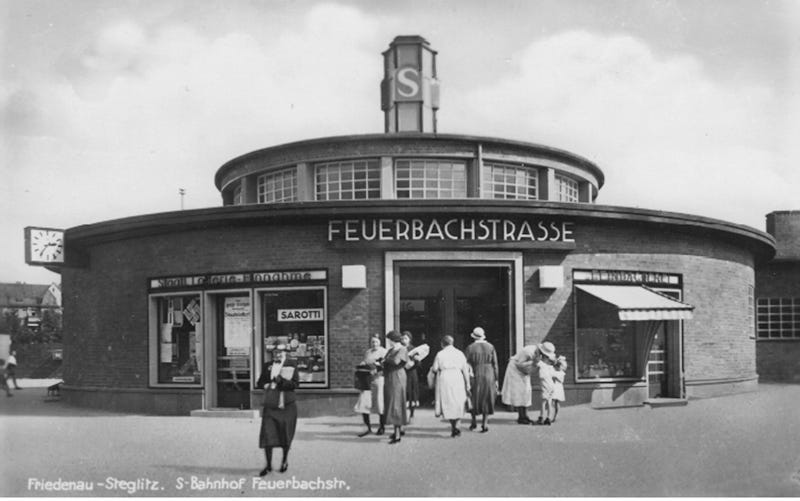
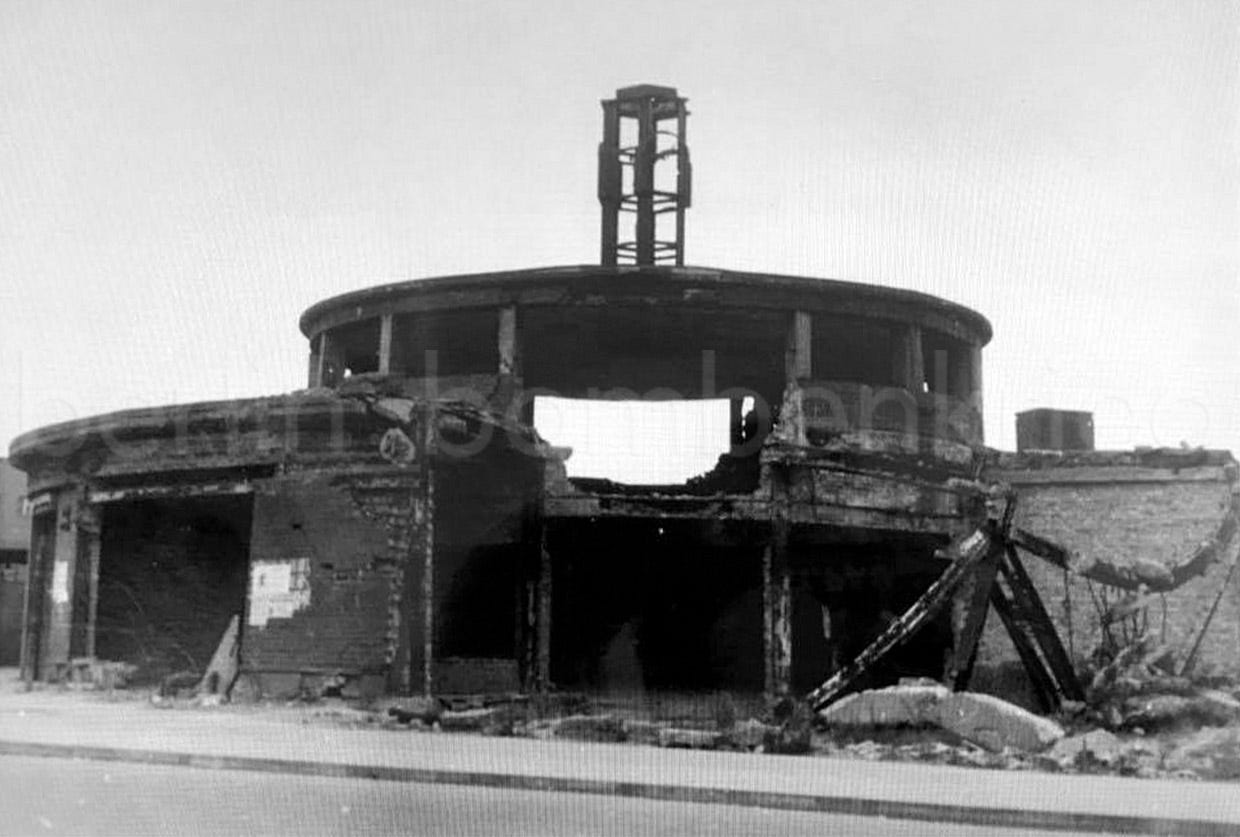
Northwest of Rathaus Steglitz we ran into Feuerbachstraße located nearly at Friedenau. Construction of the S-Bahnhof located there (planned under the name Feldstraße) began in 1932 and was opened on May 1933, as seen on the first image taken before the war. This train station was severely damaged during a massive air-raid on April 29, 1944 by American heavy bombers (679 B-17s and B-24s bombed Berlin that day), with the area around Feuerbachstraße and Steglitz being devastated although main target was Friedrichstraße Bahnhof. It was not reopened until June 1945 when the war ended. The famous Empfangsgebäude, the modernistic reception building seen in the picture, designed by architect Richard Brademann (1884-1965), was partly repaired during 1951/52 under Karl Waske direction.
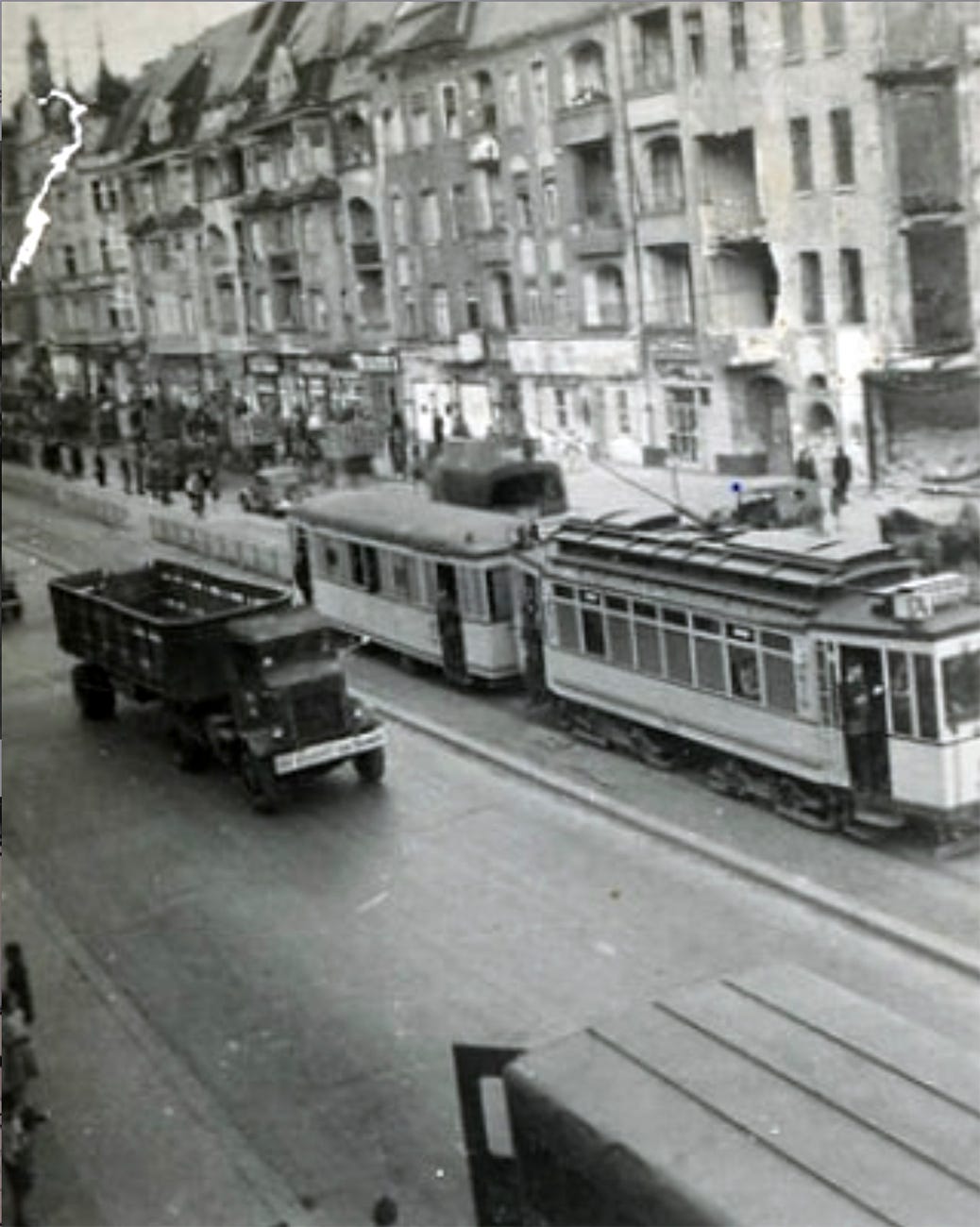
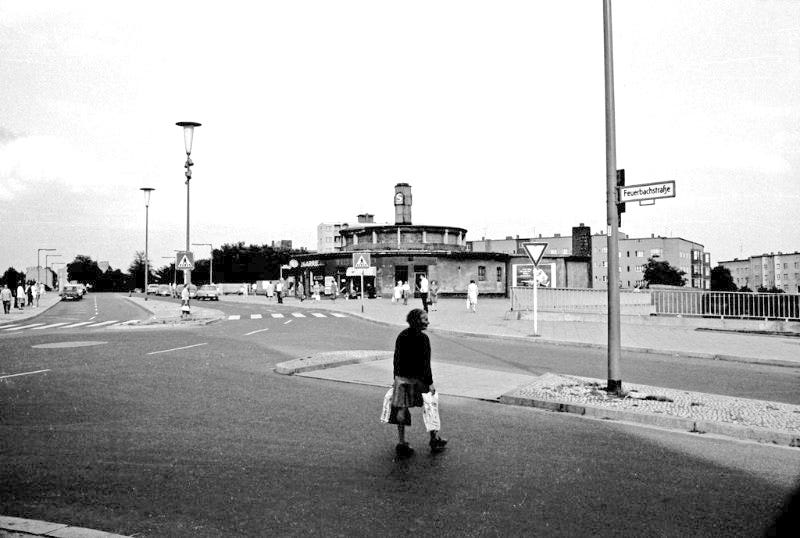
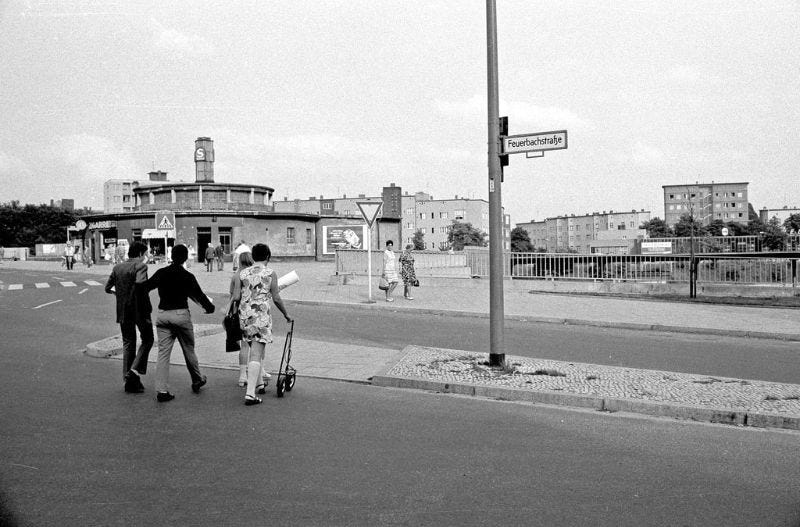
In these two photographs taken by Heinrich Klaffs during the year 1970 we can see in the background the partly restored Feuerbachstraße station during the Cold War era. In 1984 after the result of a study to check the condition of the reception building, it was demolished and subsequent reconstructed as seen today.
_______________
Sources and Bibliography:
Aengeneyndt, Jan-Derk. Südwest-Berlin als Kriegsgebiet. Die Bezirke Zehlendorf und Steglitz von Januar bis Juni 1945. 2003
Dost, S. Richard Brademann (1884-1965) Architekt der Berliner S-Bahn. Verlag Bernd Neddermeyer. 2002
Feustel Jan, Köhler Hörst. Lebensader durch Sumpf und Sand, 100 Jahre Teltowkanal. 1. Auflage. Hendrik Bäßler Verlag. 2006
Friese, Wolfgang. Lankwitz und seine Geschichte. Teil 5: Kloster und Luftangriff. Gabriele Schuster Eigen. 2013
Hopfe, Christian. Berlin-Steglitz. Die Reihe Archivbilder. Sutton Archivbilder. 2017
Kunstamt Steglitz (Hrsg.). Alles neu: 50 Jahre Kriegsende in Steglitz. Berlin 1995
Major, Patrick. The Death of the KPD: Communism and Anti-Communism in West Germany, 1945-1956. OUP Oxford. 1998
Roberts, Maxwell J. The Decade of Diagrams. Department of Psychology University of Essex. Colchester. 2019
Simon, Christian. Steglitz im Wandel der Geschichte: vom grössten Dorf Preussens. be.bra-Verlag. 1997
Steglitz-Museum Archiv. Heimatverein Steglitz e.V. Berlin. [http://steglitz-museum.de/archiv]
Stivers, William and Carter Donald A. The city becomes a symbol: the U.S. Army in the occupation of Berlin, 1945-1949. Center of Military History United States Army. Washington, D.C. 2017
Wildt, Michael and Kreutzmueller, Christoph. Berlin 1933-1945 - Stadt und Gesellschaft im Nationalsozialismus. Siedler Verlag. 2013
Zimmer, Dieter E. Bombenkrieg. Aus Dieter und Jürgen Zimmer: Zur Familiengeschichte. Unpublished manuscript. 2005. [http://www.d-e-zimmer.de/PDF/bombenkrieg2005.pdf]
Thank you for reading Berlin Bombenkrieg by Pablo López Ruiz. Please subscribe, if you haven’t yet, to comment, follow and share. All images used for non profit / educational purposes.