


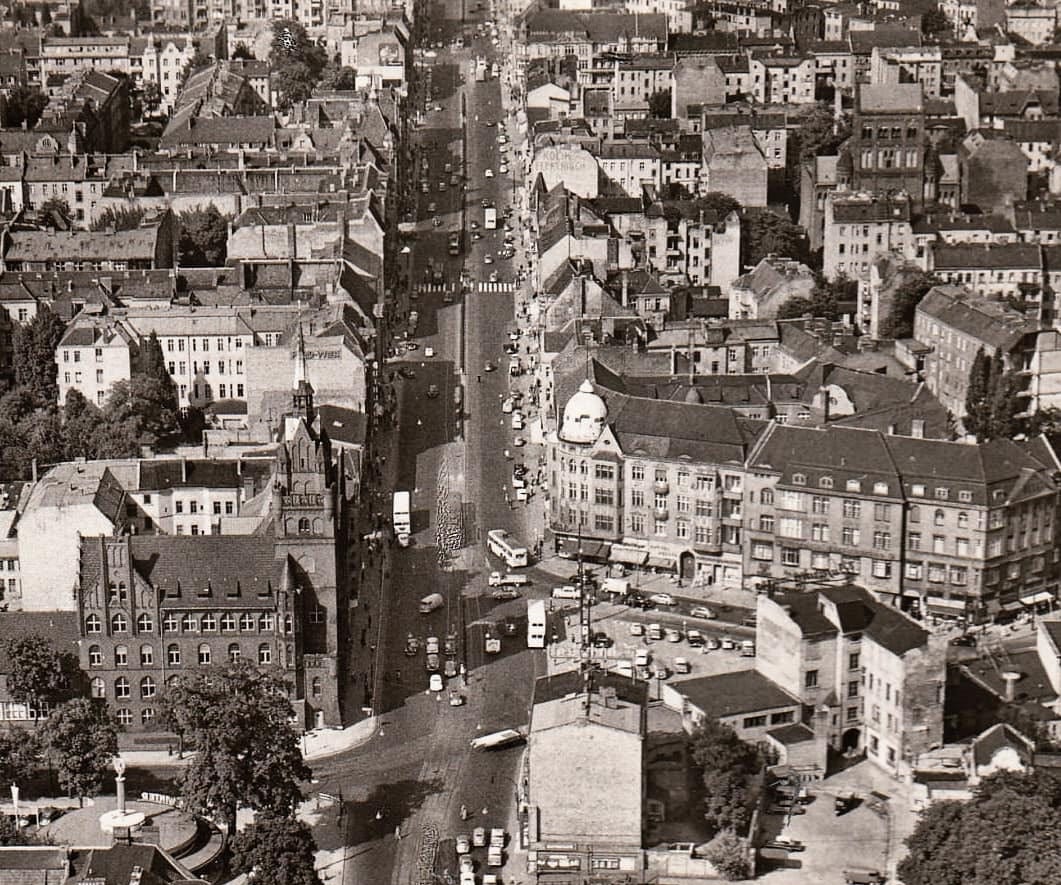
After the end of the Second World War and with the Iron Curtain already instaured, and the subsequent division of the city into four sectors, Berlin Steglitz continued its reconstruction work as an essential part of the US occupation zone. But that effort and money went principally to the main artery of the suburb’s life, Schloßstraße and its surrounding area. With streets cleared of rubble stores, groceries, markets and cinemas reopened and a new commercial life sponsored by the American giant glow on the great avenue that crosses that district from north to south with the red Rathaus building as an a iconic.
In the aerial view of the reconstructed Steglitzer Schloßstraße in the 1950s seen above, it seems like war has ever happened, with clear streets, the majestic Rathaus and the new Volkswagen-pavilion (built in 1951) at left. Notice at right that there is no Hermann-Ehlers-Platz yet.
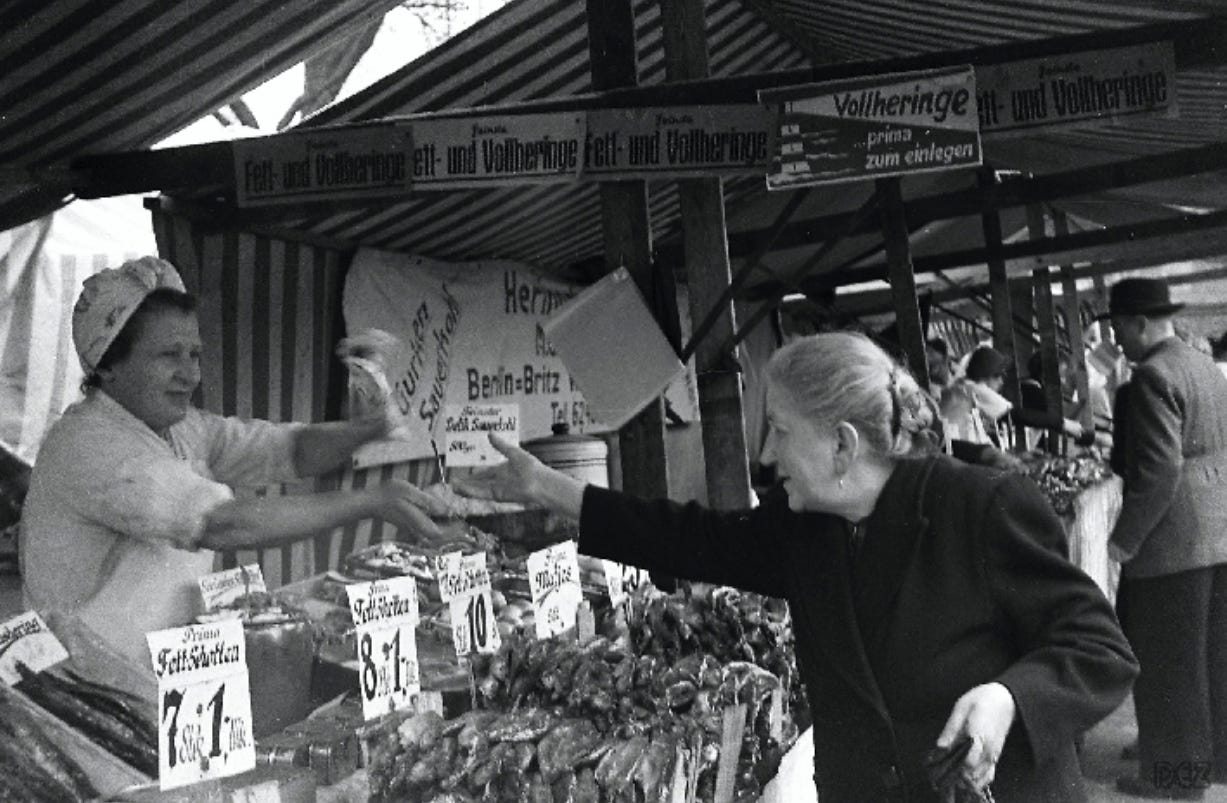
In this silent film footage taken at Steglitz after the end of the war we can see the Rathaus Steglitz from Albrechtstraße with trams and buses running again and finally the street market next to Hermann-Ehlers-Platz, with several scenes showing Berliners’ new life at Schloßstraße. Notice the Albrechtshof-Lichtspiele cinema at Albrechtstraße (01:47) and the Titania-Palast theatre views’ (02:05). [Video credit: US Holocaust Memorial Museum. Theodor Röckle Collection. ID:3917.]
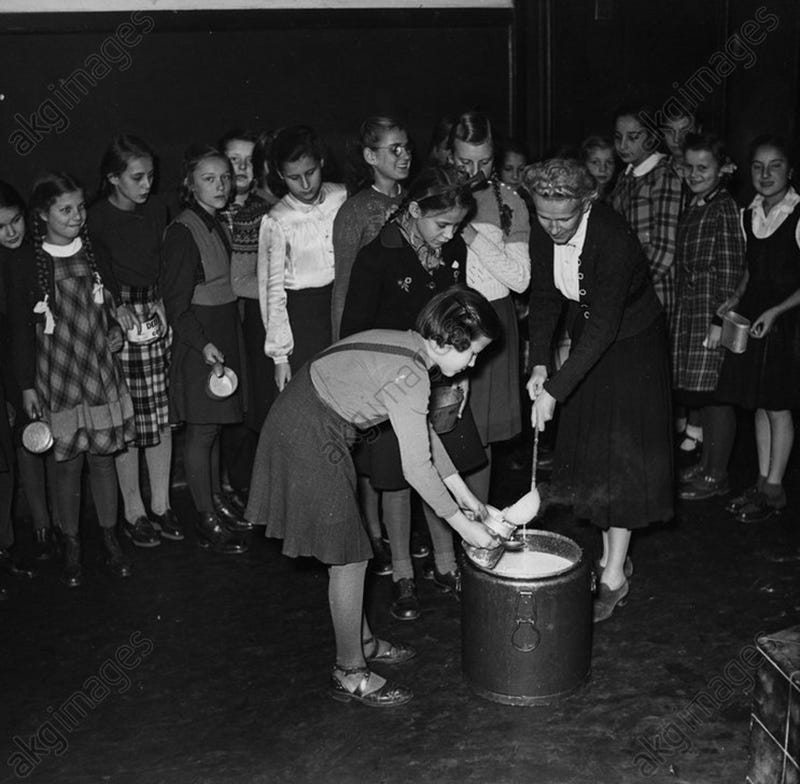
Much of that American economic support was managed by the High Commission for Occupied Germany - Alliierte Hohe Kommission (AHK). Established in 1948, the US HICOG was created by the victorious Western Allies to supervise and regulate the politic, economic and social directives of the new born West Germany. For example, in 1951 a program of US HICOG was carried out with 8 1/2 million Deutsche marks to deliver food between the population.
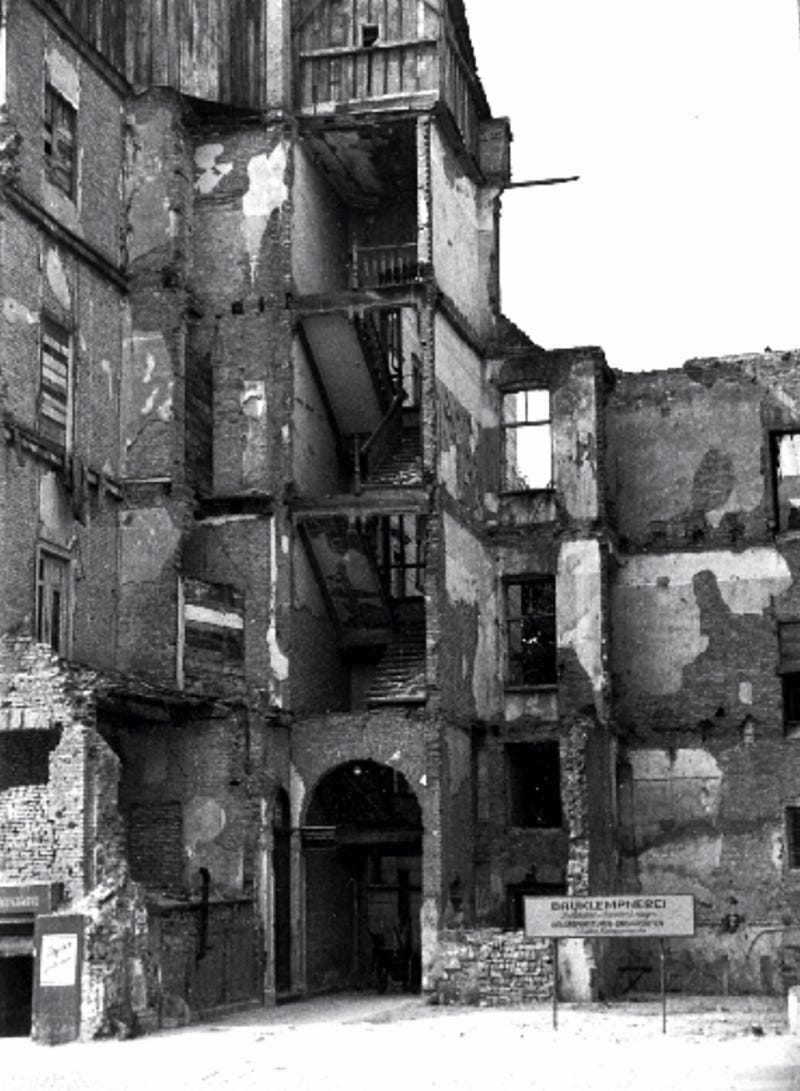
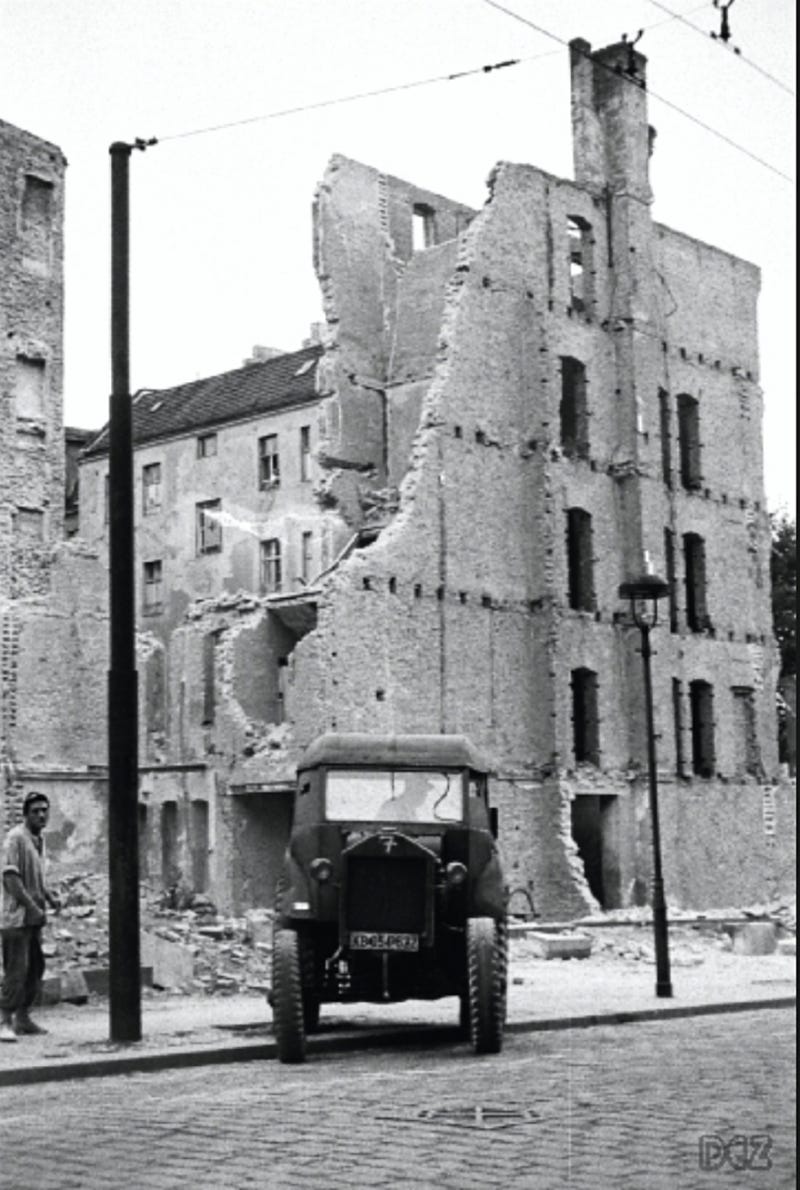
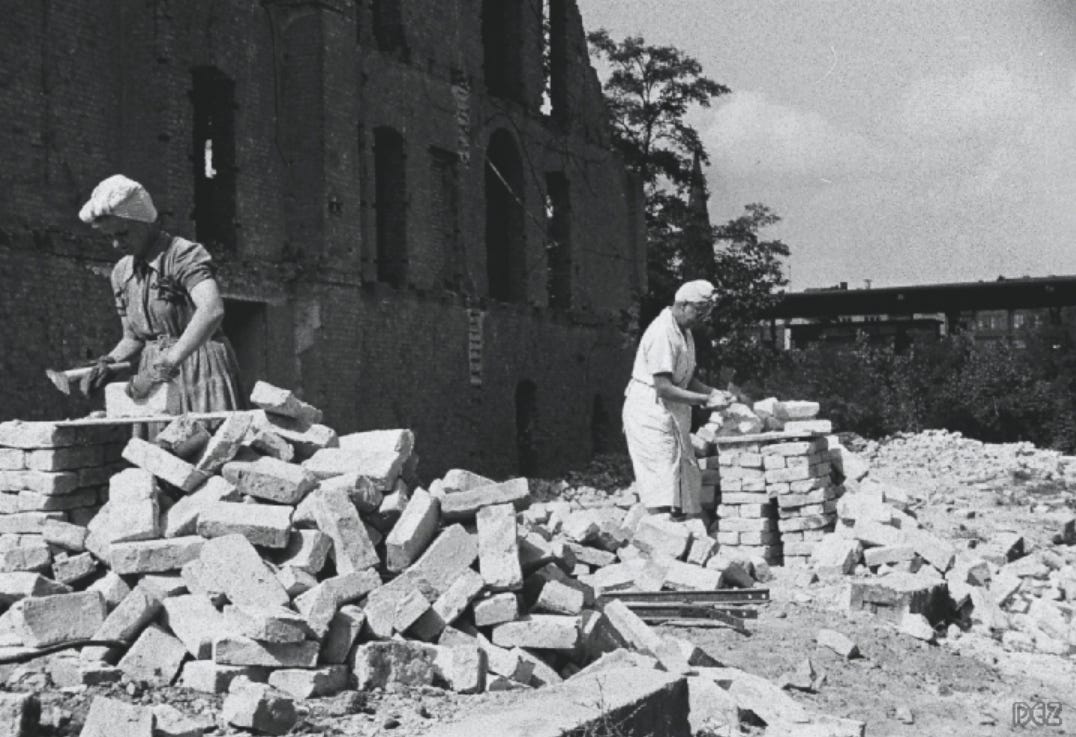
However, in the adjacent streets there were still images of destruction until well into the 50s with rubble and ruins, remains of the Bombenkrieg past. Here, Two scenes of ruined buildings in Steglitz, probably Markelstraße in 1952.
One of the highlights of Steglitz district throughout its Berlin history has been transportation, as we saw in previous posts the world’s first electrified tram line ran through there in 1881. As the rest of the Western zone, it had to restart and rebuild the entire transport and communications network after the war, a very hazardous enterprise not only difficult due to the economic precariousness but also due to the recent tension and division of the capital by the victors.
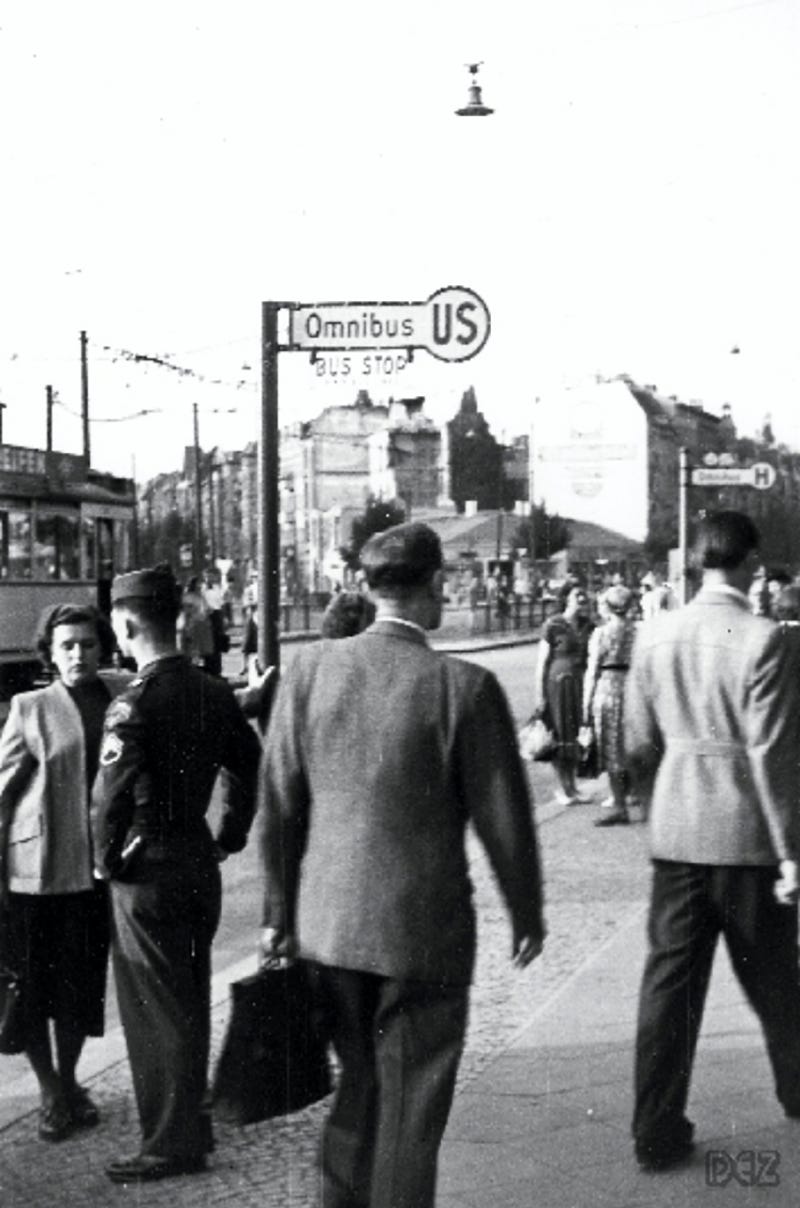
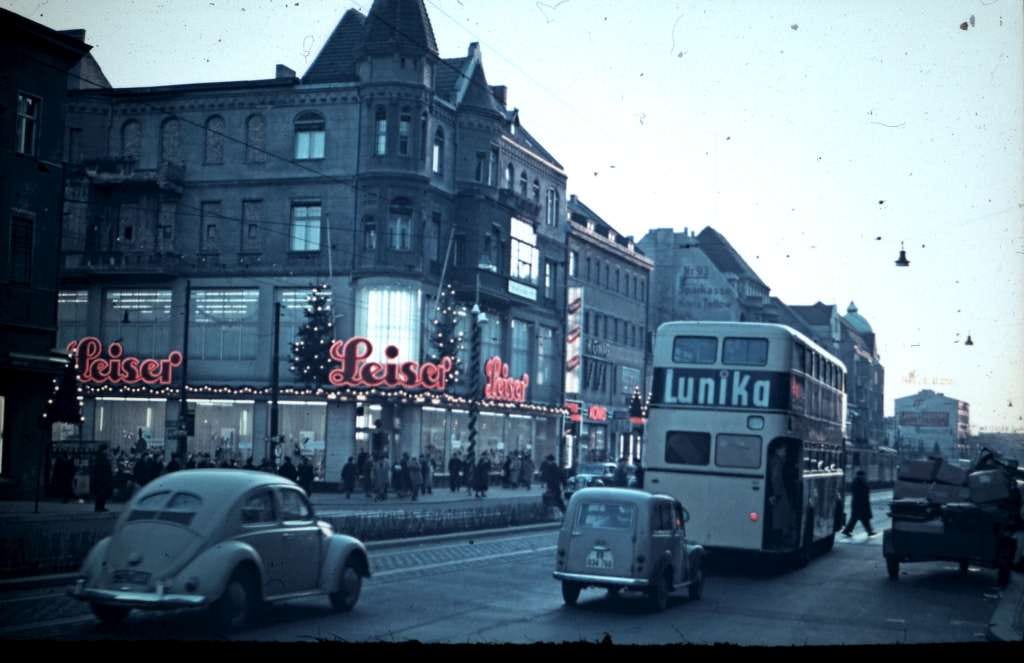
The Berliner Verkehrs-Gesellschaft (from 1938 known as BVG or Bezeichnung Berliner Verkehrs-Betriebe) was responsible of all tram and omnibus systems, the last was part of the bus network so it carries identical characteristic yellow colour too.
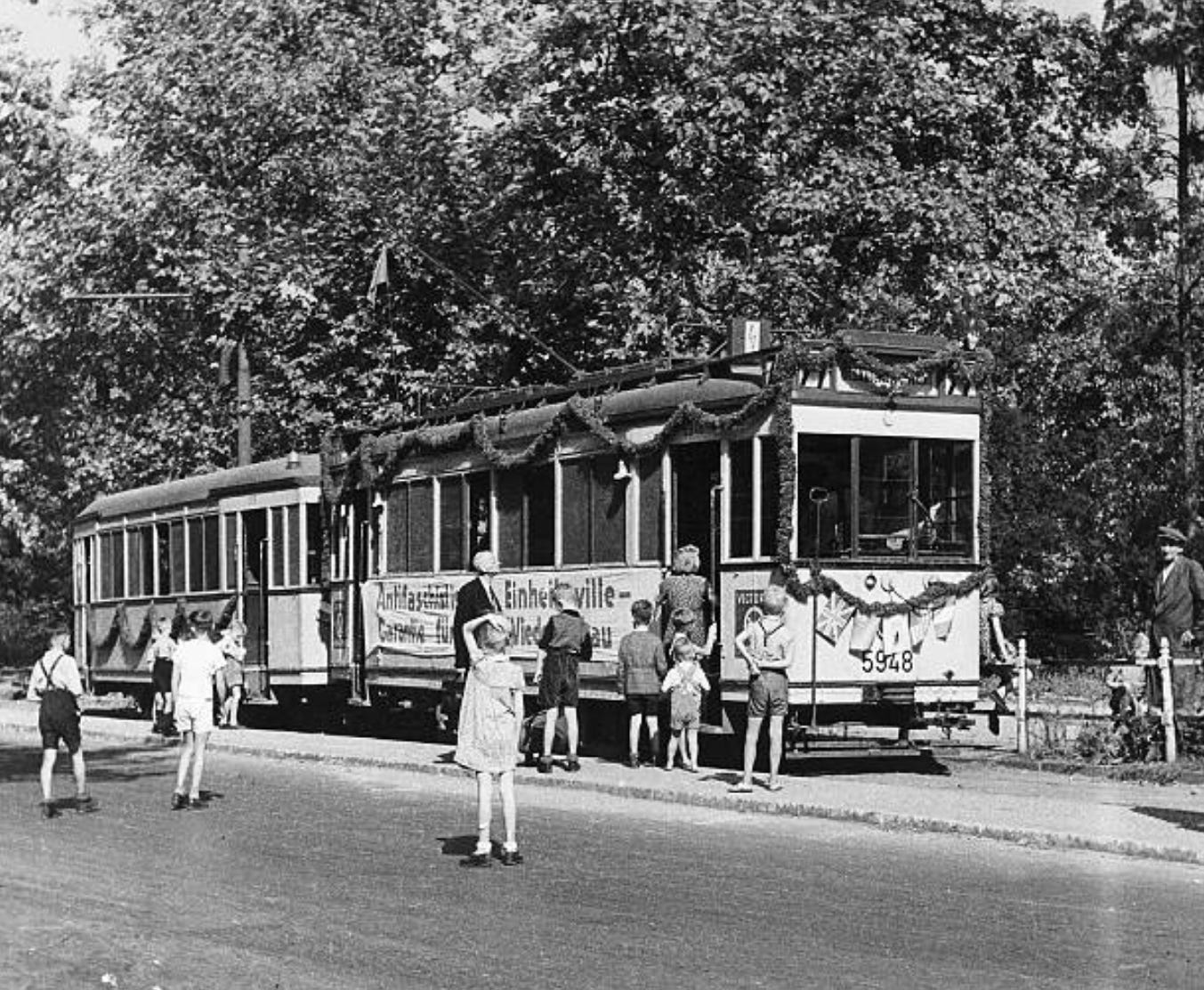
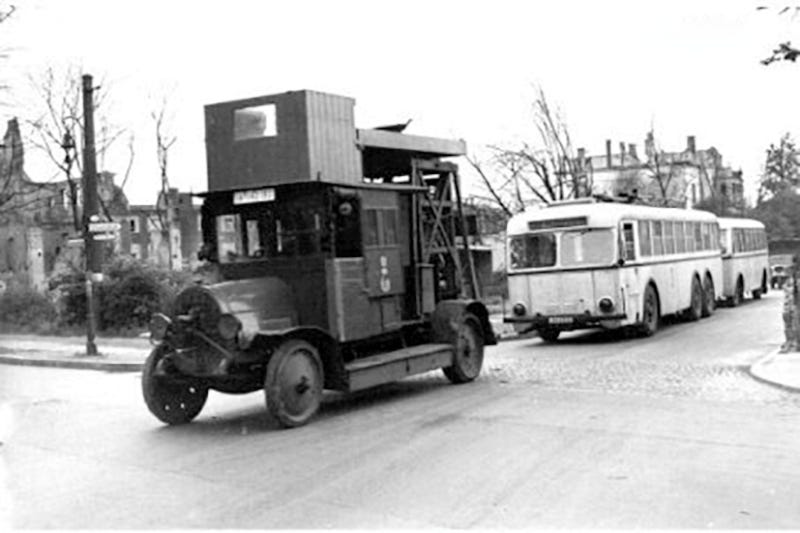
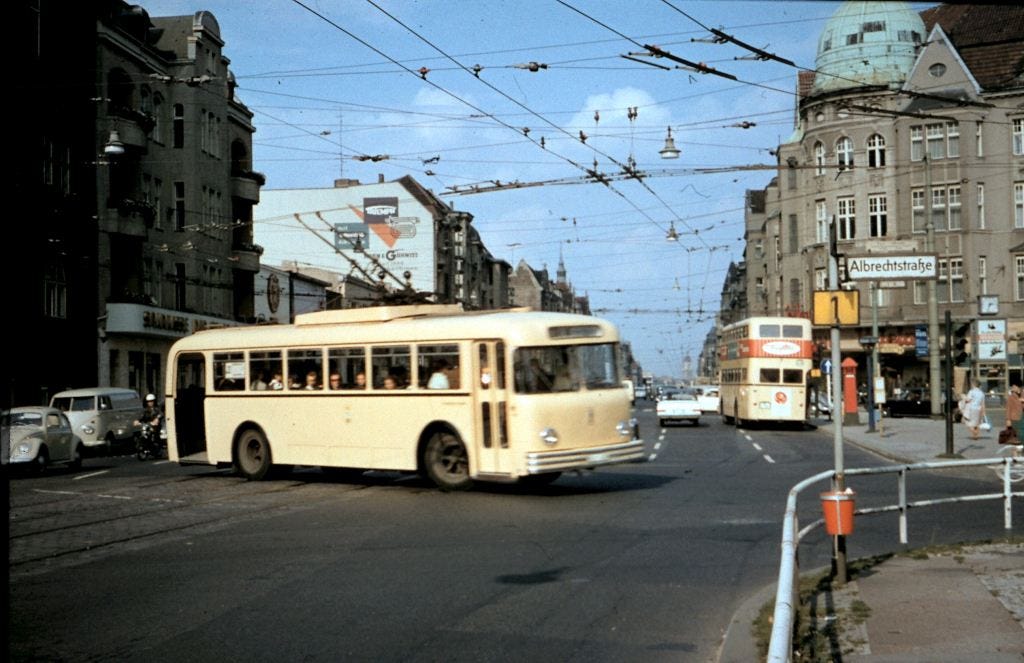
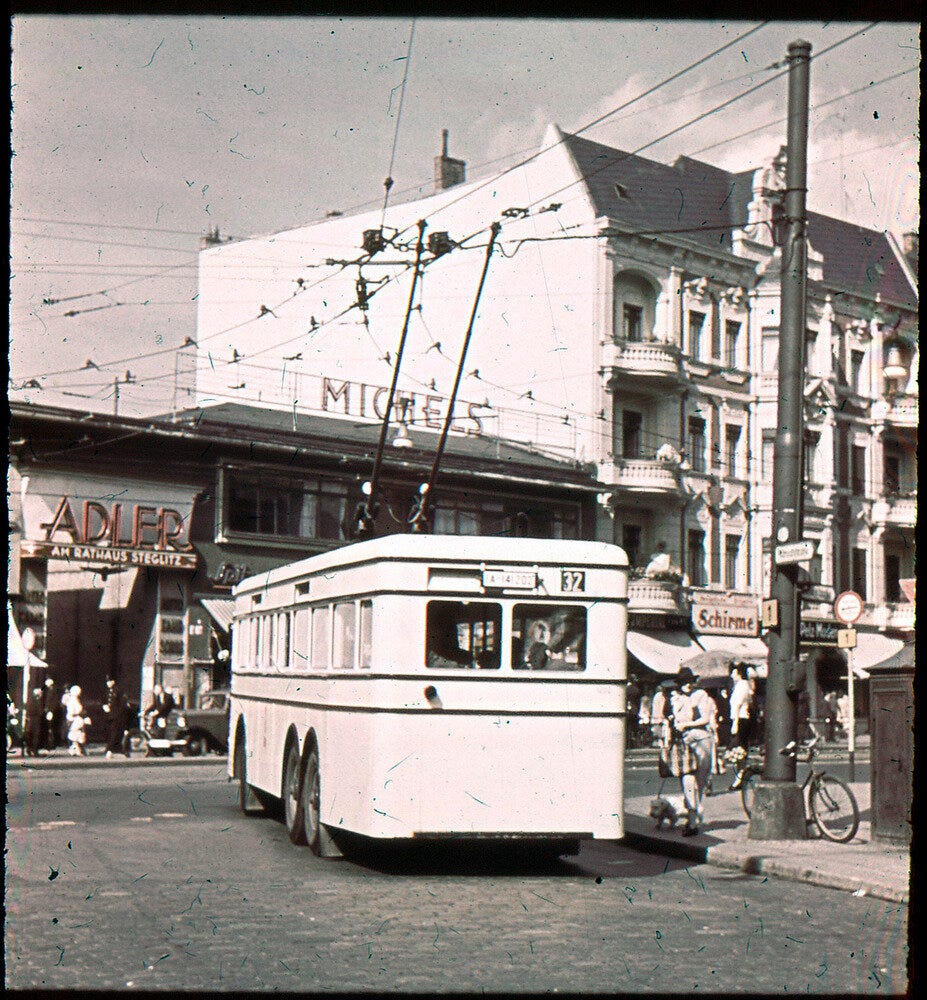
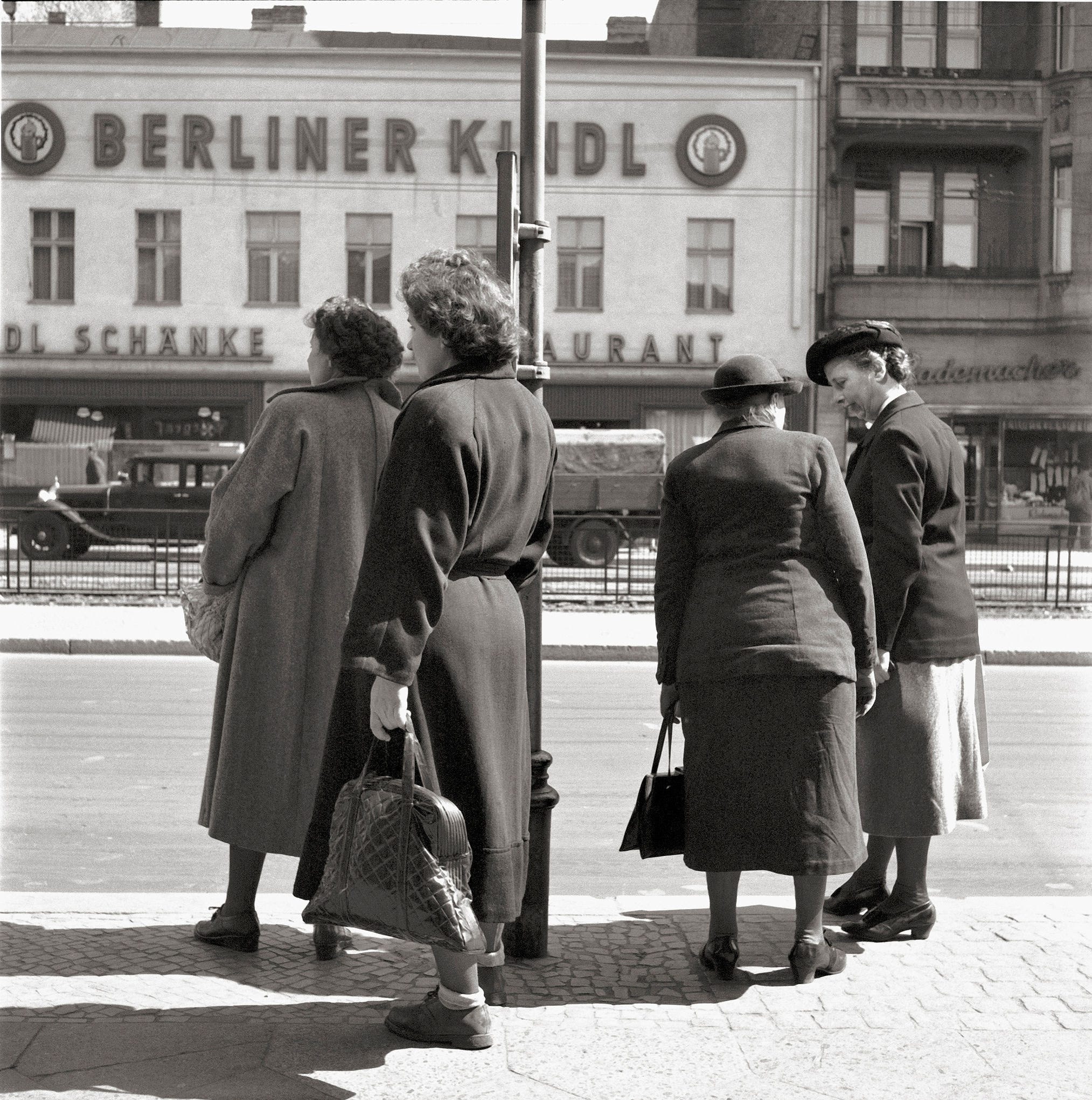
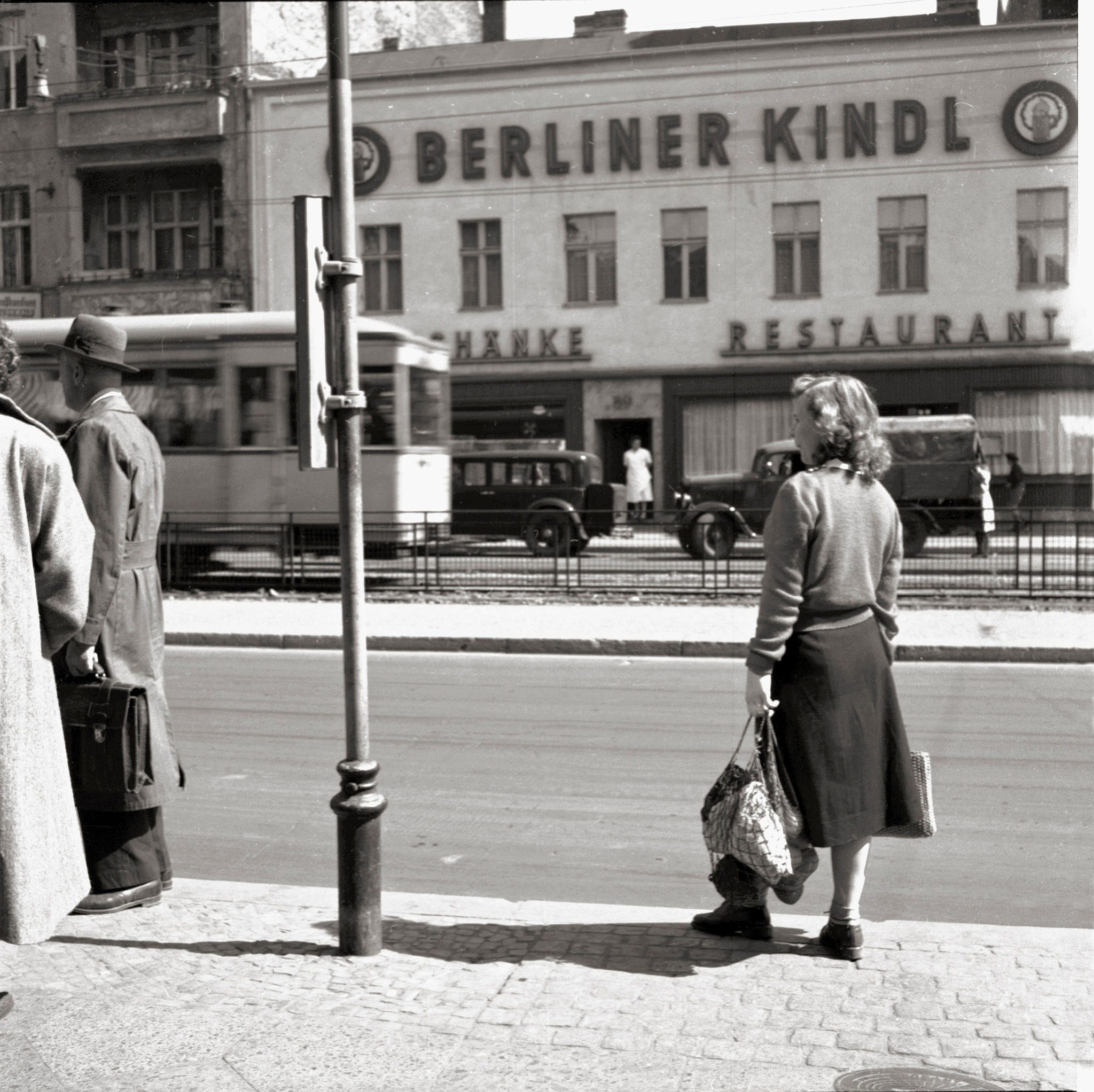
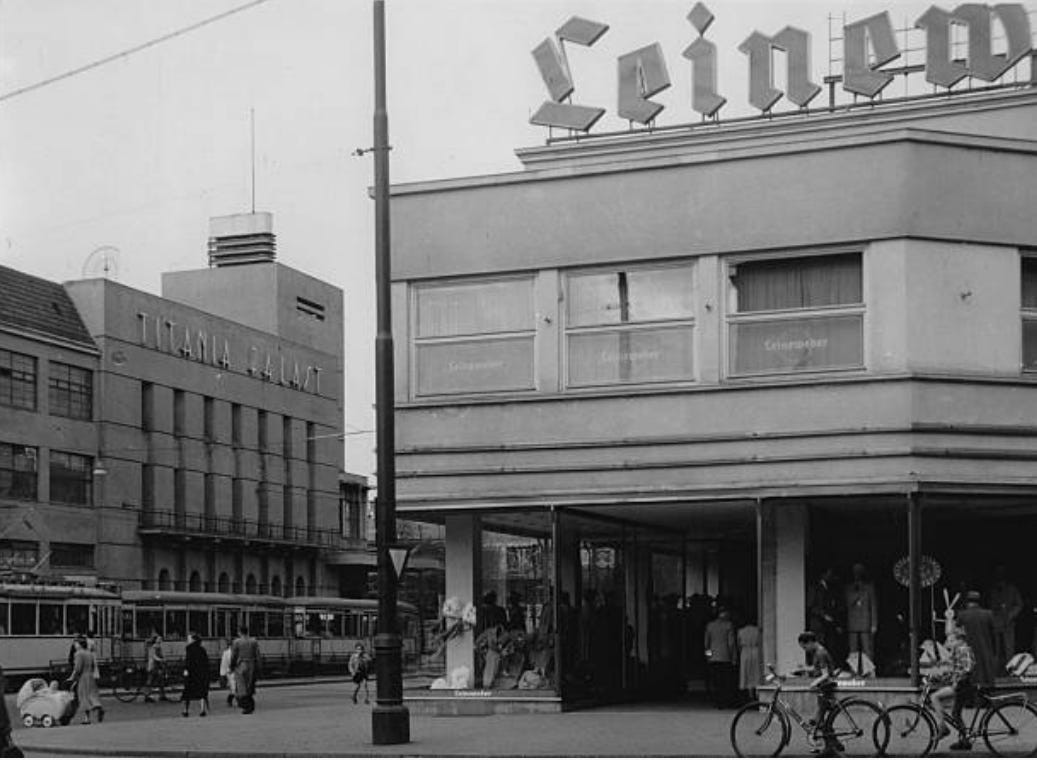
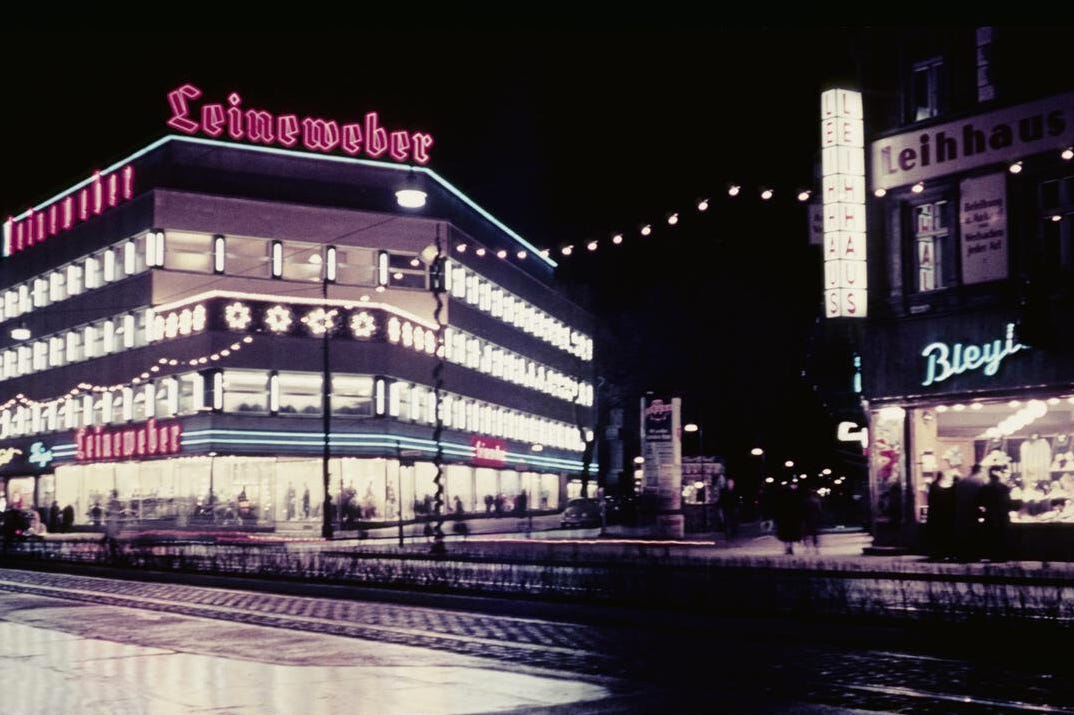
Next, as a conclusion about the history of this Berlin city district during the air-bombings, war period and subsequent years, we share several scenes of the post-war years. Life goes on at Steglitz and after reconstruction Berliners go about their business, and we hope that never again it be known as ‘steht nichts’ - nothing is standing.
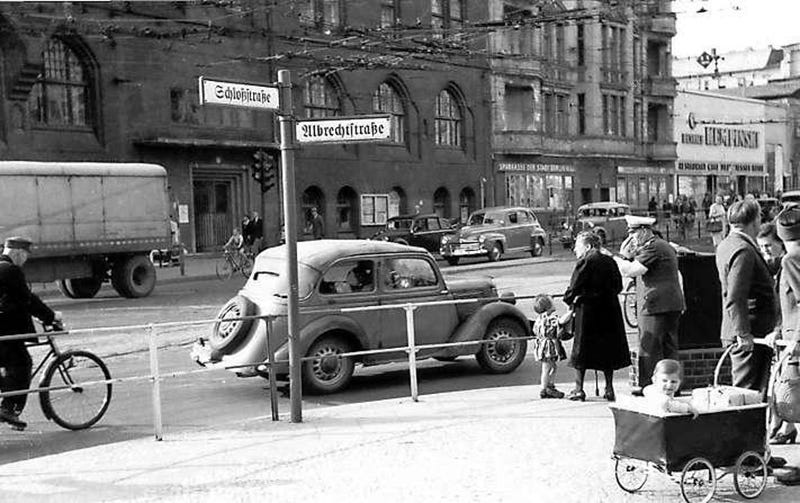
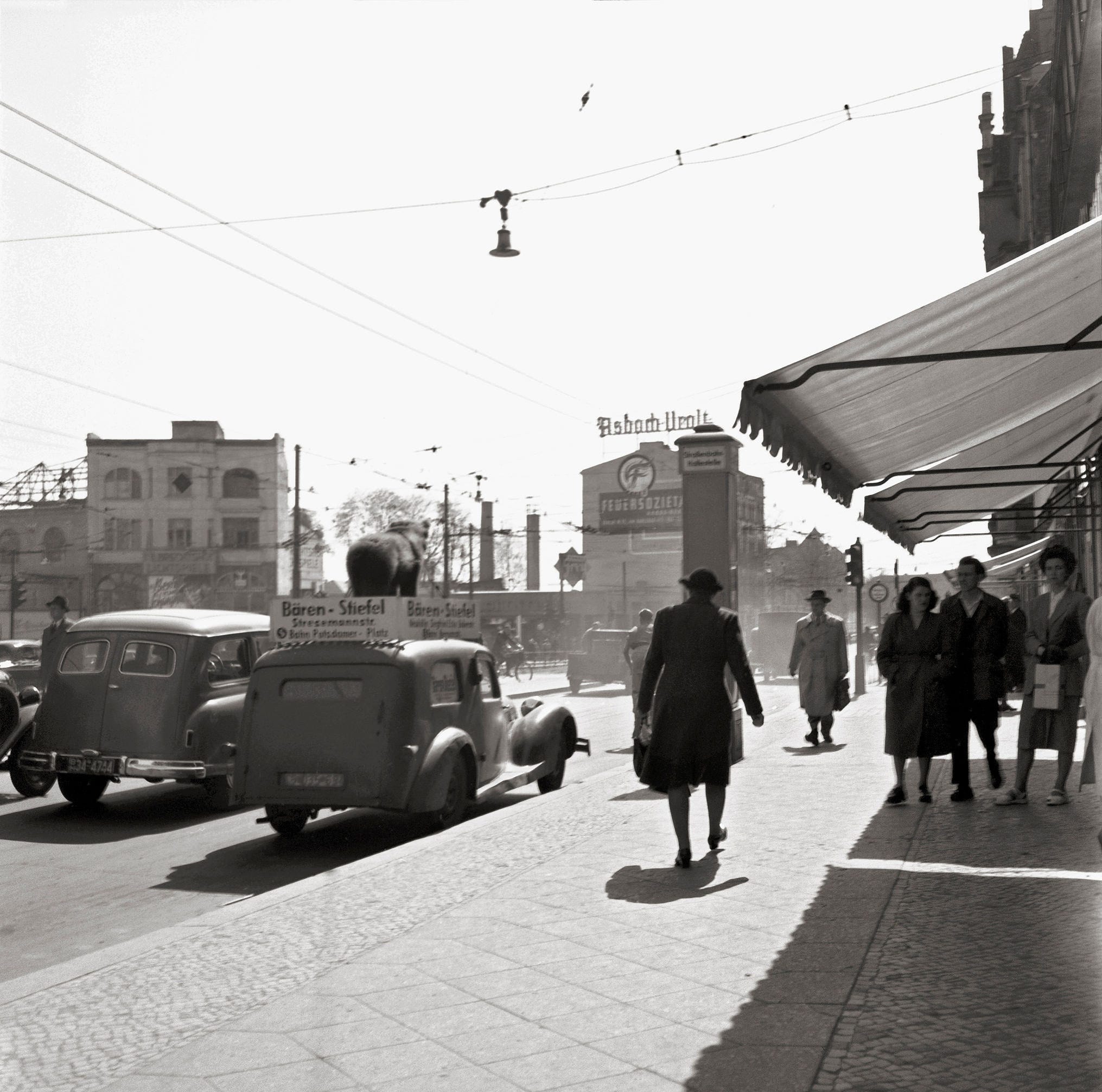
_______________
Sources and Bibliography:
Aengeneyndt, Jan-Derk. Südwest-Berlin als Kriegsgebiet. Die Bezirke Zehlendorf und Steglitz von Januar bis Juni 1945. 2003
Berliner Verkehrsseiten. Nahverkehrsgeschichten aus Berlin <http://www.berliner-verkehrsseiten.de/>
Dost, S. Richard Brademann (1884-1965) Architekt der Berliner S-Bahn. Verlag Bernd Neddermeyer. 2002
Feustel Jan, Köhler Hörst. Lebensader durch Sumpf und Sand, 100 Jahre Teltowkanal. 1. Auflage. Hendrik Bäßler Verlag. 2006
Friese, Wolfgang. Lankwitz und seine Geschichte. Teil 5: Kloster und Luftangriff. Gabriele Schuster Eigen. 2013
Hopfe, Christian. Berlin-Steglitz. Die Reihe Archivbilder. Sutton Archivbilder. 2017.
Kunstamt Steglitz (Hrsg.). Alles neu: 50 Jahre Kriegsende in Steglitz. 1995
Major, Patrick. The Death of the KPD: Communism and Anti-Communism in West Germany, 1945-1956. OUP Oxford. 1998
Roberts, Maxwell J. The Decade of Diagrams. Department of Psychology University of Essex. Colchester. 2019
Simon, Christian. Steglitz im Wandel der Geschichte: vom grössten Dorf Preussens. be.bra-Verlag. 1997
Steglitz-Museum Archiv. Heimatverein Steglitz e.V. Berlin. <http://steglitz-museum.de/archiv>
Stivers, William and Carter Donald A. The city becomes a symbol: the U.S. Army in the occupation of Berlin, 1945-1949. Center of Military History United States Army. Washington, D.C. 2017
Thank you for reading Berlin Bombenkrieg by Pablo López Ruiz. Please subscribe, if you haven’t yet, to comment, follow and share. All images used for non profit / educational purposes.