


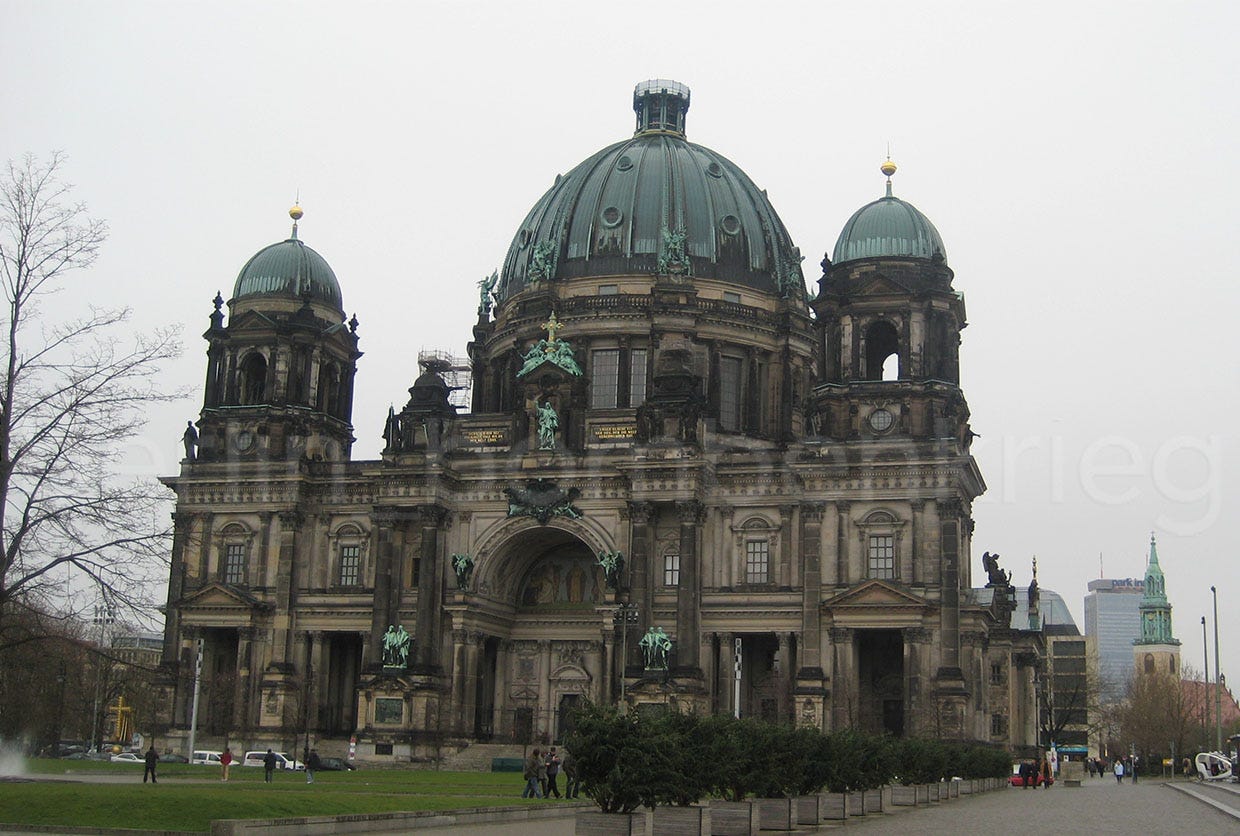
The Berliner Dom (Berlin Cathedral, built 1894-1905) at Lustgarten in Berlin-Mitte is one of the most famous landmarks of the German capital, but few of her visitors notice nowadays the battle-damage and scars from the 1945-days splashed all over its stone walls.
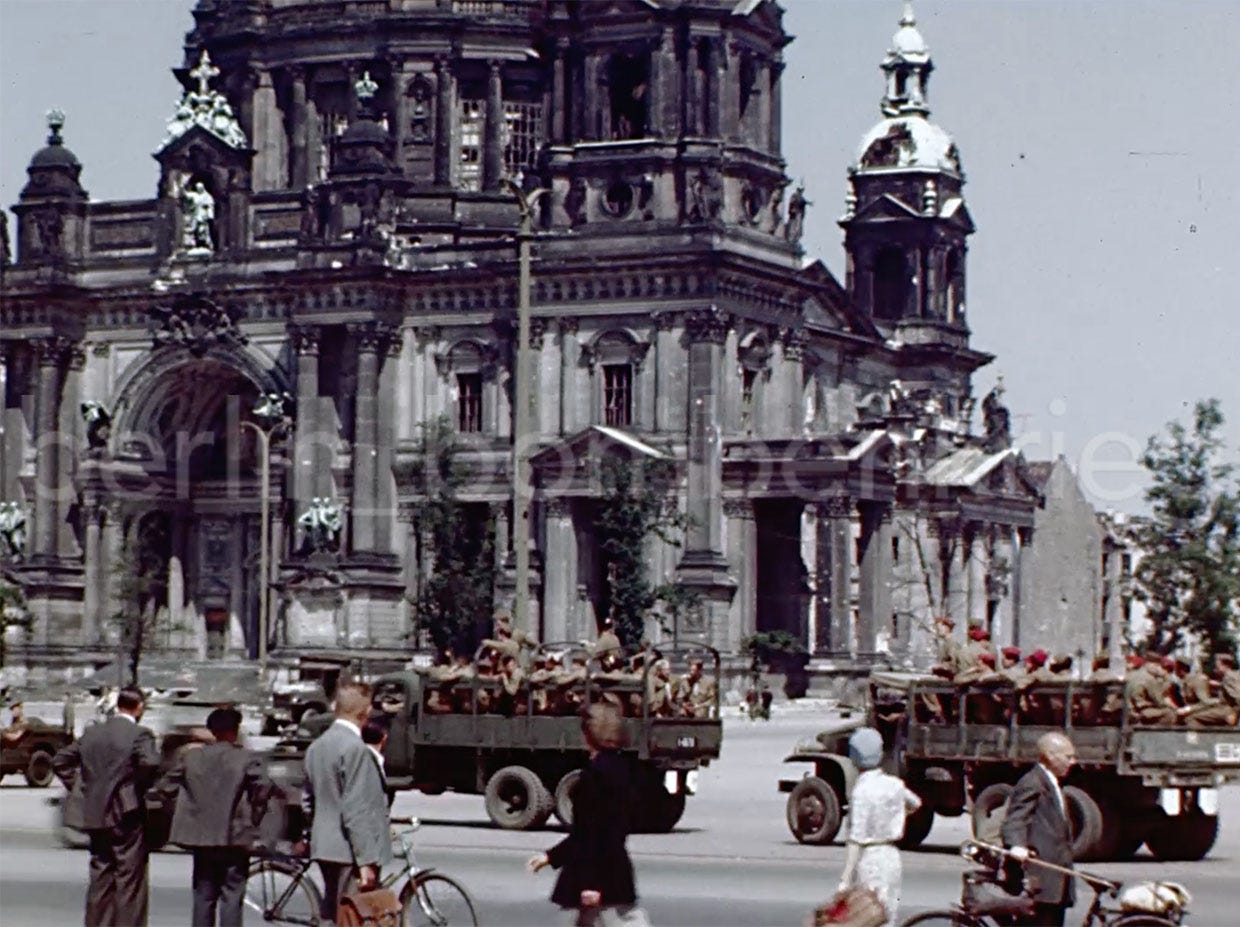
The Berlin Cathedral’s damage
The Dom had been already damaged by RAF raids in December 1940 (20/21 Dec) and by daylight USAAF air bombardments in May 1944 and February-March 1945, which destroyed the lantern and top dome of the cathedral (and the Hohenzollern crypt). In the last days of April 1945 both facades of the Berliner Dom were heavily hit by Soviet howitzers shelling during the Red Army assault on the Third Reich’s capital. Fierce street fighting in those days resulted in more shrapnel and bullets damaging the outside walls and columns of the monumental building. After the war, the cathedral was considered to be 25 percent destroyed.
Battle scars of the Berliner Dom
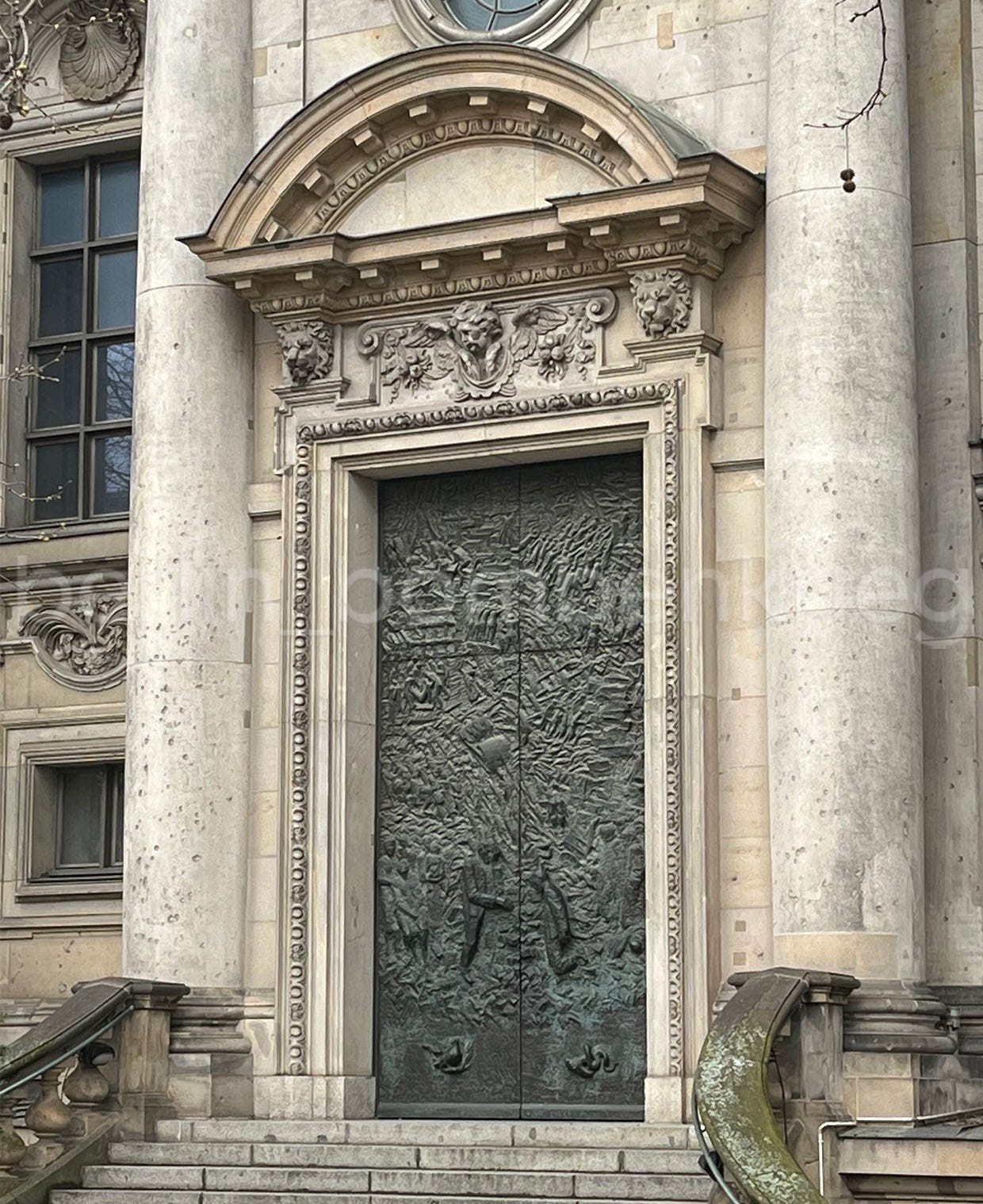
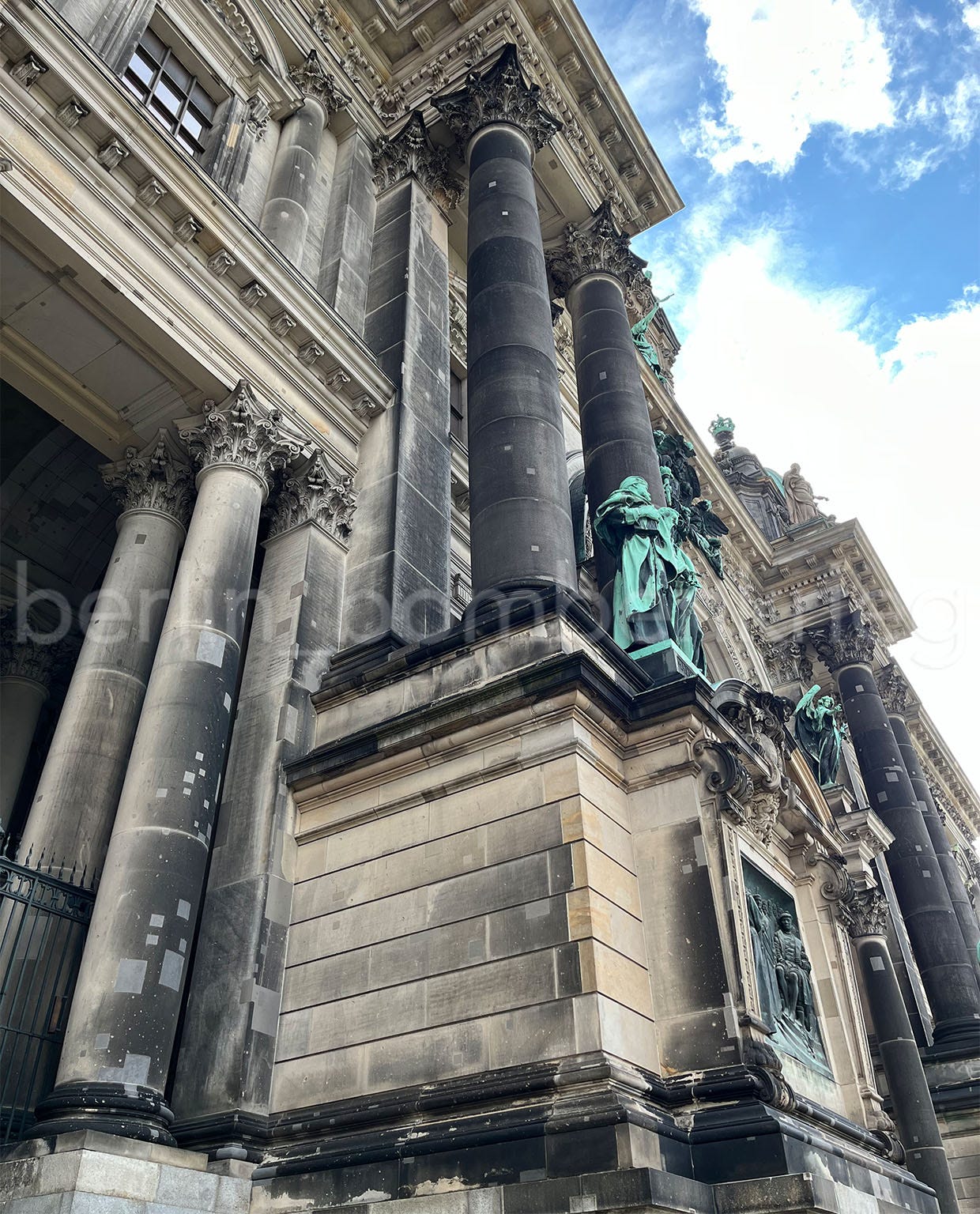
Last time there we focused our attention on to take a closer look at the cathedral’s southwestern corner where you can see some battle-scars on her stone bricks (not heavy marks actually) from some submachine gun fire and/or shrapnel and what appears to be traces of Soviet conquerors’ graffities (¿?) in cyrillic from those May 1945 deathly days. Sadly these are mixed and overpainted by modern graffiti and scratches from other (much younger) visitors. Fortunately, some of these holes haven’t been repaired yet unlike many others located on the columns of the entrance itself and all along the Dom’s facade.
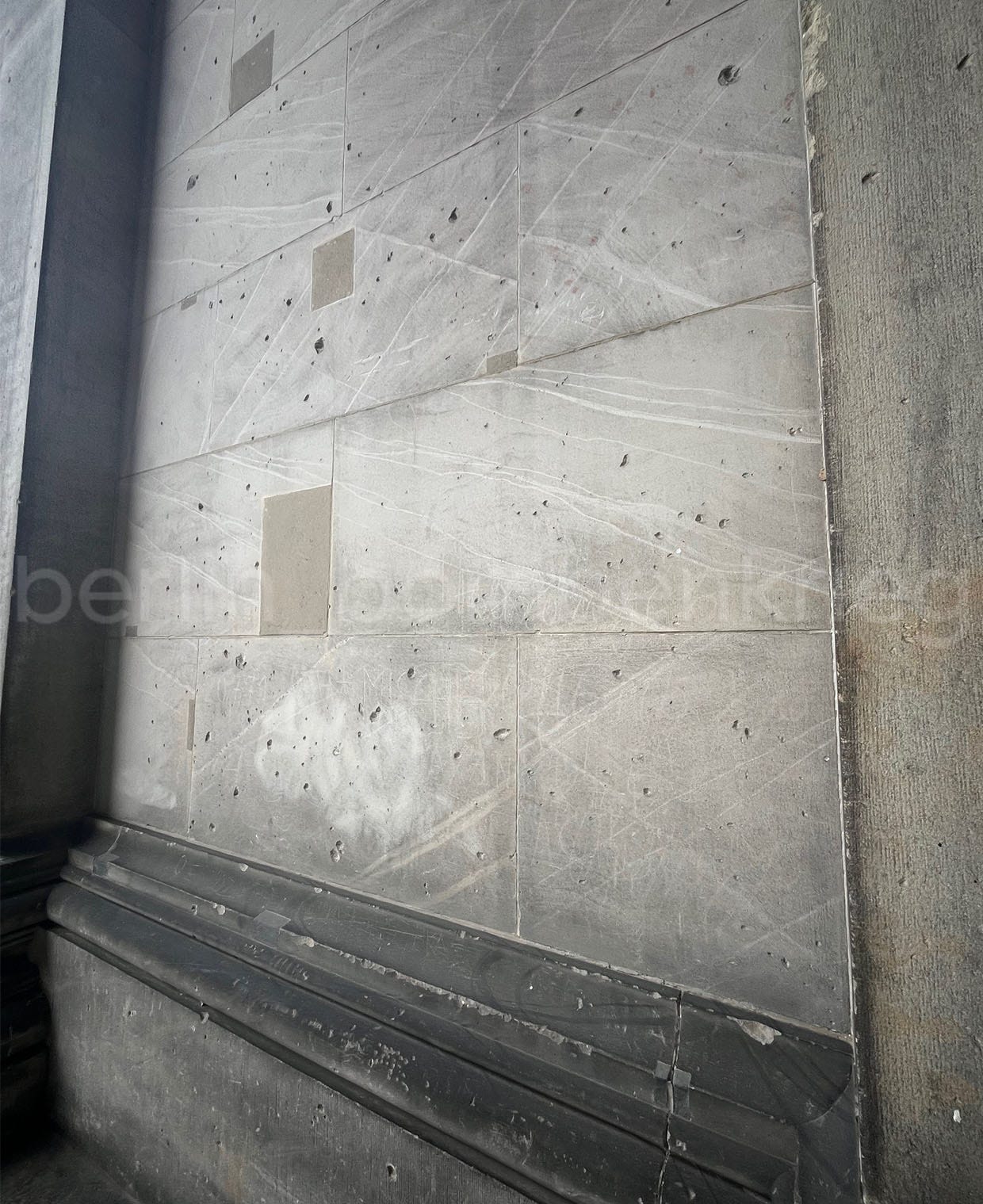
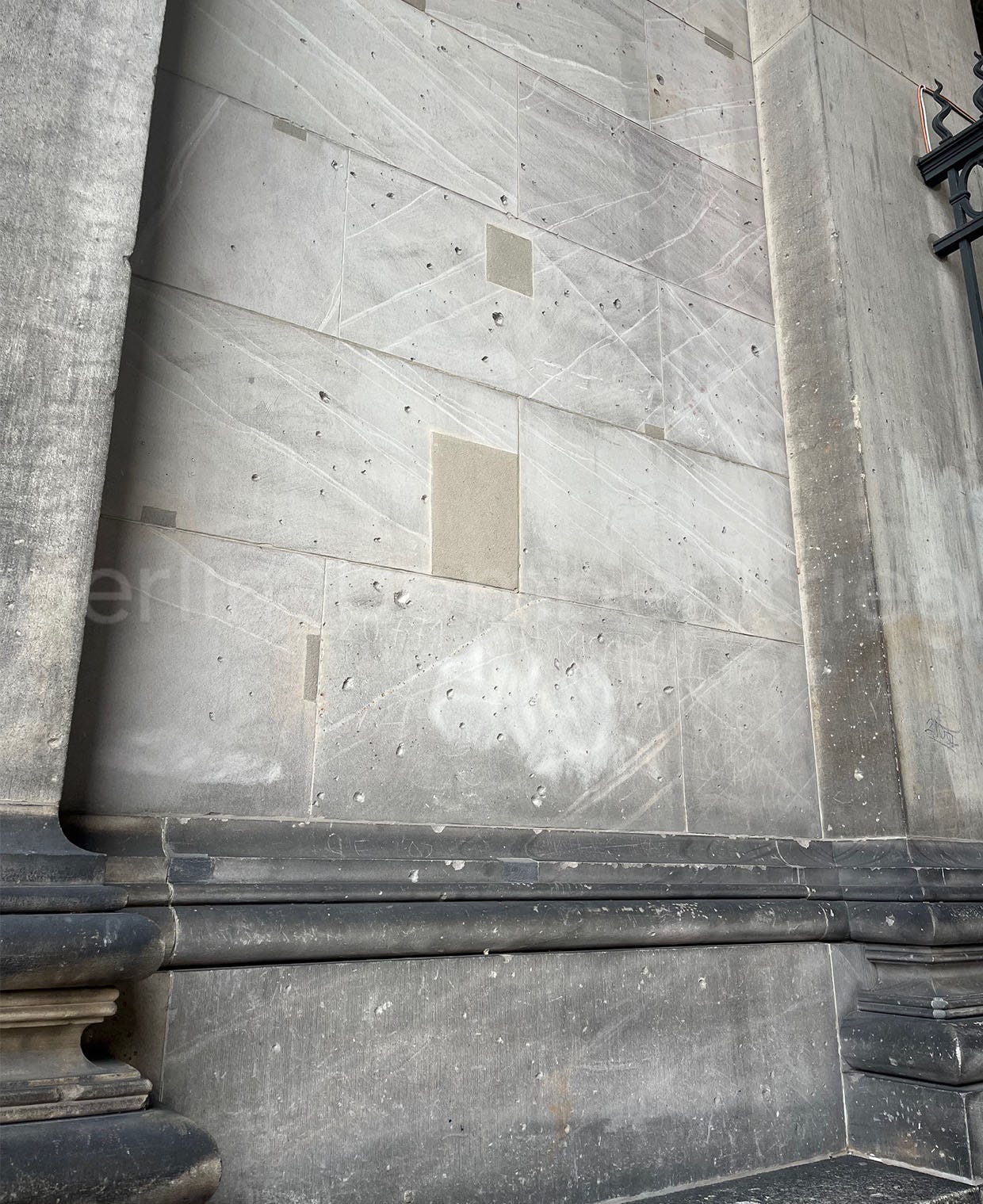
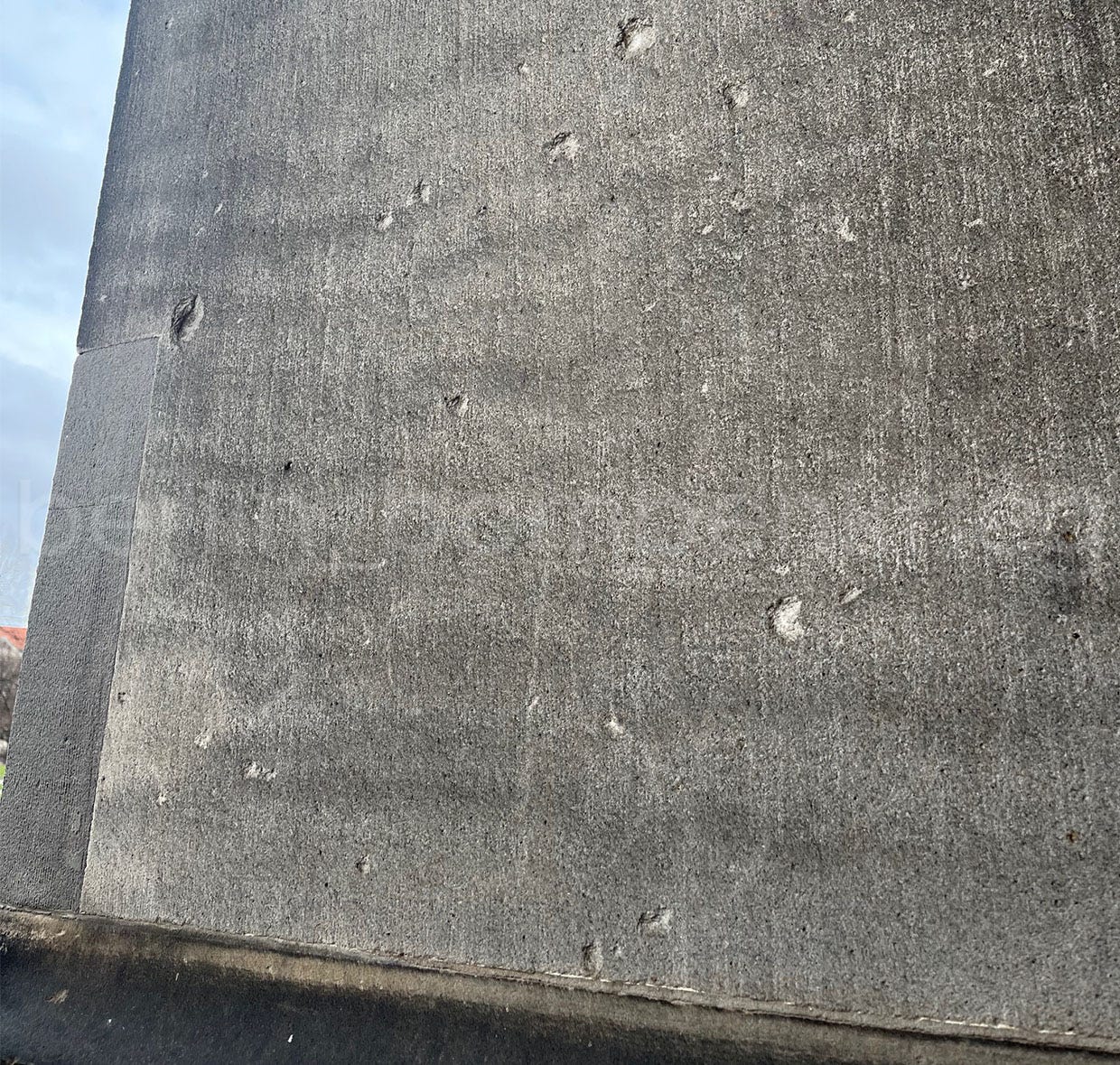
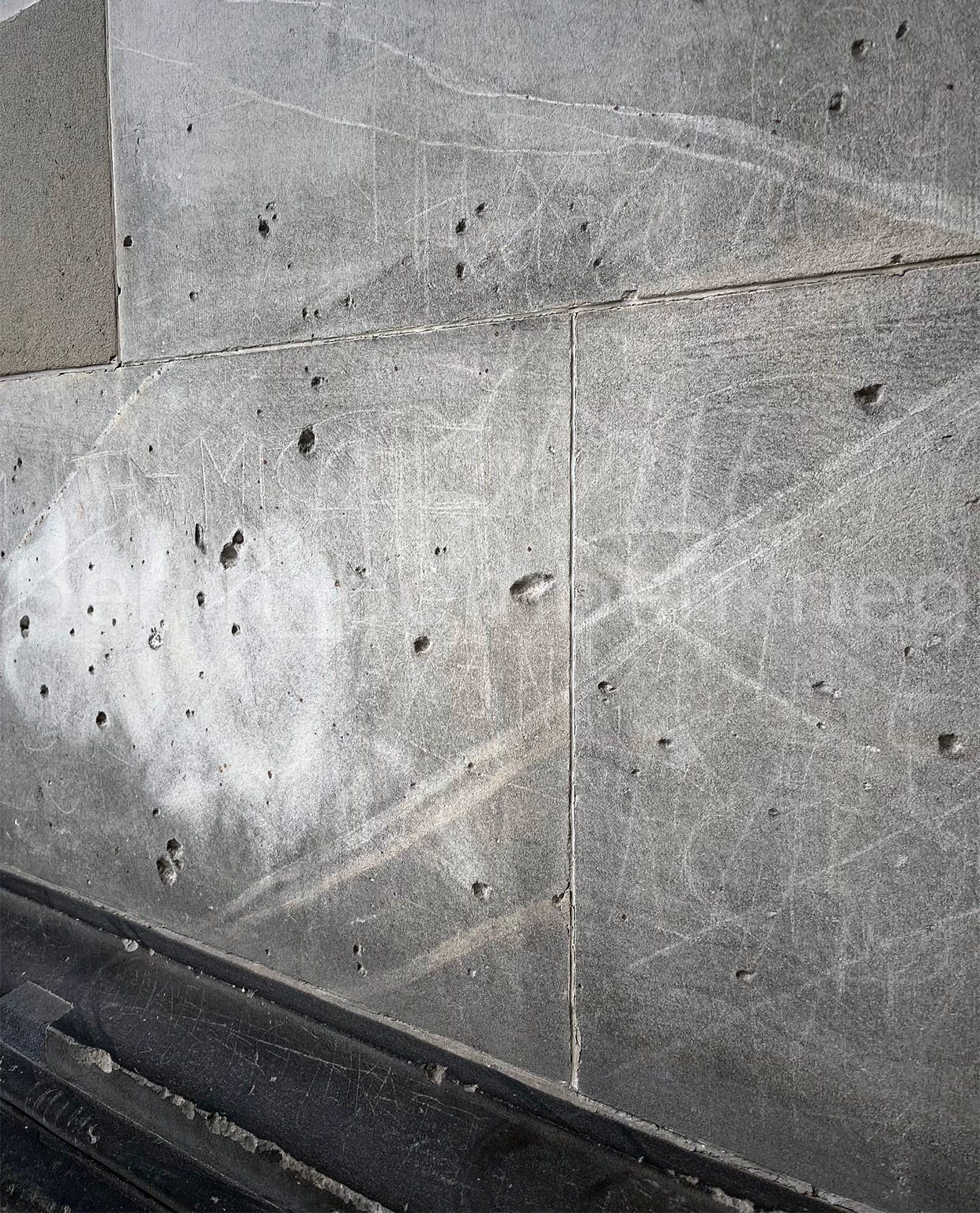
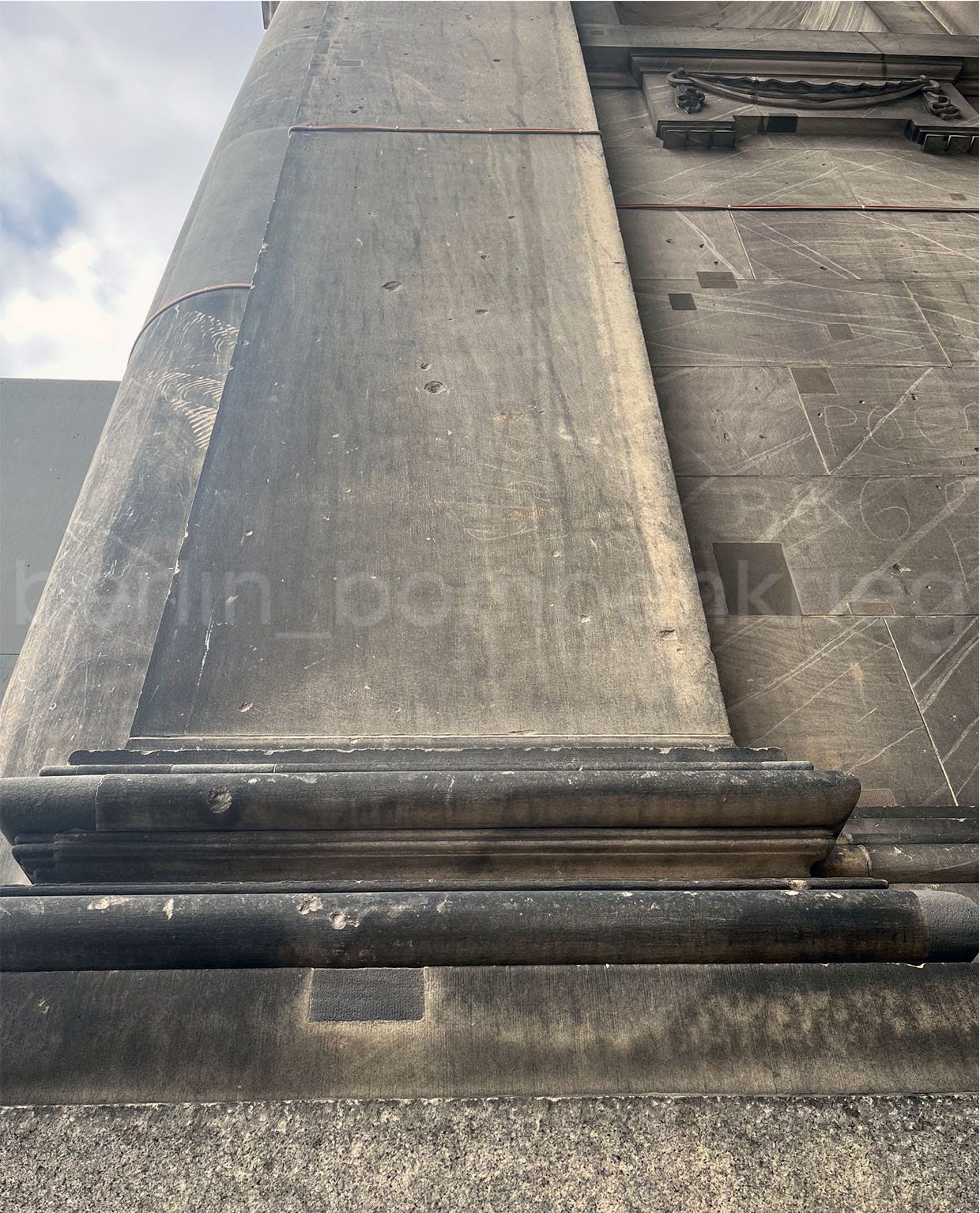
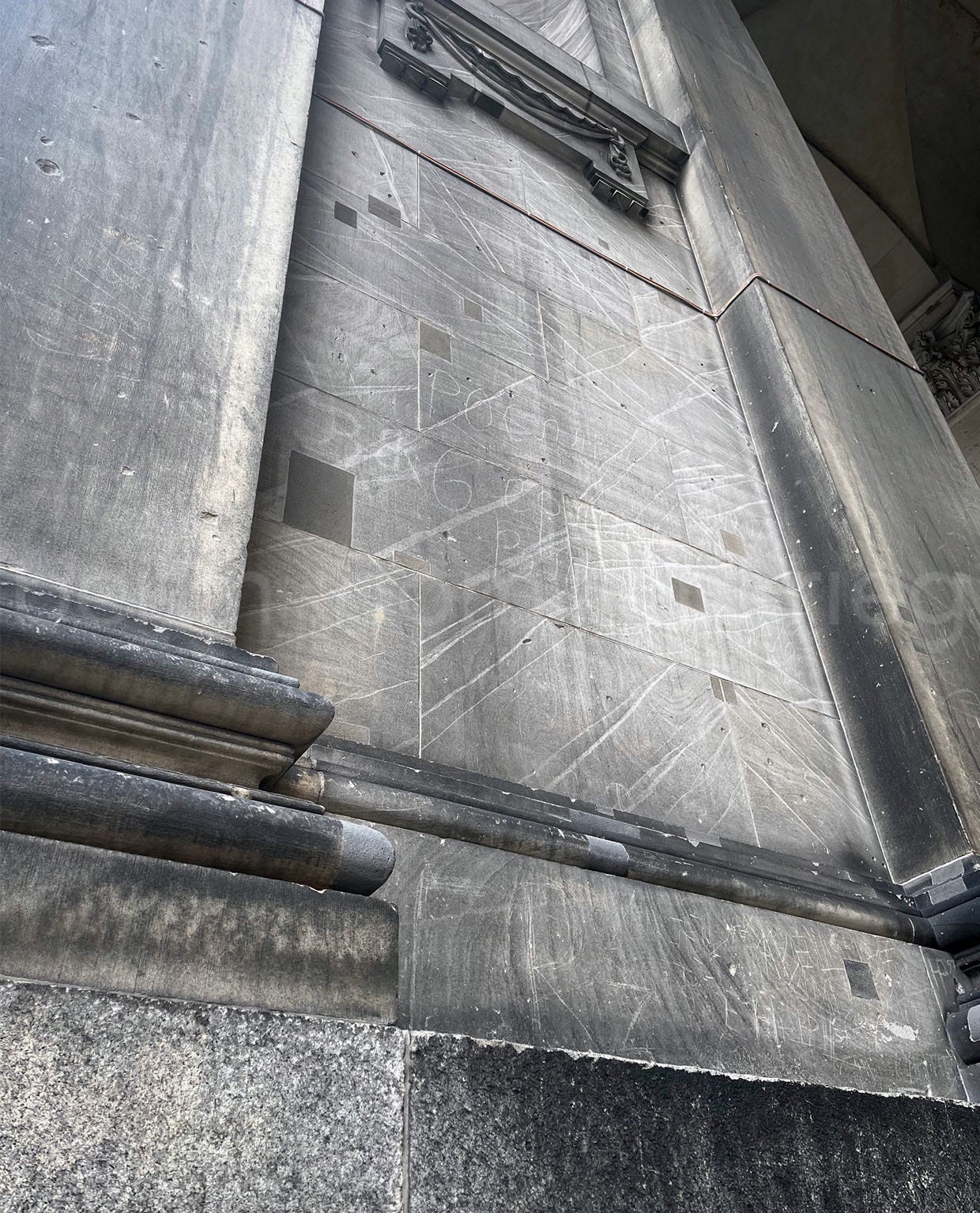
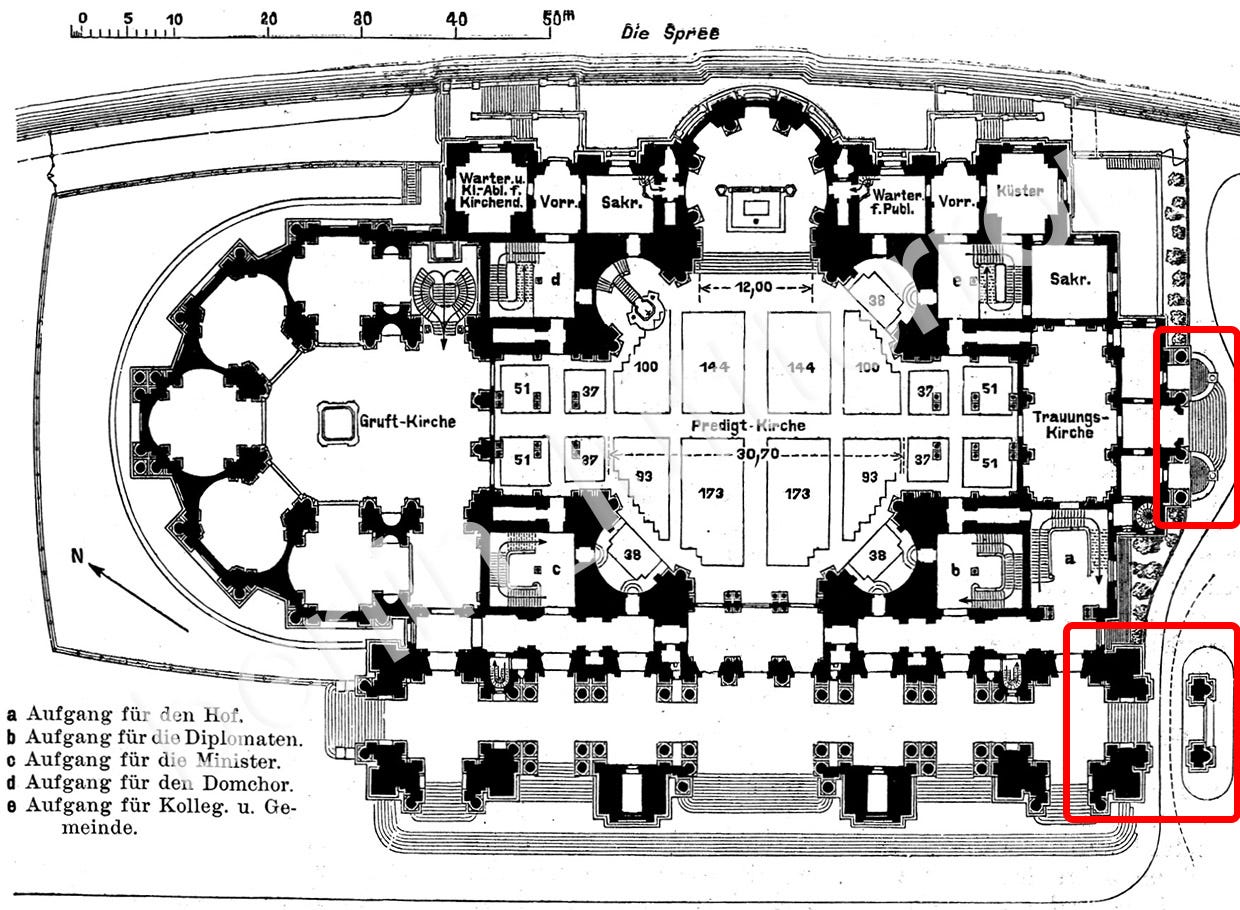
These scars are located at one of the side entries of the main building, part of the Karl-Liebknecht-Straße facade (next to the Domcafé), the left side from the main entrance. Also you can see the damage at the nearby column ‘Südportal’ which led to the Tauf- and Traukirche (baptistery and wedding church) which during this research we have learned that it’s one of the lesser known and less photographed spots of the cathedral. These pictures aren’t taken [obviously] during the snowy last few days, but in the last summer.
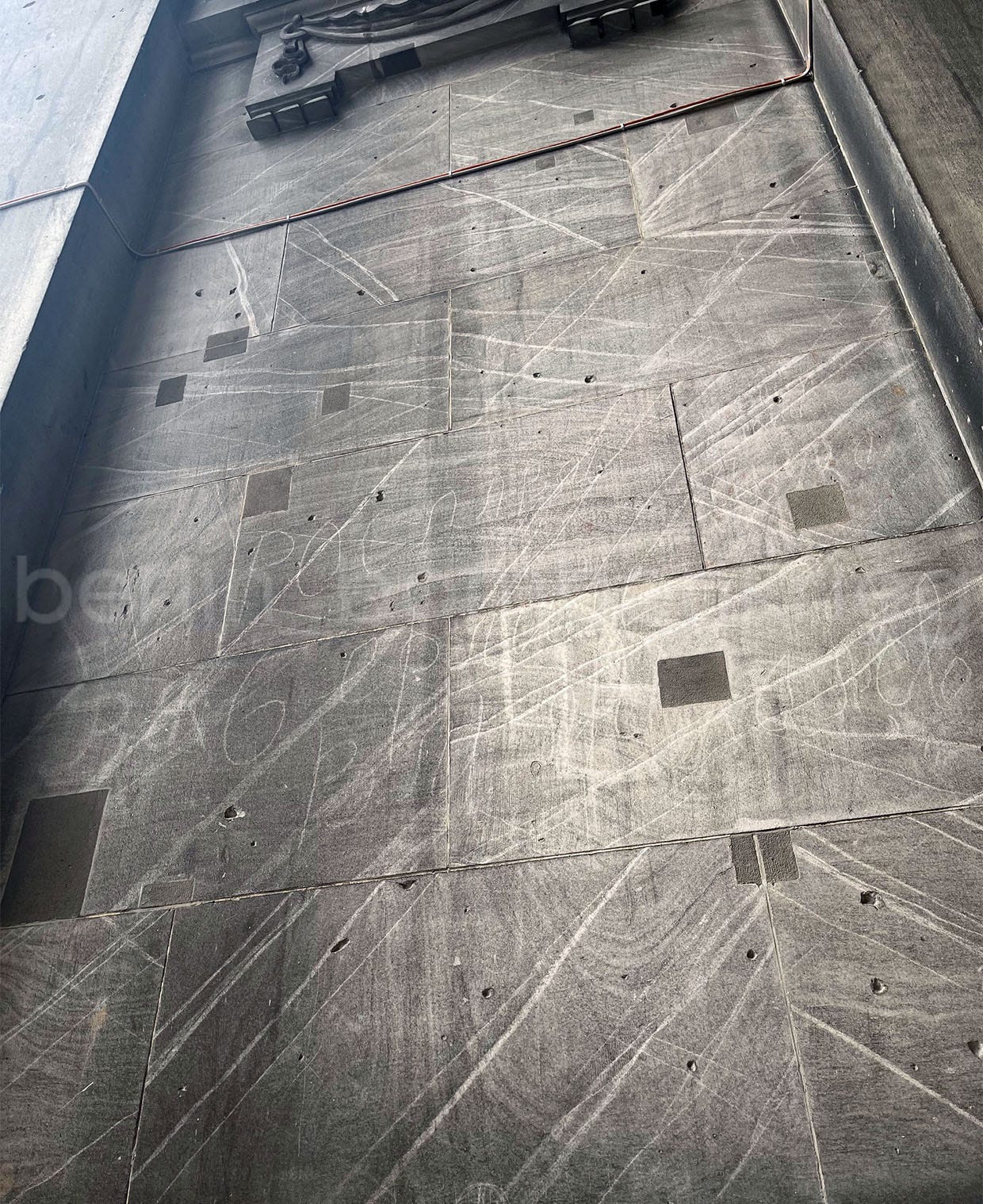
It wasn’t until 1952 that Dom’s reconstruction work became reality, an extremely difficult enterprise inside the DDR and with such limited money funds. Major reconstruction work was finally done between 1975 and 1982. Today, the Berliner Dom is still being renovated with a major cleaning (oh dear what a mistake…) of their outside walls and statues —blackened by the air raids and fighting— like other main buildings and landmarks, losing this part of her history and the 1945-past of the city. Hope that these battle scars will not be erased too. On the other hand, the official Dom’s website reflects the different opinion of the administration: “However, the facade of the building, which dates back to 1905, is badly damaged and urgently needs extensive restoration work.”
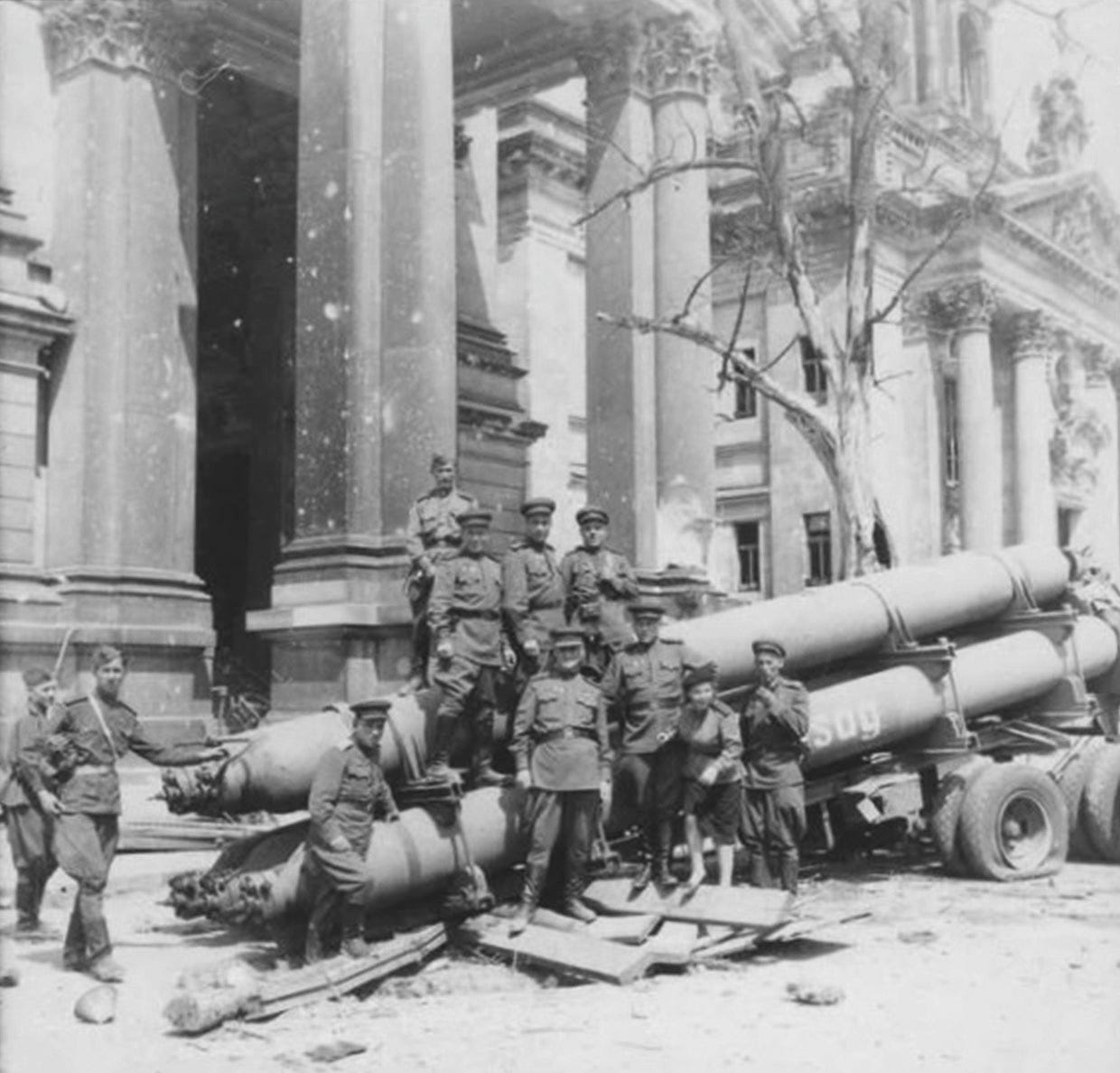
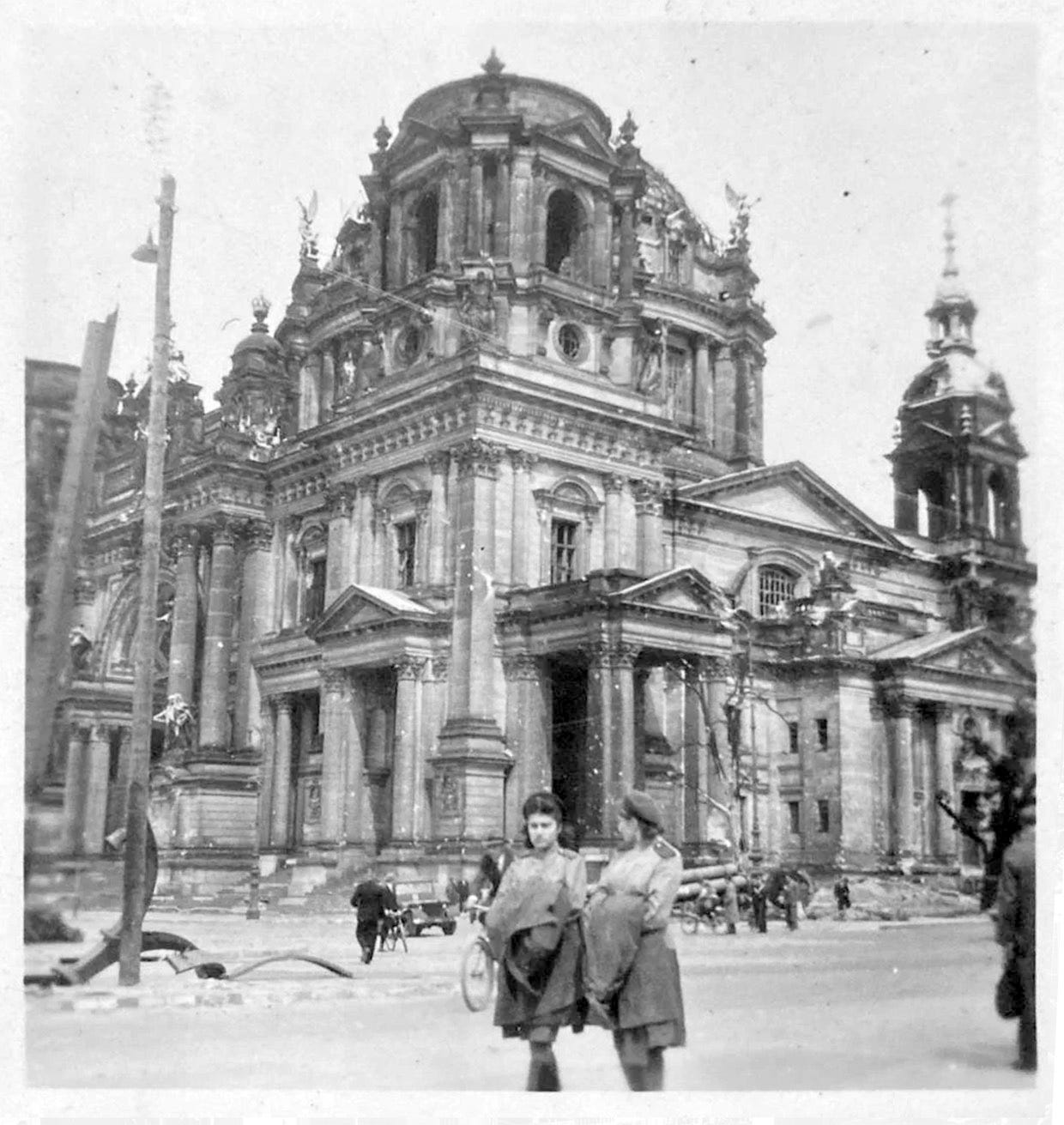
Sadly among the nearly hundred Dom pictures taken in the summer 1945 in the last days of April or following the end of the war, we didn’t found more than just one close view of this southwestern corner to compare with today’s marks, being the rest taken from the Schloss side across the street. In the picture we can see a group of Soviet soldiers posing exactly at this point with what appears to be some gas tanks left behind during the battle (note GASAG lettering on the tanks). Damage from the battle to walls and columns of the cathedral is clearly evident in the photograph.
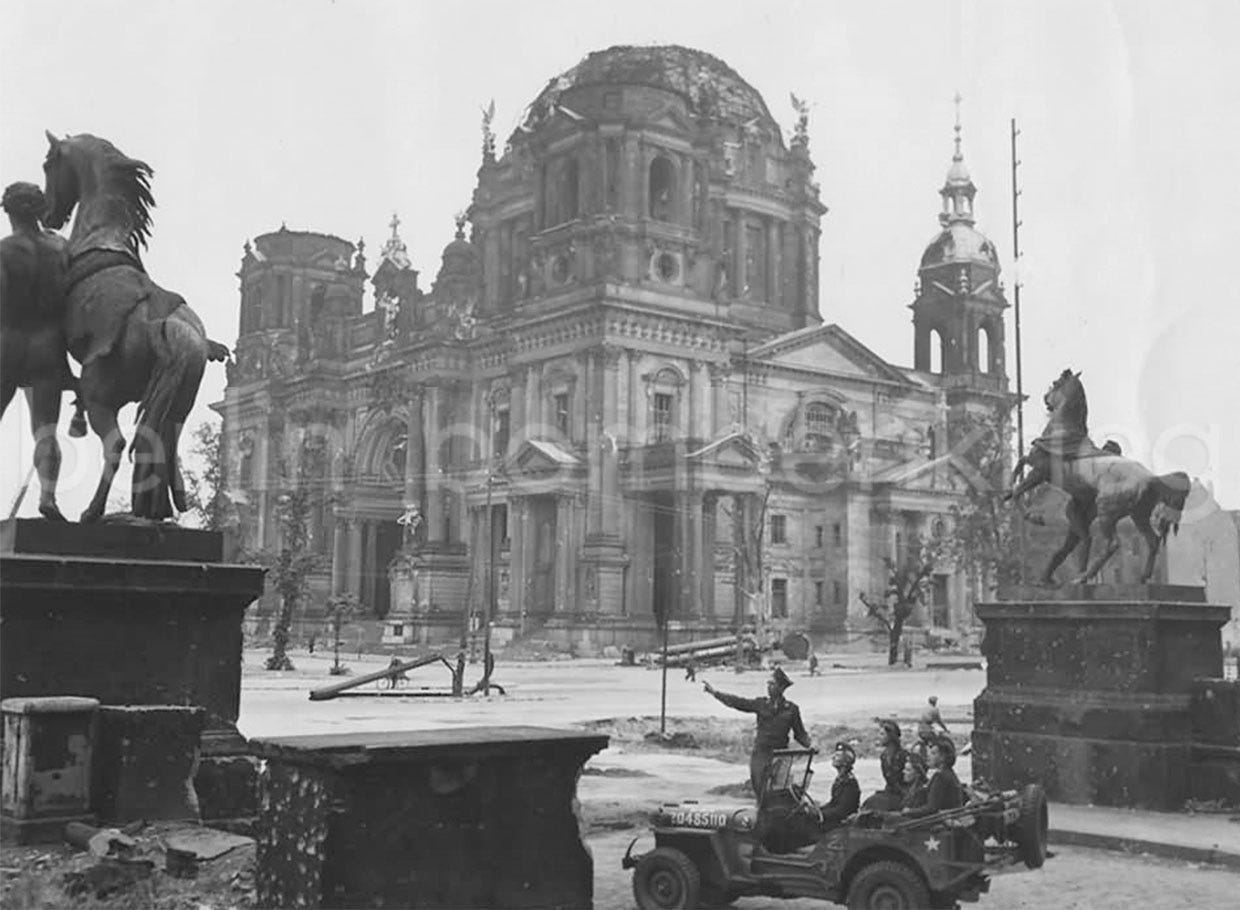
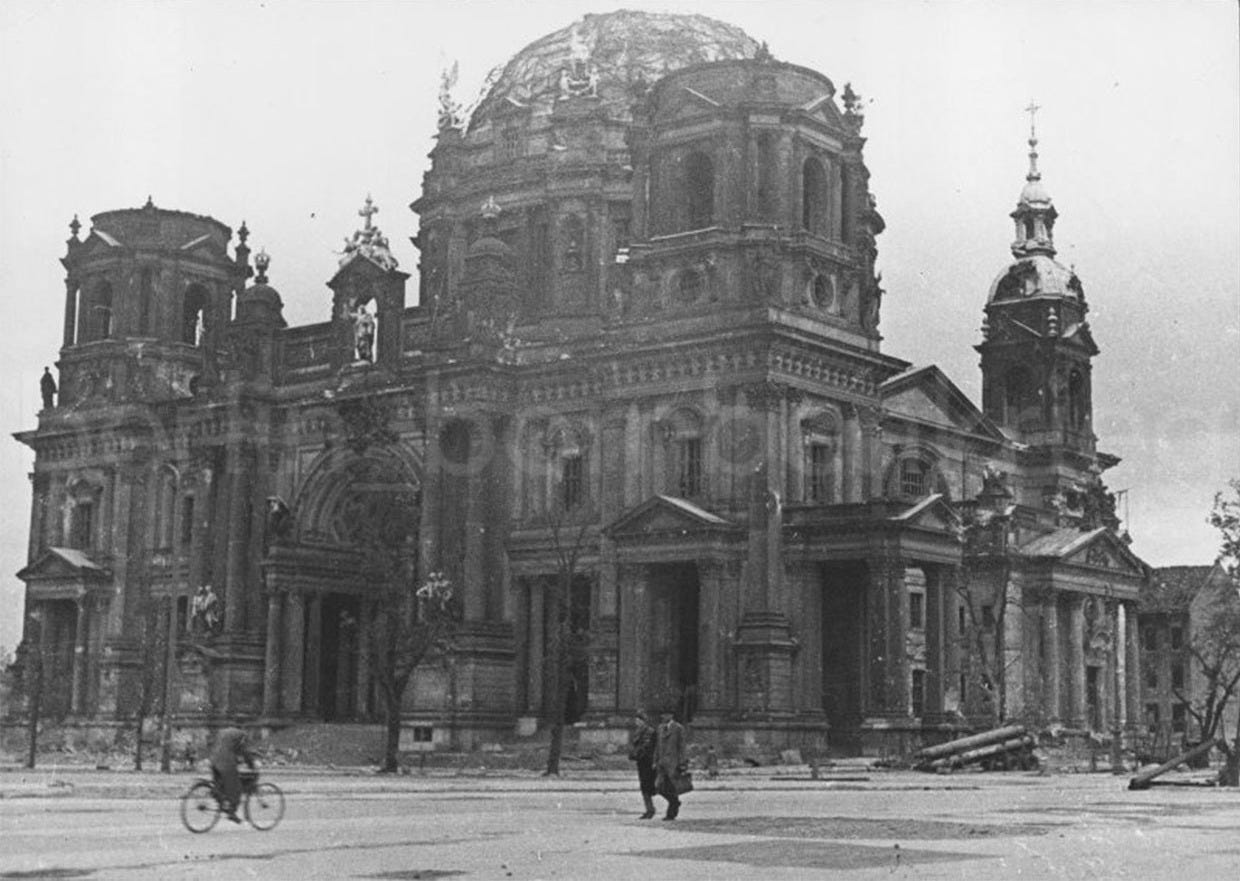
Following are three views of the heavily damaged cathedral seen from the Schloss side in Berlin’s immediate postwar days, summer 1945. Note shrapnel damage to the southwestern corner and that the gas tanks are still laying at the same spot.
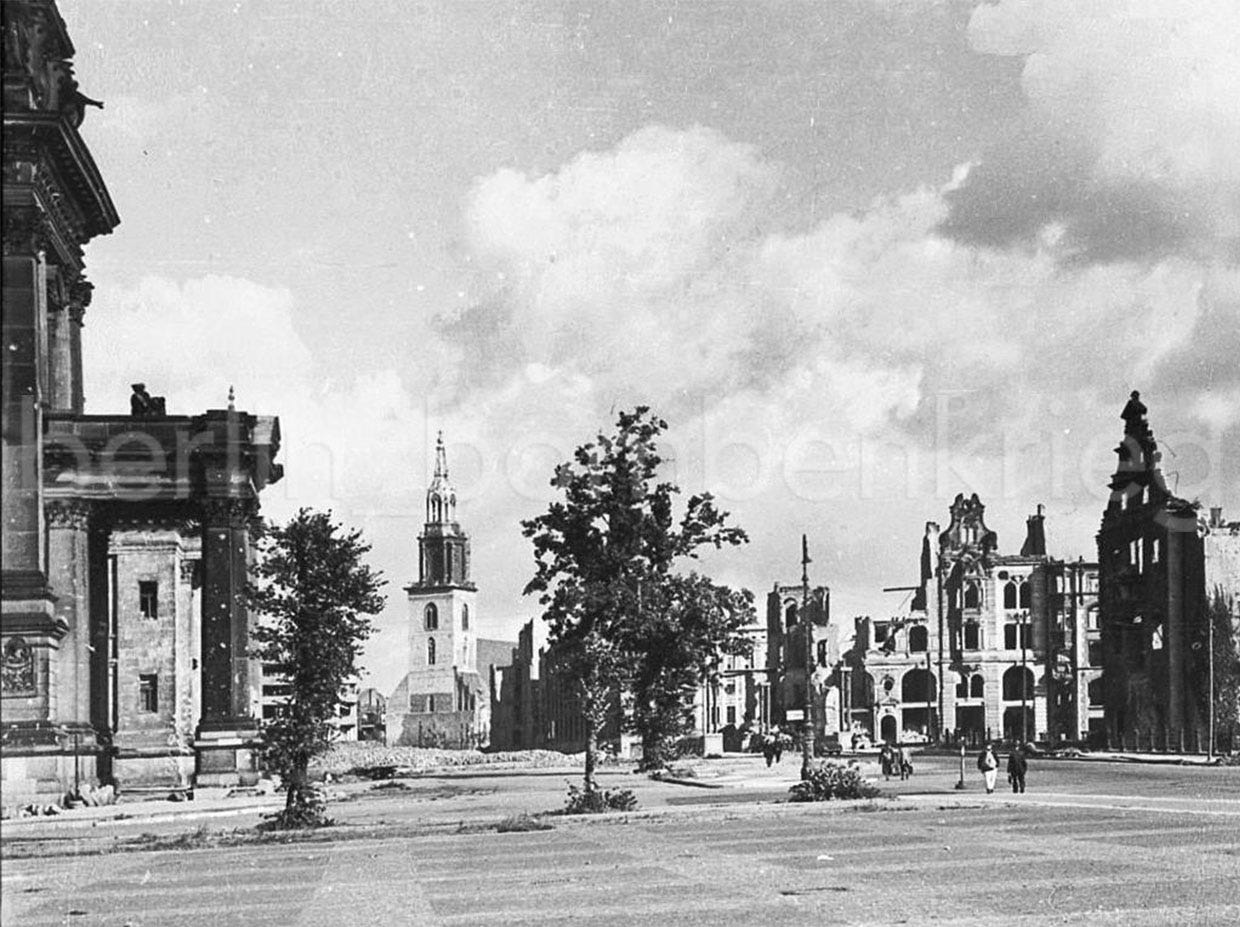
This picture of Kaiser-Wilhelm-Straße (today’s Karl-Liebknecht-Str) looking eastwards was taken in 1946, clearly showing the damage to the side portal and columns (extreme left). Note Marienkirche in the background, one the few remaining spots from those days in this popular and centric area of the city.
View of the main entrance of the cathedral, already restored and with most of its war wounds erased. The different colour clearly reveals the patching work of post-war repairs, Lustgarten, 2024.
The “dark” Berliner Cathedral at Lustgarten, back in 2008 before cleaning work began to restore its walls and statues, darkened and damaged by fires and fumes from the air raids and 1945-fighting.
In collaboration with @Berlinbattledamage
_______________
Bibliography:
Antill, Peter. Berlin 1945: End of the Thousand Year Reich. Osprey Publishing, 2005
Berliner Dom. DDR-Zeit und Wiederaufbau. [accessed January 2026.]
Berliner Dom. Fassadensanierung. [accessed January 2026.]
Demps, Laurenz. Luftangriffe auf Berlin. Die Berichte der Hauptluftschutzstelle. Ch. Links Verlag, 2014
Landesarchiv Berlin: LAB A Rep. 001-02, Nr. 700, Bl. 139 ff; LAB, A Rep. 001-02, Nr. 700, Bl. 143 ff; LAB, A Rep. 001-02, Nr. 702, Bl. 85 ff.; s. a. LAB, A Rep. 005-07, Nr. 559, o. Bl
Moorhouse, Roger. Berlin at war. Life and death in Hitler’s capital, 1939-45. Vintage Books, 2011
Wildt, Michael and Kreutzmueller, Christoph. Berlin 1933-1945 - Stadt und Gesellschaft im Nationalsozialismus. Siedler Verlag, 2013
Thank you for reading Berlin Bombenkrieg by Pablo López Ruiz. Please subscribe, if you haven’t yet, to comment, follow and share. All images used for non profit / educational purposes.