


‘Berlin night raid lasts for 3 hours…
…British bomb populous section of the city - other damage also reported.’
– The New York Times, Thursday, August 29, 1940 –
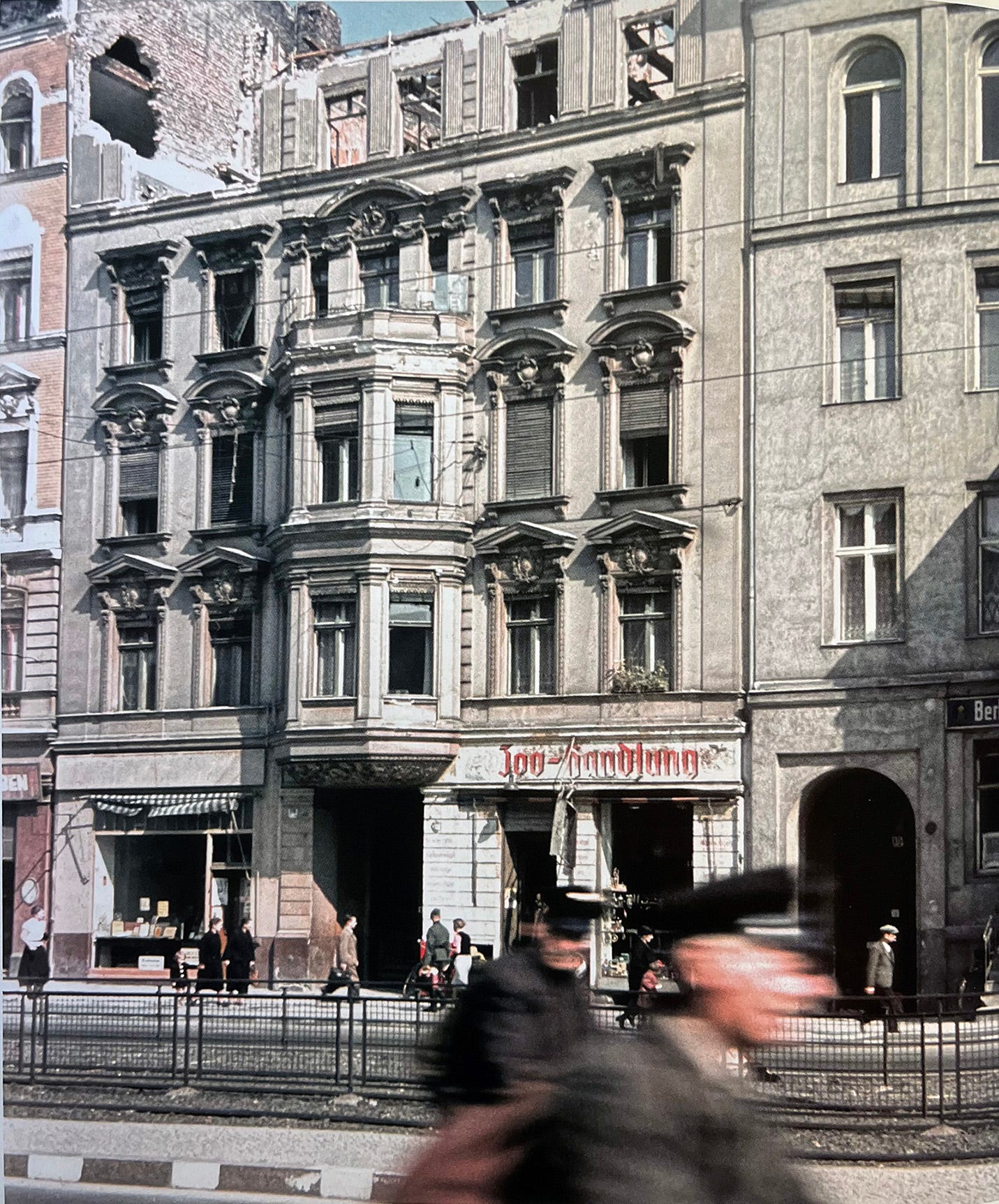
Last night 84th years ago (28/29 August 1940), Berlin tasted the bloody and terrible bombing war for the first time. Last week we had the opportunity to visit the streets in Kreuzberg district where those first bombs hit the city centre.
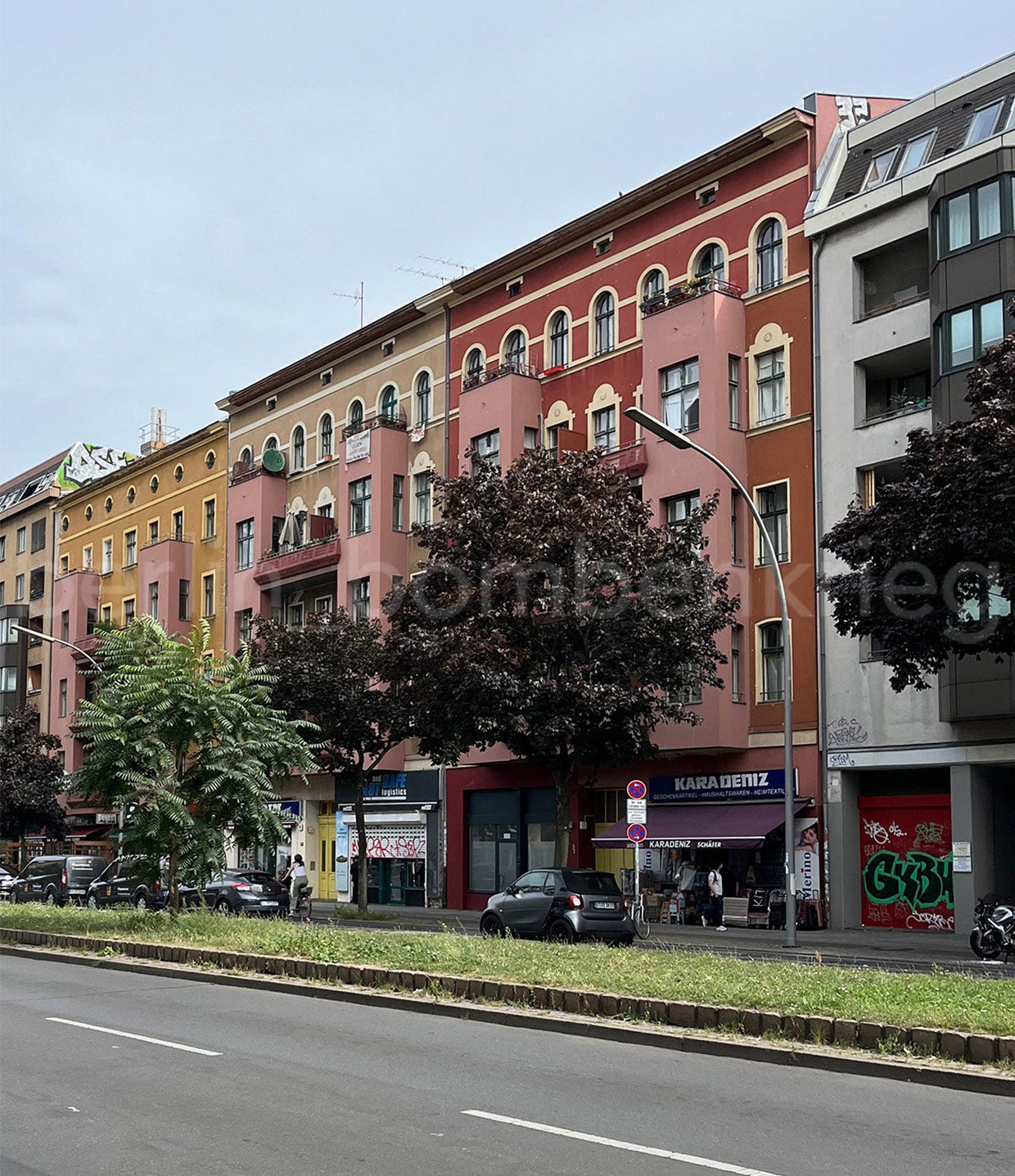
Several RAF bombs fell at the Kottbusser Tor area (see full report and map area at the bottom of the page), hitting buildings at Kottbusser Str, Mariannenstraße and Skalitzer Str. along other areas as Prenzlauer Berg and some residential colonies in the outskirts. The Kottbusser Tor area has changed a lot and there are no tram lines anymore, with new buildings built during the postwar years and the original ones which had survived being refurbished too. It seems that no scars from the air bombings have survived.
Full account of this second air raid can be read on our blog’s two-part post:
Bombing raid on Berlin
Britische Luftangriffe über Berlin
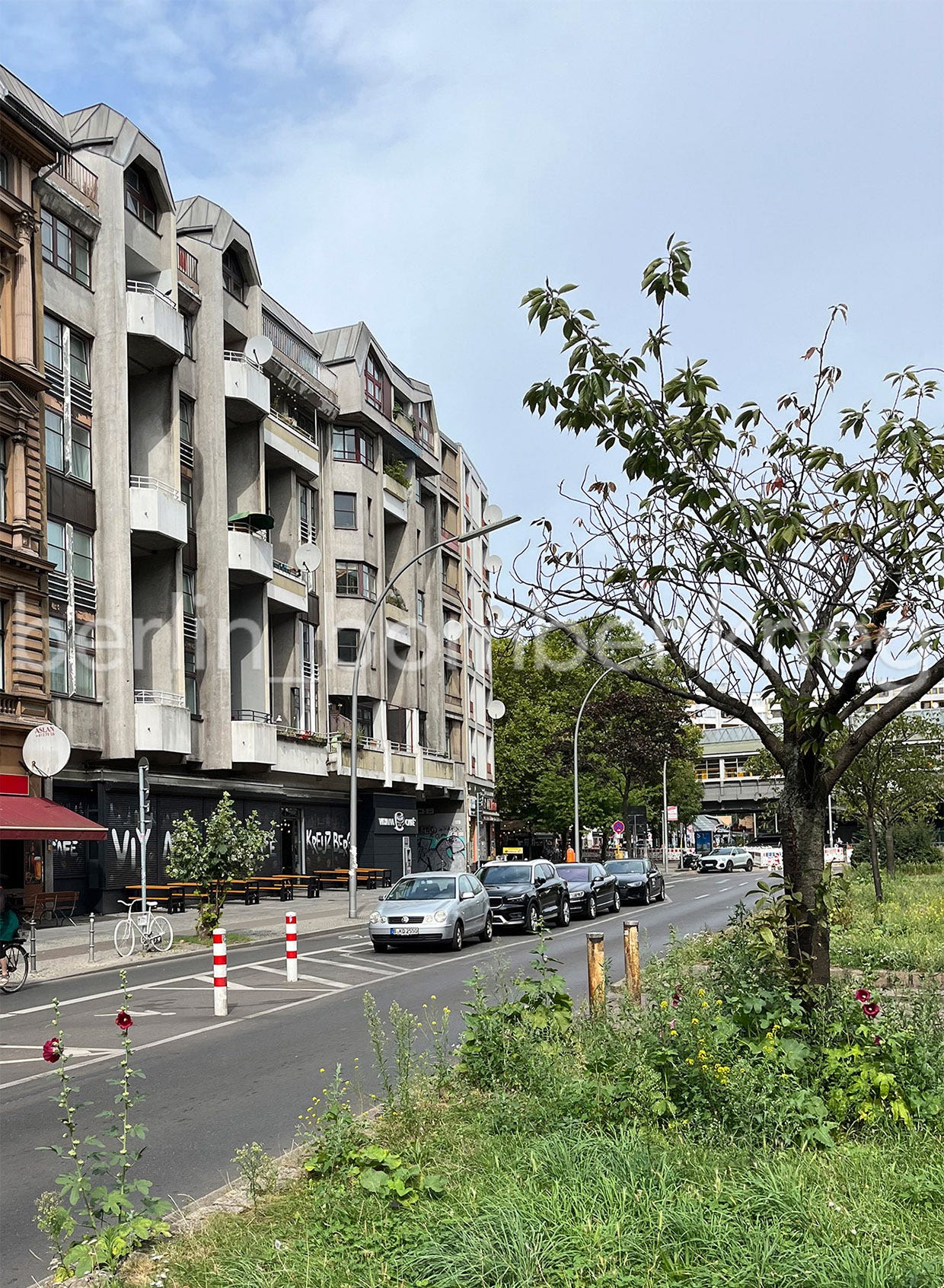
A view of the dramatic ‘Bombenschäden’(bomb damage) panorama after the RAF’s second air raid on the German capital, Kottbusser Straße 21-17 buildings and the same spot as viewed today.
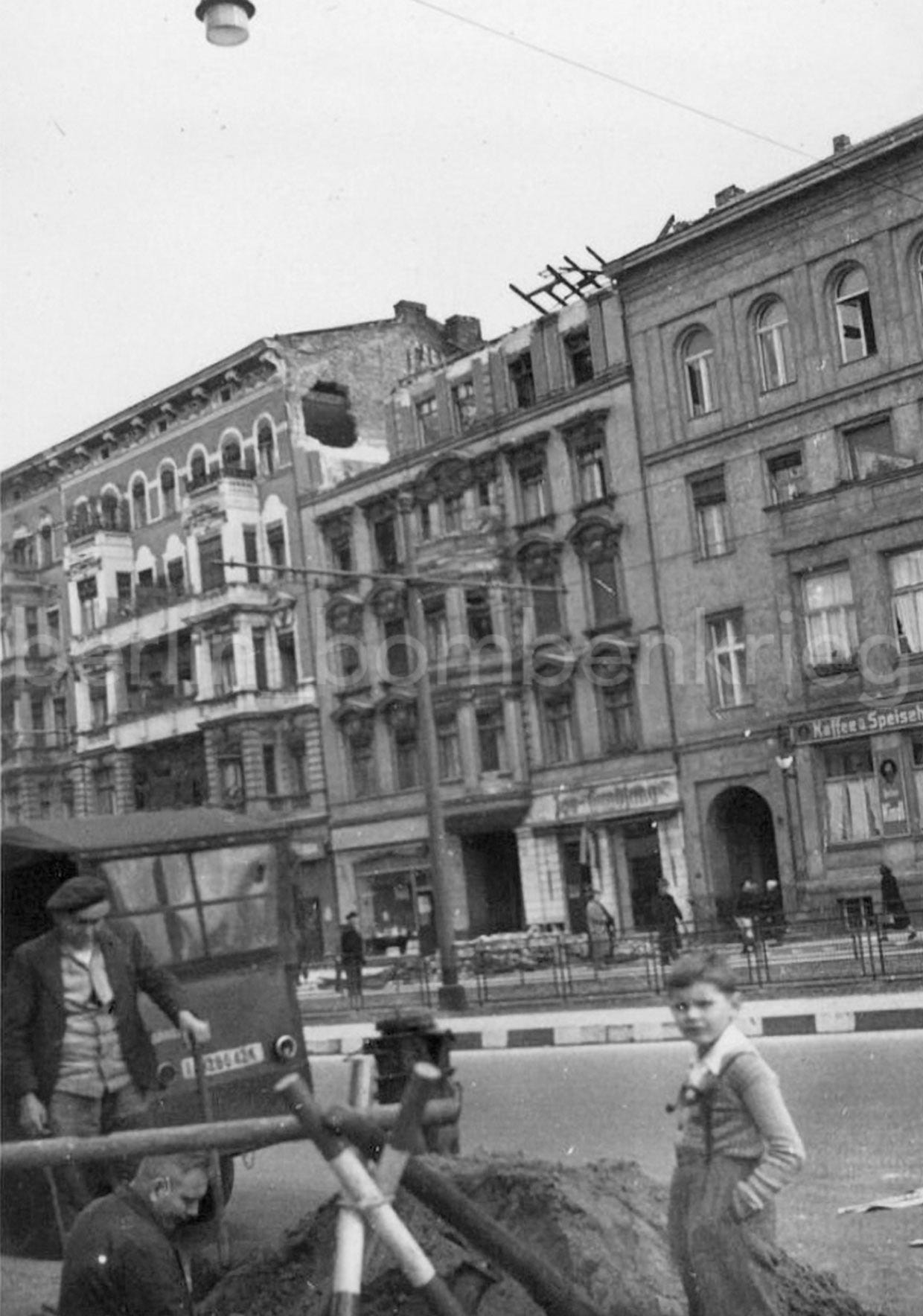
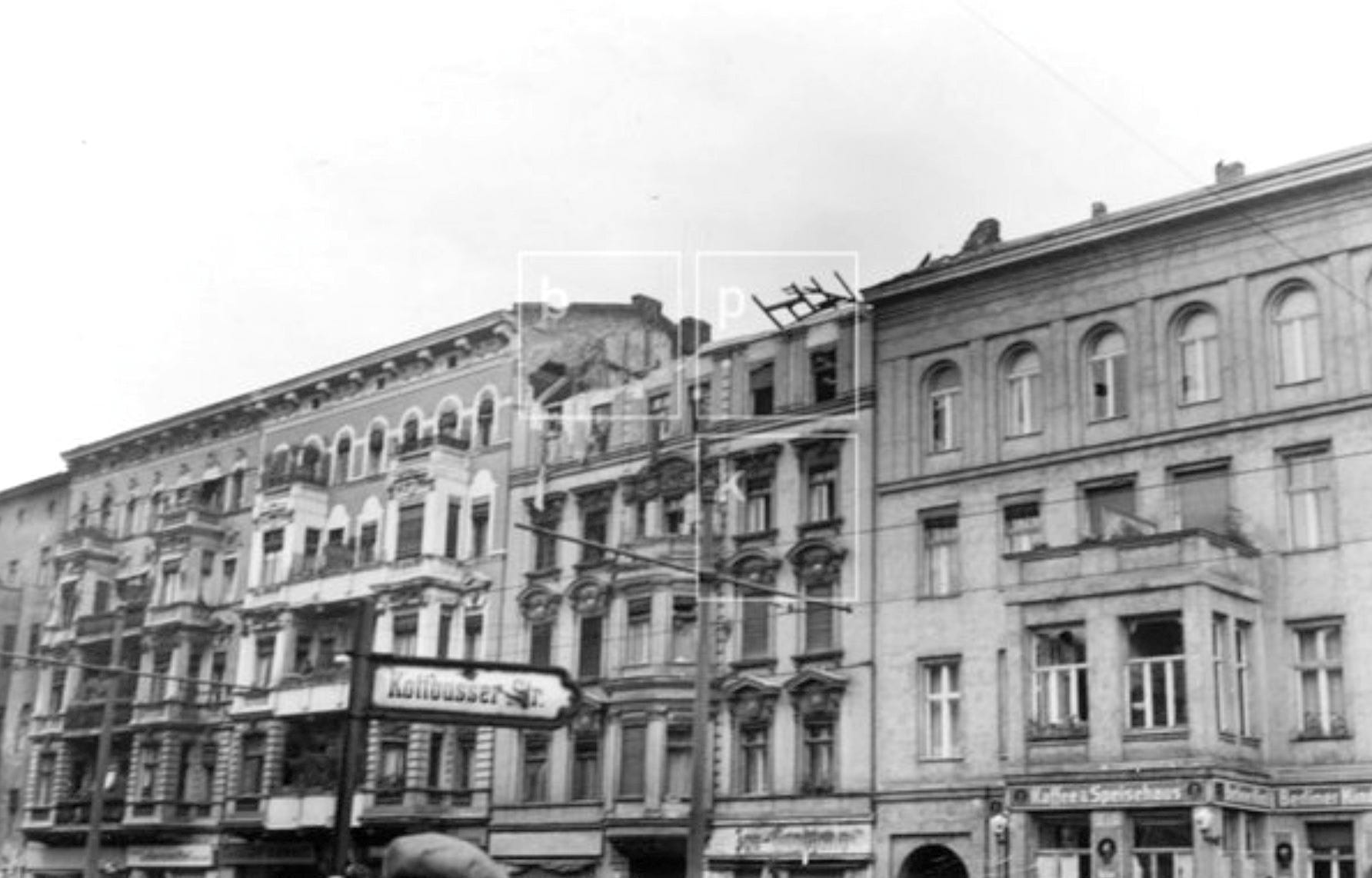
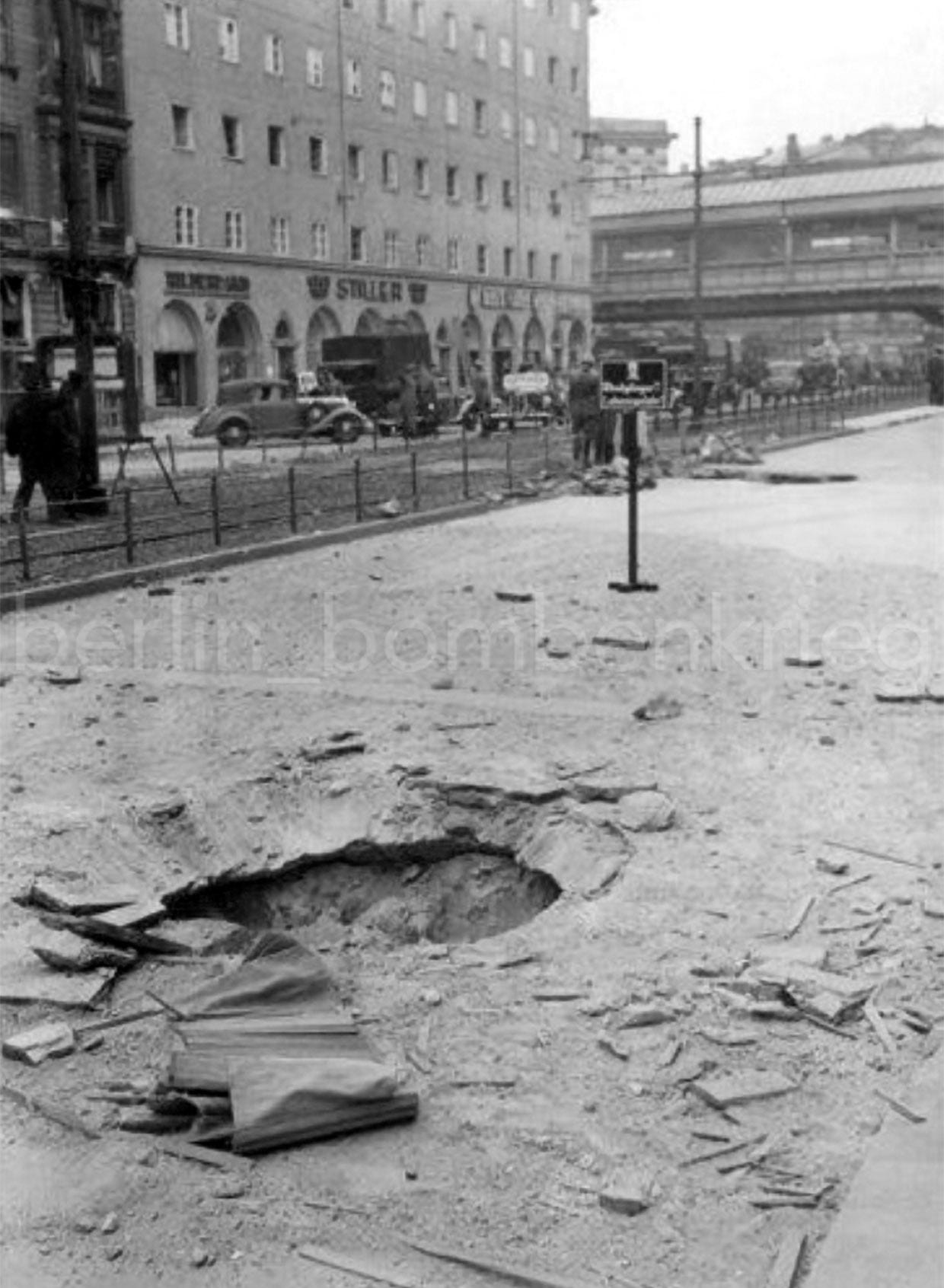
A view of the day after the raid at Kottbusser Str. 25-26, where two explosive bombs hit the pavement next to the tram lines causing damage. Note the alert sign behind and the Hochbahnhof U-Bhf. Kottbusser Tor (built in 1928) in the background where many Berliners took shelter during the raid.
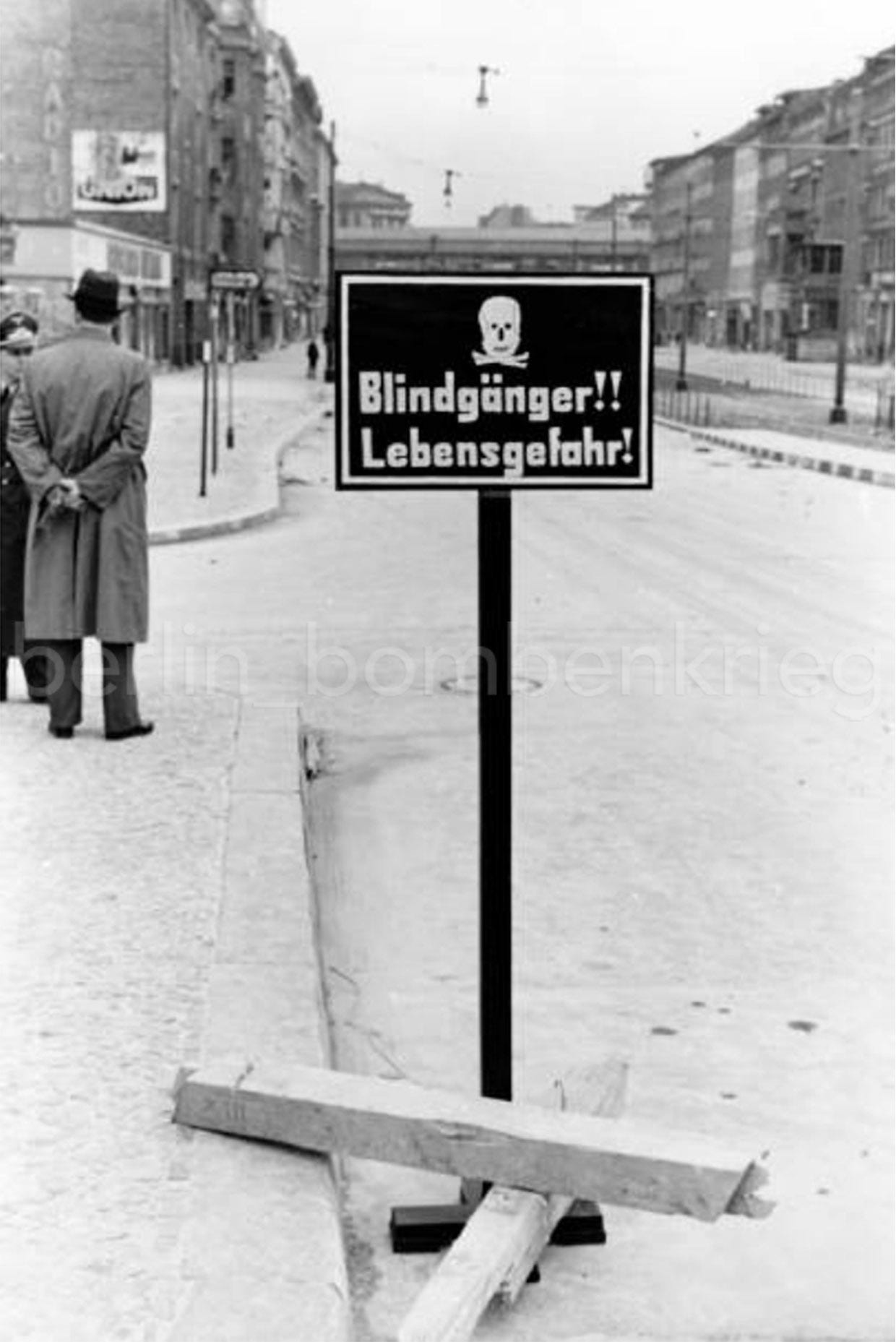
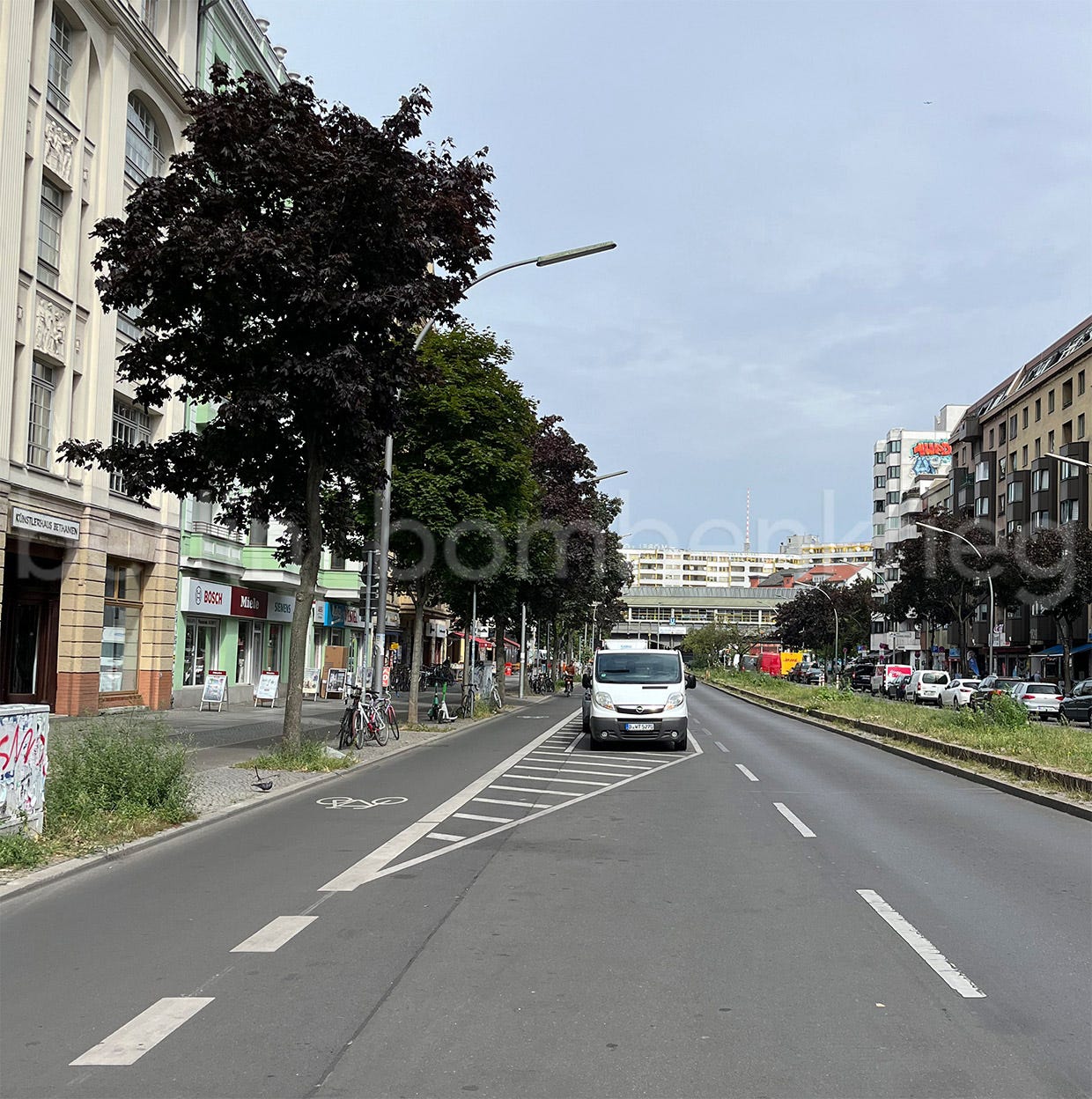
Taken a few metres away, this is a warning sign of an unexploded bomb (‘dud’) at Kottbusser Str. 18-19 in the Berlin-Kreuzberg district (notice the U-Bahn highway in the distance). The notice advises the danger with the warning Blindgänger!! Lebensgefahr! which means “Unexploded ordnance”.
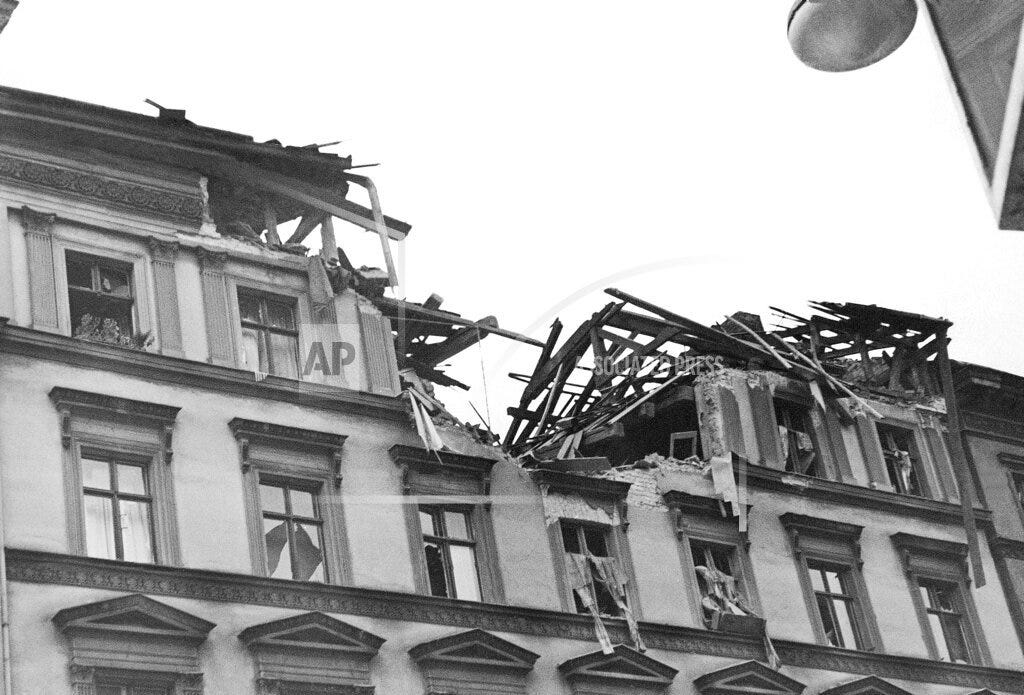
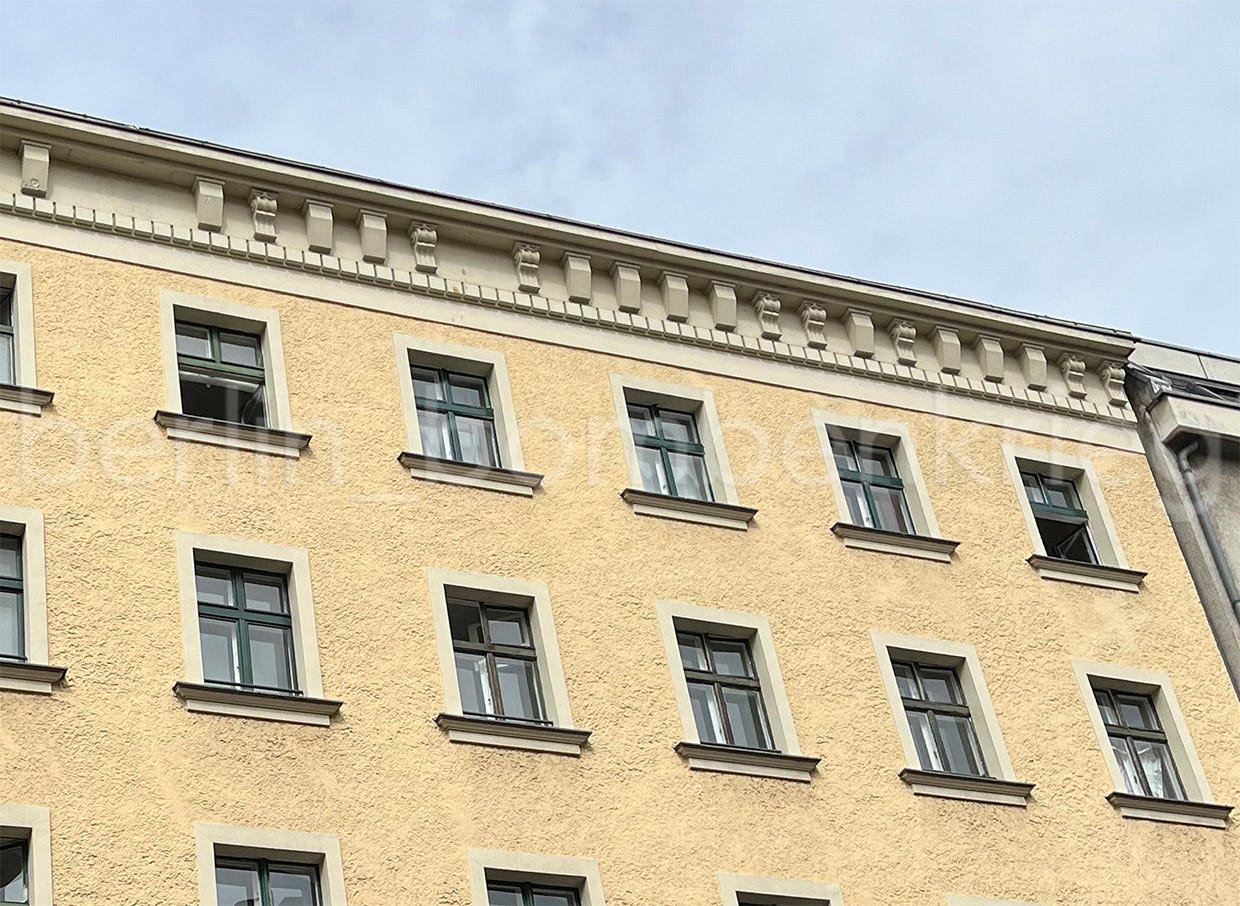
Around the corner, the roof structure of Mariannenstraße number 26 apartment (today part of Kottbusser Str 15) was thrown into the street by explosive bombs, we can see here the severe damage taken by the building’s last floor, August 29, 1940.
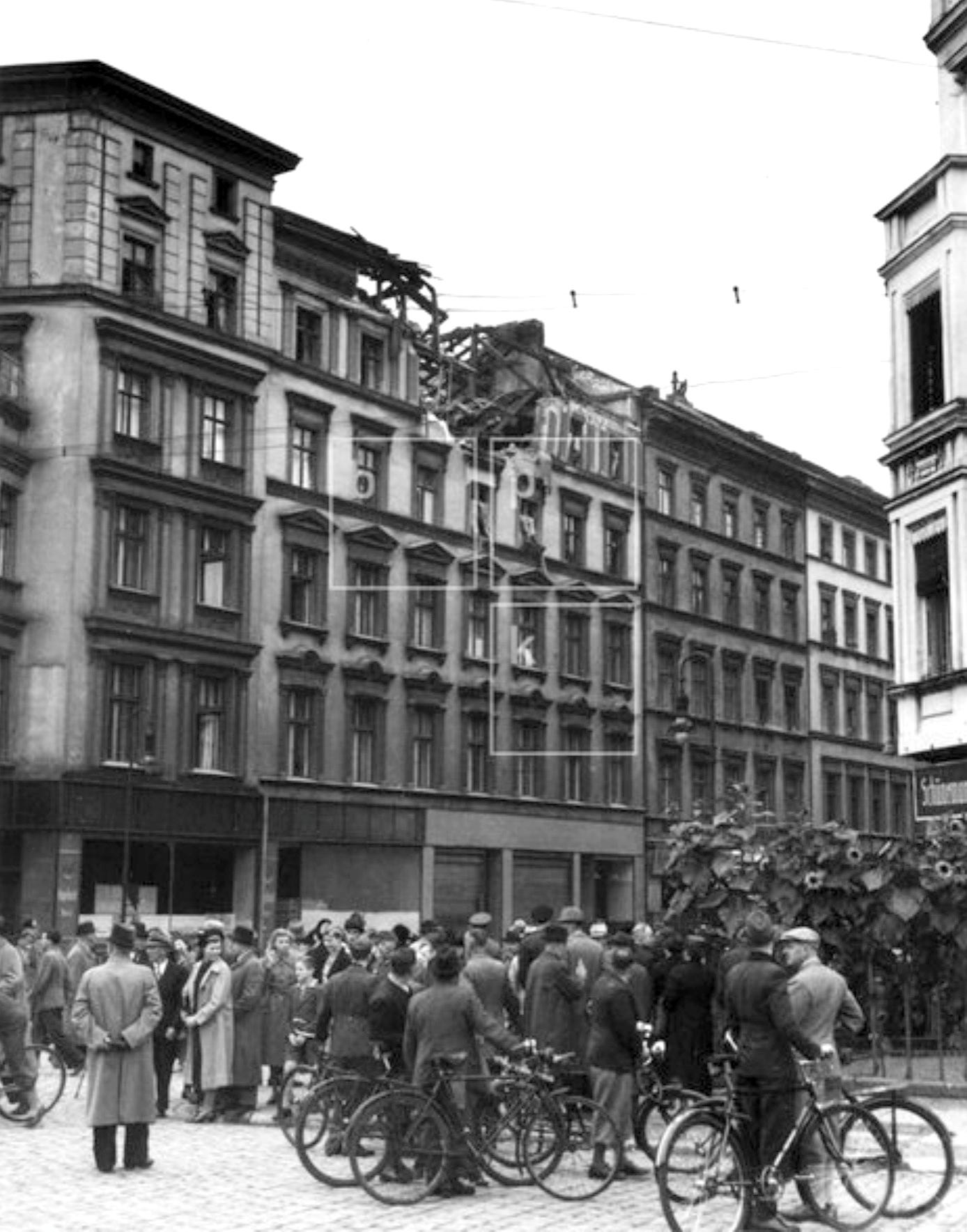
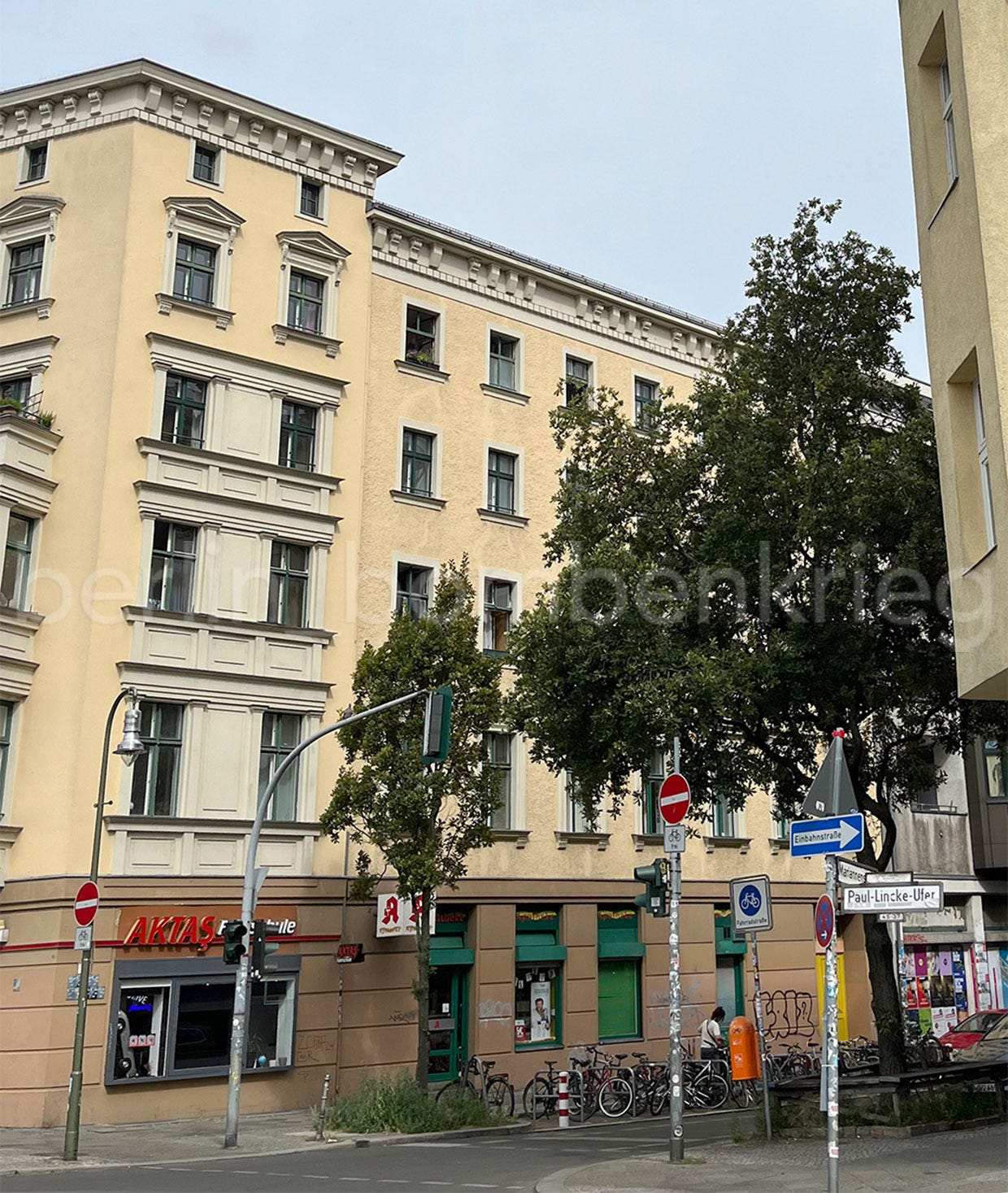
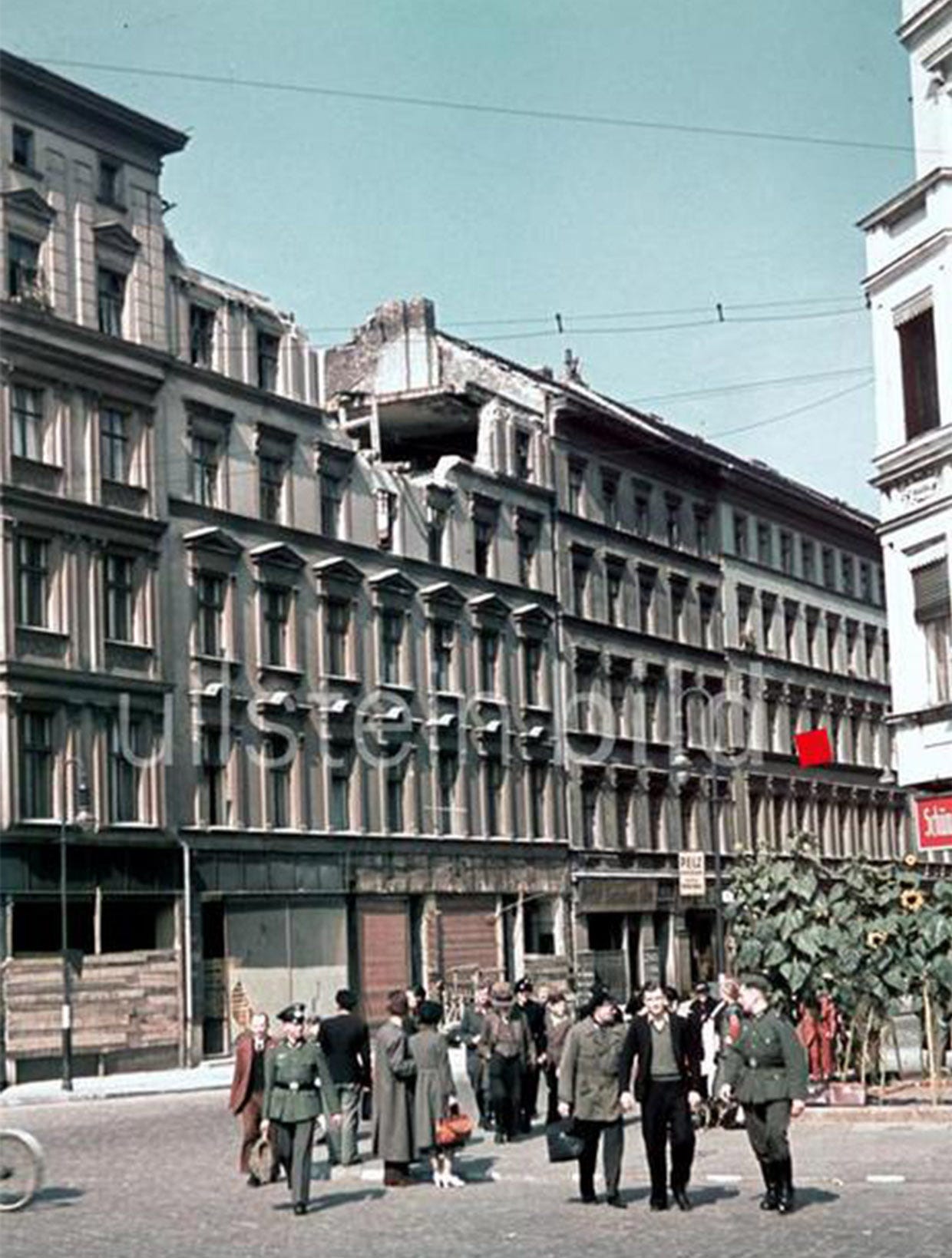
Close view of the roof and facade damage at Mariannenstraße 26 (today part of Kottbusser Str 15), August 29, 1940, and the same spot as viewed today in 2024.
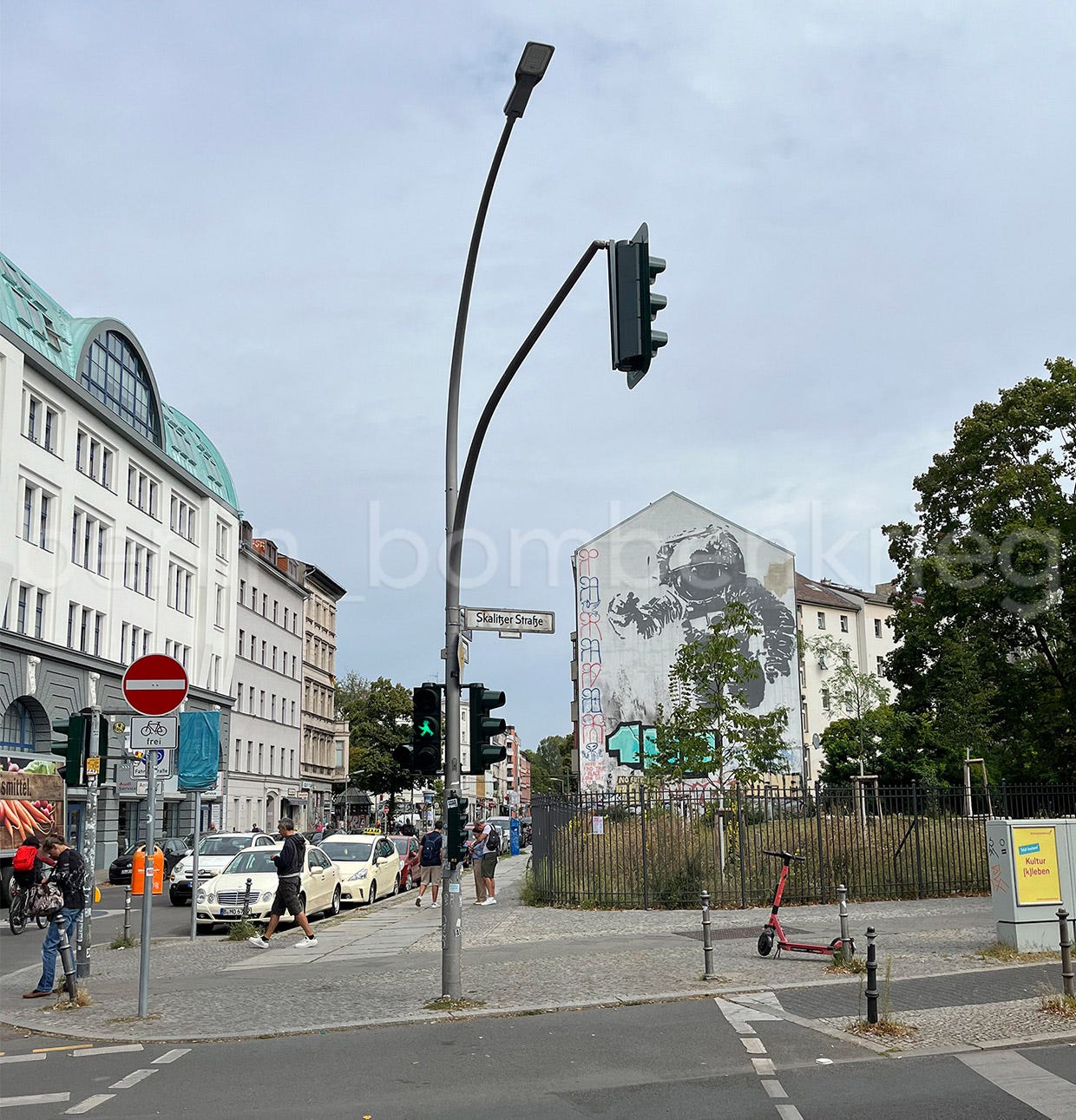
Mariannenstraße 29-10 (at left) Ecke Skalitzer Str. (in front of the famous Astronaut Cosmonaut graffiti painted by Victor Ash). Damage was also inflicted by fires on Skalitzer Str. 122, Mariannenstraße numbers 11 and 9-10 (where the electricity plant was hit) and Oranienstraße 189.
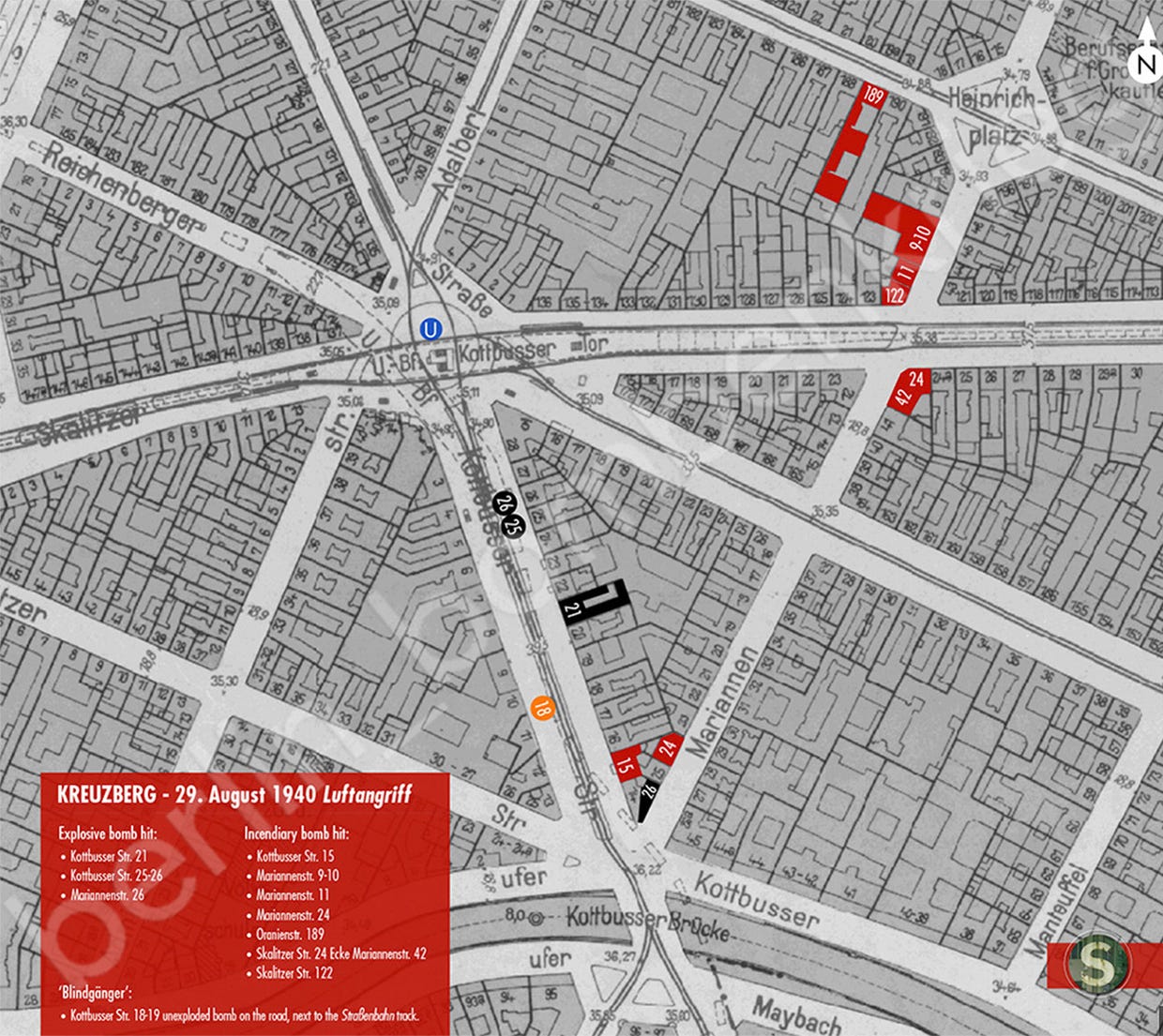
The eastern Kreuzberg district, a very populated residential area, was severely hit by British bombs on 29 Aug. 1940. Several sticks of bombs dropped around U-Bhf Kottbusser Tor caused chaos and large fires there, flying debris shattered the streets, hitting everything around. Almost all the windows between the train station and the Kottbusser Brücke were smashed. Two high explosive bombs were dropped in front of Kottbusser Str. 25-26 causing severe damage to the pavement and the tram lines there. Another bomb hit Kottbusser Str. 21 destroying the roof structure and the last floor, and number 15’s roof was also destroyed by fire-bombs. Around the corner, the roof structure at Mariannenstraße 26 was thrown into the street by explosive bombs, with roof fires at numbers 24 and 42 Ecke Skalitzer Str. 24. Finally, two unexploded bombs (‘duds’) were located in front of Kottbusser Str. 18-19, next to the tram track.
Berlin admitted minor damage to several districts of the capital the following morning: the myth of the Reichhauptstadt’s inviolability had been finally shattered.
_______________
Bibliography and sources:
Berliner Morgenpost, Freitag, 30. Aug. 1940. Nr. 208
BRITISH BOMBING SURVEY UNIT (1998).The Strategic Air War Against Germany 1939 - 1945 - The Official Report of the British Bombing Survey Unit. Frank Cass
Demps, Laurenz. Luftangriffe auf Berlin. Die Berichte der Hauptluftschutzstelle. Ch. Links Verlag, 2014
Der Angriff, 30. Aug. 1940, Nr. 210
Friedrich, Jörg. Der Brand Deutschland Im Bombenkrieg 1940-1945. Verlag Ullstein, 2005
Landesarchiv Berlin. Die Kriegschronik der Reichshauptstadt Berlin – Quelle zur Geschichte Berlins in der NS-Zeit
Landesarchiv Berlin. LAB, A Rep. 001-02, Nr. 700, Bl. 8 f
Moorhouse, Roger. Berlin at war. Life and death in Hitler’s capital, 1939-45. Vintage Books, 2011
Overy, Richard.The Bombing War: Europe, 1939-1945. Allen Lane, 2013
Shirer, William L. Berlin Diary: Journal of a Foreign Correspondent 1934-1941. Galahad Books, 1997
Shirer, William L.This Is Berlin. Random House, 2013
Wildt, Michael and Kreutzmueller, Christoph. Berlin 1933-1945 - Stadt und Gesellschaft im Nationalsozialismus. Siedler Verlag, 2013
Thank you for reading Berlin Bombenkrieg by Pablo López Ruiz. Please subscribe, if you haven’t yet, to comment, follow and share. All images used for non profit / educational purposes.