


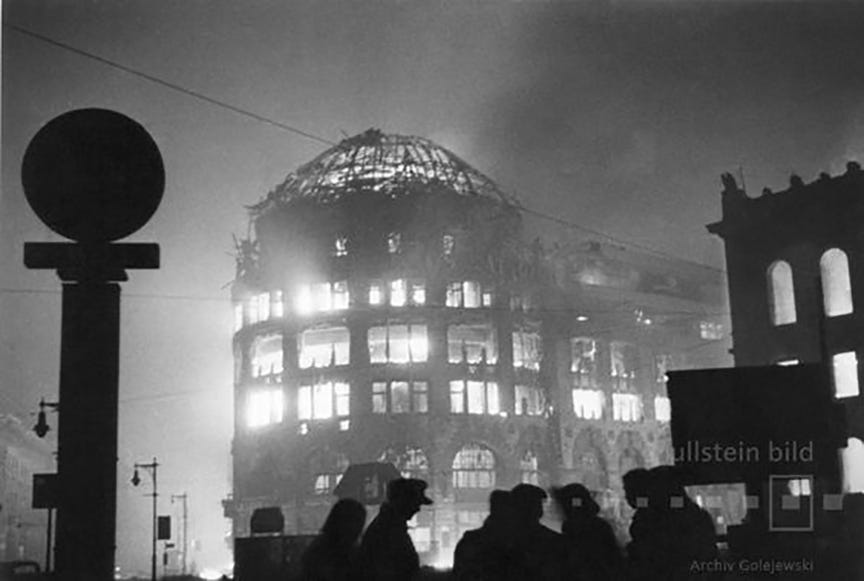
Haus Vaterland (“Fatherland House”) burns following a night raid on 22/23 November 1943 by British RAF bombers. The building was a pleasure palace on the southwest side of Potsdamer Platz. At left, a S-Bahn signal post.
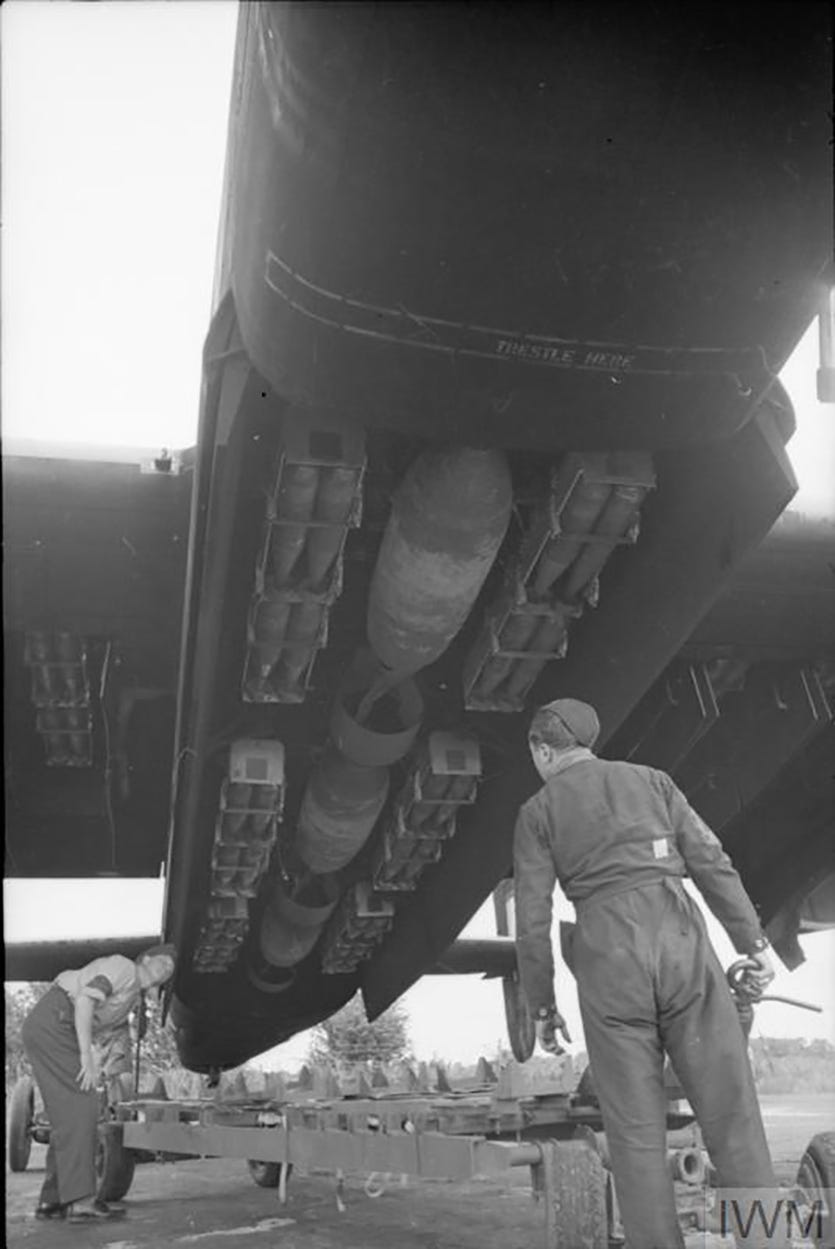
Incendiaries (IB), usually small-sized weapons, were carried in an aircraft bomb-bay using Small Bomb Containers (SBCs) and were packed into clusters. The device was not aim able and once dropped often became effected by cross winds. This resulted in incendiary attacks become widespread downwind of the target and also lead to other bombers being struck by falling bombs. Incendiary bombs function on impact. The heavy reliance of Bomber Command on highly inaccurate incendiaries shows that fire-raising was a major weapon in the strategic air offensive.
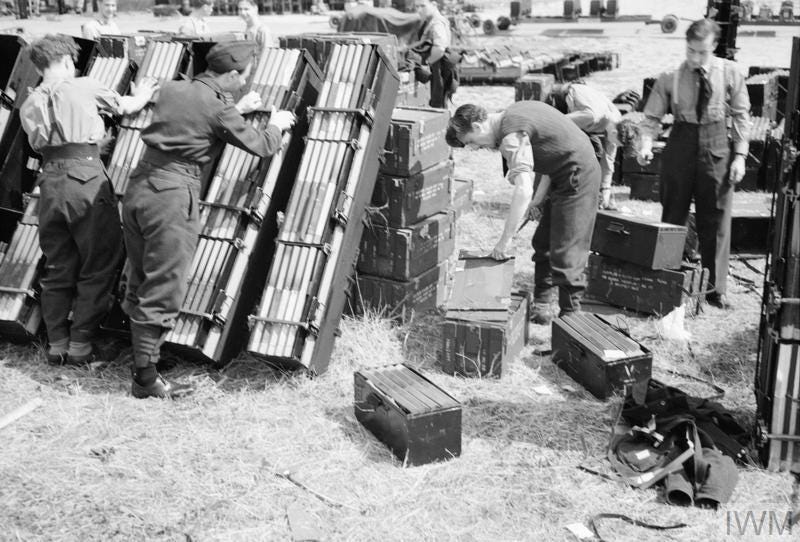
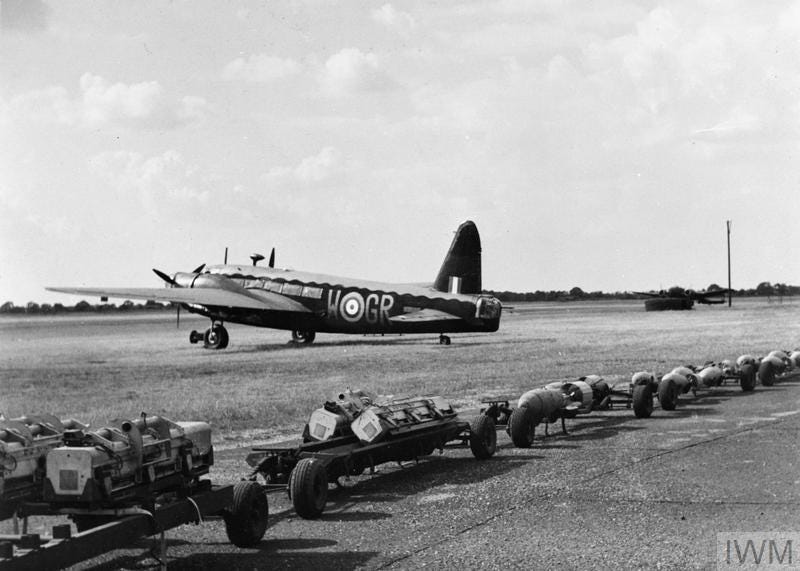
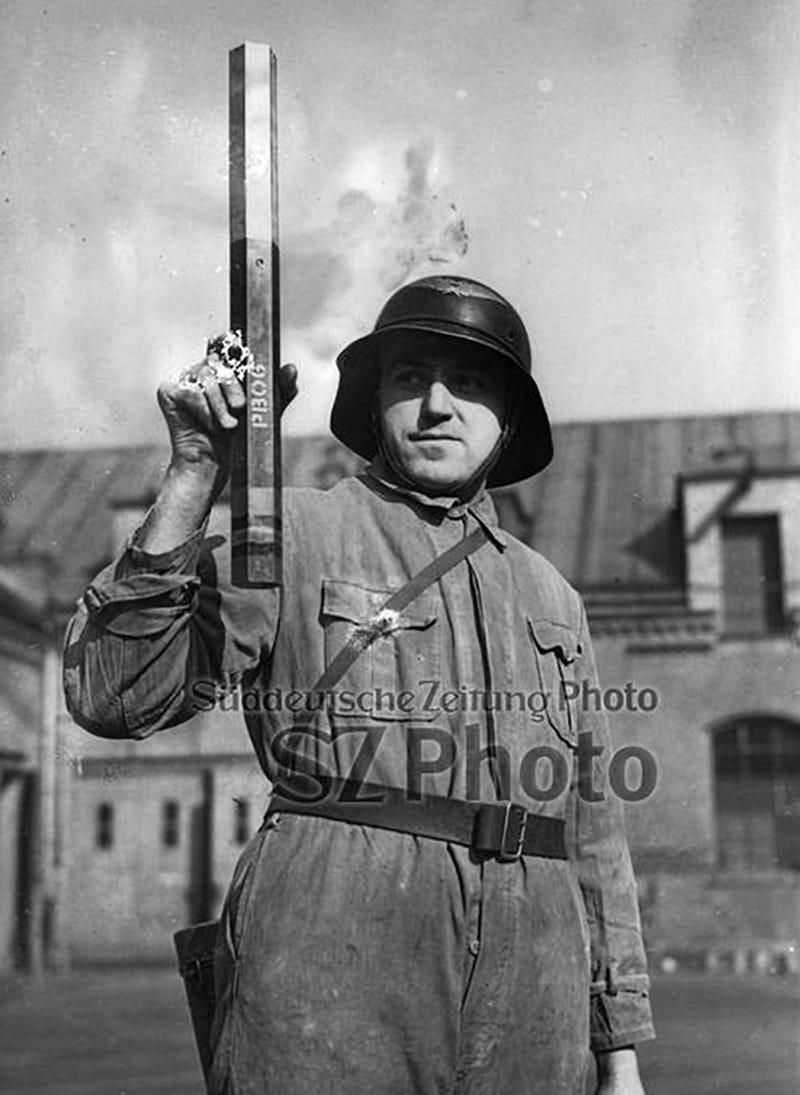
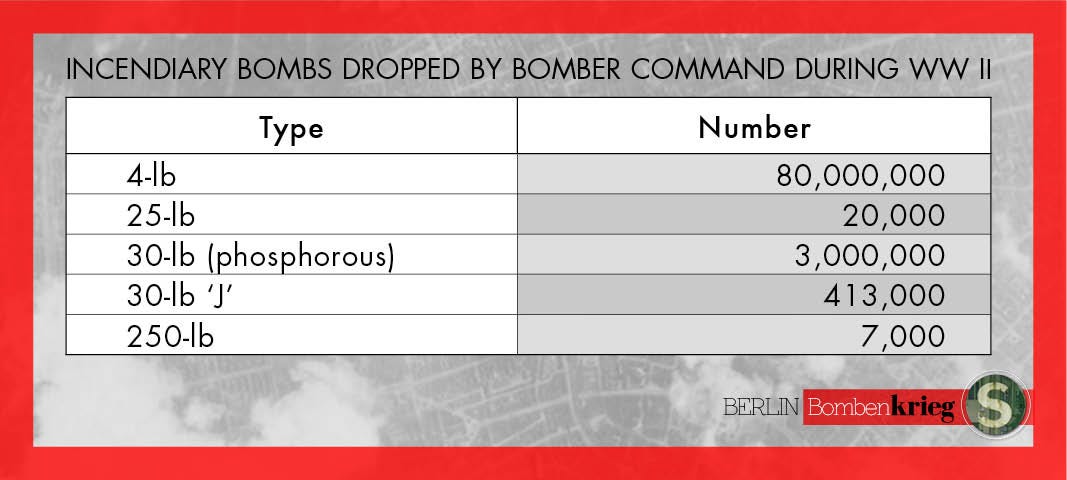
The mainstay of the Command’s incendiary devices was the 4-lb Magnesium (IB) bomb. RAF Bomber Command dropped 80 million of these small incendiary bombs during World War II. In May 1943 efforts were made to develop a delivery device for the ‘four pounder’ IB which would allow for them to be aimed and therefore more accurate during the raids.
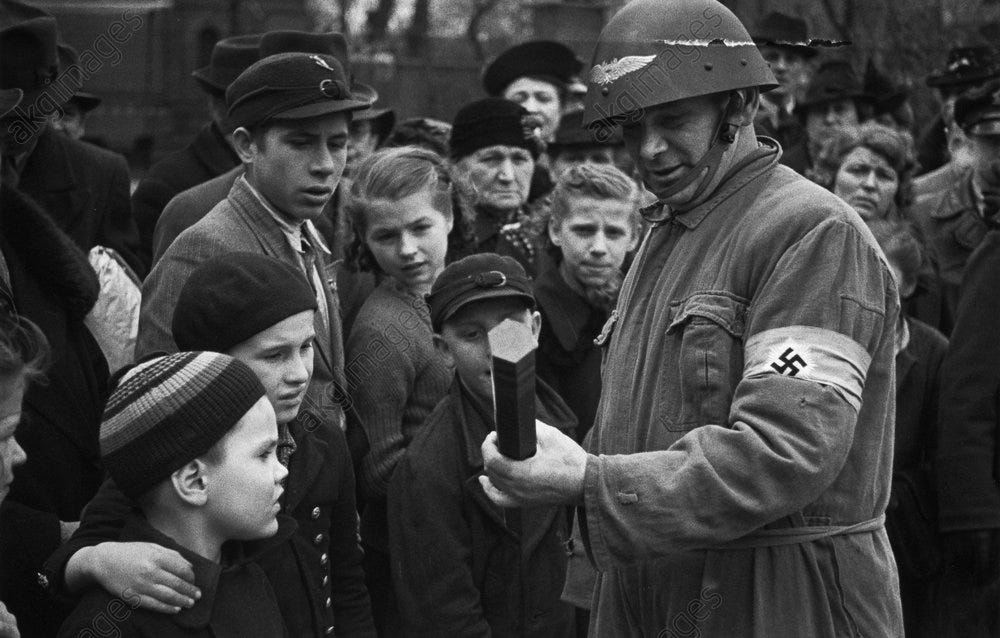
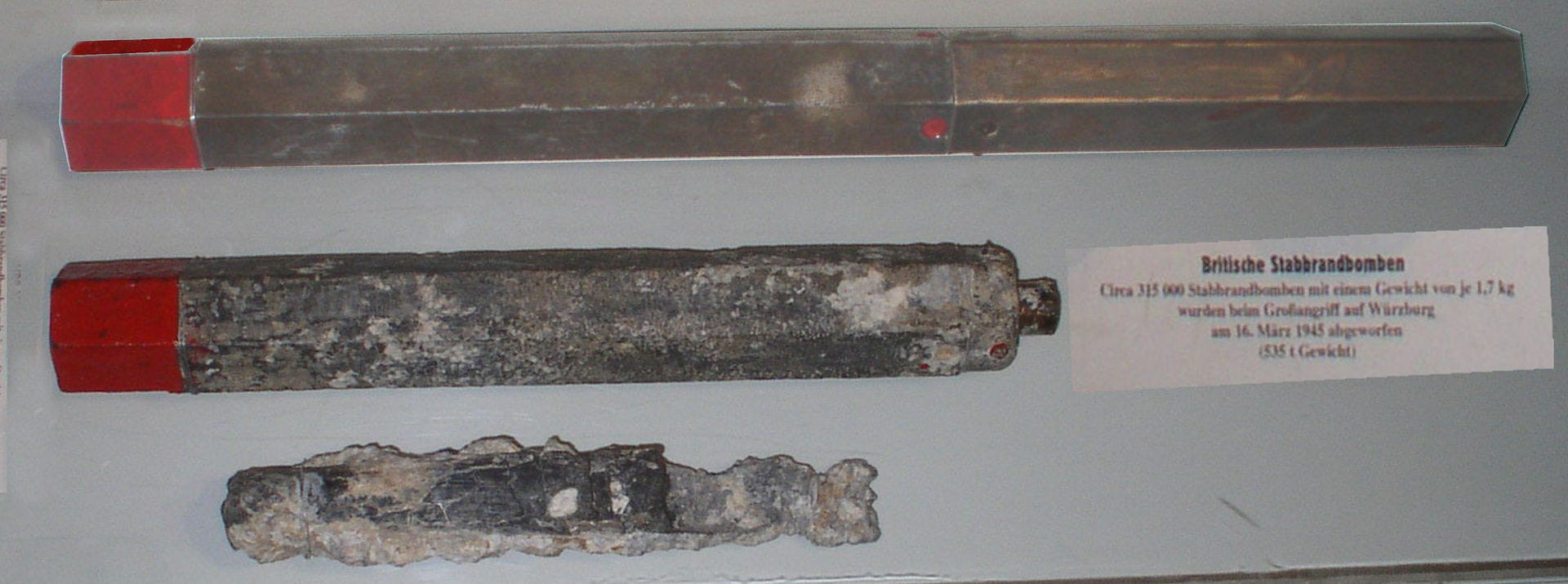
In April 1941, 12 million incendiaries were ordered for the rest of the year and 36 millions for 1942, but because of magnesium shortages, production just reached ‘only’ 2.2 million in the ninth months of 1941, and 11.8 million in 1942, but these figures were more than enough for a force not yet converted fully to mass incendiary bombing. This very large numbers of production had enormous requirements on the Britain’s war effort.
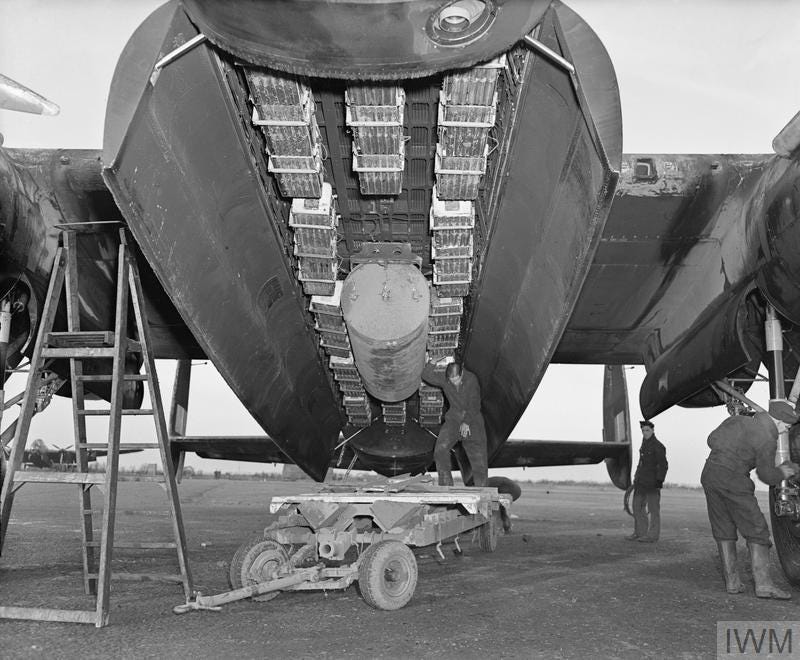
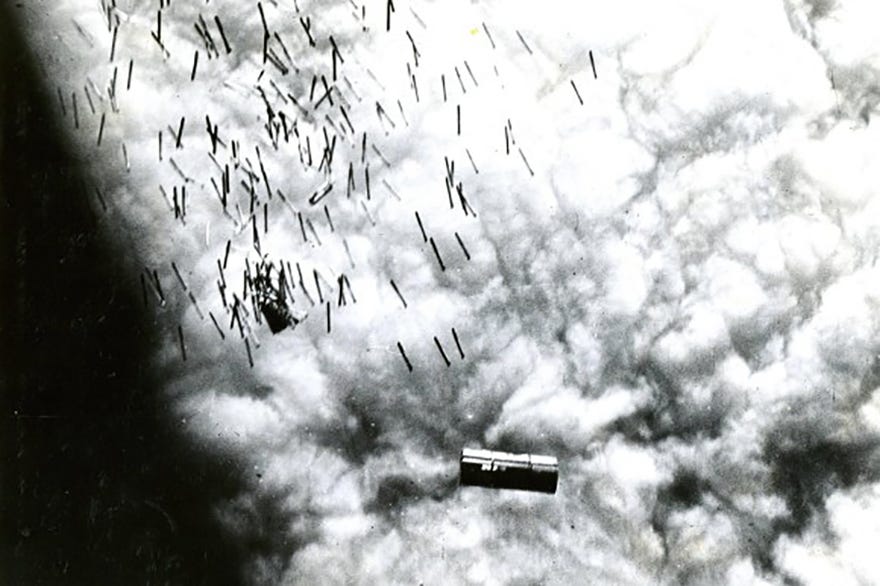
The other main type of incendiary-bomb dropped by Bomber Command was the 30-lb J-Type IB phosphorous. The Germans considered this a ‘morale weapon’ because it was impossible to extinguish with water due to its benzon-gel and was stronger than 4-lb IB. Regardless of its short life span of this type of bomb on the war over 400,000 were dropped.
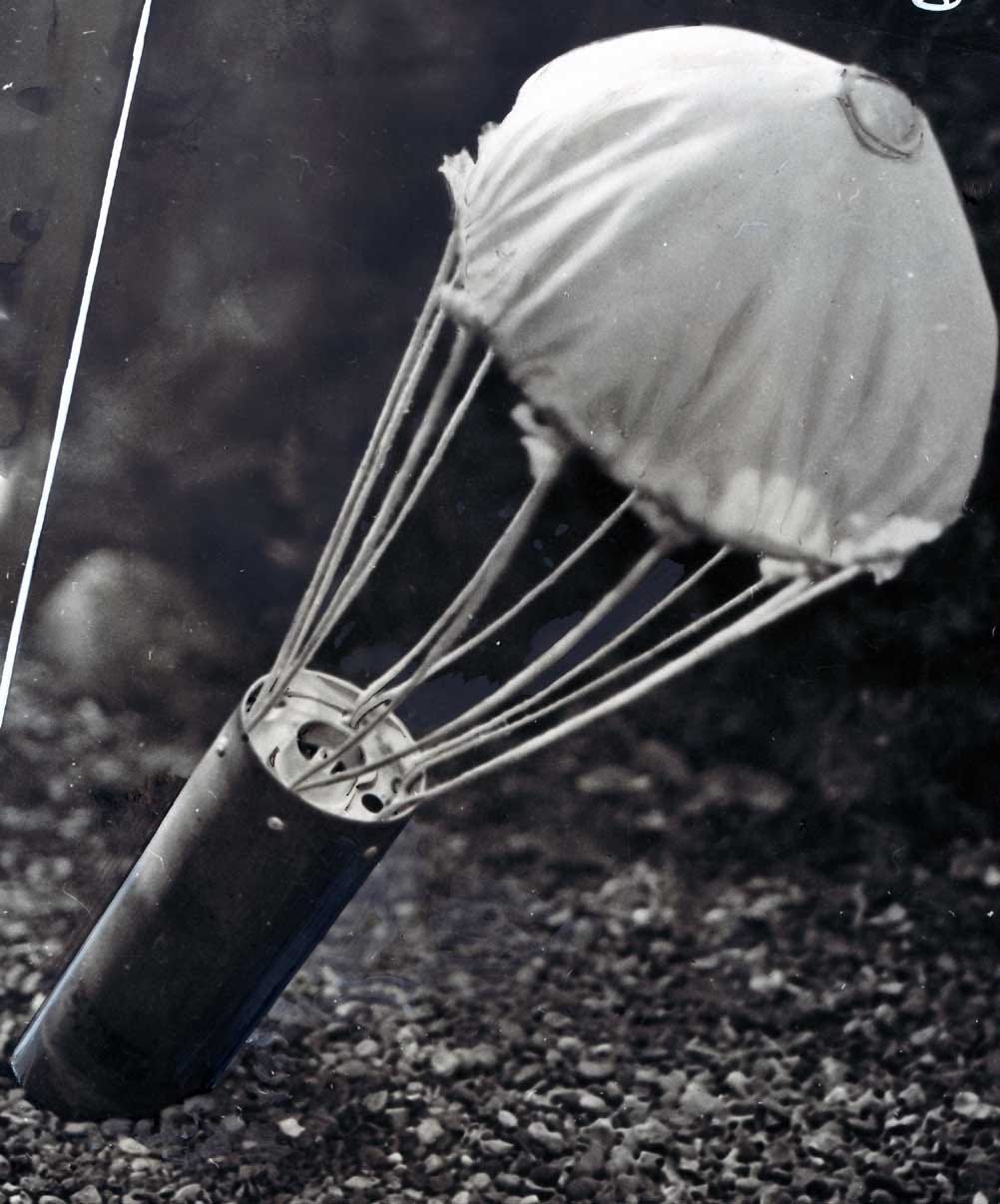
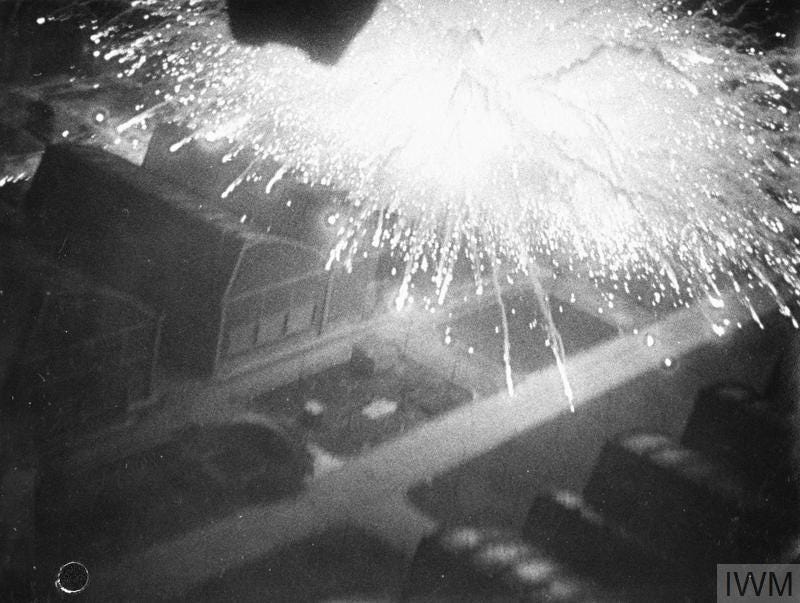
Handley Page Halifaxes usually carried the main bulk of incendiary bomb load on Bomber Command missions, so when they’re hold on reserve after high losses over Berlin in Fall 1943 the British offensive lost a high percent of fire destruction.
Breakdown, by type, of incendiary bombs dropped by RAF Bomber Command during World War 2. Source: Burls, Nina. RAF bombs and bombing. ROYAL AIR FORCE HISTORICAL SOCIETY. Journal 45. 2009.
By 1944, the percent of total incendiary bomb load in a city attack by BC was around 70 percent and this support the claims made by Arthur Harris that the incendiary bomb was the most significant type of munition deployed by Bomber Command.
Of the total percent of bombs despatched by Bomber Command during the war 20.5 % (196,256 tons) were incendiary bombs. The economic cost to Britain of manufacturing incendiary bombs for BC was approximately £73 million, which means that those weapons cost slightly more than 50 percent of the total cost spent on bombs during the entire period of the campaign.
_______________
Source:
Air ministry. RAF Armament Volume I: Bombs and Bombing Equipment. 1954
Air Studies Division Report: The Economic Effects of the Air Offensive Against German Cities, USSBS
Bolan, G T. The development of British incendiary bombs during the period of the 1939-45 World War. Armaments Design Establishment Technical Report. Ministry of Supply. December 1946. <http://bulletpicker.com/pdf/Development%20of%20British%20Incendiary%20Bombs.pdf>
Boyd, David. 4lb Incendiary Bomb. <http://www.wwiiequipment.com>
Burls, Nina. RAF bombs and bombing. ROYAL AIR FORCE HISTORICAL SOCIETY. Journal 45. 2009
Fahey, John. Britain 1939 – 1945: The economic cost of Strategic Bombing. University of Sidney, 2004
Falconer, John. Bomber Command Handbook. The History Press. 1998
Friedrich, Jörg. Der Brand: Deutschland im Bombenkrieg 1940-1945. Propylaen Verlag, Zweigniederlassung der Ullstein. 2002
Price, Alfred. Kampfflieger. Bombers of the Luftwaffe Volume Three January 1942-September 1943. Classic Publications. 2005
Thank you for reading Berlin Bombenkrieg by Pablo López Ruiz.
Please subscribe, if you haven’t yet, to comment, follow and share. All images used for non profit / educational purposes.