


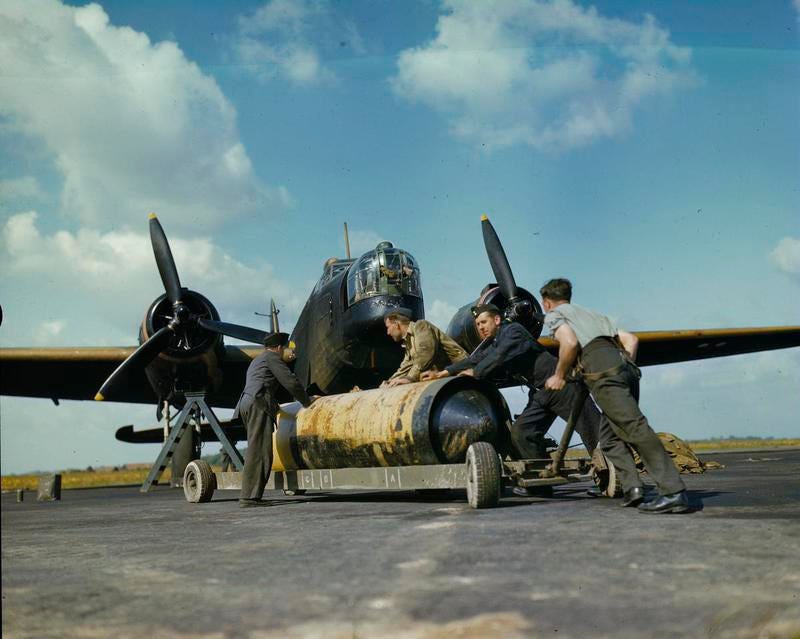
The strategic method to destroy German cities employed by Bomber Command in area bombings was based on fires caused by the incendiary bombs, and to ignite it, Great Britain had to devise a new type of weapon that would accelerate and facilitate its jump from house to house, block to block, eliminating also any obstacle that would stop it: walls and piles. A great power was necessary, which generated a formidable expansive blast wave.
In October 1940, the Air Staff required to design and develop this new range of weapons to “dehouse” the enemy’s cities: these would be named ‘High capacity’ bombs or HC.
Based on the Blitz experiences, the British learn how effective were the air-mines dropped by Luftwaffe bombers and their destructive effects in the city. An air-mine was a sea mine adapted to be dropped on land targets, usually attaching it to a parachute. A clockwork mechanism would detonate the mine 17-25 seconds after impact, detonating at roof level (the force of the blast would disperse laterally) to maximize the explosion in built-up areas and to obtain a huge ‘blast-effect’. The Luftwaffe used several types of these bombs, the most common were the 500 kg Luftmine A and the 1,000 kg Luftmine B and had a high charge ratio of 60-70 percent. They were first used against land targets on 16 September 1940 in the early stages of the air-assault against Britain.
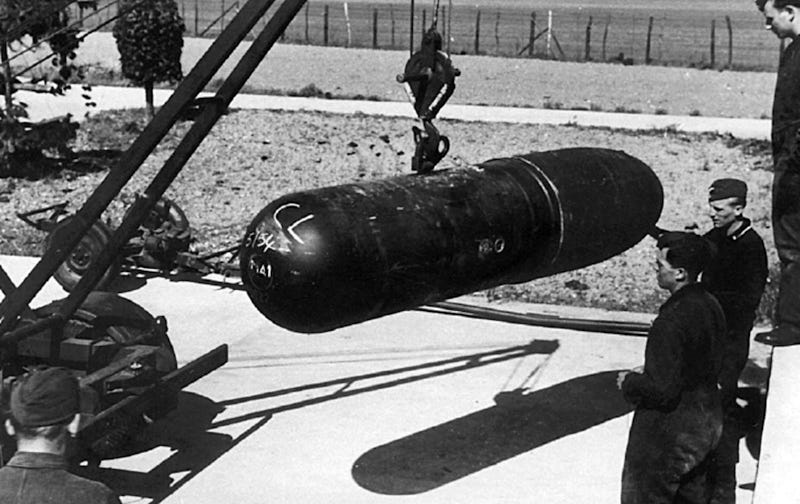
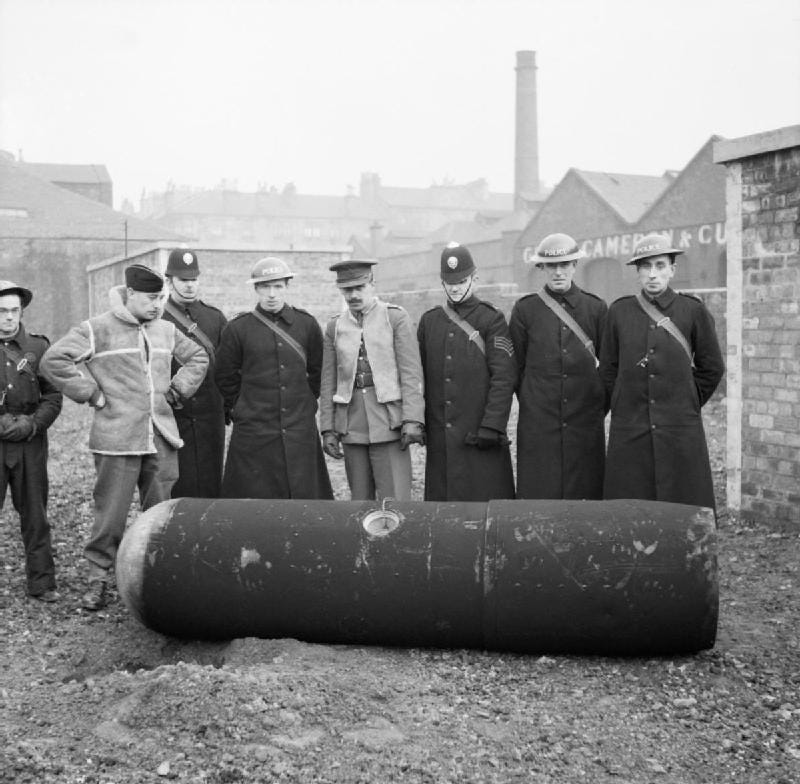
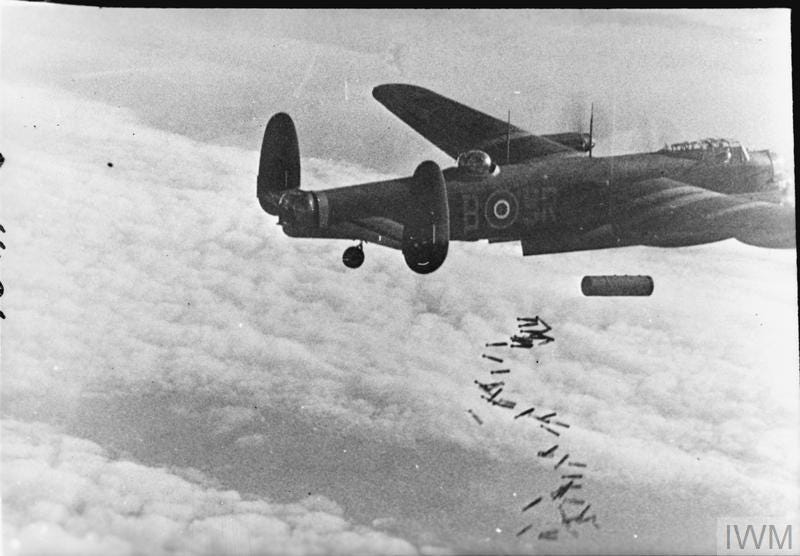
The British idea was to create a blast bomb, in a certain way inspired by those German “air-mines”, filled with a high charge ratio in the lightest possible structure, a thin steel case. HC-bombs usually used high charge to weight ratios of 70-88%. The bomb was filled with HE Amatol and sometimes this one was also mixed with TNT and aluminium powder to form ‘Torpex’ and ‘Minol’. Their lightweight construction meant that they collapsed on impact so that they had to be instantaneously fused, delayed action not being an option here. In addition, its high weight made these bombs to fall straight, blowing off roofs and windows like paper so that the small 4-lb incendiary bombs could reach the building interiors, ignite and burn, and creating in the process a flue chimney to help fire to expand.
The HC series introduced the innovator concept of modular construction and all have a crude cylindrical shape with flat noses, resembling a dust bin. The absence of tail fins made these blast-bombs had no ballistic characteristics, so when dropped they could land anywhere. The parachute of the initial series was deleted after test runs proved no need to ‘soft’ their landing and also made more unstable the weapon from 800 to 2,000 feet.
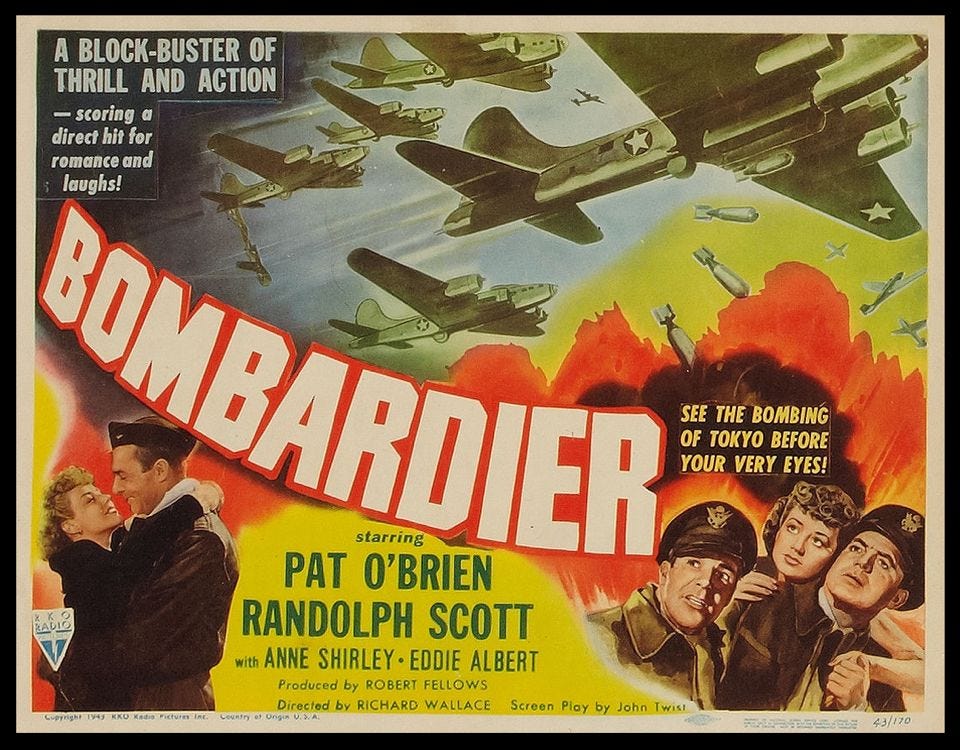
These weapons were known unofficially as ‘Blockbusters’ because of the idea that they were capable of destroying a whole block of flats in a city. The earliest press reference of this term appeared in an US United Press report dated 29 July 1942, but it didn’t appear in British press until January 1943. The start of the association of this term with the cinema apparently dates back to May 1943, when ‘blockbuster’ was used for the publicity campaign of a RKO’s war film named “Bombardier” (The tagline of the movie reads: “The block-buster of all action-thrill-service shows!”), and in 1944 in another war documentary called Marines at Tarawa (‘It hits the heart like a two ton blockbuster!’ it said…) and press became to associate it with massive impact and success (Hall S, 2014).
Germans continued to refer to it as ‘Luftminen’. British crews called them Cookies, perhaps due to their shape, but it is unknown. Others say this was a codename for an usual bomb-load consisting of a large canister - the HC, several HE bombs and a thousand incendiaries and for whatever reason the name ‘cookie’ became associated with the canister itself.
First of the large HC weapons designed was the 4,000-lb HC bomb —the so called ‘Cookie’, required initially as a mine-bomb to drop on naval targets such as harbours and ships. The device had to be able to fit into the Wellington medium bomber bomb-bay and was so big that no bomb trolley was capable of carrying such a bomb at the time. First bomb was ready in November 1940, and the great urgency for the bomb made that several were dropped already in February 1941 (first official use of these new 4,000-pounders were on 31 March/ 1 April 1941 on a raid on Emden). Initial installation of a parachute was dropped later by Air Staff but a nose spoiler was fitted to improve ballistic performance. By August, 226 bombs had been dropped but the type was not officially part of the Command’s inventory until January 1942. Their usual weight was 3,930-lb (1,786 kg). From February 1943 a new ‘proximity fused’ type of 4,000-lb HC bomb, with a wide blast-effect, was used when four Lancasters dropped them for the first time on La Spezia port in Italy.
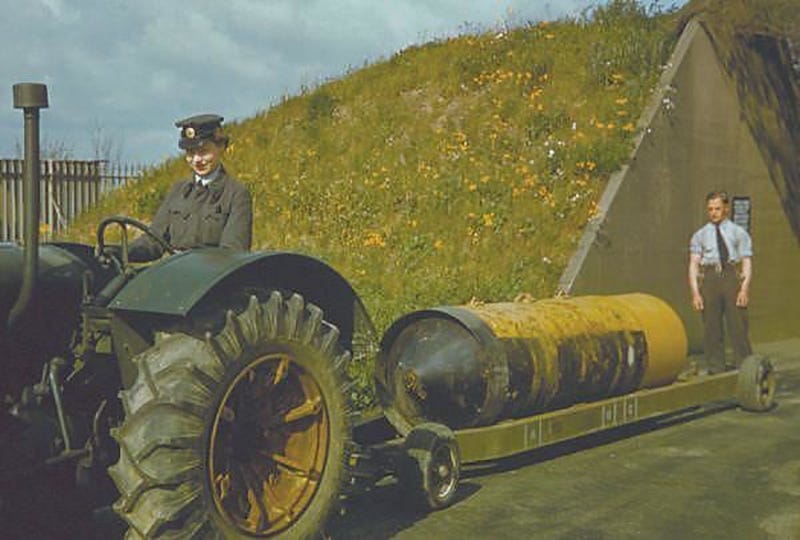
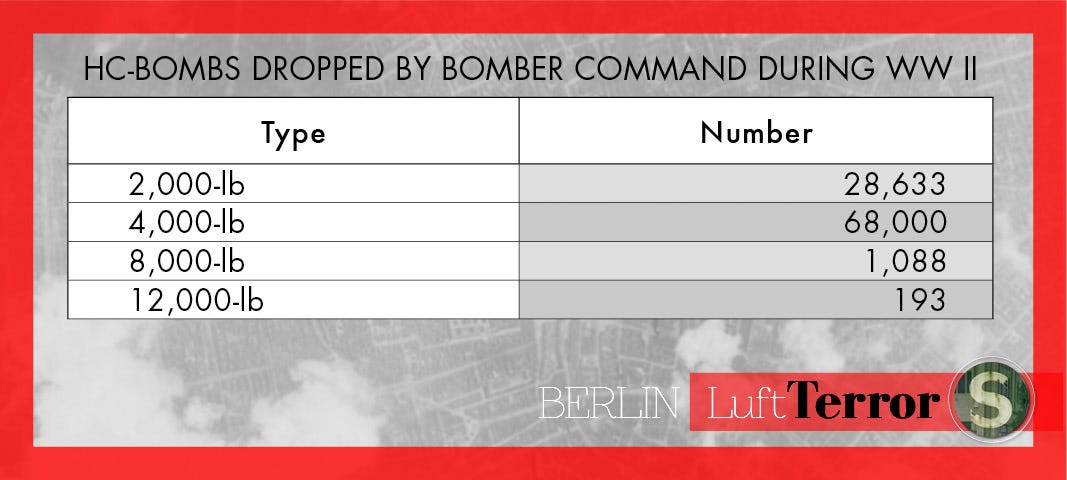
During the war 68,000 of these bombs were dropped by Bomber Command, other sources indicates a nearly 93,000 figure but it is evident that the 4,000-pounder was the mainstream weapon of the HC range; it was estimated that these bombs were 1.4 times more effective as the same weight of medium bombs at causing structural damage. Each of these blast bombs cost the British Government £163 according to existing data.
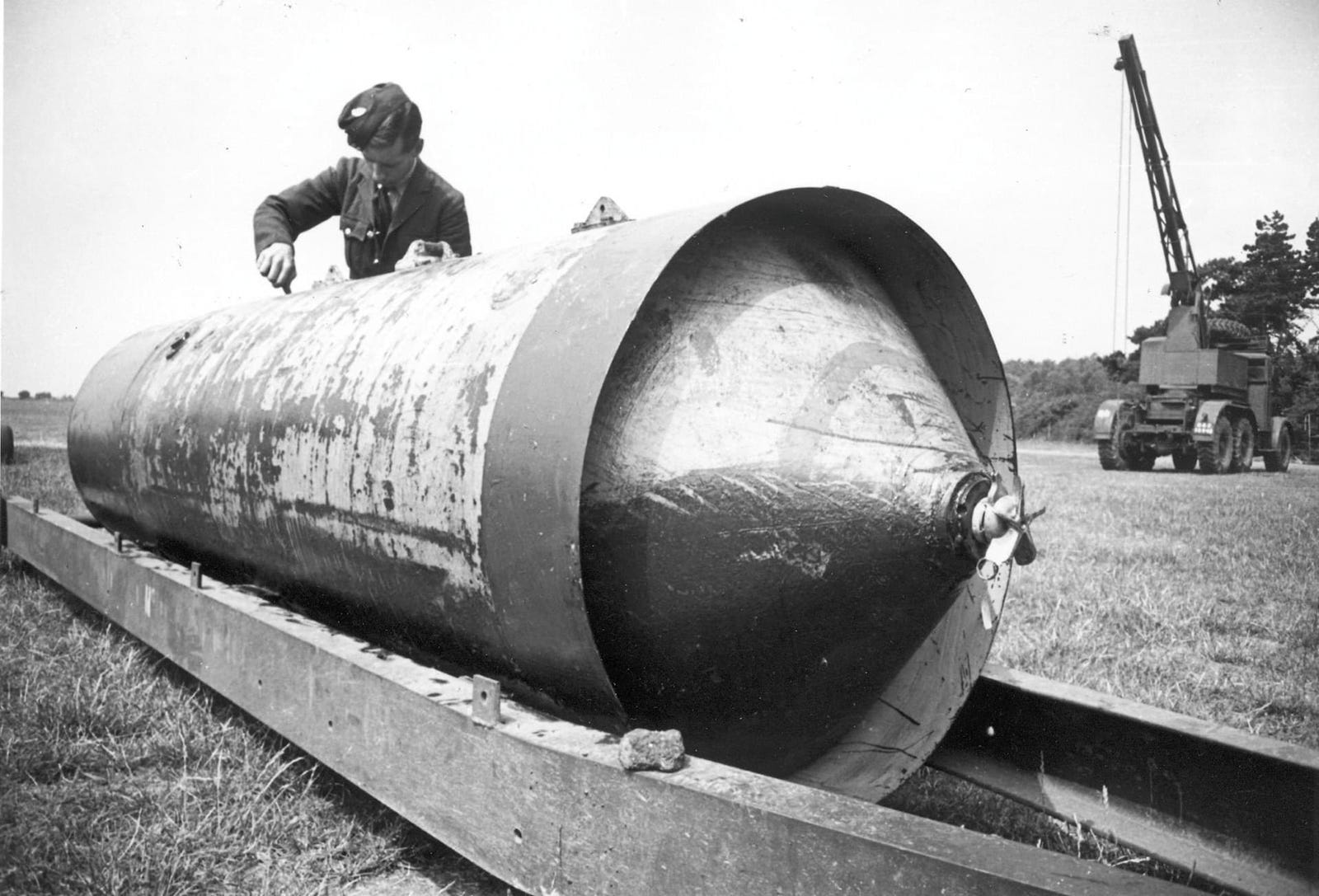
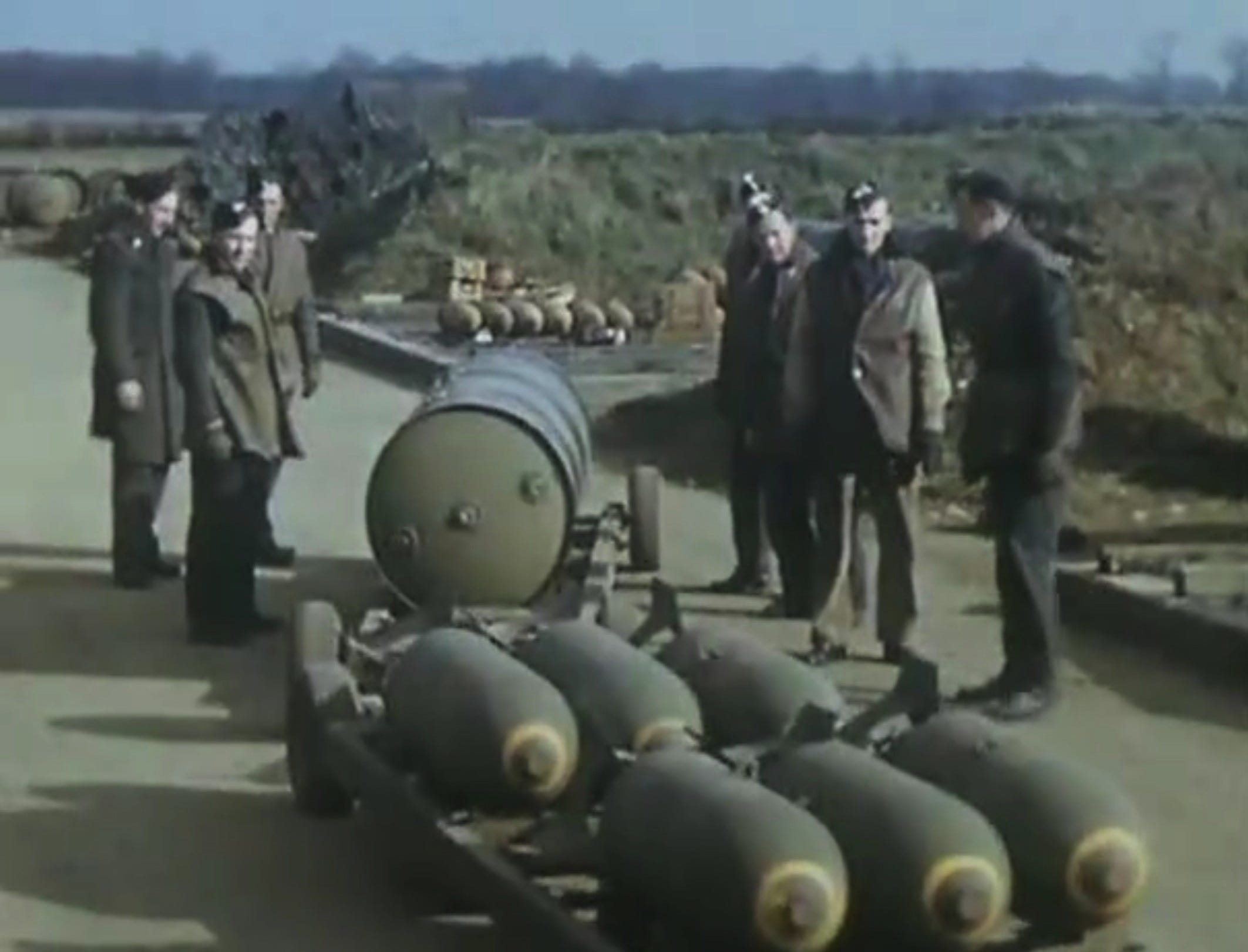
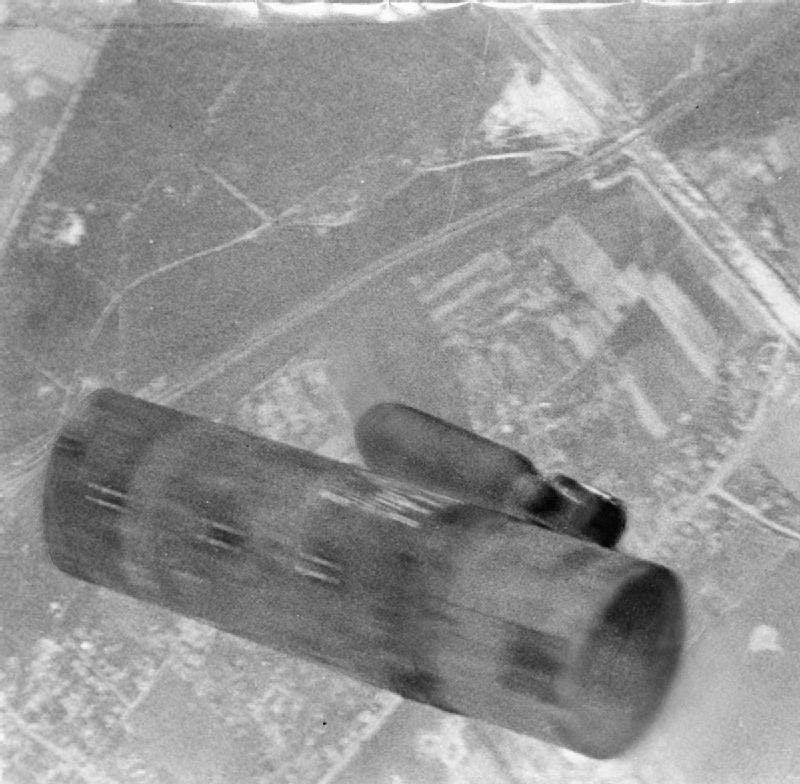
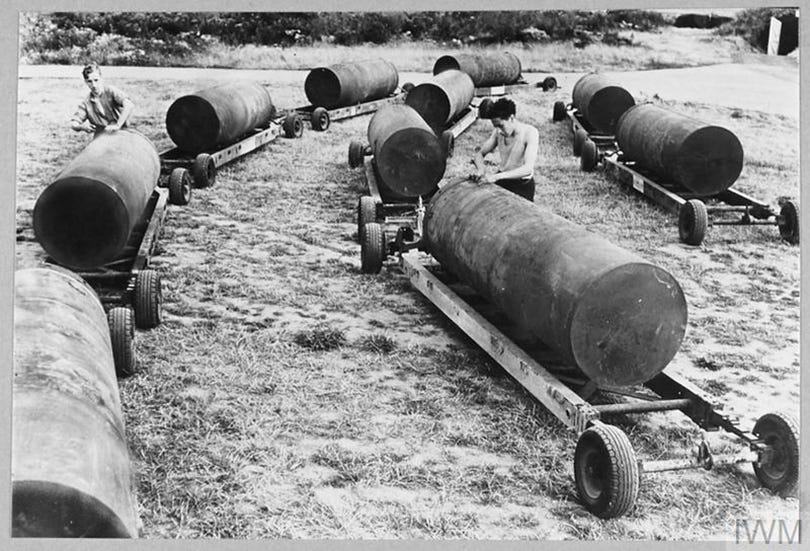
[This film was created by the US Ballistics Research Laboratory at Aberdeen, Maryland during the tests made of British 4,000 pound munitions. Video credit: Periscope Film LLC Archive.]
The 4,000-pounder was closely followed by the next variant of this type, the smaller one: 2,000-lb HC bomb. Their usual weight was 1,842-lb (837 kg). Subsequent Mark II and Mark III of this 2,000-pounders differed in detail; the conical nose was replaced with a domed nose and the number of fuzes was increased from one to three to guarantee detonation. This is the only ‘blockbuster’ bomb than can be carried and dropped by the big Short Stirling heavy bomber due to its divided bomb-bay.
The number dropped from a 194 figure in the year 1941 to a max point of 16,227 in 1944. Following development of larger bombs, this type was redesigned at the Command’s request and incorporated the use of a ballistic tall unit. The new variant became available for use in August of 1942 and remained a part of the RAF general inventory throughout the remainder of the conflict. A total of 28,633 of these weapons were dropped by Bomber Command during the war.
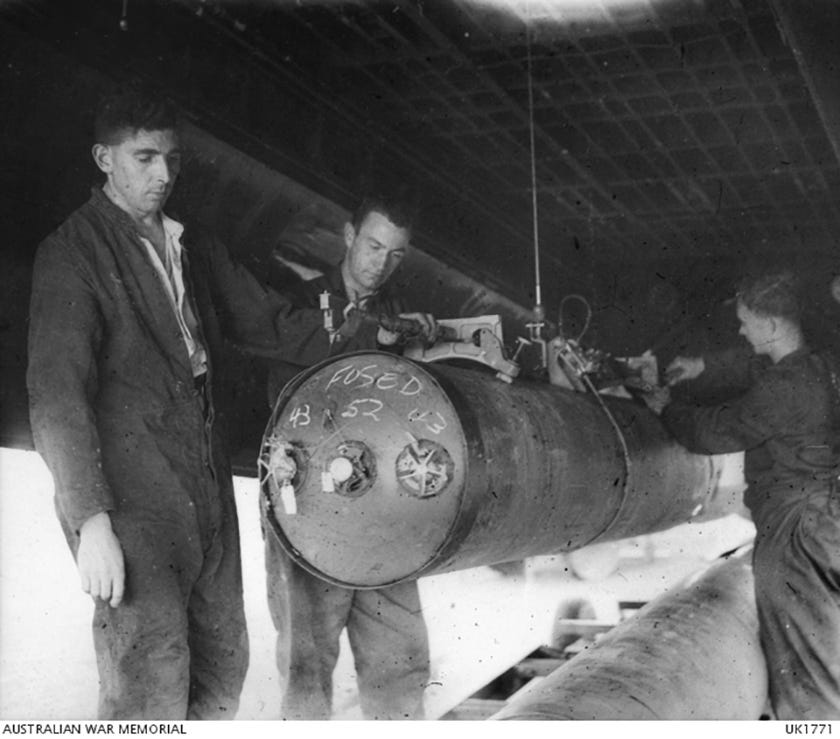
In 1942, a larger version of the blast bomb was developed by joining together two 4,000-lb HC bomb sections, creating the 8,000-lb High Capacity bomb (‘super cookie’) which although similar in design to the standard ‘Cookie’ were actually shorter in length and of larger diameter, so even the Lancaster bomber had to be modified to carry this weapon (bulged bay-bomb doors).
Their usual weight was 7,860-lb (3,572 kg). Only the front section was fused and this in turn detonated the connecting section by blast wave. These bombs were deployed against similar targets but in shorter numbers, this was because when testing, the sections of the 8,000-pounder were found to be inferior to a single 4,000-lb HC bomb. 1,088 of them were used in combat during the war.
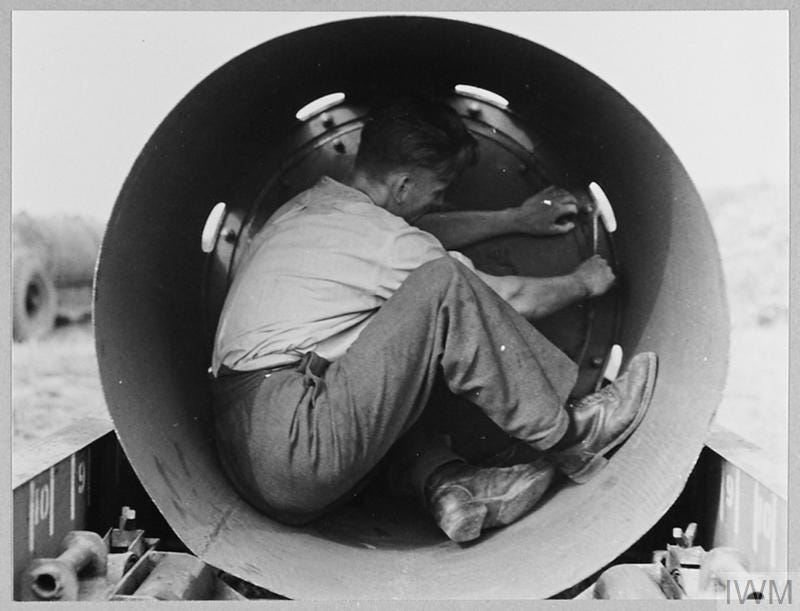
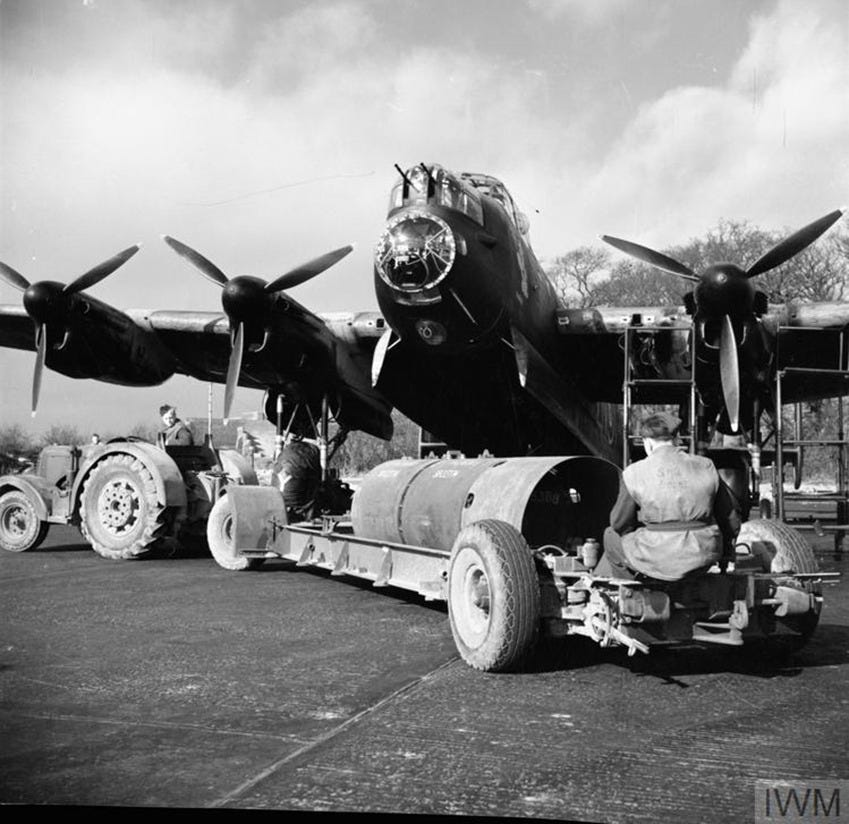
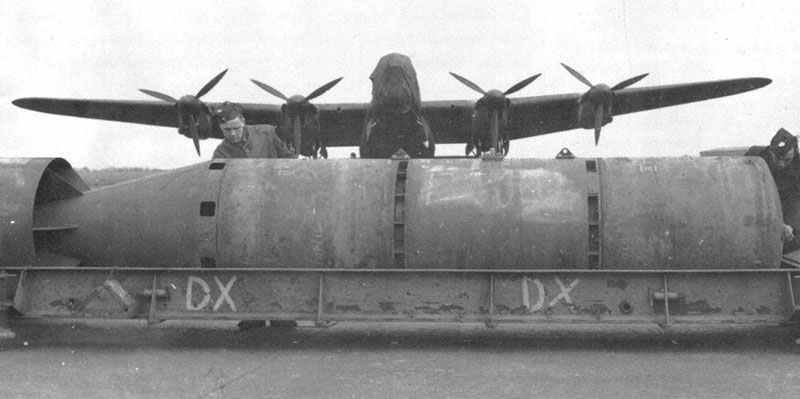
Finally, the RAF employed the biggest model of this series, the 12,000-lb HC bomb (5,425 kg was their usual weight) filled with Torpex explosive and fused with three nose position fuzes. This ‘super cookie’ bomb was developed in 1942 after a study of the Air Staff for a large weapon. It was created essentially with three 4,000-lb ‘Cookies’ bolted together with the addition of a six-finned ballistic tail, but actually the bomb was shorter due to the need to fit it into the Lancaster bomb-bay; loaded it took aprox. 35 minutes and four men to prepare it.
But this weapon was rarely used against targets like cities, they were primarily reserved to special precision targets or factories. First use of this bomb was on September 14, 1943, when No 617 Sqn attacked the heavily defended Dortmund-Ems Canal. Just 193 of these big-size bombs were dropped by RAF Bomber Command during the war, most of them expended by the ‘special’ No 617 Squadron with not much success.
[Video credit: Buyout Footage Historic Film Archive.]
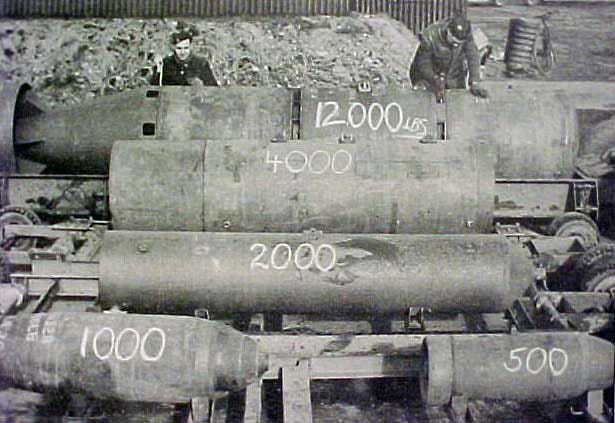
The following image summarizes part of the RAF’s blast-bombs family: armourers show off bombs for a comparison in size at the bomb dump at RAF Woodhall Spa, Lincolnshire. In the front are 1,000-lb and 500-lb MC bombs, behind them a 2,000-lb HC Mark I, then a 4,000-lb HC Mk III or Mk IV ‘Cookie’. Finally, at the rear, is a 12,000-lb HC ‘Blockbuster’.
This table shows, by type, the number of HC-bombs dropped by RAF Bomber Command during World War 2. Source: Burls, Nina. RAF bombs and bombing. ROYAL AIR FORCE HISTORICAL SOCIETY. Journal 45. 2009.
_______________
Sources and Bibliography:
Airminded. Airpower and British society, 1908-1941. The first Blockbuster. <https://airminded.org/2012/11/14/the-first-blockbuster/>
Air Ministry. (1954). RAF Armament Volume I: Bombs and Bombing Equipment.
The United States Strategic Bombing Survey. Air Studies Division Report: The Economic Effects of the Air Offensive Against German Cities, USSBS
Bowman. (2012). Martin W. Bomber Command Reflections of War. Volume: 2. June 1942-Summer 1943. Pen & Sword Aviation
Boyd, David. 4000lb High Capacity Bomb. <http://www.wwiiequipment.com>
Burls, Nina. RAF bombs and bombing. ROYAL AIR FORCE HISTORICAL SOCIETY. Journal 45. 2009
Fahey, John. (2004). Britain 1939 – 1945: The economic cost of Strategic Bombing. University of Sidney
Falconer, John. (1998). Bomber Command Handbook. The History Press
Friedrich, Jörg. (2002). Der Brand: Deutschland im Bombenkrieg 1940-1945. Propylaen Verlag, Zweigniederlassung der Ullstein
Goss, Chris. (2018). Heinkel He 111: The Latter Years - the Blitz and War in the East to the Fall of Germany. Pen & Sword Books Ltd
Hall, Sheldon (2014). Pass the ammunition: a short etymology of “Blockbuster”. In: Elliott, Andrew B.R., (ed.) The Return of the Epic Film. University Press, 147-166
Johnson, George. (2014). The last British Dambuster: one man’s extraordinary life and the raids that changed history. Ebury Press
Lake, Jon. (2002). Lancaster Squadrons 1944–45. Osprey Publishing
Middlebrook, Martin. (1988). The Berlin raids. RAF Bomber Command Winter 1943-44. Cassell & Co
Overy, Richard. (2013). The Bombing War: Europe, 1939-1945. Allen Lane
The Strategic Air War Against Germany 1939-1945 – The Official Report of the British Bombing Survey Unit (Introduction by Sebastian Cox). Frank Cass. 1998
Worral, Richard. (2019). BATTLE OF BERLIN 1943–44. Bomber Harris’ gamble to end the war. Osprey Publishing
Thank you for reading Berlin Bombenkrieg by Pablo López Ruiz. Please subscribe, if you haven’t yet, to comment, follow and share. All images used for non profit / educational purposes.