


‘Step into the roaring twenties and experience the vibrant nightlife of Berlin’s Central Hotel and Wintergarten’
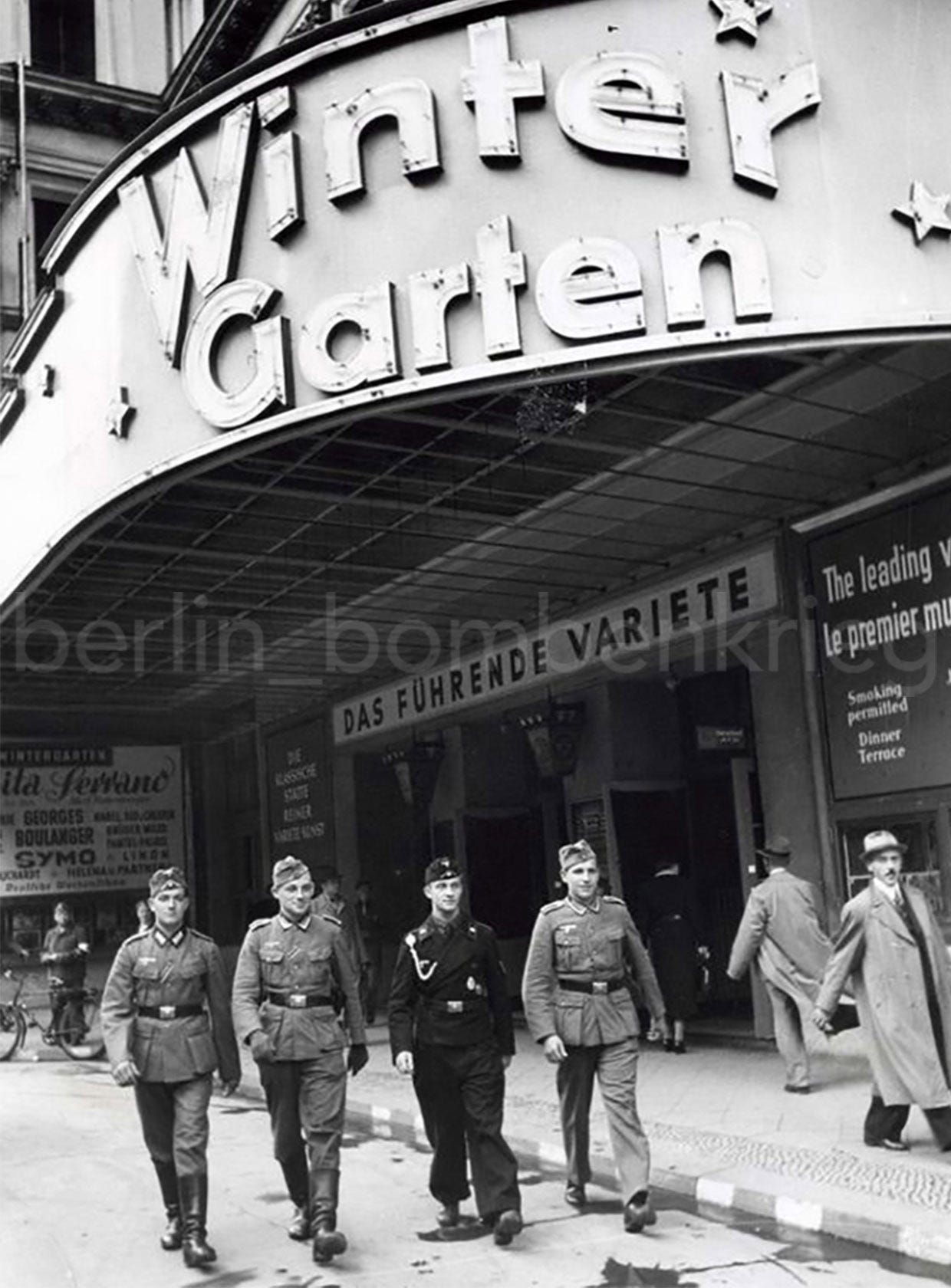
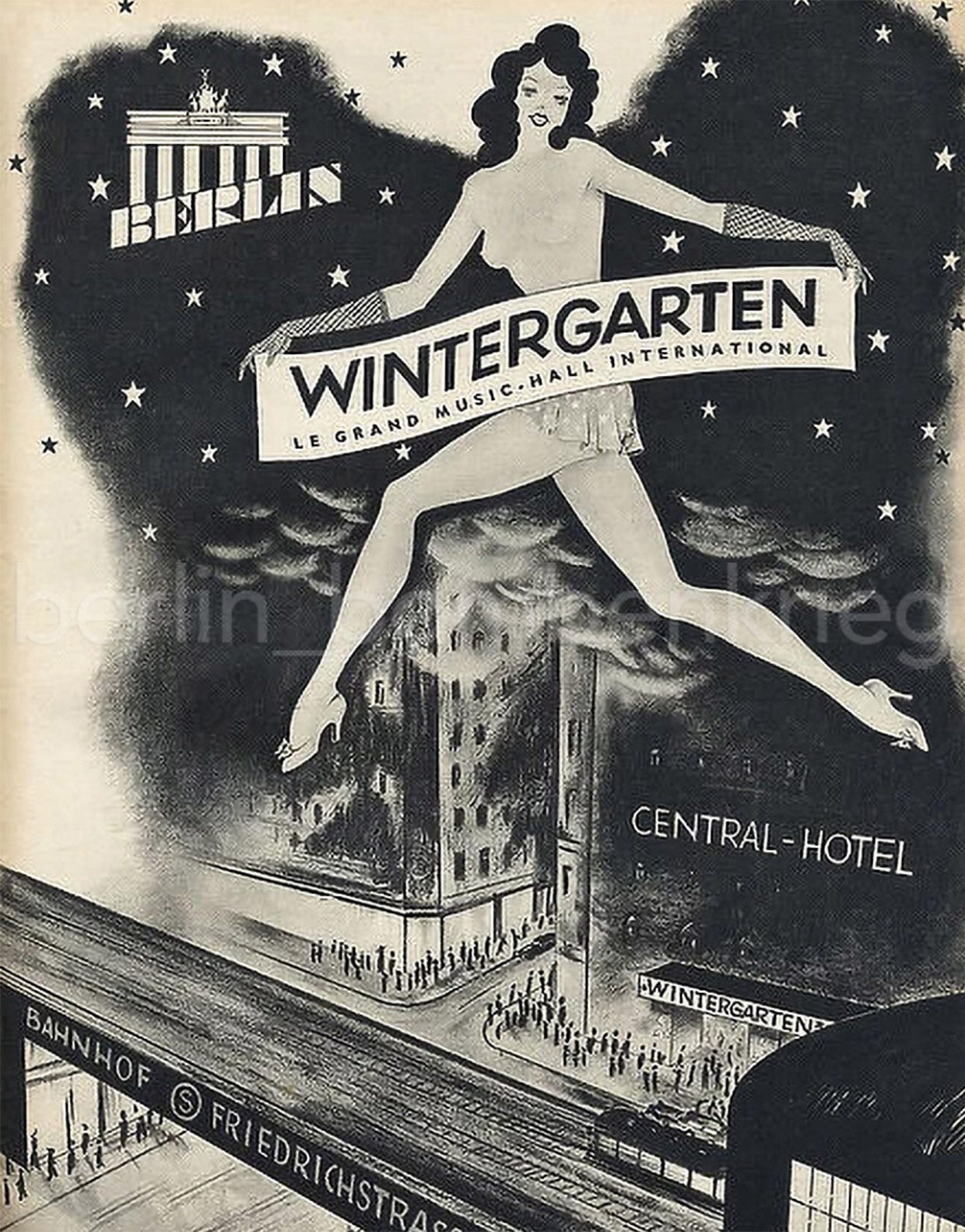
The Wintergarten (Friedrichstraße Nr 143-149) was one of Berlin’s best-known variety theatres located in the heart of the city, a popular destination for locals and tourists alike.
Owned by Hermann Gebers, this important theatre located north of the Unter den Linden boulevard opened originally as a recreational hall part of one of the most iconic hotels in the Berlin-Mitte district: the Central-Hotel (built in 1877-78). The large and cosmopolitan hotel, located very close to the Friedrichstraße Bahnhof (known then as the ‘Central train station’) and similar to London and Paris neo-Renaissance and luxury-style hotels of the time, runned almost 100 meters long from the Dorotheenstraße corner to Georgenstr. In the inner courtyard, the hotel had a palm garden with a glass roof and vaulted ceiling dome, a place for guests to relax and for music concerts (a winter garten, quite popular in Wilhelmine Germany) as well as a café-restaurant.
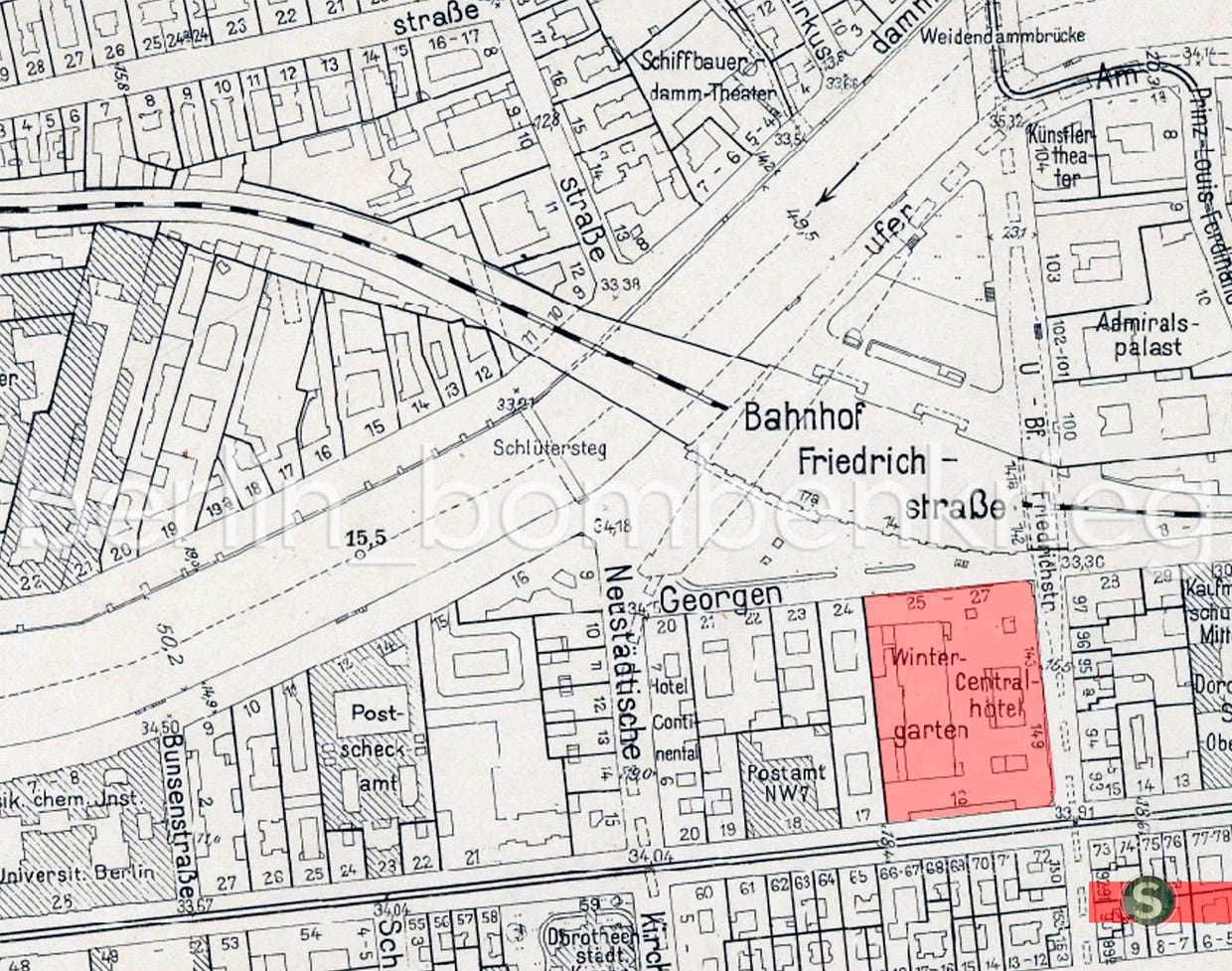
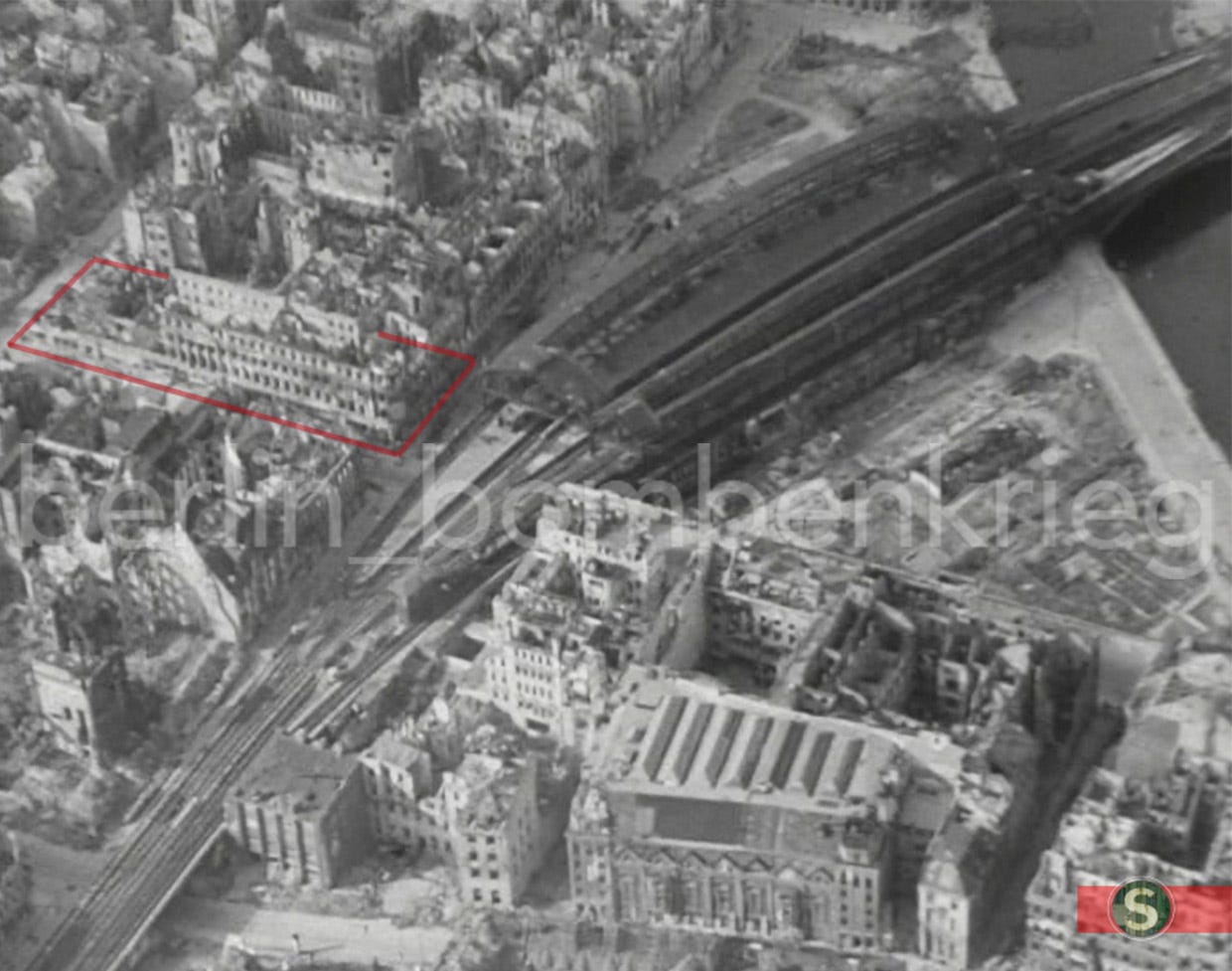
This street map, dated 1940, shows the large property occupied by the Central-Hotel and its close location to the Friedrichstraße train station. The hotel had three street facades (Dorotheenstraße-Georgenstr-Friedrichstr.) with several entrances and two corner turrets topped with cupolas. The elongated inner courtyard which housed the Wintergarten is clearly seen in this plan view.
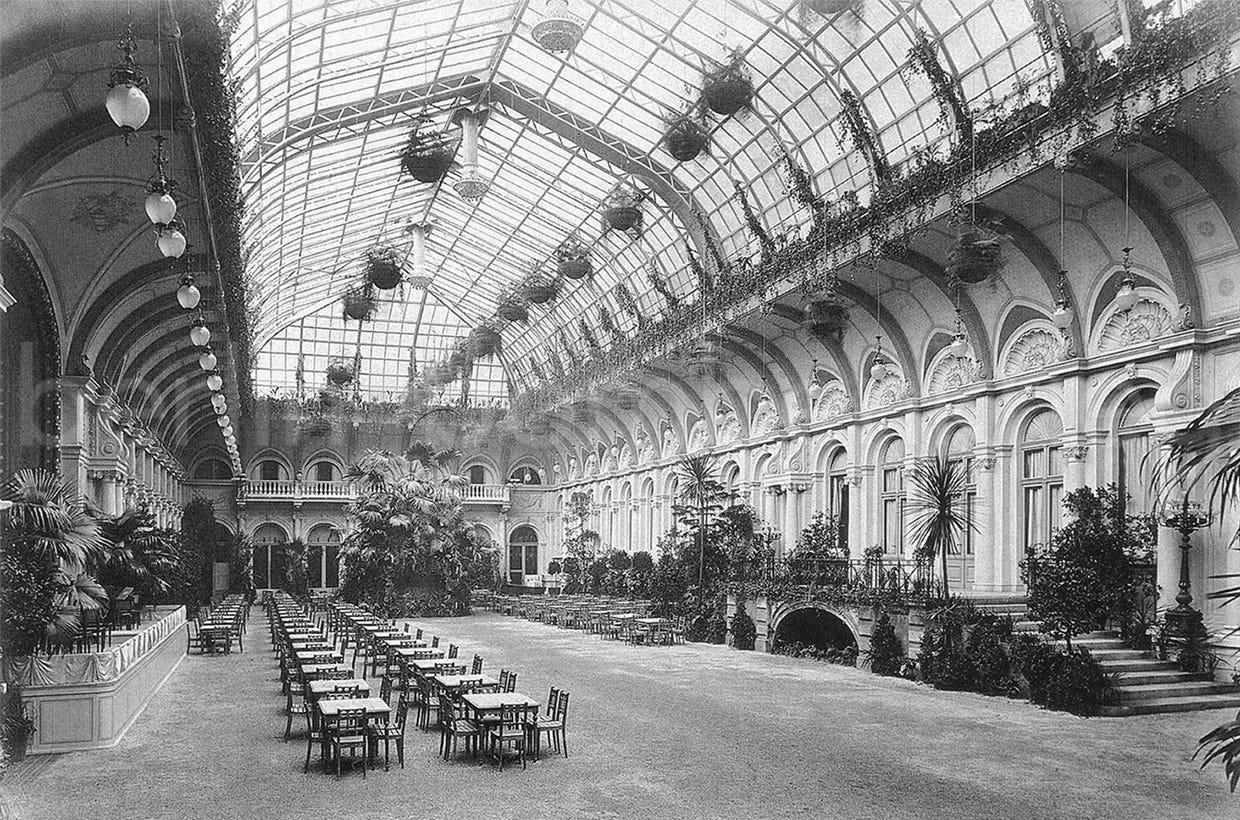
Berliner actor Franz Dorn and Hungarian Julius Baron took over the winter garden and, after heavy renovation work opened as a theatre in 1887: the new Garten hall had a multi-use variety as a venue for concerts adding theatrical performances, shows, revues and operettas through the combination of band, singers and dancers to the famous hotel. The Skladanowsky brothers showcased the first short movie presentation ever here in November 1895, making it the first movie theatre in history too (“the first projections of film in Europe to a paying audience”). Against a background of inflation and depression, Berlin drew the talent and energies of the rest of Germany towards its glittering cabaret shows and burgeoning sex-tourism industry, which attracts artists, writers, and intellectuals from around the world. The hall was rebuilt again in the 1930s under the new direction of Ludwig Schuch, becoming one of the largest and most modern theatres in Europe.
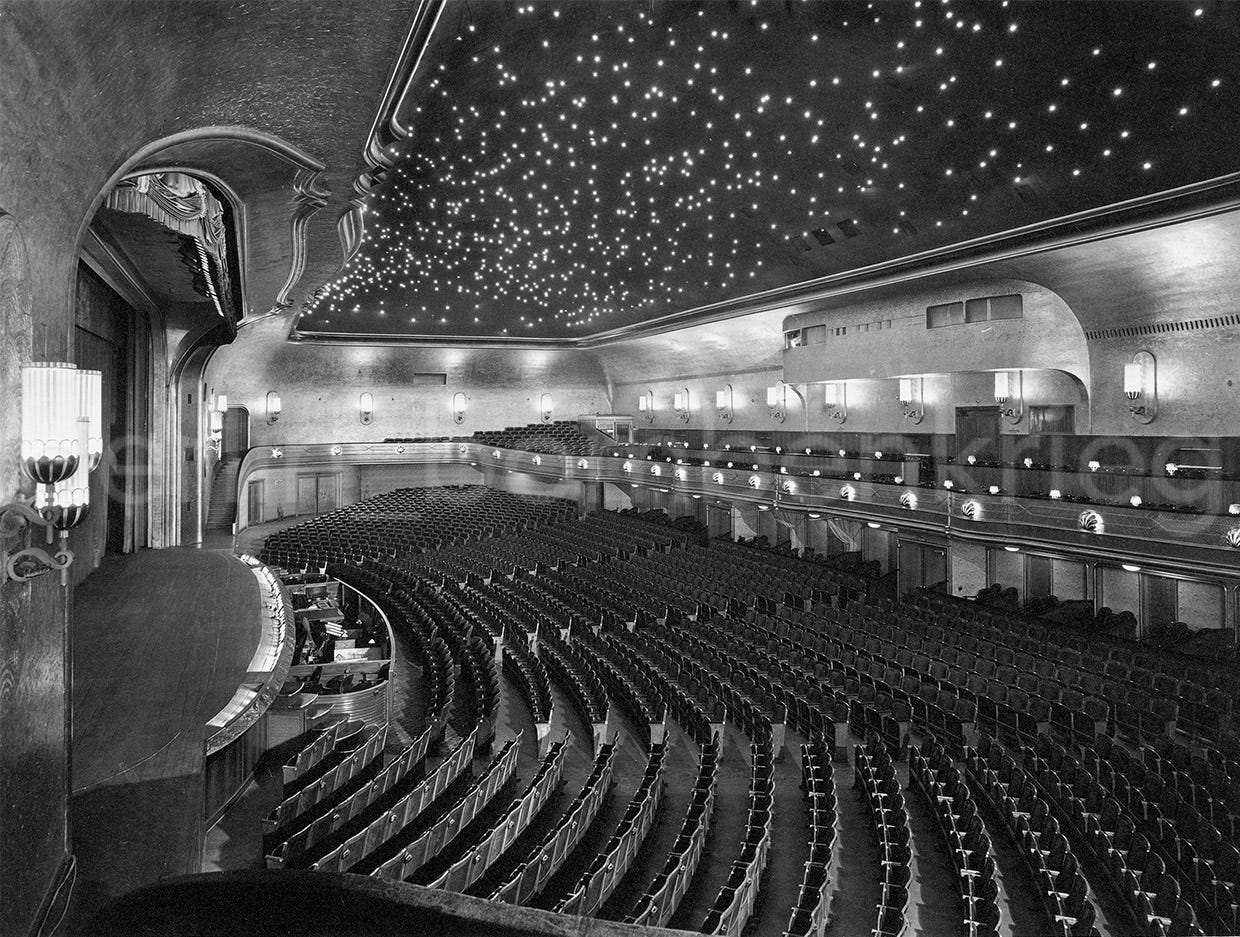
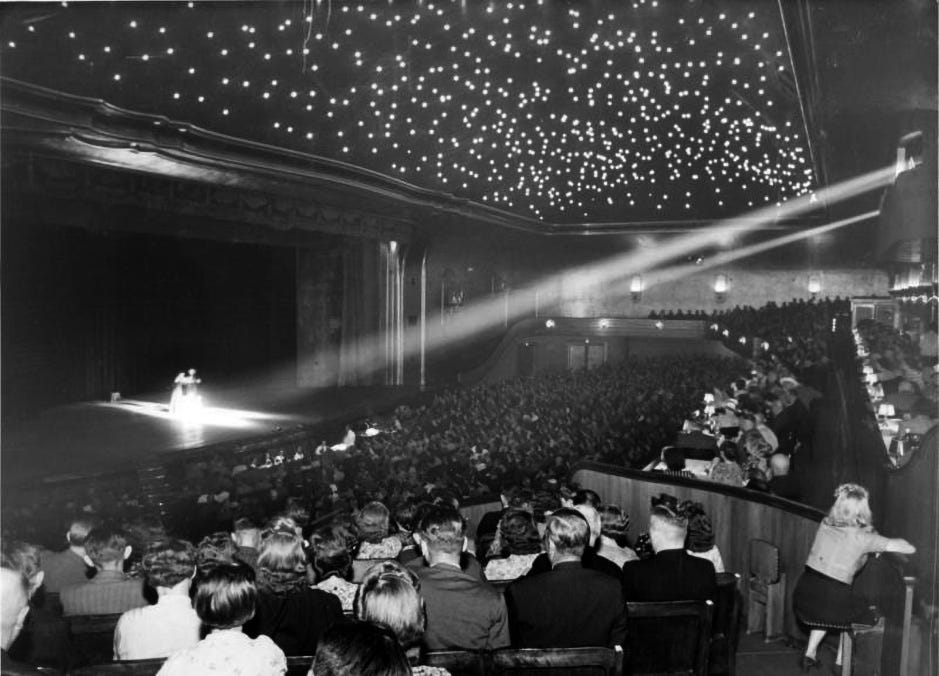
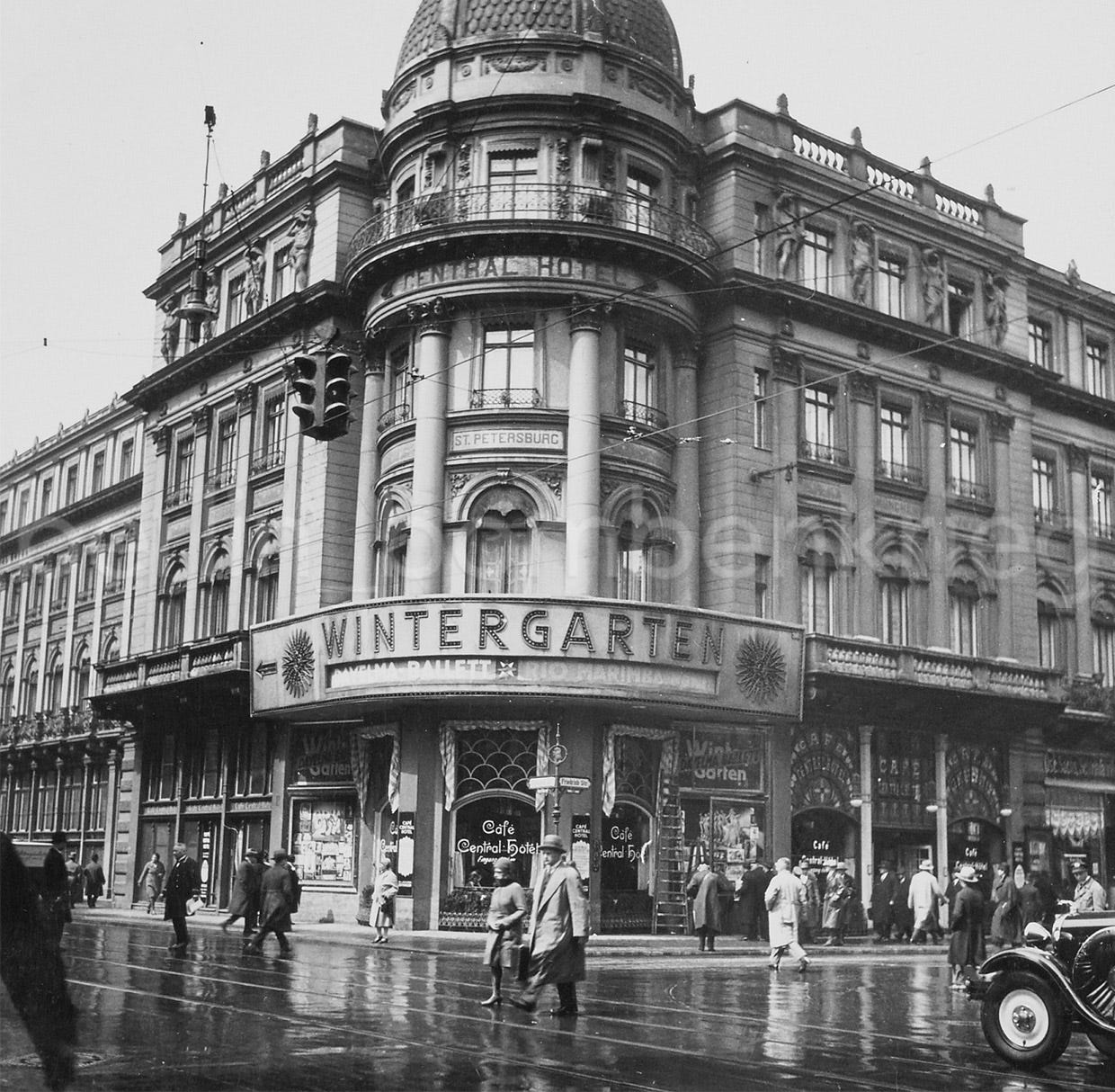
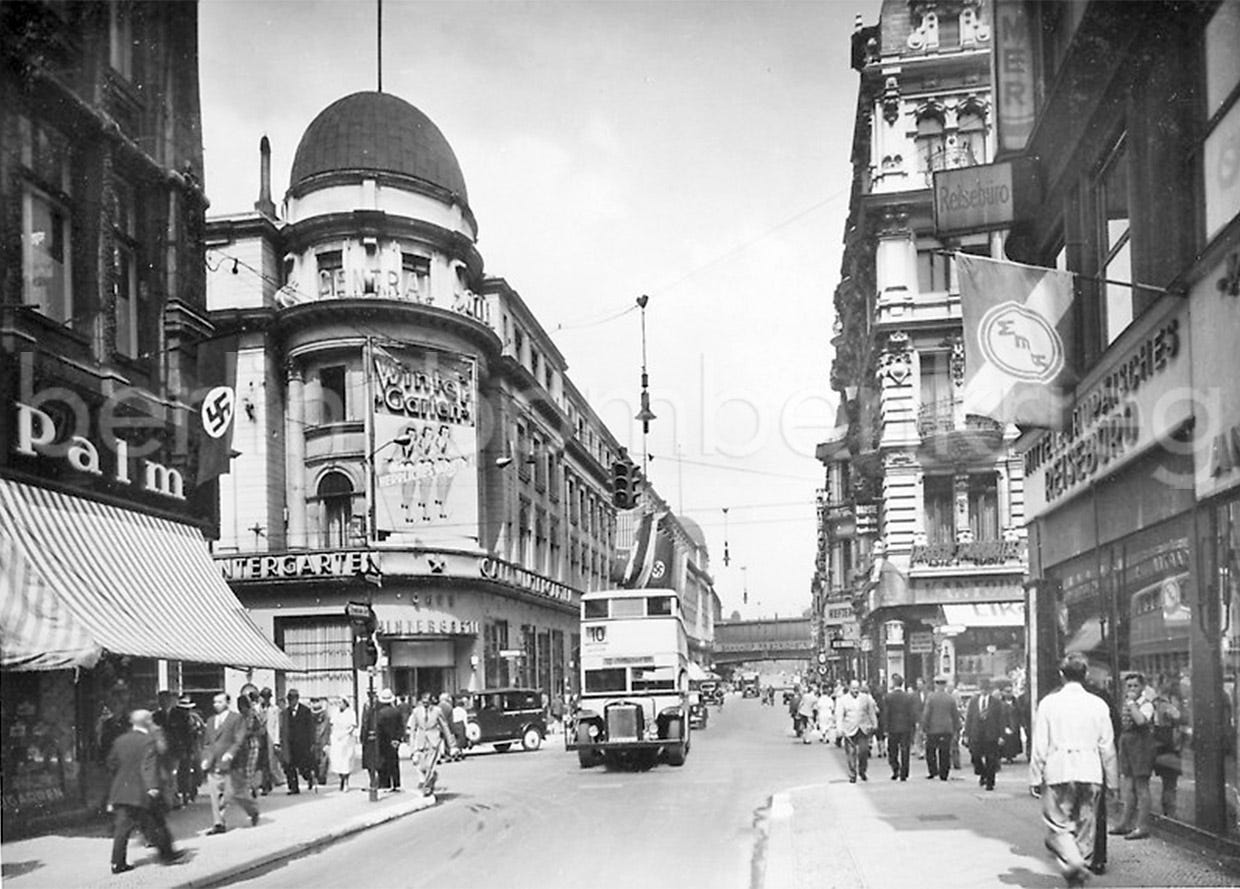
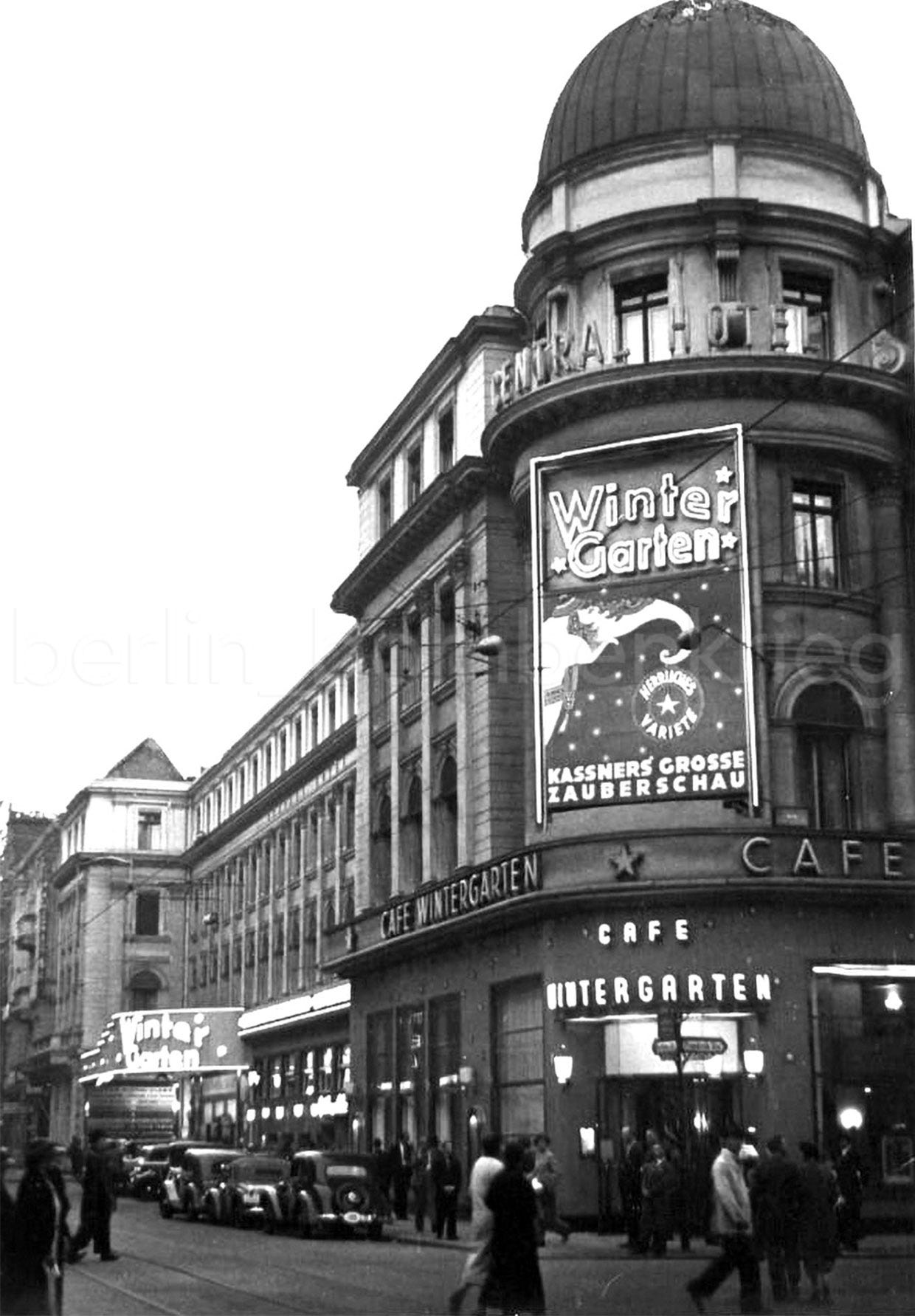
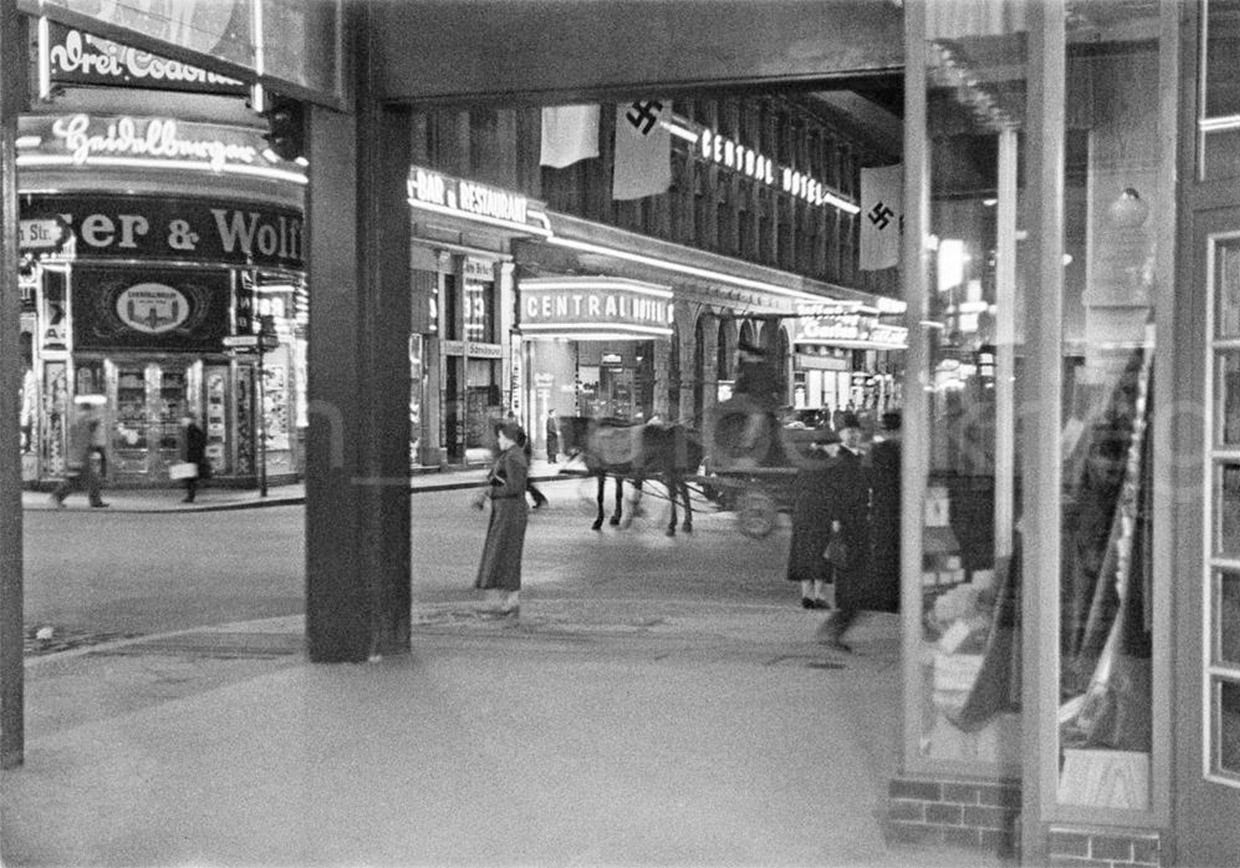
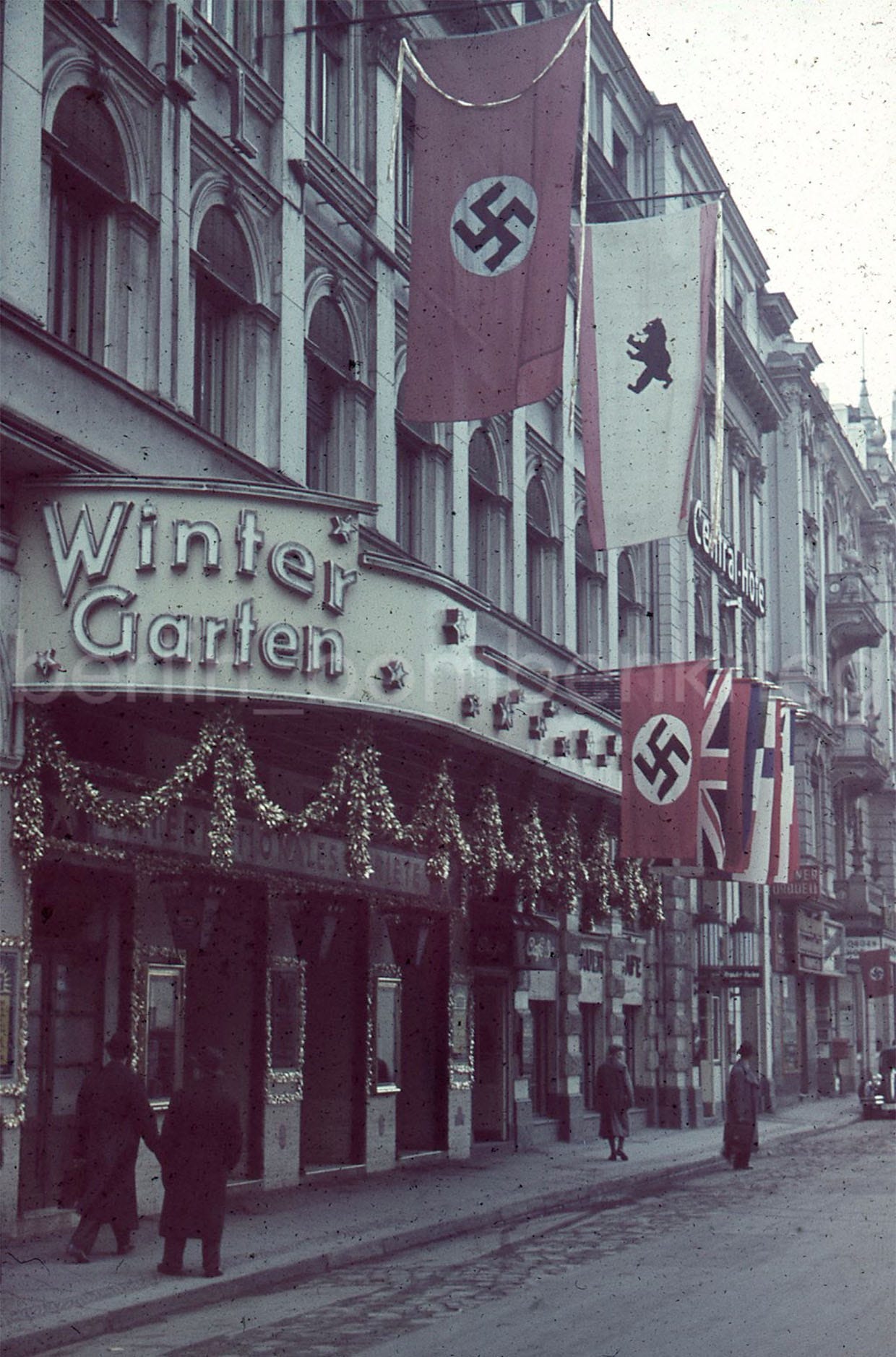
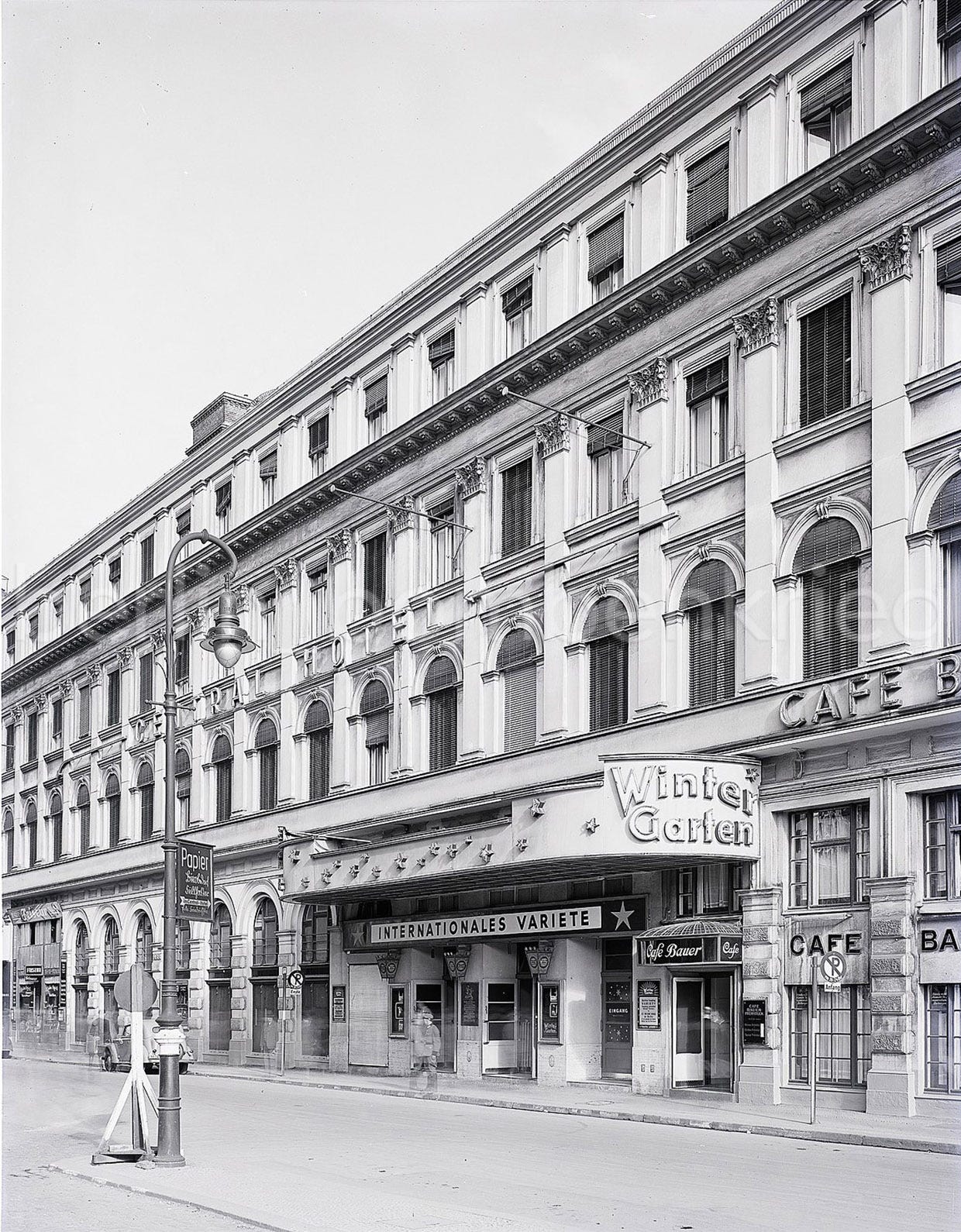
Here are some views of the exterior facade of the Central-Hotel and the WinterGarten (note the station’s railway bridge in the background) in the 1930s, when the German capital was run by the Nazi regime.
Bombenkrieg 1940-1945
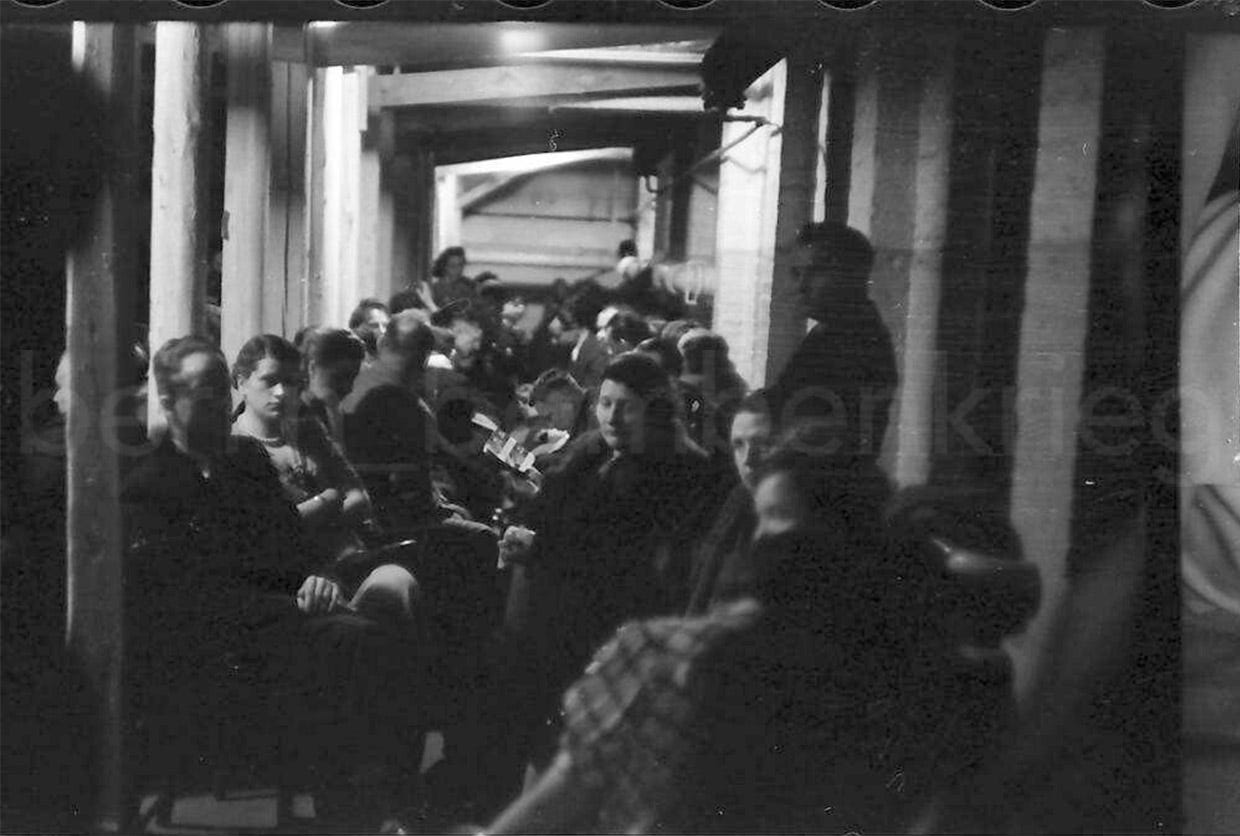
The Wintergarten was hit several times during the war by Allied air raids. Its proximity to the important Friedrichstraße Bahnhof as well as the government district of the capital —where Hitler’s Chancellery was located—, caused that this area would be fiercely bombed by the enemy. The train station was marked as ‘primary target of opportunity’ in the case the bombers encountered Berlin covered by clouds or smoke so, not surprisingly, bombs fell close of the hotel on every British and American bombardment. Anyway, the Central wasn’t hit until March 1943, when the RAF resumed its bombing campaign on the German capital. Incendiary bombs dropped on that night by 251 British bombers (1/2 March, 1943) caused minor damage on the building’s roof and left several adjacent houses at Dorotheenstraße in flames.
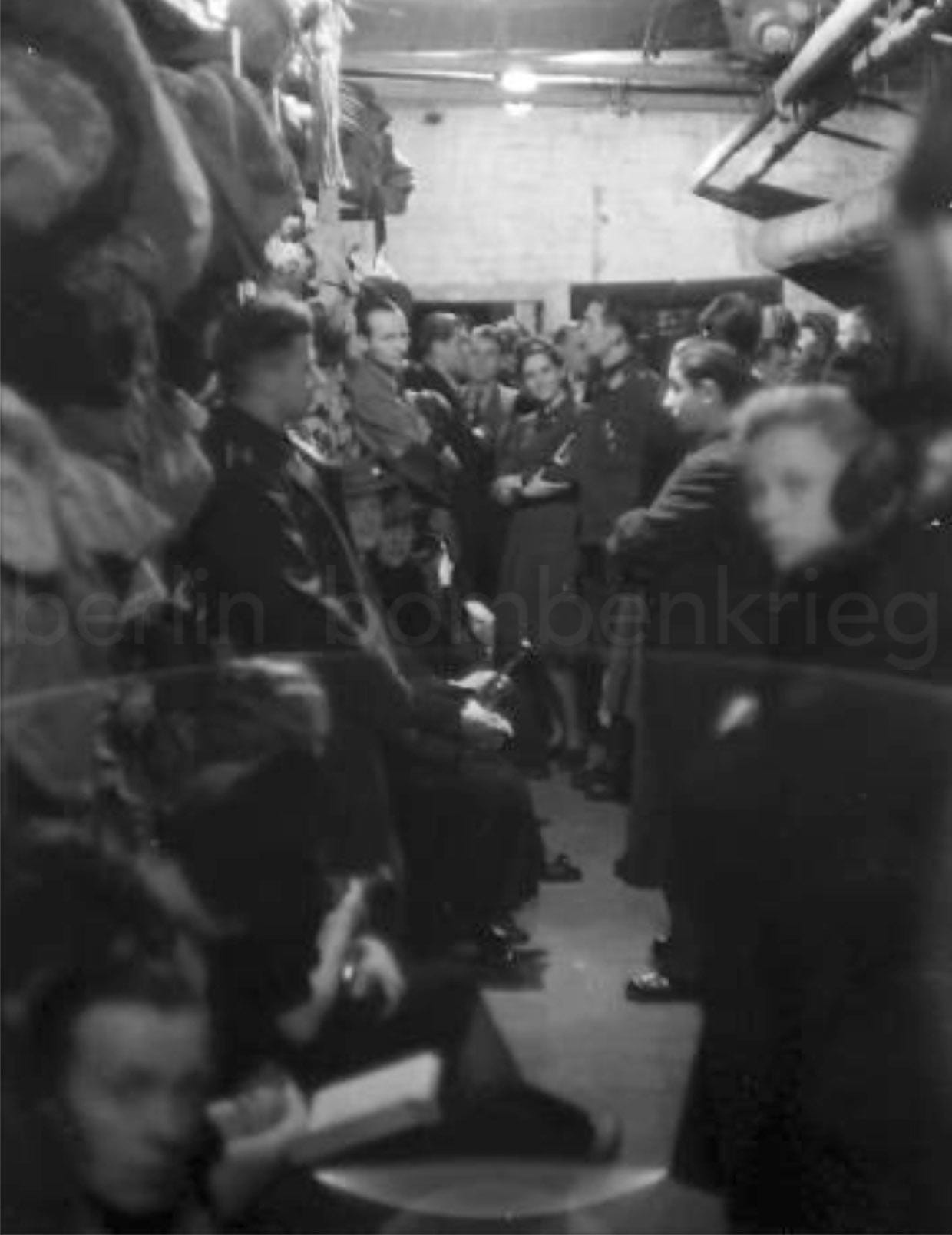
Nearly a year later, when the British air offensive reached its maximum level (the so called ‘Battle of Berlin’) the Hotel was hit again by the RAF on 28/29 January 1944 (608 Bomber Command aircraft dropped their bombs on that night over Berlin), causing fire-damage on the building, especially on the roof. City records reported numerous areas of damage on both sides of Friedrichstraße, especially by incendiary bombs.
Finally, the theatre collapsed under the carpet of bombs dropped by the Americans during the last year of the war. After some close calls, the southern part of the building was hit by US bombs and destroyed on June 21, 1944, during a big daylight raid by 606 Eighth Air Force heavy bombers: it was the 211th air-alarm of the war on Berlin and the attack left the ‘Zentral-Hotel’ in ruins and gutted by fire (Friedrichstraße Bhf received a direct hit too). In the spring of 1945 this popular area was totally wiped out during the large US attacks on Berlin-Mitte, especially by the February 3rd and March 18th raids. Following the destruction of the original Wintergarten by Allied bombers, the Café-Restaurant was briefly reopened a few metres away in the Georgenstraße facade during the final months.
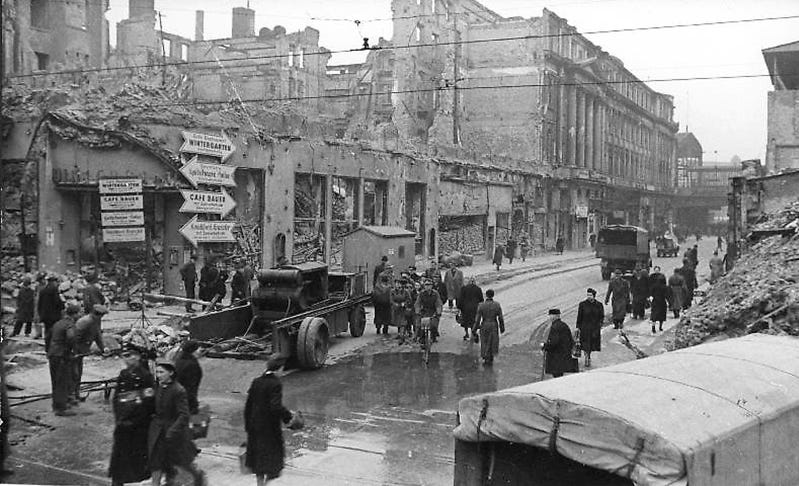
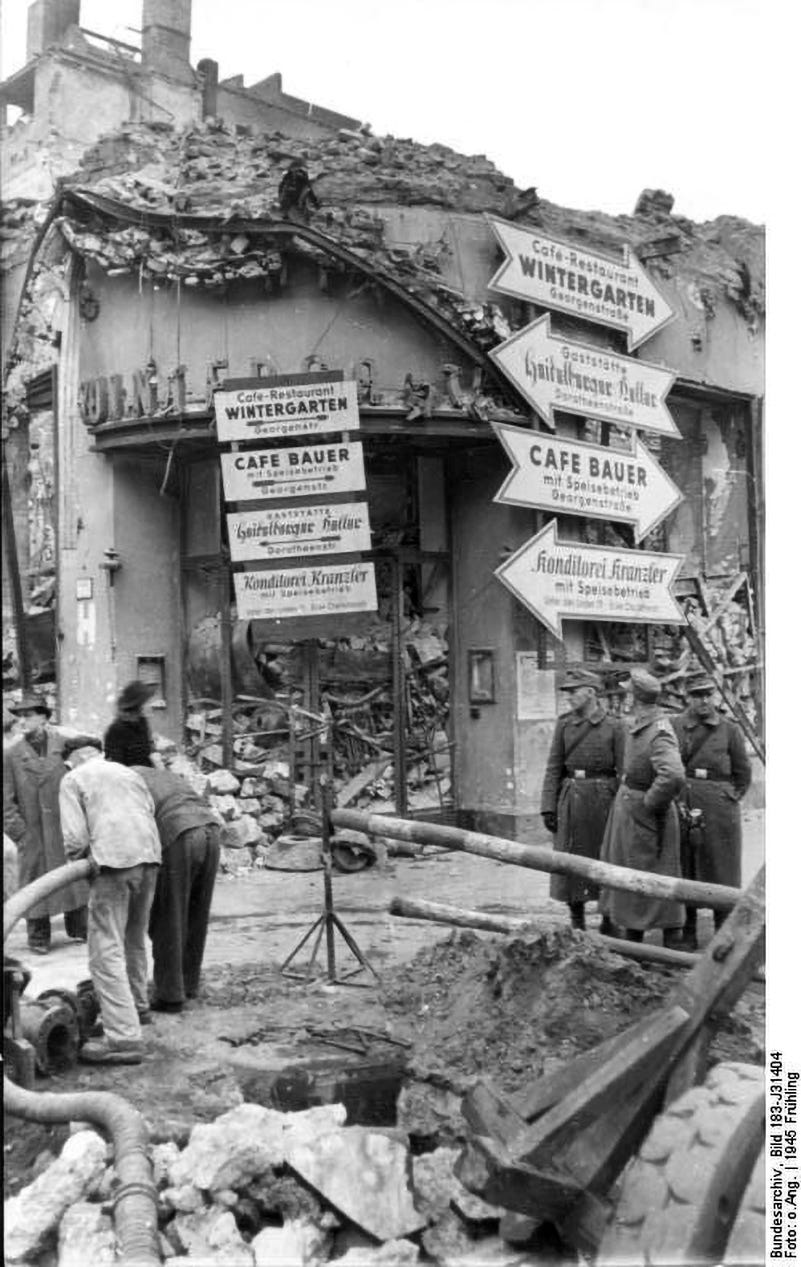
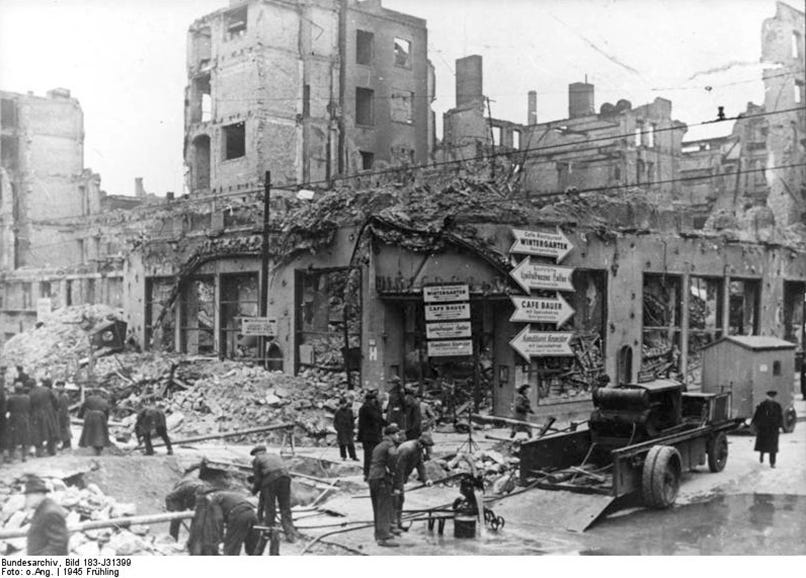
Zerstörungen in der Friedrichstraße, Frühjahr 1945: this extraordinary series of photos was taken by a German photographer on March 21, 1945, in the aftermath of an Allied air raid. Civilians and soldiers can be seen working on a big bomb crater and clearing debris from the street in front of the destroyed Central-Hotel southern corner. Makeshift signs were placed to indicate the ‘new’ location of the Café-Restaurant at Georgenstraße and other displaced restaurants.
Wann kommt der Russe? The final battle
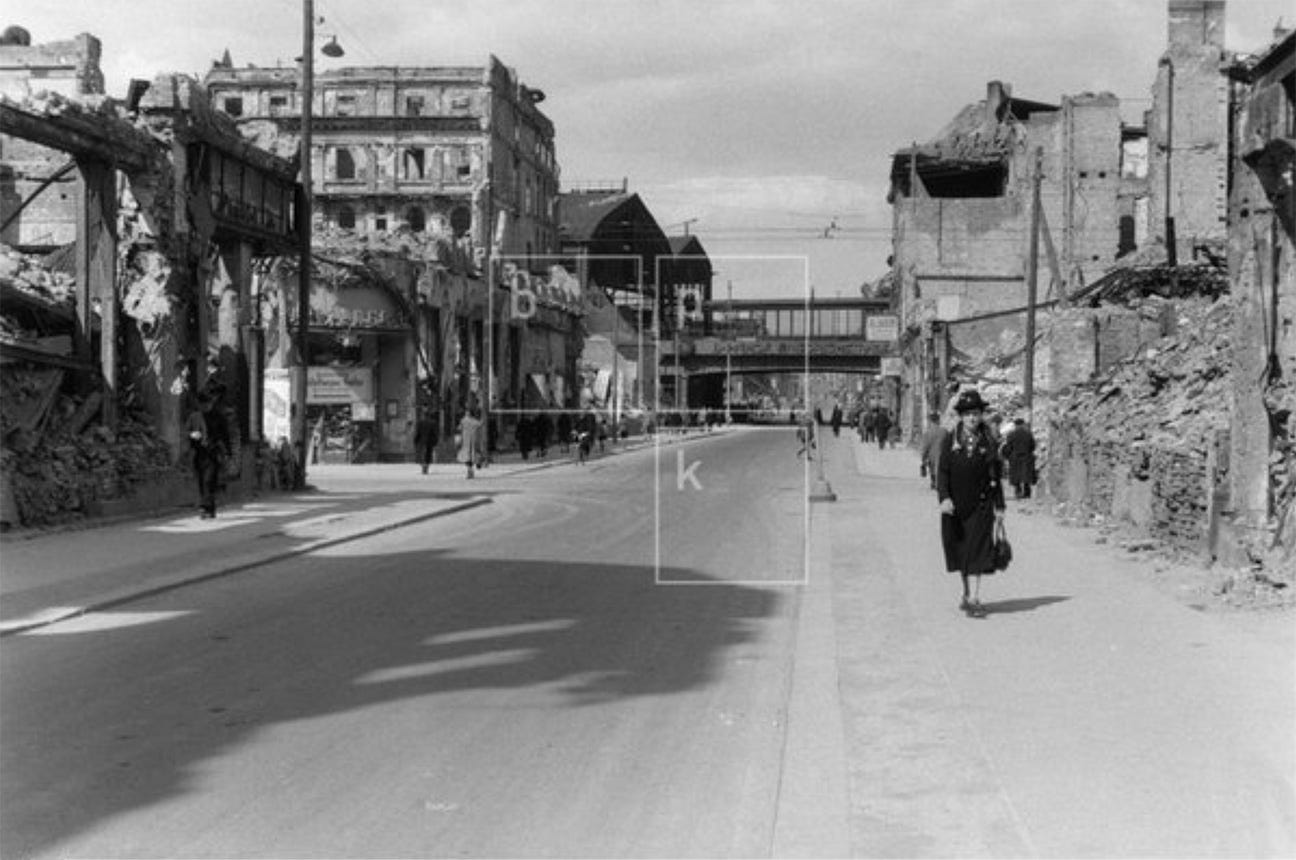
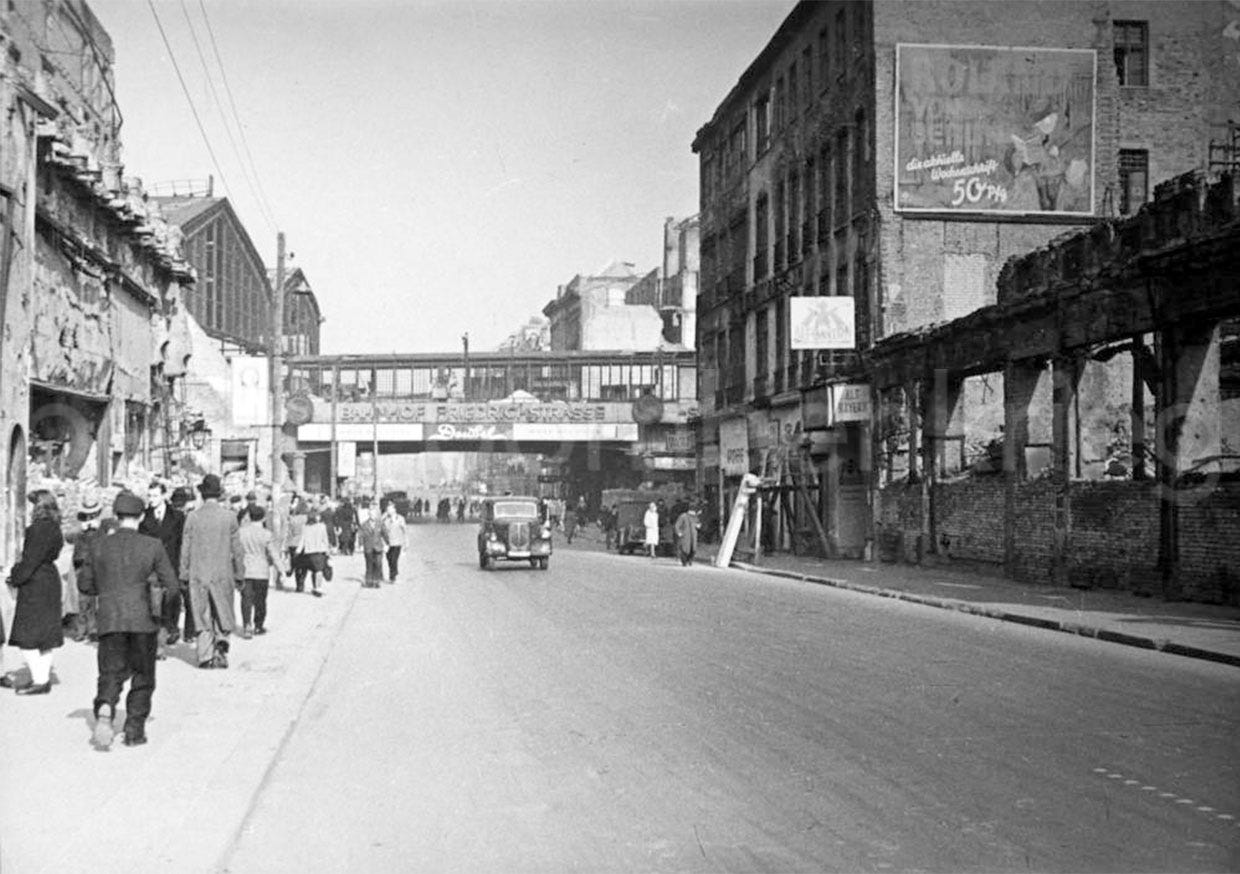
Further damage was inflicted during the Soviet armies’ assault on the Third Reich’s capital in late April-May 1945. Howitzer shells, bomb splinters and small-arms fire added more rubble to an already ruined spot, located a few blocks away from the Reich’s Chancellery, one of the main targets of the assaulting Red troops. Surviving pictures show that heavy street-fighting took place all over the Friedrichstraße, one of the several breakout attempts by the last survivors of the bunker started next to the Wintergarten, with around thirty vehicles (with ‘Nordland’ SS troops and numerous civilians) trying to escape northwards across the Spree at the height of Friedrichstraße and the Weidendammebrücke, which left the area full of wrecks and dead bodies on the night of May 1/2. Finally, on the next morning the German garrison surrendered to the Red Army: the war in Berlin was over.
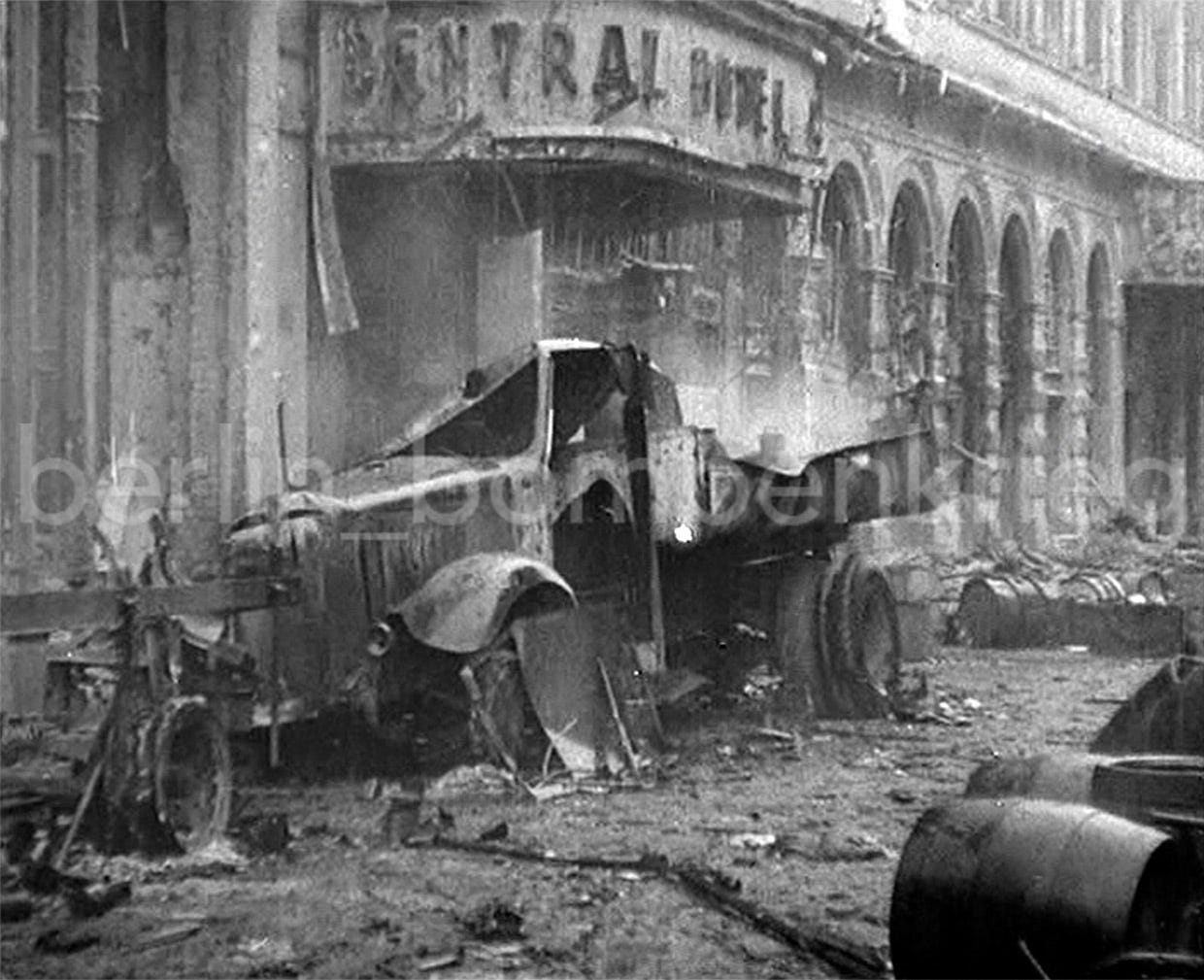
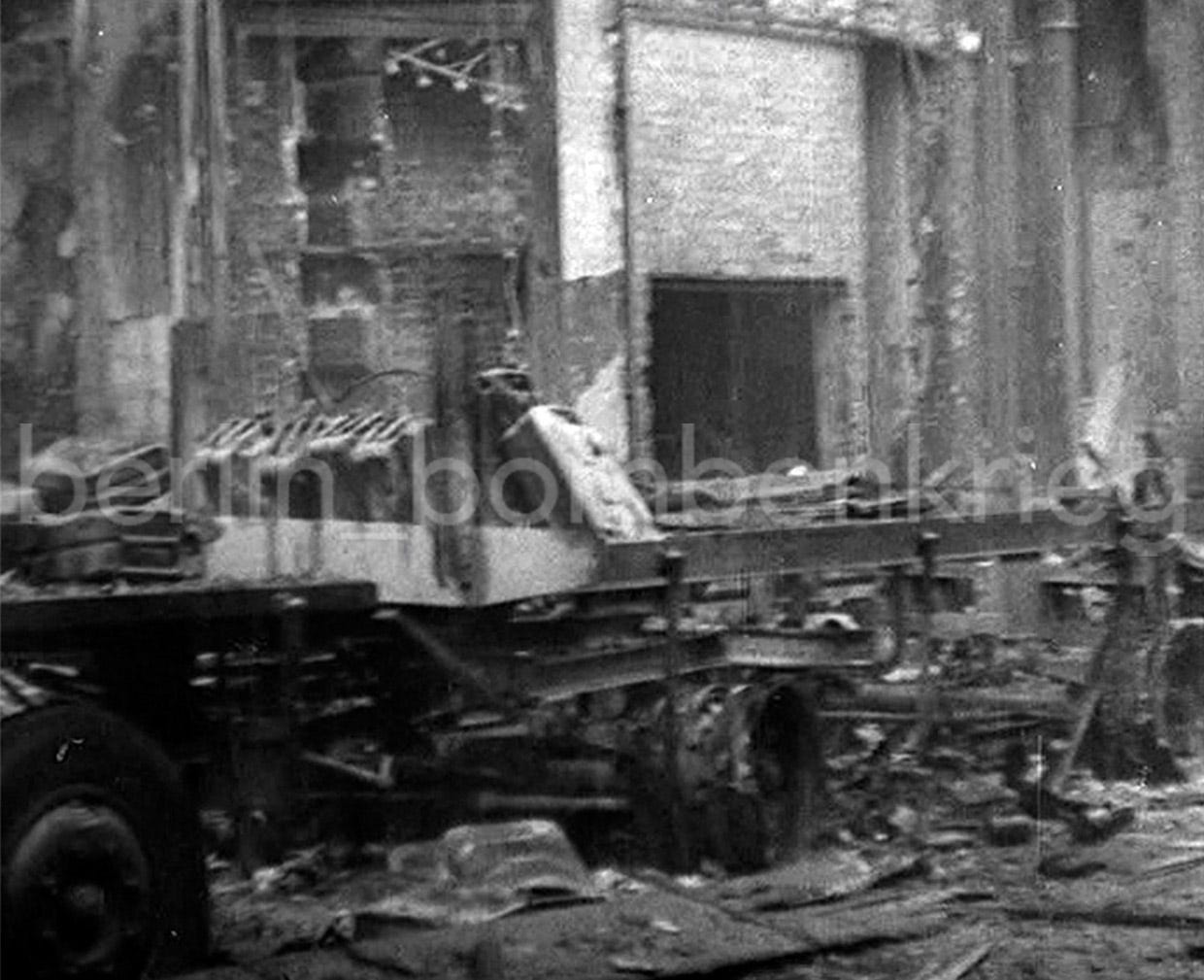
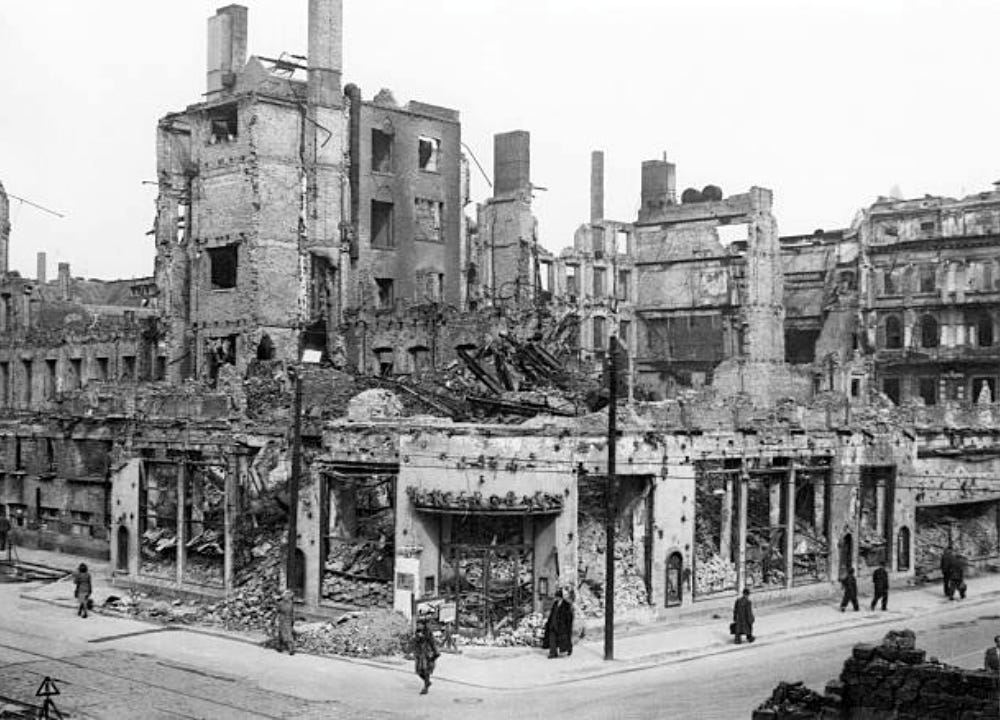
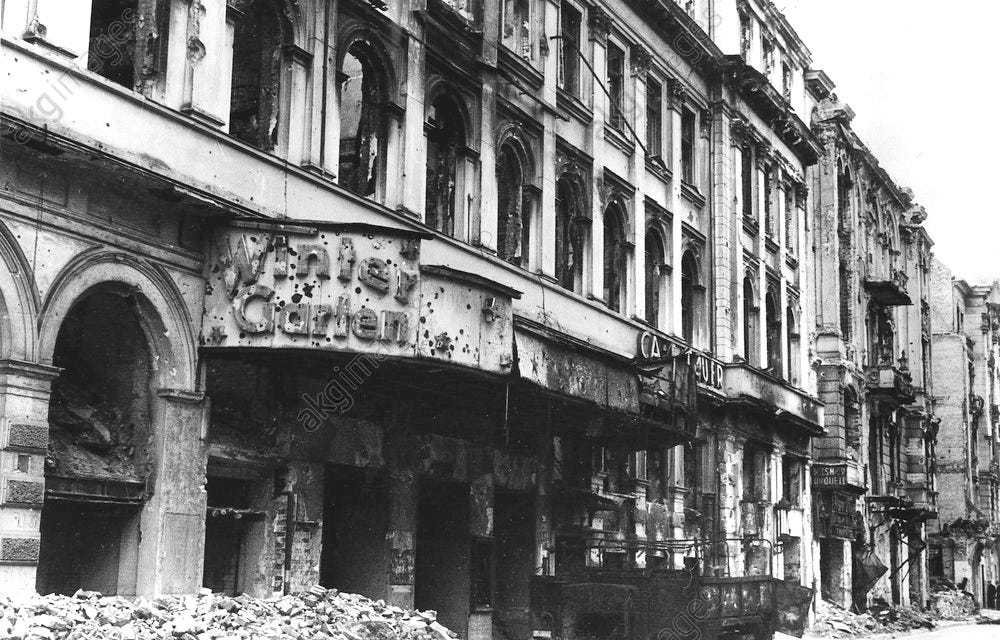
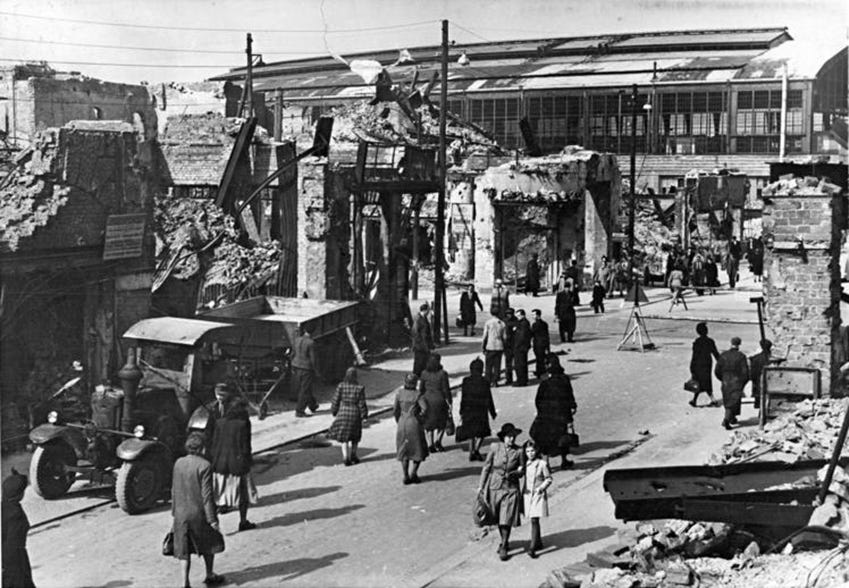
Two postwar views of the Friedrichstraße between Dorotheenstraße and Georgenstr. (note Wintergarten ruins at left), where no building was left intact by Allied bombs, taken circa 1946.
Post-mortem and new life
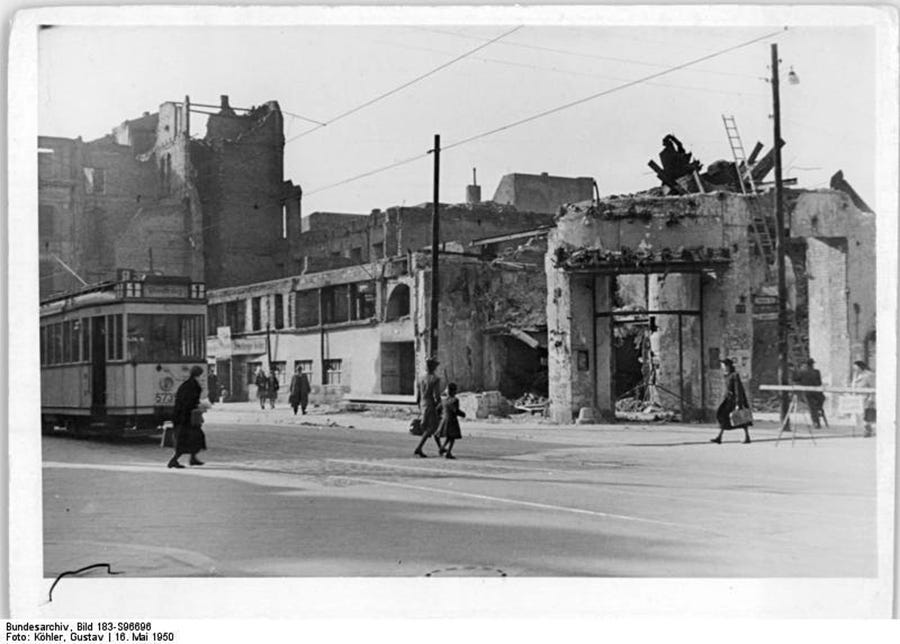
The ruins of this popular hotel and café, now part of the Soviet occupation sector in Berlin, weren’t blown up until 1950. In September 1946 a second Wintergarten (in der Neuen Welt) was opened at Hasenheide in Berlin which mainly showed films preceded by a stage show, closing its gates finally in 1955.
Life goes on: now part of East-Berlin, rubble and ruined buildings still can be seen at the famous corner where Dorotheenstraße meets Friedrichstr. in May 1950.
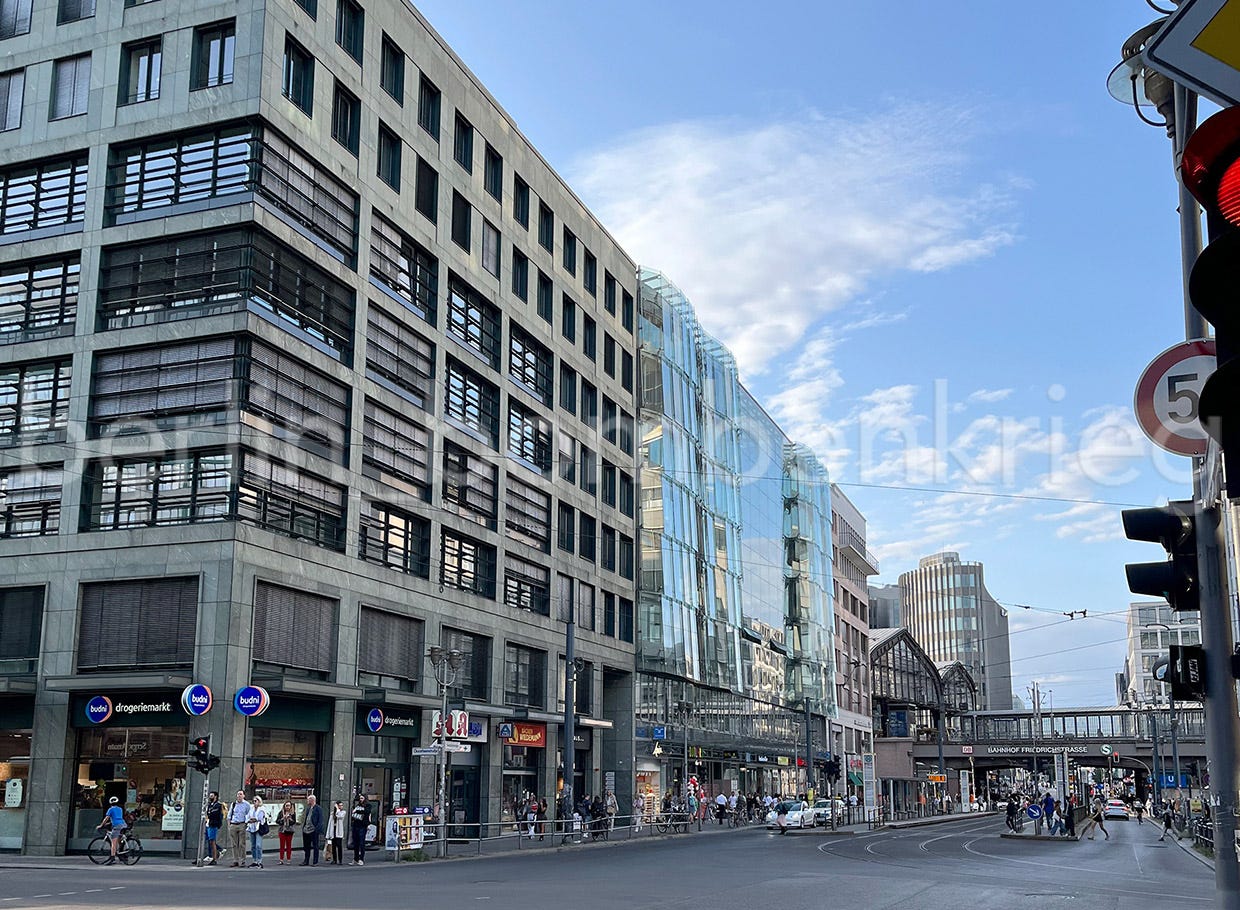
Following the city’s reunification in the 1990s, a new-born theatre built at Potsdamer Straße Nr 96 took the name of the former Wintergarten Varieté-Theater (the third one), opening in September 1992 with nearly 500 seats and runned by Deutschen Entertainment AG with André Heller and Bernhard Paul. Threatened with bankruptcy in 2008 and closed during nearly a year, since then the theatre has been managed by the owner of the building, Arnold Kuthe Entertainment GmbH. The show must go on.
_______________
Sources and bibliography:
Archer, Lee. Panzers in Berlin 1945. Panzerwrecks, 2019
Beevor, Anthony. The Fall of Berlin 1945. Viking, 2002
Berliner Morgenpost. Berliner Wintergarten-Varieté hat neuen Betreiber. 18 Nov. 2009. (accessed May 2024)
Demps, Laurenz. Luftangriffe auf Berlin. Die Berichte der Hauptluftschutzstelle. Ch. Links Verlag, 2014
Jansen, Wolfgang und Leif, Erich. Festschrift 50 Jahre Wintergarten 1888-1938. 2. Auflage. Olms, 1994
Landesarchiv Berlin: LAB, A Rep. 001-02, Nr. 701, Bl. 34 ff; LAB, A Rep. 005-07, Nr. 559, o. Bl; LAB, A Rep. 001-02, Nr. 702, Bl. 99 ff.; s. a. LAB, A Rep. 005-07, Nr. 559, o. Bl
Moorhouse, Roger. Berlin at war. Life and death in Hitler’s capital, 1939-45. Vintage Books, 2011
Neckelmann, Harald. Friedrichstraße Berlin zu Beginn des 20. Jahrhunderts, Berlin Story Verlag, 2012
von den Hude. Der Bau des Central-Hotel in Berlin. Drei Beiträge zur Berliner Geschichte um 1880. edition.epilog.de, 2022
Wildt, Michael and Kreutzmueller, Christoph. Berlin 1933-1945 - Stadt und Gesellschaft im Nationalsozialismus. Siedler Verlag, 2013
Thank you for reading Berlin Bombenkrieg by Pablo López Ruiz. Please subscribe, if you haven’t yet, to comment, follow and share. All images used for non profit / educational purposes.