


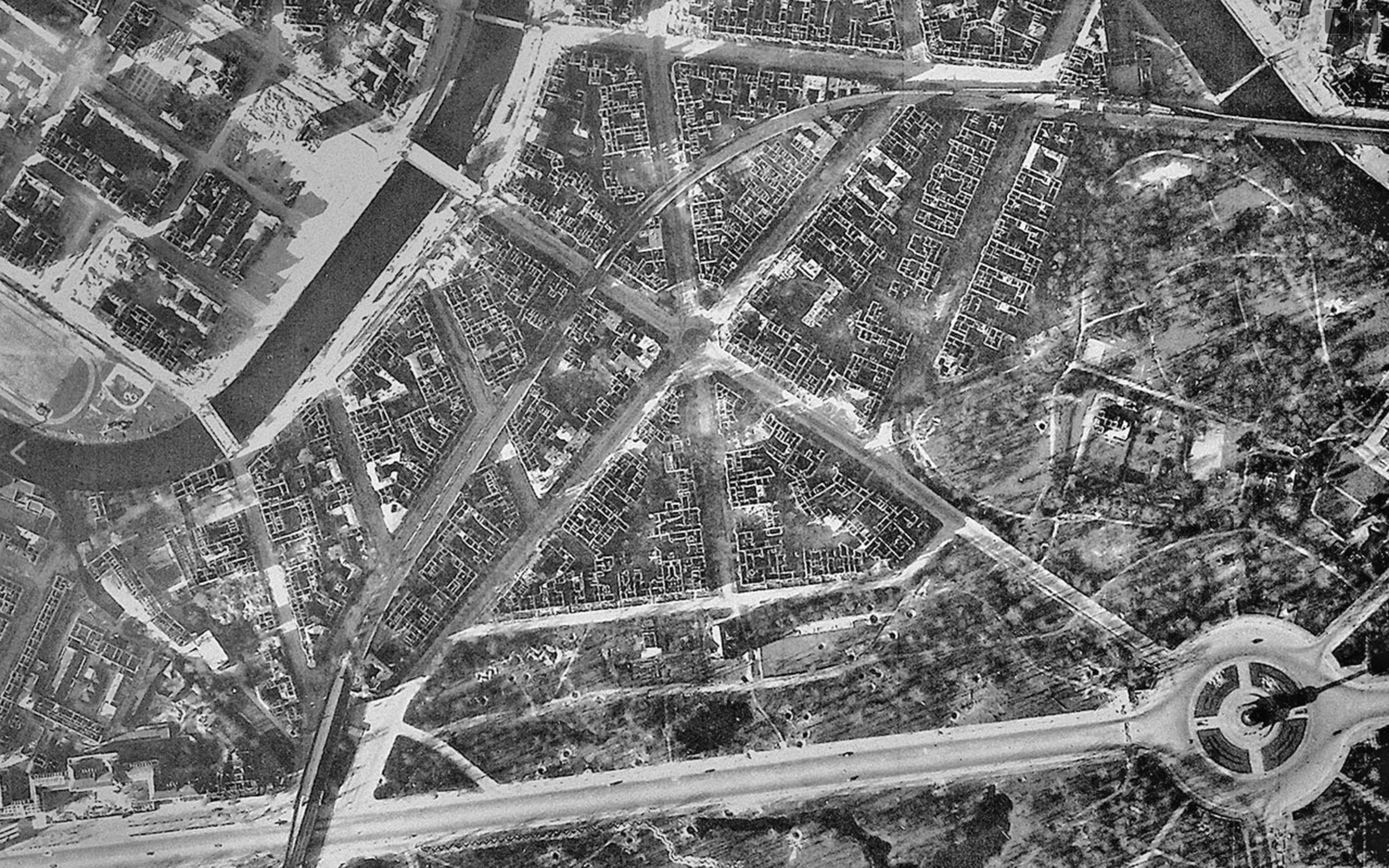
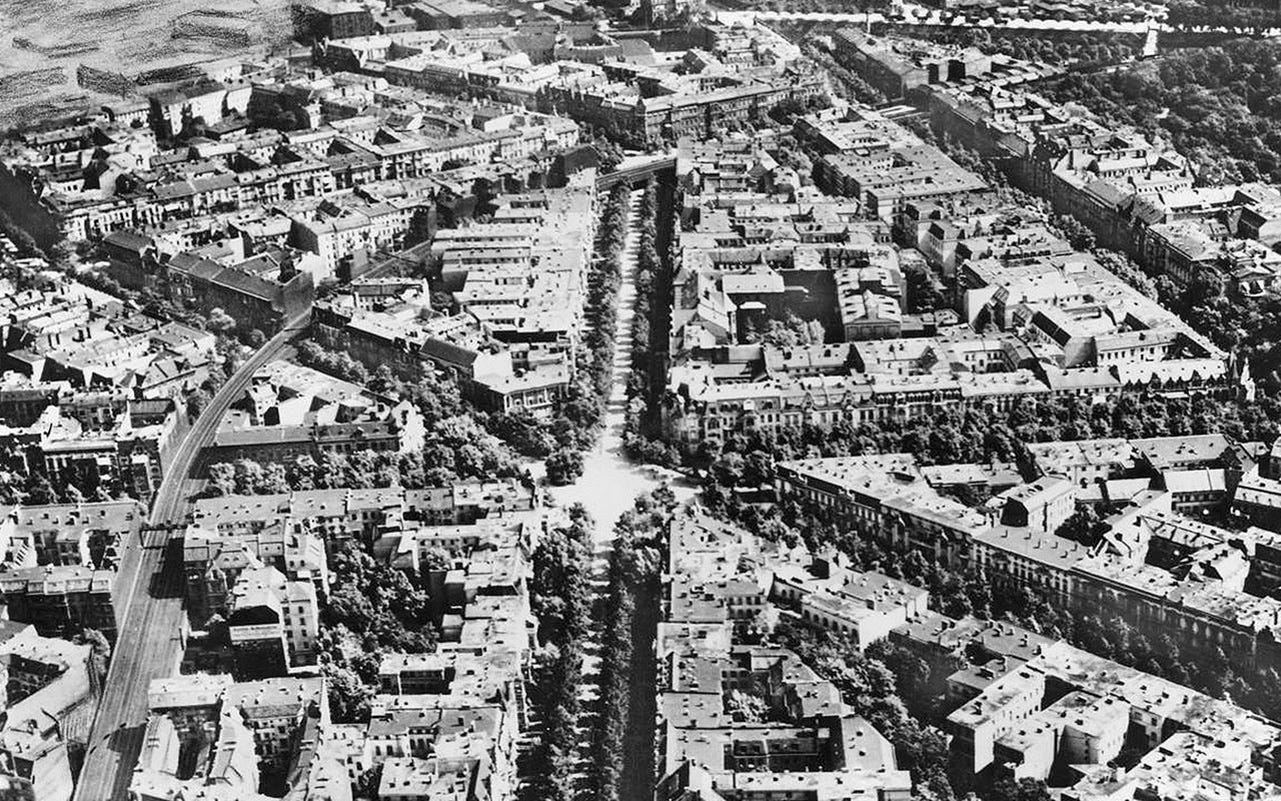
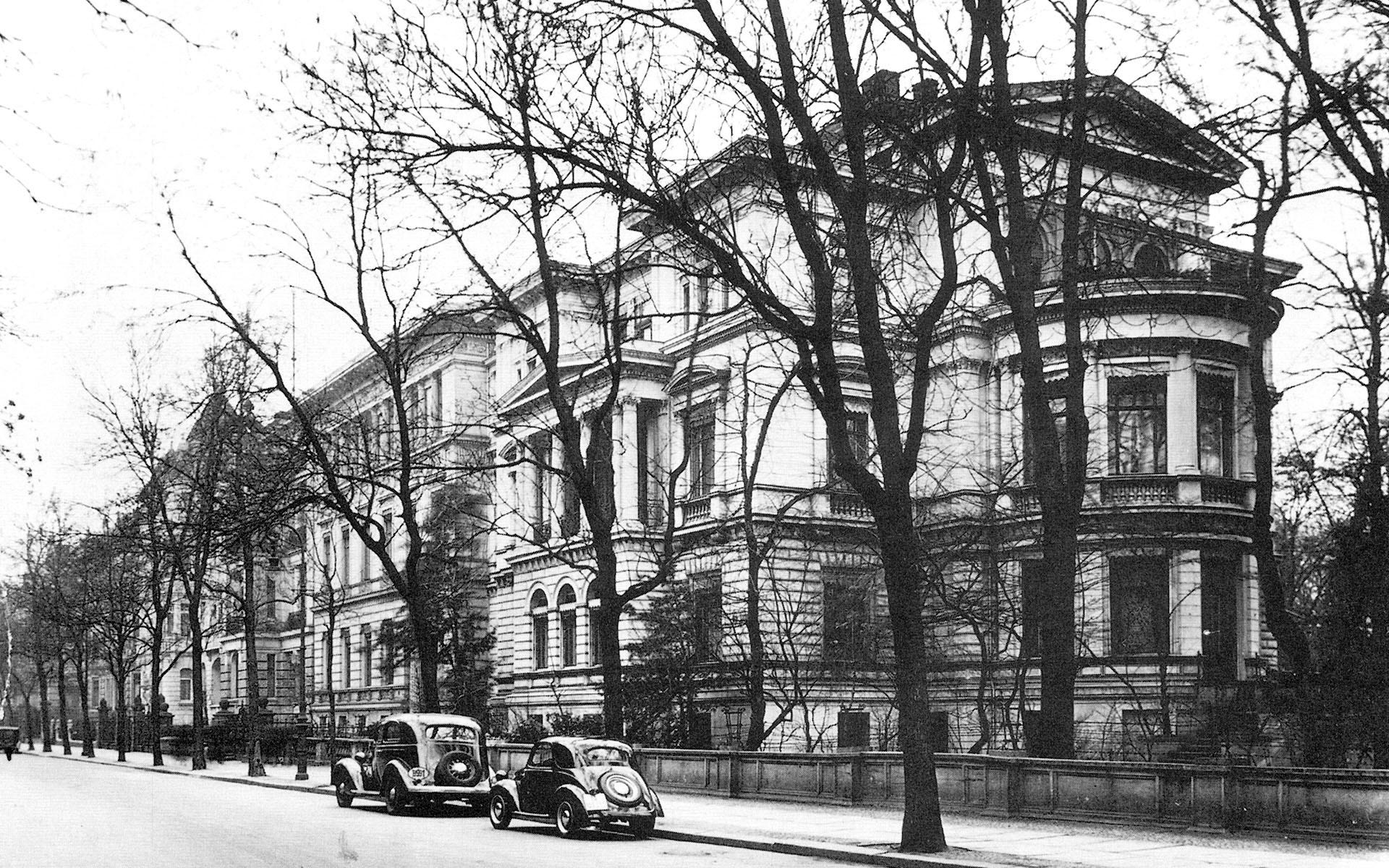
Located in the northwestern Tiergarten, the Hansaviertel was built from the intersection of three main streets in a star-shaped square, which was named Hansaplatz in 1879. A residential ‘Bezirk’, the zone emerged from the city’s rising prosperity. The S-Bahn railway, adjacent to the river Spree and with two stations (Bhf-Tiergarten and Bellevue) located here, divided this district into a north-eastern and a south-western area. The newcomers —wealthy citizens— built prestigious houses with elaborately composed styles, cornices and friezes in neo-baroque and neo-renaissance façades with small front gardens along the roadsides. Many notable citizens lived here during the Weimar Republic.
The quarter had a remarkably high proportion of Jewish population. They were all practically deported during the Nazi period, first ‘resettled’ and later sent to the death camps, and their two synagogues used as a collection camp for Jews and later destroyed.
The Hansaviertel in the Bombenkrieg, 1940-1945
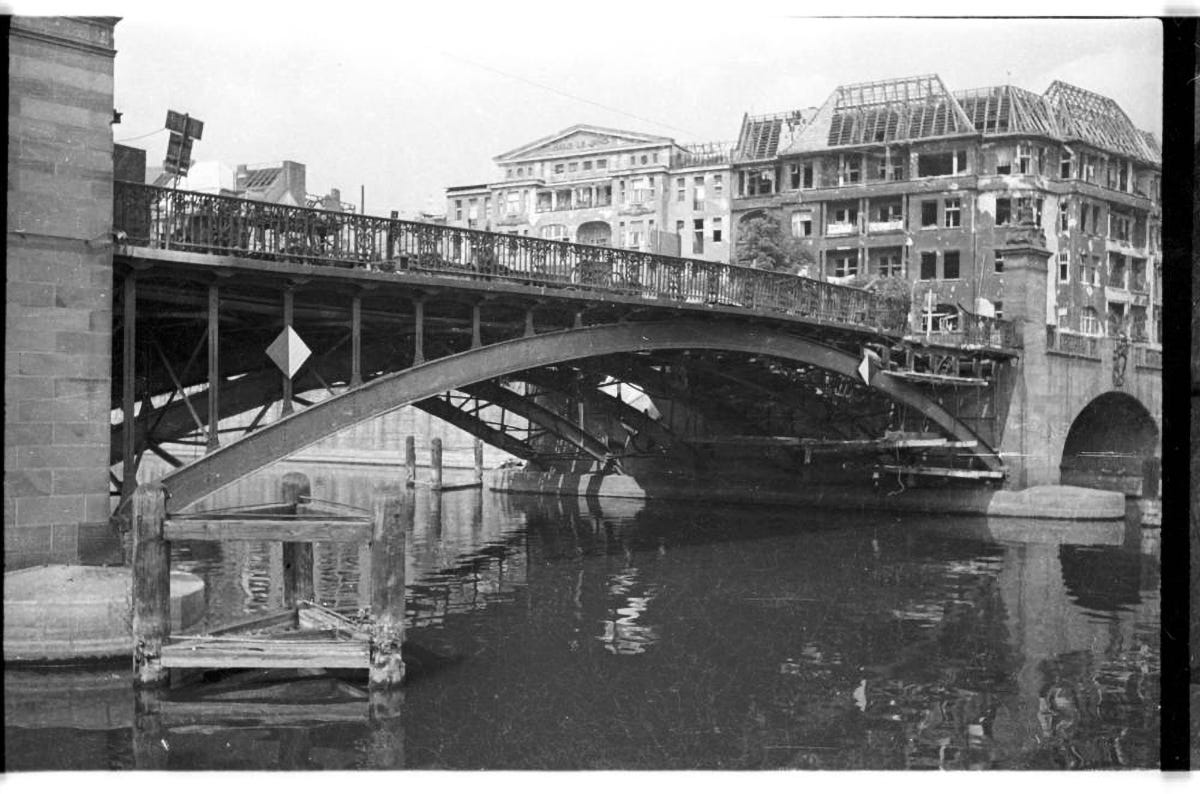
The area was heavily damaged by the Allied air raids during the war, first time that the Hansaviertel appeared on the city’s bombing reports was on 20/21 December 1940, when several British incendiary bombs struck buildings at Brückenallee 2-6 and 32, and at Altonaer Str. 17. A year later, during the 7/8 November 1941 air attack, the largest single raid to date (73 RAF bombers raided the city), several bombs landed along Altonaer Str. and Hansaplatz, including some on the Hansabrücke.
When London restarted the aerial raids against the city in 1943 with a two-night small campaign, the district was hit hard on 16/17 and 17/18 January (169 and 187 bombers bombed, respectively): severe building damage resulted at Altonaer Str. 9-14, Schleswiger Ufer 12/13 and Lessingstr. 40 all hit by air-mines that left more than 200 homeless. On the Spree near the Hansabrücke, seven boats were slightly damaged by explosive bombs.
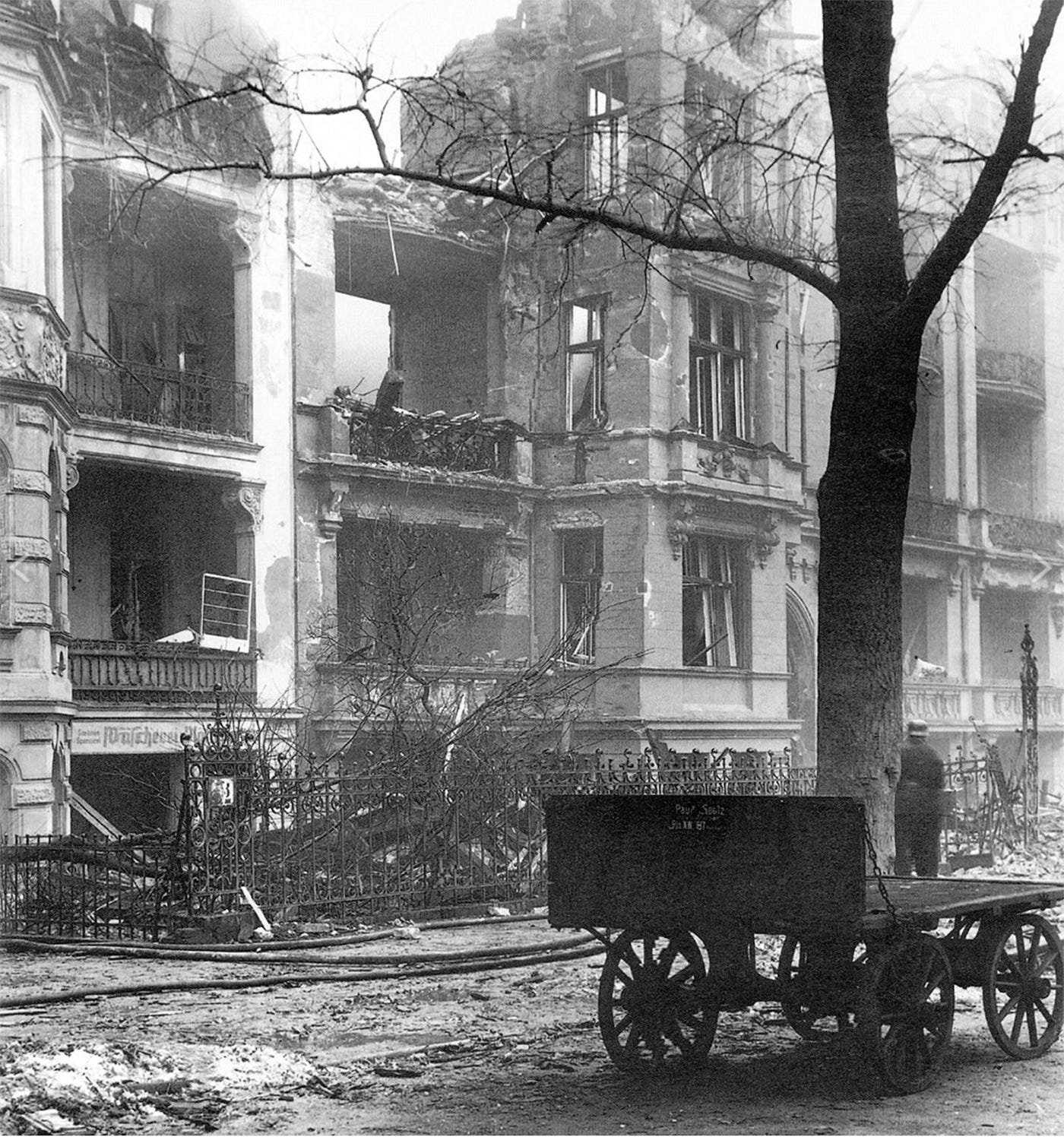
The northern Tiergarten and Moabit areas were completely destroyed during the British fall and winter 1943-44 raids when RAF aircraft flew 10,813 sorties dropping 33,390 tons of bombs, especially the “Hansa” quarter which was hit hard by fire and explosive bombs and air-mines with German records talking about ‘Schwere und schwerste Zerstörungen’ at the district. The Schloss Bellevue was badly hit and listed as a “total loss” too. In contrast to the severe damage to buildings, the casualties are relatively small in the district but water, light, gas and telephone connections were several days off.
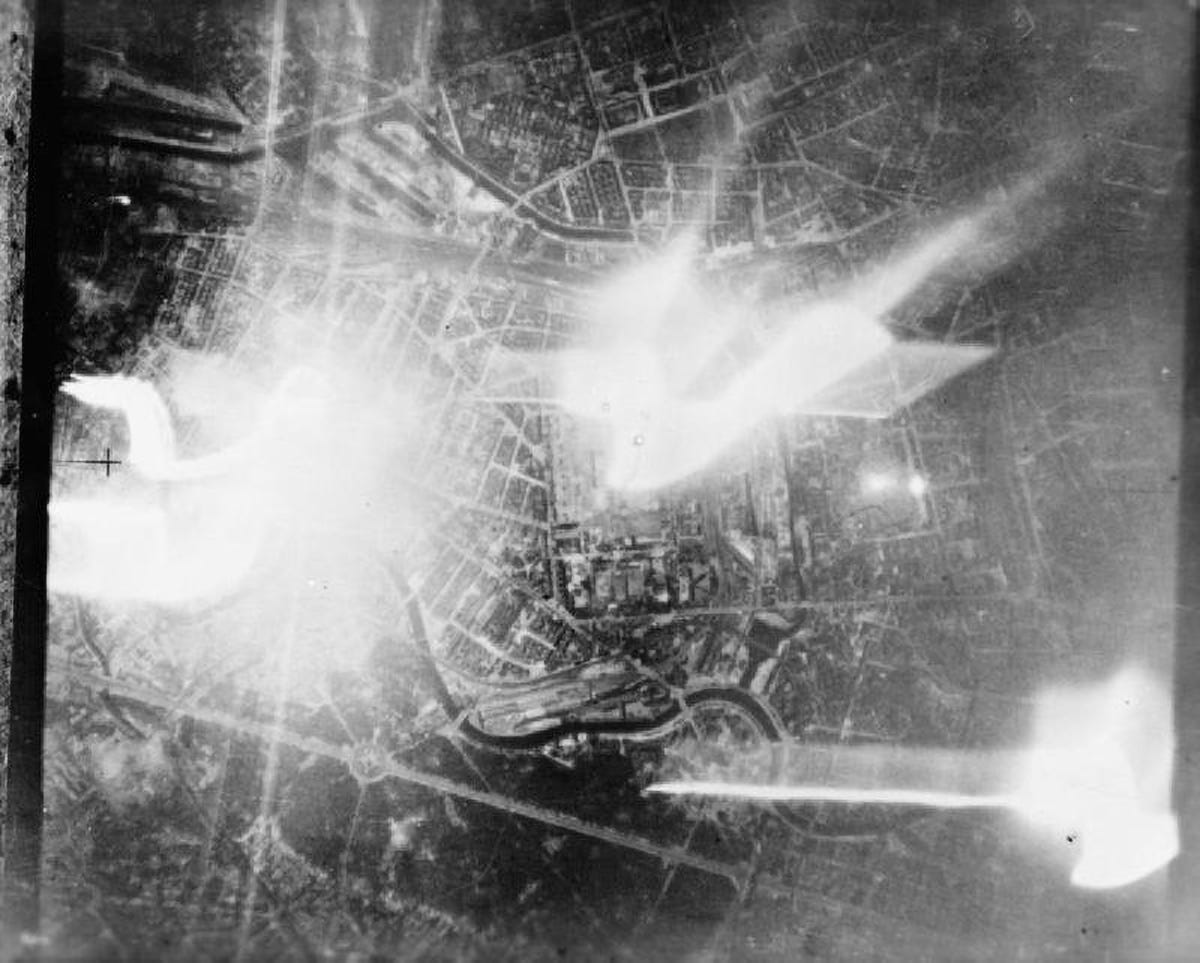
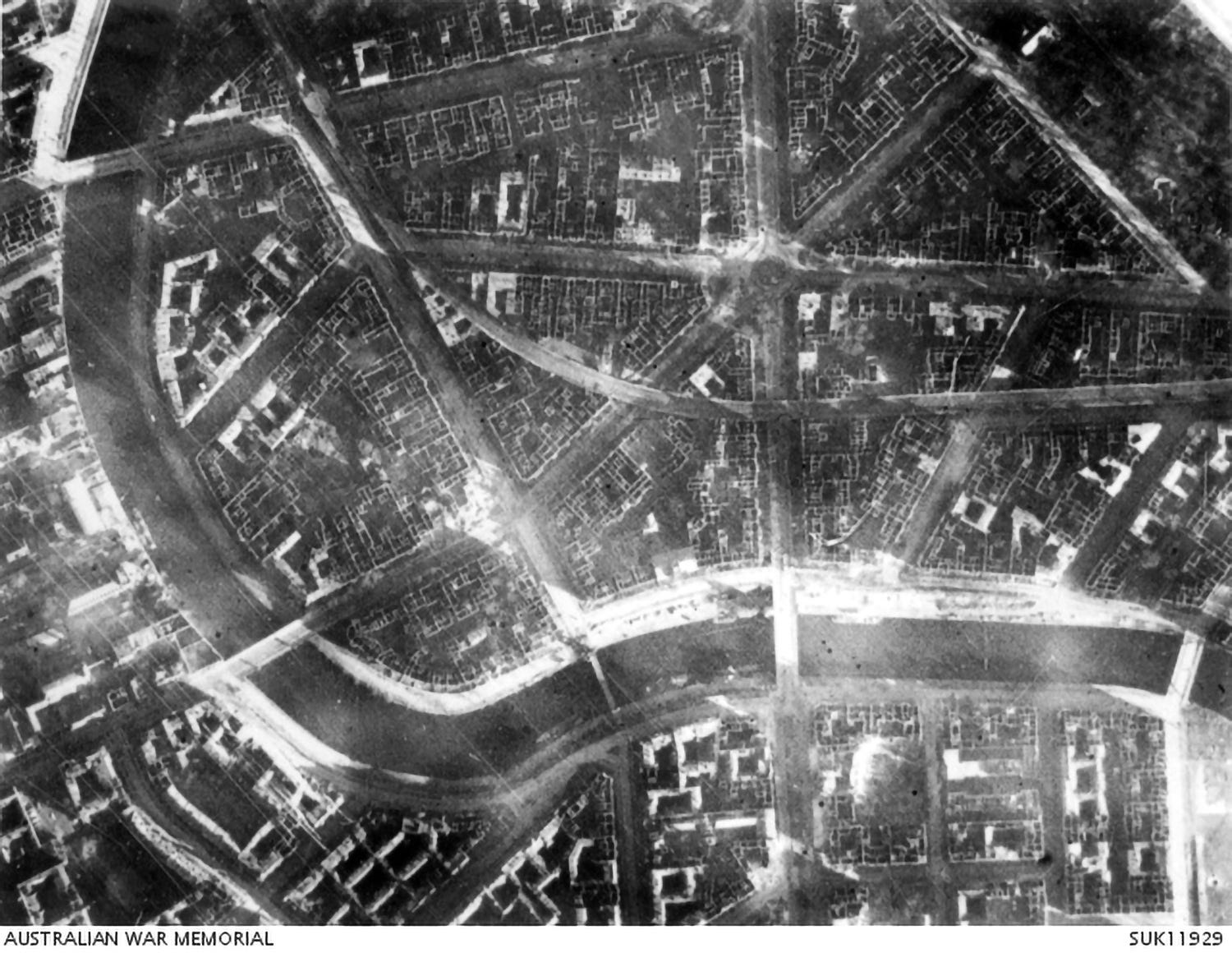
The American daylight air raids caused severe damage on this area too: centre of Berlin was the target for US bombers on 8 May 1944 —403 bombers reached Berlin on that day under a complete overcast— hitting the area around the Zoo and the Hansa-district with disastrous consequences.
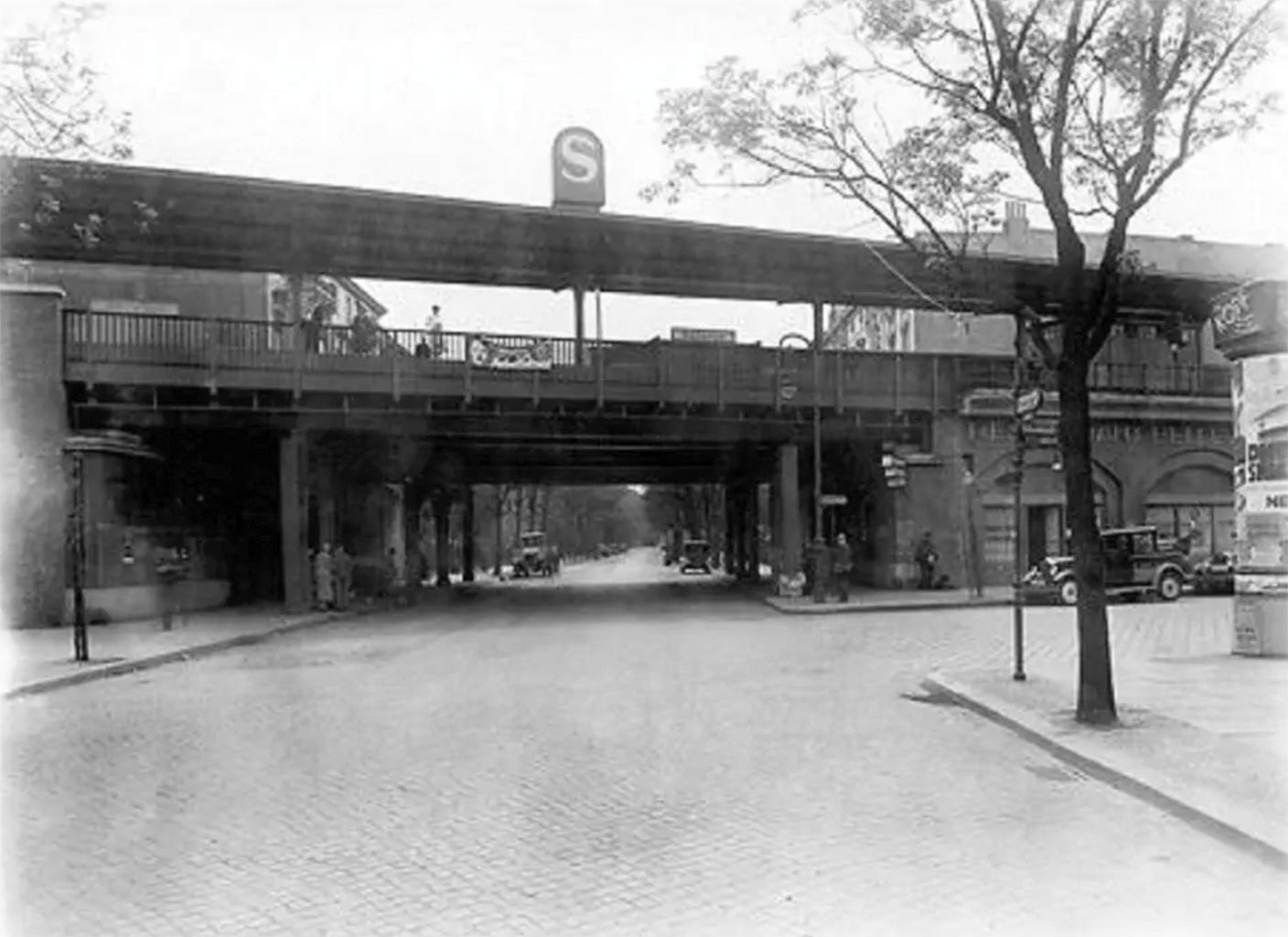
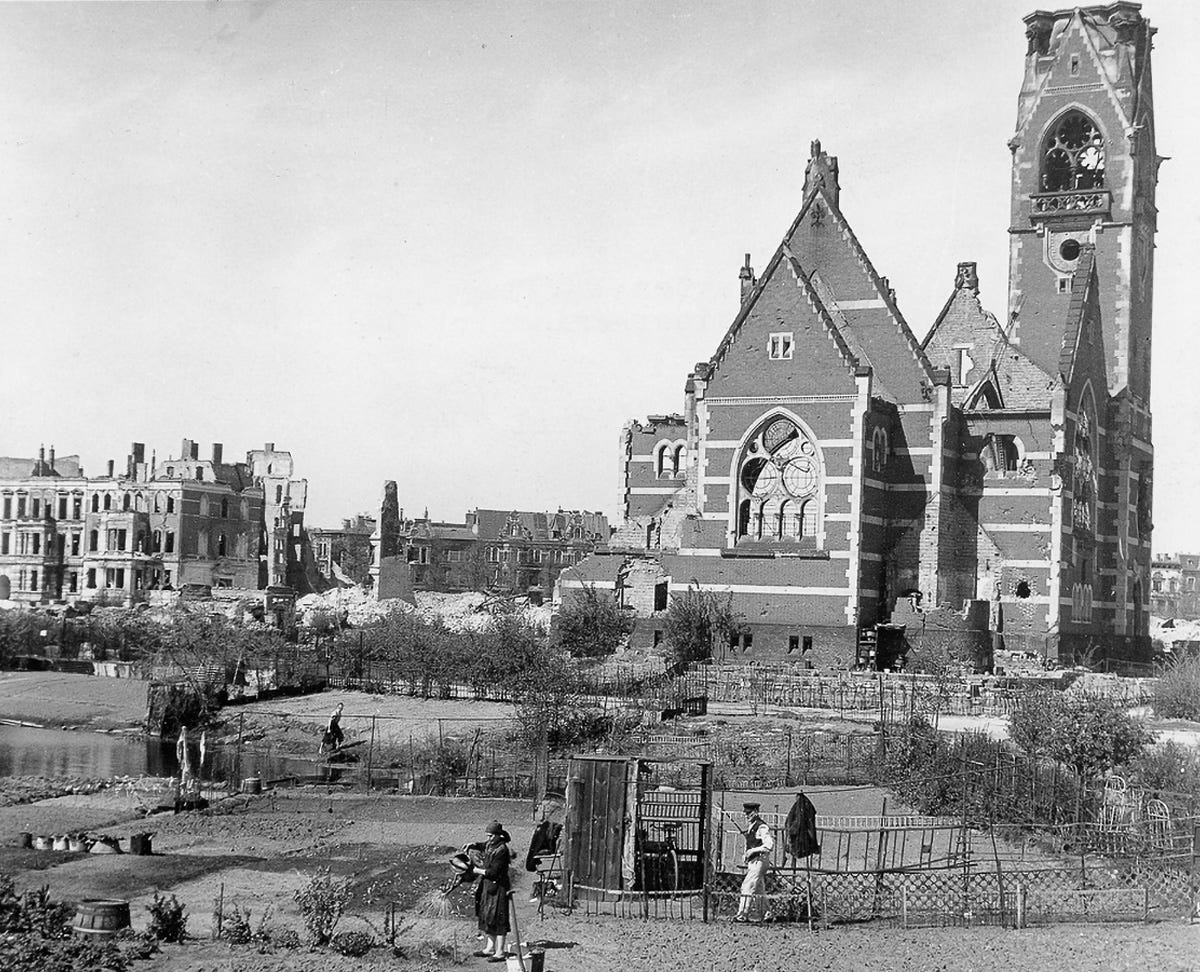
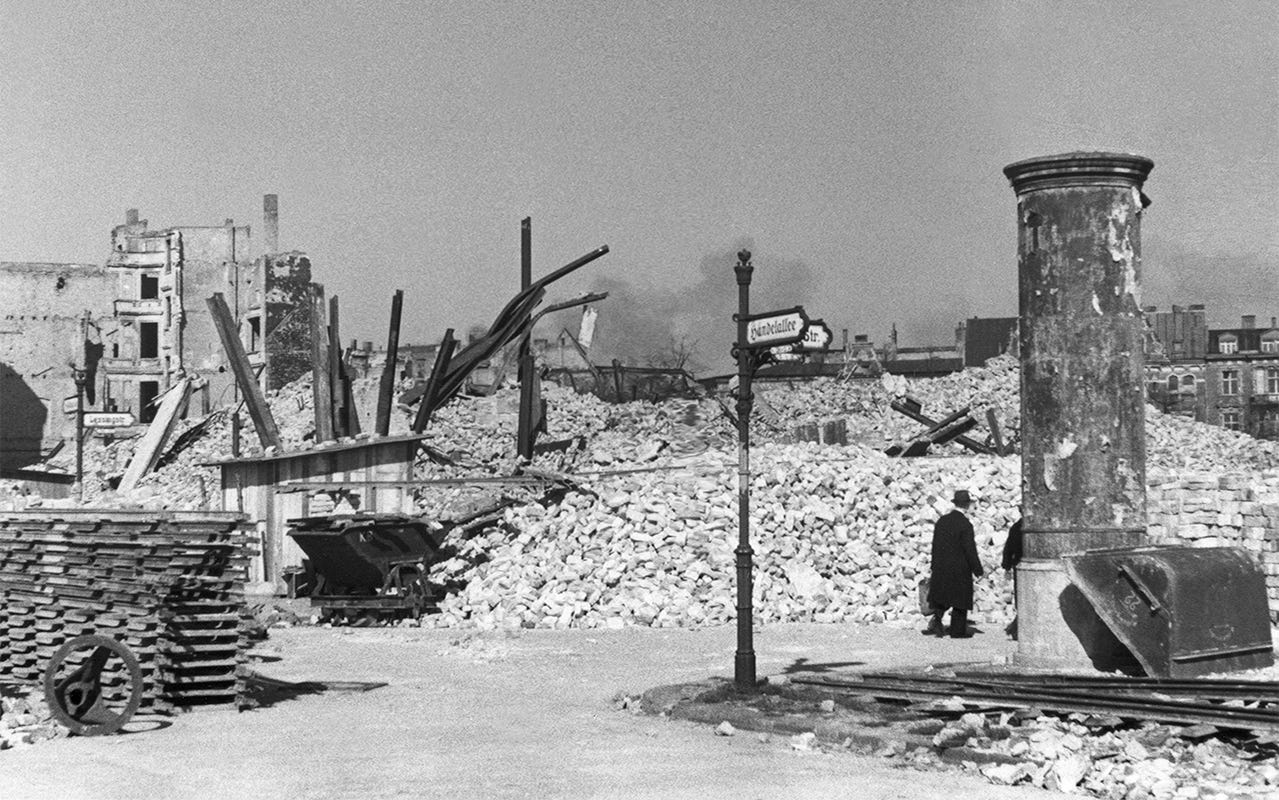
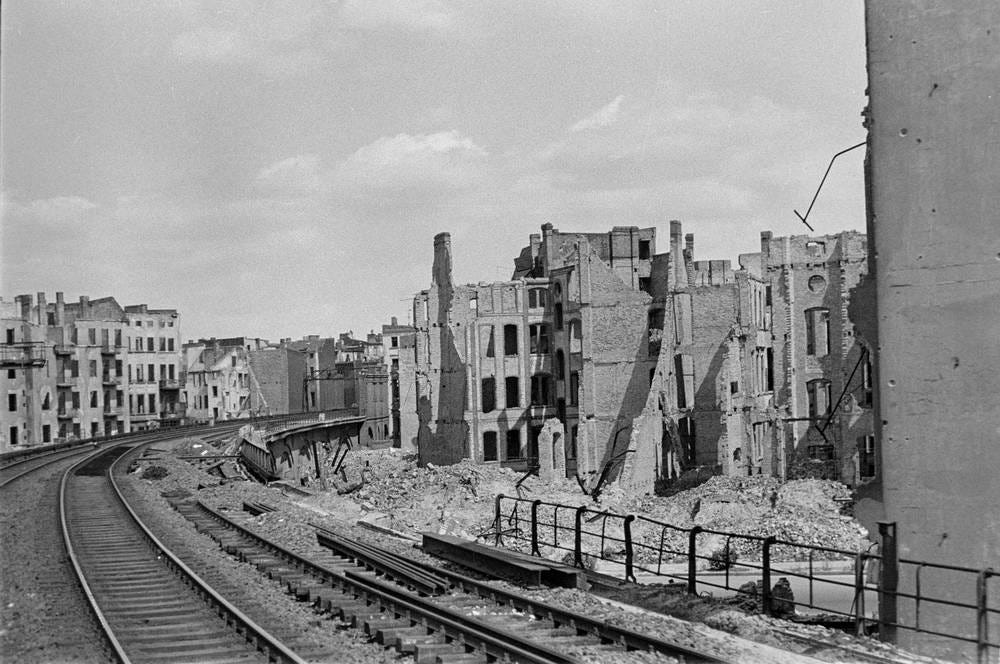
In the late stages of the war, nuisance night raids by RAF Mosquitoes also caused destruction in the Hansaviertel as reported on 31 December 1944 when a ‘cookie’ bomb hit Altonaer Str. 2, or after several bombs struck at Brückenallee 22 and Tile-Wardenberg-Str. 10 on 10 March 1945. Finally, on April 12, 1945, Mosquitoes dropped bombs again on the already ruined district, hitting Brückenallee 4, Händelallee, and the ruins of the Kaiser-Friedrich-Gedächtniskirche. More bombs collapsed part of the railway bridge at Lessingstraße.
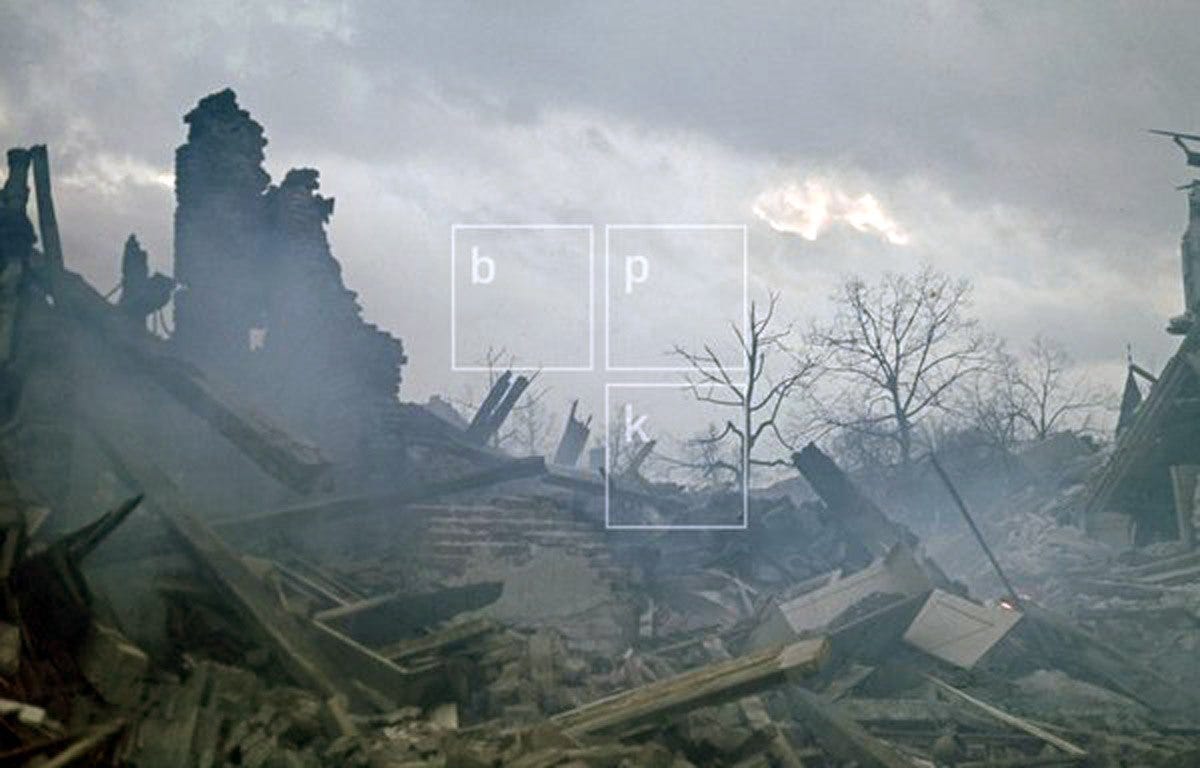
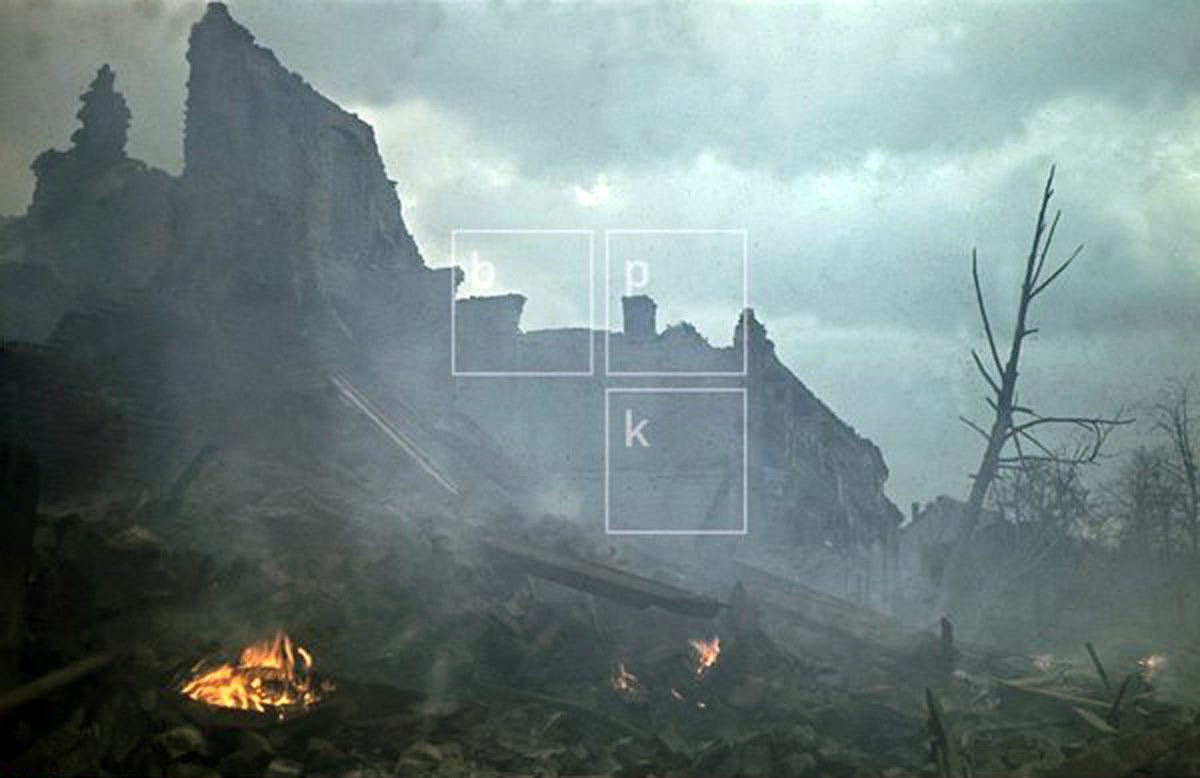
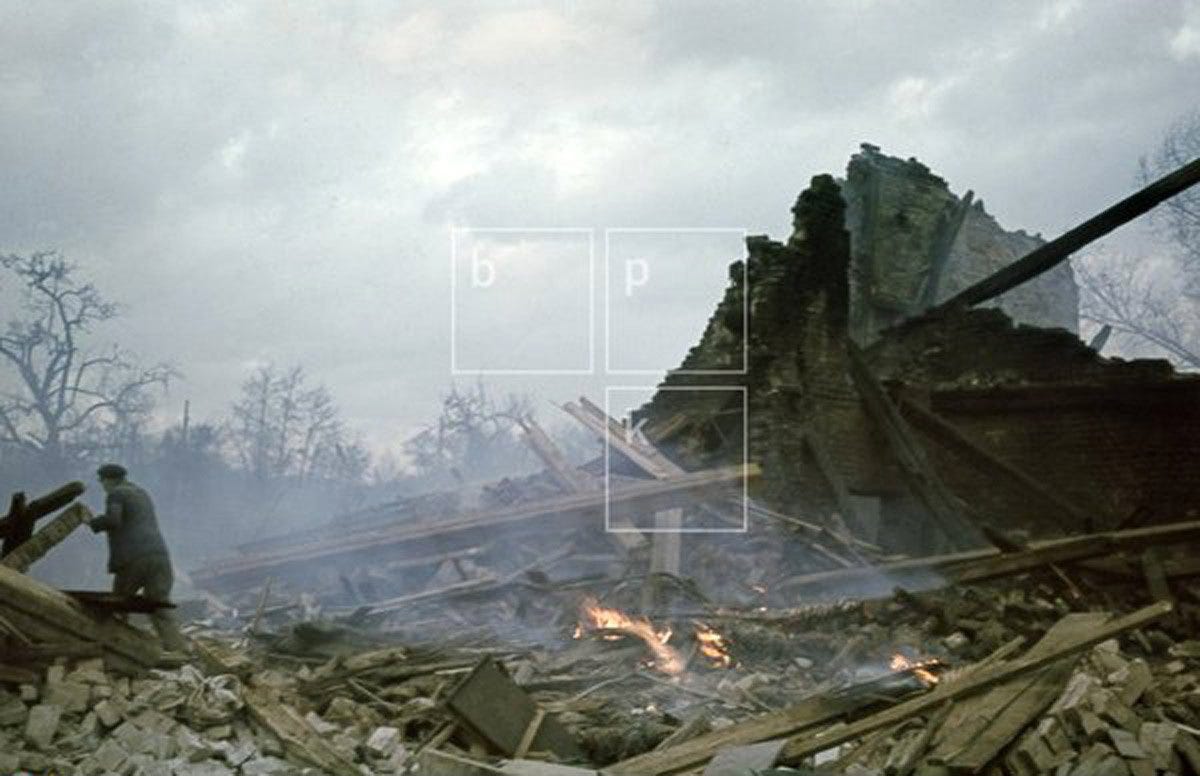
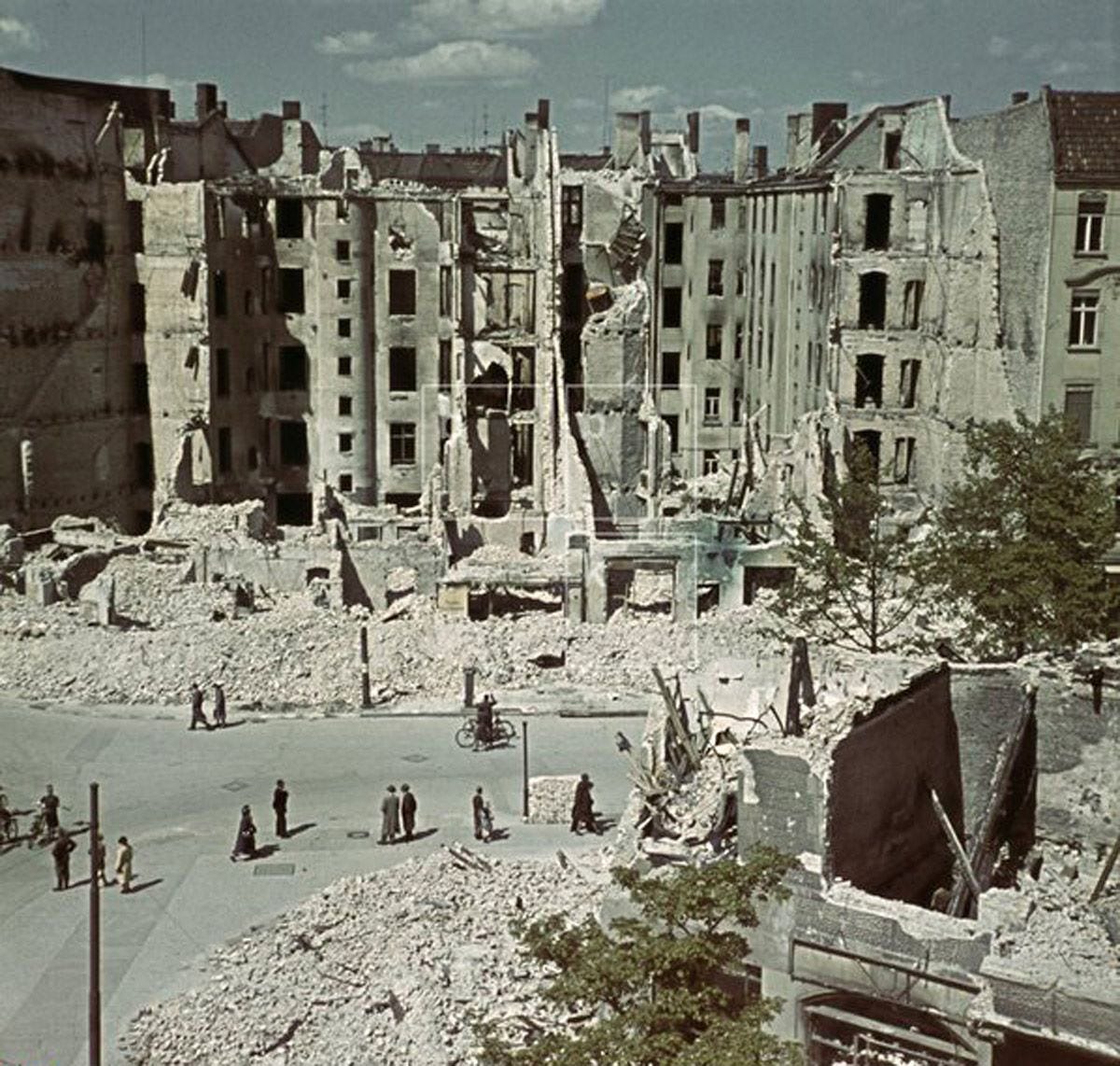
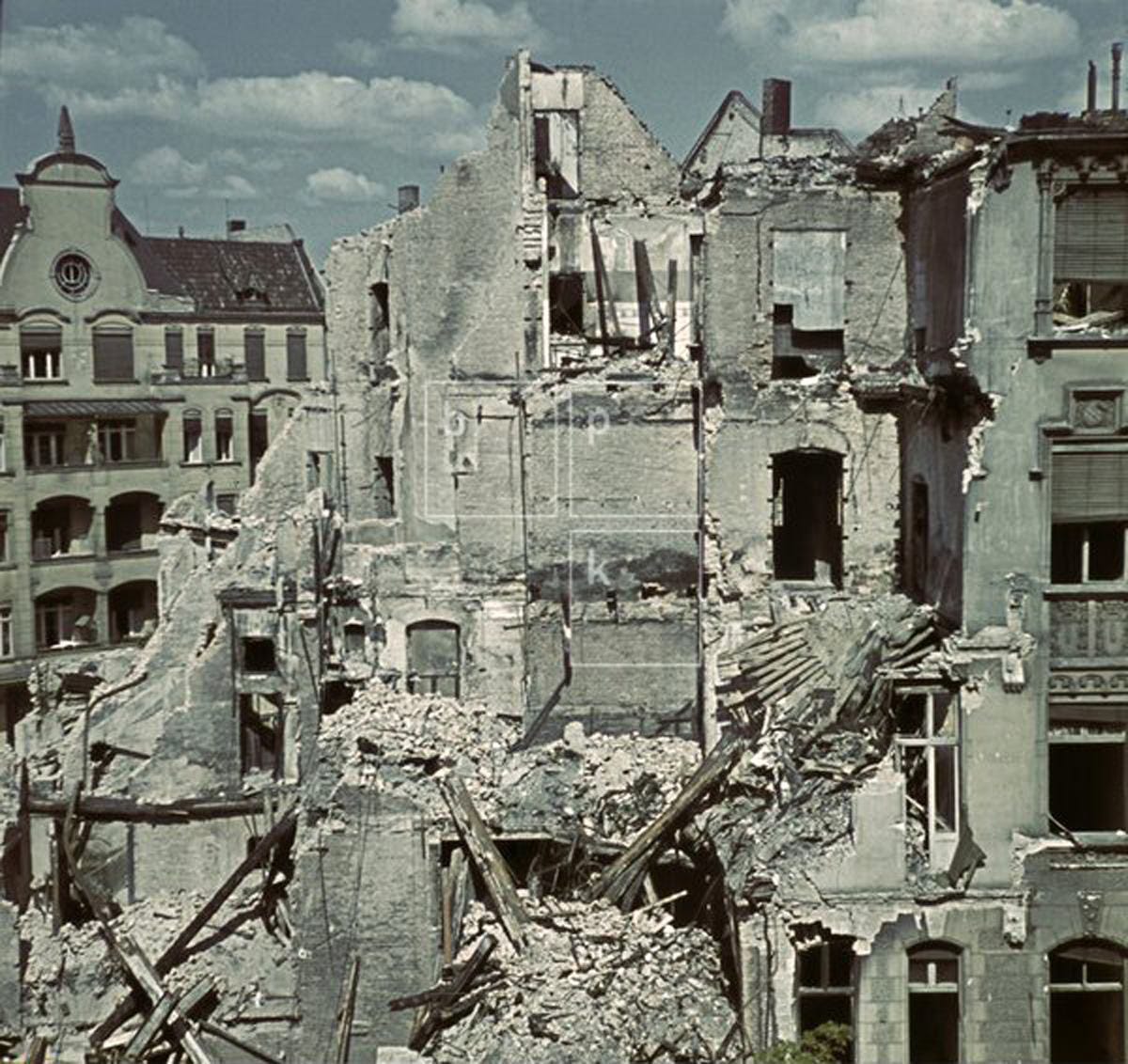
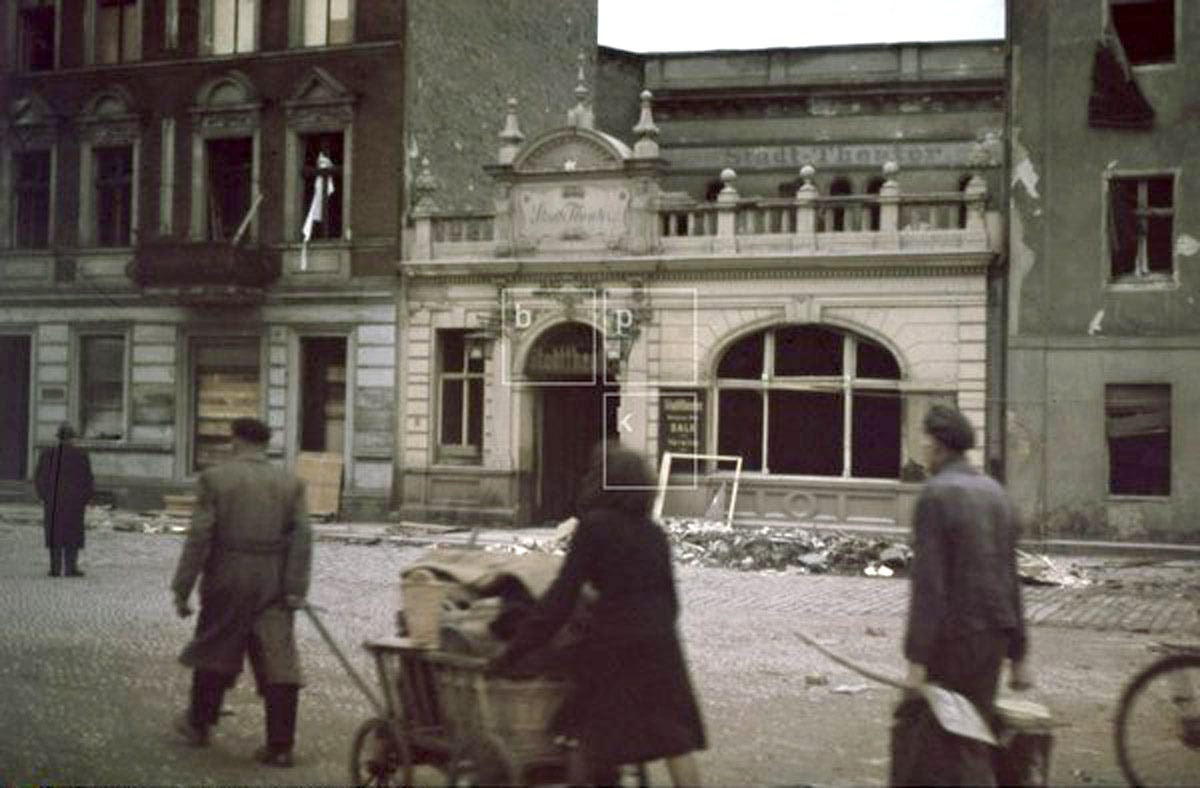
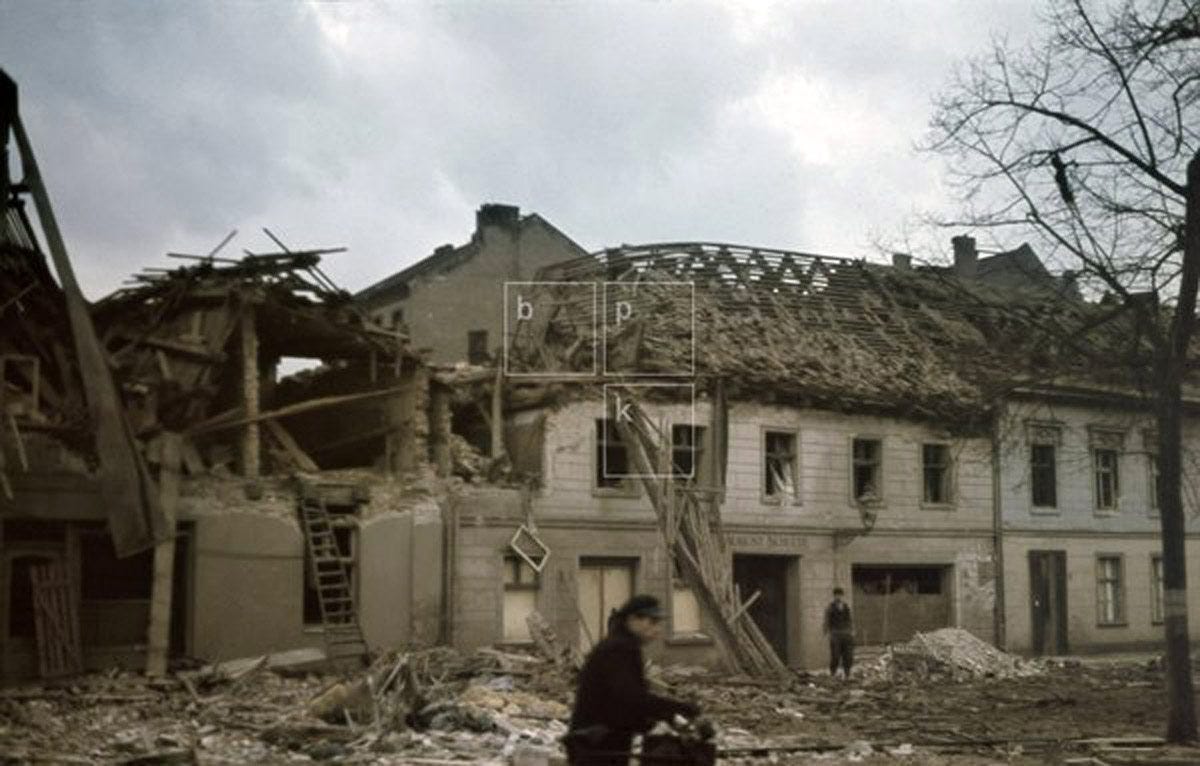
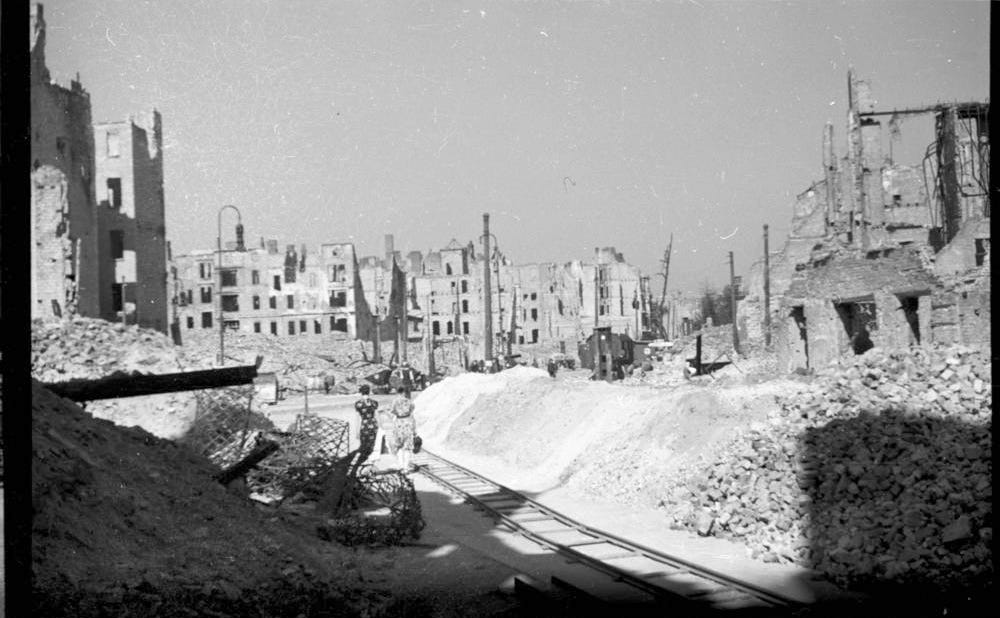
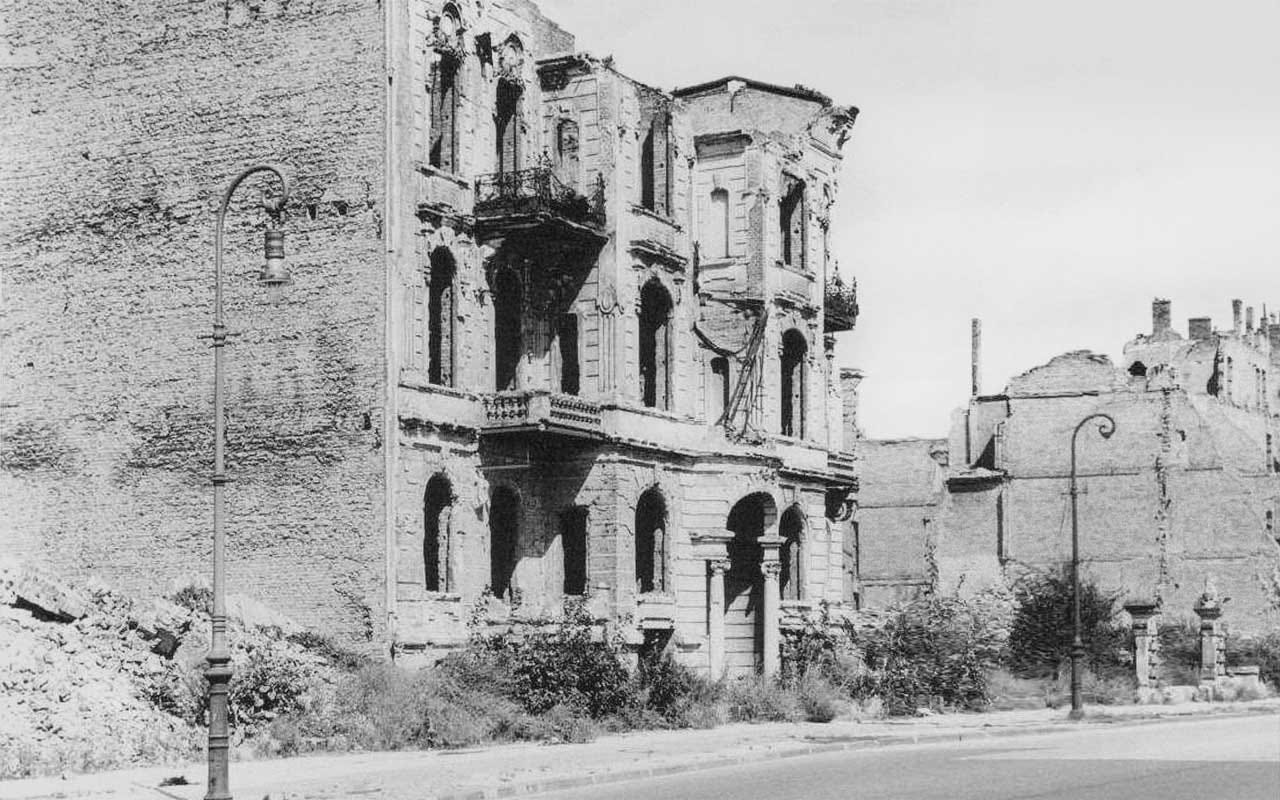
This series of pictures showing of bomb damage and devastation were taken by a German PK photographer in the Hansaviertel district after a British air raid in 1943.
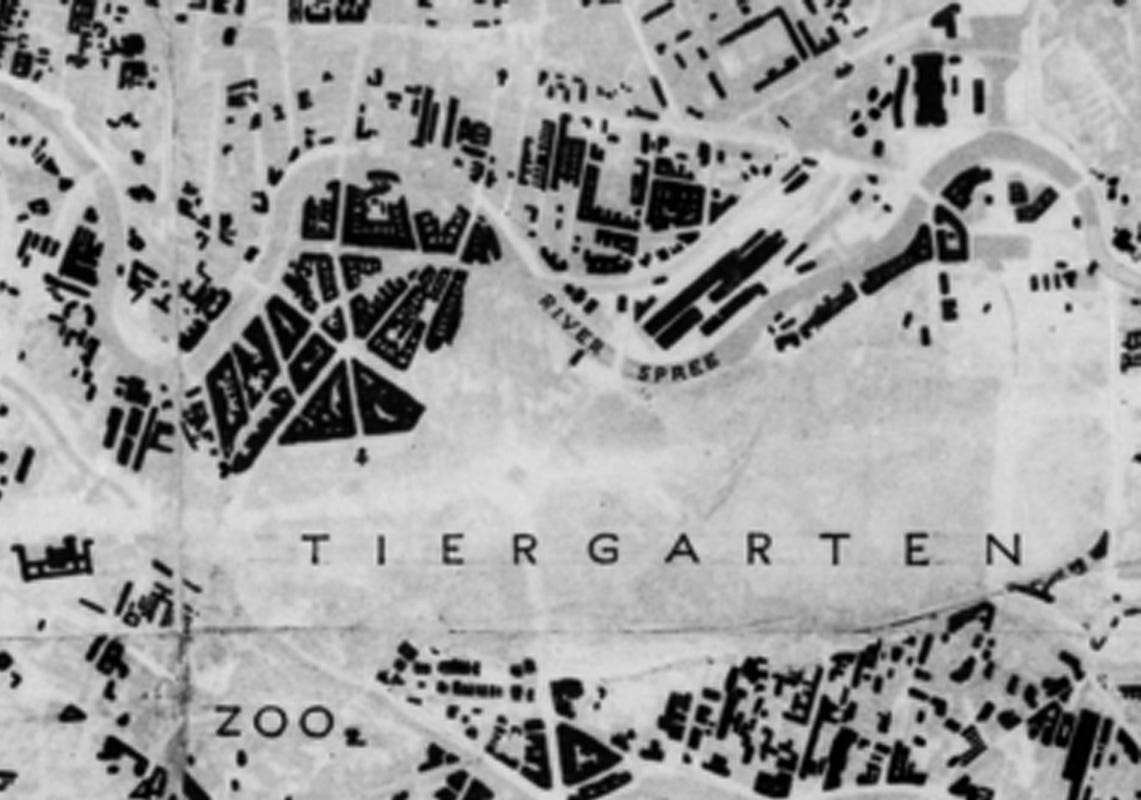
This bomb damage diagram was released by the British Air Ministry after examining numerous aerial photographs to indicate how much damage was caused by the RAF air campaign up to February 1944 (darkened areas) on the city centre. Note that practically all the Hansaviertel’s built-up area is marked as “destroyed”.
The 1945 fightings
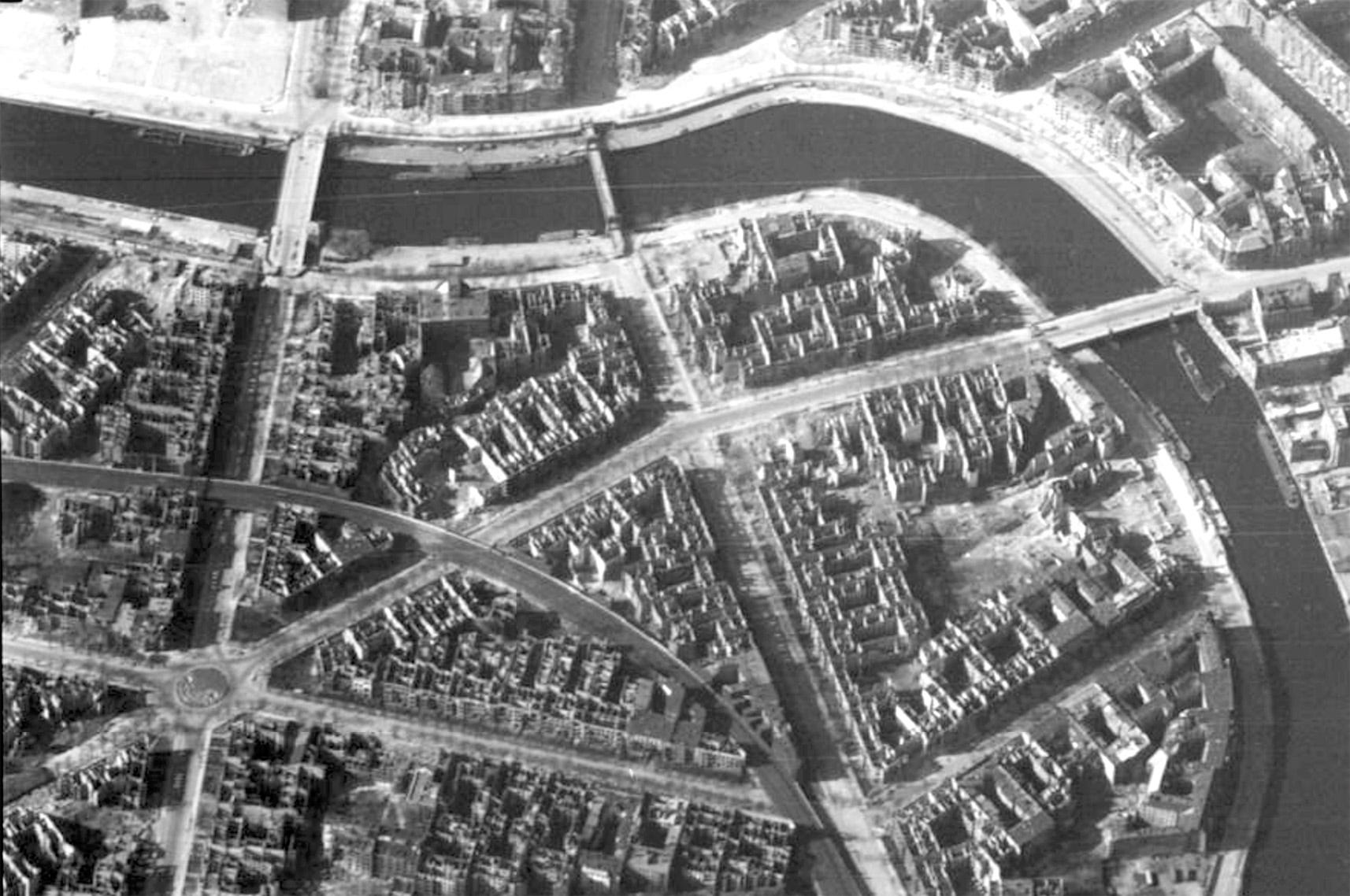
From March 1945, Berlin and its citizens prepared for the final battle with the advancing Russian troops. The Hansaviertel and northern Tiergarten park were located inside the inner circle of “the fortress”, being its first line of defence the Spree river. This area was defended by some units from Panzer-Division ‘Müncheberg’ and was hammered during all battle by Soviet artillery. Barricades and tank obstacles were built at the Hansa- and Moabiterbrücken in preparation for the intended bloody street-fighting. On the 27th April the Soviet 12th Guards Tank Corps with the 79th Rifle Corps on its right flank advanced from the north through the Moabit district reaching the river’s north bank on the afternoon of the 28th, although both units encircled the “Hansa” area: the 79th pushed east to get a direct assault across the Moltkebrücke into the Reichstag and Königsplatz and the 12th westwards to western Moabit, but finally halted due to its heavy infantry losses. No great advance was made here until May 1st, when the attacking forces penetrated into the Hansa and western Tiergarten from Charlottenburg Tor.
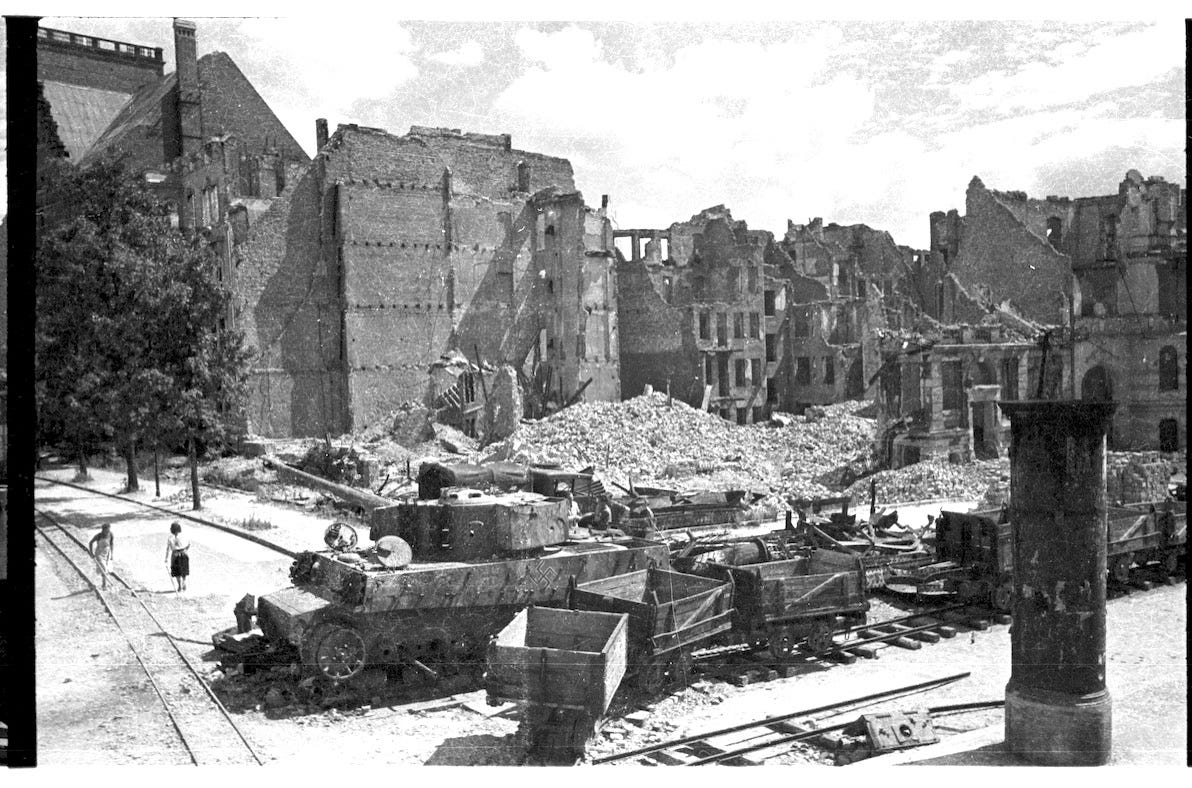
After the ceasefire, a Panzer VI Tiger I tank was found abandoned at Altonaer Straße. It was positioned between the railway bridge and the Panzersperre barricade that blocked the southern end of the Hansabrücke to prevent the Soviet assault from the north. This tank, one of the last two of this type fighting in Berlin, belonged to the 3./Pz. Abt. ‘Müncheberg’.
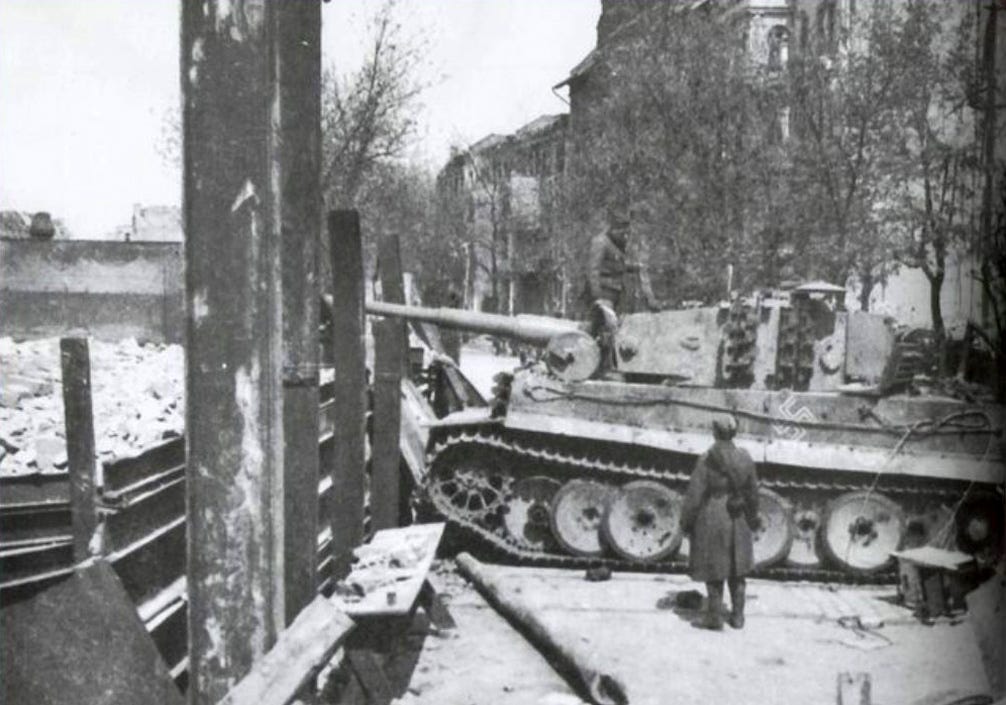
Pictures show the same Tiger in 1946 when the dismantling work had begun, surrounded by a sea of rubble and bricks, and with its main wheels and tracks missing. The tank had a mixed composition with an early built hull and a late style turret with zimmerit and commander’s cupola, and a white outlined swastika was painted on the sides of the hull.
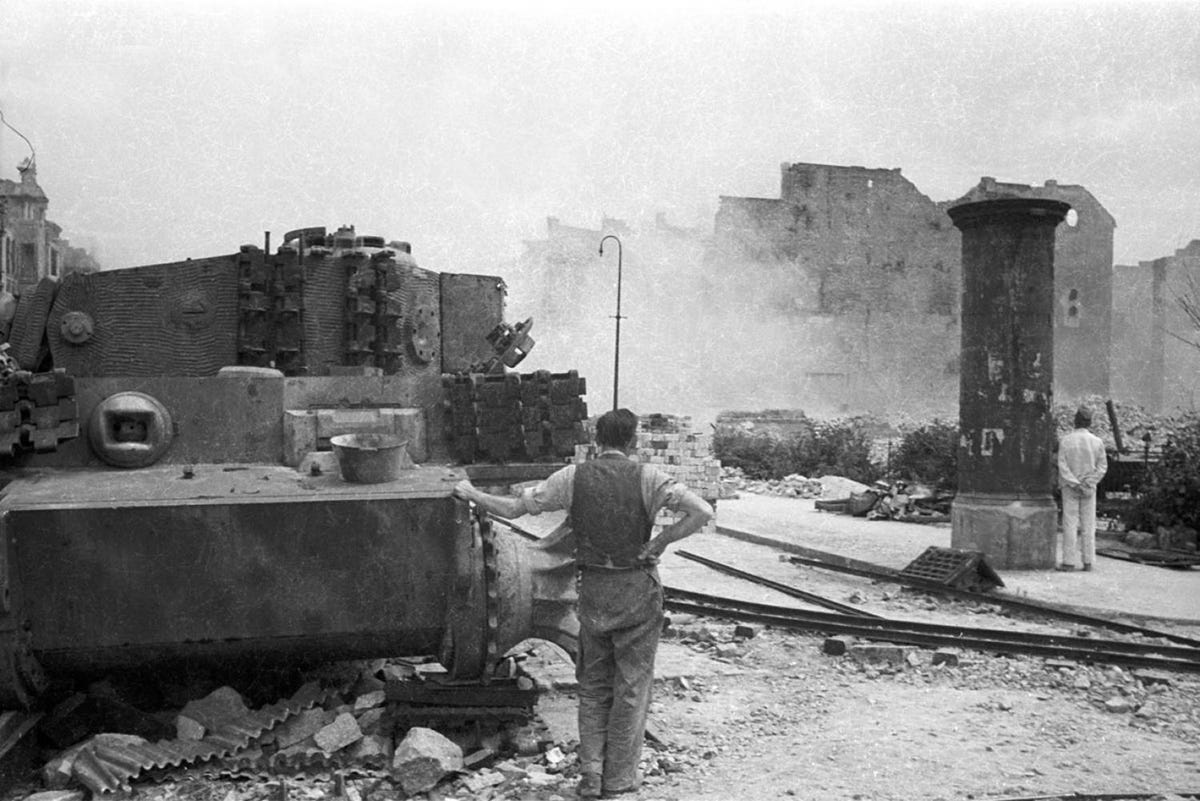
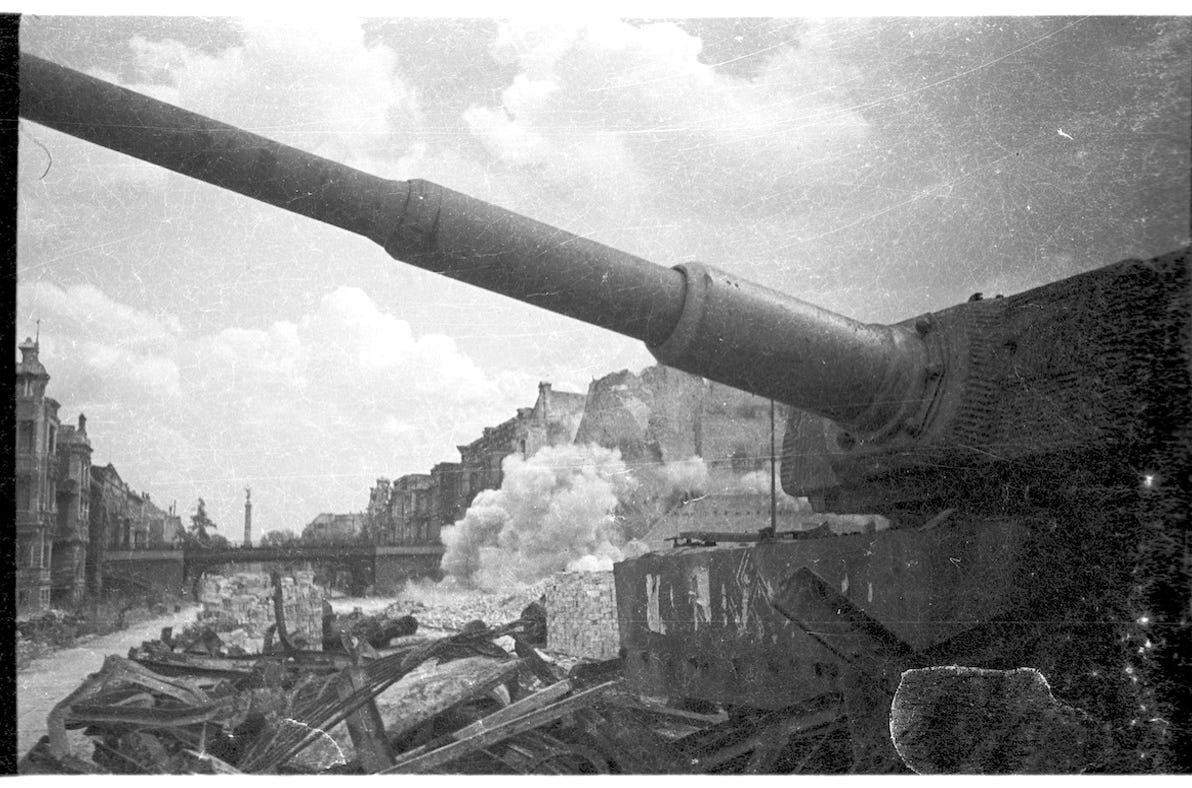
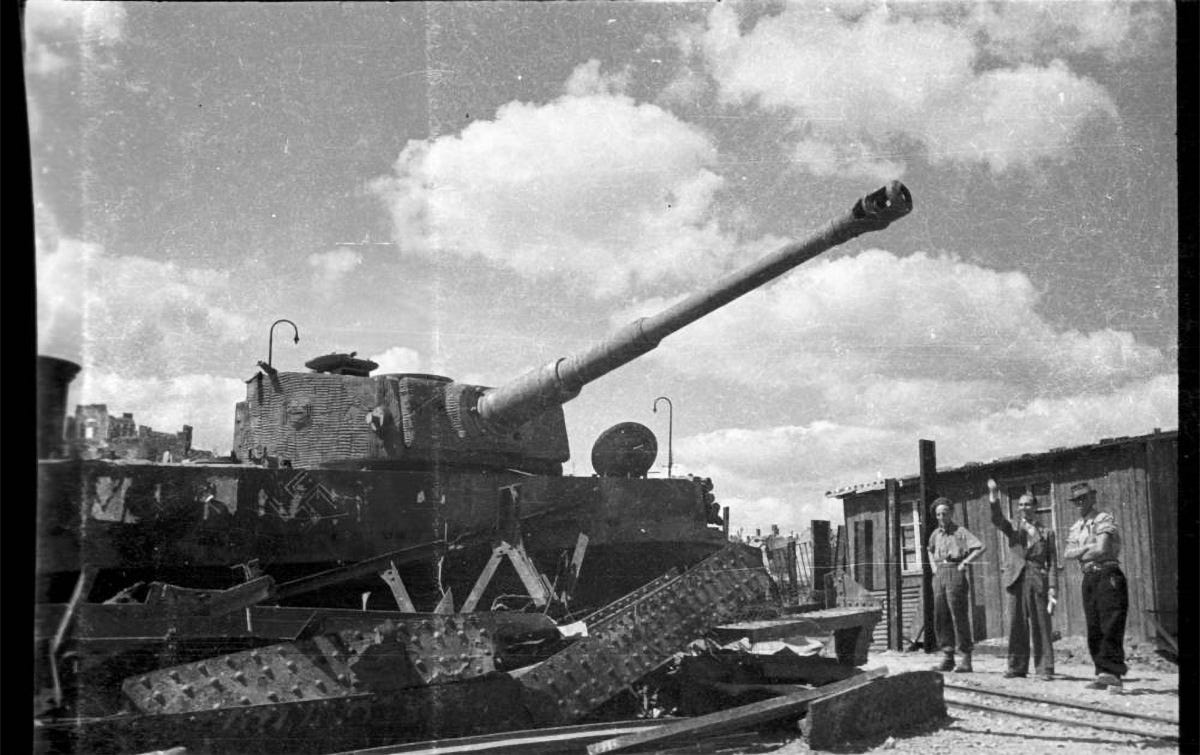
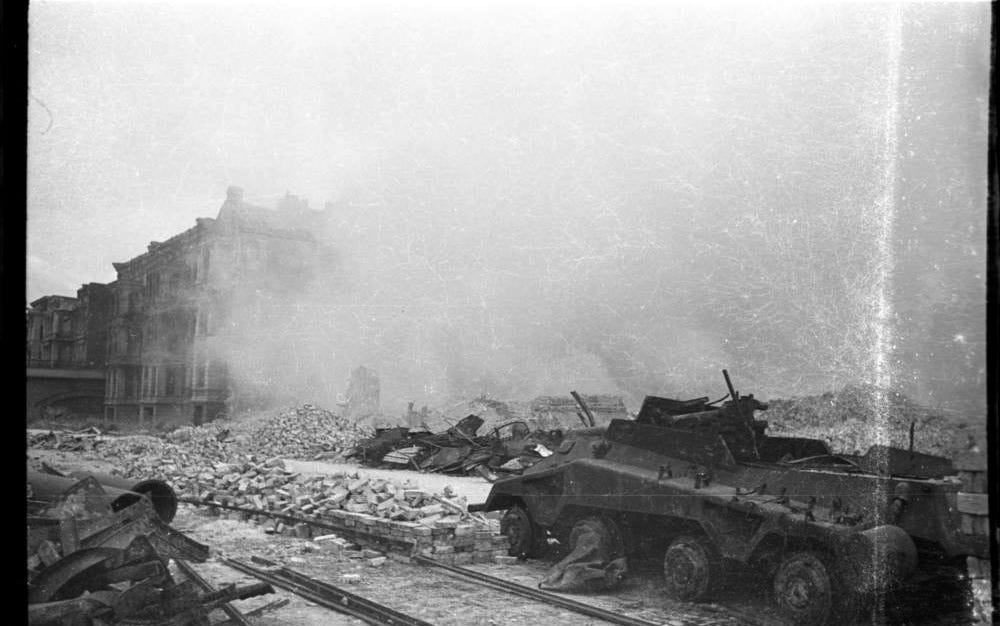
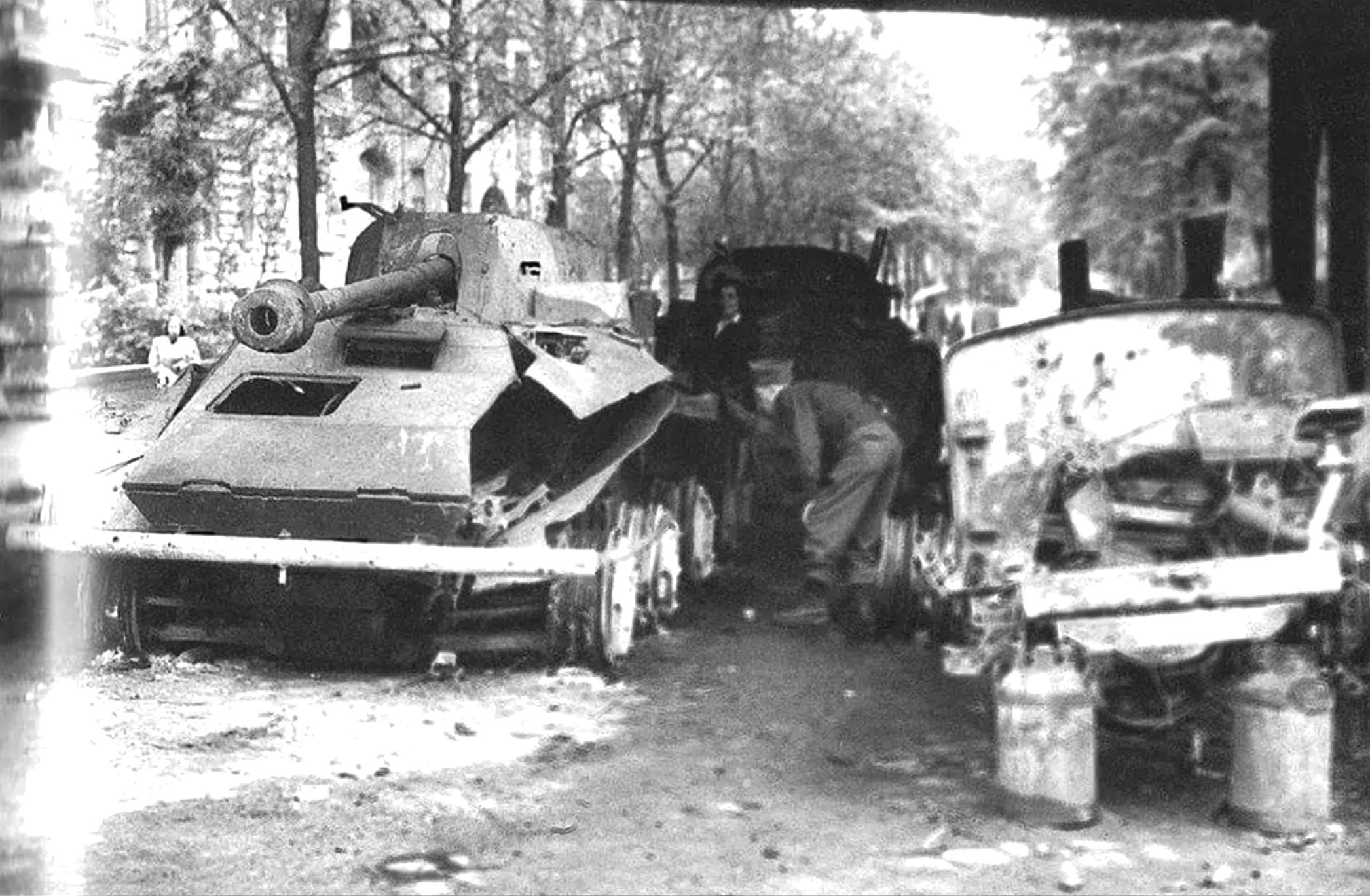
Next to the Tiger at Altonaer Str Ecke Schleswiger Ufer there was a Panzerspähwagen PAK 40, in this case facing Tiergarten. The crew abandoned the armoured car and destroyed its gun; closer pictures revealed that it was equipped with a 7.92 mm MG81Z machine gun fitted to the left armour plate. It is assumed that this vehicle belonged to the same unit as the heavy tank.
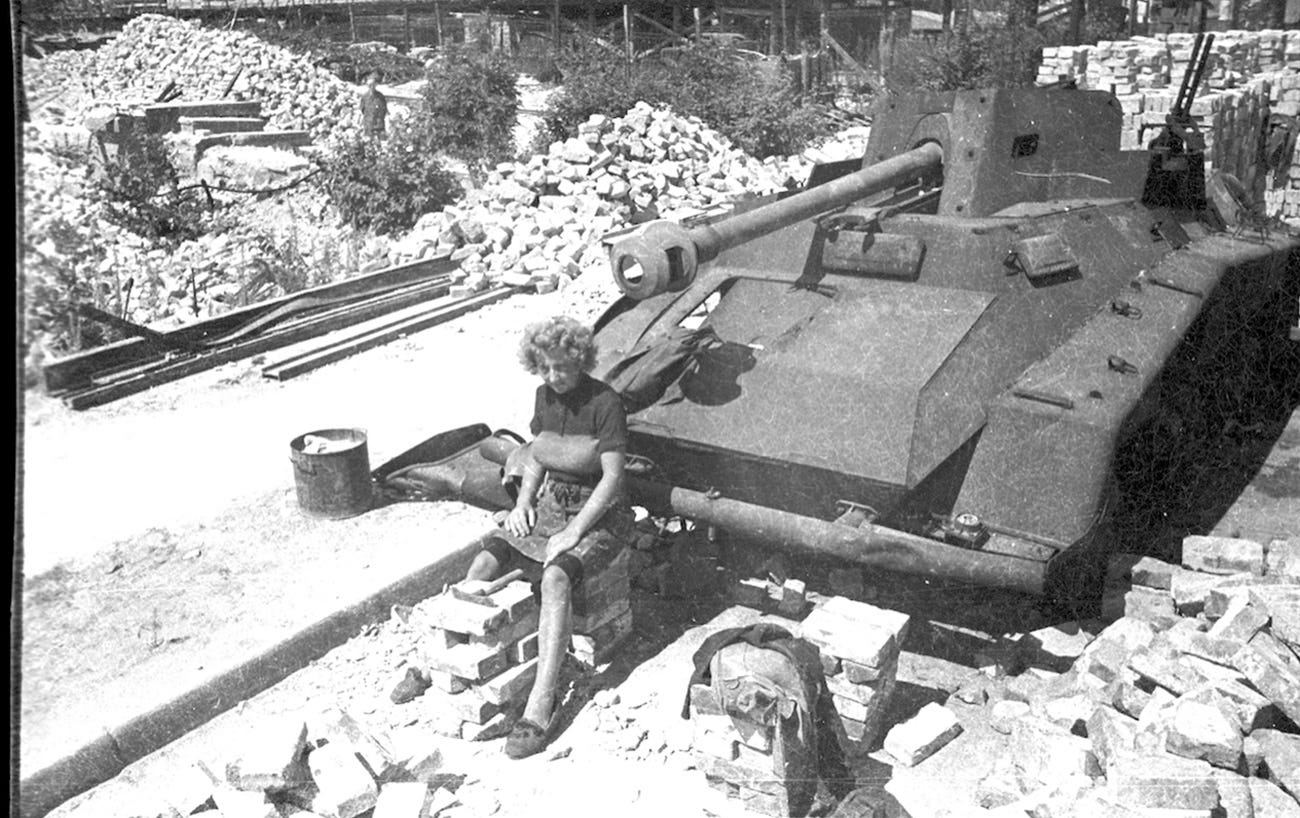
British Royal Engineer C S Newman captured this series of photos of a German Trümmerfrau working on some bricks seated in front of the Sd.Kfz.234/4 wreck at Altonaer Straße. The Tiger tank is seen behind.
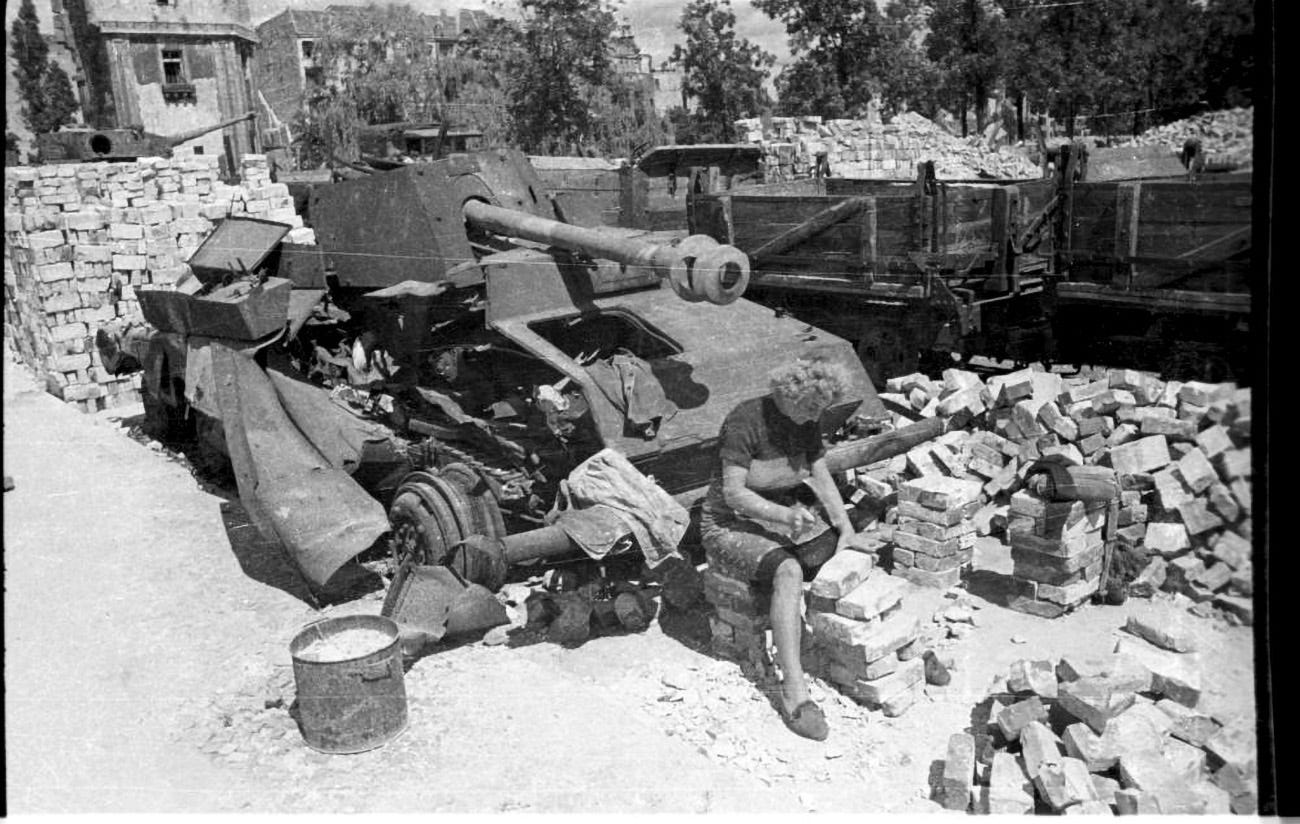
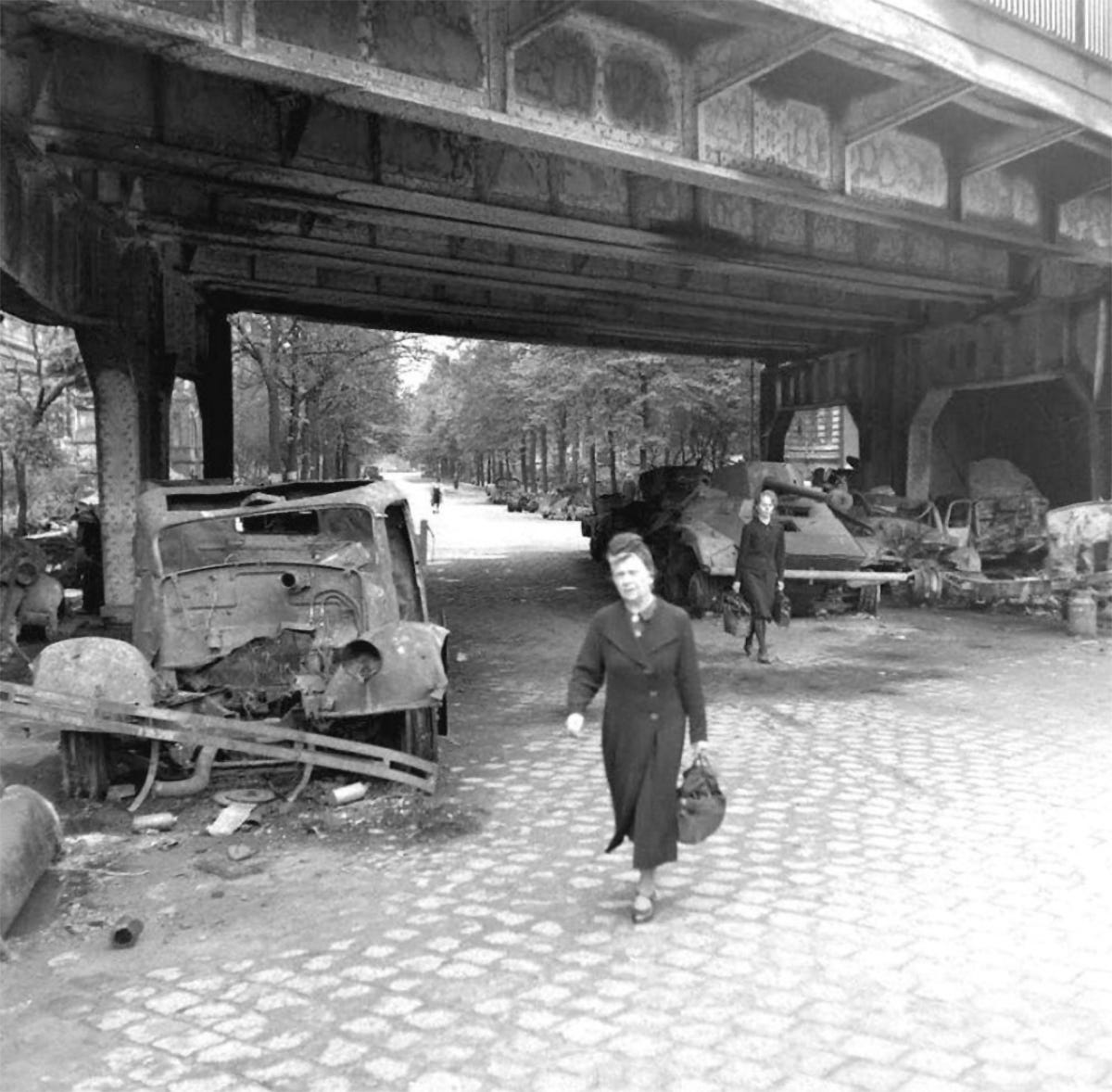
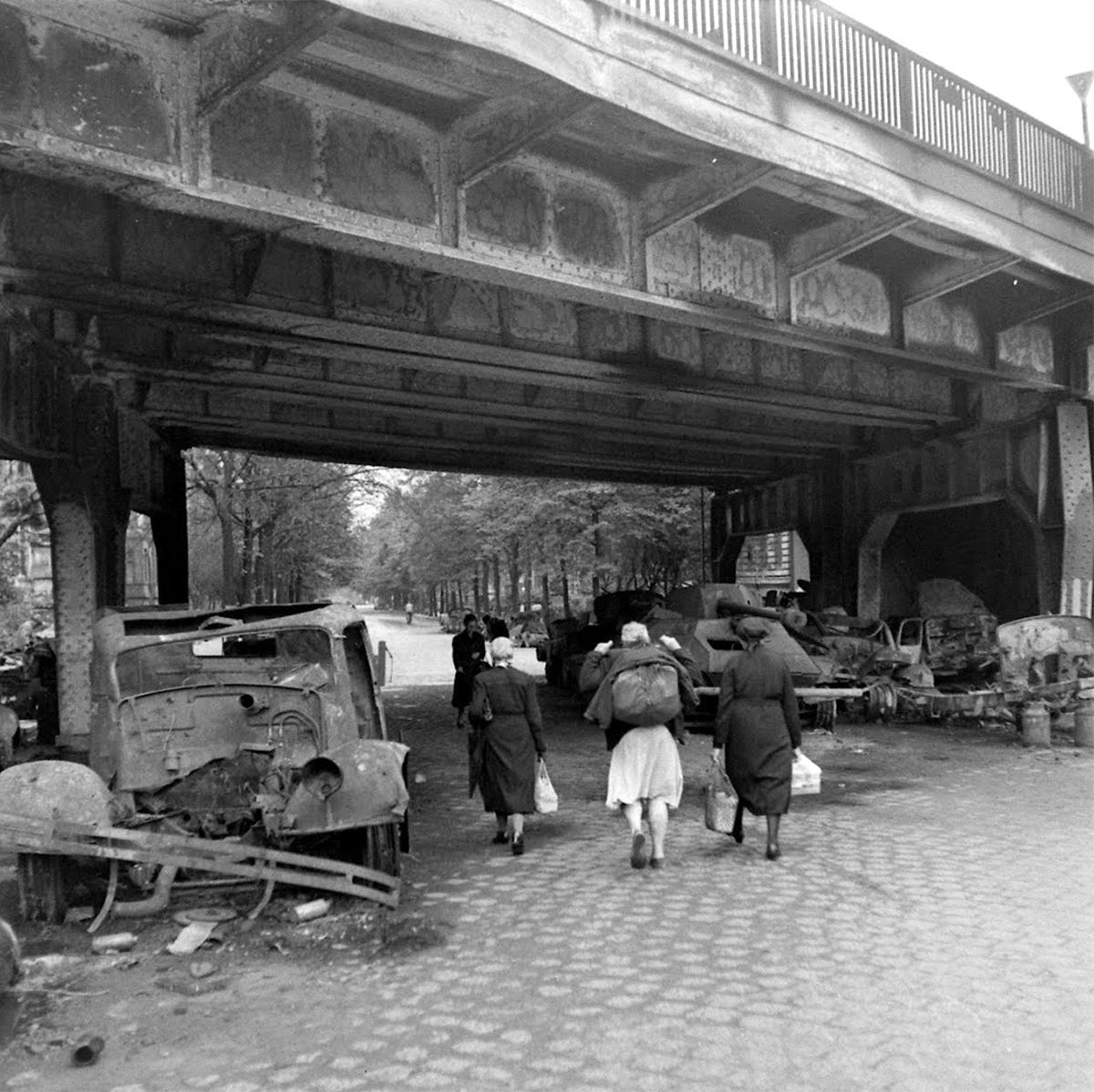
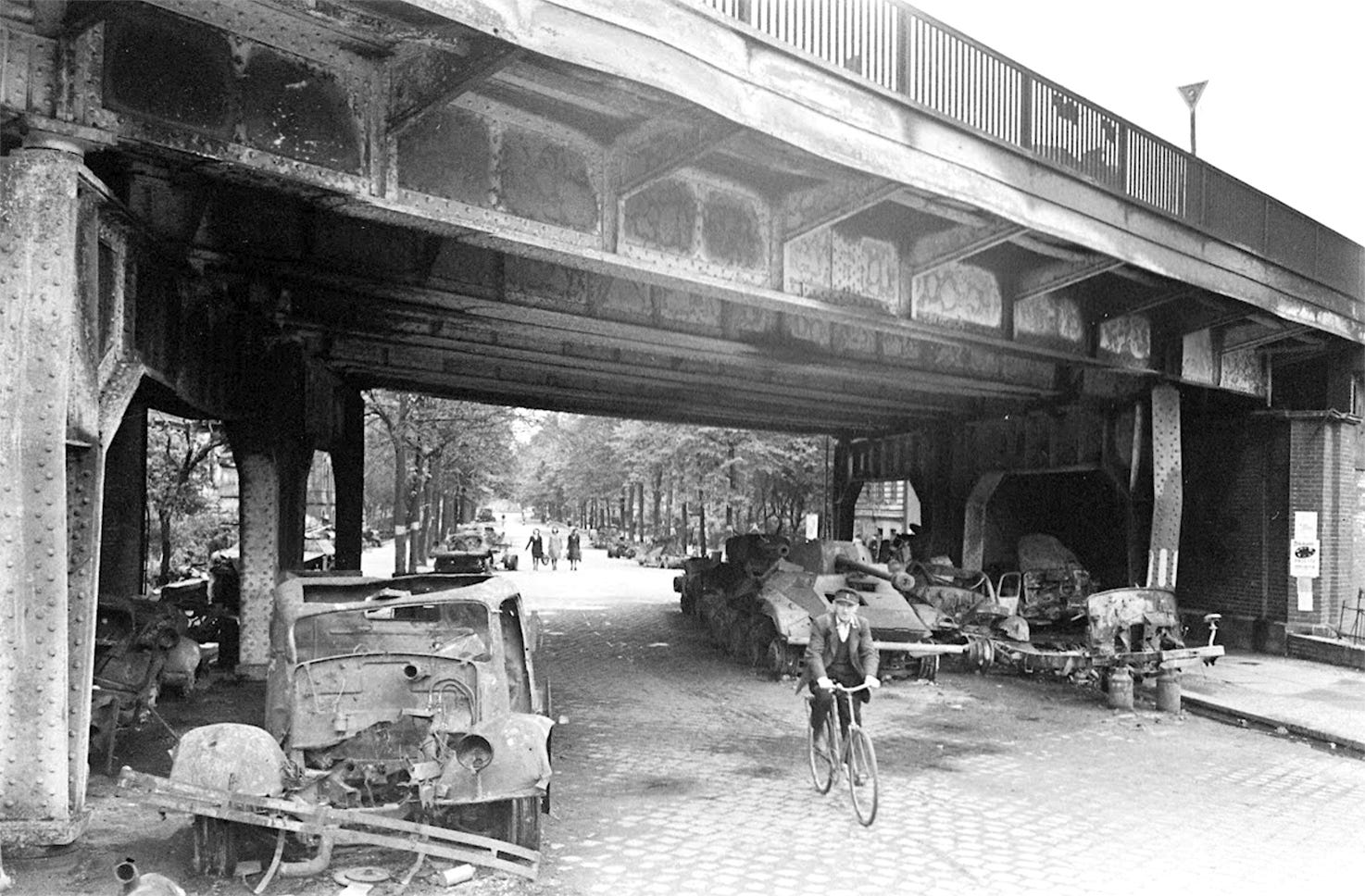
Some blocks away to the east, American William Vandivert found more remains of German vehicles abandoned. He took these pictures at Claudiusstraße/Flensburger Straße in July 1945 in the northern part of the Hansaviertel. Among the wrecks under the S-Bahn railway bridge there were two schwerer Pz.Sp.Wg. (7·5cm Pak 40) (Sd.Kfz.234/4) armoured cars which probably belonged to Pz.Spähl.Kp. from Panzer-Division ‘Müncheberg’.
Post mortem
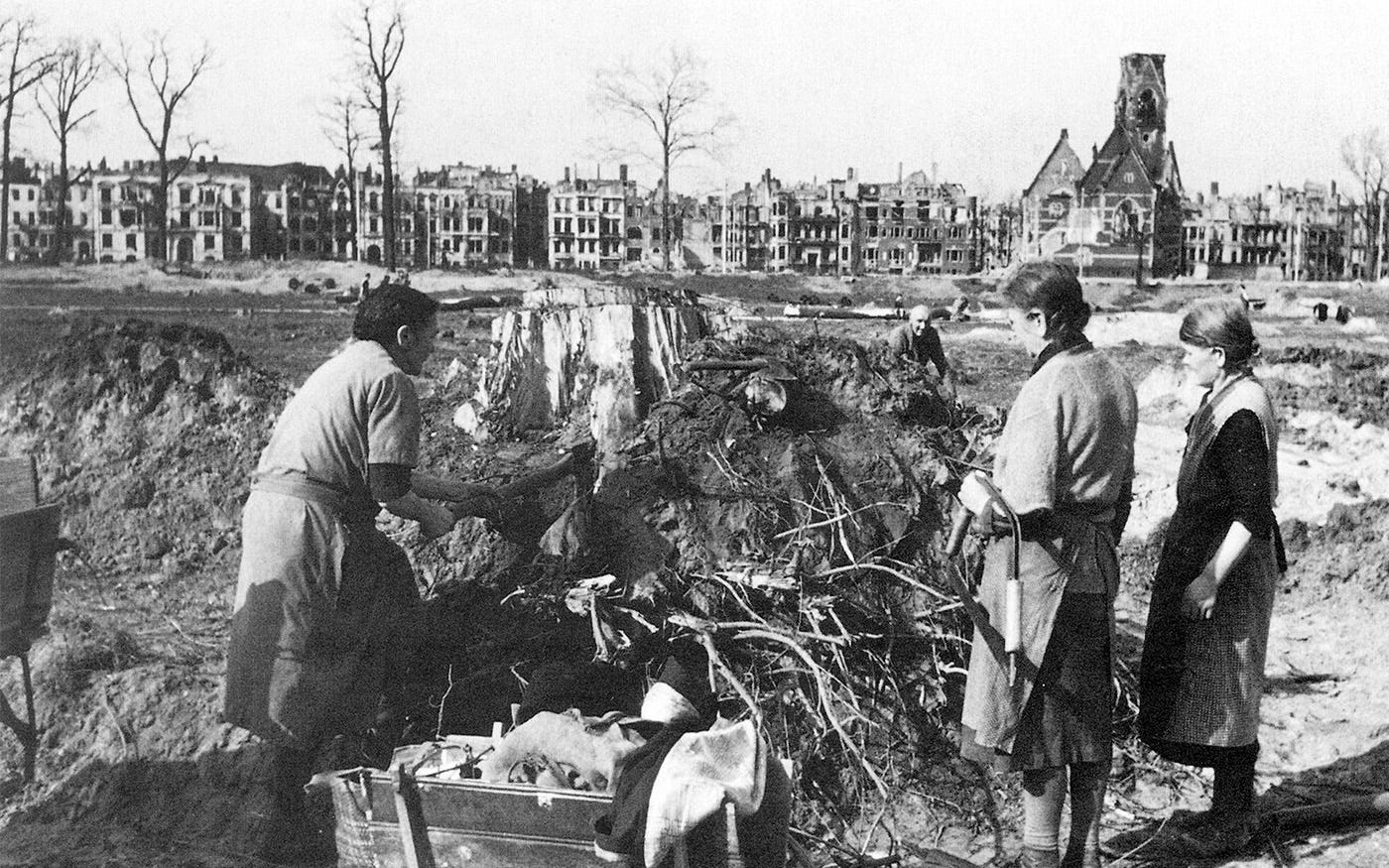
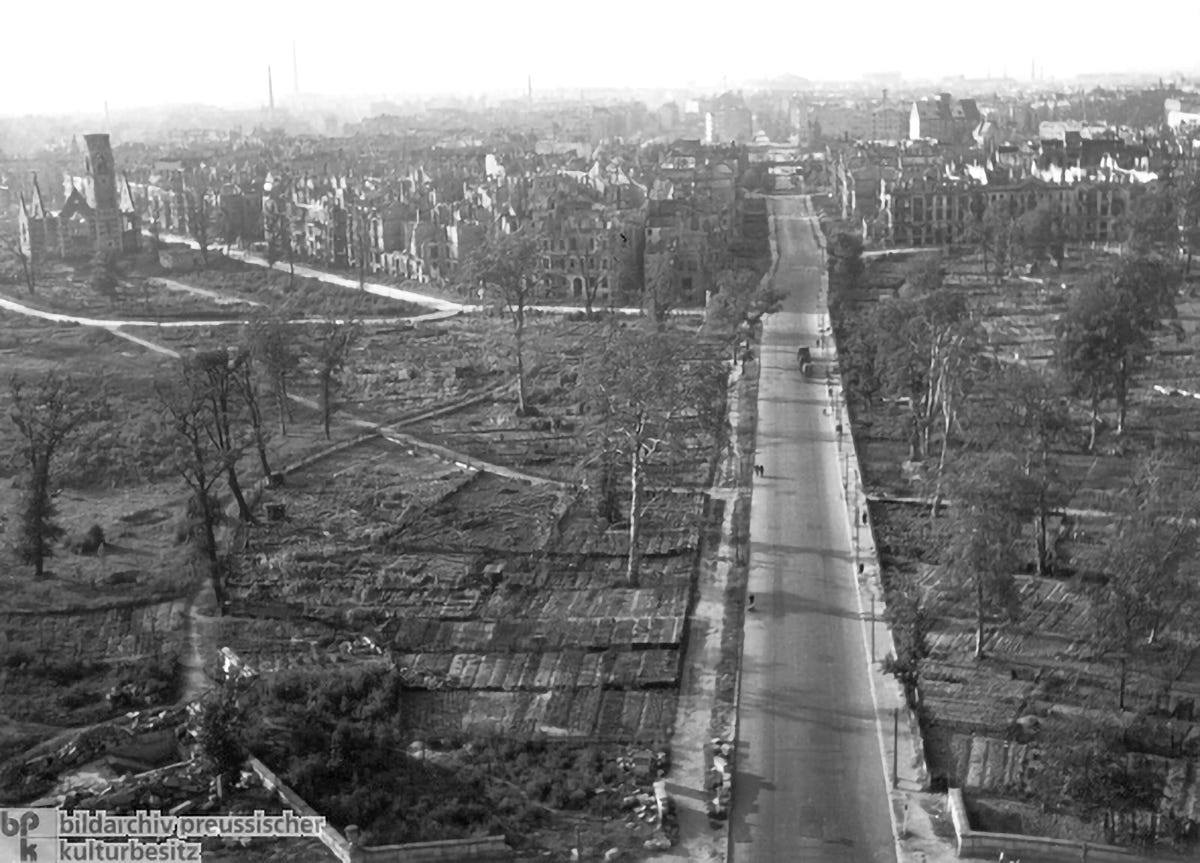
The war bombings caused a complete destruction in the area and its fancy residential buildings. According to Dr. Sandra Wagner-Conzelmann, of the 343 houses listed in the district just 70 remain, many of them badly damaged. Nonetheless, about 4,000 people still lived there among rubble. In the devastated Tiergarten, the remaining trees were chopped down months later which, combined with the multiple bomb craters, made the area to resemble a moon landscape.
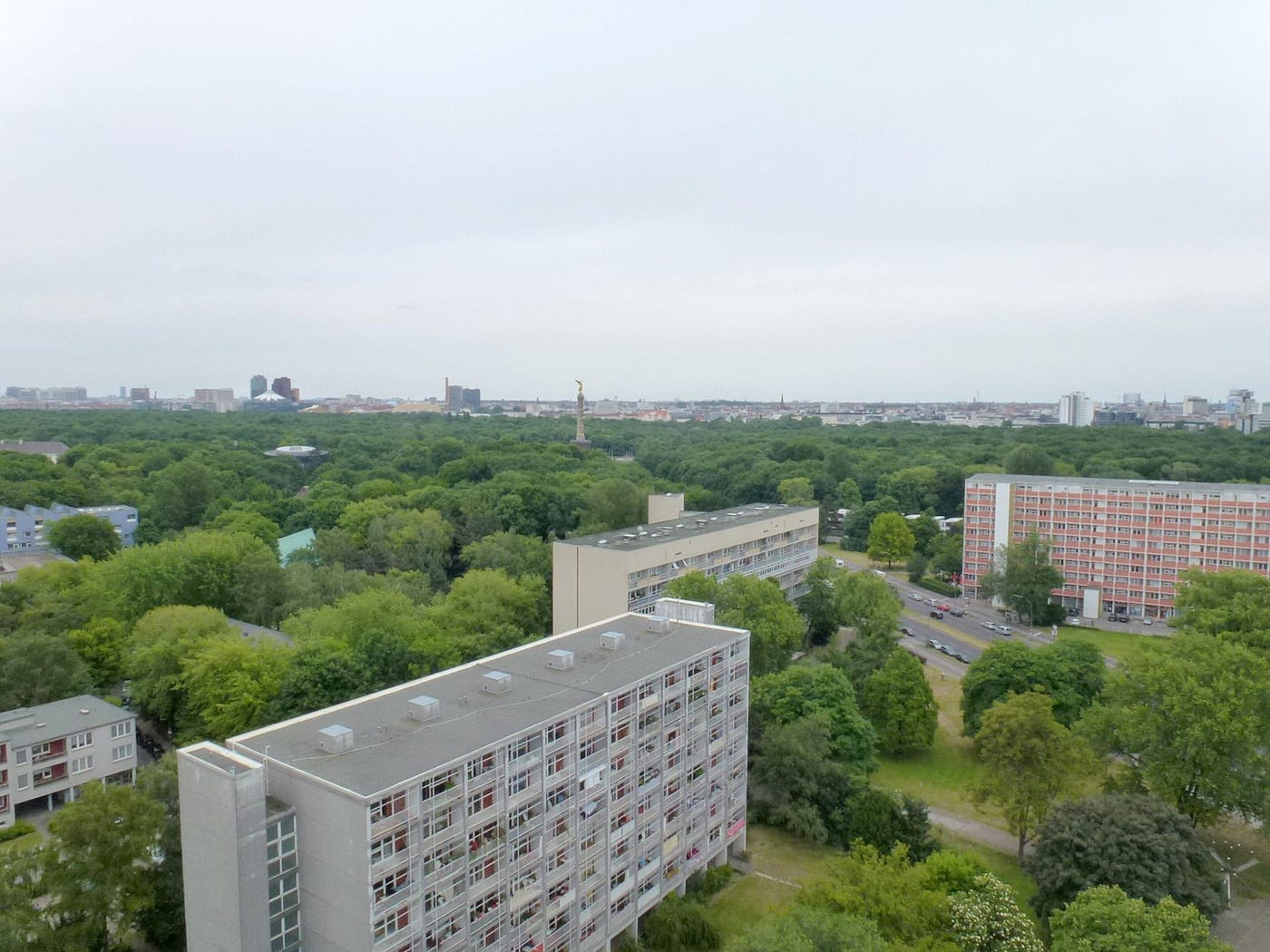
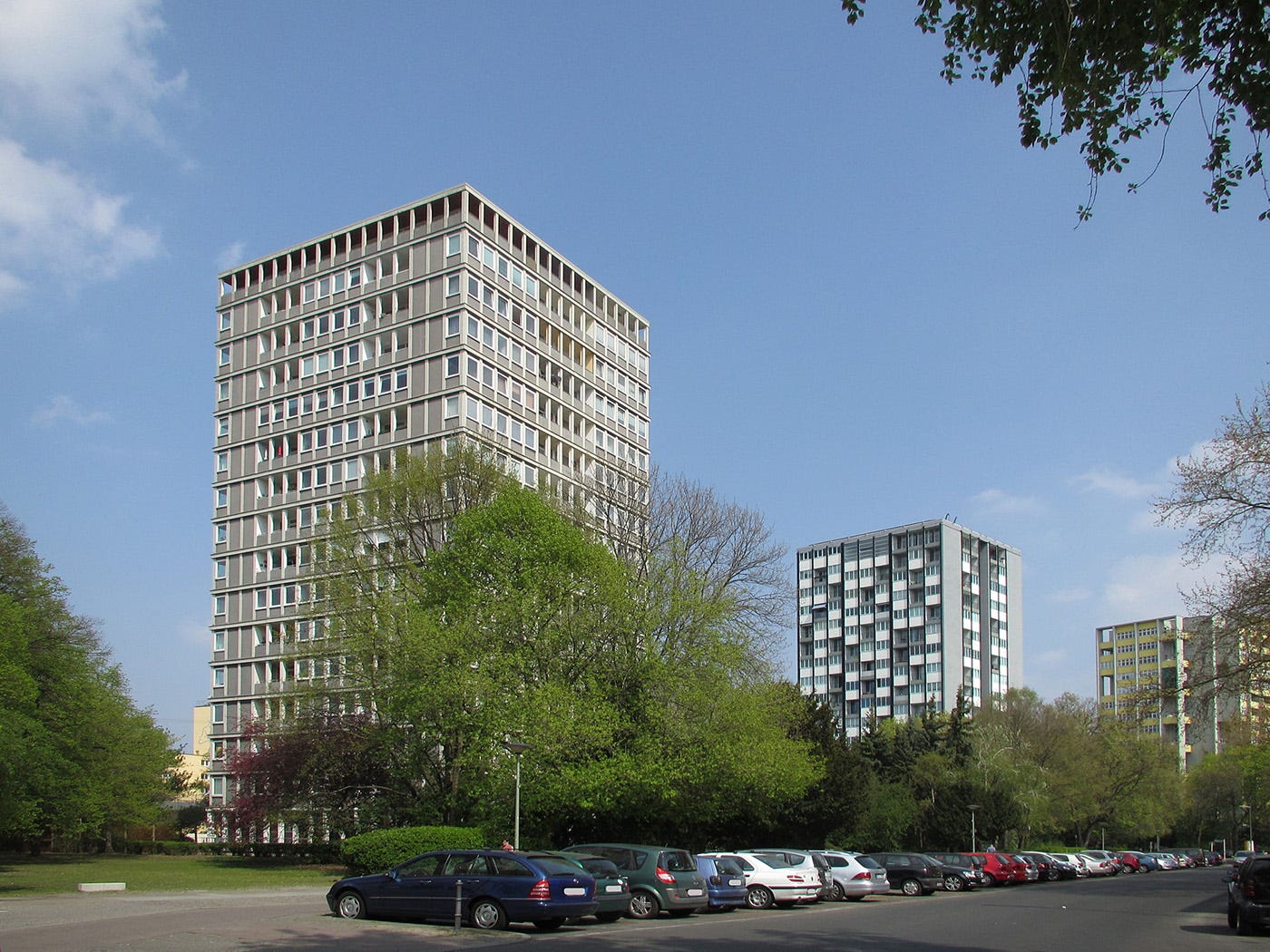
The rebuilt program did not start until 1953, when the German Senate declared this district the core area of the imminent International Building Exhibition Interbau (Interbau 57), creating from 1957 a modern urban area designed by several internationally renowned architects. Hans Scharoun, Head of the Department for Building and Housing in Berlin, summed up the project: ‘What remains, after the loosening-up achieved by bombing raids and the final battle, gives us the chance to shape an urban landscape.’
Two views of today’s Hansaviertel residential area, where from an extensively war-damaged area a modern urban development with wide green spaces was born.
_______________
Sources and Bibliography:
Antill, Peter. Berlin 1945: End of the Thousand Year Reich. Campaign 159. Osprey Publishing, 2005
Archer, Lee. Panzers in Berlin 1945. Panzerwrecks, 2019
Beevor, Anthony. The Fall of Berlin 1945. Viking, 2002
Blank, Ralf. Germany and the Second World War. Volume IX/I. Clarendon Press, 1990
Demps, Laurenz. Luftangriffe auf Berlin. Die Berichte der Hauptluftschutzstelle. Ch. Links Verlag, 2014
Hansaviertel Berlin. 22. November 1943. <https://hansaviertel.berlin/geschichte/november-1943/>
Hansaviertel Berlin. Geschichte der Interbau 1957. <https://hansaviertel.berlin/interbau-1957/geschichte-interbau-57/>
Janiszewski, Bertram. Das alte hansa-Viertel in Berlin. Haude & Spener, 2000
Landesarchiv Berlin. LAB, A Rep. 001-02, Nr. 700, Bl. 143 ff; LAB, A Rep. 001-02, Nr. 698, Bl. 144 ff., s. a. Nr. 700, Bl. 270 ff; LAB, A Rep. 001-02, Nr. 698, Bl. 149 f., s. a. Nr. 700, Bl. 275 f; LAB, A Rep. 001-02, Nr. 701, Bl. 176; LAB, A Rep. 001-02, Nr. 702, Bl. 79 ff.; s. a. LAB, A Rep. 005-07, Nr. 559, o. Bl; LAB, A Rep. 001-02, Nr. 702, Bl. 185 f; LAB, A Rep. 001-02, Nr. 703, Bl. 43; LAB, A Rep. 001-02, Nr. 703, Bl. 87 f
Le Tissier, Tony. Race for the Reichstag: The 1945 Battle for Berlin. Pen and Sword Military, 2010
Moorhouse, Roger. Berlin at war. Life and death in Hitler’s capital, 1939-45. Vintage Books, 2011
Wildt, Michael and Kreutzmueller, Christoph. Berlin 1933-1945 - Stadt und Gesellschaft im Nationalsozialismus. Siedler Verlag, 2013
Thank you for reading Berlin Bombenkrieg by Pablo López Ruiz. Please subscribe, if you haven’t yet, to comment, follow and share. All images used for non profit / educational purposes.