


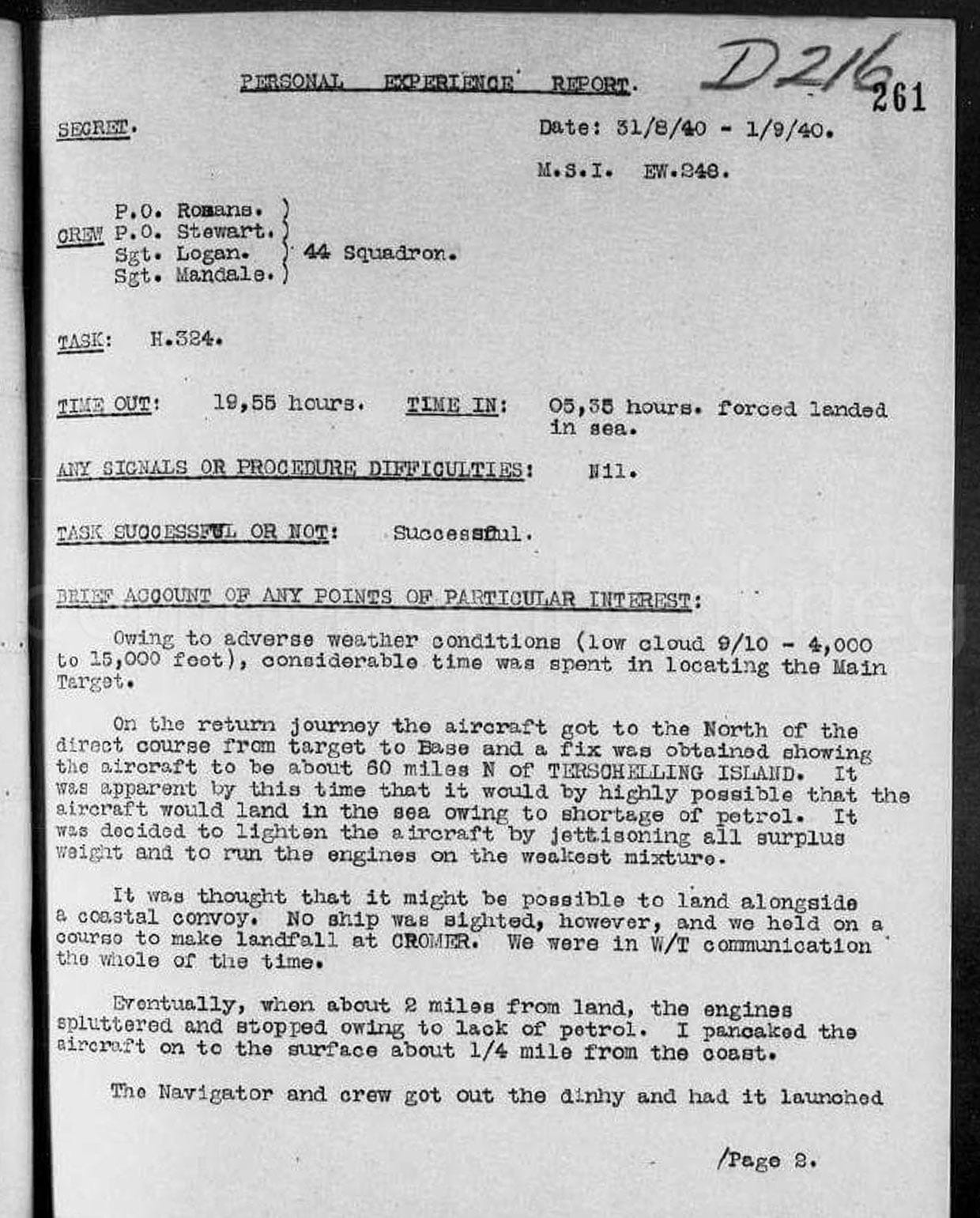
‘I pancaked the aircraft on to the surface…
…about 1/4 mile from the coast.’
– P. O. Romans, September 1, 1940 –
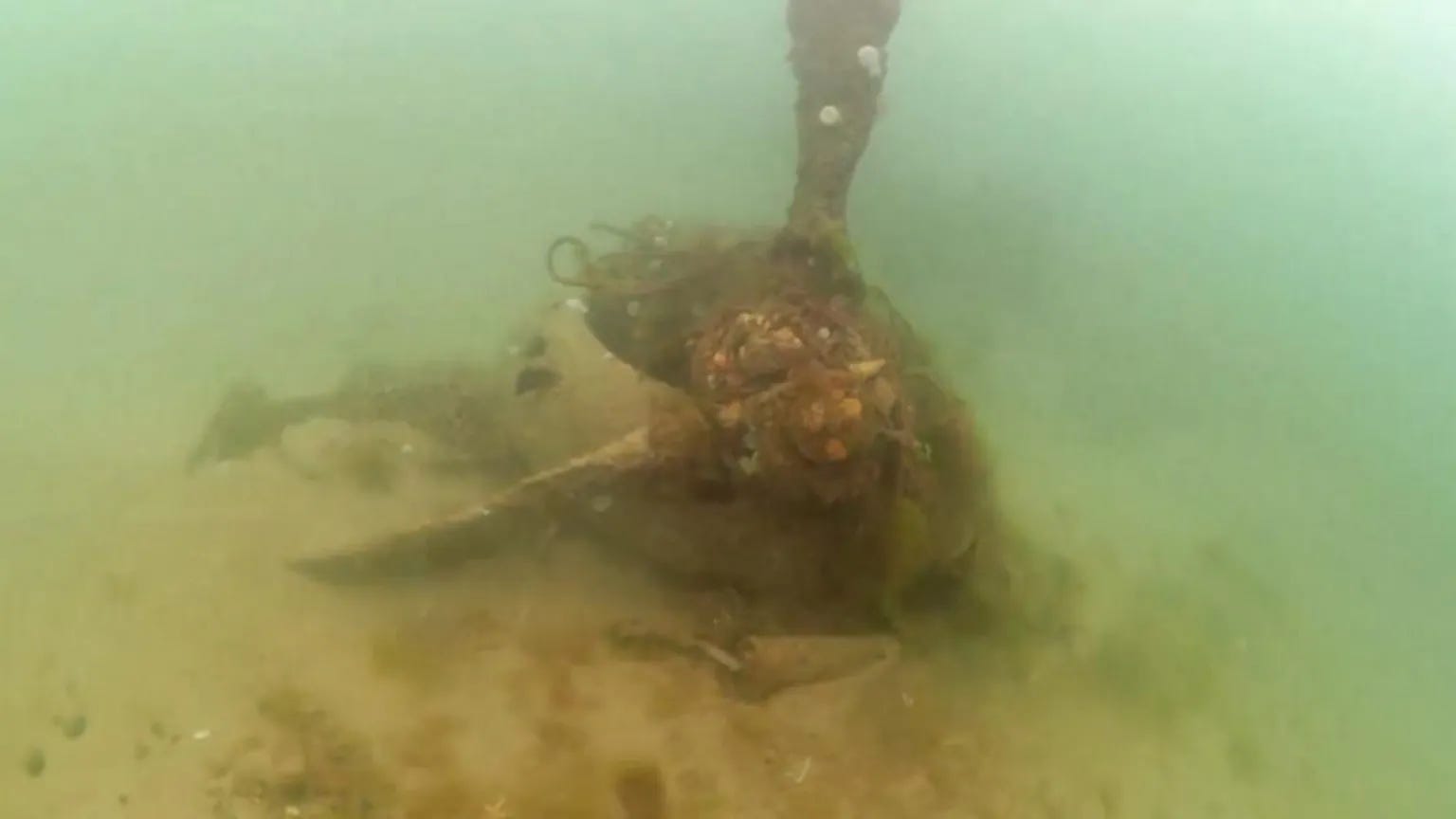
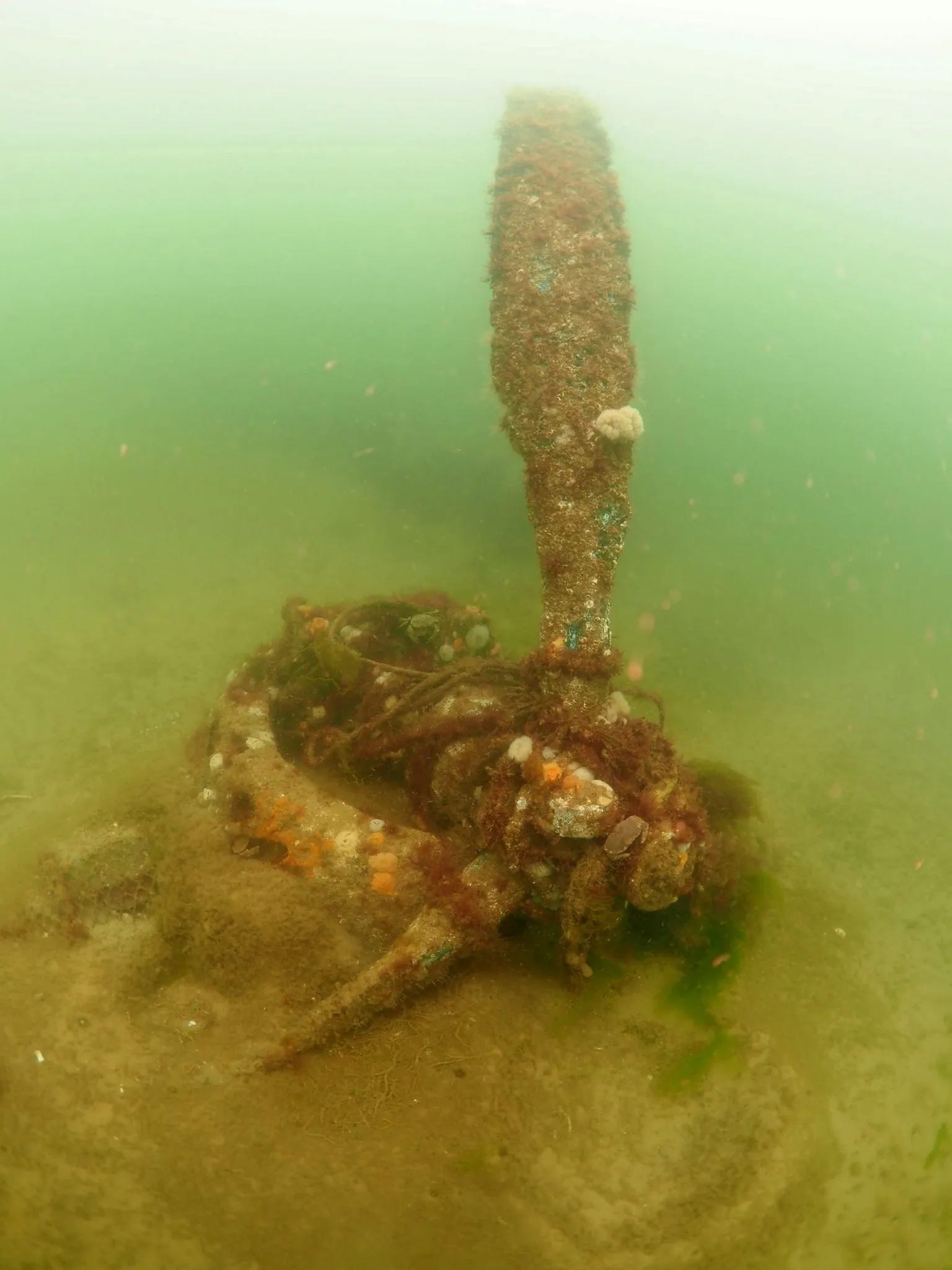
Last week surfaced that remains of Hampden P2123 of 44 Squadron were filmed for the first time off the north Norfolk coast by sealife diver Rob Spray. This ww2 British medium bomber was lost more than 80 years ago in August 1940 returning from the fourth air raid on Berlin by RAF aircraft.
In 2022 Spray, chair of the Marine Conservation for Norfolk Action Group, whilst diving off Salthouse beach found in shallow water what appeared to be a Handley-Page bomber remains. “I was looking for interesting bits of seabed and this loomed out of the slight murk” he said, being interviewed by BBC reports. He contacted the Norfolk Research Wreck group to identify the wreck which finally turned out to be the P2123 remains lying there since that summer night. Paul Hennessey, from Norfolk Wreck Research, helped identify it as P2123 bomber, lost in the early hours of September 1, 1940.
August 31, 1940: R.A.F. planes renew attack on Berlin
On the night of 31 August / 1 September, 1940, RAF Bomber Command aircraft overflew and dropped bombs on the Third Reich’s heart again, less than twenty-four hours since the previous raid and for a fourth time in a week. Berliners ran to their cellars and shelters to take cover meanwhile the anti-aircraft defences and searchlights of the city tried to repel the British air raiders. London sent twenty-eight medium bombers to hit military and industrial targets. Bad weather prevented some of the bombers to reach their targets, in this case Tempelhof, the BMW factory and a gas work; most of the crews were somewhere in the Berlin area but failed to see under the cloud cover.
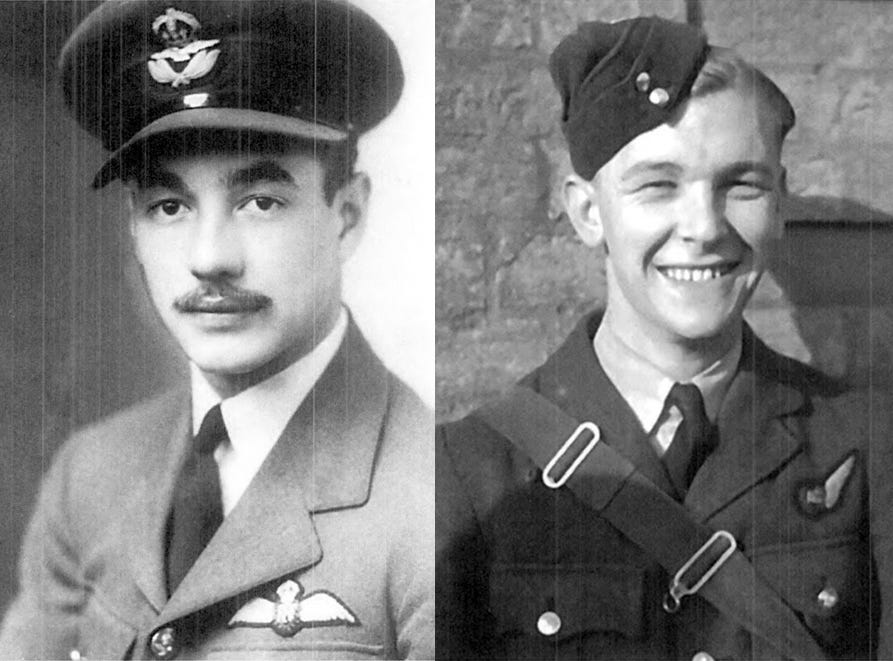
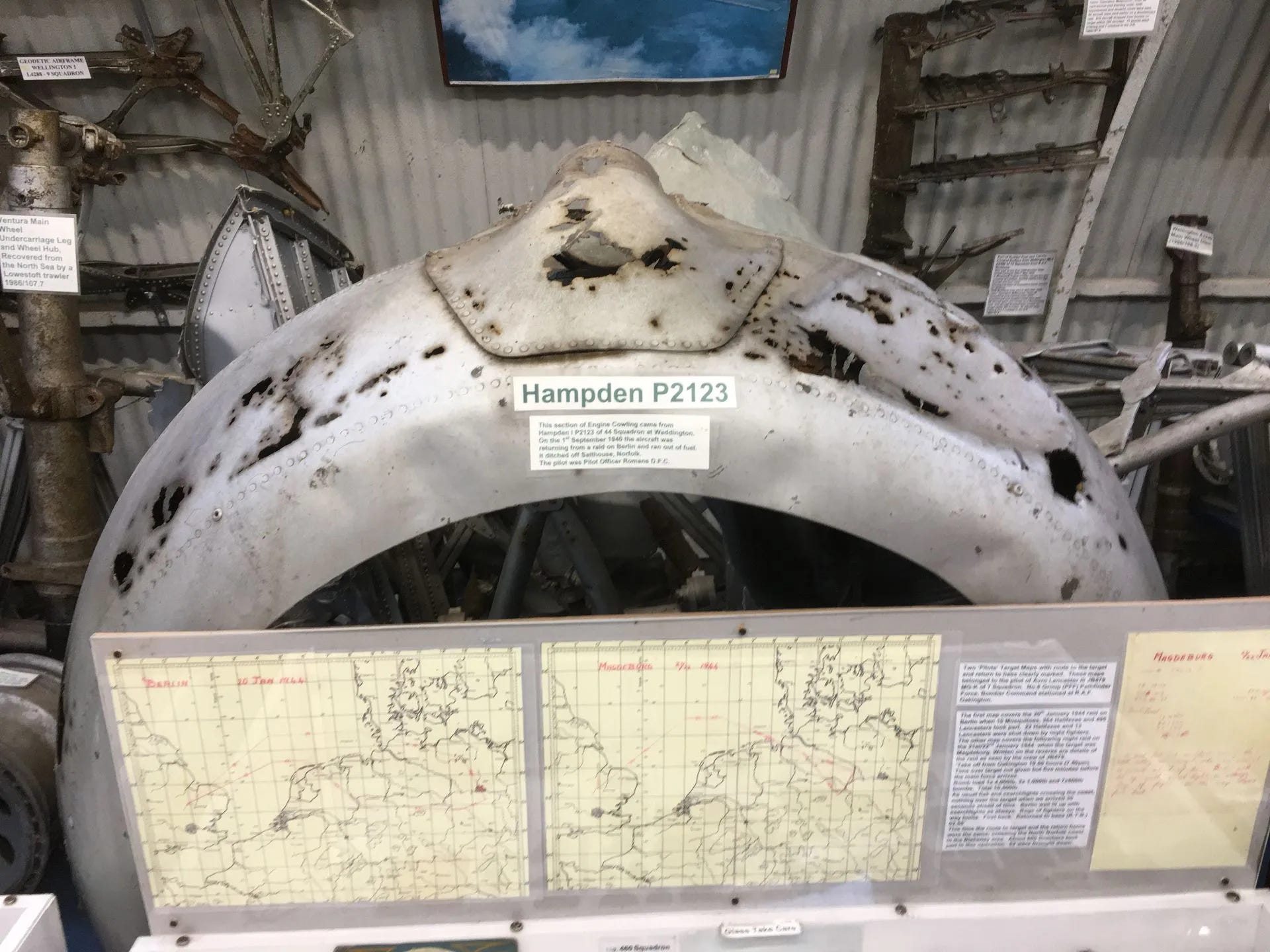
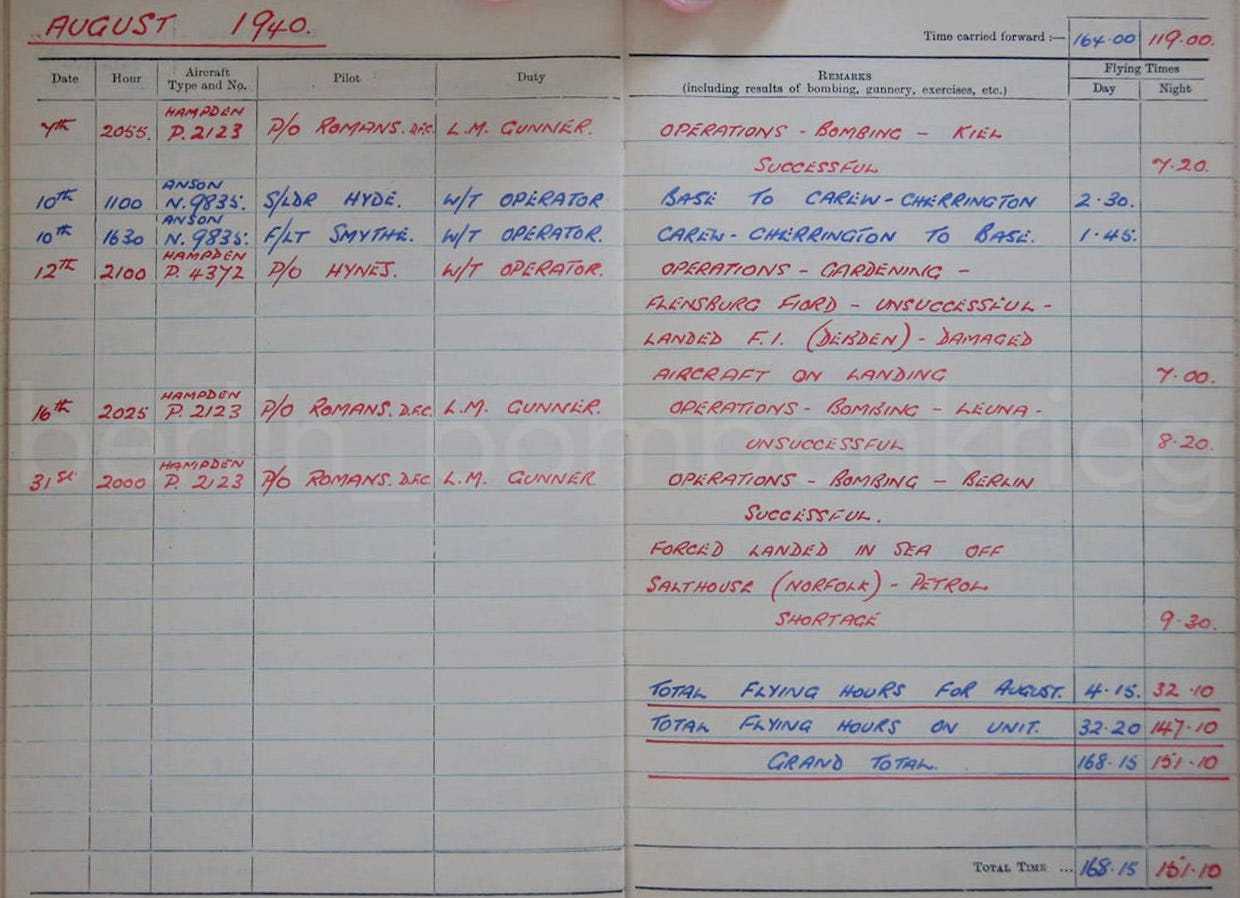
RAF’s only loss on this raid was Hampden P2123 of 44 Squadron: piloted by twenty-year-old Flying Officer Romans, this bomber found adverse weather over Berlin and after delivery the bombs on Tempelhof area the crew faced the return journey running out of fuel over the inhospitable North Sea. Finally, after being airborne for 9 and 30 minutes the engines stopped and Romans skillfully ditched the plane less than two miles off Salthouse —others say Cromer— on the Norfolk coast at 05.35 hours and the crew, unhurt, took to their dinghy and paddle to shore during more than 3 hours to safety.
Romans remarked on his report: “It is of interest that the Hampden remained afloat for 2 minutes before making its final plunge.”
On hitting the water, Sgt Jimmy Mandale (rear gunner aboard) reported that the Hampden bomber fully submerged upon impact and then popped back up again enabling the crew to exit the aircraft.
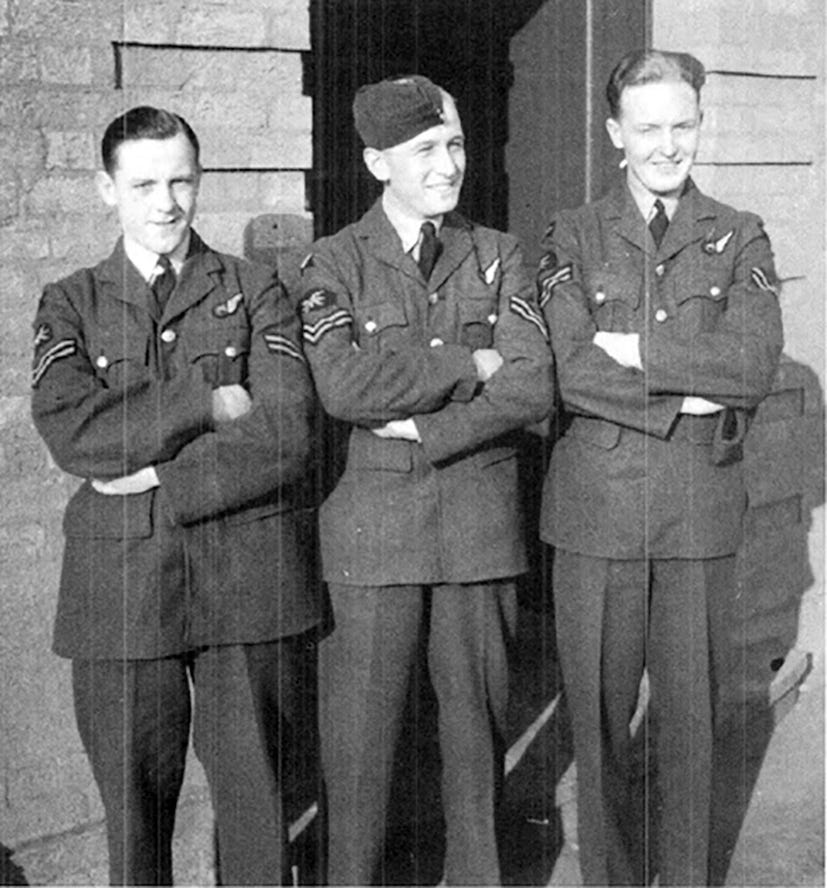
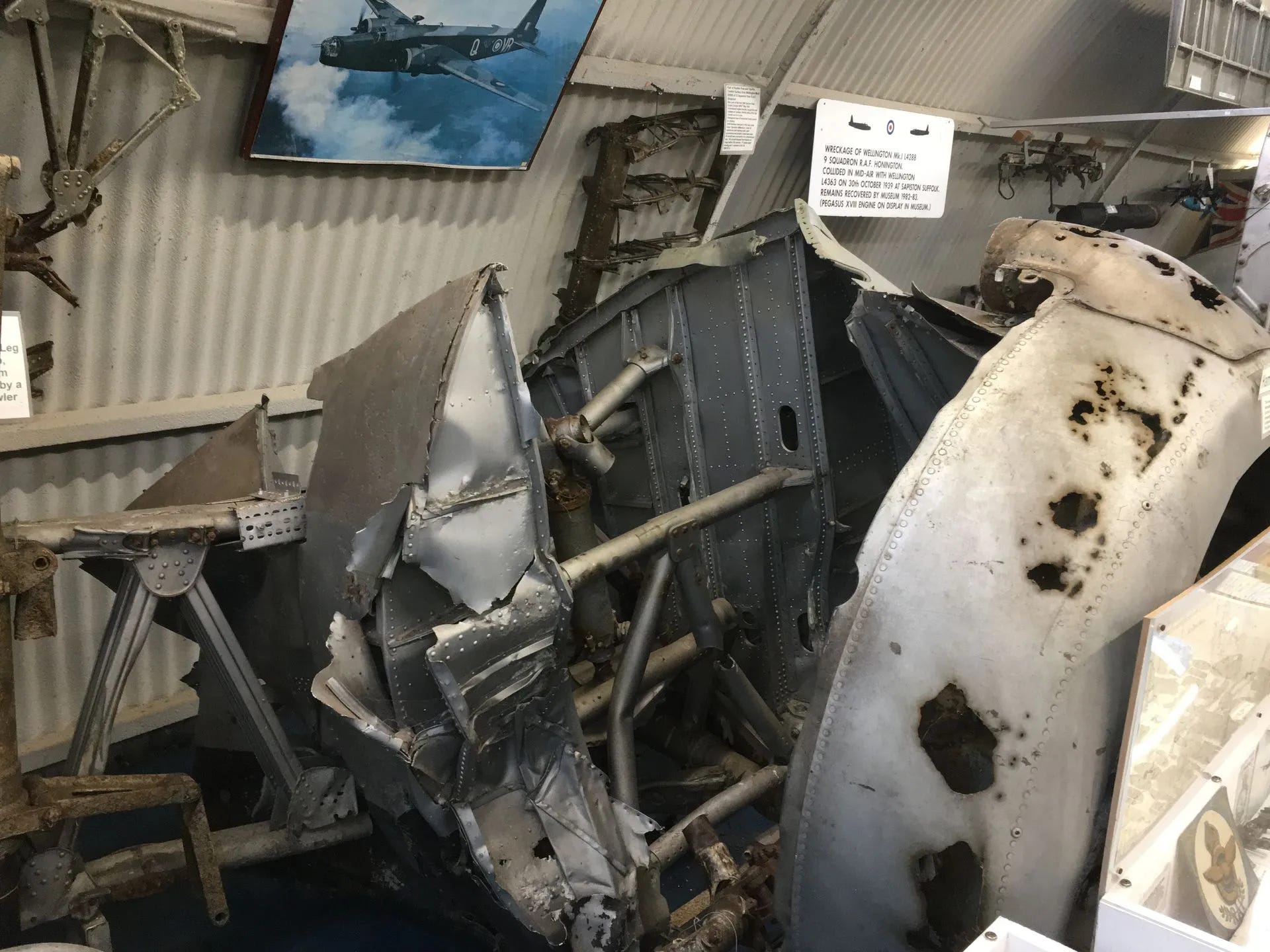
Hampden P2123’s wreck has been already found in 1975 after fishermen snagged their crab pots on it, with several parts of one of the 980hp Bristol Pegasus XV nine cylinder air cooled radial engines of the bomber being recovered, which had been at the Norfolk and Suffolk Aviation Museum at Flixton, near Bungay, Suffolk, ever since.
_______________
Bibliography:
Berlin Bombenkrieg. Four in a row: 31 August 1940. [accessed December 2024]
Chorley, W R. RAF Bomber Command Losses of the Second World War. Volume 1 1939-40. Classic Publications, 2nd edition, 2013
Donnelly, Larry. The Other Few: The Contribution Made by Bomber and Coastal Aircrew to the Winning of the Battle of Britain. Red Kite/Air Research, 2004
Norfolk Wreck Research. Handley Page Hampden … P-2123. [accessed December 2024]
Ward, Chris. 5 Group Bomber Command: An Operational Record. Pen & Sword Books, 2007
Williston, Floyd.Through Footless Halls of Air: The Stories of a Few of the Many who Failed to Return. GSPH, 1996
Young, Neil. The Role of the Bomber Command in the Battle of Britain. Imperial War Museum Review No. 06, 1991
Thank you for reading Berlin Bombenkrieg by Pablo López Ruiz. Please subscribe, if you haven’t yet, to comment, follow and share. All images used for non profit / educational purposes.