


‘British Bombs set Big Fires in Berlin. Nazis Blast London’
– New York Journal-American, Saturday, 31 August, 1940 –
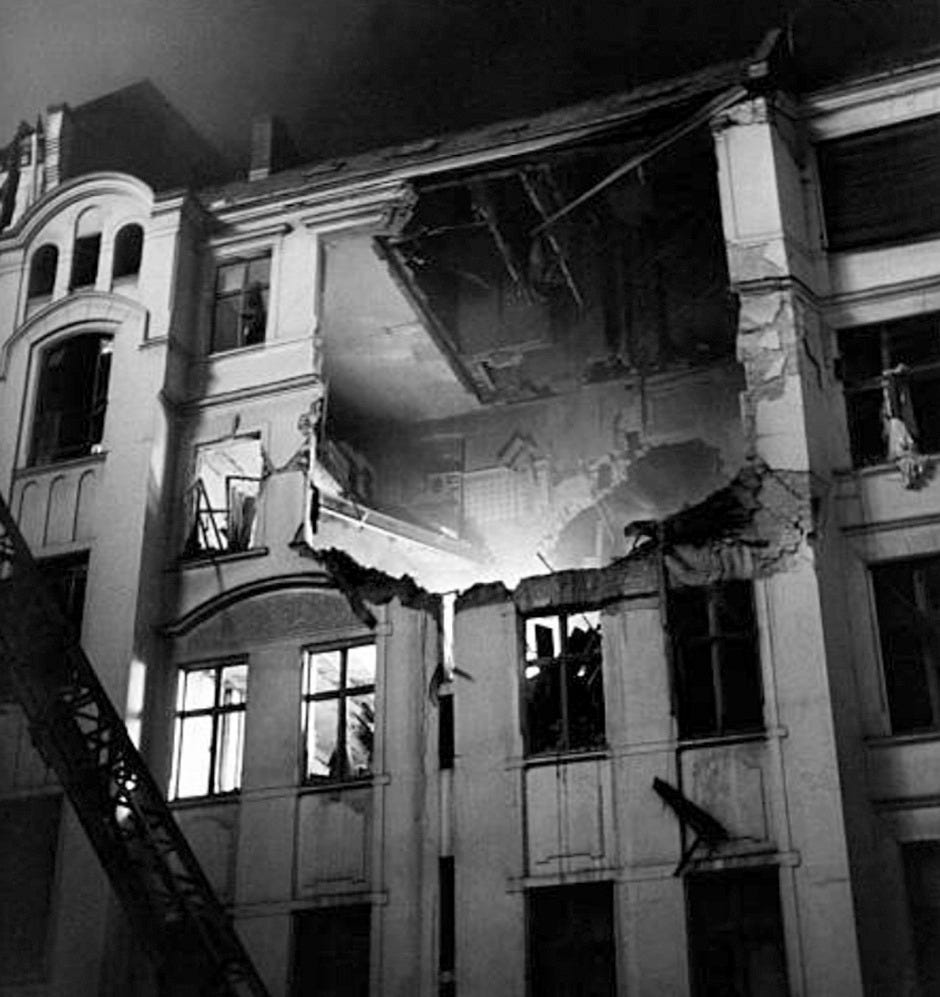
On the night of August 30/31, 1940, the air alarm sirens and the anti-aircraft bursts woke up Berliners from their sleep again, who hurried get dressed to go to the cellars and makeshift air raid shelters: the Royal Air Force was visiting the Reich’s capital for the third time.
As we have seen on the previous post, that night Berlin targets were the large Siemensstadt works in the northwestern sector, Tempelhof airport facilities and oil storages and the Henschel-Schönefeld factory. In all, London sent forty-one medium bombers with 34 of them reaching the city and dropping their deadly cargo with more or less success over their assigned targets, covered by darkness and heavy clouds.1 This was the ninth air alarm of the war in Berlin and this time the sirens howled over Germany’s heartland from 01.39 hours until the all-clear alarm (‘Entwarnung’) finally sounded at 03.15, nearly two hours later.2
Press reports described three waves of enemy planes coming from the northwest with German Flak (AA guns) firing minutes before the first alarm sounded, followed by fires and explosions concentrated on the same district as the previous attack two nights earlier (Kreuzberg, author’s note). It was reported that some of the raiders were flying lower than before and that flares were dropped over the city’s center, remarking a big explosion that sent sparks into the air in the southeastern section of the city.3 Some correspondent described it as ‘the fiercest, but one of the shortest air raids the Reich’s capital has yet experienced.’4
The official OKW report summed up the events on the next morning: “Last night British planes continued their attacks on Berlin and other cities in the Reich territory. A number of bombs fell in the city centre and in workers’ residential areas of the Reich capital. Here, as in other parts of the Reich, the damage to property is insignificant. There are no deaths to complain about. Some civilians have been injured.”5 In the study about the bombing war in Berlin led by Dr Laurenz Demps listed 19.7 t of explosives and around 1,110 4-lb of incendiaries dropped on that night on the city.6
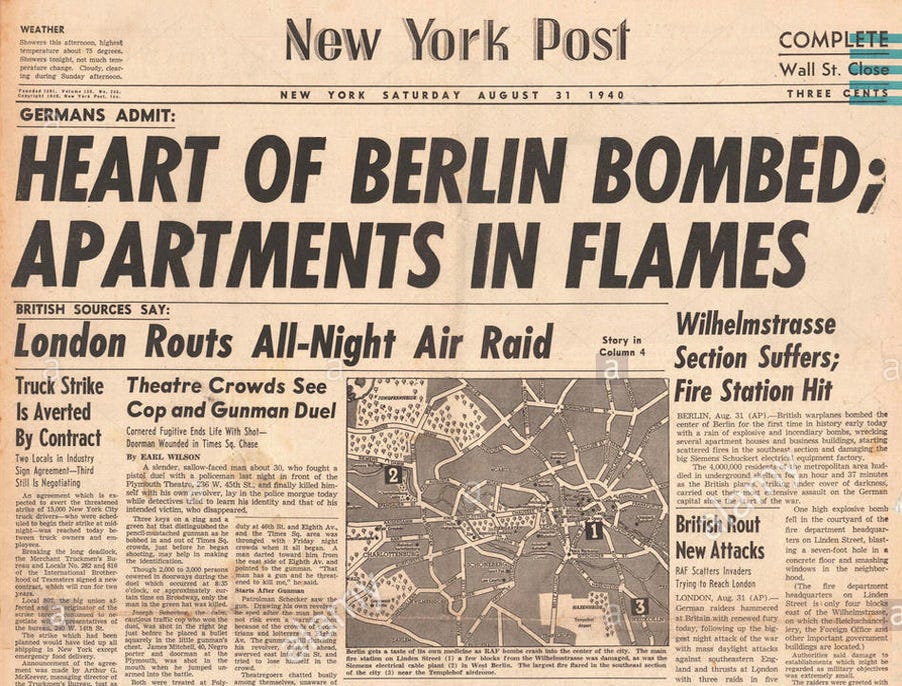
“British Blast Center of Hitler’s Capital”
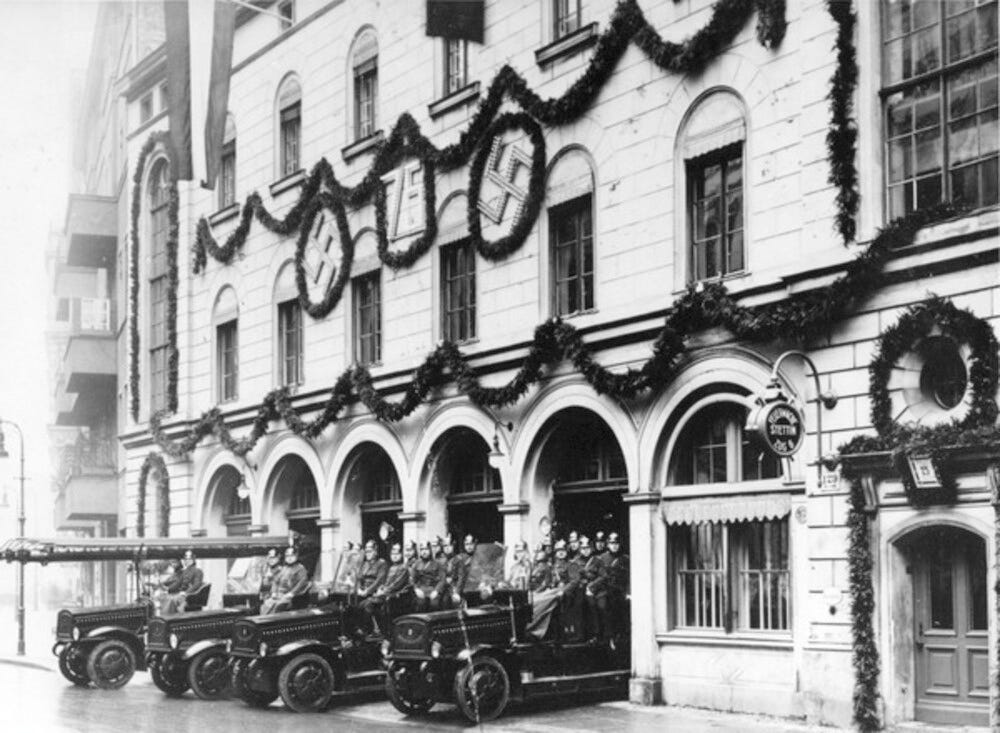
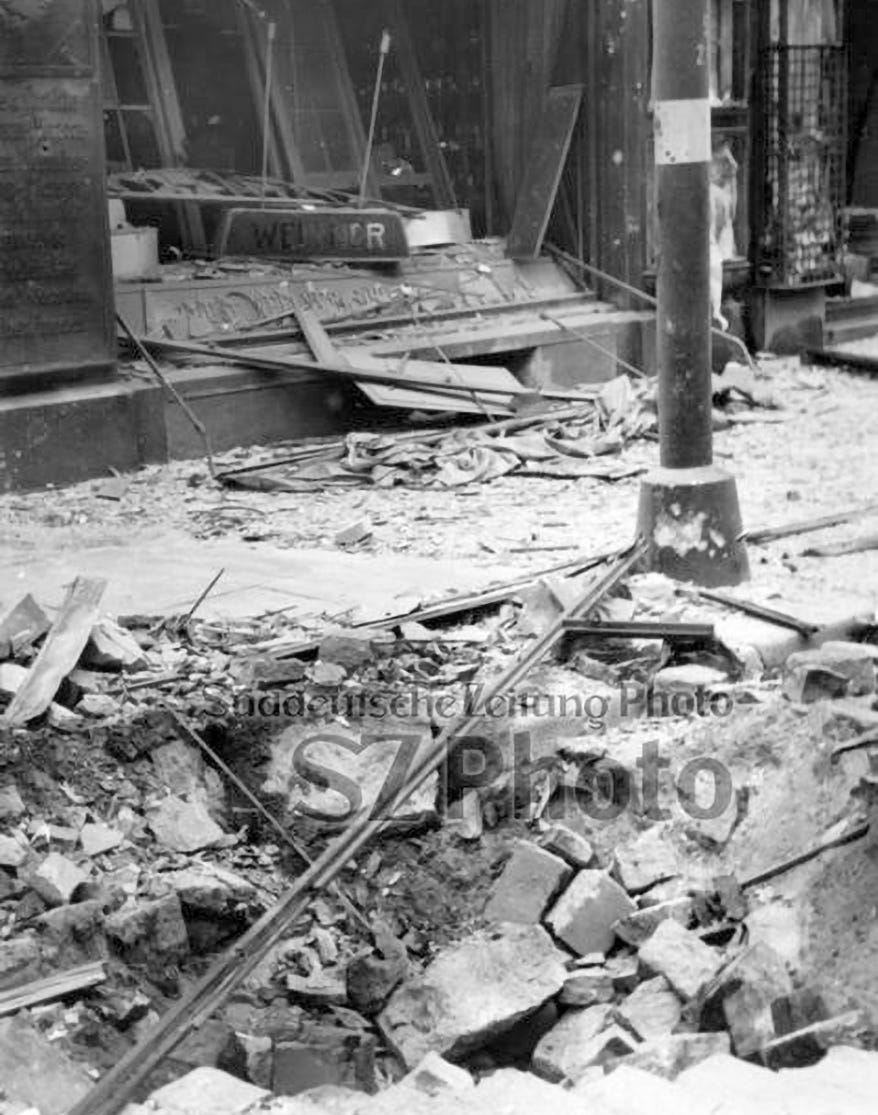
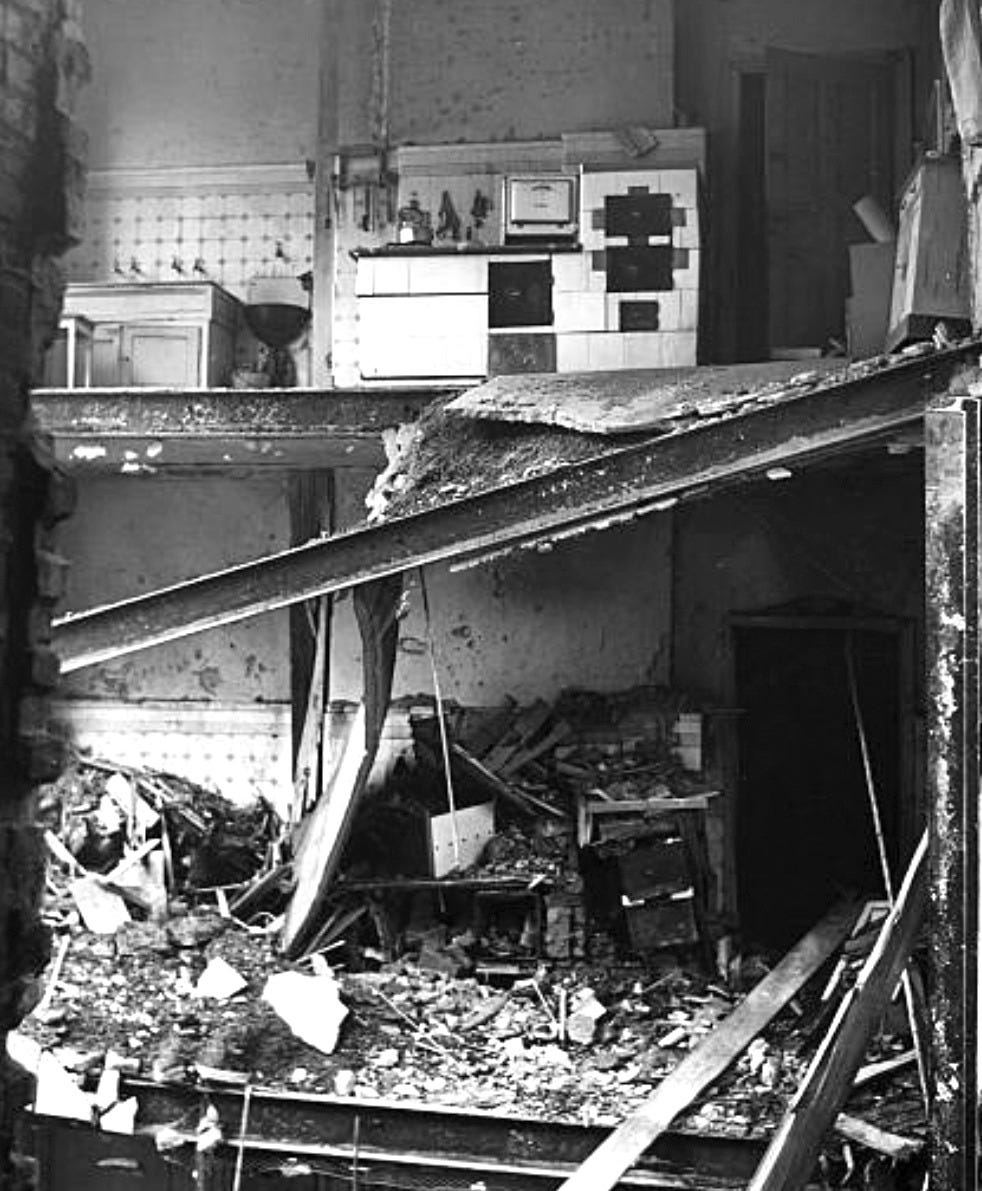
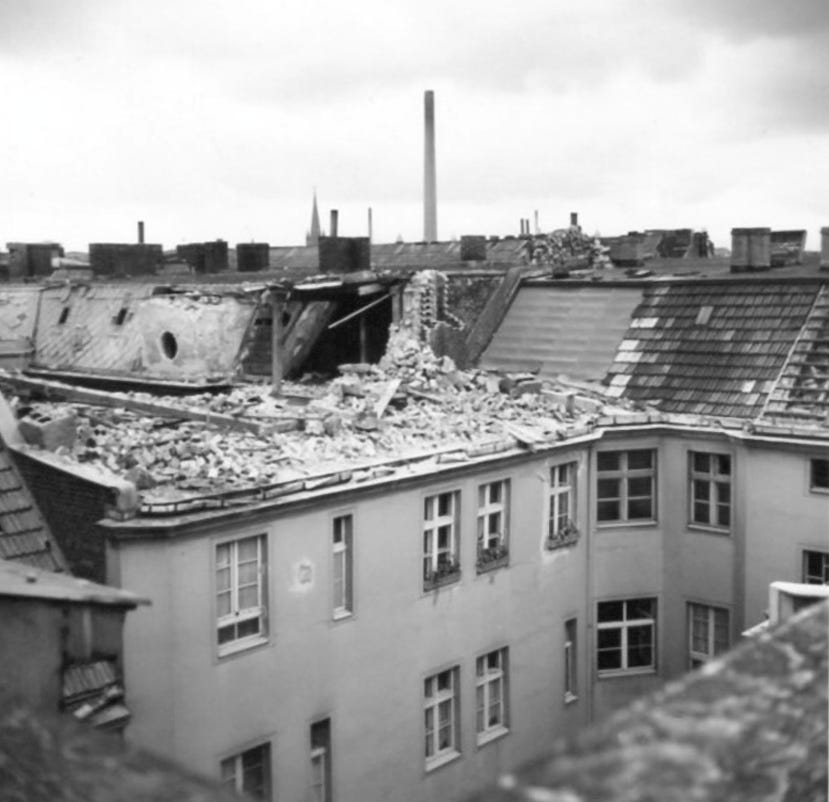
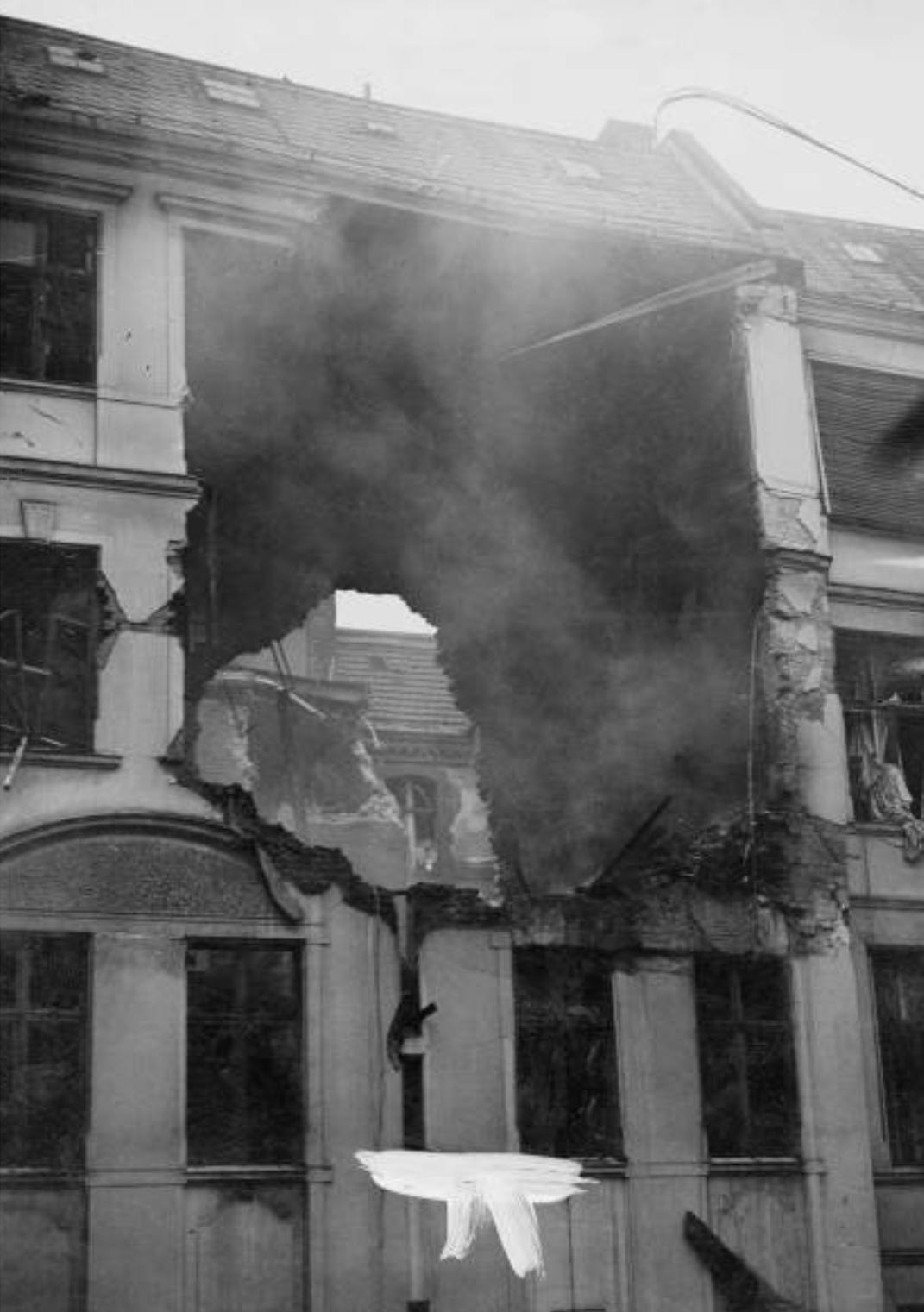
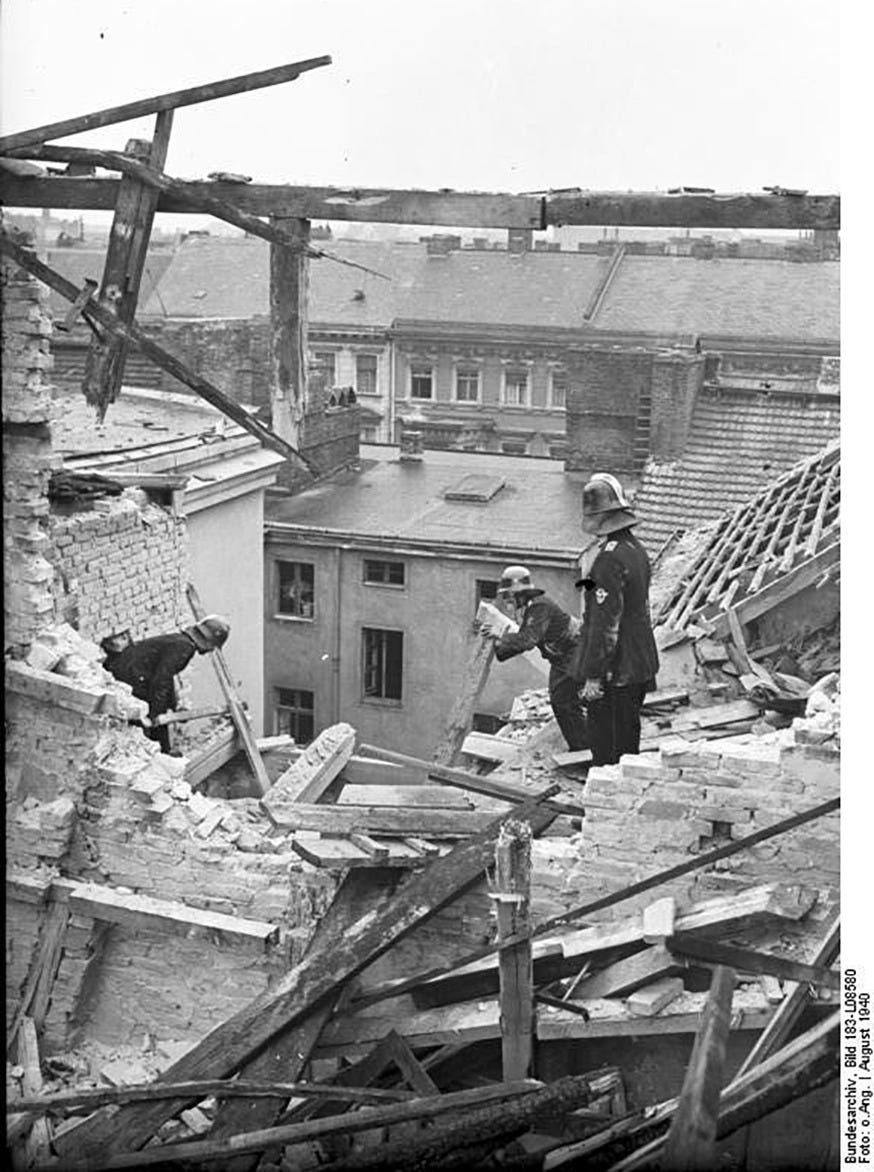
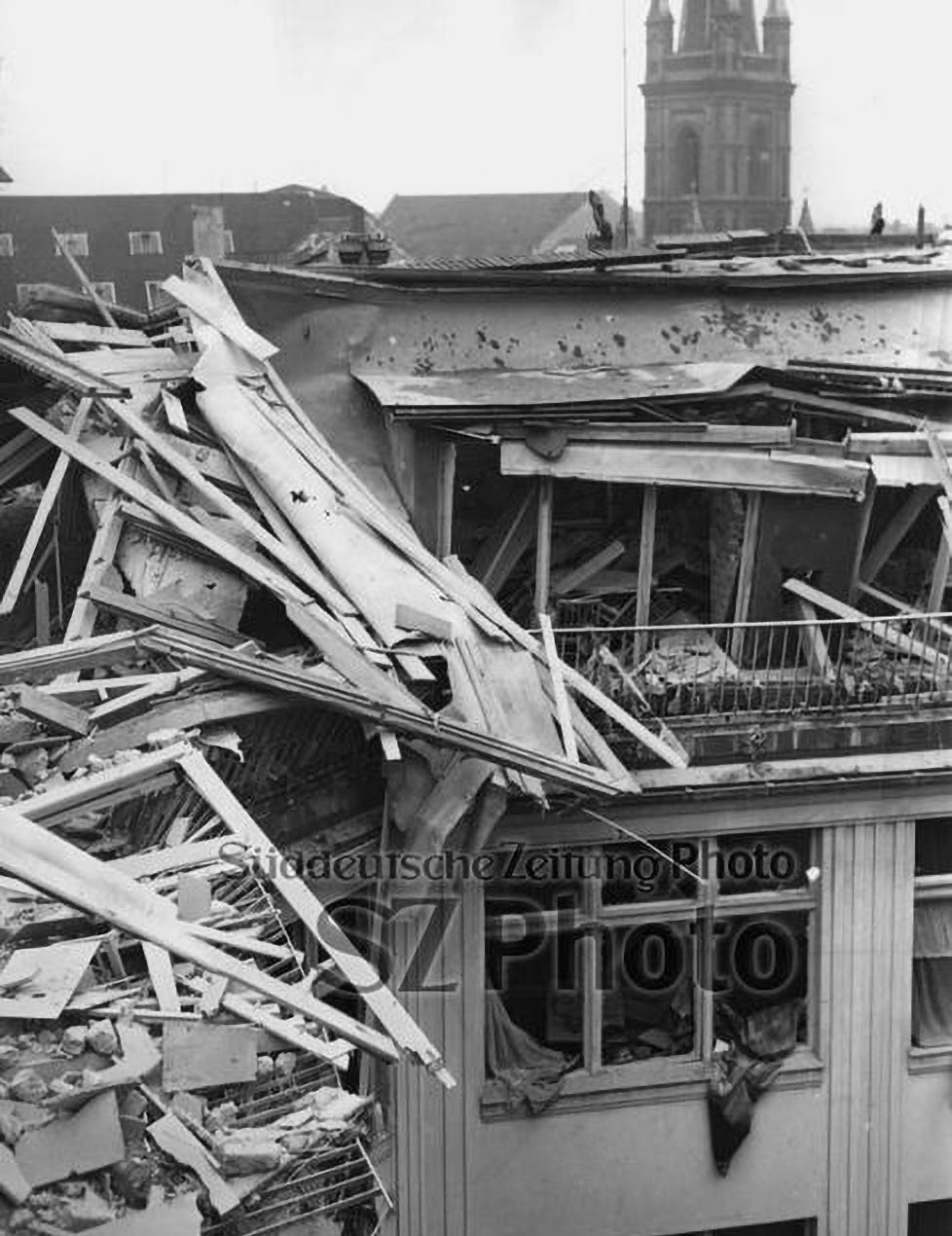
As on previous raids, the Abschlußmeldung des Kommandos der Schutzpolizei recorded every bomb hit and issued on September 28th a report that allow us to list all the damage taken by the districts on that night. The Berlin-Mitte district was hit by several high explosive bombs: in Axel-Springer-Straße (part of Lindenstraße until 1996) an 125 kg explosive bomb fell on number 40-41 where the Hauptfeuerwache (main fire station) was located, causing heavy damage on the frontyard’s window panels, garage doors and several pipes. It blasted a six-foot crater in the stone pavement. Another HE bomb hit the adjacent Reichstierärztekammer headquarters in Nr 42, which destroyed the roof structure and top floors of the building, with some debris falling on the courtyard of the fire station too. A third bomb hit Sebastianstr 26, damaging the Luisenstadt Schüle and destroying the apartments across the street, number 61.7
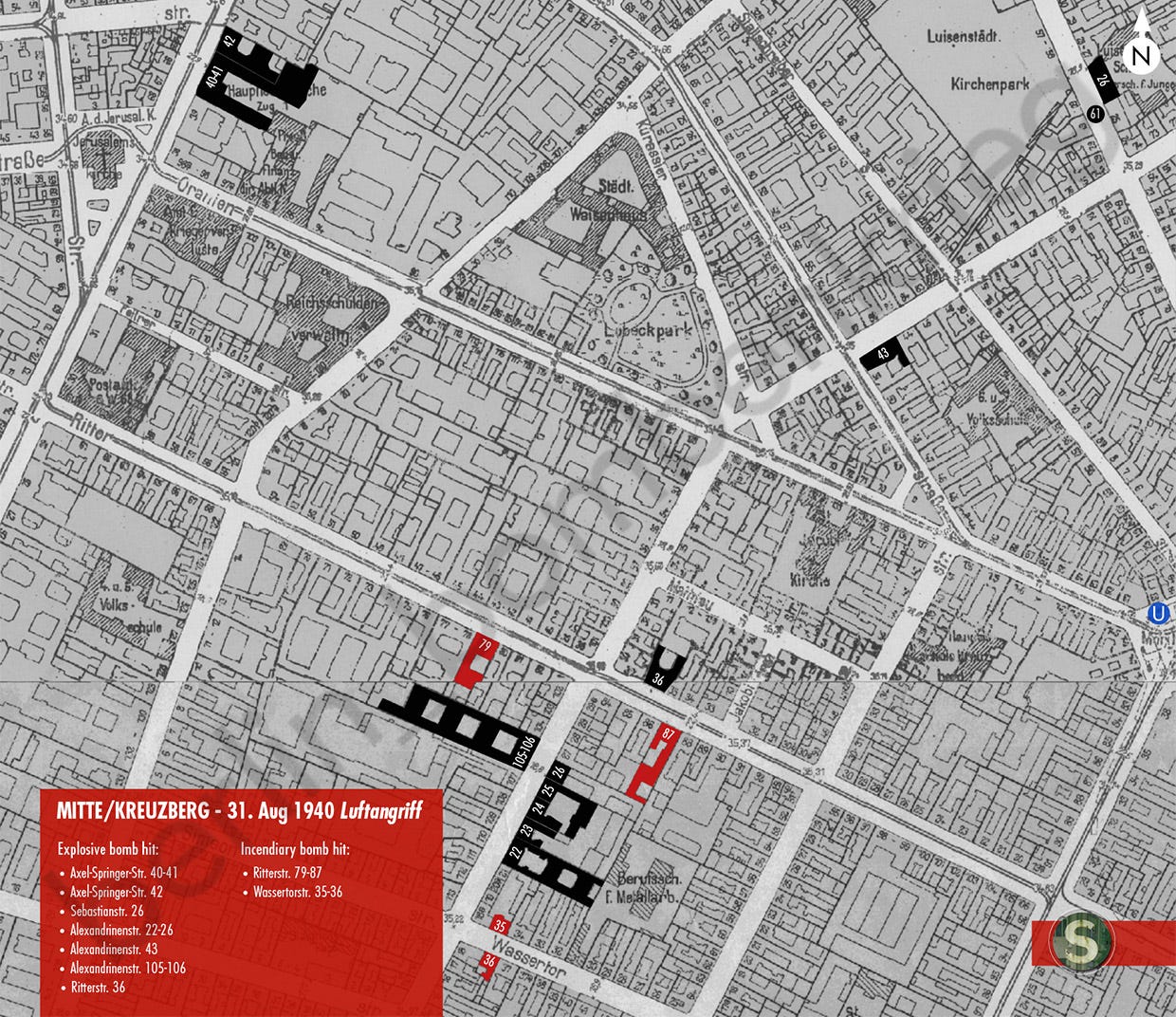
Most of the bombs fell on the southeastern residential district of Kreuzberg, where caused severe damage with fires and some buildings collapse. In Alexandrinenstraße 22-26 and 105-106, roof fires were started after several explosive bombs hit the area and in Nr 43 an explosive bomb destroyed the roof structure. At Ritterstraße 79-87 roof truss fires were reported and the tram overhead lines were also destroyed here. One more explosive hit the street in front of number 36, a large commercial building, home of the August Wellner Söhne AG Metallwaren-Fabrik: the blast destroyed a gas street lamp and caused heavy damage to the facade smashing every window, further significant damage affected all houses within a radius of about 100 metres with more explosions in the adjacent Mathieustraße. A block away, another bomb hit Wassertorstr. 35 causing heavy damage on the roof and last floor.8
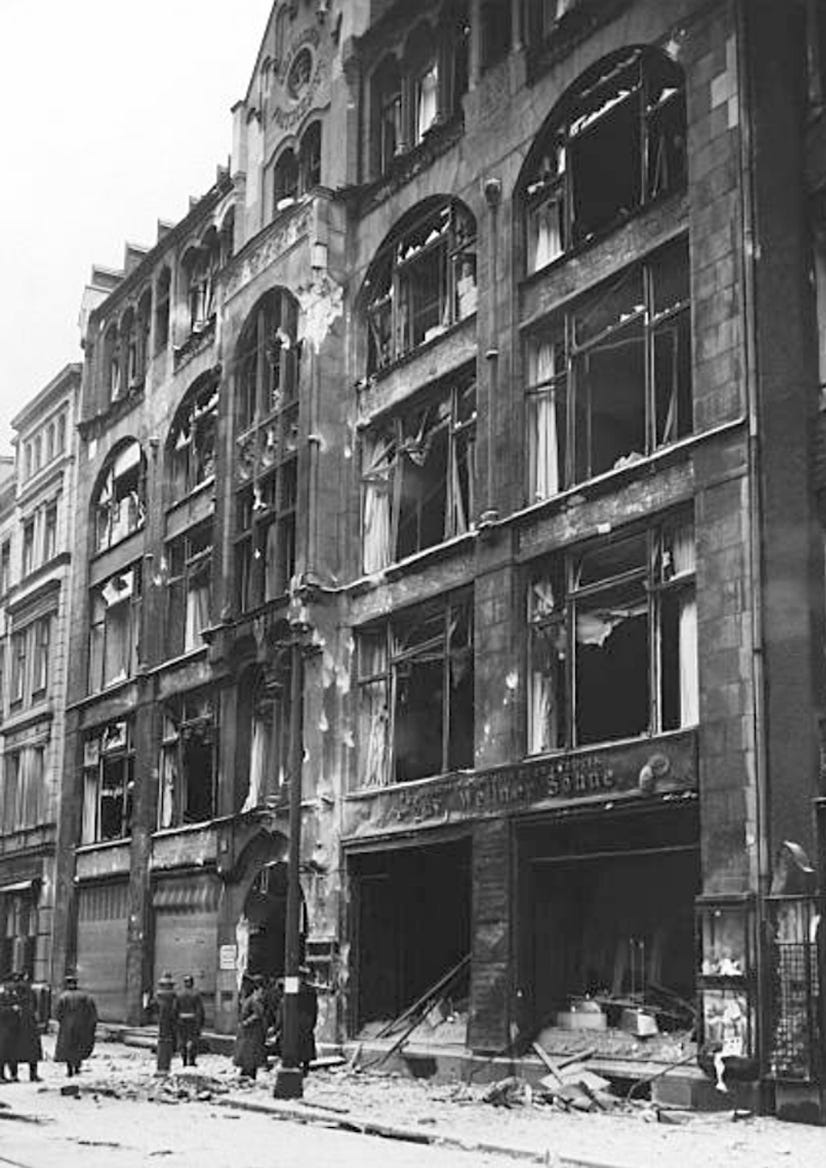
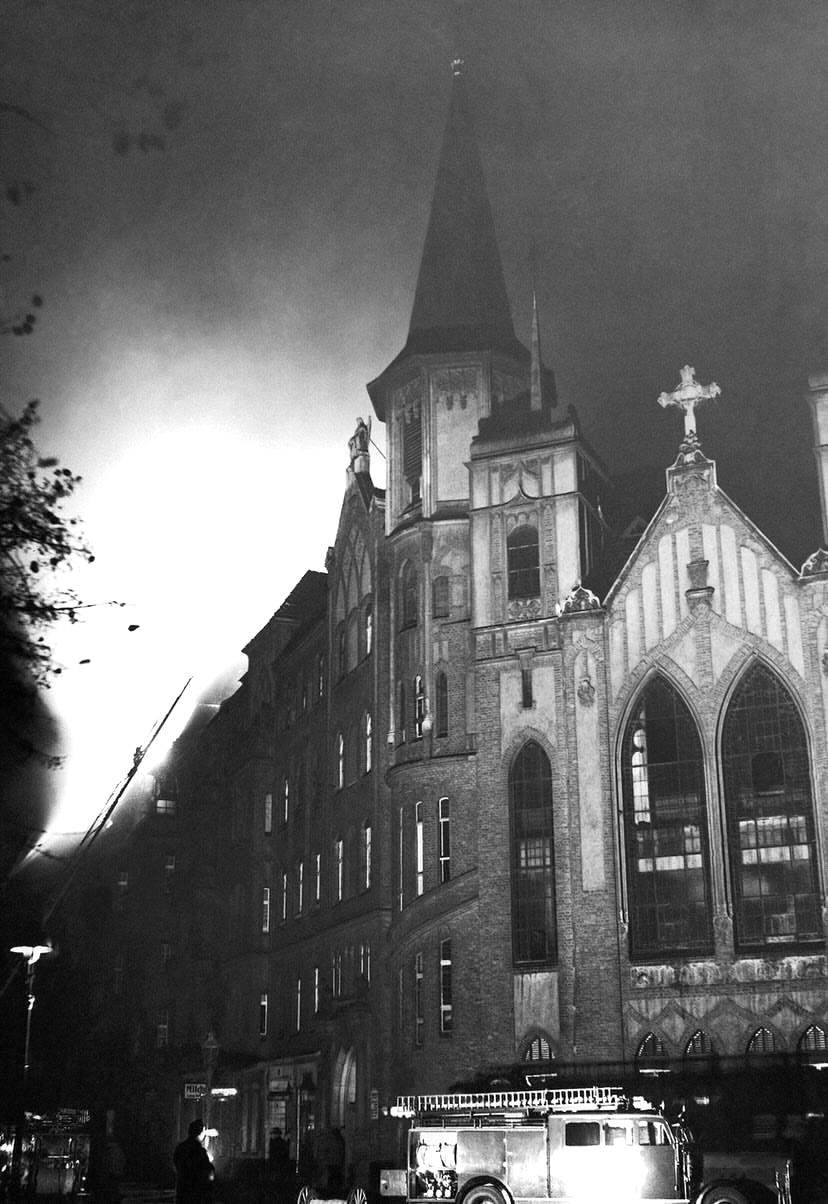
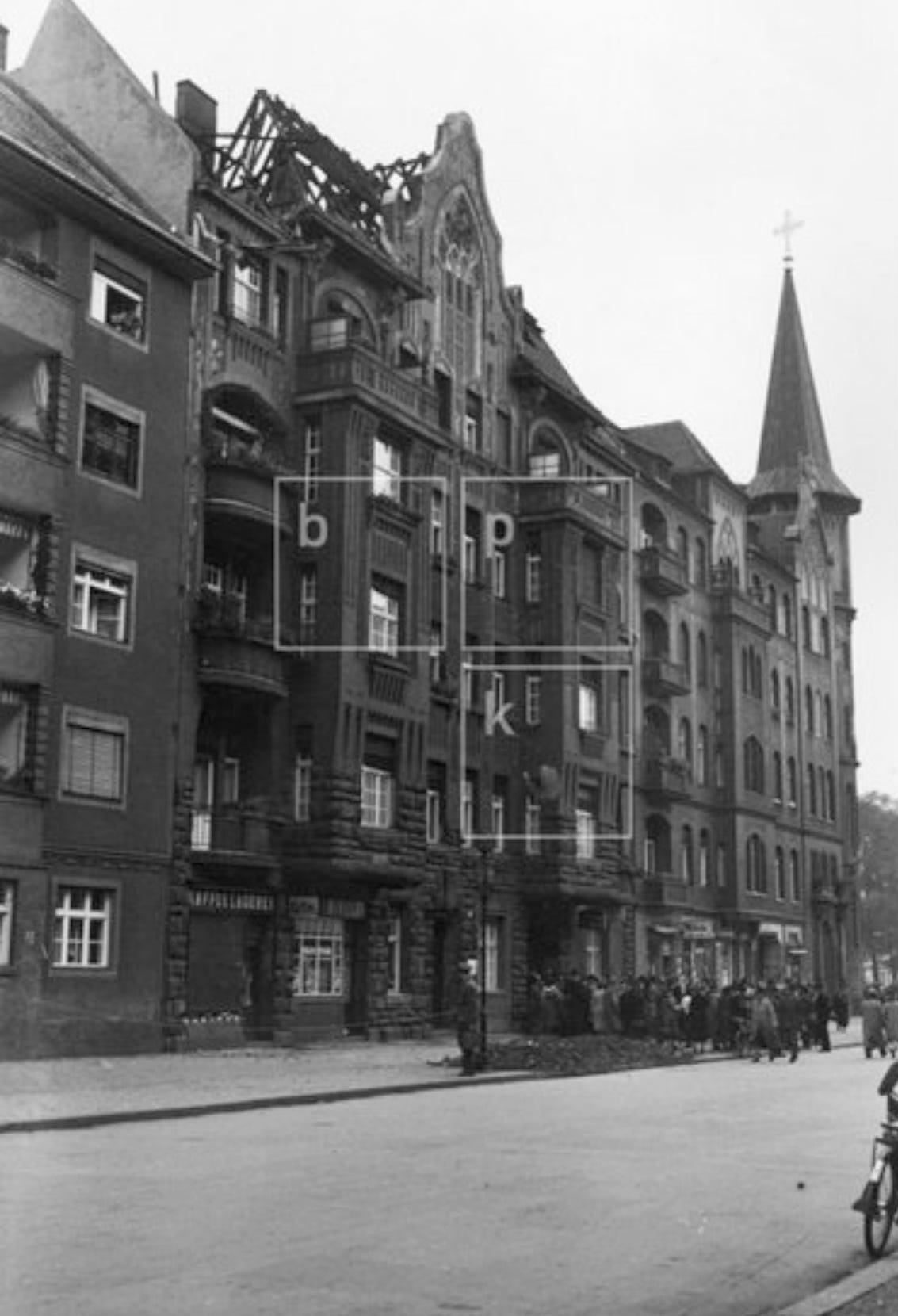
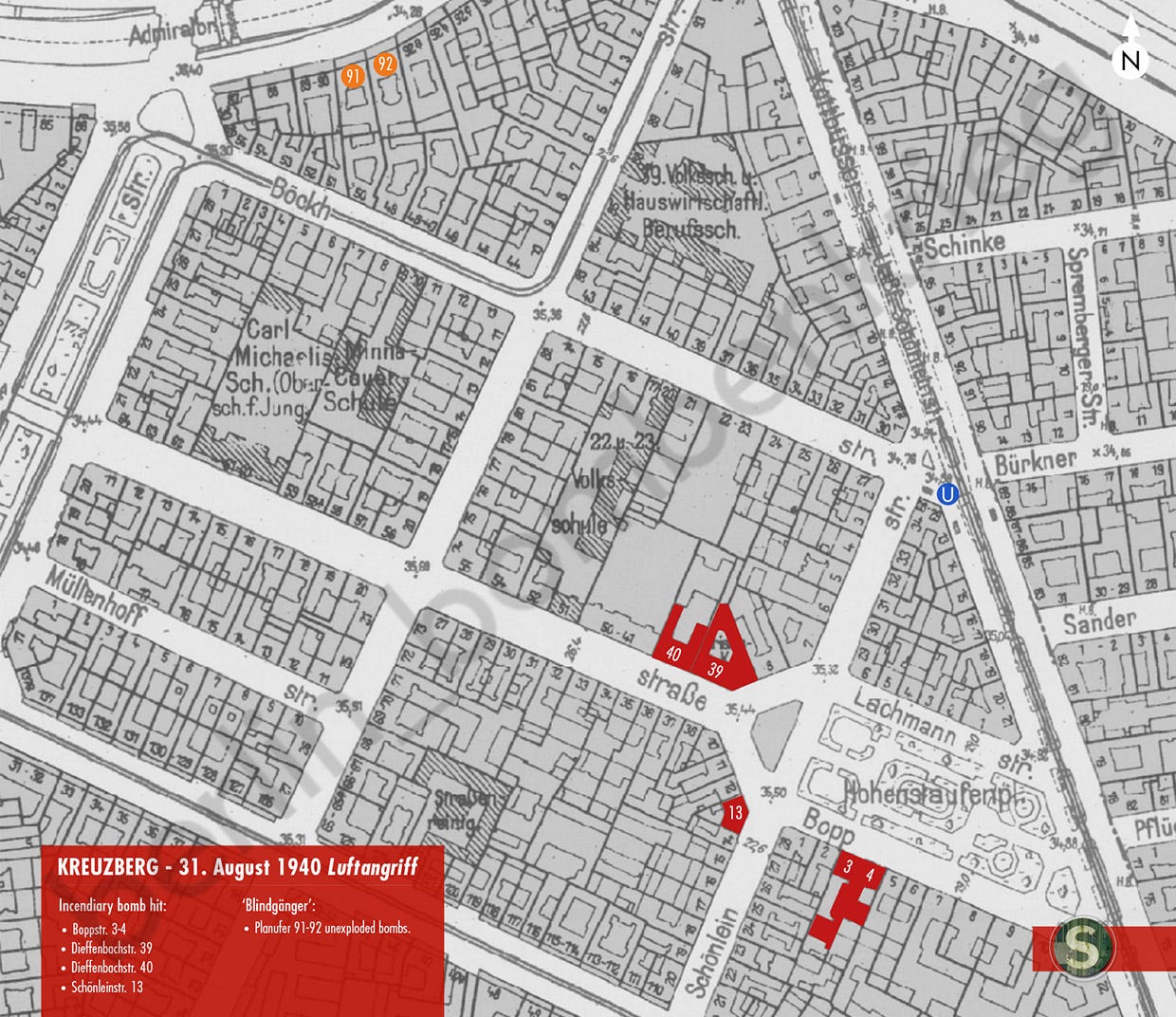
A stick of enemy’s incendiary bombs fell on the Hohenstaufenplatz surrounds, hitting the side wing of the Bethesda Hospital at Dieffenbachstraße 39. Police reported that the patients were prepared for evacuation but the fire was soon curbed and the hospital was not in danger. Two more incendiary bombs set a fire in the adjacent evangelisch-methodistische Christus-Kirche but thanks to a Hauswarten that put them out, only two pews and small sections of the floor were charred.9 More bomb hits were reported at Boppstr. 3-4 and Schönleinstr. 13, and in Planufer 91-92, where a pair of ‘duds’ found forced some Berliners to be evacuated from their houses.10
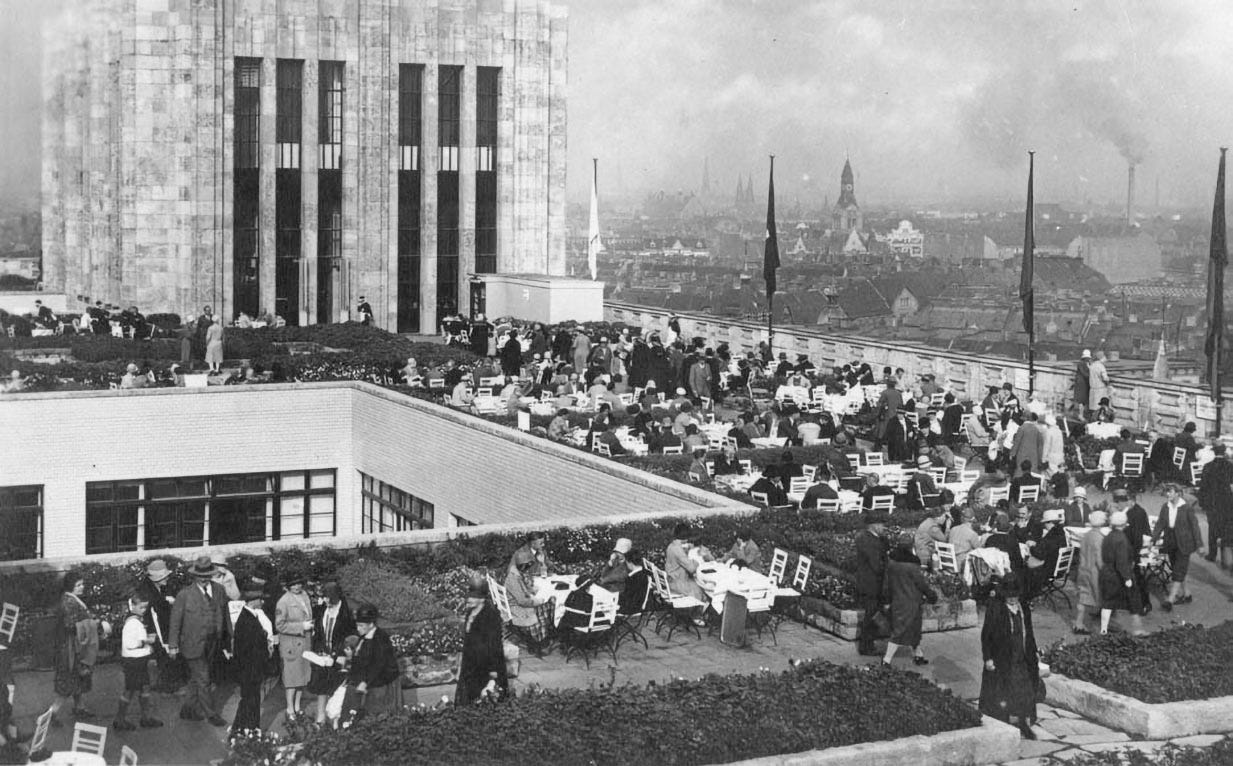
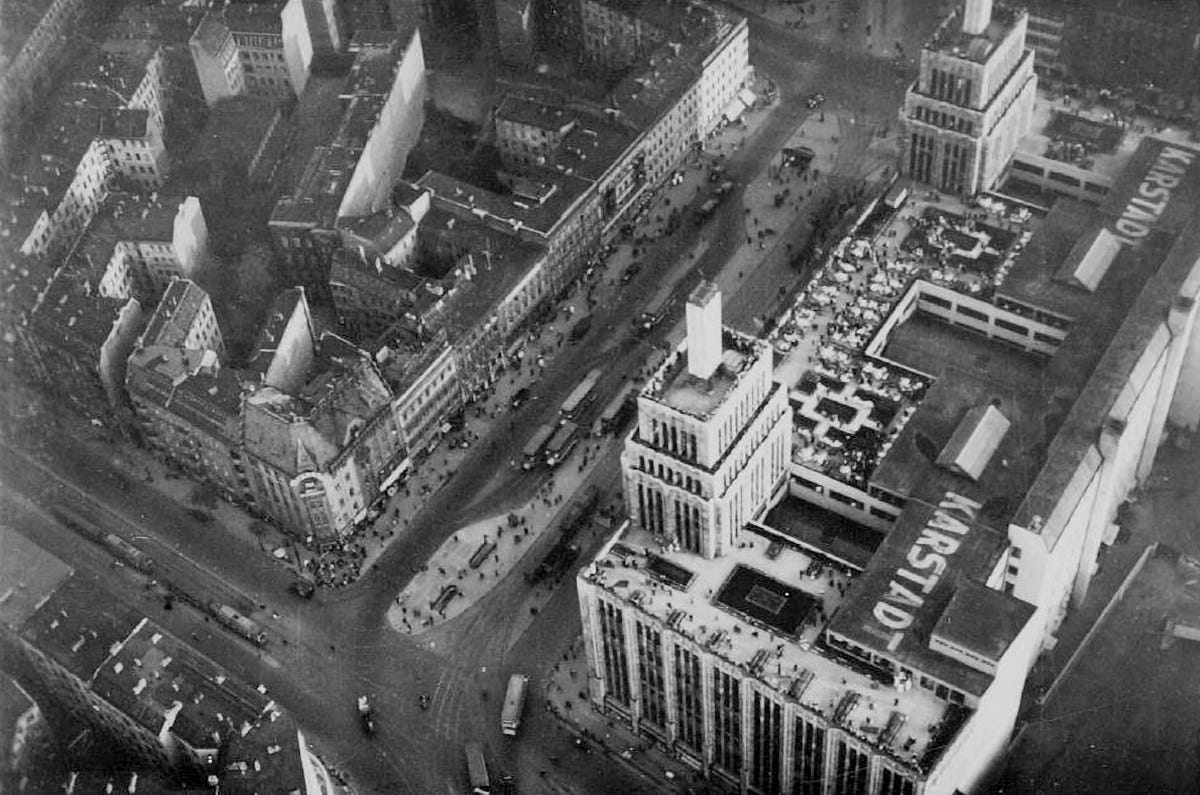
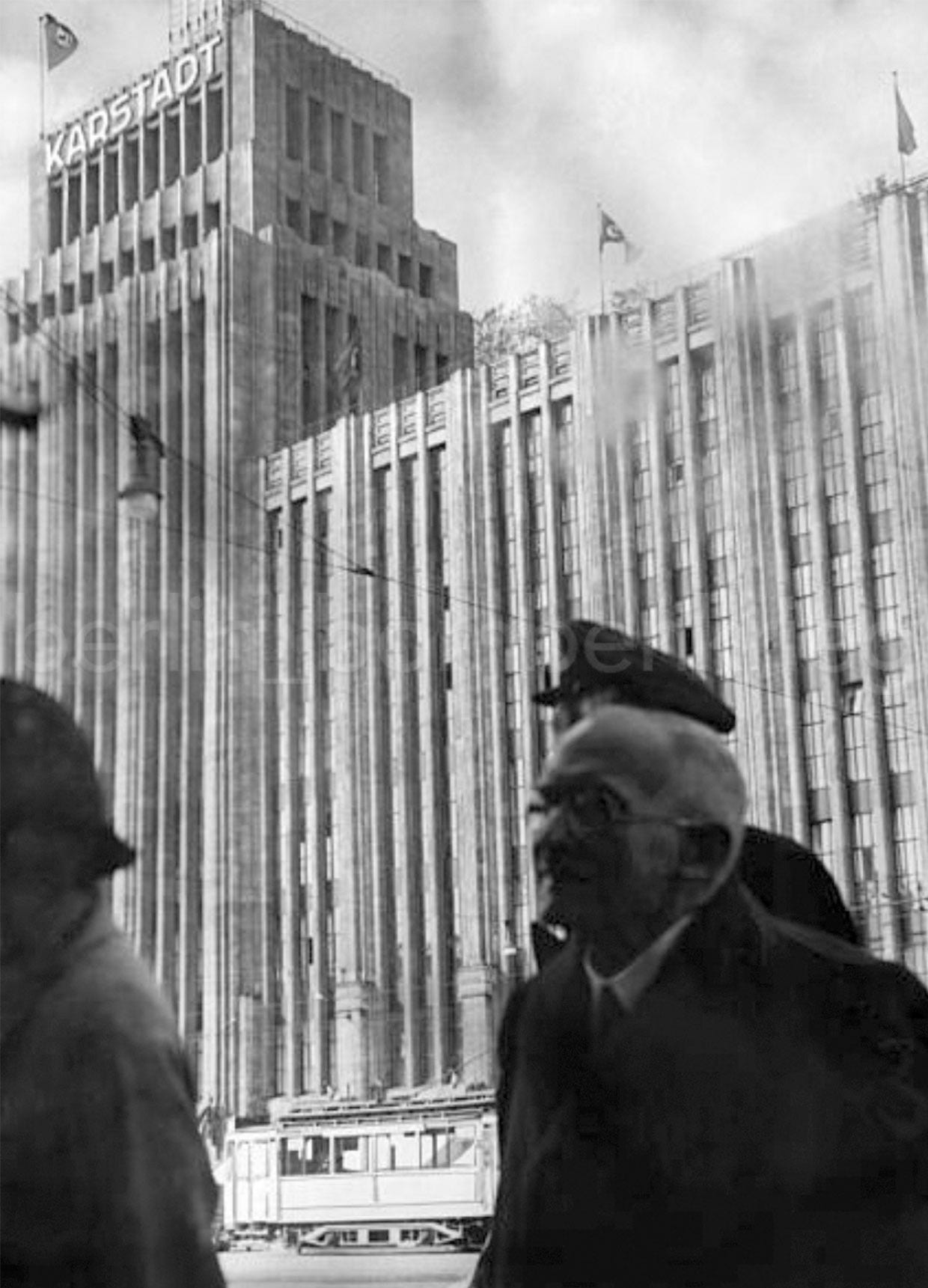
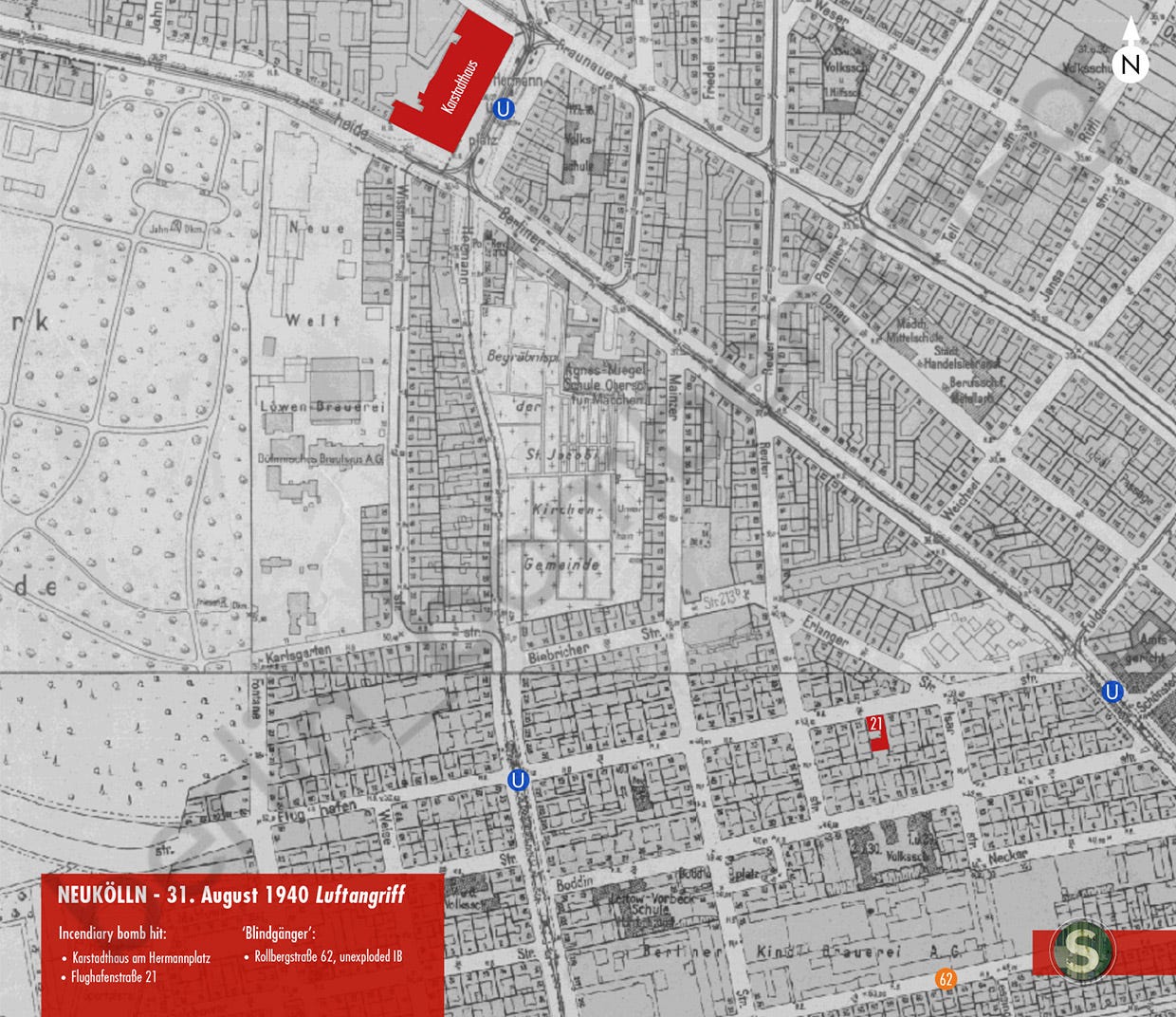
In the Neukölln ‘Kiez’, a small fire began at Flughafenstraße when an incendiary bomb fell on the roof building of street number 21 and a ‘dud’ from a fire-bomb was found at Jägerstraße 62 too (today’s Rollbergstr.), in front of the Berliner Kindl Brauerei, but the biggest headlines went to the fire bomb on the Karstadthaus’ roof garden at Hermannplatz. The bomb was thrown onto the street by RLB members, damaging the tram’s high-voltage line.11
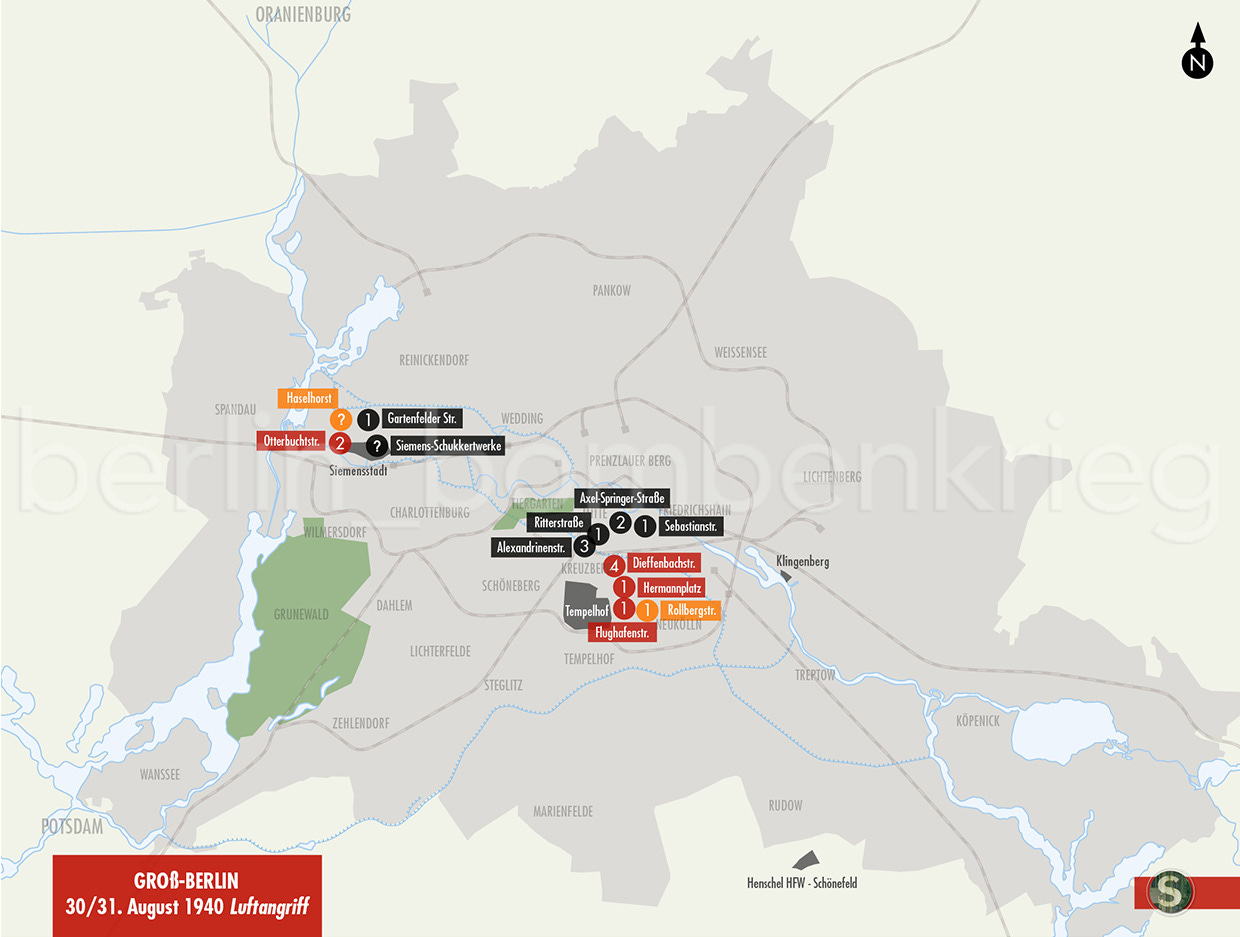
Meanwhile, in the northwestern Spandau administrative district the British raiders achieved the most important hit of the night when incendiary and high explosive bombs fell in the Siemensstadt area, hitting some buildings of the Siemens-Schukkert werke AG halls although damage was slight. Some minor damage and roof truss fire were done by other incendiaries hitting the Haselhorst area and Otterbuchtstr. Some other explosives struck Gartenfelder Str. 53 with little damage to property and no personal injuries. The Germans found two unexploded ‘duds’ at the Haselhorst Exerzierplatz too.12
Finally, at Löwenhardtstraße, which belongs to the Tempelhof district, a chimney fell to ground after being hit by an anti-aircraft shell.13
This is an overall view of the locations where British bombs fell on that night superimposed to a 1940-map of Berlin. In this case the numbers refer to the amount of bombs (HE– black colour; incendiaries– red and ‘duds’- orange) reported on every district.
Although on first reports it was stated that there were no victims, the raid left one dead (who died in the Wassertorstr. 36 fire) and eight more people injured, all residents of Kreuzberg. Nearly a hundred people were evacuated from their homes, NS-authorities providing collective accommodation at Alexandrinenstr. 5-6 and Dieffenbachstr. 60-61 in Kreuzberg, and at the Evangelisches Gemeindehaus in Siemensstadt. Many of the families could back to their houses hours later but the most affected received emergency apartments to stay or were sent with relatives. Emergency ration cards were issued giving money, cloth and shoes, some of them provided by the Bethanien, Bethesda and Am Urban hospitals and field kitchens were delivered. Of interest is that Siemens provided lunch for 17 homeless people too, but at cost price of RM 0.40 per portion.14
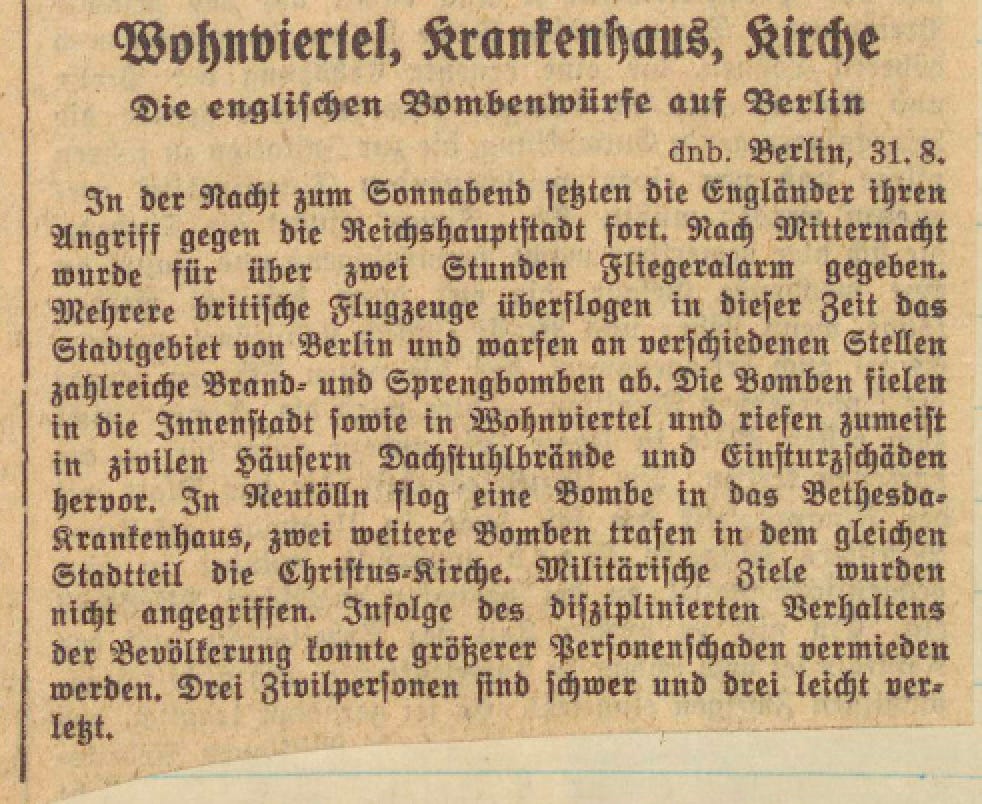
“Wohnviertel, Krankenhaus, Kirche. Die englischen Bombenwürfe auf Berlin”
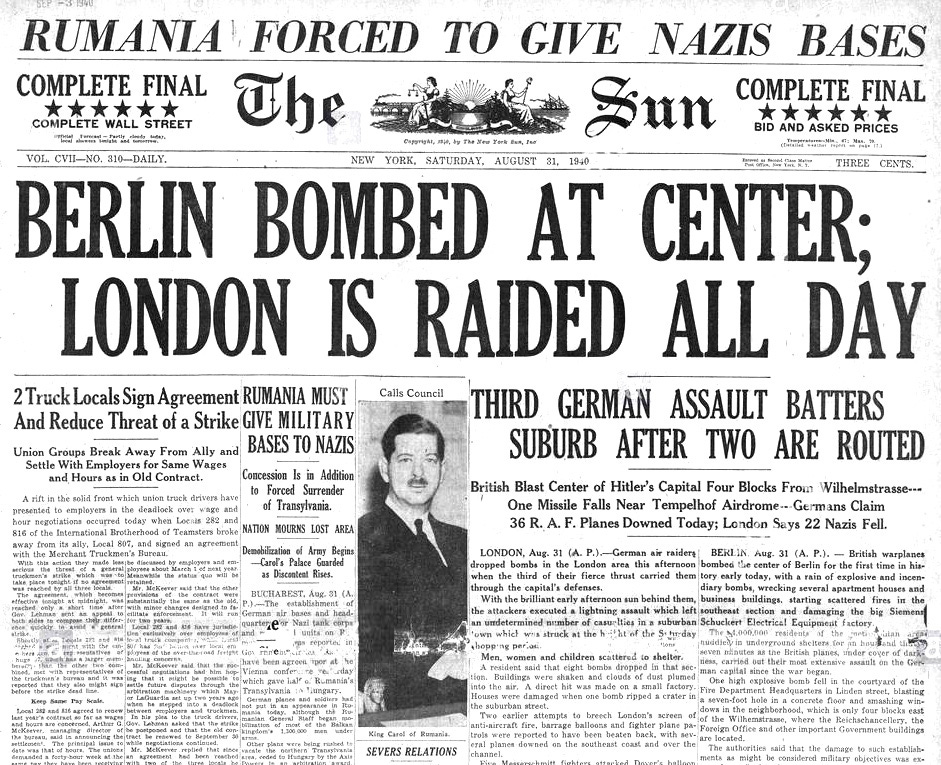
As with previous raids, British and American press covered the very next morning the attack on Berlin and listed the effects of the bombardment sharing headlines with the parallel raid on Krupp’s factory in Essen. The Allies described it as ‘the most extensive assault on the German capital since the war began’ by RAF raiders15 and highlighted the damage done to the city’s centre, specially the bomb hit on the Lindenstraße’s fire station (‘…only four blocks east of Wilhelmstrasse.’), stating that the bombers wrecked several apartment houses and business buildings starting fires in the southeast zone.16
For the first time, the Nazis admitted that the raid caused some damage in the industrial complex of Siemensstadt but curiously the German press didn’t mentioned it on their following morning articles. They carried word by word the official press released by the authorities, and remarked its daily basis theme in all their text: the RAF had bombed ‘blindly’ the capital, attacking residential quarters, hospitals and churches again.17
The Propaganda Ministry prepared to take foreign correspondents again to an auto tour of locations being bombed, and the minor damage to the factories was openly admitted, reasserting on it the non military value of the installation (‘authorities said that the damage to such establishments as might be considered military objectives was extremely small; that the nearest thing to a military objective struck was the vast Siemens Schuckert factory in west Berlin’)18. New York Times correspondent P Knauth reported Siemens’ damage as slight and from 50-kilo bombs.19 More interesting is that despite of the effusive accuracy claiming by British airmen, none the Henschel factory in Schönefeld or the Klingenberg power station were listed as being hit. Of course, there is the possibility that the Nazi regime hide the damage in the event that they were actually hit by the night raiders.
By the end of August, Berlin, the capital of the Third Reich, has sustained the third air attack in four nights and the Royal Air Force has proof that Hitler, even with the most powerful army and air force and having conquered half of Europe, was unable to defend Berliners at home. The political fallout was substantial and as Goebbels noted, the Führer was outraged and in open disposal to bomb heavily London as a reprisal.20
Damage has been slight and any military targets were hit but Bomber Command, in clear inferiority and limited by greater distance, was able to keep pressure on Germans as Prime Minister Churchill ordered, trying to disrupt Hitler’s attention from the incoming sea invasion.
_______________
Bibliography:
Materna, Horst. Die Geschichte der Henschel Flugzeug-Werke A.G. in Schönefeld bei Berlin 1933 bis 1945. Rockstuhl Verlag, 2010
Overy, Richard. The Bombing War: Europe, 1939-1945. Allen Lane, 2013
Shirer, William L. Berlin Diary: Journal of a Foreign Correspondent 1934-1941. Galahad Books, 1997
Wildt, Michael and Kreutzmueller, Christoph. Berlin 1933-1945 - Stadt und Gesellschaft im Nationalsozialismus. Siedler Verlag, 2013
Thank you for reading Berlin Bombenkrieg by Pablo López Ruiz. Please subscribe, if you haven’t yet, to comment, follow and share. All images used for non profit / educational purposes.
see Berlin Bombenlrieg, RAF’s third raid on Berlin (accessed April 2022); The National Archives of the UK (TNA): Operations Record Books: AIR 27
LAB, A Rep. 001-02, Nr. 700, Bl. 5 ff; DEMPS, Laurenz (Ed). Luftangriffe auf Berlin. Die Berichte der Hauptluftschutzstelle. Ch. Links Verlag, 2014, p 238
Percival Knauth wireless to The New York Times, Saturday, August 31, 1940, page 1
Ibid
OKW report, dated August 31, 1940; see LAB, A Rep. 001-02, Nr. 700, Bl. 5 ff.
DEMPS: op. cit. p 285
see LAB, A Rep. 001-02, Nr. 700, Bl. 5 ff; The New York Times, Saturday, August 31, 1940, page 1
report in the Deutsche Allgemeine Zeitung, In der Ritter- und Alexandrinenstraße, 31 Aug. 1940; see LAB, A Rep. 001-02, Nr. 700, Bl. 5 ff
LAB, A Rep. 001-02, Nr. 700, Bl. 5 ff
Ibid
Ibid
Ibid
Ibid
Ibid
The Sun, New York, Saturday, August 31, 1940, page 1
report in the New York Post, Saturday August 31, 1940, page 1. “British blast center of Hitler’s capital four blocks from Wilhelmstrasse” and “Apartments in flames” were among other big headlines published by British journals.
Deutsches Nachrichtenbüro report from 31 Aug. 1940; Deutsche Allgemeine Zeitung, 31 Aug. 1940; MOORHOUSE, Roger. Berlin at war. Life and death in Hitler’s capital, 1939-45. Vintage Books, 2011. p 141
The Sun, New York, Saturday, August 31, 1940, page 1
The New York Times, Saturday, August 31, 1940, page 2
MOORHOUSE: op. cit. p 141; FRIEDRICH, Jörg. Deutschland im Bombenkrieg 1940-1945. Ullstein Heyne List, 2002. pp 56-57. Should be remembered that on that same night German aircraft headed in large formations to bomb Liverpool: about 130 Ju 88 and Heinkel bombers attacked the city meanwhile some others hit parts of London and Portsmouth, and Manchester, Bristol and Worcester received bombs too with some 50 people killed.