


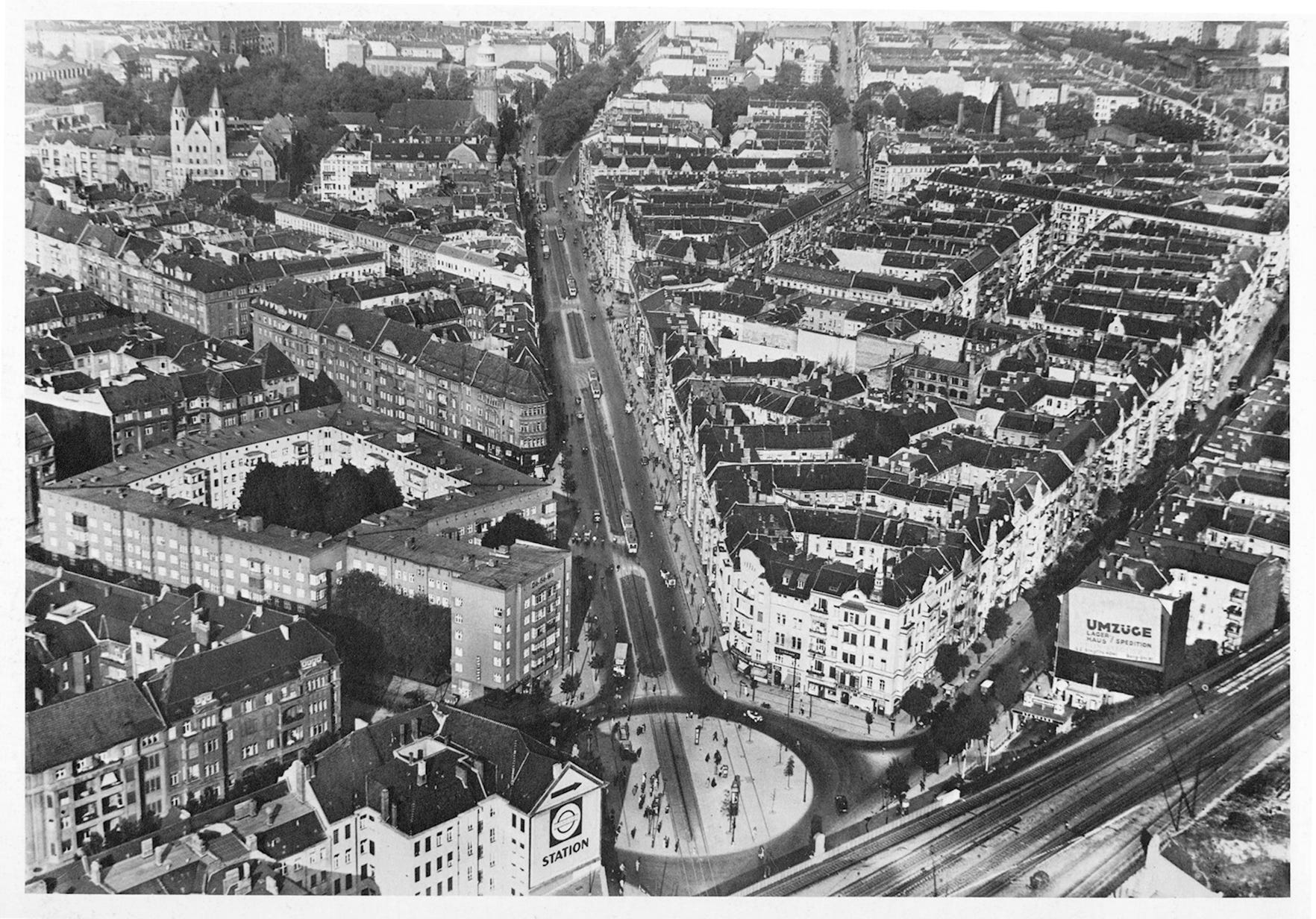
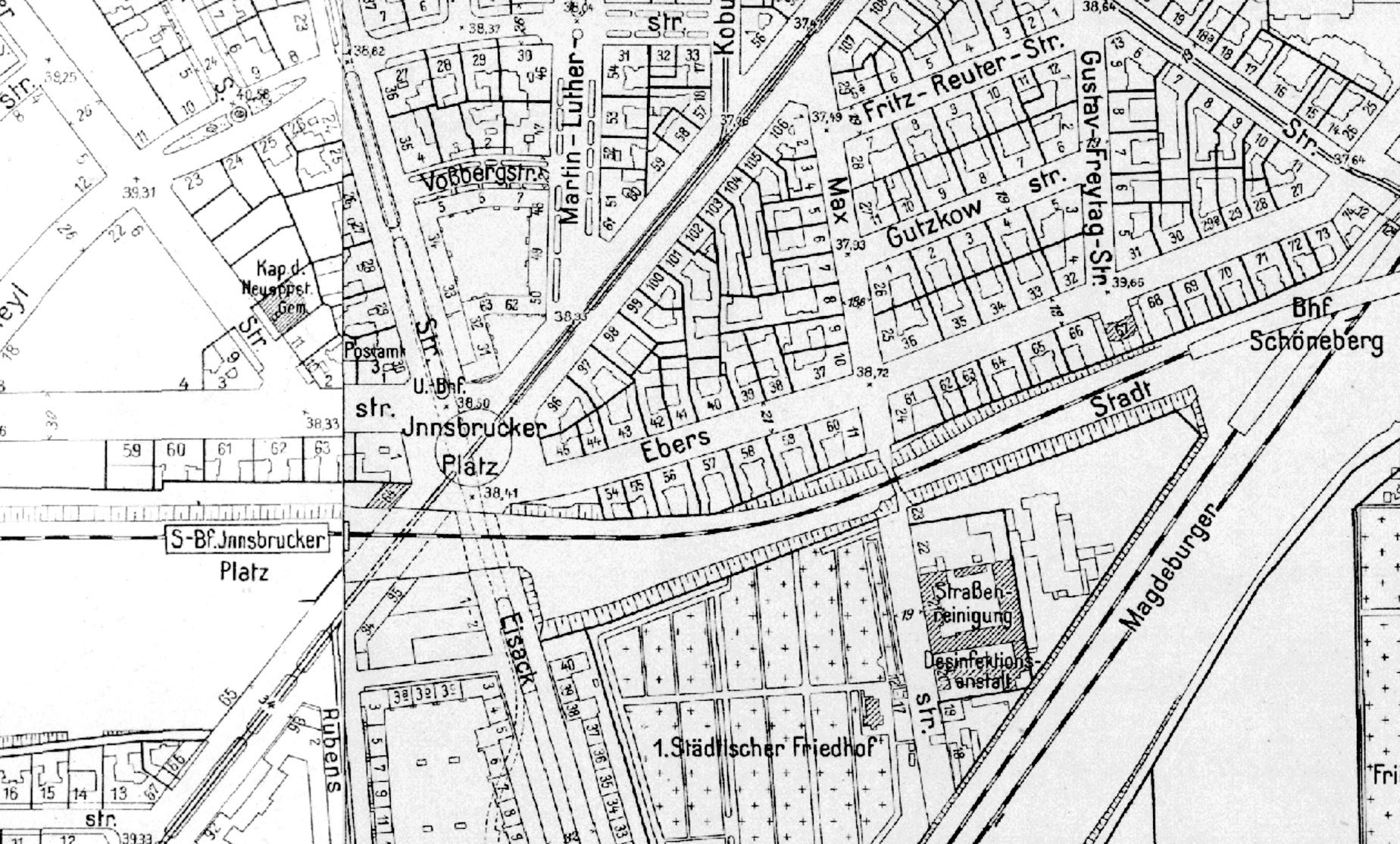
The Innsbrucker Platz in Berlin was the post-war location of our previous post Die Amis arrive!, with some American and Soviet soldiers next to a Sherman tank in July 1945, just a few days after US forces reached their occupation zone of the German capital. Located on the southwestern zone, between the inner circle and the Steglitz and Friedenau districts, it was a traffic junction where the city’s S-Bahn, bus and tram met. In 1927 a square was built here as a starting point to Innsbrucker Str. under the name “Innsbrucker Platz” after the Tyrolean city of Innsbruck and a S-Bahnhof with the same name was opened on July 1, 1933, a few months after the country began to be ruled by the Nazis.
The complete history and development through the years of this place is well beyond this post, so we recommend the excellent Friedenau aktuell blog for further reading.
Bombenkrieg 1940-45
The square and its surrounding area were seriously damaged during the Second World War. Berlin-Schöneberg was one of the most bombed districts from the first days of the campaign, and Innsbrucker Platz would not escape destruction from the air. Virtually all of its buildings and the U-bahn station were hit. The city reports show bomb damage already on 20/21 October 1940 (30 RAF bombers raided Berlin) in this area, receiving some bombs during the 16/17 January 1943 raid too (169 bombers). First great damage came during the night of 1/2 March 1943 (251 RAF bombers) with numerous fires around this point and Ebersstraße. This attack left in flames the roofs and upper floors of Wex Str. 60/63 Ecke Innsbrucker Platz.
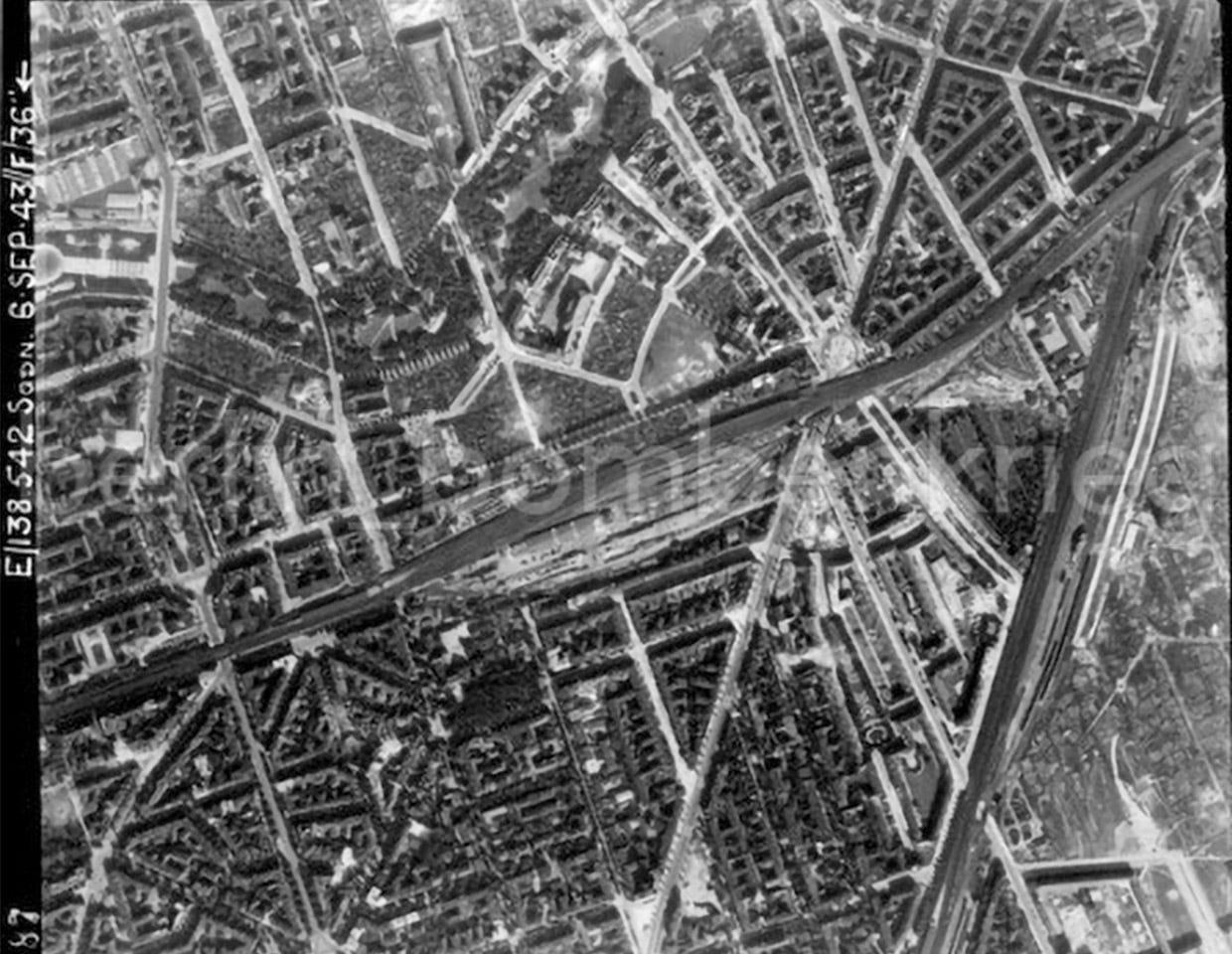
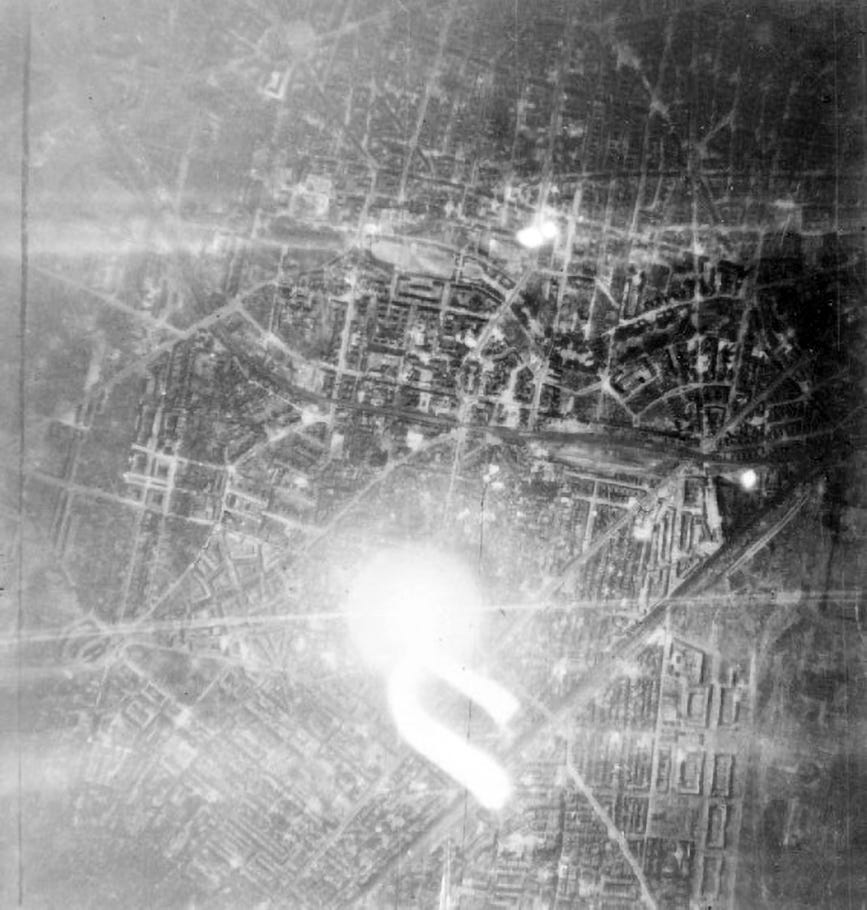
American bombers hit the Schöneberg district again on 21 June 1944 (868 a/c), some high-explosive bombs badly damaged the railway bridge next to Innsbrucker Platz. A massive daylight raid on February 26th, 1945 (US 1,066 bombers) caused severe damage to the area between this square and Bayerischer Platz with bombs hitting the Schöneberg Rathaus, Stadtpark, Hauptstr. and Martin-Luther-Str. among others, leaving 139 dead and 64 wounded only here.
Finally, the Soviet assault caused great devastation. On April 27th, 1945, the Ringbahn circle became the front line. Train traffic and services had been stopped two days before due to fighting and lack of coal. In the case of the southwestern area from Friedenau through Schöneberg the Soviet assault was made by Red Army’s 9th Mechanized Corps with its 69th and 70th Mechanized Brigades, and after minor resistance they reached the Innsbrucker Platz line at midday meanwhile elements of the 91st MB penetrated the right flank and captured U-Bhf Schöneberg. The advancing troops encountered makeshift barricades, anti-tank barriers and strongpoints as the Germans set up the railway line as a huge defensive perimeter. Heavy fighting led to the taking of the underground station and the exit to Wex Str. by the end of the day when resistance was overcome.
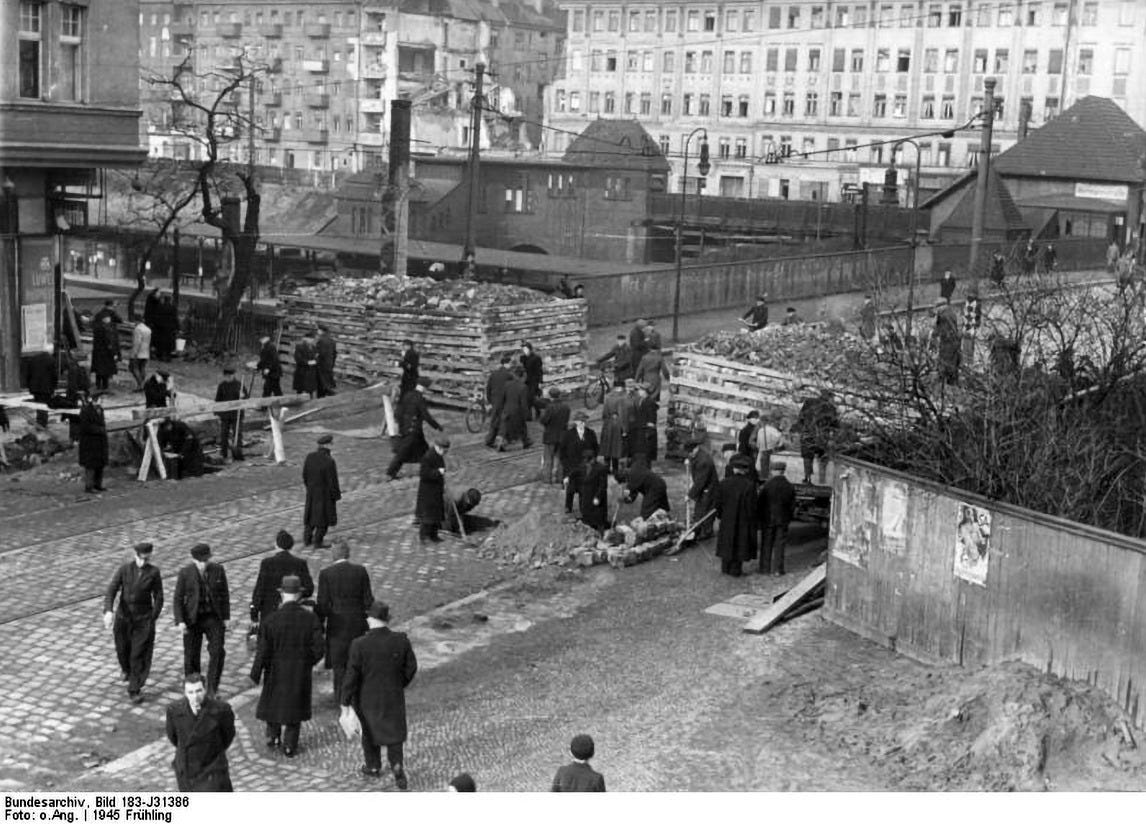
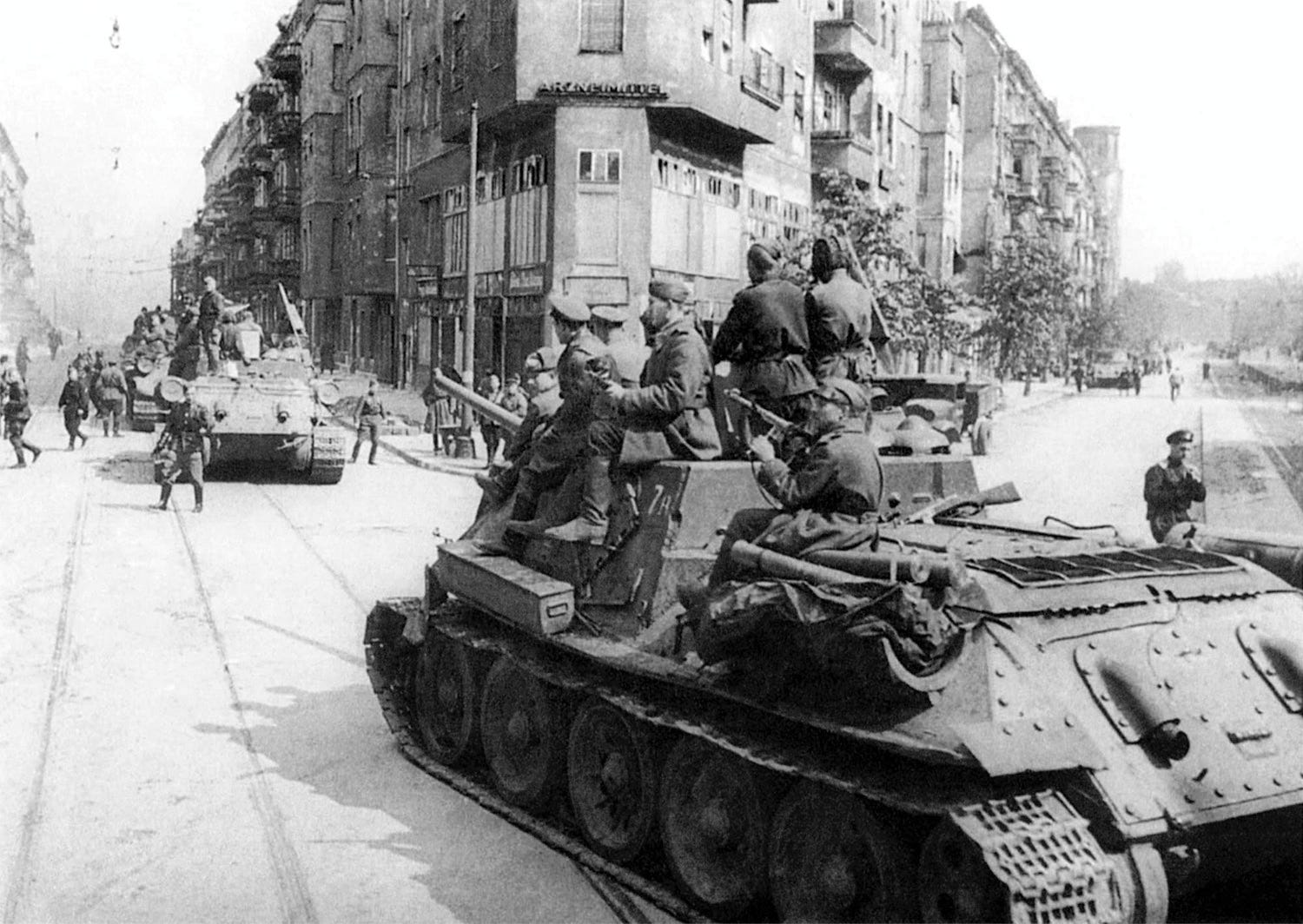
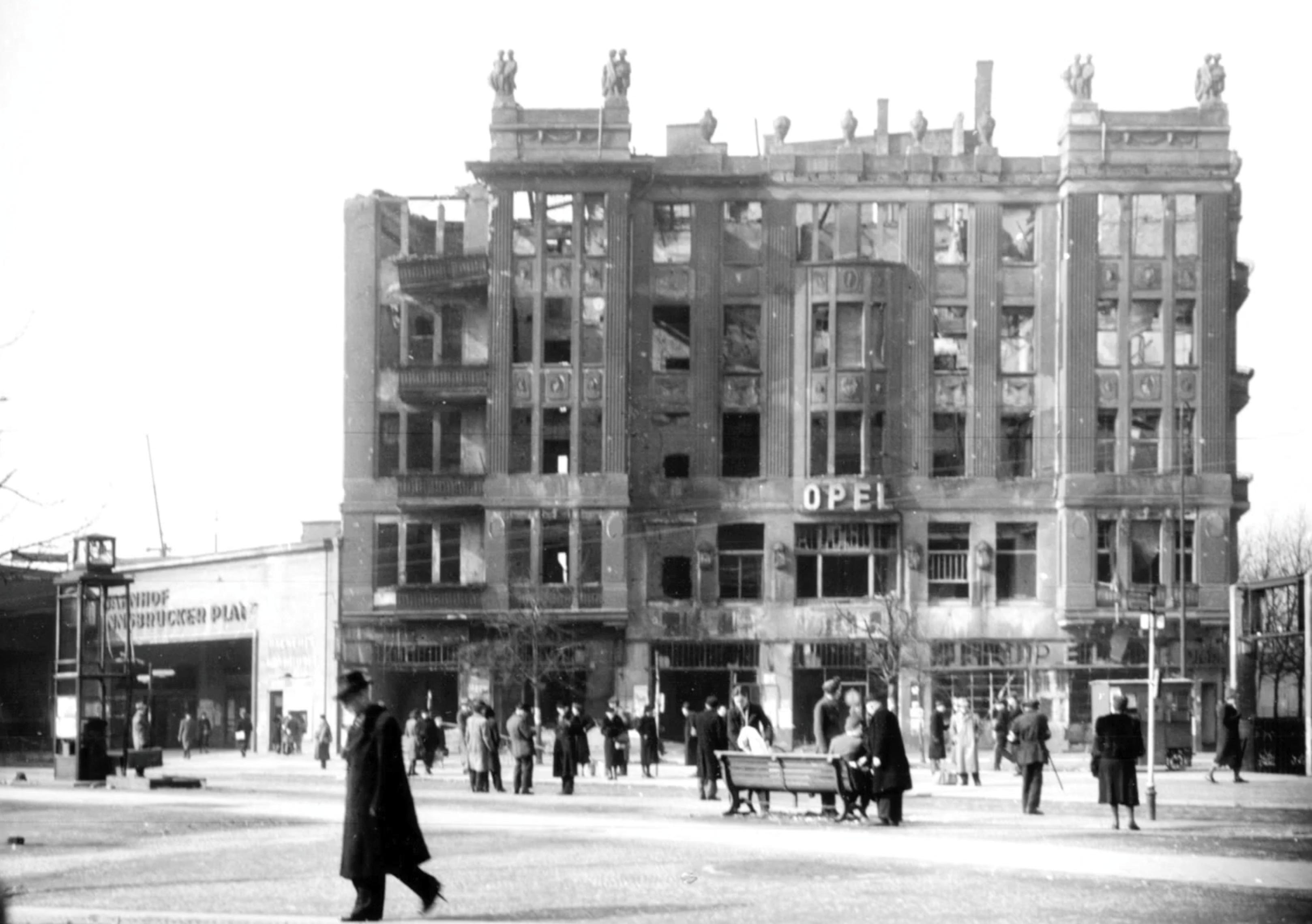
By war’s end, many buildings have been destroyed during the fight added to the damage already caused by the bombings, like this ruined house at Innsbrucker Str. 30 located in front of the square and next to the Reichsbahn “Opel” building in July 1945, it was demolished after the war too.
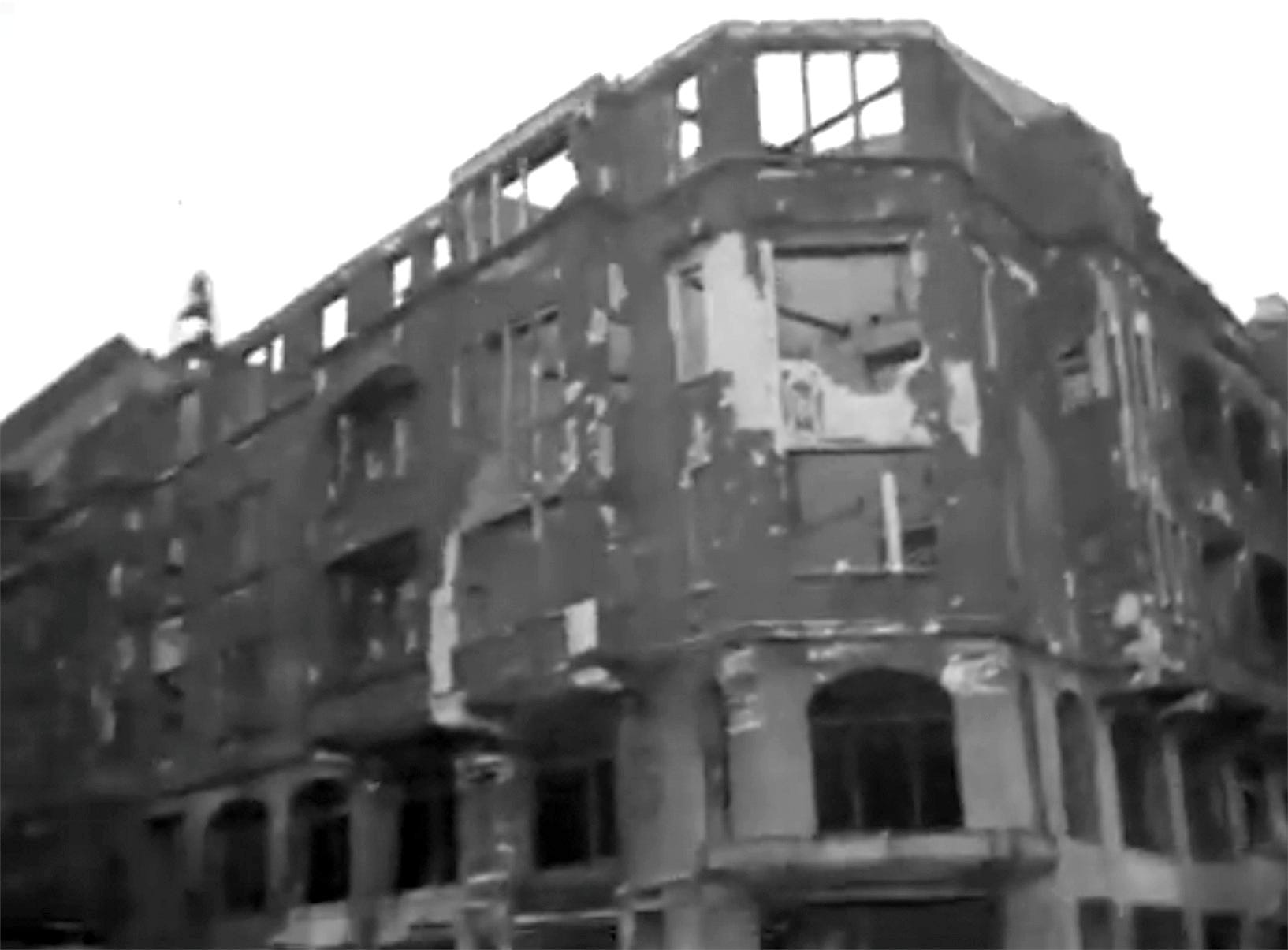
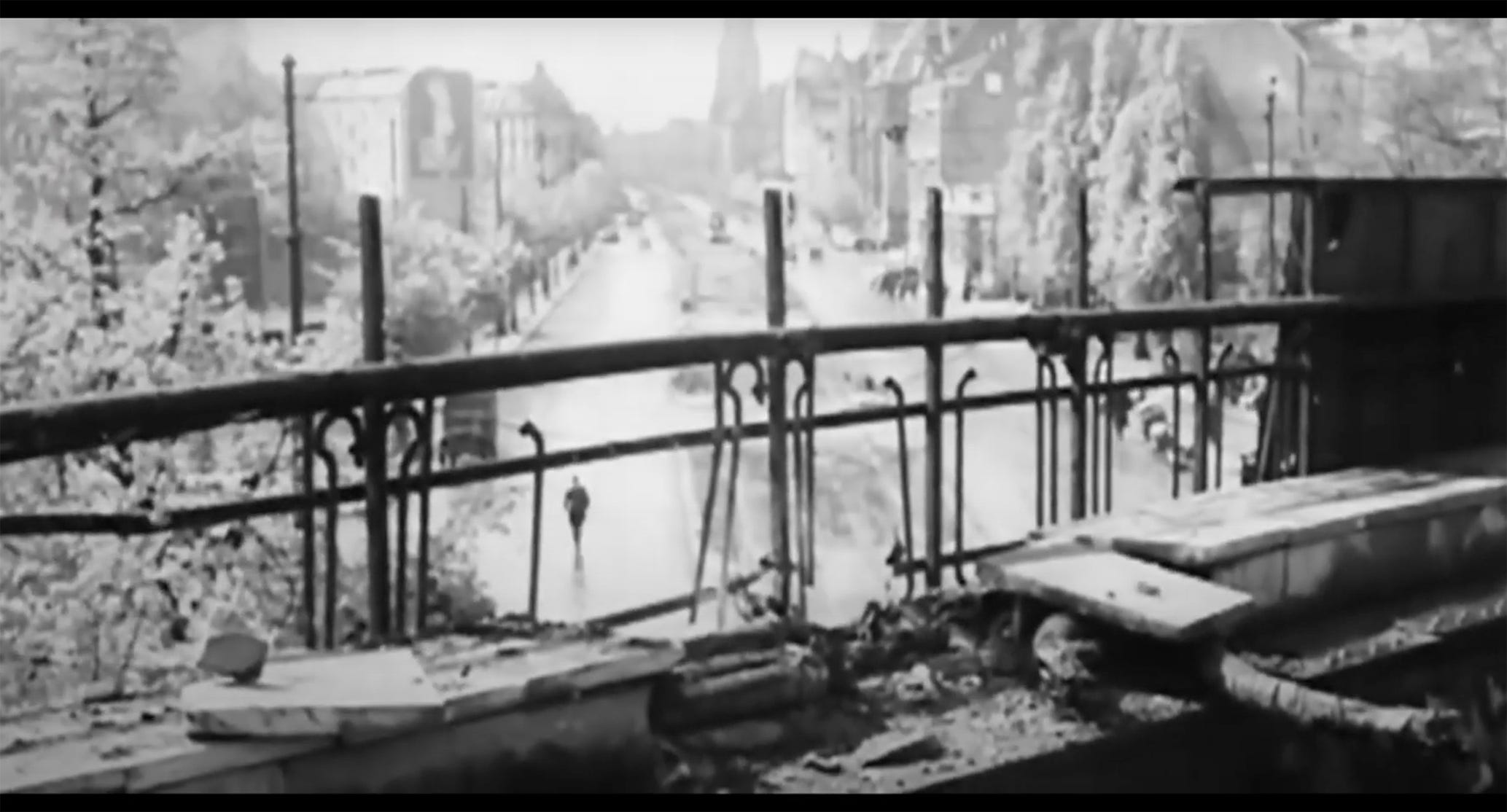
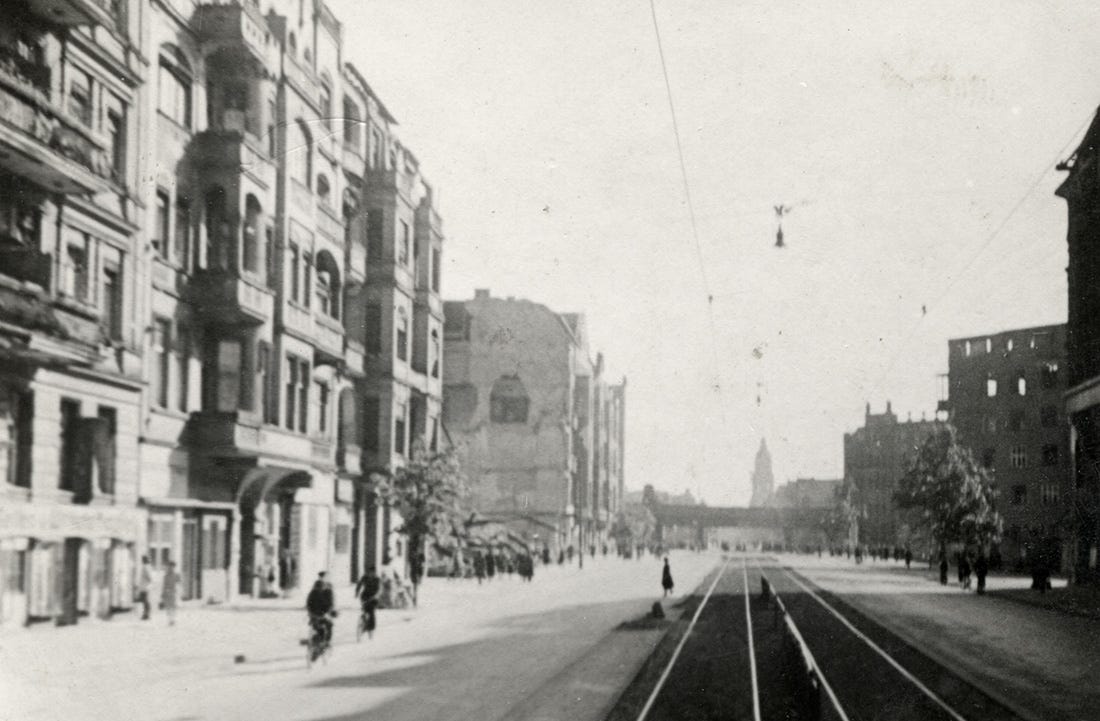
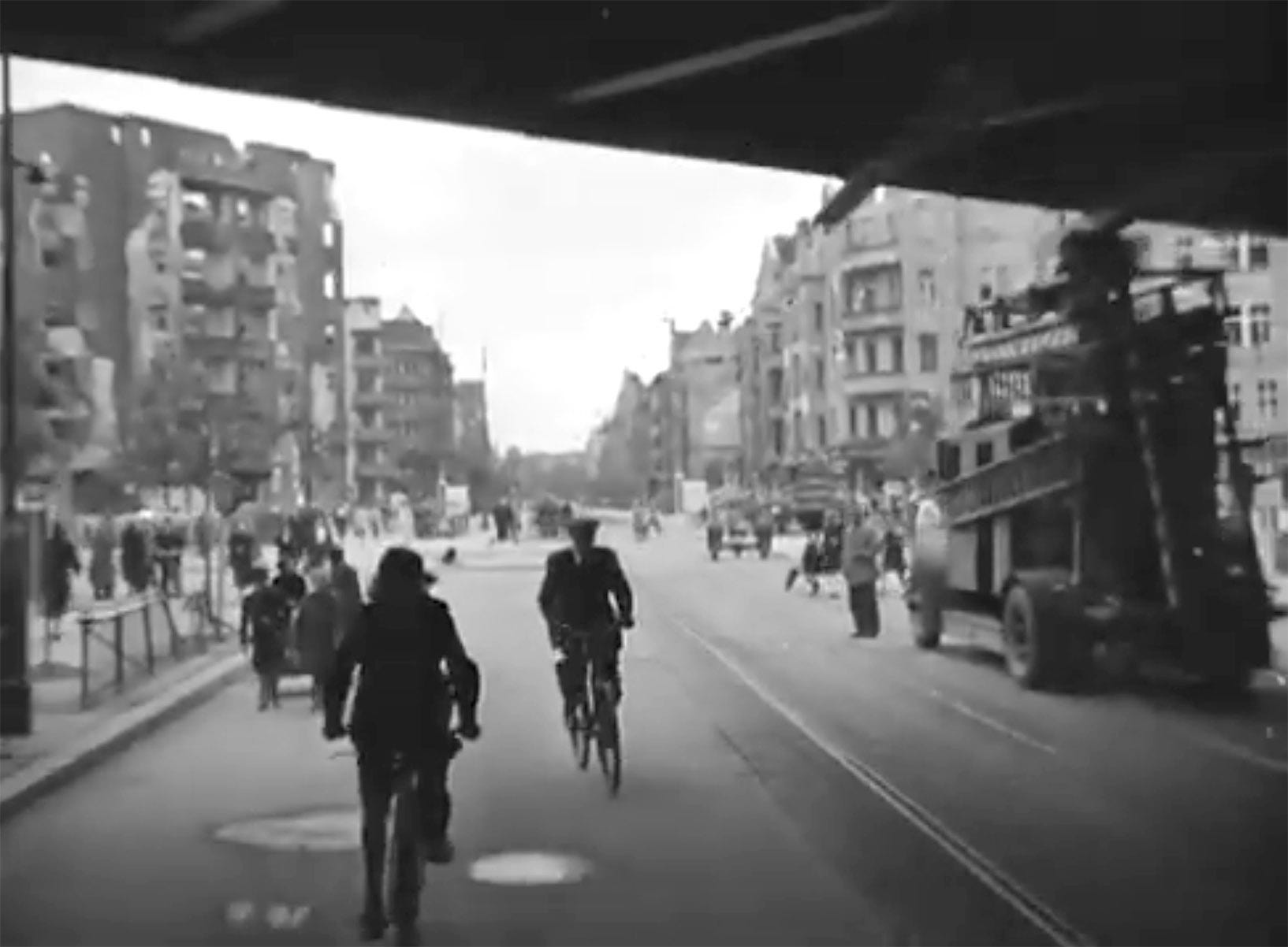
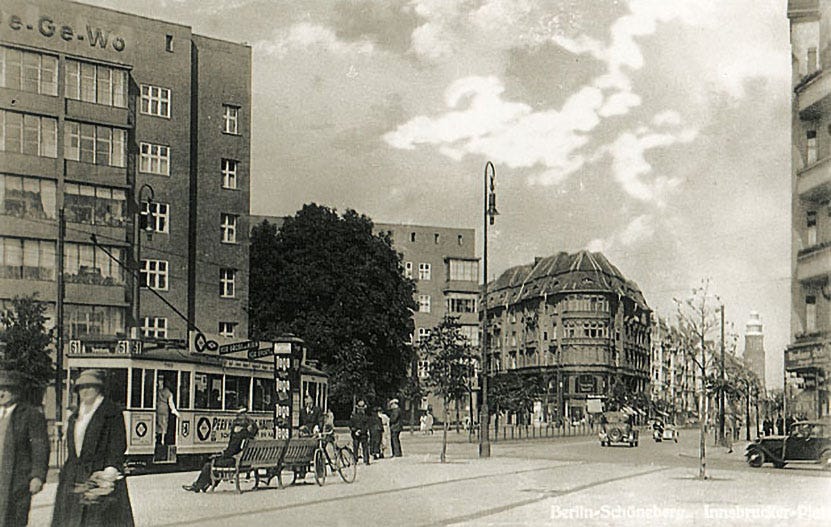
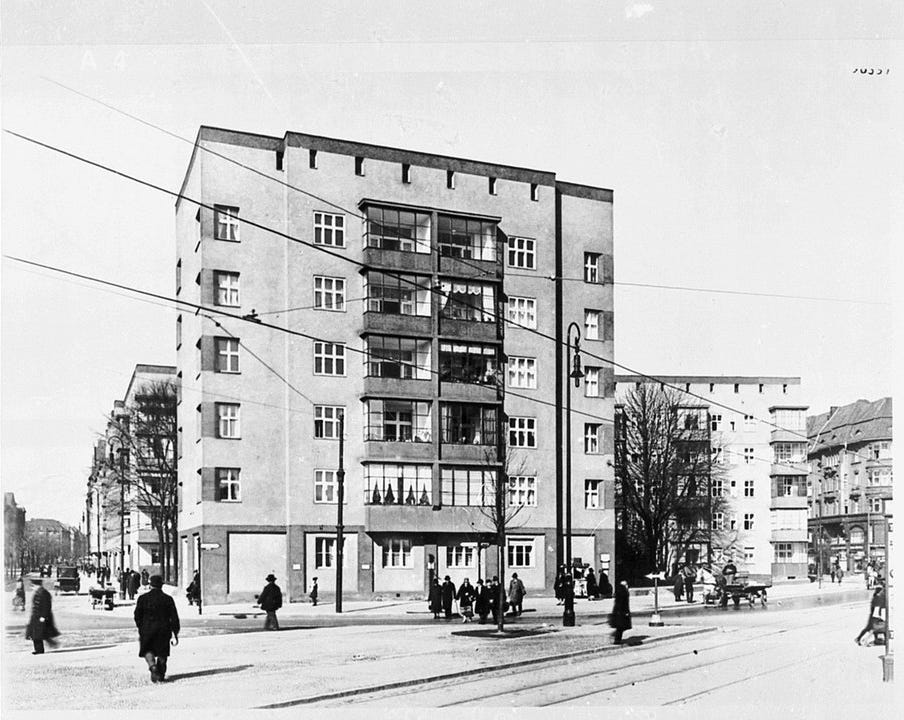
The most significant building of this square was heavily damaged by war’s fires too. Located at Innsbrucker Str Nr 31/34 (today’s Innsbrucker Platz 4), the DeGeWo Haus (Deutsche Gelleschaft zur Förderung des Wohnungbaues) is one of the best examples of German interwar modernism. It was designed by architects Paul Mebes and Paul Emmerich as a six-story building with a perimeter-block complex, and built by Ph. Holzmann AG during 1922-28. This Weimar-era showpiece was rebuilt in the post-war years as luxury apartments and with two more floors added. It was used by Marshall Plan publicists to highlight West Berlin successes and presented as built in 1950 as “Berlin’s first high-rise”.
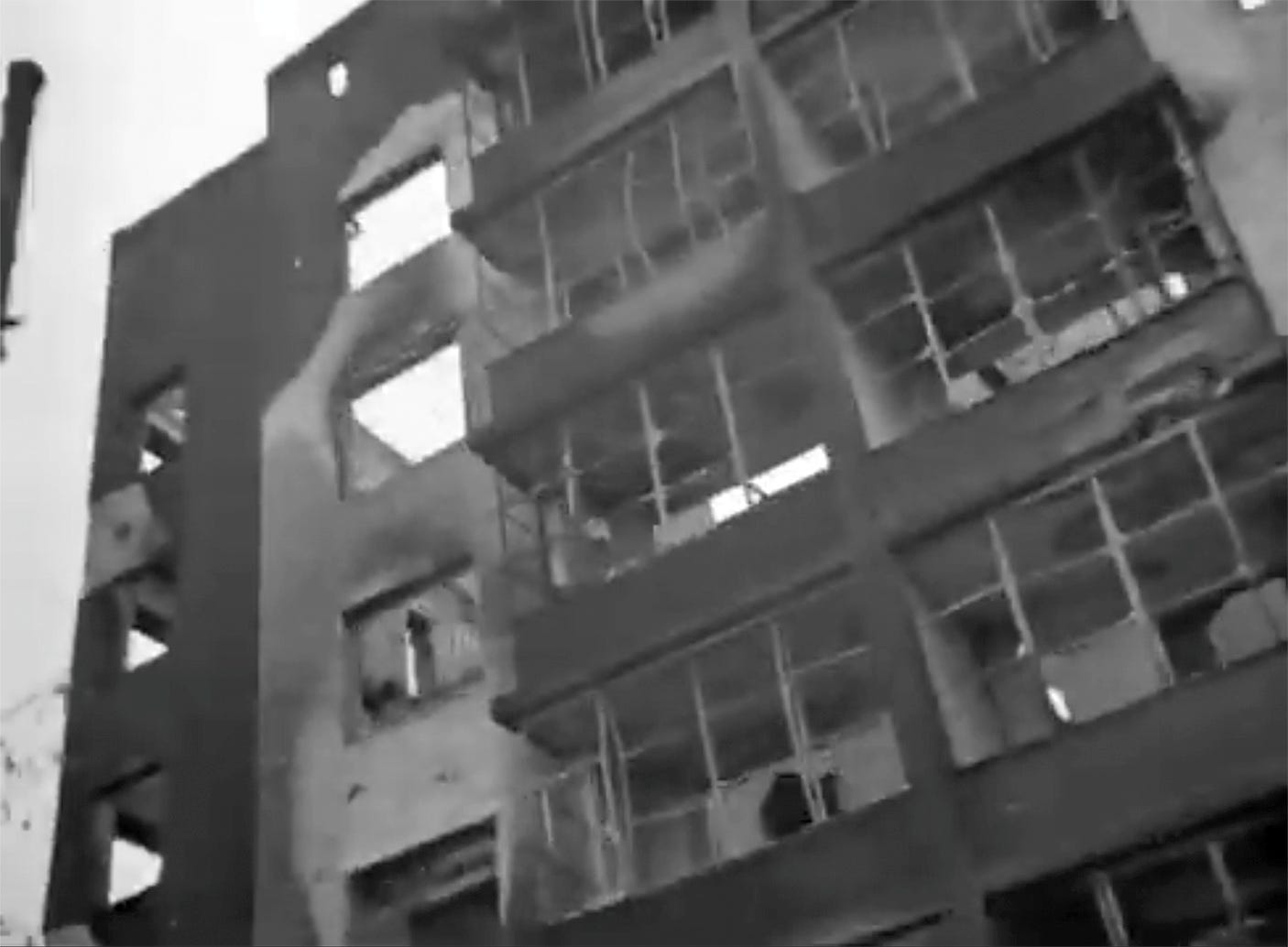
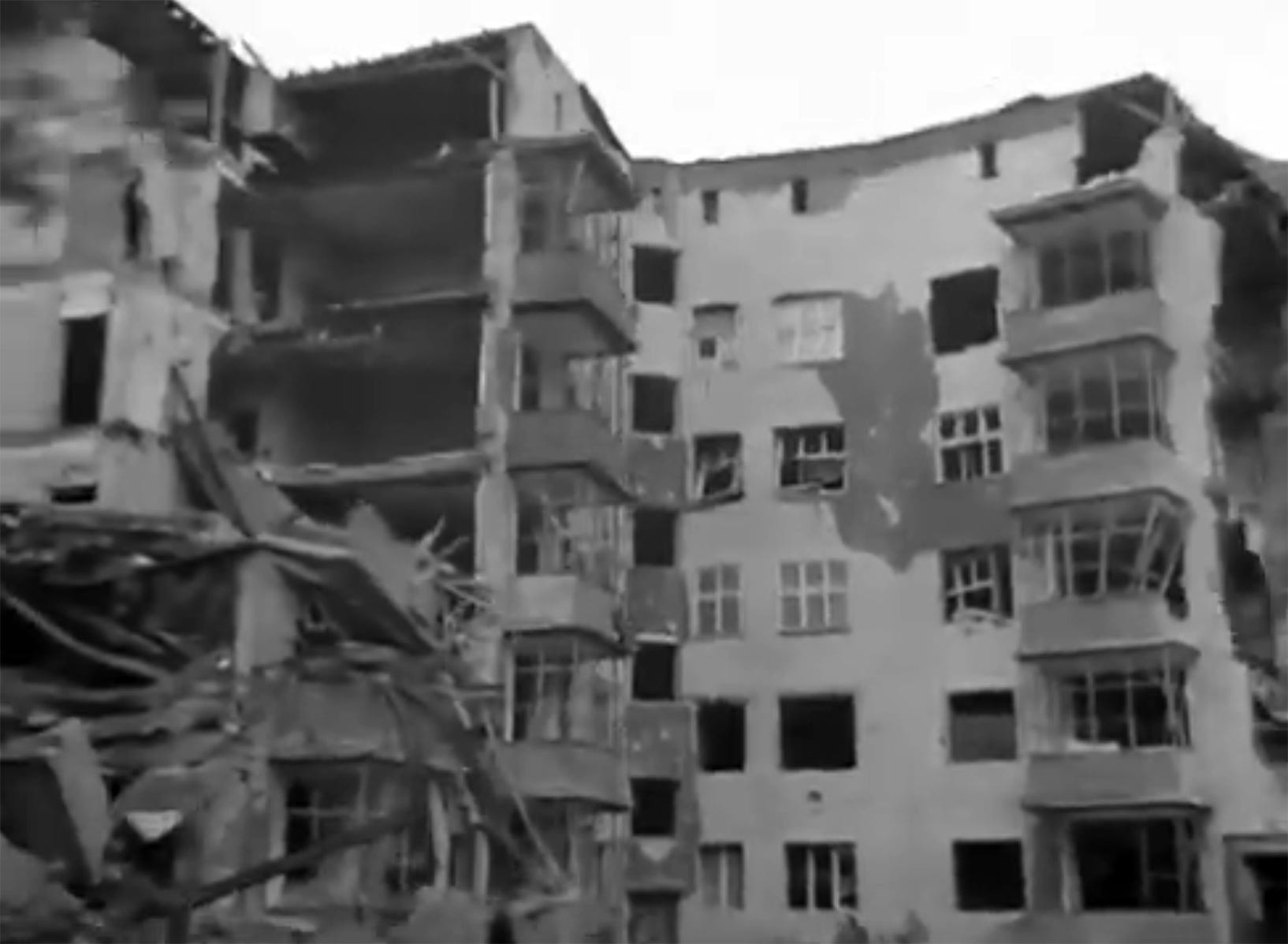
July 1945: destroyed and burnt out facade of the apartment building and its modern block complex between Hauptstr. and Innsbruckerstraße caused by the air raids and the ground battle.
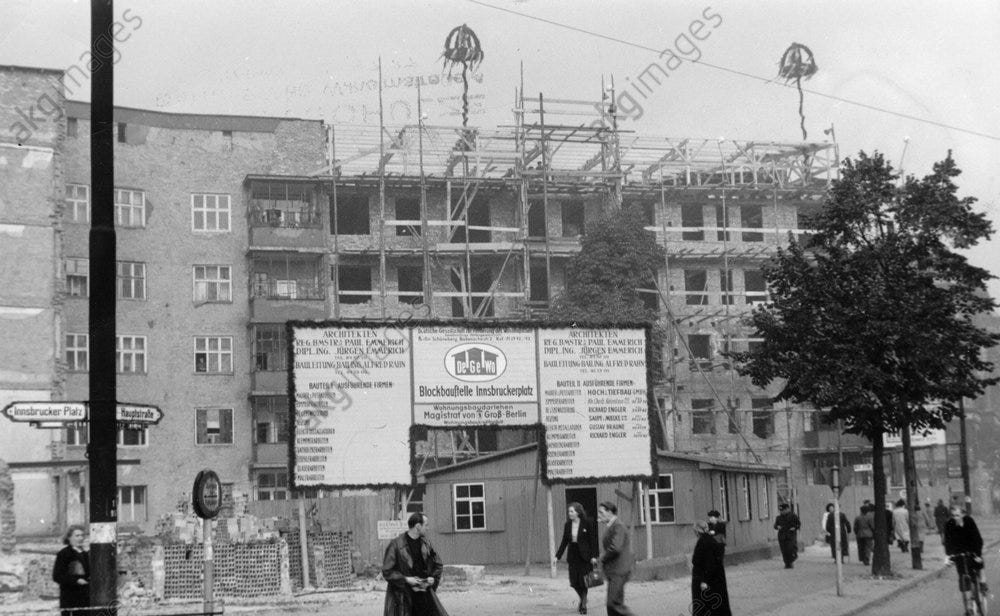
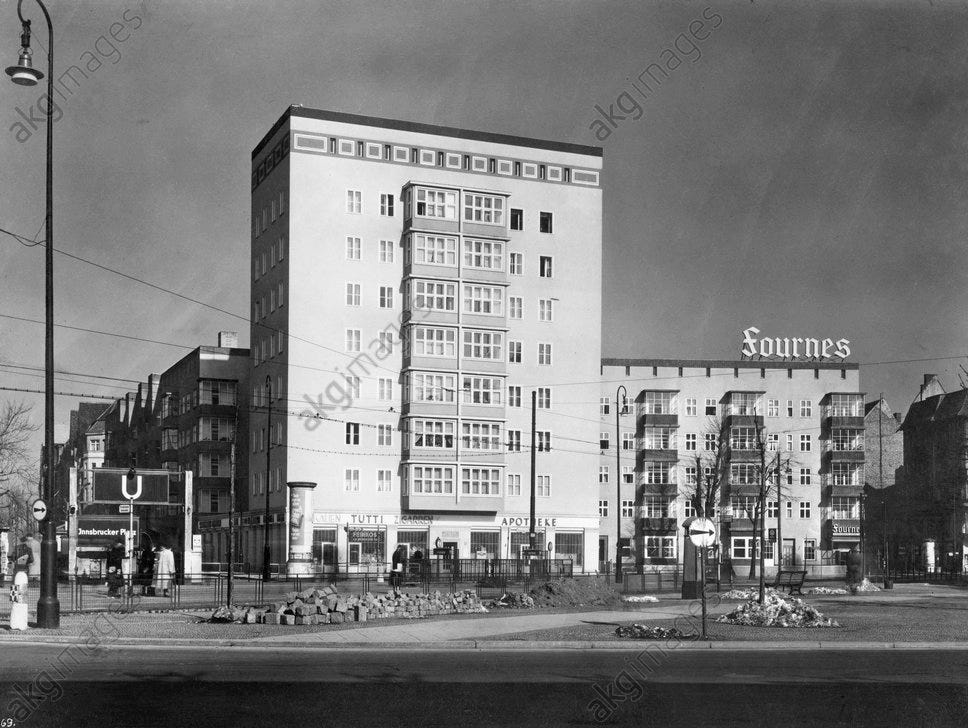
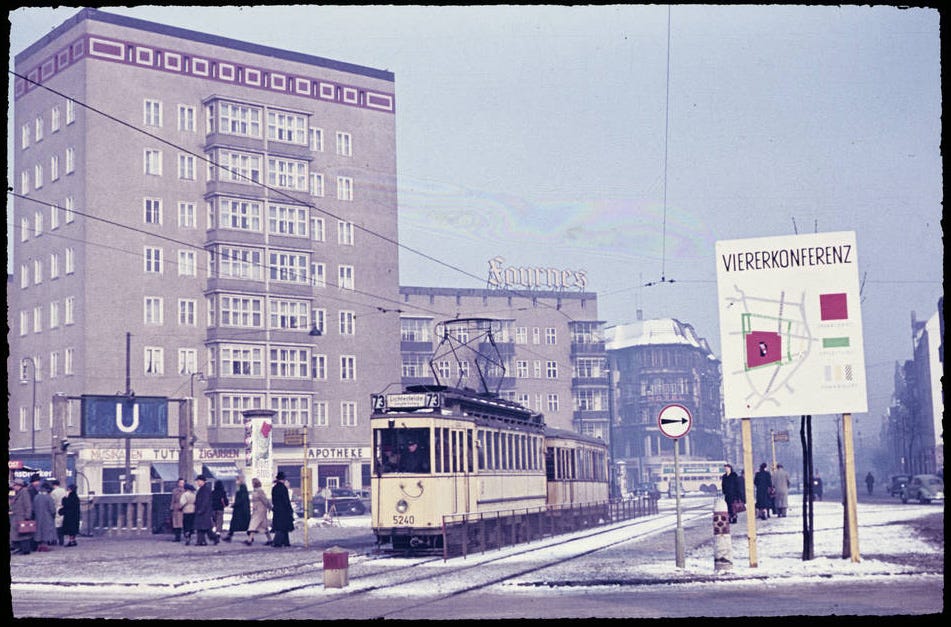
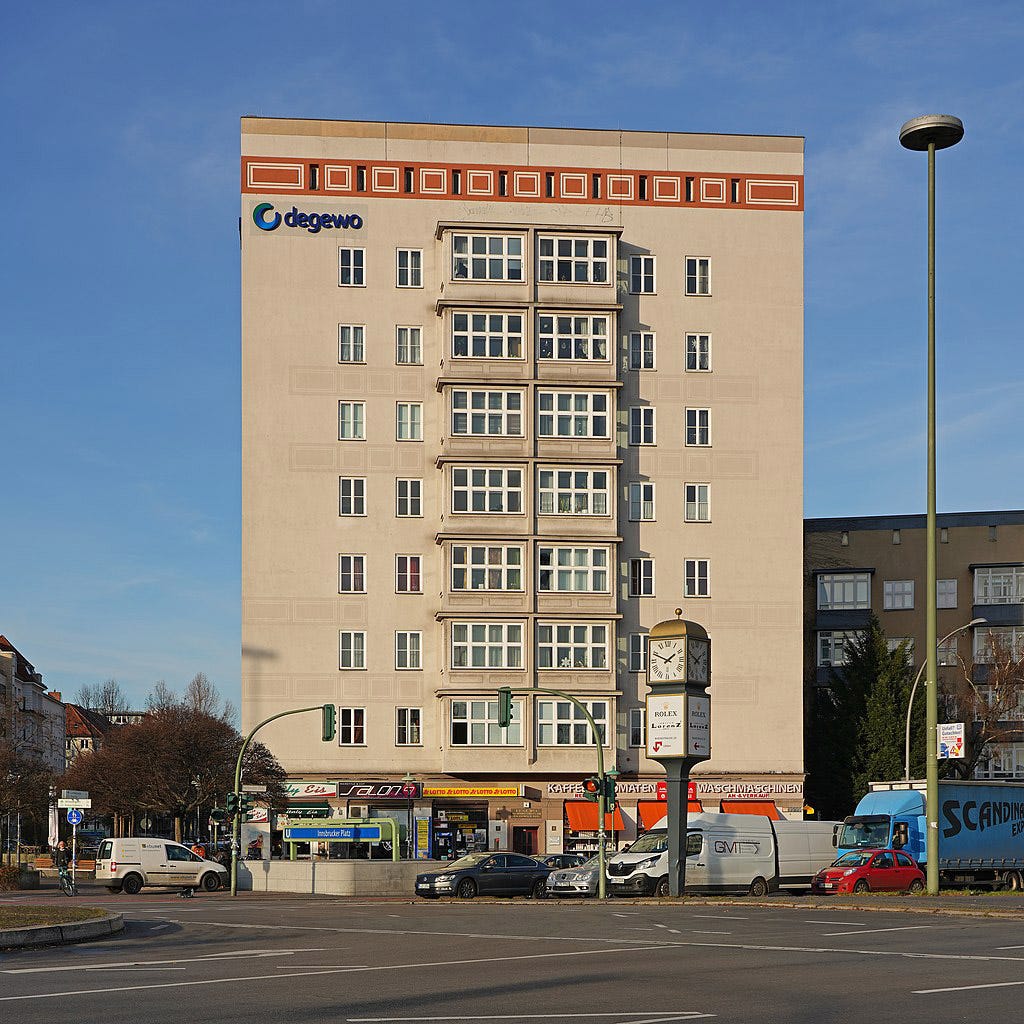
Across the street, the other side of the square was severely damaged by war too. Here, Berliners gathered around an American M4A3(76) Sherman tank from the 2nd Armored Division guarding Innsbrucker Platz. Also, a pair of Willys Jeeps are parked next to the tank parked over the tram tracks. Notice the tram stop blown up at extreme right and the road signal in Russian cyrillic pointing “KARLHORST” in front of the tank.
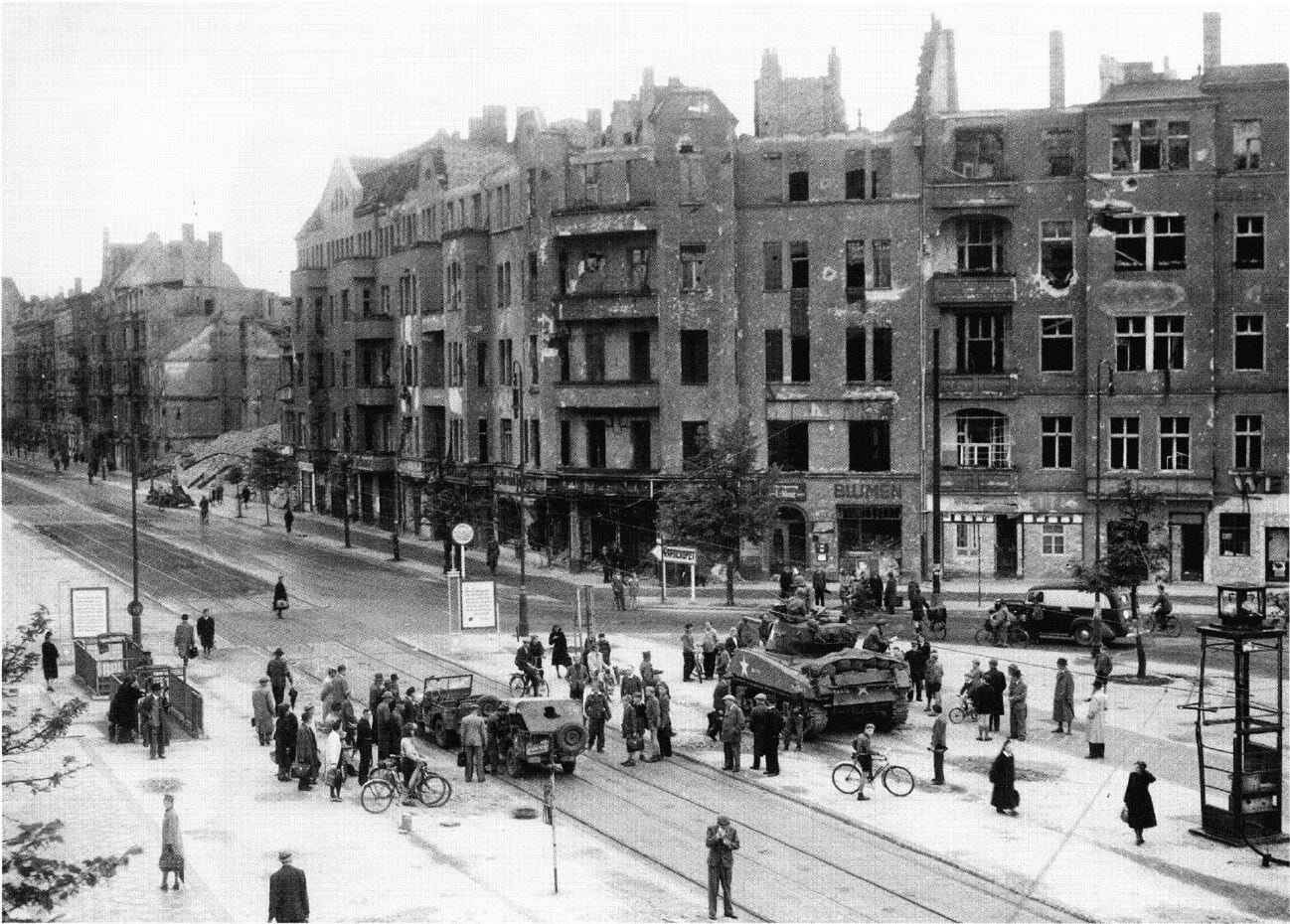
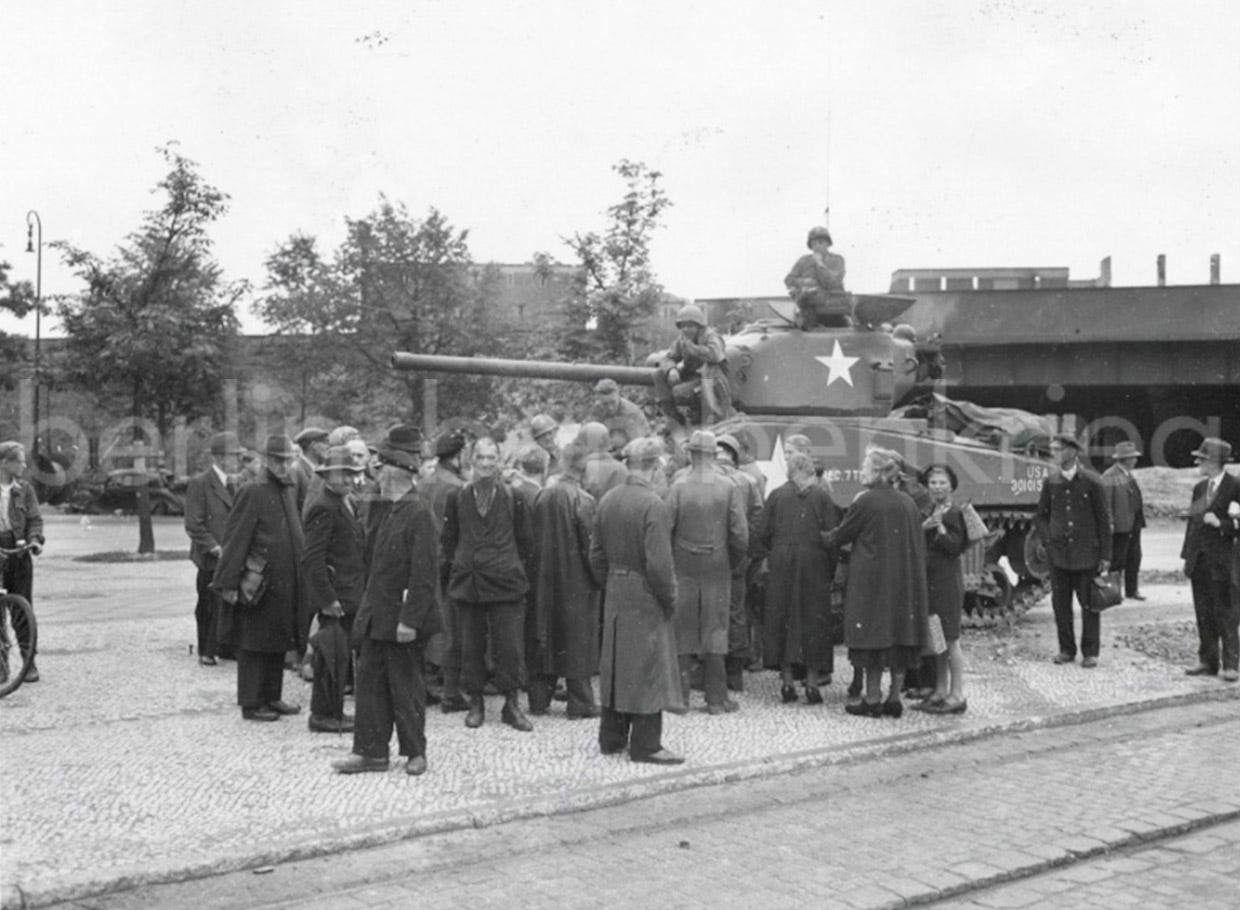
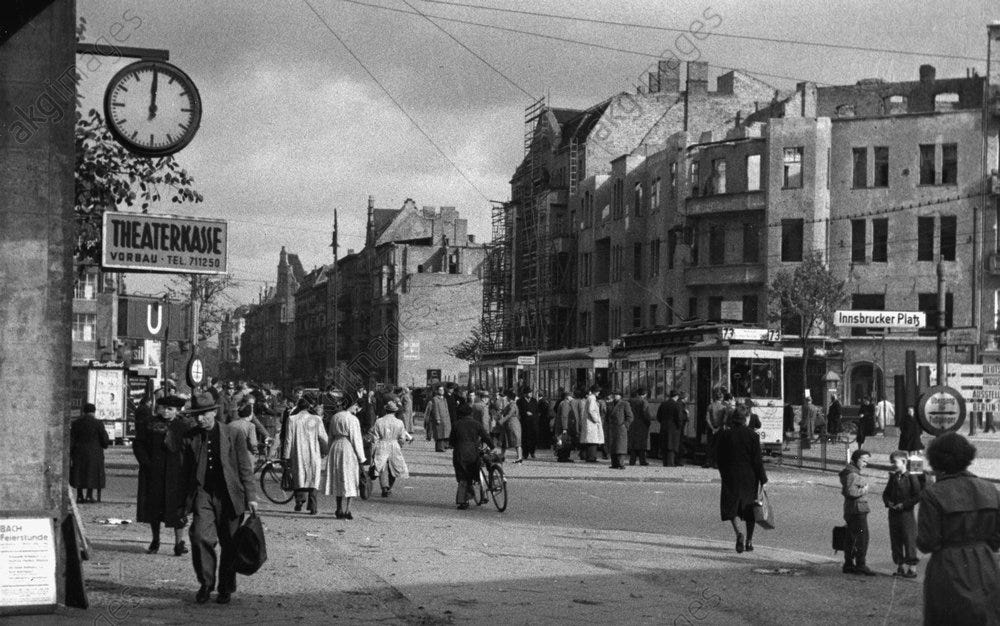
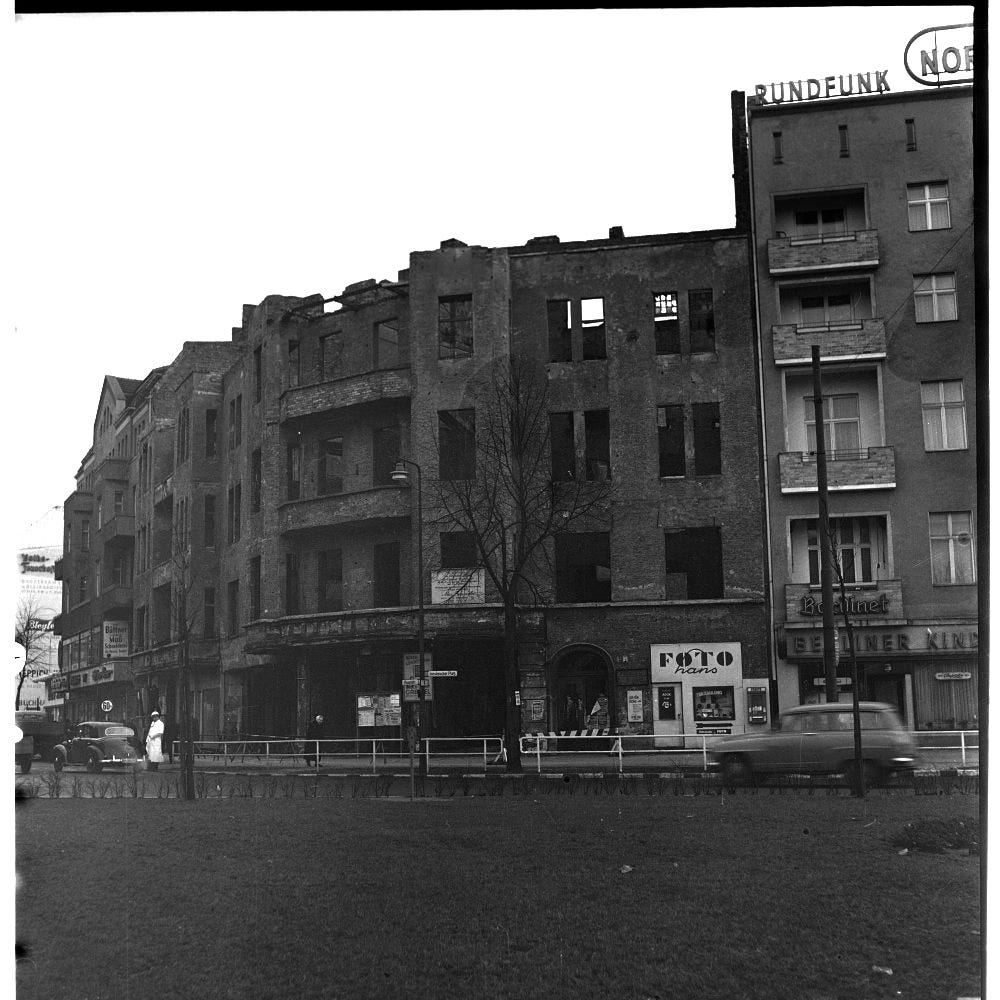
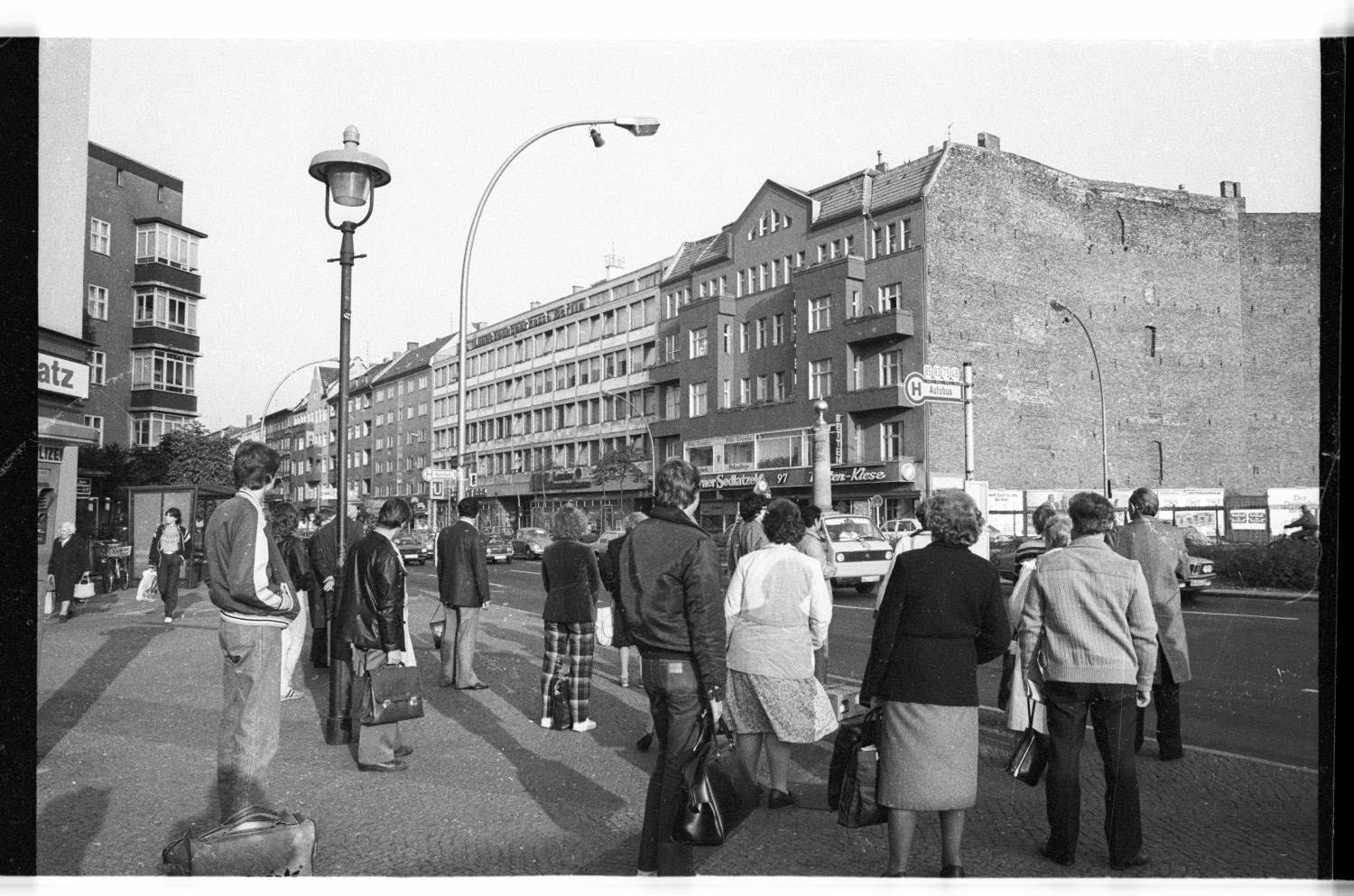
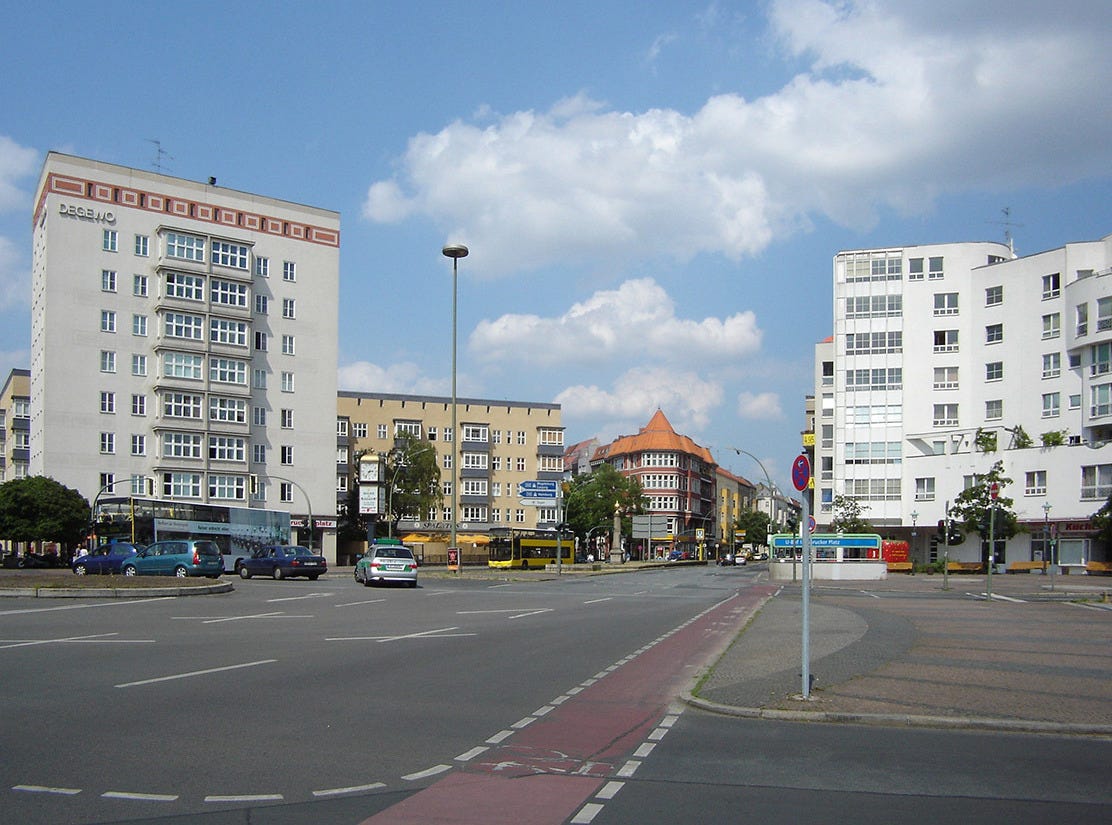
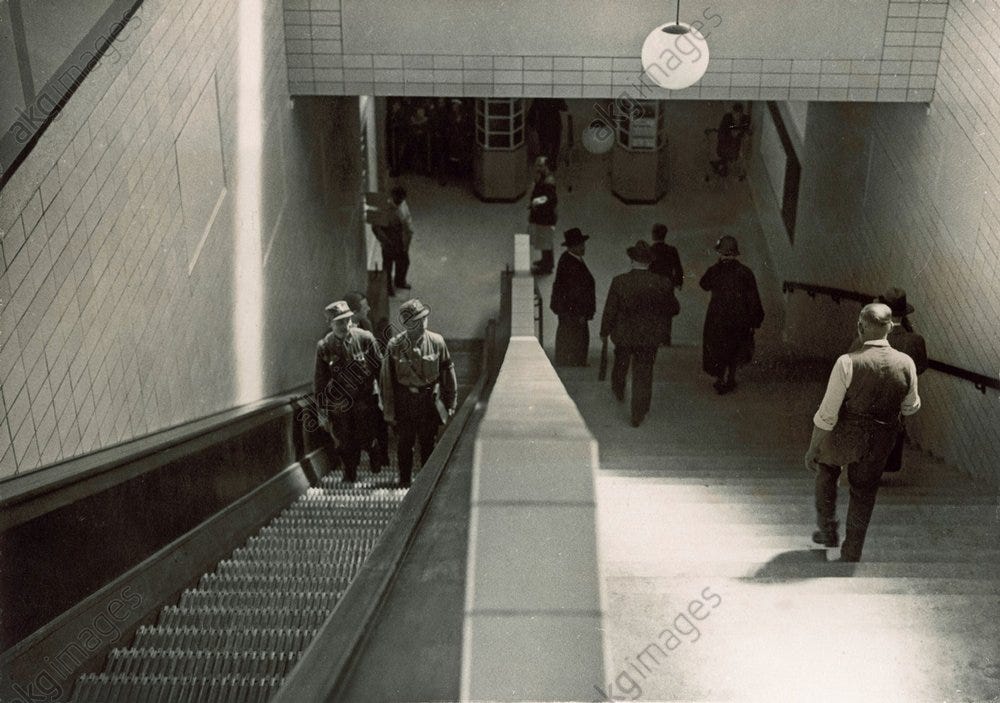
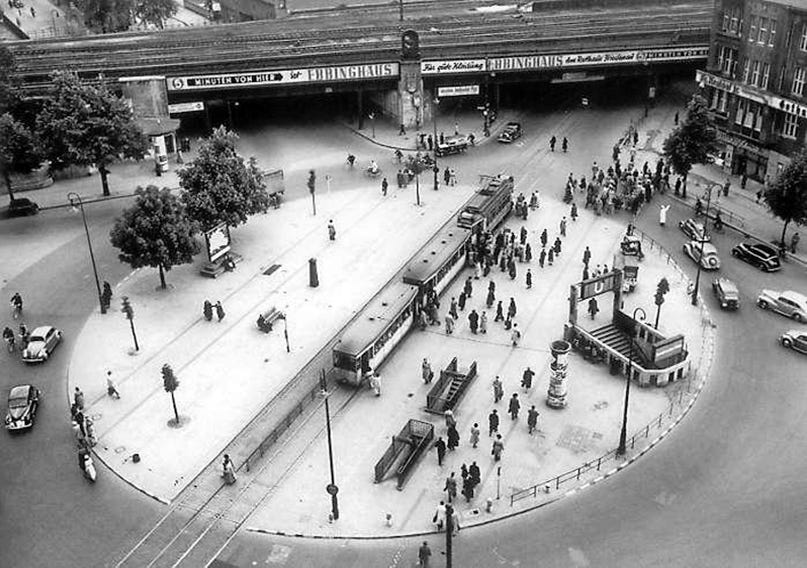
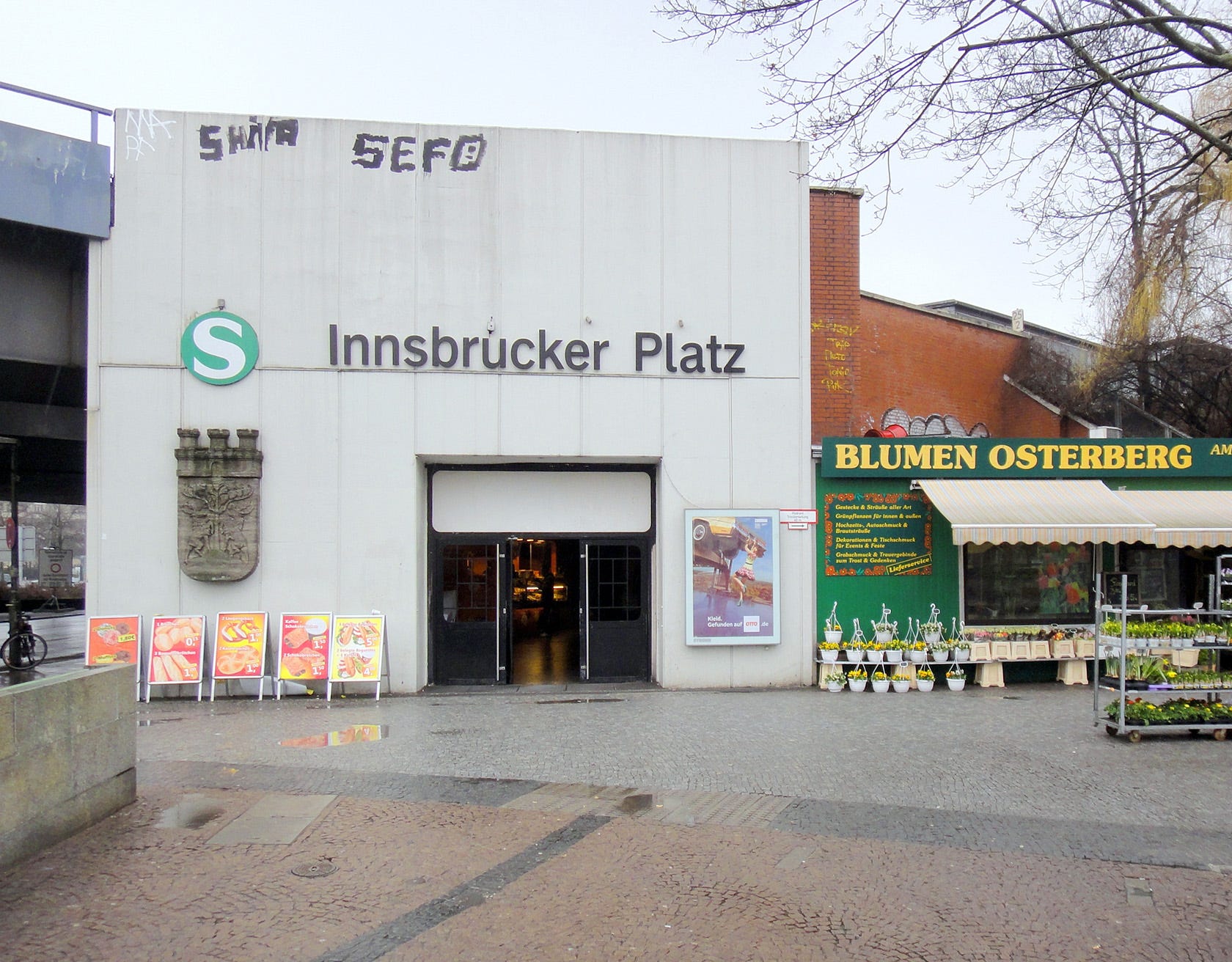
The intense battle left the underground train station badly damaged and didn’t reopen until December 1945. The access in the middle of the square was closed after the area was completely rebuilt in 1954 and a new entrance was opened a few metres north in a glazed pavilion. The construction in 1971 of the new motorway Stadtautobahn 100 and the underground tunnel under the main road led to a total redesign of the square and both train stations, with Wex Str. course being greatly altered and its nearer houses being demolished as well as the Reichsbahn building located next to the bridge; the renovated Südring didn’t reopen until 1993.
Today, Innsbrucker Platz remains a chaotic intersection of main streets and a traffic and train junction of the southwestern part of the city, with three S-Bahn lines (S41, S42, S46) and one subway line (U4 and the planned expansion of U10) and the road exits to two adjacent motorways.
_______________
Bibliography and sources:
Demps, Laurenz. (2014). Luftangriffe auf Berlin. Die Berichte der Hauptluftschutzstelle. Ch. Links Verlag
Diefendorf, J. (ed) (2014). Transnationalism and the German City (Studies in European Culture and History). Palgrave Macmillan
Friedenau aktuell. Innsbrucker Platz (accessed October 2021)
Landesarchiv Berlin. LAB, A Rep. 001-02, Nr. 700, Bl. 78 ff.; LAB, A Rep. 001-02, Nr. 701, Bl. 15 f.; LAB, A Rep. 001-02, Nr. 701, Bl. 31. ; LAB, A Rep. 001-02, Nr. 702, Bl. 99 ff.; s. a. LAB, A Rep. 005-07, Nr. 559, o. Bl.; LAB, A Rep. 001-02, Nr. 703, Bl. 31 ff
Muschelknautz, Johanna. (2001). Berlin-Schöneberg: Blicke ins Quartier 1949 - 2000. Jaron Verlag
S Bahn Berlin DB. Die Historie der Berliner S-Bahn. (accessed October 2021)
Stivers, William and Carter, Donald A. (2017). The City Becomes a Symbol: The U.S. Army in the Occupation of Berlin, 1945-1949. Centers of Military History United States Army. CMH Pub 45–4. Available at: <https://history.army.mil/html/books/045/45-4/index.html> (accessed October 2021)
Sven, Heinemann. (2021). Die Berliner Ringbahn: Die Geschichte der legendären Eisenbahnstrecke 1871 bis heute. GeraMond Verlag
The Battle of Berlin Forum. Facebook Group. Battle reports of the 3rd Guards Tank Army by Piet Vergiet
Wildt, Michael and Kreutzmueller, Christoph. (2013). Berlin 1933-1945 - Stadt und Gesellschaft im Nationalsozialismus. Siedler Verlag
Thank you for reading Berlin Bombenkrieg by Pablo López Ruiz. Please subscribe, if you haven’t yet, to comment, follow and share. All images used for non profit / educational purposes.