


During ww2, apart from British RAF and American USAAF aircraft, Berlin was bombed by the Soviets also, years before the final Red Army assault over the city in 1945.
Hitler invaded the Soviet Union on 22 June 1941, the largest offensive in History at the time, and German forces quickly advanced through the vast steppe towards Moscow, the main target. As soon as 19 July, Hitler had issued his ‘War Directive No 33’, decreting the attack of Moscow by bombers of Luftflotte 2 in reprisal for the raids on Bucharest and Helsinki.
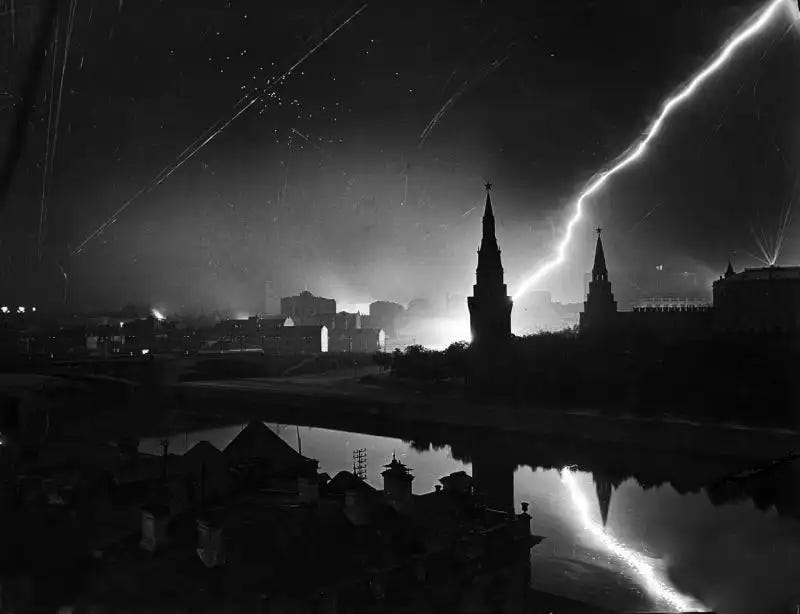
But “Klara Zetkin” —the Luftwaffe’s codename for Moscow- was heavily defended and the bombings were poor. After the Nazi attack of the capital on July 21/22, 1941, when the Germans dropped a total of 104 tonnes of HE bombs and 46,000 incendiaries for over 5 hours, Stalin ordered immediate retaliation against the Reich capital.
[The Kremlin under the attack of the Luftwaffe, July 1941.]
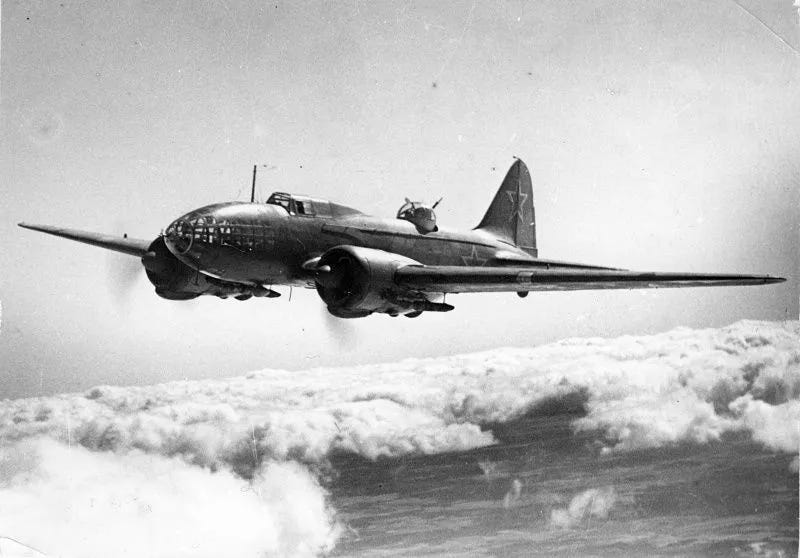
[A Soviet medium bomber Ilyushin Il-4 in flight.]
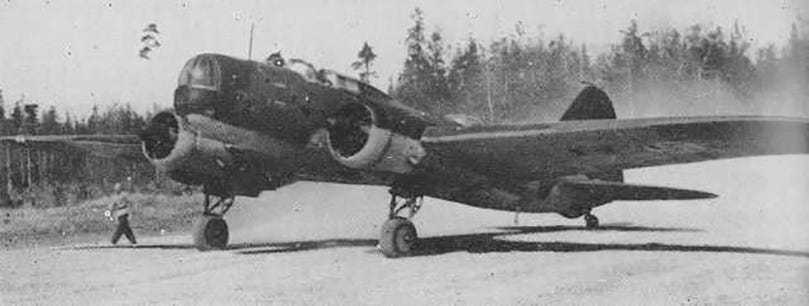
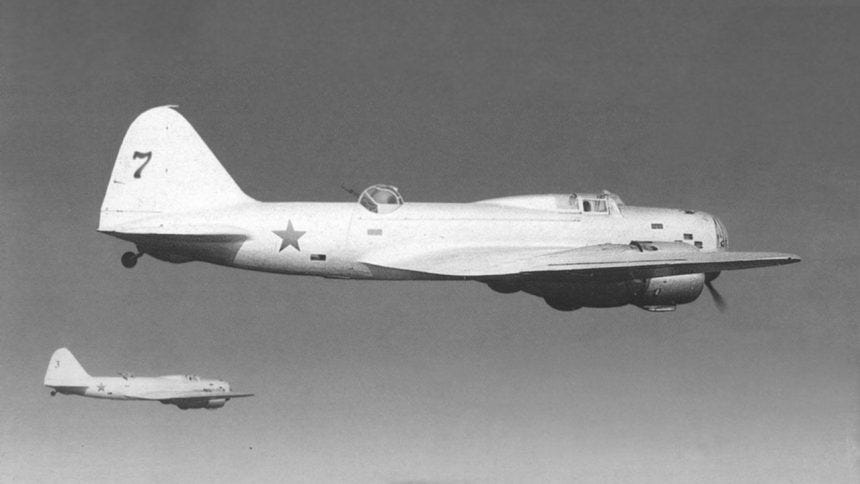
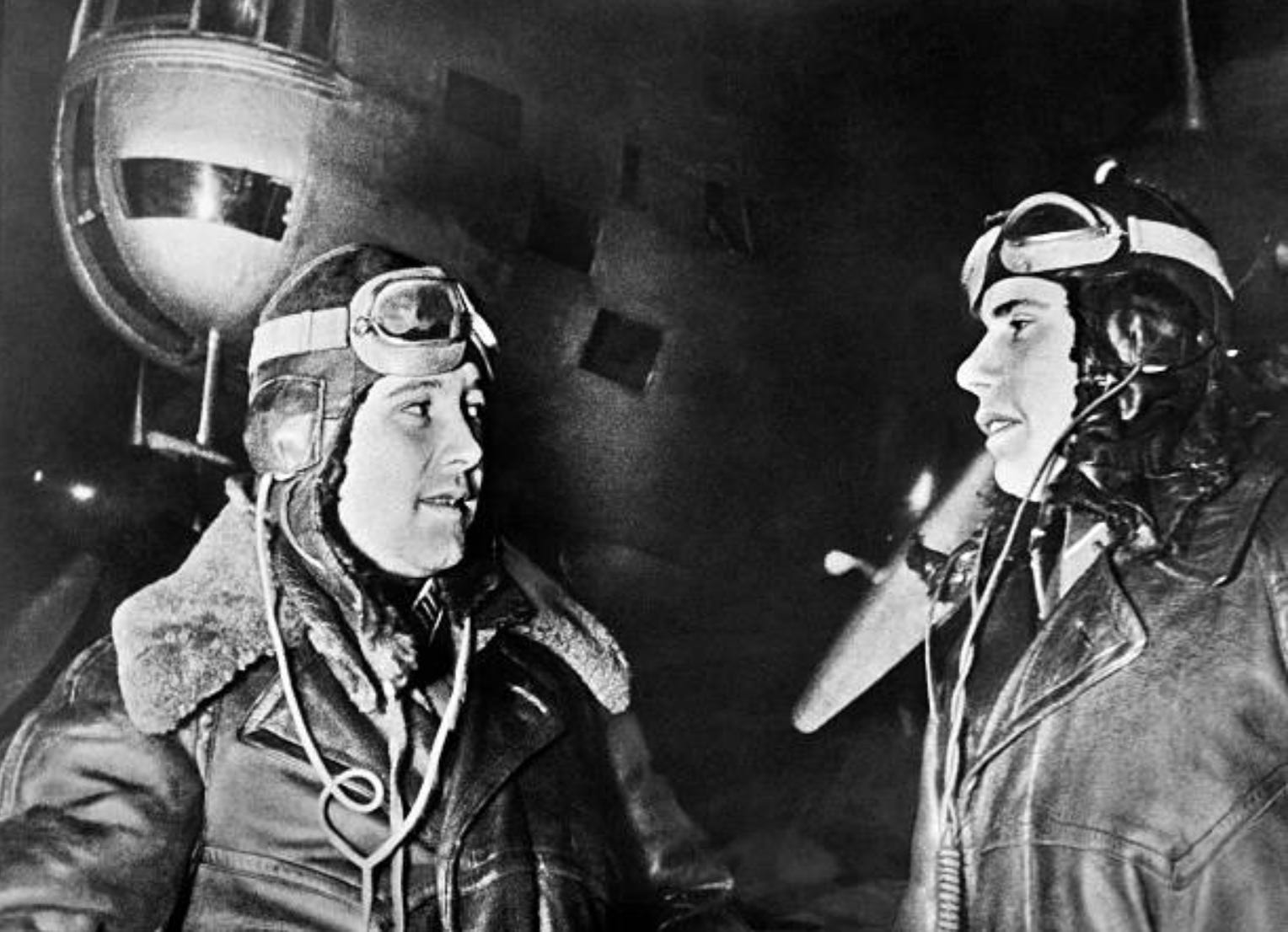
On the evening of 7 August 1941, 15 Ilyushin DB-3T torpedo bombers of the Baltic Fleet operating from an island airstrip off the Estonian coast struck Berlin after travelling a distance of more than 600 miles (1,000 km). All returned safely. While the damage caused by the twin-engined bombers was negligible (each carried fewer than 1,000 pounds of bombs), the Kremlin propaganda machine was quick to trumpet the success of the raids.
[The Ilyushin DB-3 medium long-range bomber. During World War Two, 1,528 were built by Soviet factories.]
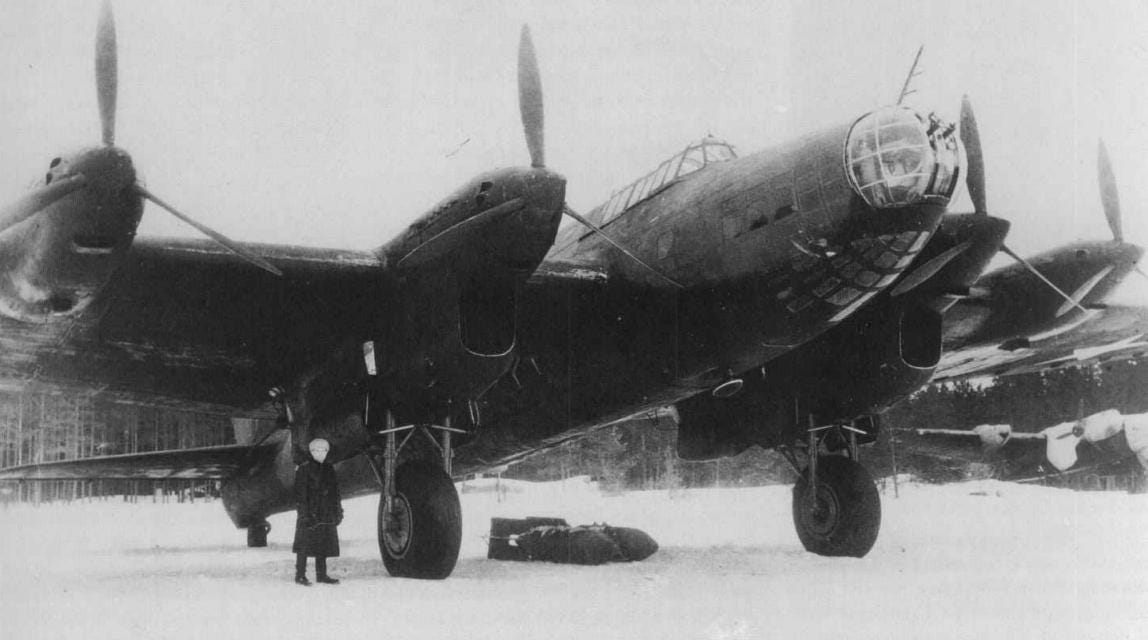
Later, at dusk on 10 August 1941, a formation of VVS (Voyenno-Vozdushny Sili, or Red Air Force) Yermolayev Yer-2 medium bombers and 14 of Stalin’s prized four-engine Petliakov Pe-8 formed up over Pushkino Airfield in Leningrad for the raid on Berlin. The planes were to be joined over the city by two full squadrons of Ilyushin Il-4 bombers flying from Estonia. Unfortunately for the Soviets, the mission was cursed with misfortune from the start, several Pe-8s had to abort due to engine problems and one of the heavily loaded Pe-8 crashed immediately upon take off. The bombing was a total disaster. More attacks followed, with minor damage.
[The huge size Pe-8 four-engined was the only strategic bomber built by the Soviets during the war, but the unreliability of her engines and low numbers built (93) made the bomber a complete failure in action.]
[Yevgeny Preobrazhensky, Commander of the Soviet Baltic Fleet’s 1st Mine-Torpedo Aviation Regiment )(left), and pilot Pyotr Khokhlov before leaving the aerodrome to conduct an air-raid over Berlin during August 1941.]
By late 1941, the Wehrmacht was so close to Moscow that Stalin was forced to forget strategic bombing, apart from a 100-bombers raid on 29 August 1942 (which left minor damage in Berlin), until the 1945 final offensive.
Naval DB-3s flew a total of 10 sorties over Berlin before their base at Saaremaa had to be evacuated in the face of imminent German capture. The final attack was made on the night of September 4-5. A total of 86 naval aircraft participated in the raids, of which 33 were reported to have reached Berlin, while others bombed secondary targets, including Stettin, Königsberg, Danzig, Swinemünde and Libau. Daylight bombing was even tried, but met with no success and was cancelled.
In 1945, the Soviets were back over Berlin. On 24/25 April, 1945, 80 years ago tonight, Berlin suffered its last ‘strategic’ air bombing during World War Two. During April 16 to May 8, 1945, VVS —the Red Air Force— aircraft made 90,674 sorties to which nearly 80% of them were in direct support of the advancing ground forces or in a tactical mission. Postwar Soviet analysis revealed that just 5.4 percent of their raids during the entire war had a strategic role.
The Soviet bomb ton dropped over Berlin is less than 1% of the total for the Allies during Second World War.
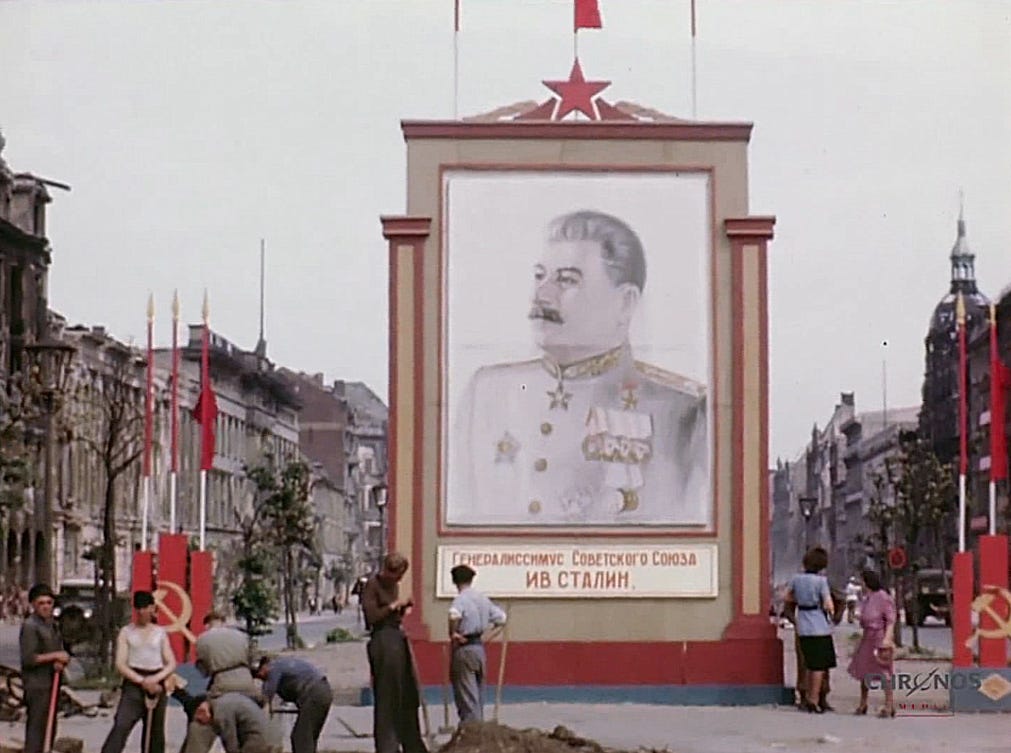
[Berlin, July 1945. Four years later, Berliners (who survived the bombings and war) would see Joseph Stalin (1878-1953) much closer everyday. A vast painting portrait of the Soviet leader presided Unter den Linden next to Brandenburger Tor in the aftermath of the war, with a memorial and Red banners, at the exact point today is placed the big Christmas Tree.]
Bibliography:
Boog, Horst; Krebs, Gerhard; Vogel, Detlef. Germany and the Second World War, Vol. VII. The Strategic Air War in Europe and the War in the West and East Asia, 1943–1945. Clarendon Press, 2015
Hiestand, William E. Eastern Front 1945: Triumph of the Soviet Air Force. Osprey Publishing, Air Campaign, 2024
Higham, Robin; Kipp, Jacob. Soviet Aviation And Air Power: A Historical View. Routledge, 2019
Kamenir, Victor. Soviet Navy Over Berlin. Warfare History Network. (accessed February 2026)
Kozhevnikov M, N.The Command and Staff of the Soviet Army Air Force in the Great Patriotic War 1941-1945. A Soviet view. DEPARTMENT OF THE AIR FORCE. US Government Printing Office, 1977
Moore, Jason. Soviet Bombers Of The Second World War. Fonthill, 2019
Overy, Richard. The Bombing War: Europe, 1939-1945. Allen Lane, 2013
Thank you for reading Berlin Bombenkrieg by Pablo López Ruiz. Please subscribe, if you haven’t yet, to comment, follow and share. All images used for non profit / educational purposes.