


‘The last remaining evidence of medieval monastic culture in the city of Berlin’
– Historische Kommission zu Berlin –
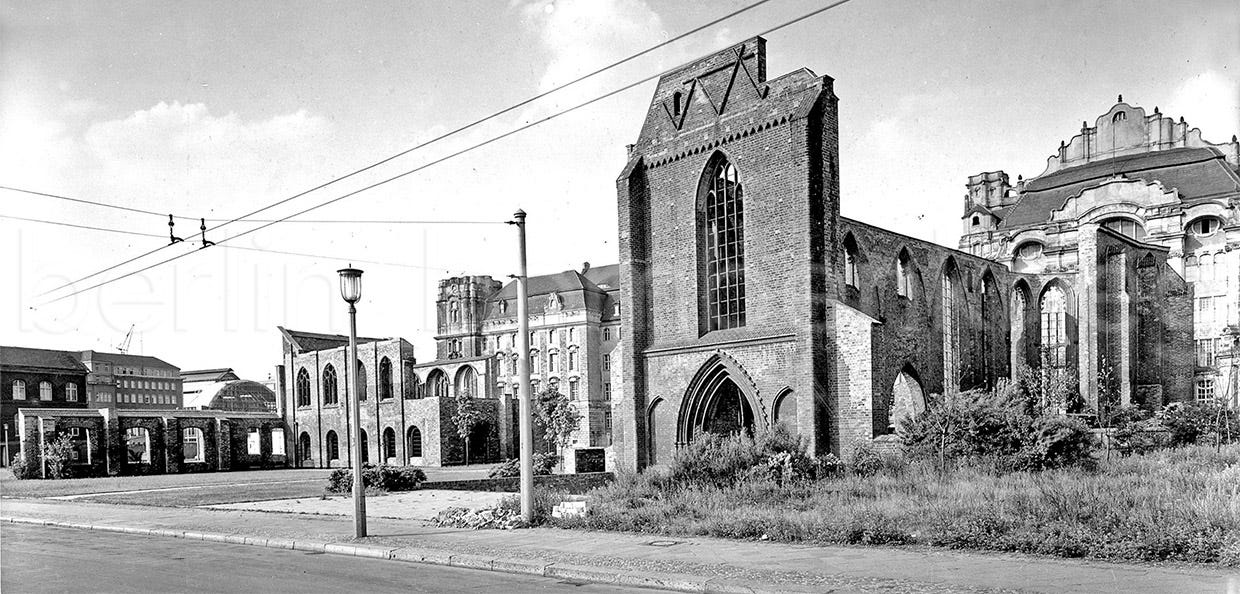
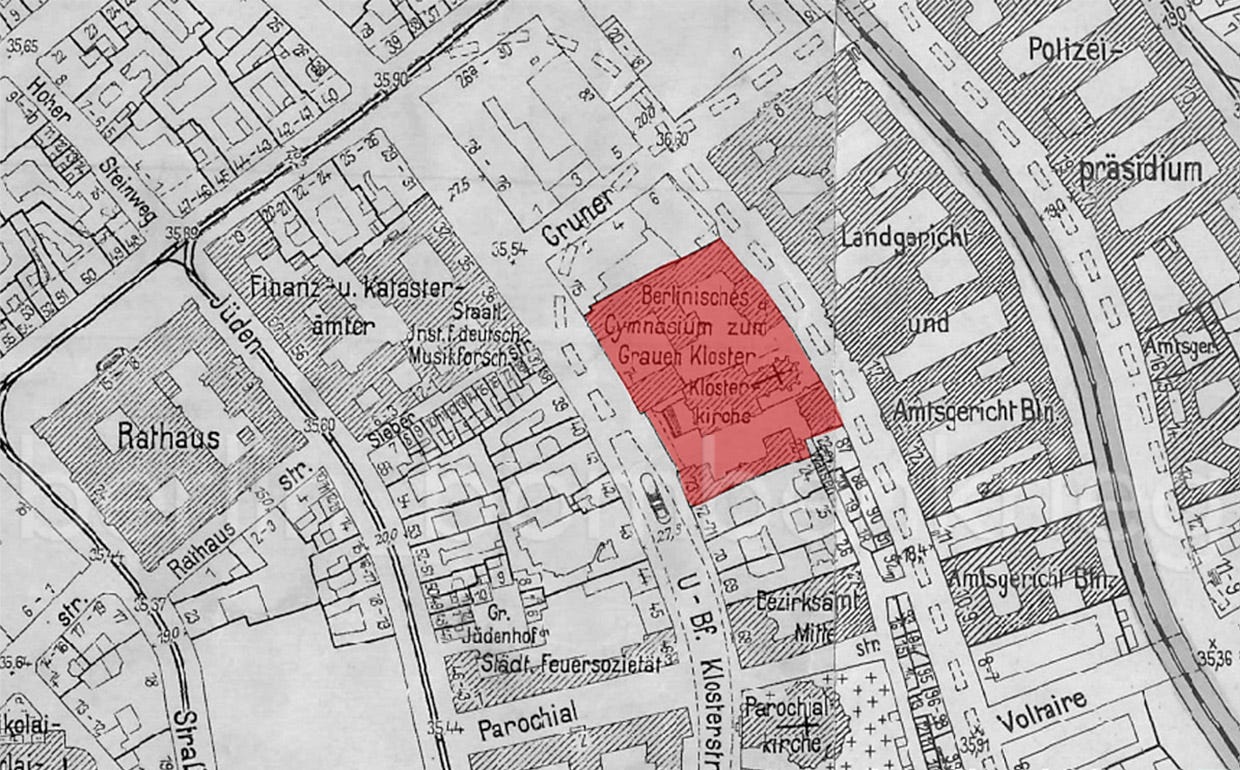
Located a few hundred metres from the busy and always chaotic Alexanderplatz, in this area of Berlin-Mitte we can find one of the last remaining testimonies from Berlin’s founding history and from the last days of World War 2: the ruins of the former Franziskaner-Klosterkirche, a silent memorial surrounded by a small green area. The ruins, located at Klosterstraße 73, south of the Rathauspassagen, were part of a bigger complex which included the church, a Franciscan monastery —known as the Grauen Kloster— and a Gymnasium (some kind of German High school) among other structures which no longer exist, demolished in the 1960s to make room to the modern and disproportionate Grunerstraße.
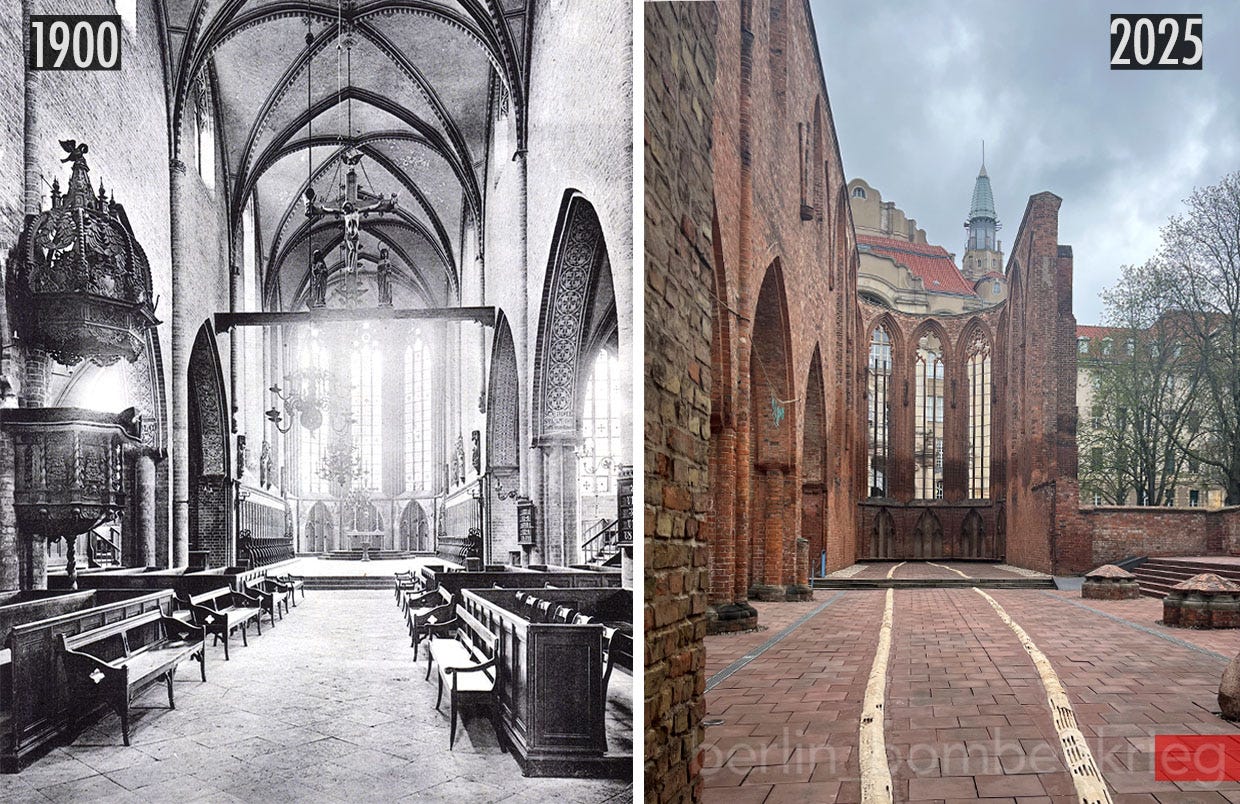
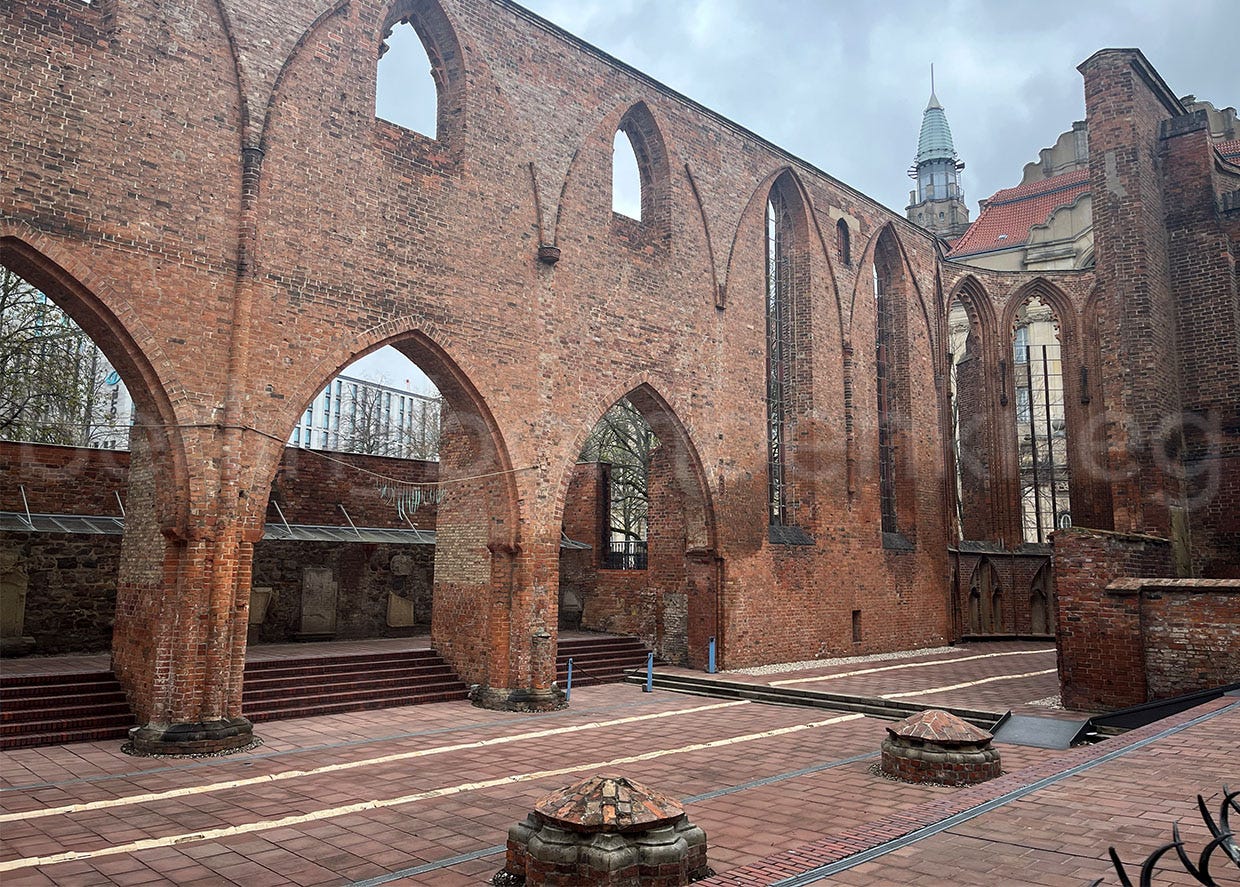
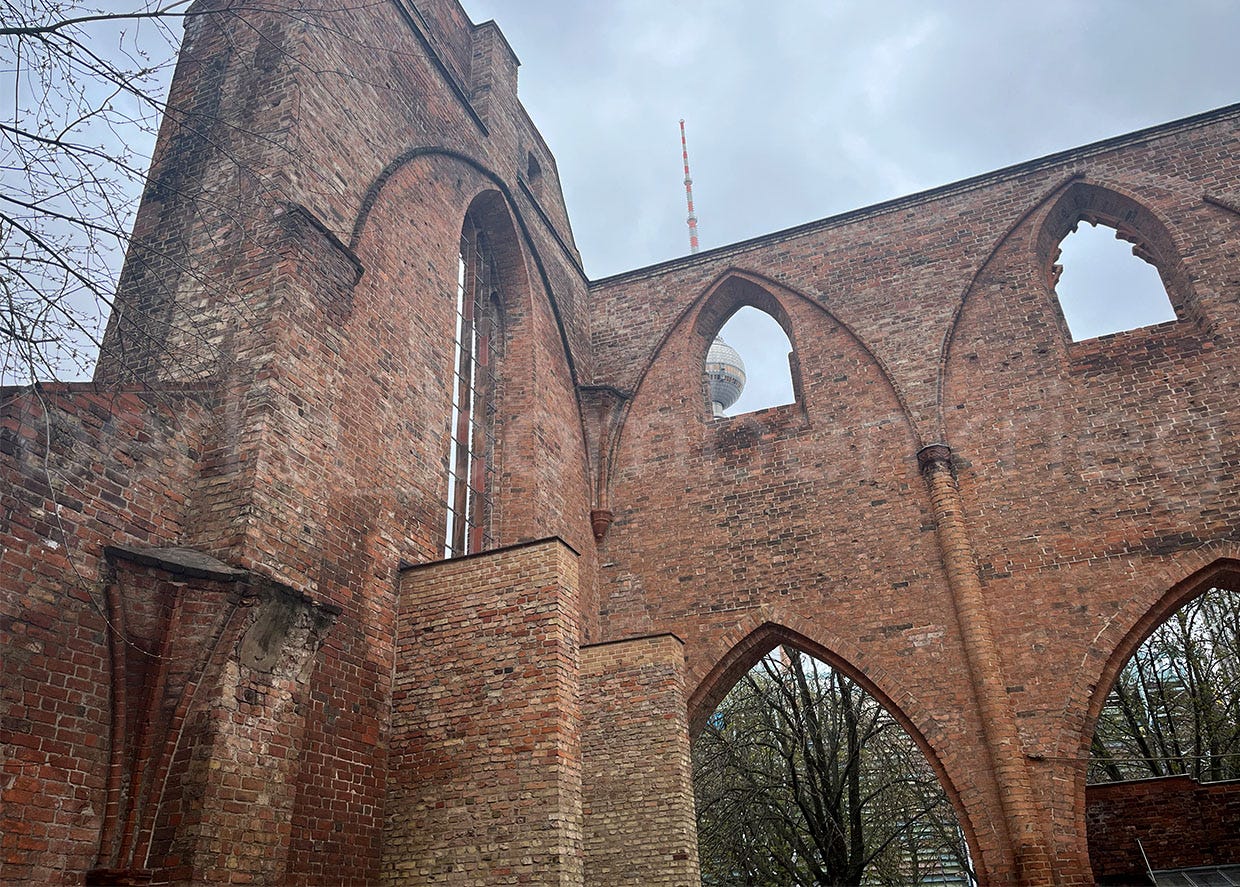
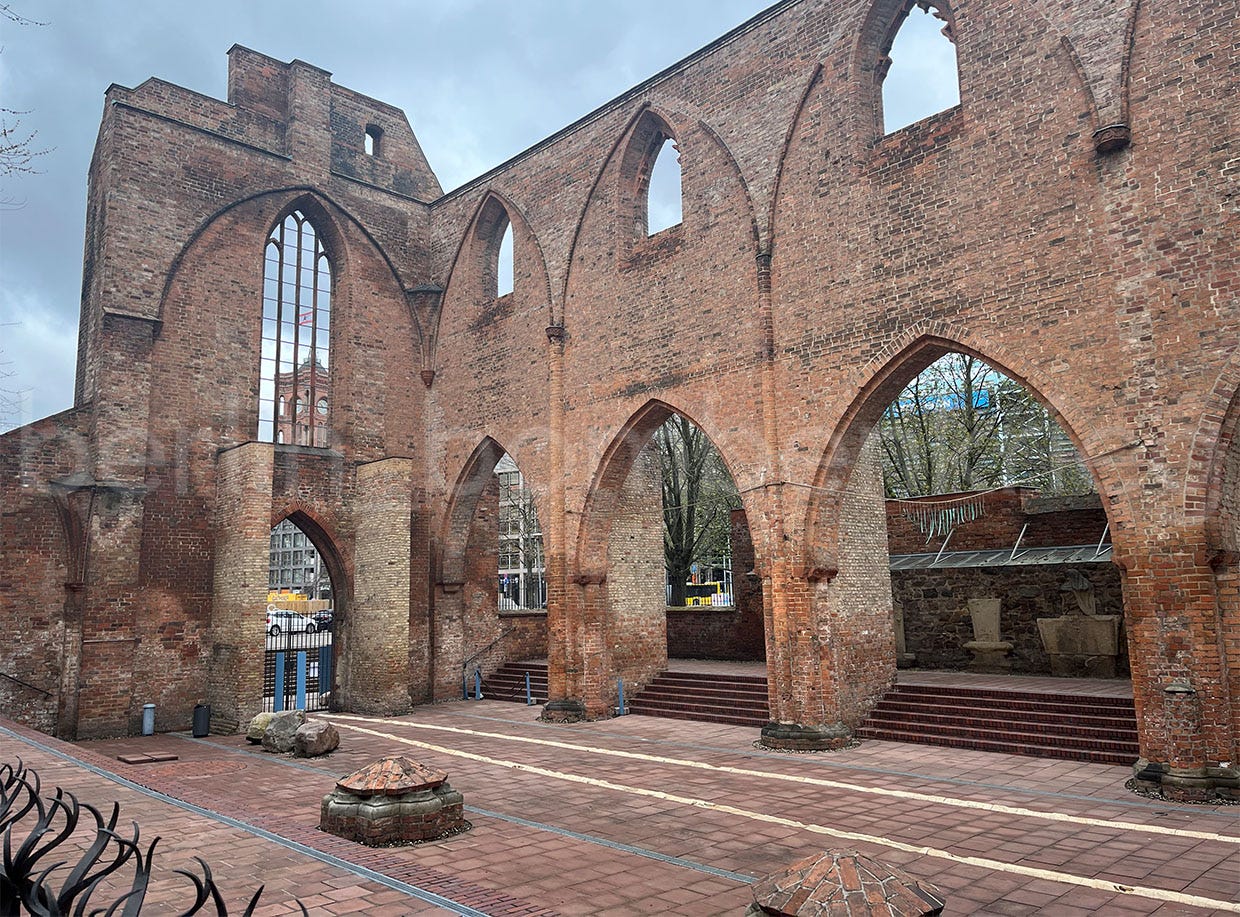
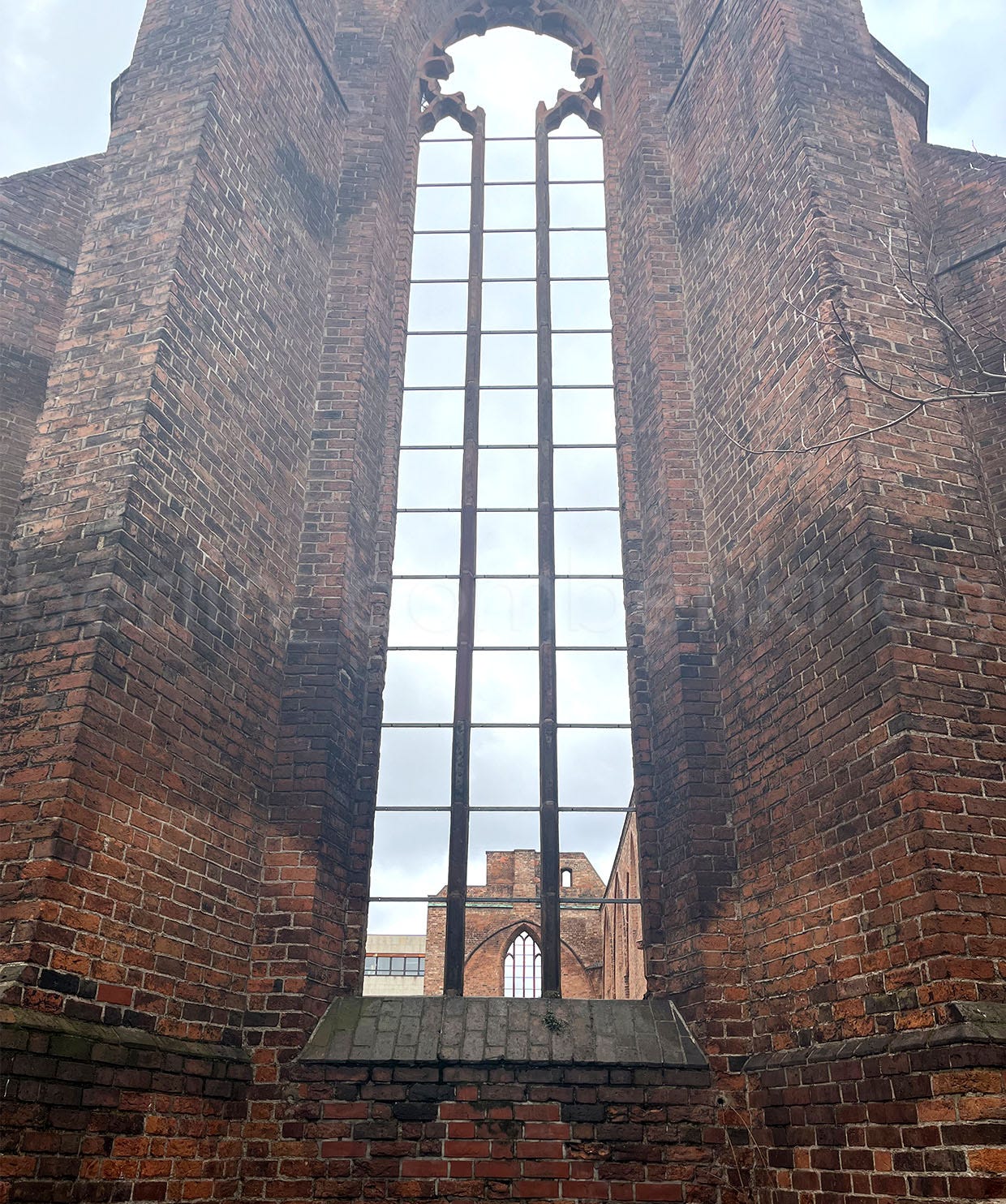
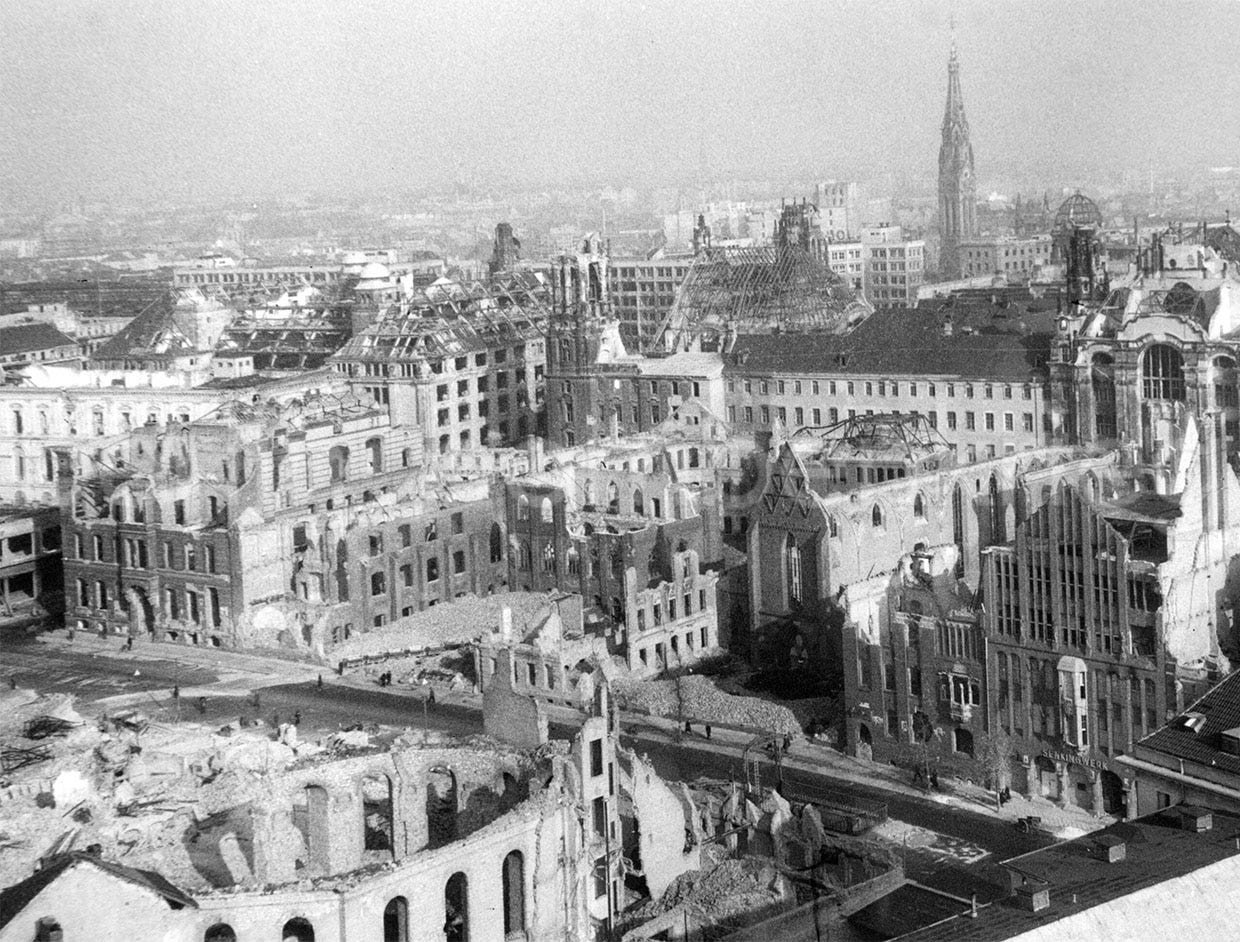
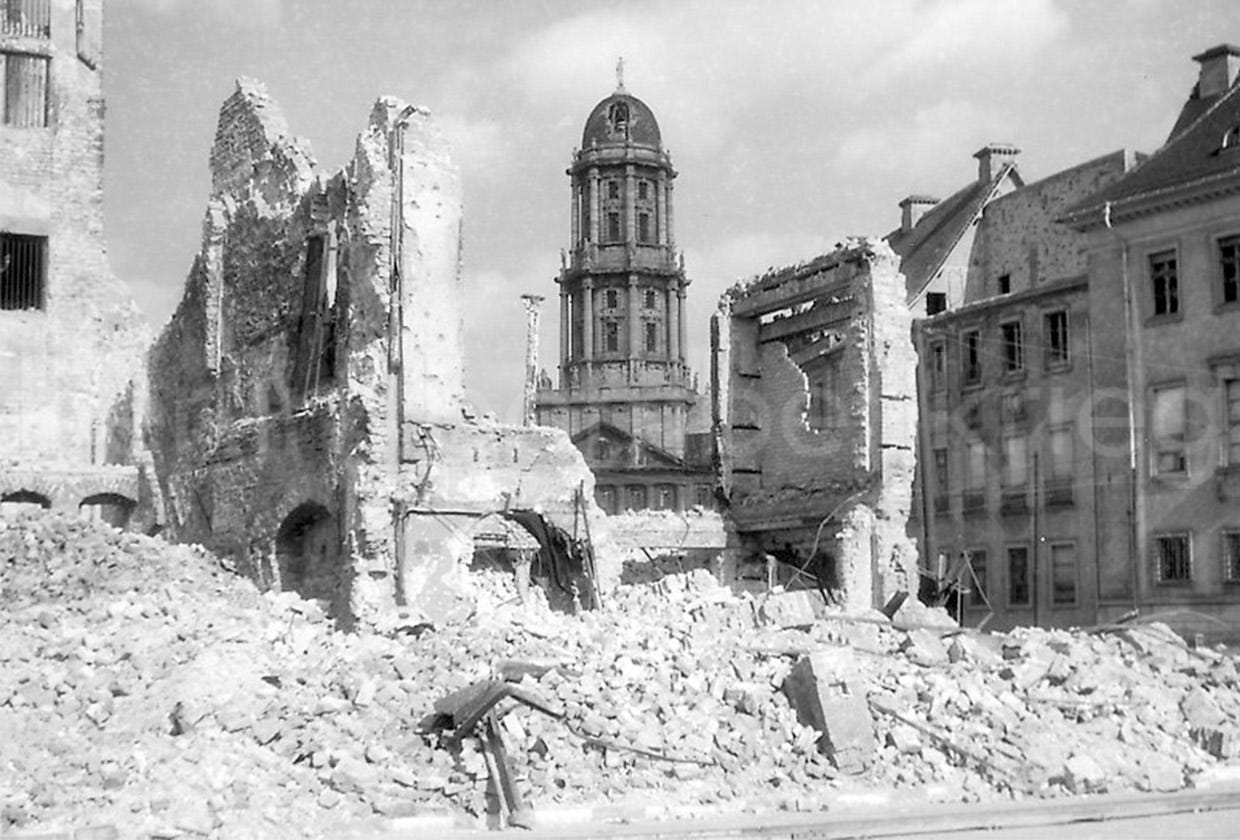
The Franciscan monastery church, designed as a three-nave basilica with cross vaults, was built in brick Gothic style (in the so-called Brandenburg brick) between the end of the 13th and the first half of the 14th century in the Berlin eastern limits against the city foundation wall and only part of it remains today, as the sacred complex was badly damaged in April 1945, hit by an aerial mine dropped by an RAF Mosquito in a nuisance night raid. Only the outer walls on the north, east, and west sides of the church survived. Before that, the monastery complex suffered several transformations along the centuries, so here we found ruins from different eras. Part of the foundations of the medieval monastery buildings and the subsequent use of the complex as a school are still preserved in the ground. There are some surviving rooms in the basement too, below the northern side corridor and some historical graves are still there.
The architecture and early origins of the church and the medieval site are beyond this blog but you can find here an exhaustive study about it written in 2016.
[The Kloster complex (red marked) and surrounding area, located south of Alexanderplatz, seen in the 1939-Berlin streetmap before the war’s destruction.]
Although not as well-known or visited as the world-famous Kaiser-Wilhelm-Gedächtniskirche, the Klosterkirche and her walls were left this way for decades, roofless and empty to maintain the remembrance of the bombings suffered by the city and its habitants during the Second World War, a living memory of the destruction from those days.
The ruins have been used for cultural purposes, primarily during the summer months, since the 1980s, thanks to the initiative of East Berlin sculptors and the work of the Förderverein Klosterruine e.V. (‘Friends of the Monastery Ruins Association’) founded in 1992. Currently, the ruined site is only open during the summer months from April to November (10 to 18:00 hrs), which included an annual two-part sculpture exhibition being held, along with theatre, music, and literature projects there, being managed by the Bezirksamt Mitte since 2016.
Here are some pics of the ruined church we took a few months ago, back in 2025 on a typical Berlin rainy day.
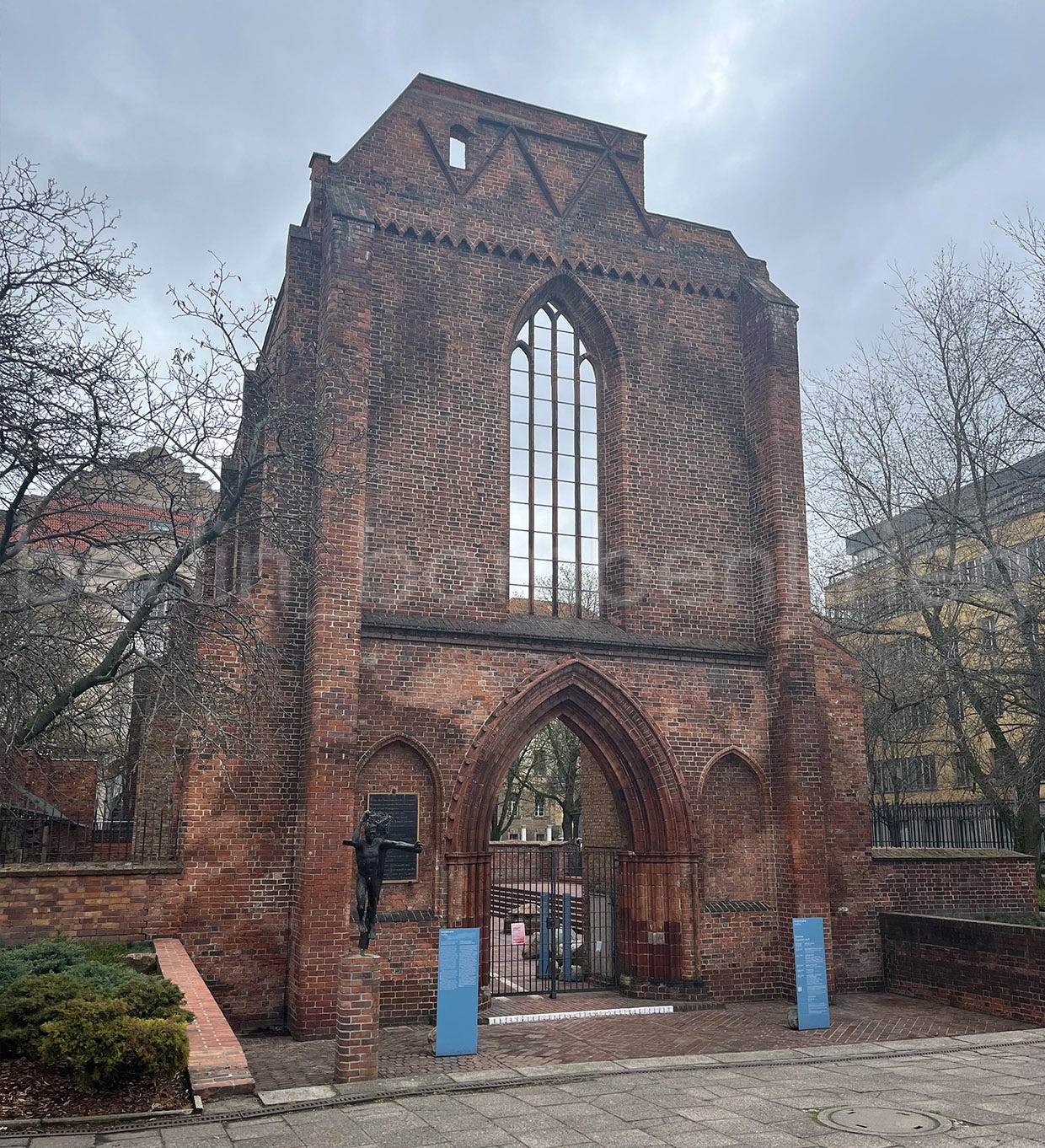
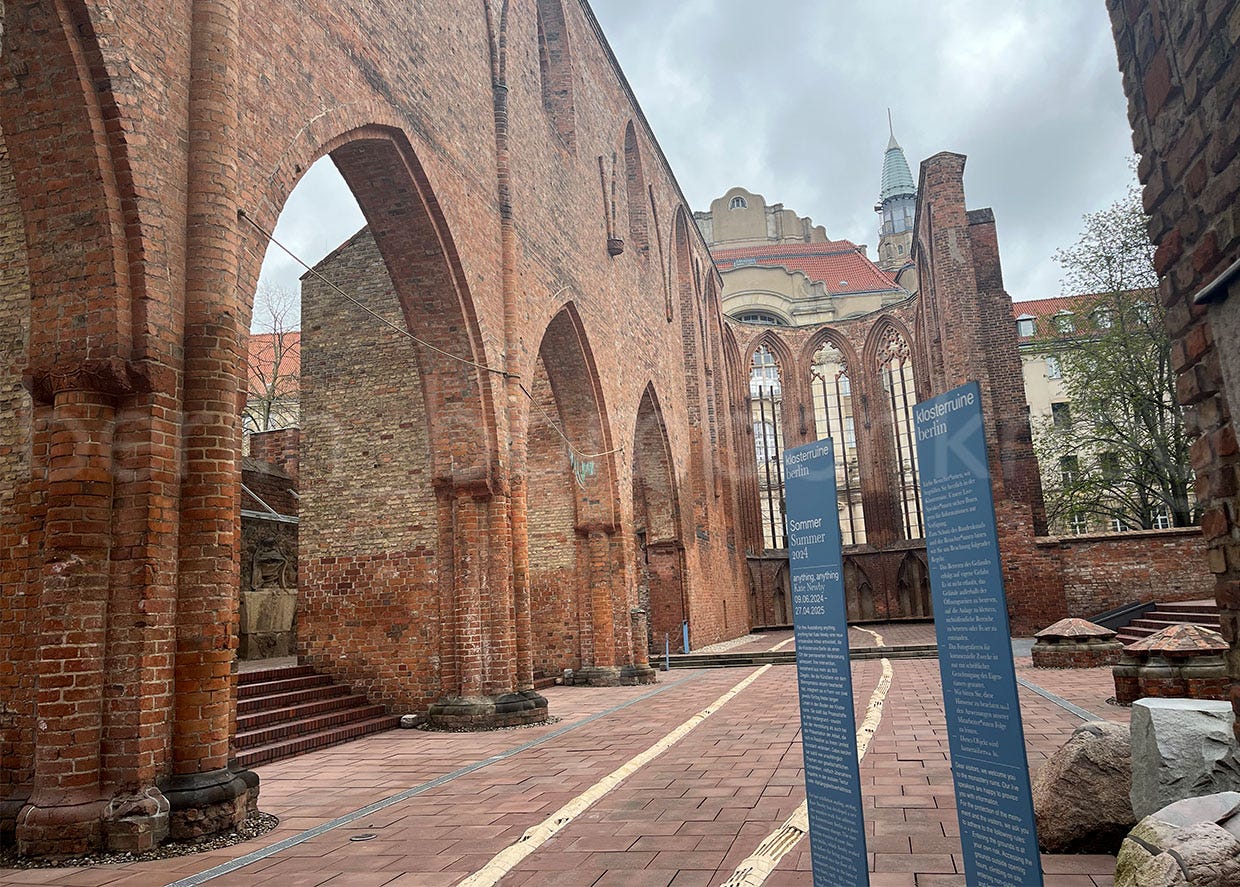
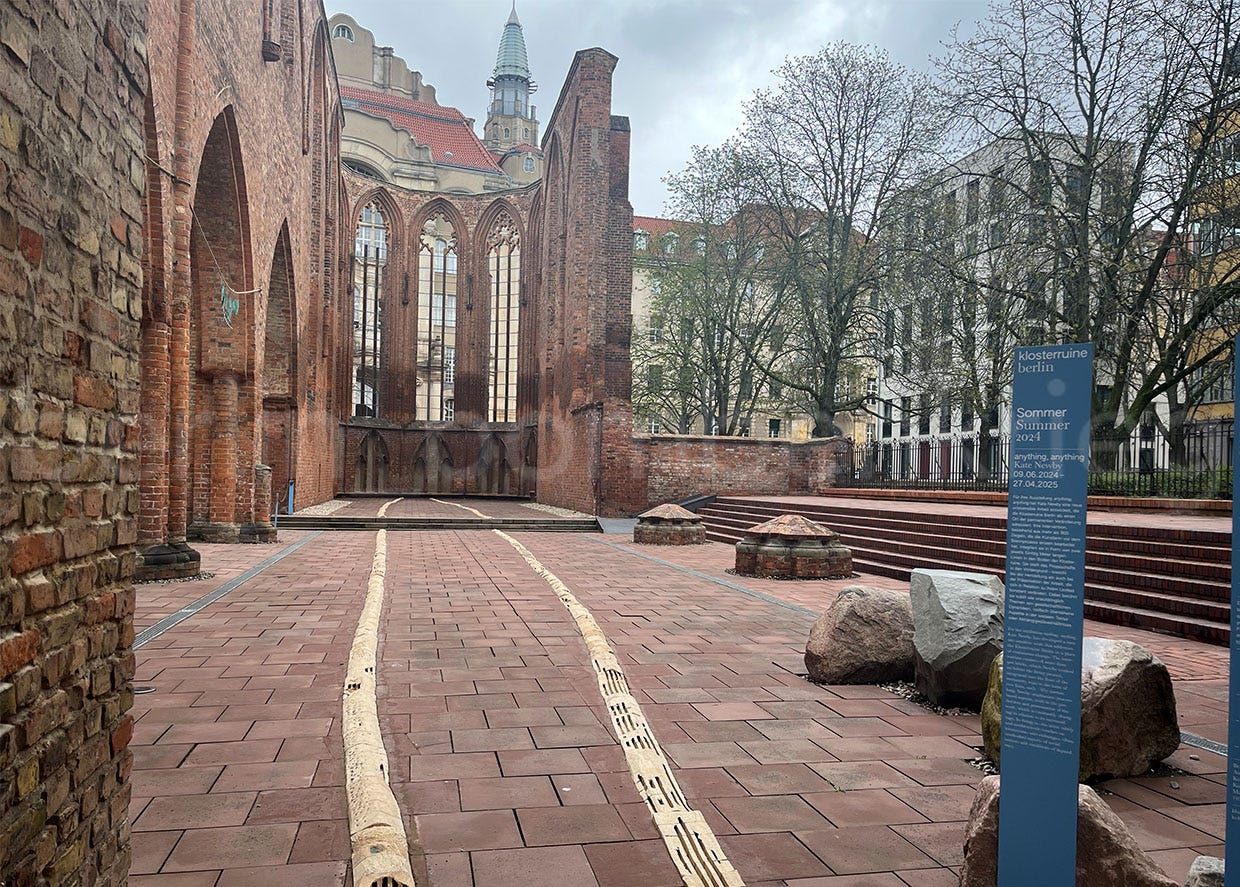
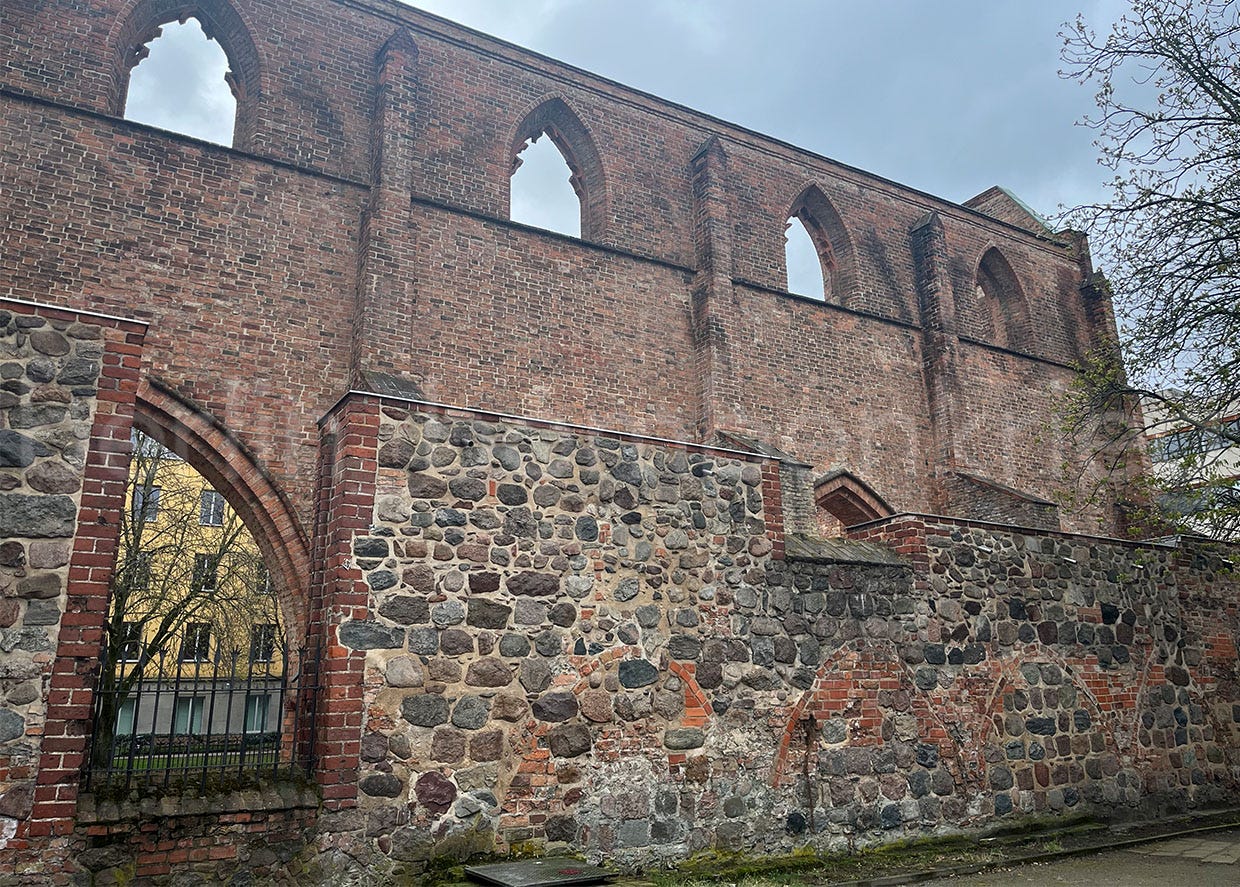
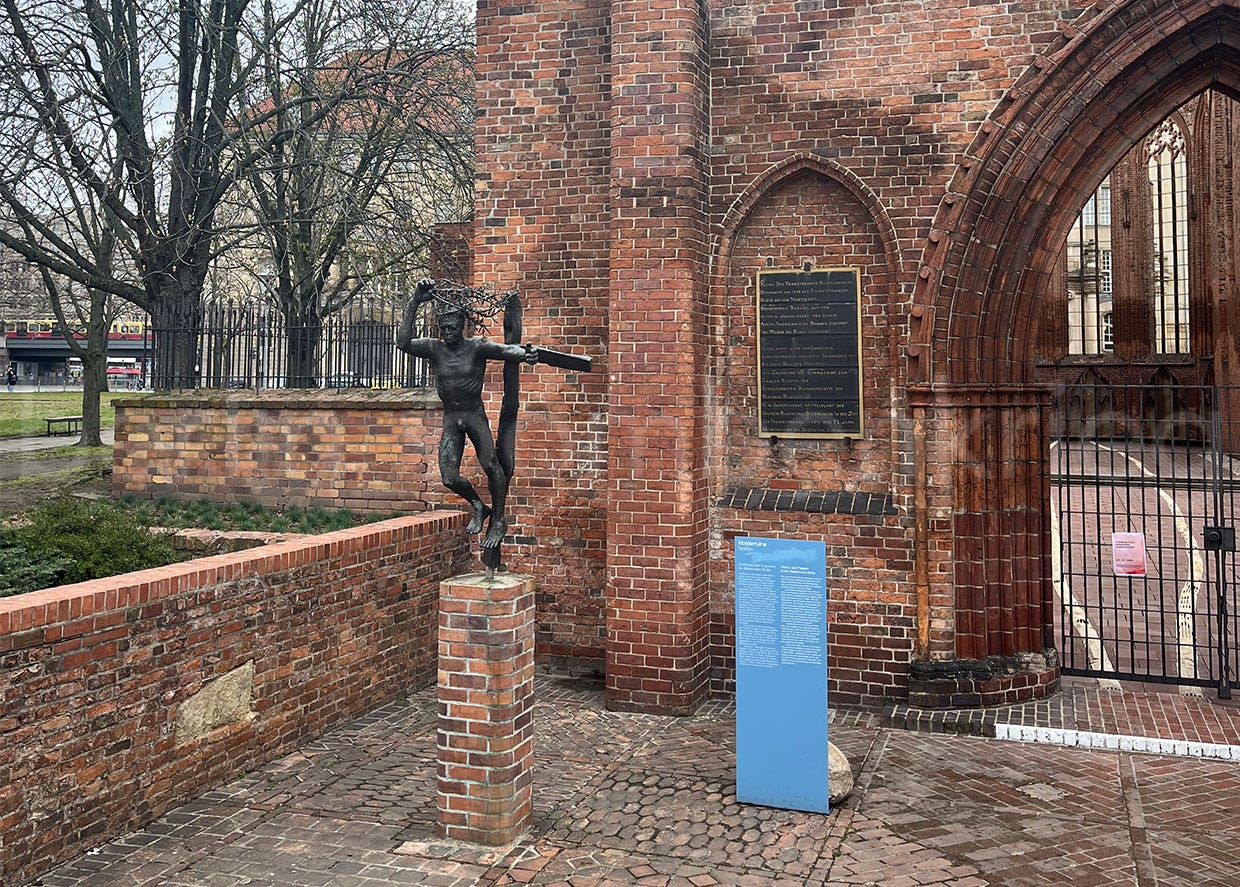
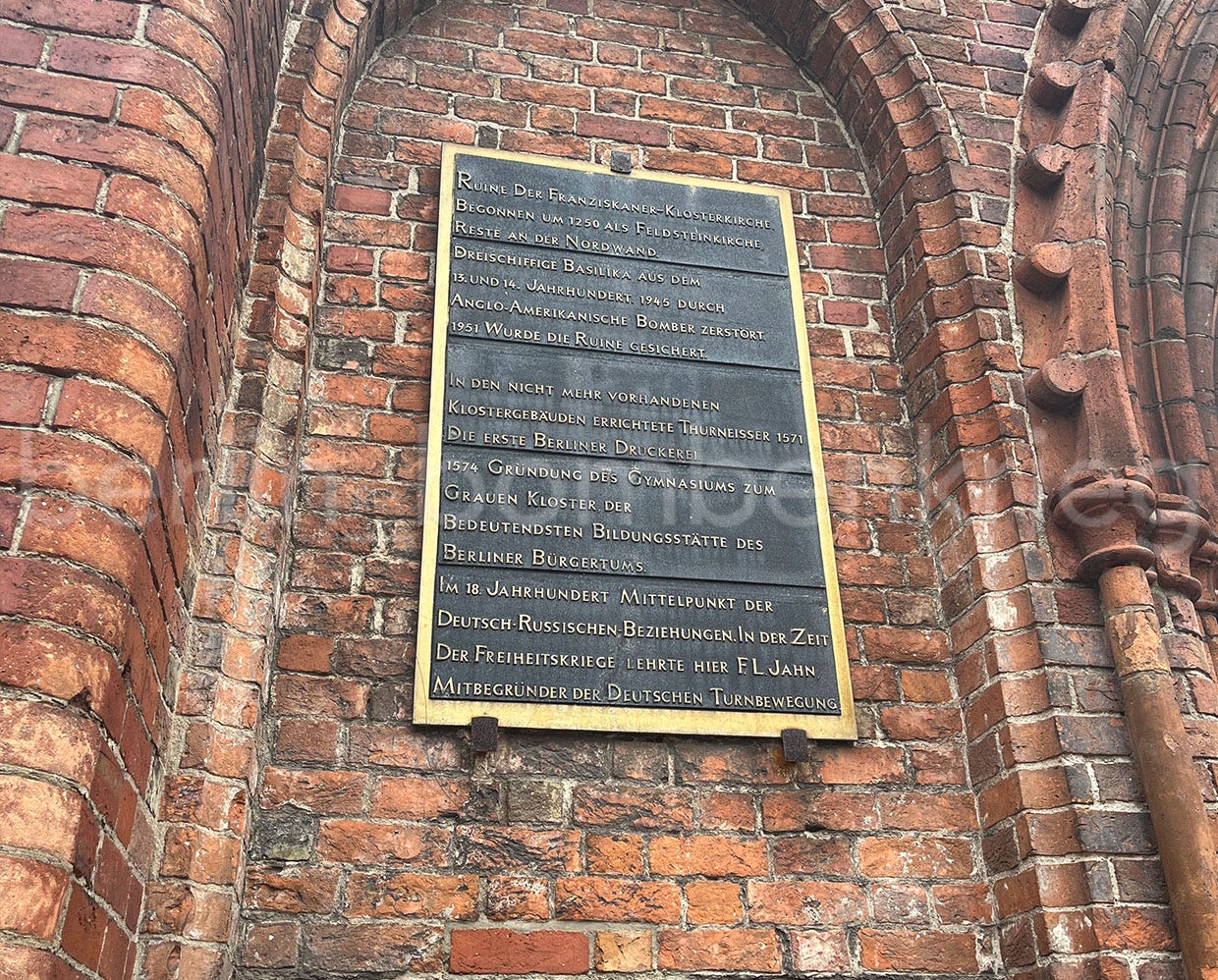
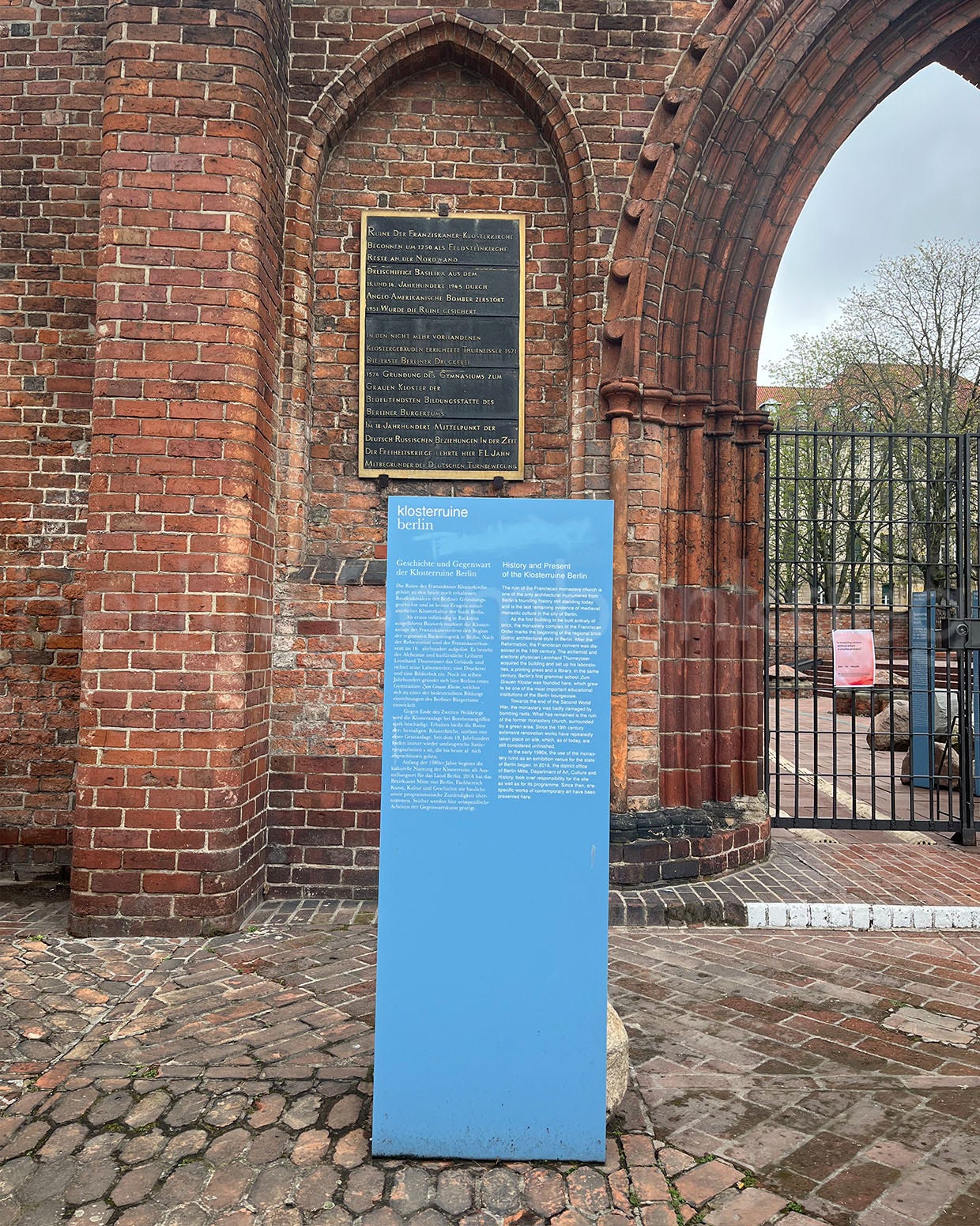
Two views of the old cast bronze memorial plaque placed at the main entrance of the memorial-church, and the more recent (2016) bilingual information sign, Berlin 2025.
Apart from the securing work of the ruins done during the 1960s, main renovation work was done in the 1980s by the DDR government, with further renovations in 2002 and 2005 and archaeological excavations held at the site since 2014. More recently, following a resolution of the Berlin Senate in 2016 the old urban settlement centre located adjacent to this ruined site, the Molkenmarkt, is planned to be rebuilt with a small-scale development of the district based on historical blocks, which led to a still open debate surrounding the historical city centre. Berlin’s Kultursenator Klaus Lederer back in 2019 called the medieval remains “the highlight of the district”, but is a long way until Klosterkirche’s ruins get integration on the city landscape finally.
Also, there is a sculpture cast in dark-patinated bronze installed in the green area which surrounded the ruined church, a “Pieta” made in 1978 by German artist Jürgen Pansow. Her sorrowful face is severely disfigured. The right side of her face bears a wounded figure of the dead son, both over a rectangular red brick base.
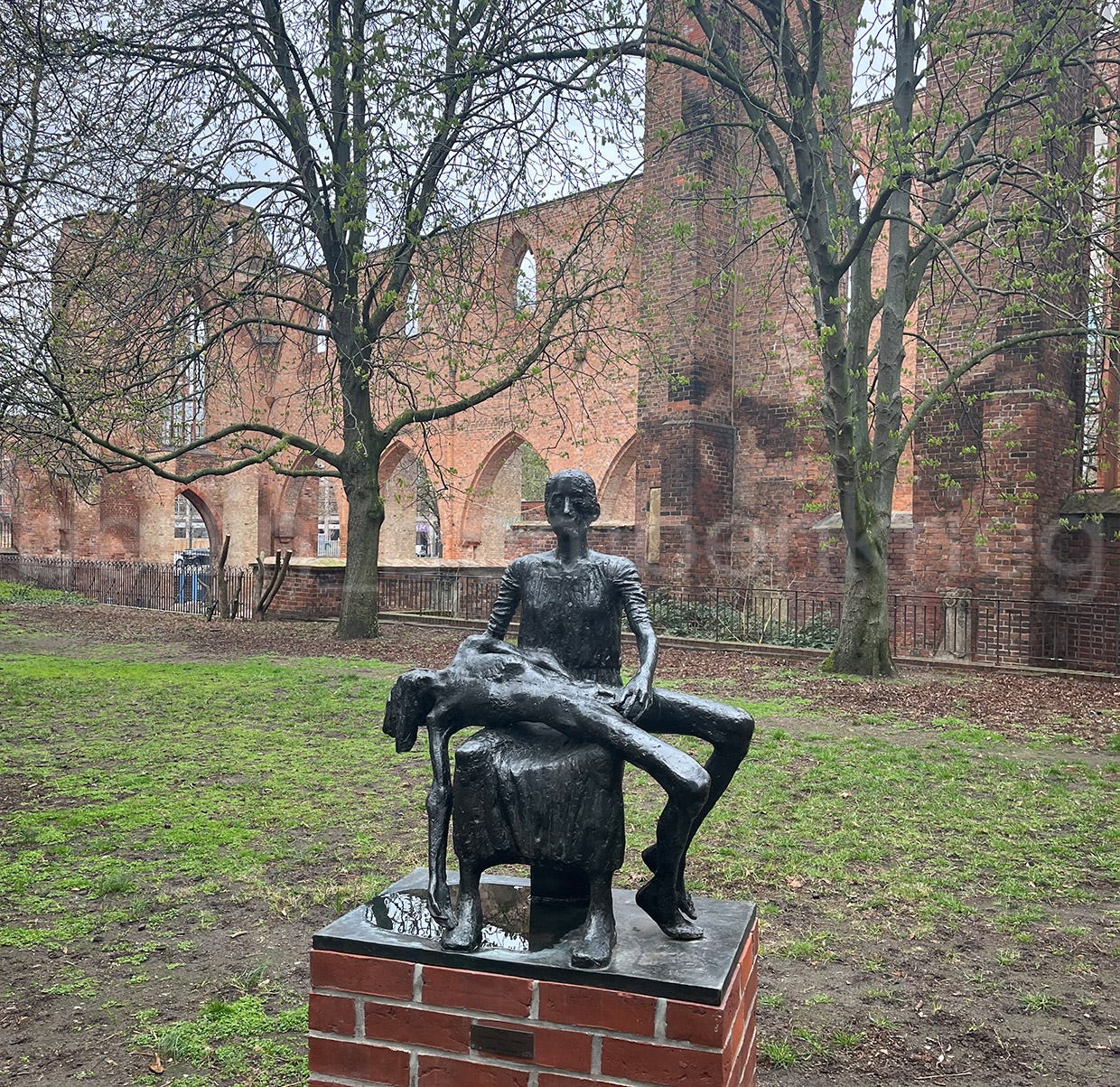
A memorial left without integration
The 700-year-old Klosterkirche offers visitors a glimpse into the past and a true living memorial to ww2 tragedies at a unique place in Berlin, but it needs to be part of a greater visiting interaction and to be integrated into an historical landscape. As the Historische Kommission zu Berlin e.V. (Hrsg.) summarizes in their published study (2021), Klosterkirche is currently only a ‘broken memorial site’, languishing there as a ruined monument at the busy Grunerstraße, its former vibrancy and diversity threatened with oblivion. Will the planned redevelopment of the Molkenmarkt/Klosterviertel bring us the monastery back? Time will tell.
On the next post we will dive into the early history of this medieval site, its destruction during the bombing war in 1945 and the demolished work done here during the postwar years.
_______________
Bibliography and sources:
Bezirksamt Berlin-Mitte, Amt für Weiterbildung und Kultur, Fachbereich Kunst und Kultur. NUTZUNGSPERSPEKTIVE FÜR DIE RUINE DER FRANZISKANERKLOSTERKIRCHE BERLIN. Berlin, 2016
Bildhauerei in Berlin. Pietà - gewidmet den Lebenden [accessed February 2026.]
Mitte-online (2018). Die Ruine der Franziskaner Klosterkirche. [accessed February 2026.]
Historische Kommission zu Berlin e.V. (Hrsg.). Das Graue Kloster in Berlin, Perspektiven aus der Geschichte. BERLINER WISSENSCHAFTS-VERLAG, 2021
Klosterruine Berlin. Von der Franziskaner Klosterkirche zum Denkmal und Ausstellungsort zeitgenössischer Kunst 750 Jahre Geschichte Klosterruine Berlin. [accessed February 2026.]
Wemhoff, Matthias. Das Graue Kloster. Erste Ausgrabungen und Überlegungen zur Neubebauung. Föderverein des Evangelischen Gymnasiums zum Grauen Kloster. [accessed February 2026.]
Whitemad (2024). The ruins of the Franciscan church in Berlin are a telling reminder. They are a reminder of the tragedy of war. [accessed February 2026.]
Thank you for reading Berlin Bombenkrieg by Pablo López Ruiz. Please subscribe, if you haven’t yet, to comment, follow and share. All images used for non profit / educational purposes.