


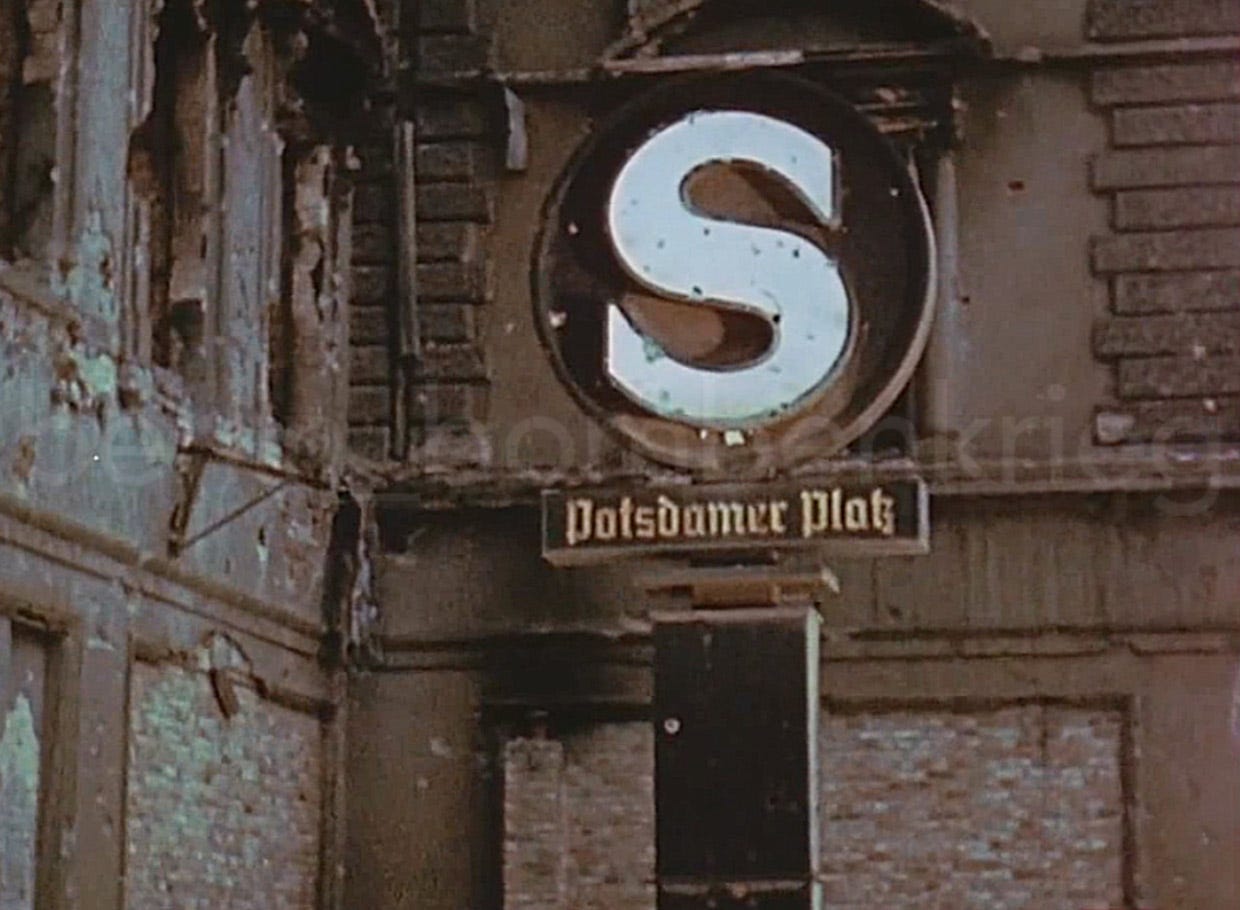
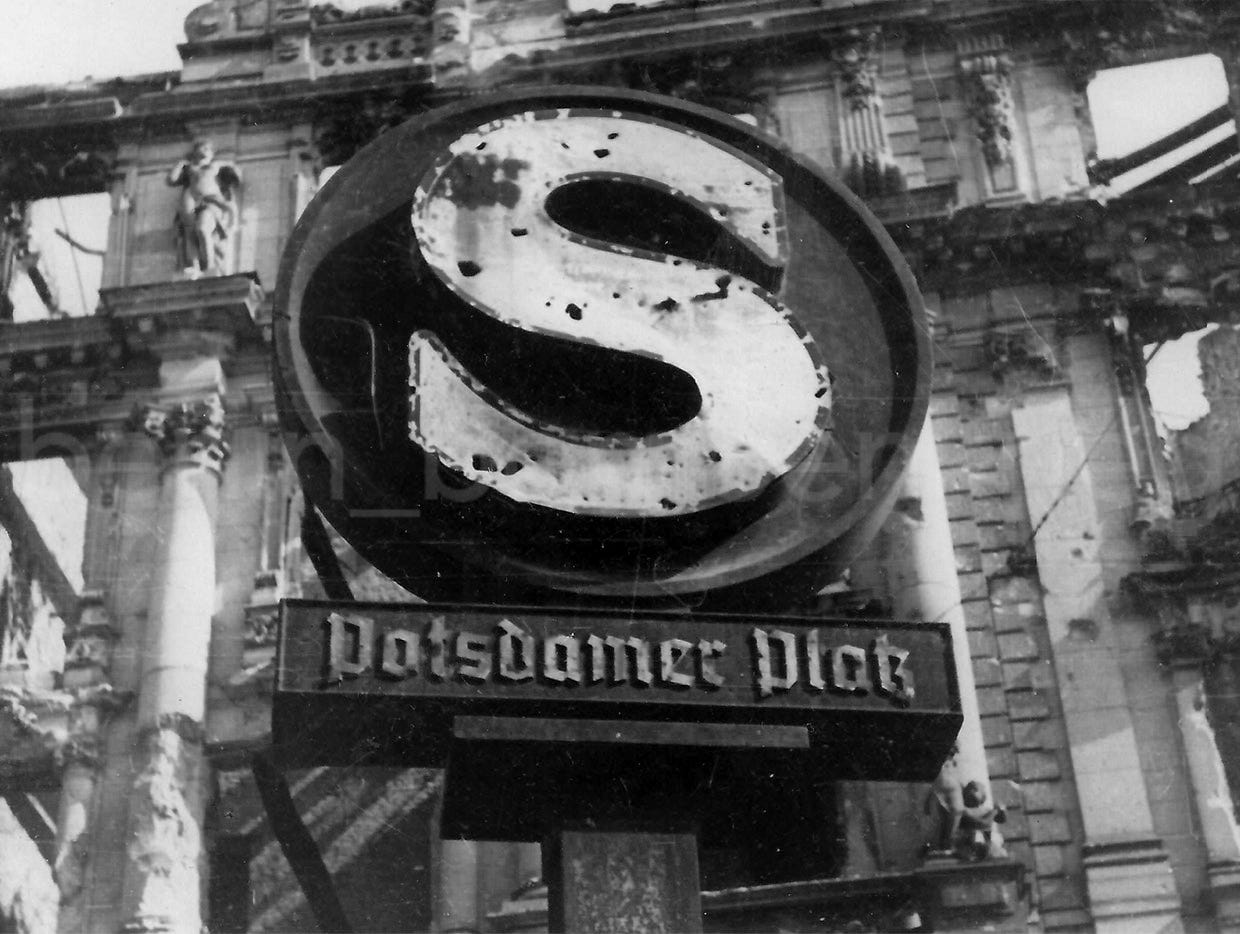
Walking around the modern buildings at Potsdamer Platz and the immensity of the Sony Center in Berlin, few visitors notice a display case placed a few steps from the access hall of the underground station. Inside the glass façade, an old metal signal stands alone: the white S on a green background, saved from the 1939-1945 period as a reminder of the air bombings and war’s destruction in the city.
This vintage “S” is the S-Bahn Berlin icon trademark —which this year 2024 celebrates its 100th anniversary— and the keyvisual logo of the brand image of this blog also.
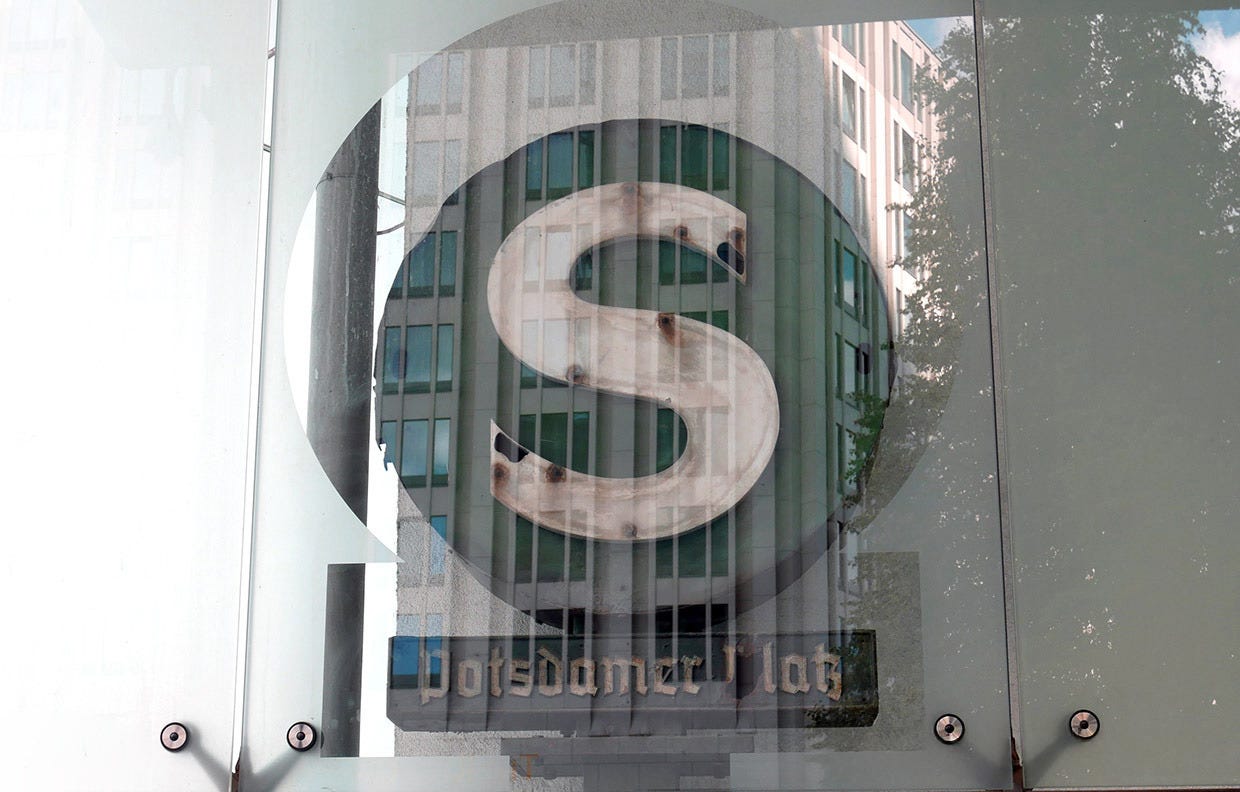
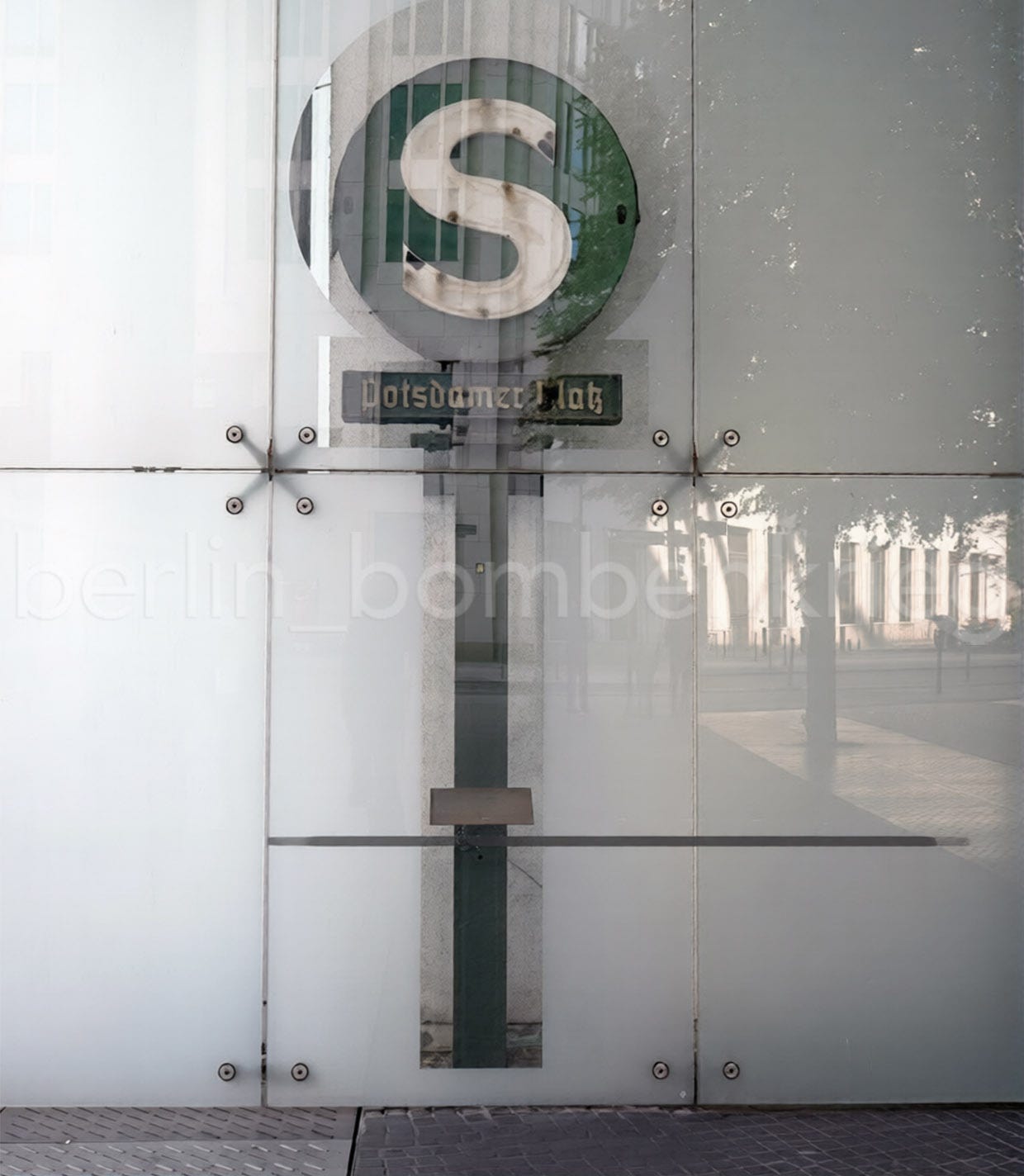
This wartime signal is on display at the ground floor of the BahnTower next to the Sony Center. The glass 26-story, 103-metre skyscraper was built in the years 1998-2000, today home of the Deutsche Bahn AG’s headquarters (DB), the new railway corporation founded in 1994. Don’t know the exact date it was placed here but if I remember well during my first visit in 2004 it was already there, so most probably it was when DB established their home at Potsdamer Platz (some other vintage signs are preserved at the Berliner S-Bahn Museum in Berlin too.) During my last visit in August 2024, the framed old S-Bahn sign, placed a few metres away from the remains of Hotel Esplanade’s Kaisersaal (a survivor of the air raids and the 1945-battle too) was not accessible, surrounded by wooden walls and building works. Potsdamer Platz, the only place in Berlin which was supposed to be rebuilt and finished, right now is a construction site, yes, again. [EDITED March 2025: the sign is already free to visit it again.]
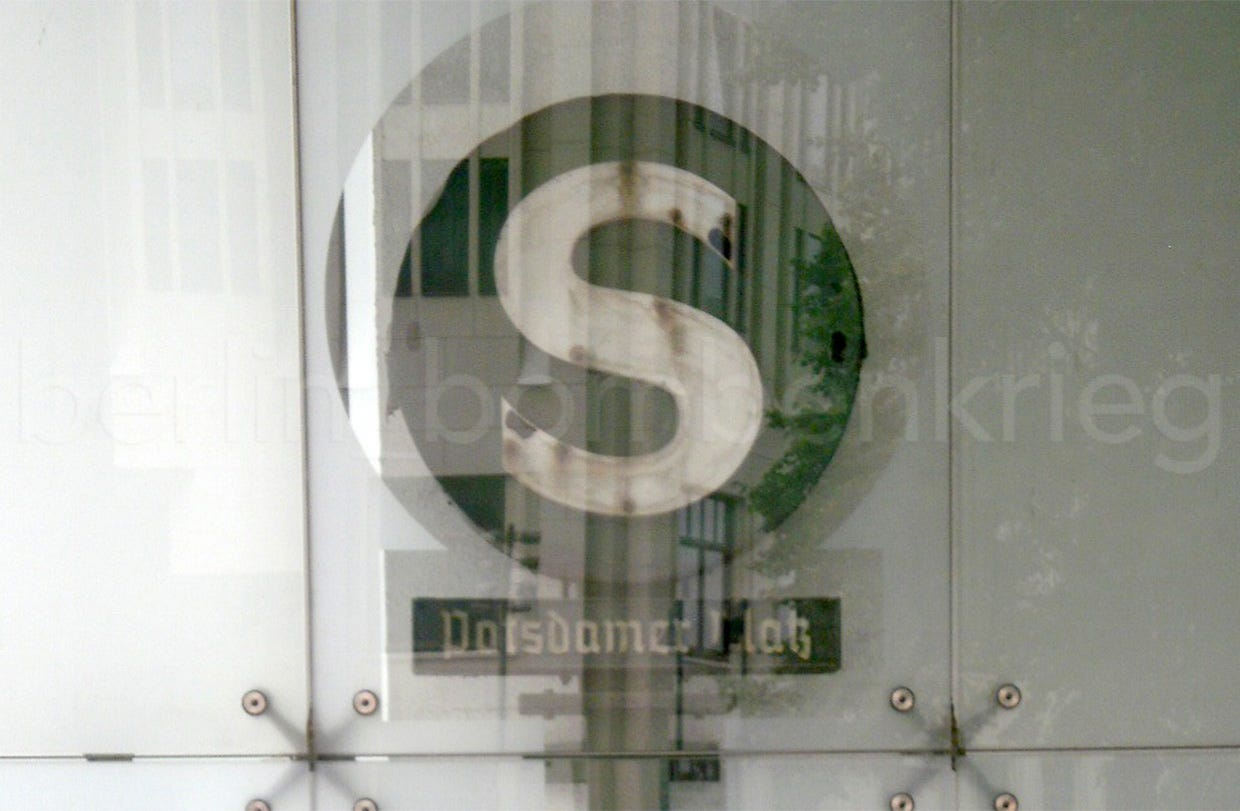
I took these pictures of the partly damaged S-Bahn sign in August 2018, safeguarded inside the building’s glass at Potsdamer Platz.
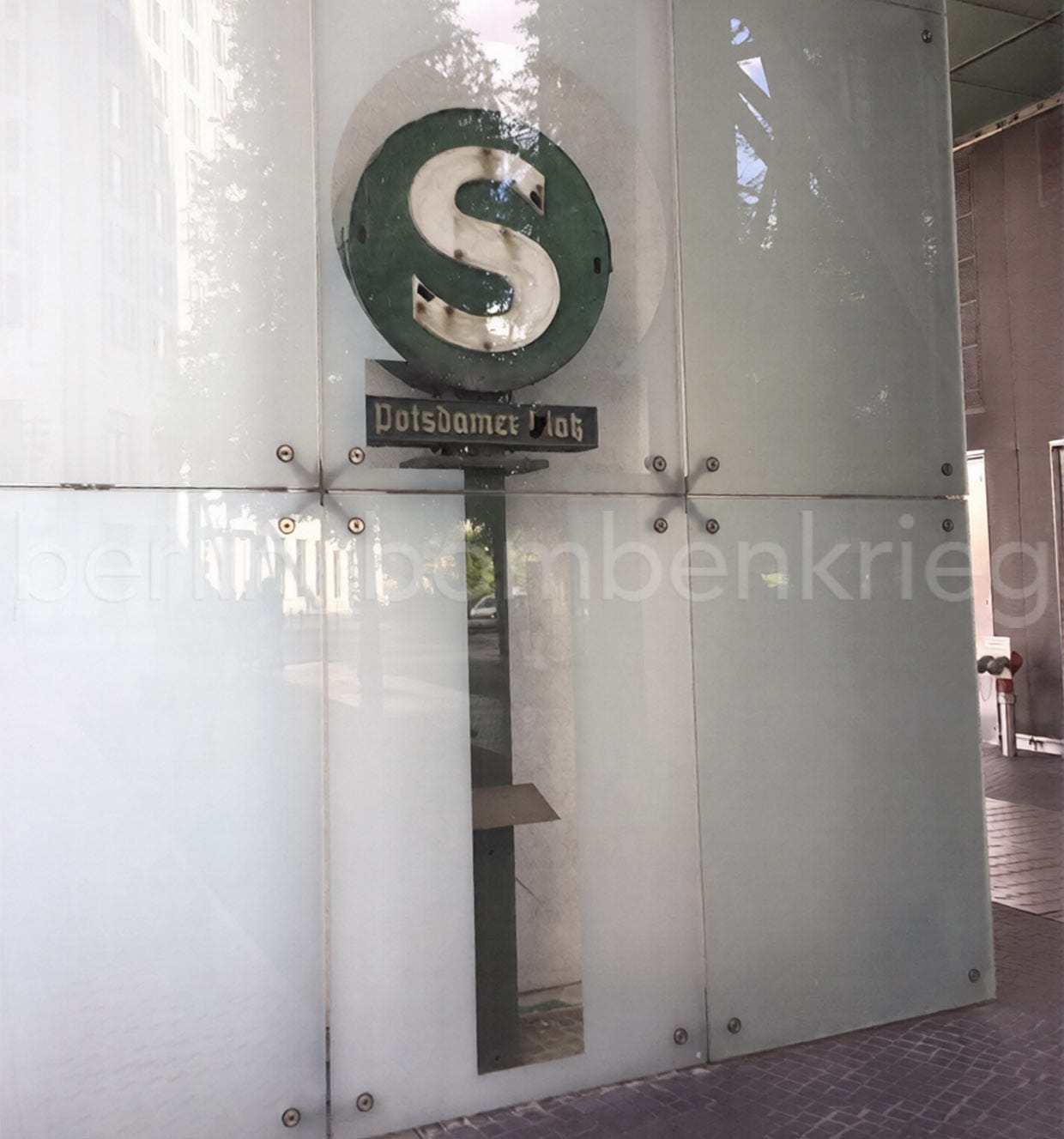
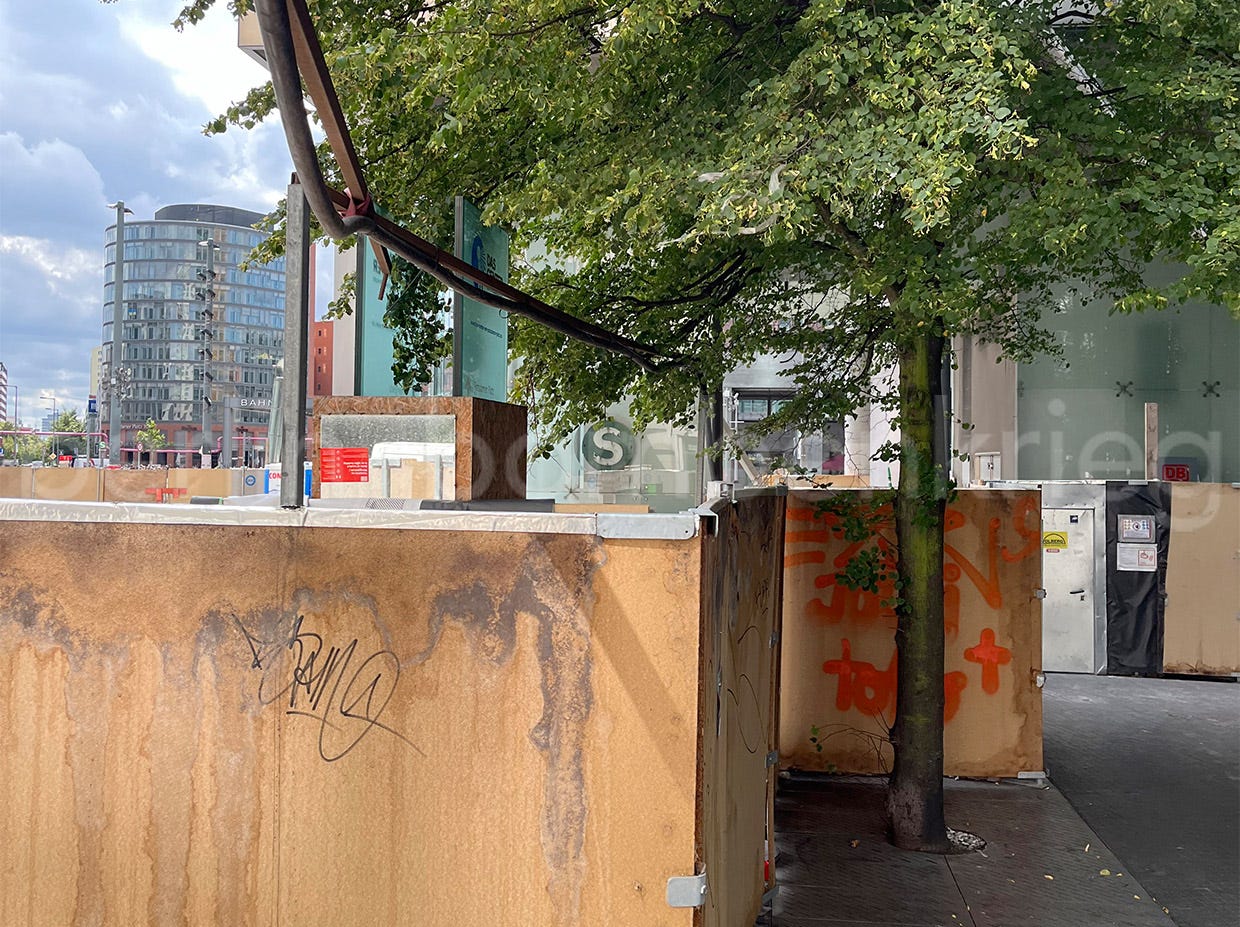
Grün-weiße Symbol
A few years ago, the S-Bahn Museum was finally able to determine the origin of the white S on a green circle background: graphic artist Fritz Rosen created the iconic logo in 1929 at request of DR (receiving 800 Reichsmark as payment) and it was officially introduced in December 1930. Some say that the S stands for „Stadtbahn“, others refer to „Schnellbahn“ (fast train) but whatever the meaning was, it became the trademark of the railway’s urban traffic throughout Germany and an iconic logo.
According to TypeOff (an interesting blog about Design research and history), in 1935 the Deutsche Reichsbahn-Gesellschaft created a new lettering for use on all train stations signs in blackletter “German” style, in line with the National Socialist Germany principles. Its origin may come from the Element typeface, very similar in her Bold style. This lettering, which included the street-signals and the station’s platform walls, can be found at Nordbahnhof, Oranienburger Str, Brandenburger Tor, Potsdamer Platz or Anhalter Bahnhof stops among others.
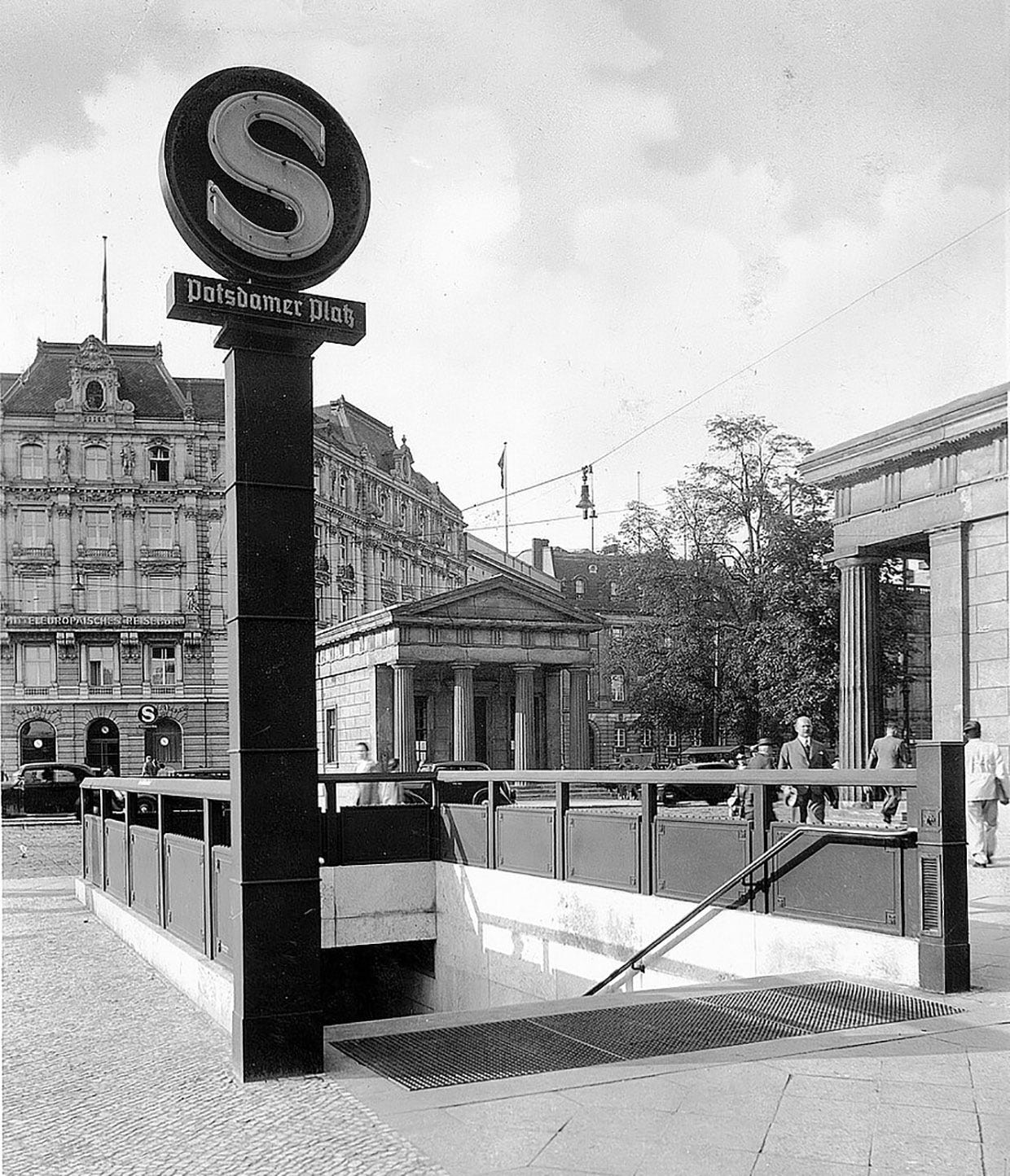
S-Bahnhof Potsdamer Platz
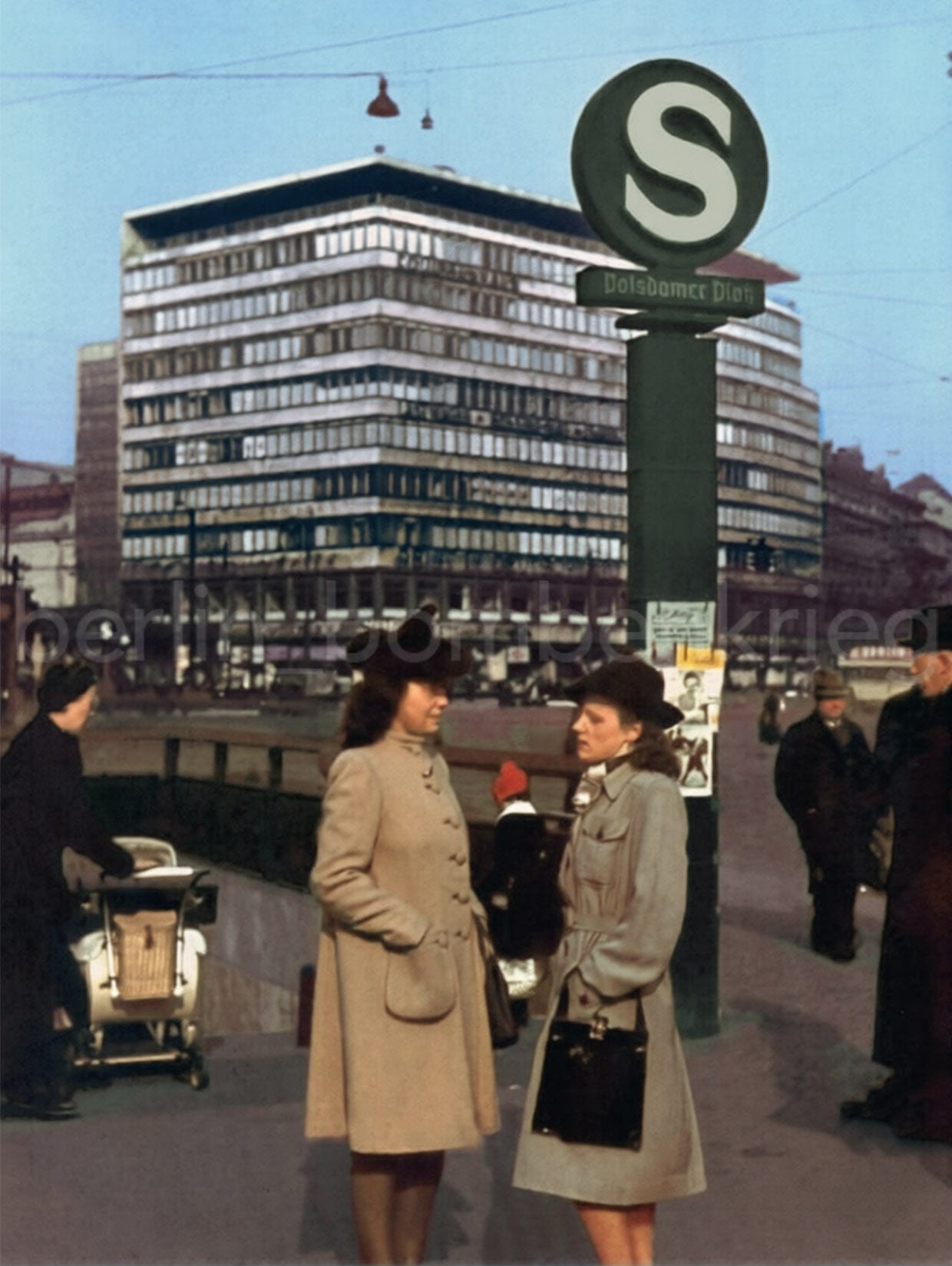
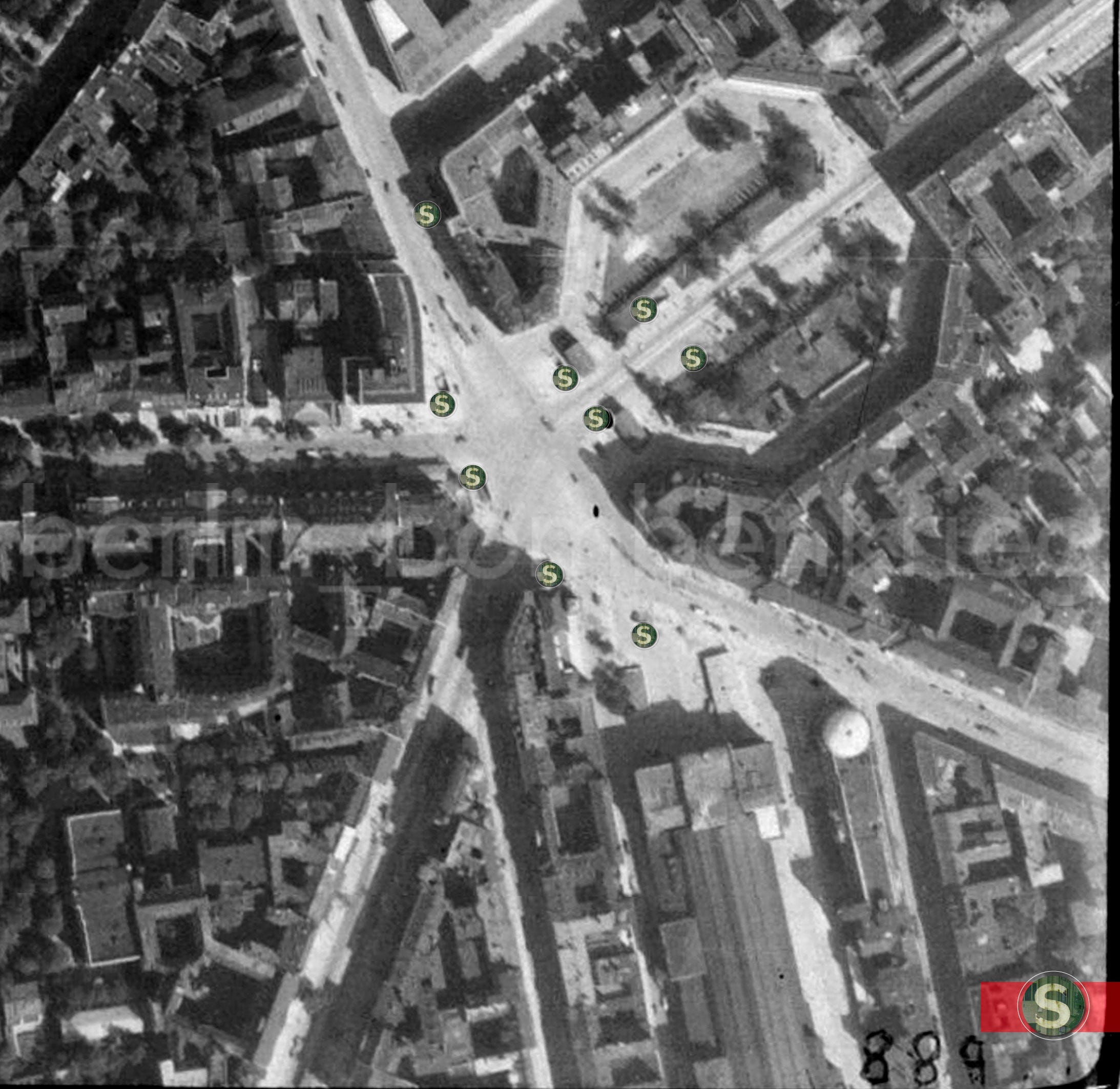
The North-South S-Bahn tunnel was built in 1934-36 (already planned by the Weimar Republic) and the Nazi government expanded it in 1936 with this second underground link that included Potsdamer Platz-Anhalter Bhf-Yorckstraße. It was opened in April 1939, a few months before the outbreak of the war. Each of the nine exits of the station was marked by an S-Bahn pylon, as other stations in this route. Following wartime blackout policies, in 1940 the city’s S-Bahn poles and exit stairs were marked with white paint as were curbs and street signs.
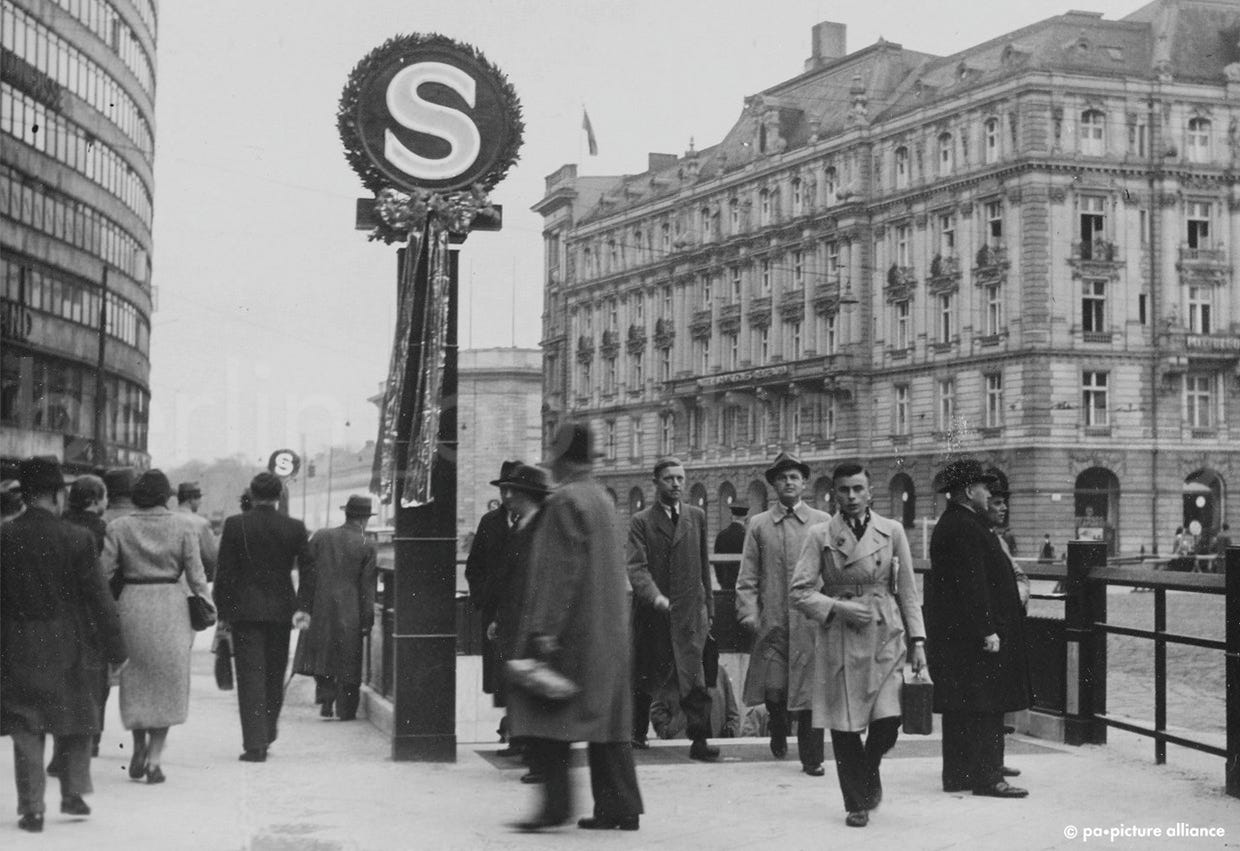
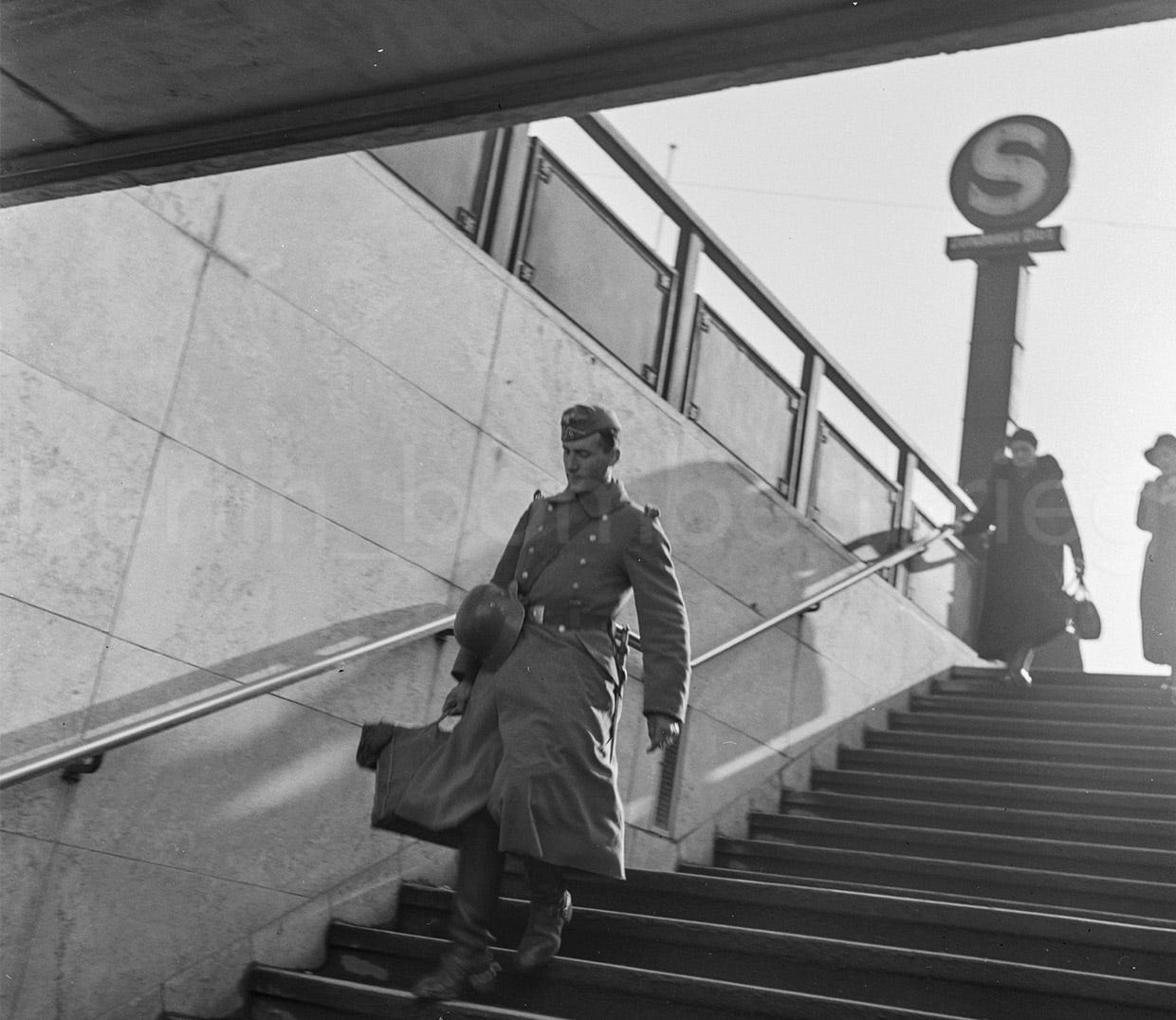
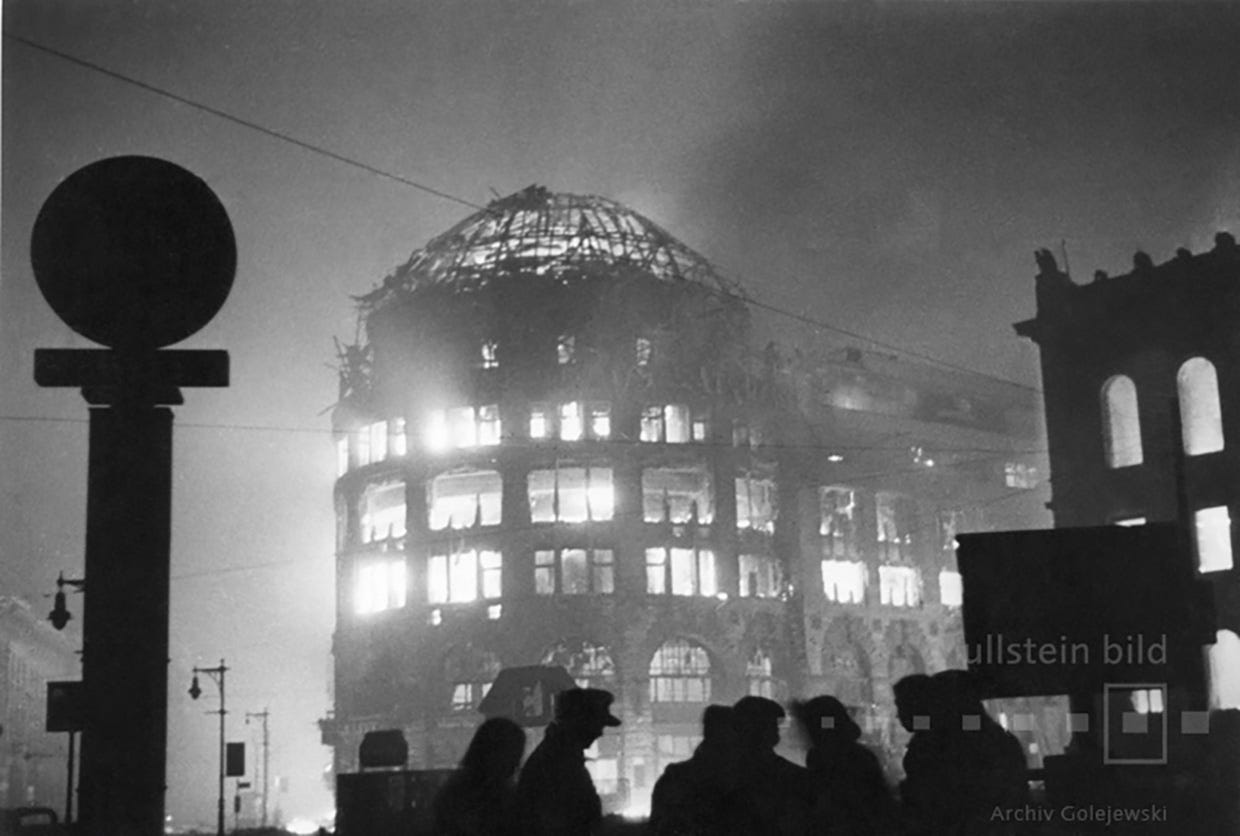
Once described as the “most heavily bombed square in Europe”, Potsdamer Platz was badly hit during the 22-26 November 1943 RAF attacks, and during the June 21, 1944 and February 26, 1945, American air raids, a prominent target due to its proximity to the adjacent railway station and the Reich’s Chancellery complex at Voßstr, just one block away. The train service finally stopped in late April 1945 among fierce street-fighting (there is no power supply due to lack of coal).
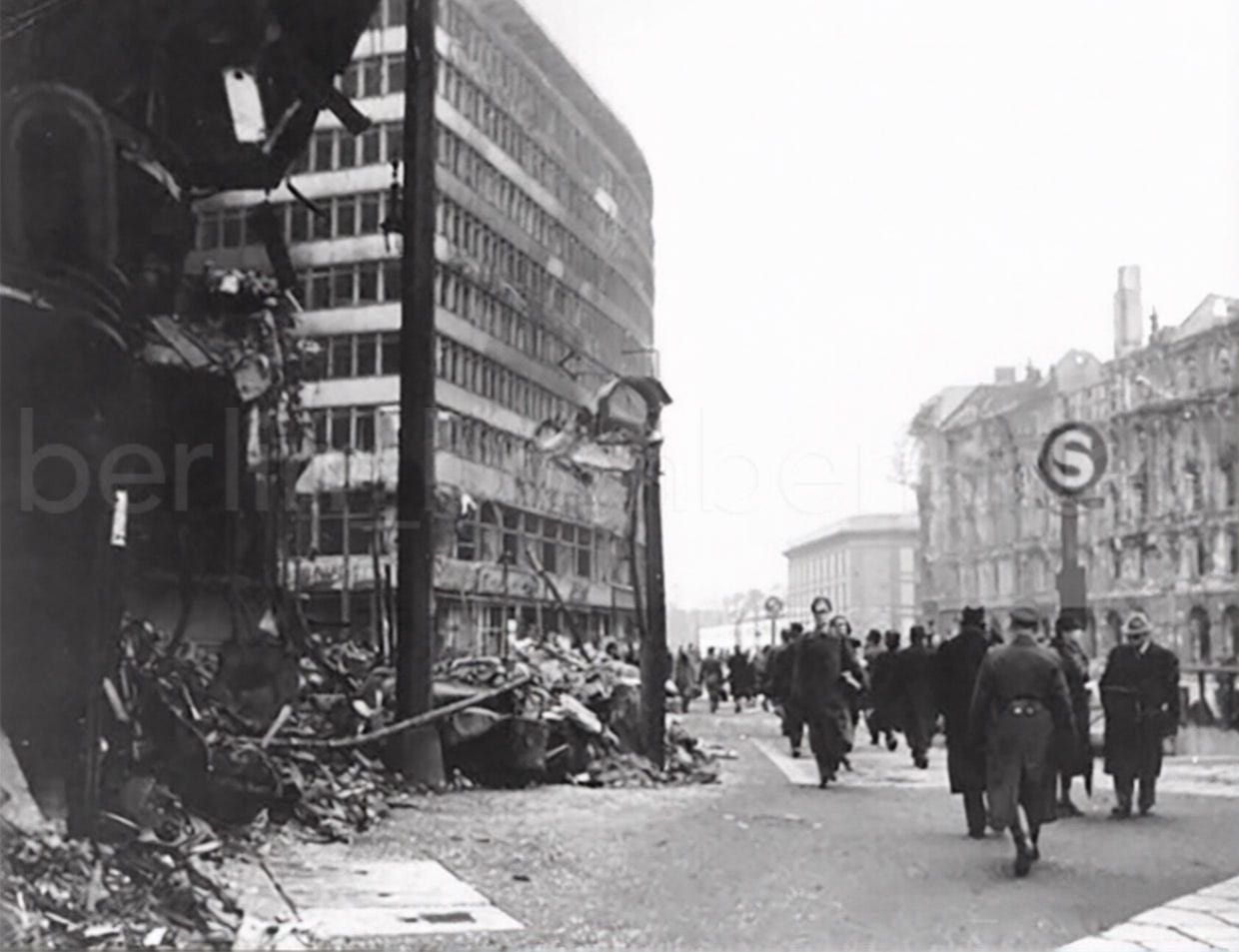
Close examination of all known pictures taken in the aftermath of the war reveals that of the nine original “S” signs placed at Potsdamer Platz, at least six of them survived the battle with more or less damage.
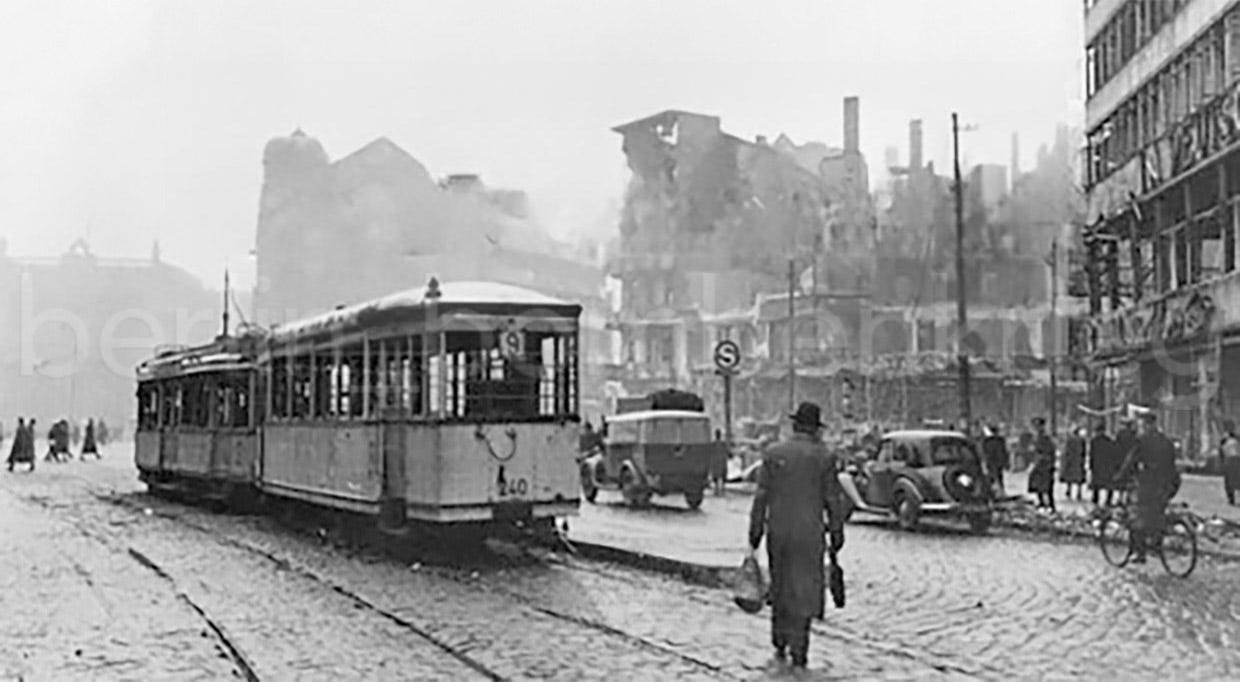
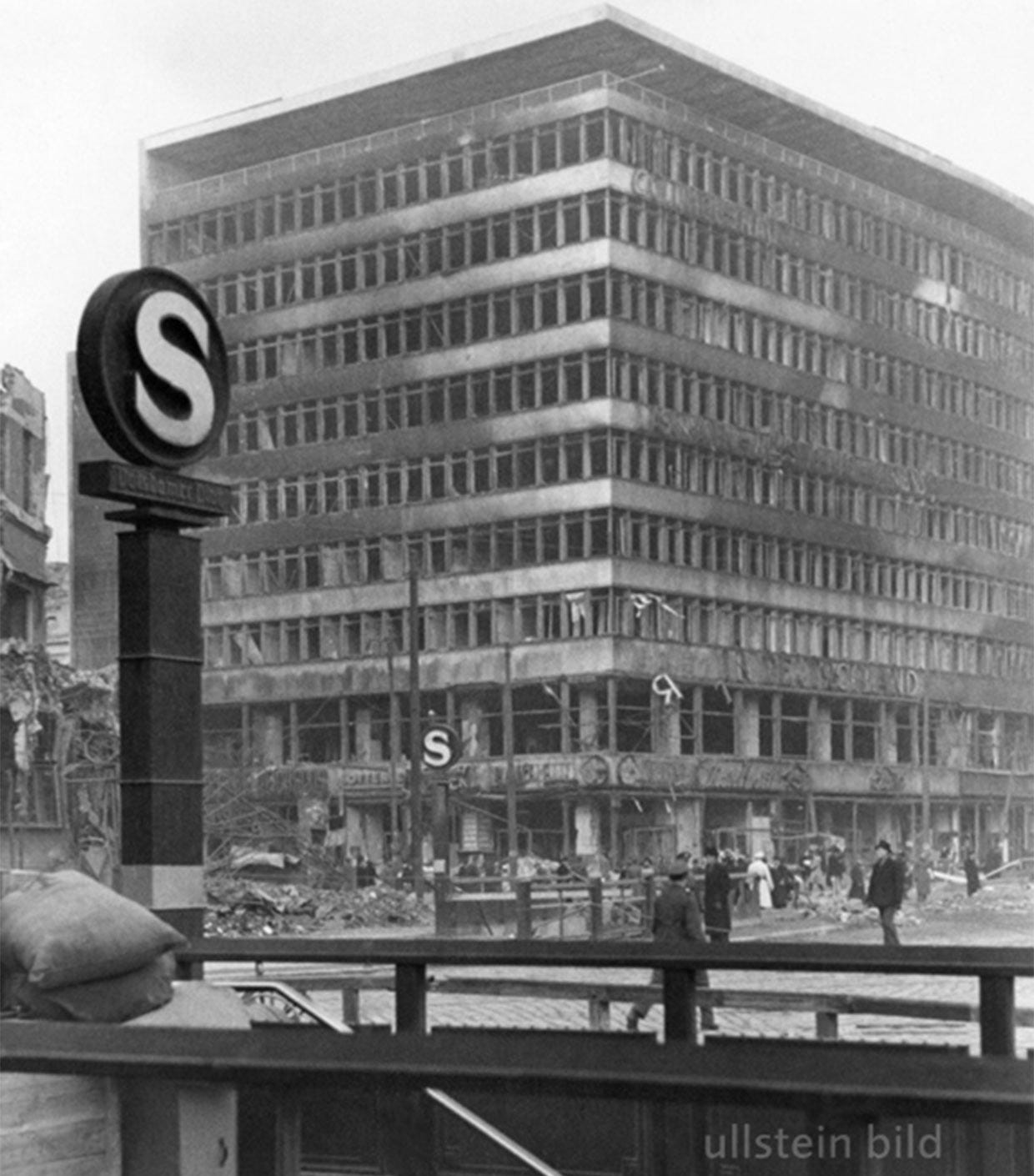
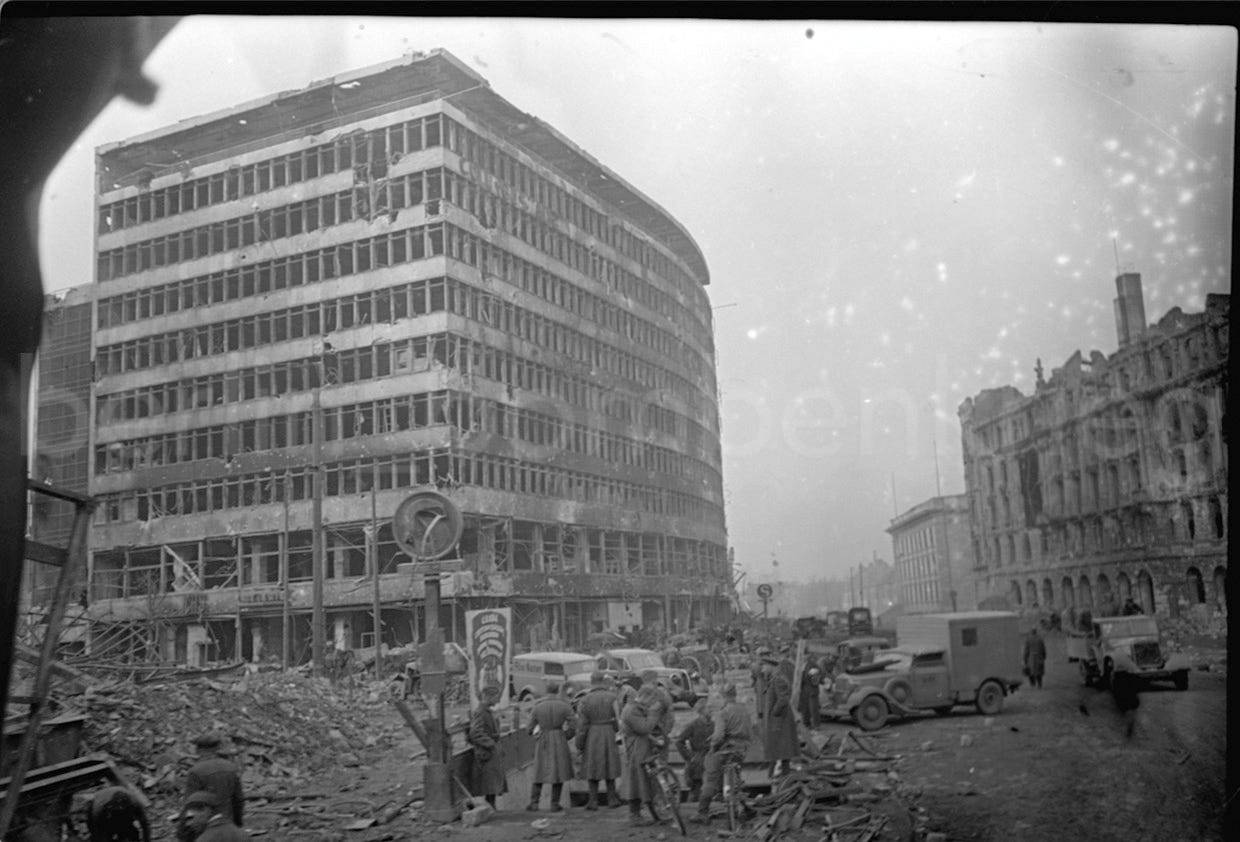
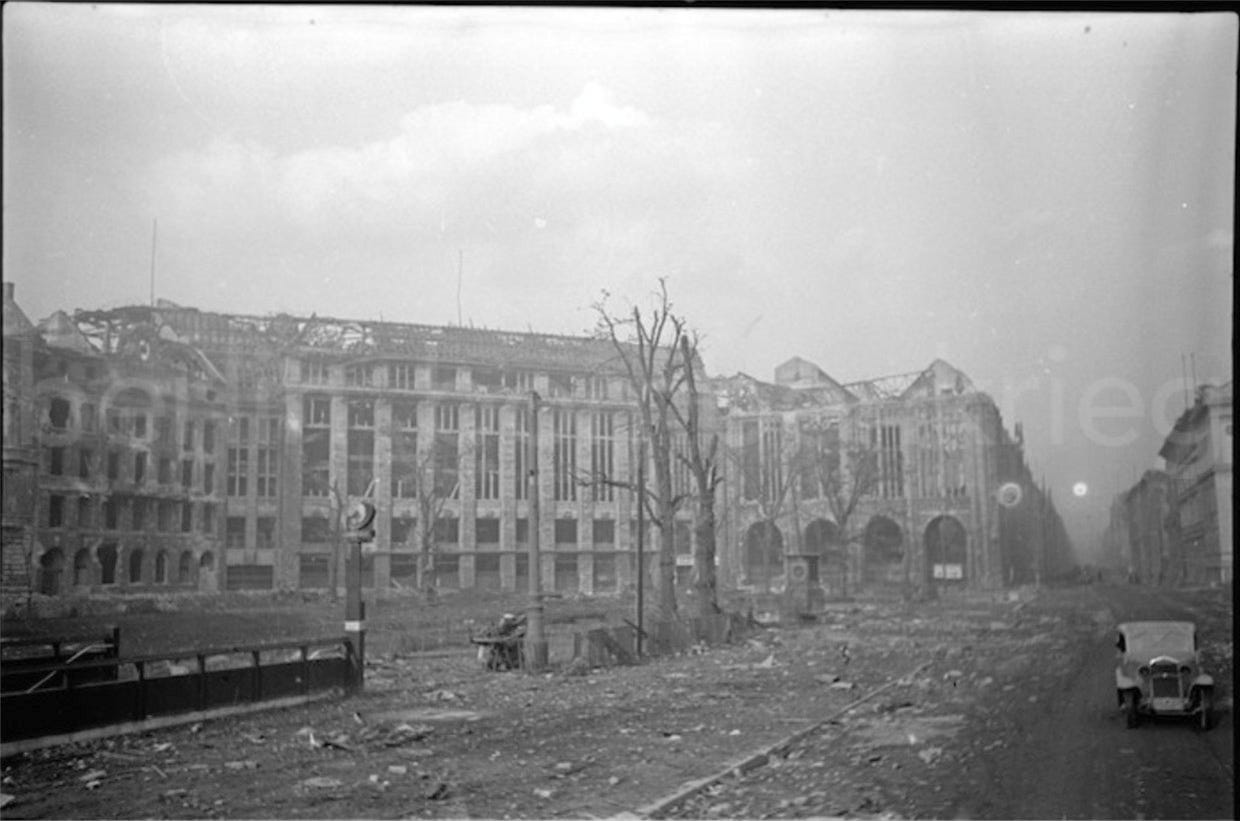
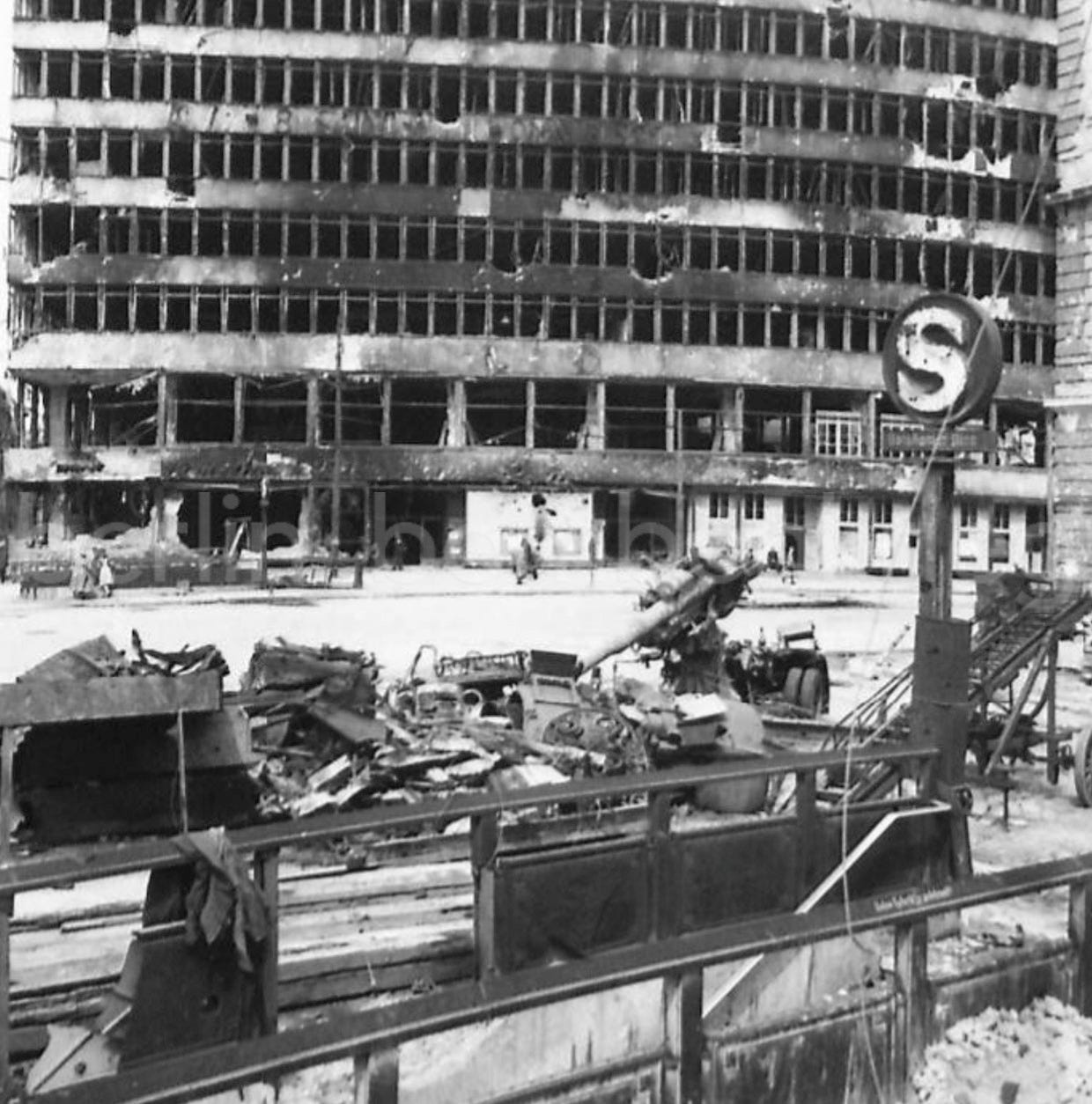
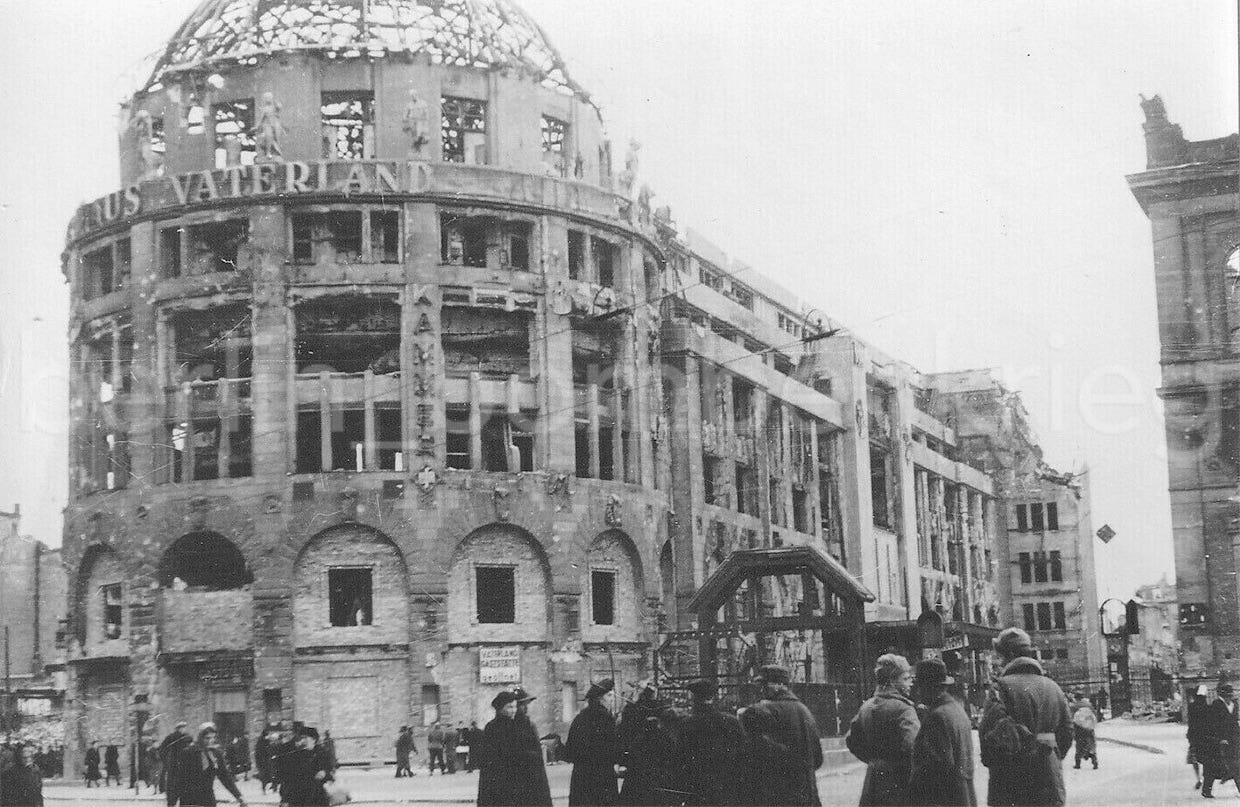
Divided Berlin: devastation around
By war’s end Potsdamer Platz was border of three of the newly born occupation sectors (British and US at West side—Soviet at East). In 1945 the square became the perfect place for Berliners’ Black Market in those days, with daily police raids, mobs and riots with occupation troops. The S-Bahn service wasn’t reopened until 1946-47 but a few months later the city division made that trains didn’t stop here anymore: Potsdamer Platz station would be closed for nearly 30 years, reopening in March 1992.
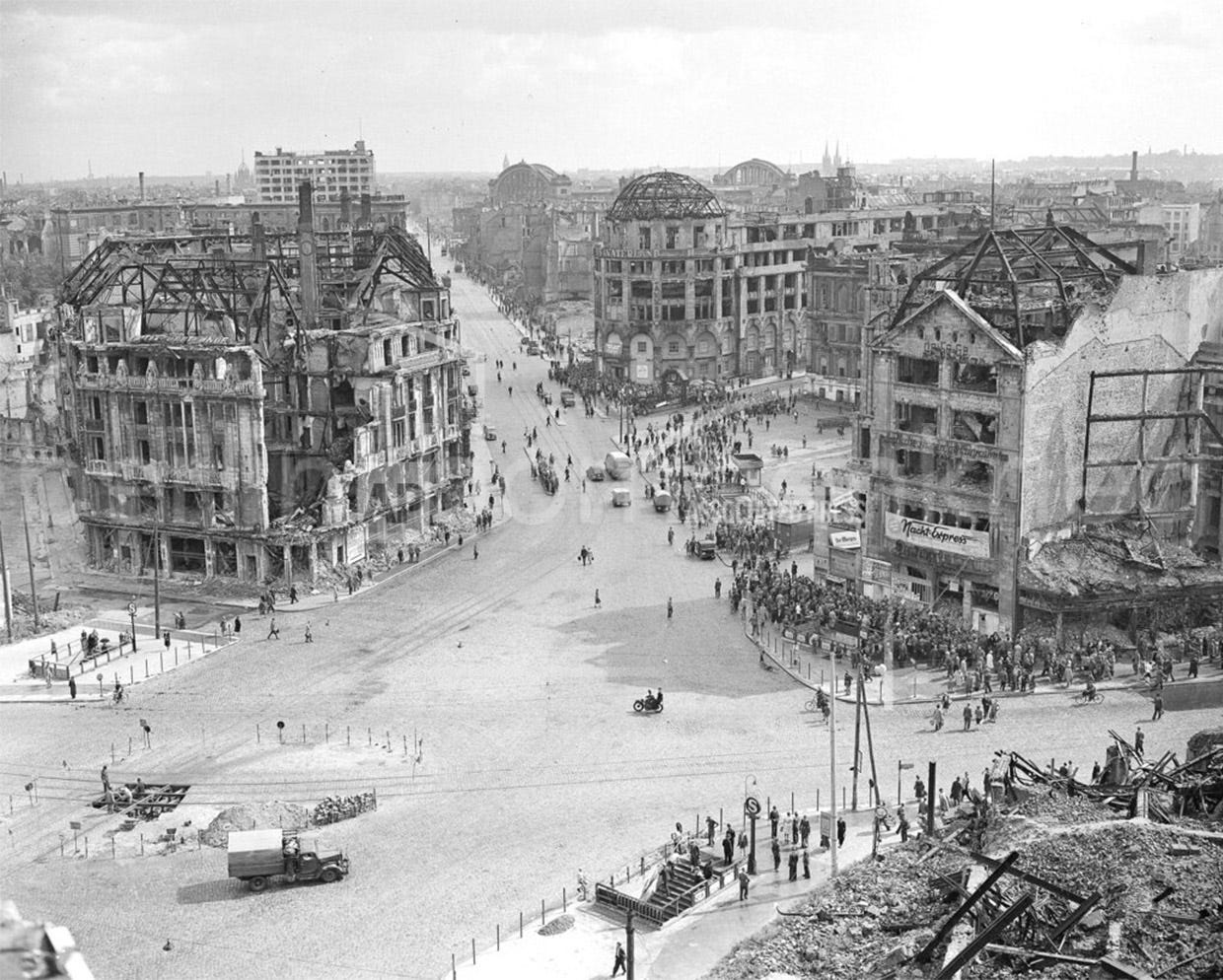
Once a busy and traffic jammed area, by 1950-60 the square, now physically divided by barbed wire, armed guards and walled up, had become mostly an open space, empty, with most pre-war buildings being demolished except for the large train station and the ghostly Haus Vaterland whose ruins remained a few years more (1976). If you look closely at 1950s pictures, some of the “S” signs seem to have been replaced by metal discs. On the contrary, if you look at 1970 and 80s photos the underground entrances are still there (closed, of course) but the circled S signs are missing, just the poles remained.
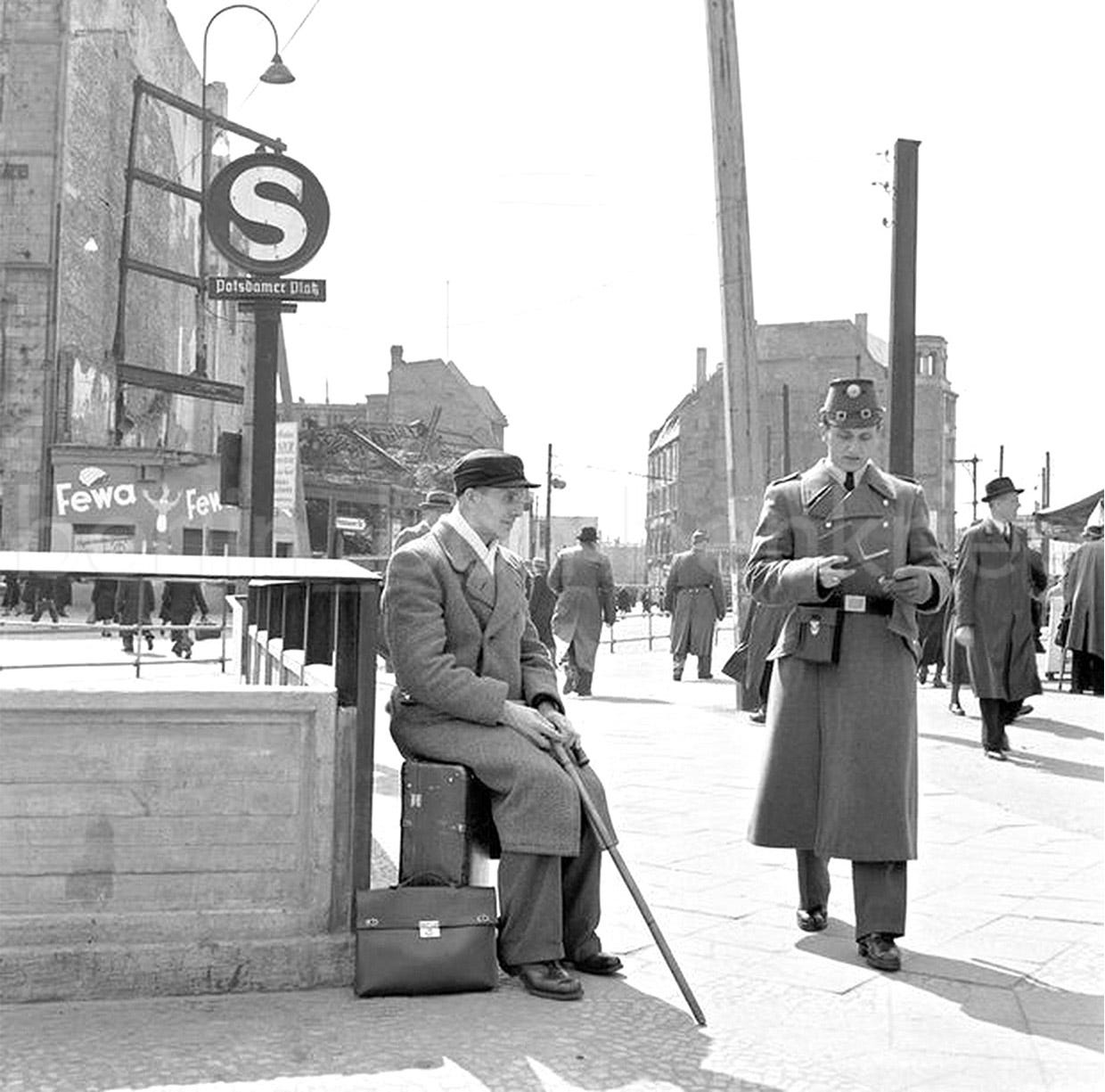
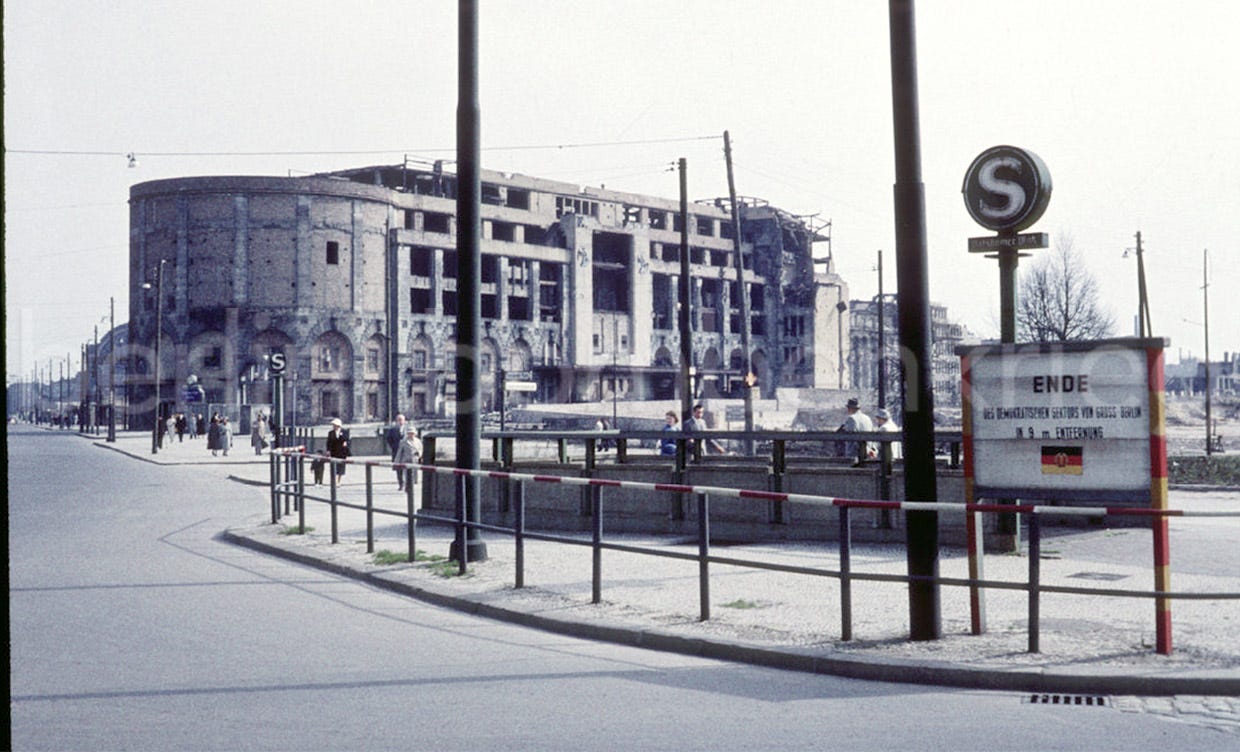
With the 1990 Reunification and the DDR-GDR collapse, life came back to Potsdamer Platz. The square suffered a huge redevelopment and much of the surrounding area became the most modern part of the city. The S-Bahn and subway entrances were refurbished and reopened and new “S” signs, reminiscent of those built in the 1930s but in modern style were installed on each output, as well as two new built entrance halls in the middle of the newly born square.
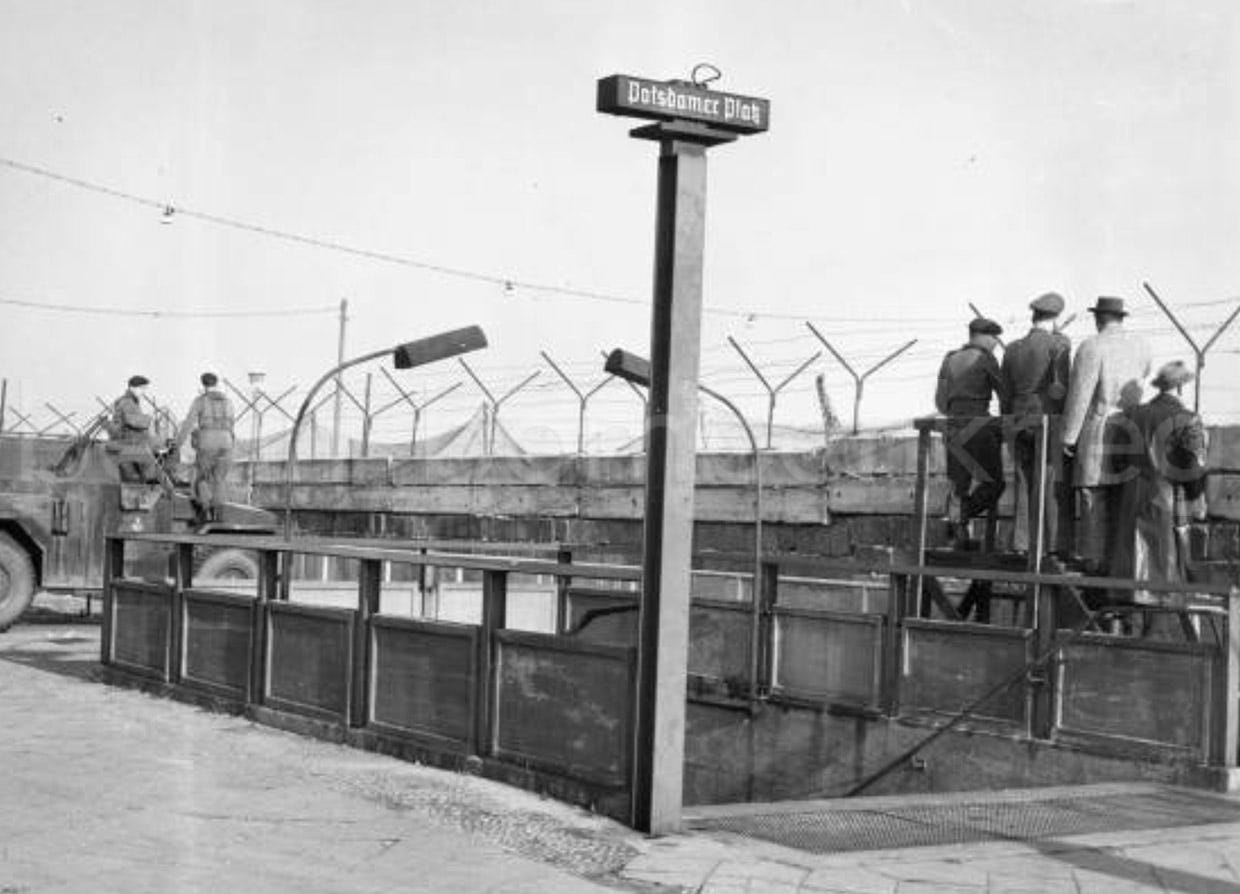
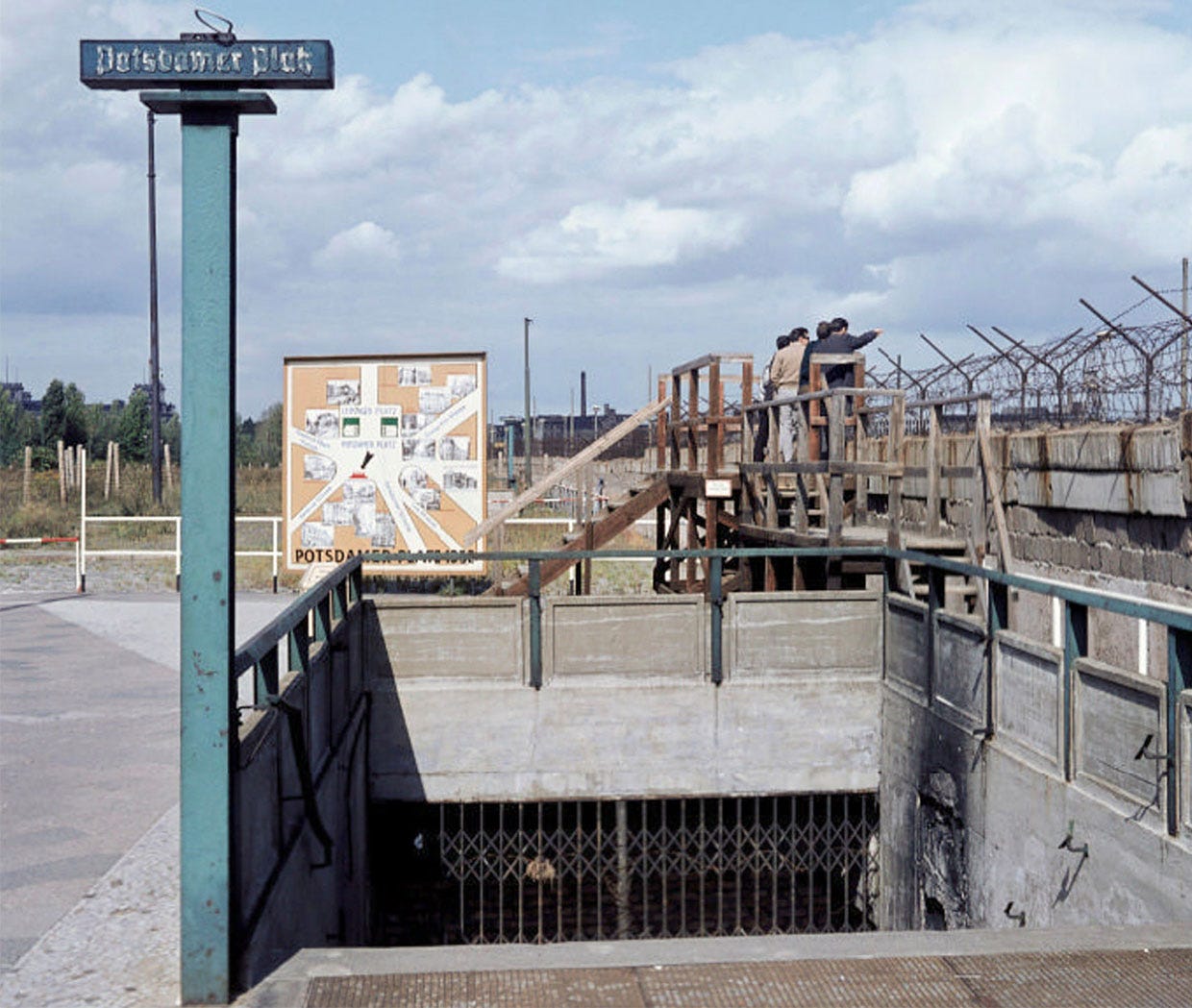
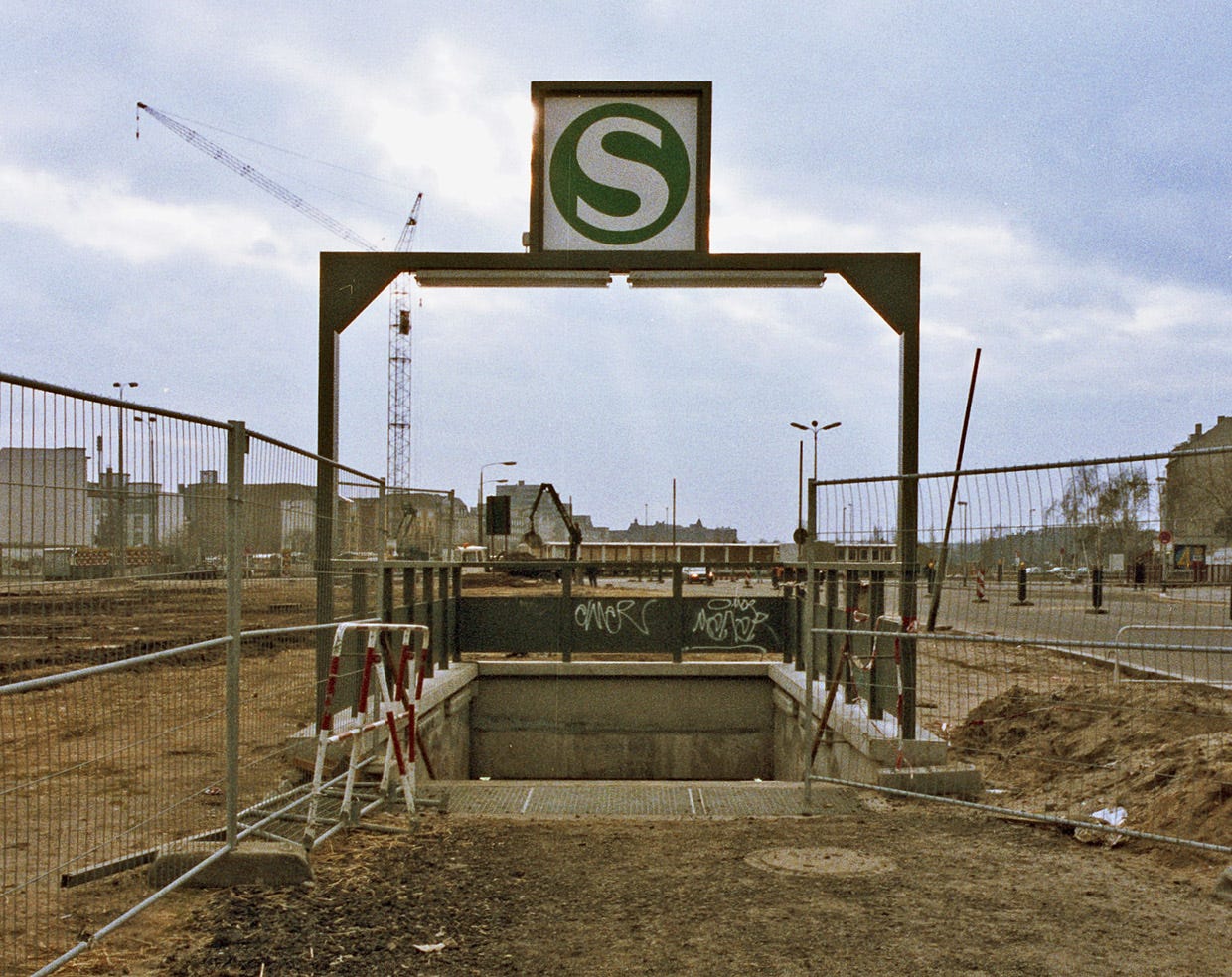
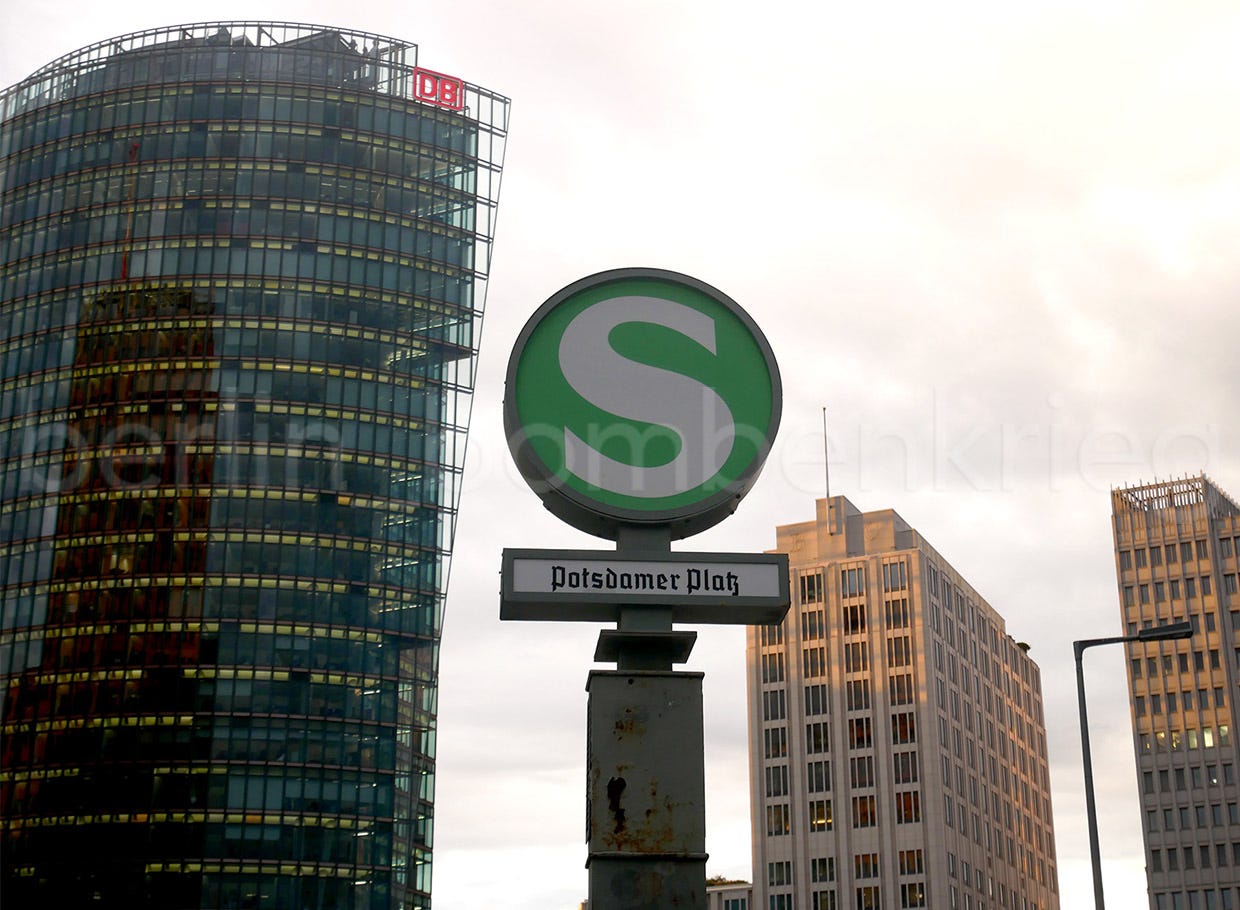
This 1945-relic, probably one of the few surviving items from the original Potsdamer Platz, have been witness of the terrific air raids, the bloody battle between the Potsdamer King Tiger and Soviet tanks in May 1945, the end of the Third Reich, the June 1953 uprising, the wall construction in 1961, the no man’s land and finally, the Fall of the Wall and reunification in 1989-90. A true reminder of Berlin’s convulsed 20th century.
_______________
Bibliography and Sources:
Berliner S-Bahn Museum. 100 Jahre Berliner S-Bahn. [Accessed October 2024]
Ebling, Hermann. Berlin um 1950: Fotografien von Ernst Hahn. Edition Friedenauer Brücke, 2013
Hailstone, Allan. Berlin in the Cold War: 1959 to 1966. Amberley Publishing, 2017
Landesarchiv Berlin: LAB, A Rep. 001-02, Nr. 701, Bl. 176; LAB, A Rep. 001-02, Nr. 702, Bl. 99 ff.; s. a. LAB, A Rep. 005-07, Nr. 559, o. Bl.); LAB, A Rep. 001-02, Nr. 703, Bl. 31 ff
Moorhouse, Roger. Berlin at war. Life and death in Hitler’s capital, 1939-45. Vintage Books, 2011
Potsdamer Platz. S-Bahnhof Potsdamer Platz. [Accessed October 2024]
SSB Berlin. Geschichte und Geschichten rund um die Berliner S-Bahn. Potsdamer Platz. [Accessed October 2024]
TypeOff. Blackletter signage in the Berlin S-Bahn. [Accessed October 2024]
Wildt, Michael and Kreutzmueller, Christoph. Berlin 1933-1945 - Stadt und Gesellschaft im Nationalsozialismus. Siedler Verlag, 2013
Thank you for reading Berlin Bombenkrieg by Pablo López Ruiz. Please subscribe, if you haven’t yet, to comment, follow and share. All images used for non profit / educational purposes.