


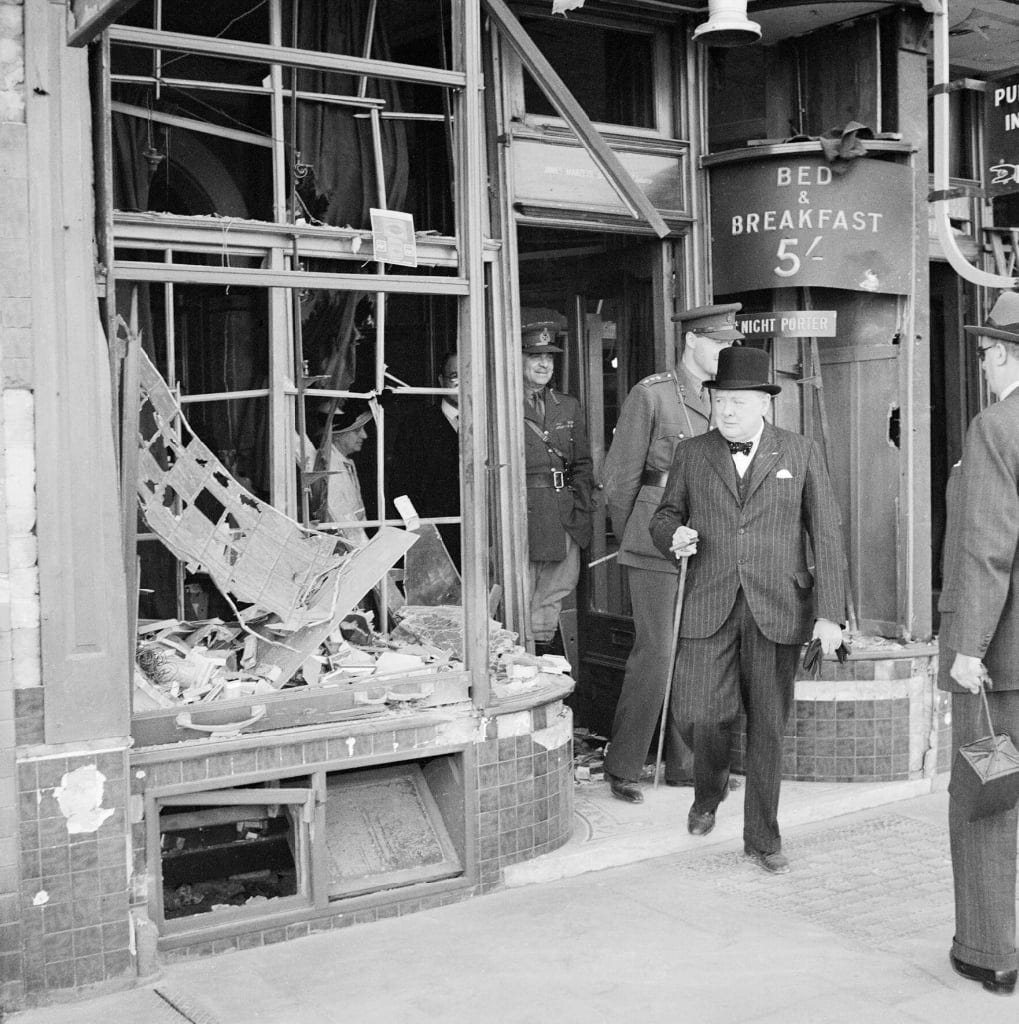
‘They had bombed London, whether on purpose or not, and the British people and London especially should know that we could hit back. It would be good for the morale of us all’.
– Winston S Churchill –
The prelude: London
During the early phase of the Battle of Britain in the summer of 1940, the Third Reich attacked RAF aerodromes, aircraft and their personnel in order to annihilate the enemy’s air defences and some industrial areas on British cities. Suddenly, on the night of August 24th, Luftwaffe bombers dropped, probably by mistake, some bombs over the City of London (there are some reports of German bombs hitting London’s suburbs a few days earlier too.)1 Next day, Prime Minister Churchill with full consent of the War Cabinet ordered an action to revenge the honour of the British citizens. He have warned the RAF to had the capability to reply immediately against Berlin in case of a German raid on London.2
British bomb response in literature
How many aircraft subsequently participated in the actual raid on the night of 25/26 August 1940 has been open to speculation. The early campaign of Bomber Command has been rather neglected by aviation historians and this very first raid is often briefly cited on every RAF bombing war study as an introduction, usually with a few words and wrong description.3 Records for that period not always make it clear exactly how many bombers participated so available sources gives us a variety of figures: Bomber Command’s operational reference book (Middlebrook, 1985)4 shows an overall figure of the night sorties: ‘103 aircraft were dispatched on operations and approximately half of these were sent to Berlin.’ In the case of Donnelly, former RAF air gunner, shows a detailed breakdown of the night operations and every loss against Berlin, but exact distribution of the assigned forces with a total figure of 89 assigned bombers was inaccurate.5 “Author” Martin Bowman gives us a more detailed chronicle of the figures on his various books about Bomber Command operations, listing ‘About fifty attacked, 7 aborted, 29 claimed to have bombed Berlin and a further 27 overflew the German capital but were unable to pinpoint their targets because of thick cloud.’6 For their part, Tweddle, in one of the few works focused just about the RAF’s “bomber boys” during the 1940 days7 only refers to the ‘twenty-two Whitleys tasked to attack the vast and crucial Siemens works’.
On the German side, the most detailed study of the air bombings over Berlin, edited by Dr Laurenz Demps refers the number of bombers as just 22. Years before, Hans Rumpf in the very first study of the air bombings in Germany (1963) just mentioned this first bombing without giving intruders’ figures.8 Finally, author Jörg Friedrich, in his bestseller Der Brand states that ‘he [Churchill] sent fifty Hampdens and Wellingtons [to Berlin]’, meanwhile Berlin Story’s book about the Berlin air bombardments (Giebel, 2015) shows 28 RAF bombers as attacking force.9
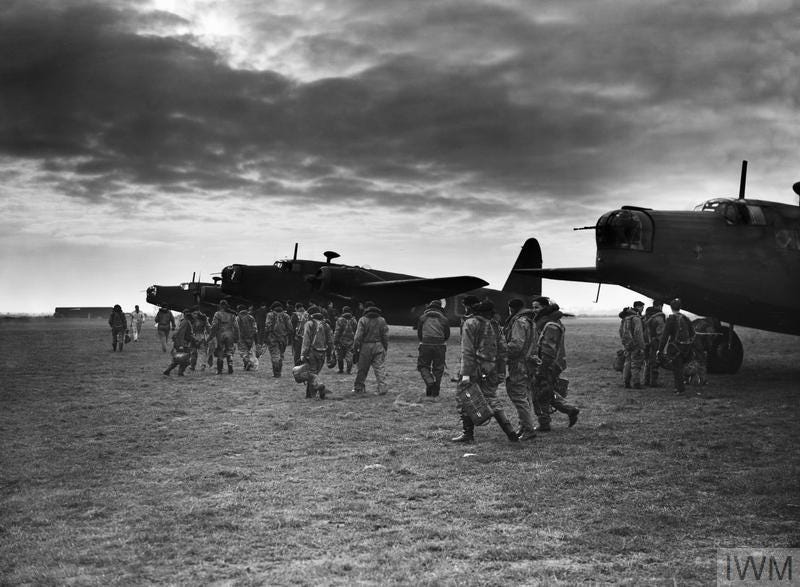
Careful research of the primary sources of the period —the Squadron’s operations record books (ORBs)— allow us to determine for the first time the number of bombers that London sortied on that night to attack the Reich’s capital and their times over target.10
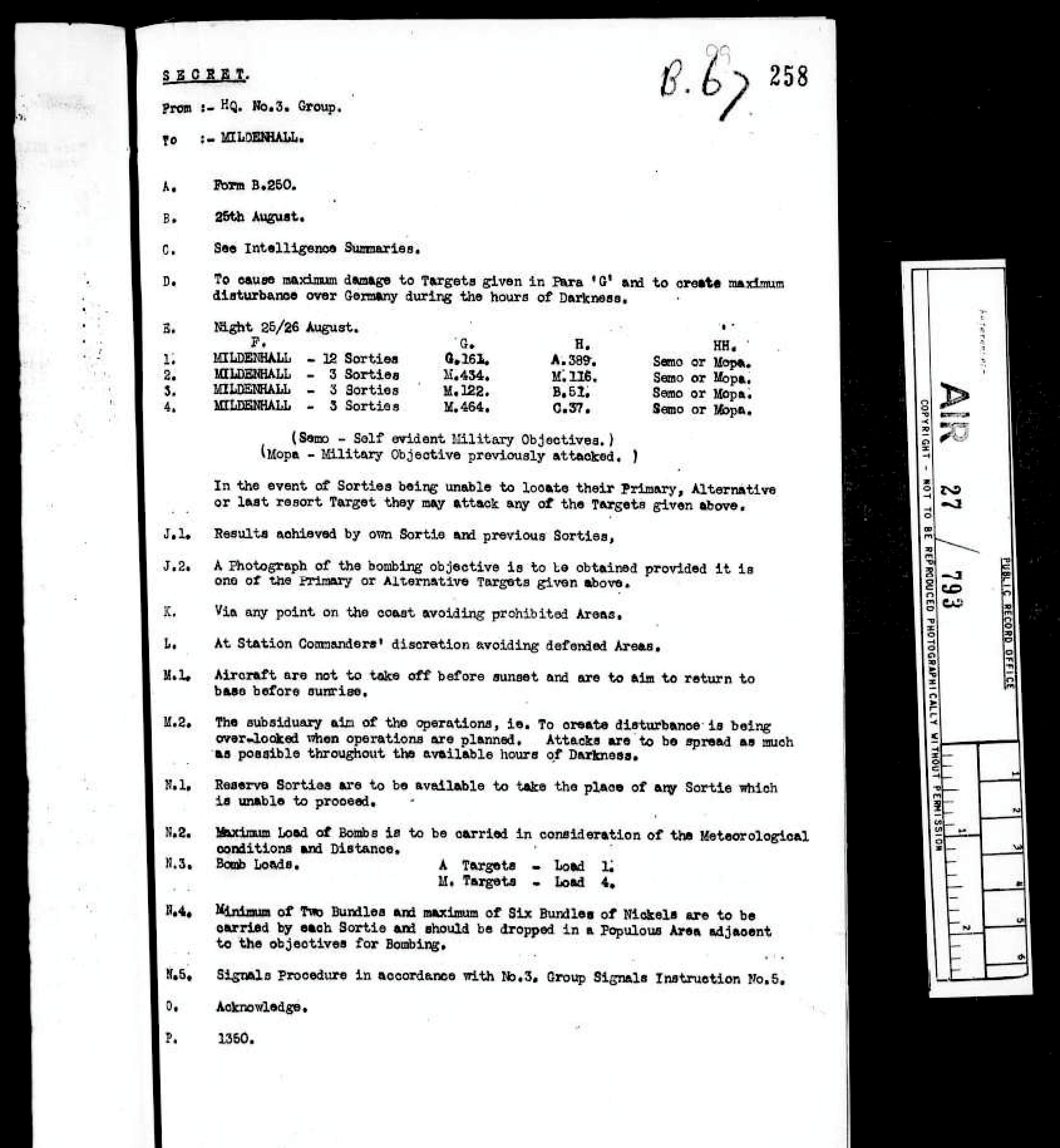
To reach Berlin, British aircraft had five times as far to travel as German aircraft had to bomb London, in a round trip of eight hours and 1,200 miles, close to the maximum range of the Wellington and Hampden bombers with full tanks and minimal bomb load. It was an ambitious raid and a very hazardous one: no one knew at the time what defences the bombers would meet over the ‘Big City’, so it was decided to make a total effort and Bomber Command assigned this operation to three of its ‘heavy’ bomb groups. That afternoon, the different bombing groups based in East Anglia and Norfolk received its attacking orders: the crews of No 3 Group (equipped with Wellington bombers) received Order Form B.250 tasking: “To cause maximum damage to Targets given in Para ‘G’ and to create maximum disturbance over Germany during the hours of Darkness”.11 Primary target for this force (17 bombers) was the Siemens & Halske works (coded as G.161 by the Air Ministry) in the northwestern part of the city. Their secondary target was A.389 (Tempelhof‘s oil deposits).12
No 4 Group’s three squadrons, equipped with Armstrong Whitley long-range bombers, were given Operations Order No. 154 at 17.00 hrs “to inflict maximum damage on SIEMENS SCHUCKERT WERKE BERLIN” and readied twenty-four more bombers for this duty. Primary target was G.225 (Siemens Schukert works) with Tempelhof marshalling yards (coded M499) as alternative. Bomb load was two 500-lb, five 250-lb GP bombs (one of those with fused delay) and one container of incendiaries on each Whitley.13
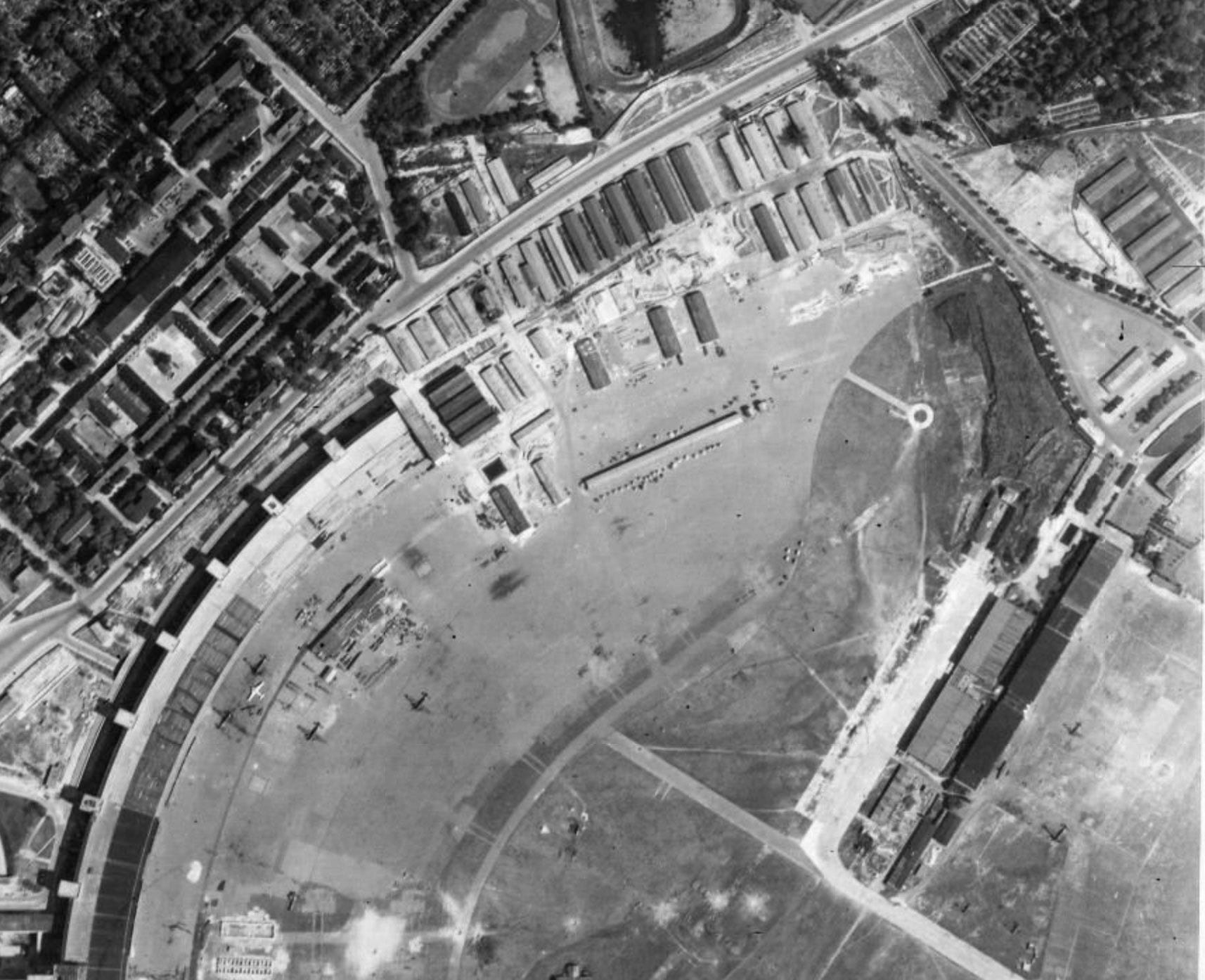
Meanwhile the third group, the Hampden force under No. 5 Group received Order B. 201 tasking with “destroy power station B57 and aerodrome H324” which means that targets were the Klingenberg power station in the eastern part of the city and the main airport of the capital, Tempelhof.14 This Group put up 46 twin-engined bombers from 6 squadrons for the mission, more than any other.
‘Berlin arms factories bombed in three-hour raid’
Just before dust, No 149 Sqn sortied eight of its Wellington medium bombers from RAF Mildenhall led by Squadron Leader D A Kerr from 2050 hrs to hit the Reich capital but Squadron’s ORB just described “mission carried out safely” as mission report.15 It would appear that one of them (T2459) had some trouble because of her early recorded landing time, which made impossible to have reached Berlin and back.16 At RAF Newmarket aerodrome in Suffolk, nine more ‘Wimpys’ on 99 Sqn were also getting airborne between 20.15 and 23.27 hrs and bounded for Klingenberg power station. Six of them failed to locate any target under the thick clouds and brought back their bombs. Just one bomber (P9243, piloted by P/O Chown) bombed Tempelhof, dropping 250-lb bombs and 4-lb incendiaries on it. The remaining two attacked targets in Schwerte.17
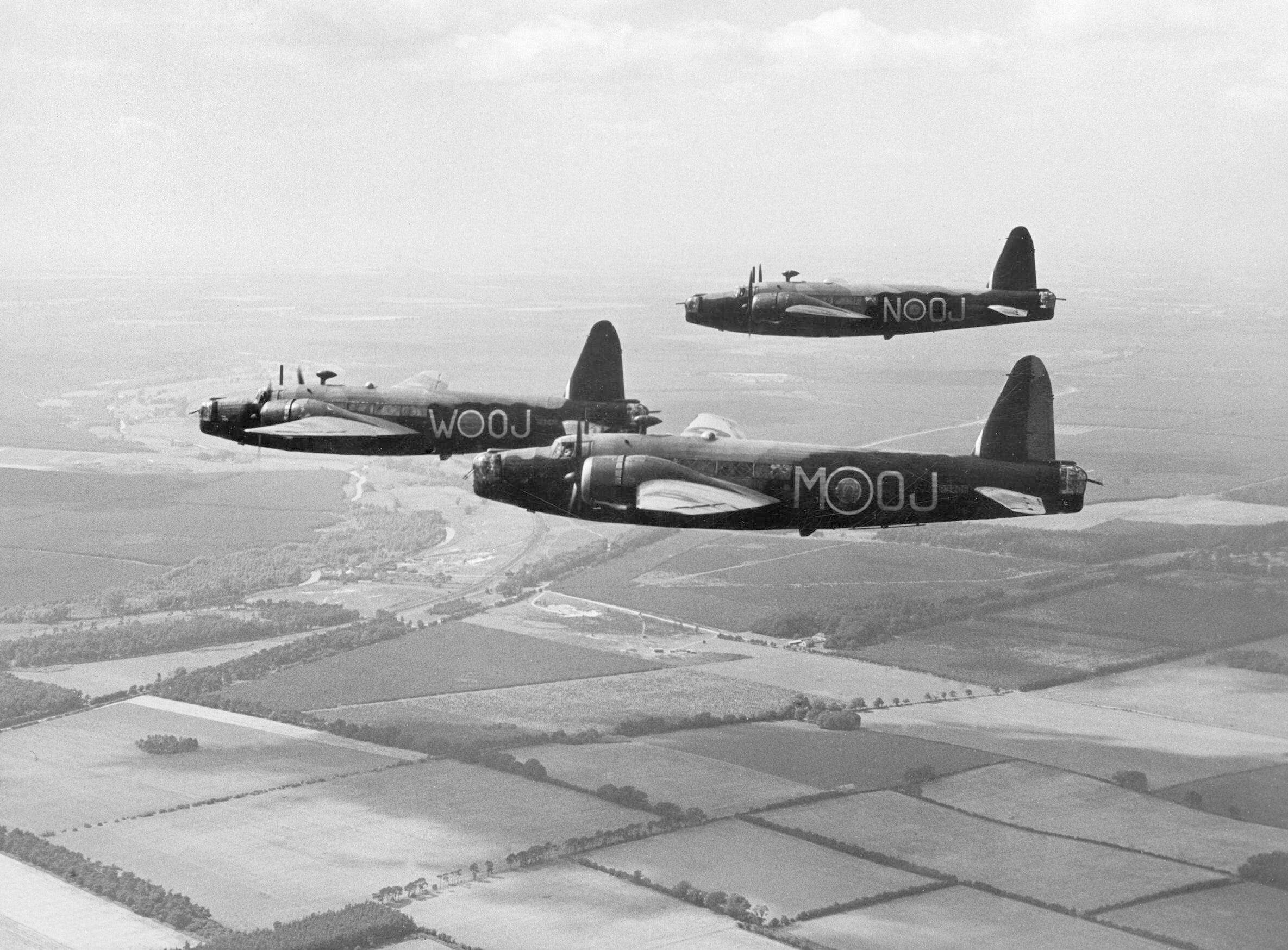
Berlin was a familiar target for Whitley crews from 4 Group based in North Yorkshire, but this would be its first one onto the offensive dropping bombs and not only propaganda leaflets.18 No 78 Squadron assigned five bombers to this raid: they began taking off from RAF Dishforth at around 20.00 but encountered 10/10 clouds and no targets were located; none of them dropped their bombs. F/O Robertson crew dropped some leaflets on the target area.19 From this station, also departed eight Whitleys of No 51 Sqn to bomb Berlin with mixed results: one bombed “the Messerschmitt factory S.W. of Oranienberg (sic) prison camp” [there were no Messerschmitt facilities at Oranienburg, author’s note] and another attacked “a small factory 12 miles N.W. of Berlin”. The others bring their bombs back to base failing to locate any target, and another one had to abort the trip because of magneto trouble. All of them reported very poor weather and cloud cover. A ninth bomber failed to take off and abort the mission.20
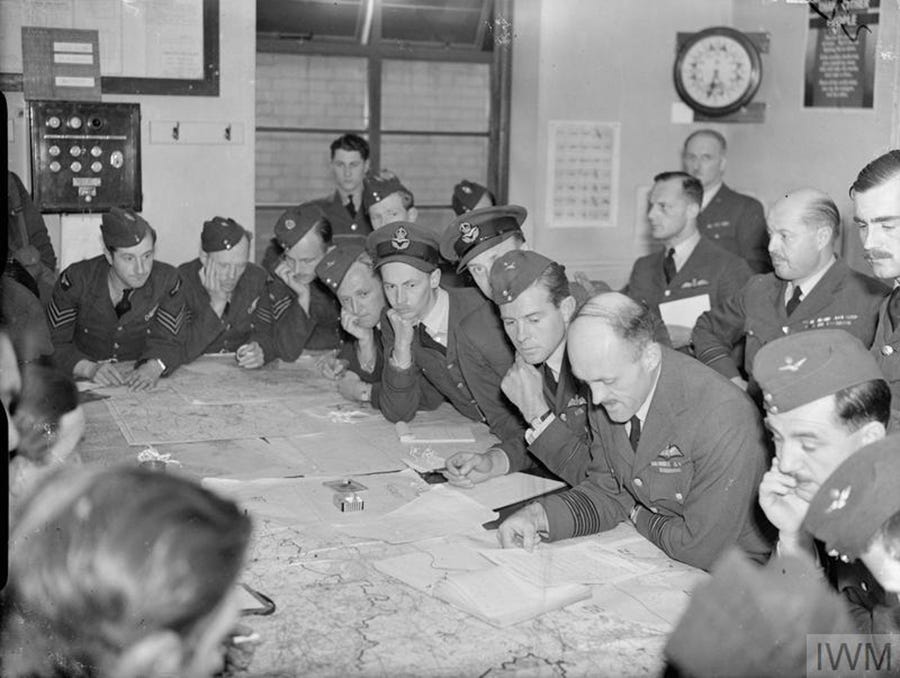
Finally, from RAF Linton-on-Ouse flying station took off ten Whitley bombers of No 58 Squadron from 20 hrs to attack “Seimens (sic) electrical works”. Two claimed to bomb the target on ETA (estimated time) and another attacked a flak battery NW Berlin, meanwhile another one bombed a concentration of lights in the woods NE of the capital. Two failed to recognize the target and brought the bombs back. All of them dropped leaflets and returned safely to base. A further three aborted their mission and returned early for mechanical failures. The tenth bomber attacked a target of opportunity in Bremen.21
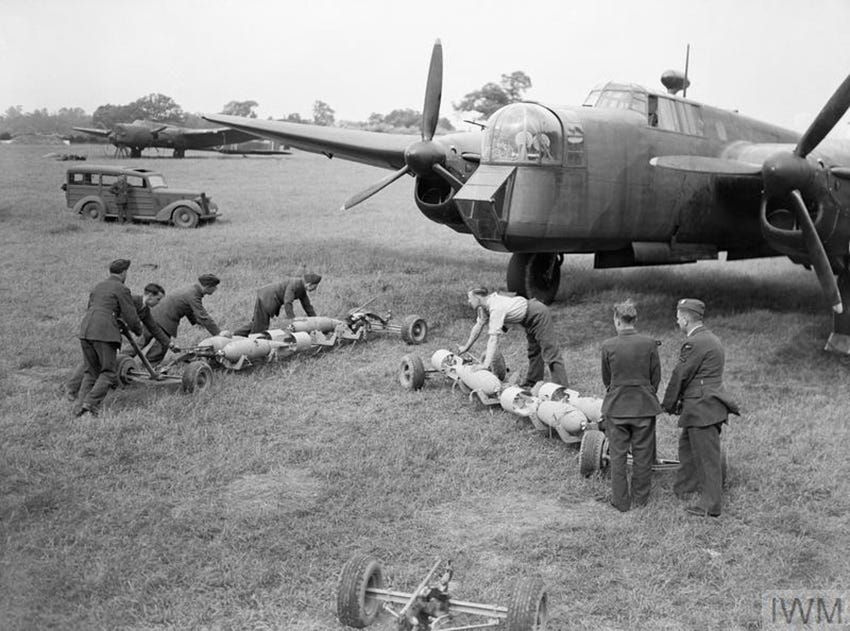
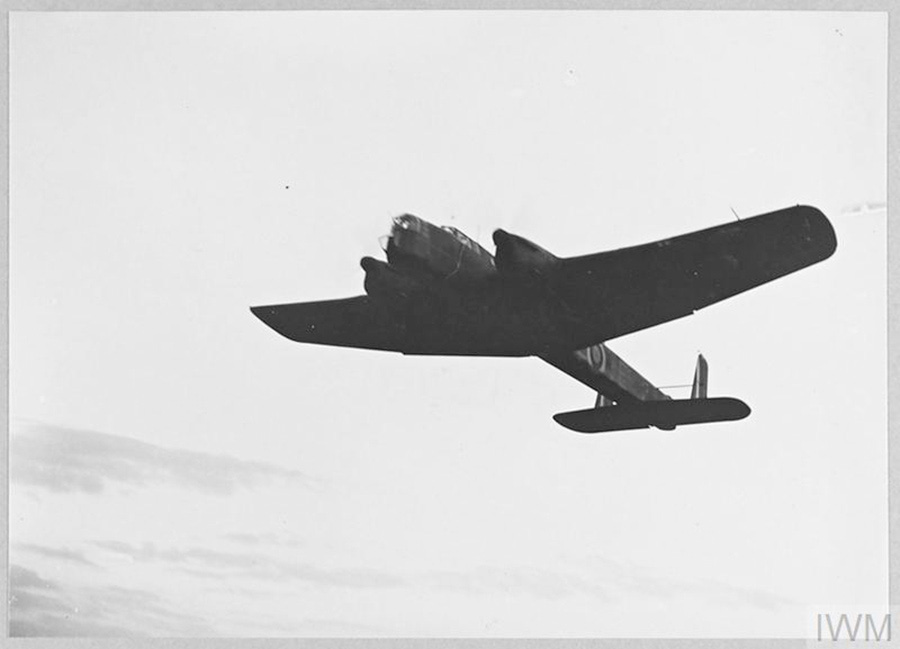
Adverse weather conditions hampered the main bombing effort by 5 Group’s Hampdens force. At RAF Scampton, 49 Squadron contributed 12 Hampdens and 83 Sqn, eleven more to the raid. Loaded with four 500-lb GP-bombs each and according to mission times planned, these two squadrons would be the first over Berlin on that evening.22 No 49’s raiders arrived over the capital in poor visibility: four aircraft claimed to have made successful bombing runs on Klingenberg and rest of the force, unable to locate it, dive-bombed several SEMO targets. Mission leader Wing Commander Gillan, DFC, bombed a marshalling yard SE of the city and another crew attacked a furnace blast near B.57 area. None of them observed the results of their bombing; another crew returned to base with bombs aboard.23
For their part, 83 Squadron raid was a total failure with just two crews claiming to have bombed the target; another attacked a railway line south of target. Two others dropped the bombs on Furstenwalde aerodrome (55 km east of Berlin) and on a viaduct at Westerhausen.24
Stationed in Waddington, 44 Squadron was assigned “to destroy power station B.57” with 6 aircraft taking off at intervals from 21.15 hrs on that night. Four of those claimed to have bombed Klingenberg with 500-lb bombs with unobserved results and another attacked the secondary, Tempelhof. The remaining Hampden (P4371), unable to locate the target, finally bombed the aircraft factory in Berlin-Johannisthal.25
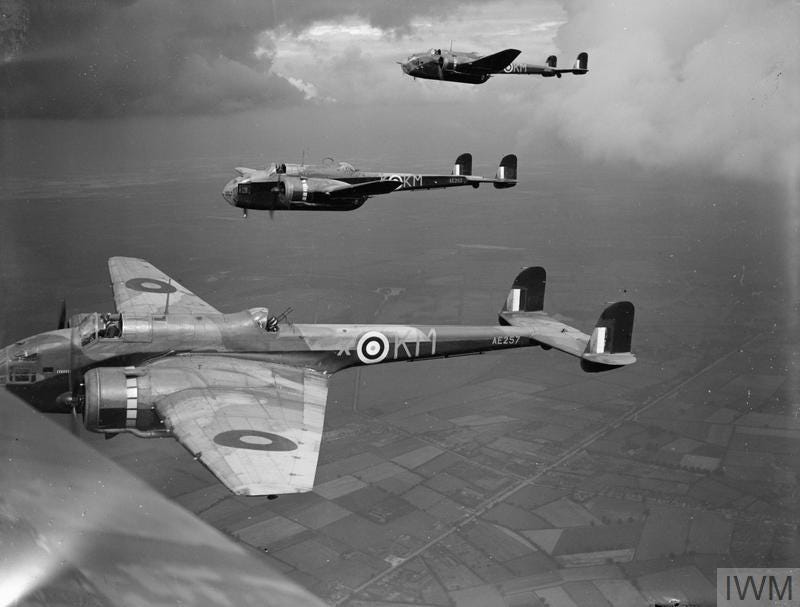
Further north, the Hemswell squadrons were to target Tempelhof, specially the important hangars along the North side of the aerodrome: 61 Sqn launched six Handley Page bombers as night fell with two of them claiming to have bombed the target without visibility, two more failed to locate it, and another one bombed Kangsdorf (Donnelly refers here to Pangsdorf aerodrome, 15 miles S of Berlin).26 The remaining bomber was forced to return early due to aileron vibration.27 The attack was coordinated with the 144 Squadron, whose six crews achieved poor results too: three of them reached the city but were unable to locate the targets due to 10/10 clouds and the other three back to base with mechanical troubles.28 Finally, 50 Squadron would put up 5 aircraft from RAF Lindholme but just two of them claimed to have attacked target B.57 and another bombed a heavy flak site and searchlights NE of the city.29
First losses
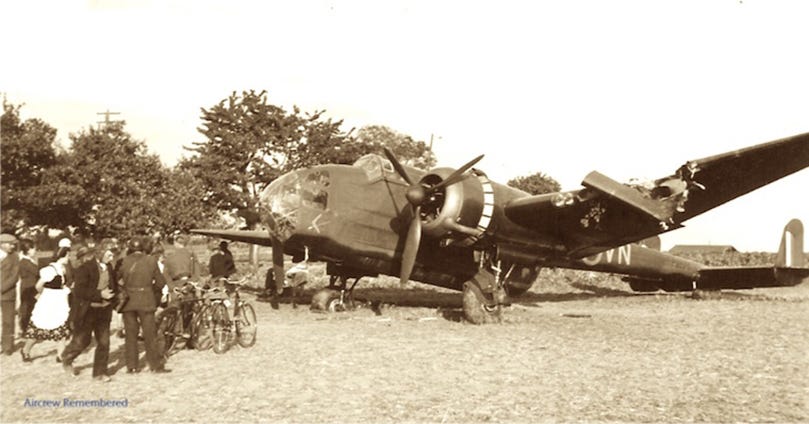
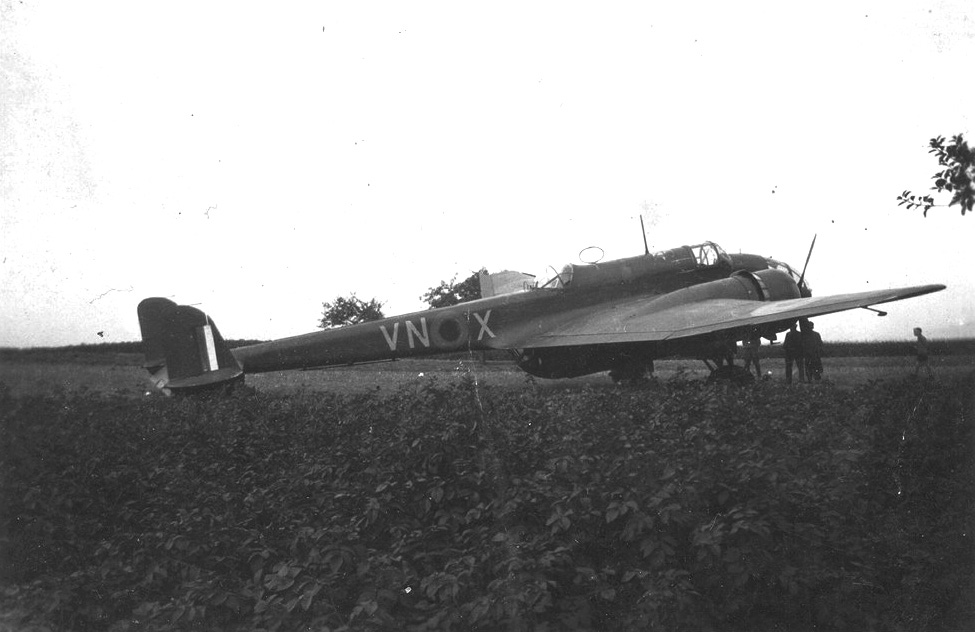
This first Bomber Command raid on Berlin did not come away unscathed. Crews faced very adverse weather and strong head wind was encountered on the return flight30 and no less than six ‘mediums’, all from the Hampden force (already at their range limit) failed to return to their bases: Hampden P4416 of 49 Sqn (P/O Fawcett crew) was lost without trace; this was the first Allied crew to lose their lives on a bombing raid aiming Berlin.31 Fuel starvation made P/O Wawn crew aboard 50 Squadron’s P2070 to force-landed near Lautersheim in Rheinland-Platz and all were made prisoners by the Germans, meanwhile P2124 from the same unit ditched out of fuel off Scarbarough Pier at 07.50 h.32 Finally, three bombers from No 83 were lost when they crashed (or ditched) back in England after ran out of fuel too (P1354, P4380 and X2895), with all their crew members rescued safely.33 There was no Nachtjagd reaction to this first important raid due to adverse weather conditions.34
The Berlin raid
While British air forces droned over Berlin, Luftwaffe bombers were heading to England where they made sixty-five raids attacking industrial centres in the midlands by midnight, bombs fell on forty places, including Birmingham, Coventry and towns in southern England, South Wales and Scotland without suffering any loss.35
Overall, 86 bombing aircraft took to the air on that evening to bring destruction to Berlin as part of a 103-aircraft force attacking enemy targets. Of these, it seems that 57 reached and overflown the city but just 35 claimed to have attacked their assigned target or an alternative in the great city area, the rest failing to locate their objectives due to heavy overcast. The weather conditions made the attack almost fruitless and most of the crews reported heavy flak and searchlights. Bomber Command’s cost was six bombers, four airmen killed, two wounded, and 4 POW.
On the next day, the Air Ministry made a communiqué about the operation which was repeated on every paper across the island: ‘Operations in the Berlin area last night were hampered by poor weather conditions. Selected military objectives were attacked, as well as anti-aircraft batteries and searchlight concentrations on the outskirts of the German capital.’36 The night raid has been mostly frustrating as Guy Gibson, then a young flying officer, resumed later: ‘The raid was in fact lousy. There was thick cloud over the target itself and I don’t suppose more than ten bombs actually landed in Berlin.’ Others were more excited about the action: 21-year old New Zealander James Bracegirdle wrote to a journalist: ‘We went over Berlin and, boy, am I proud! this was the first time Berlin had been raided and, though the RAF has been over since, I am able to say that I went on the first raid.’37
It would be the first of many to Berliners and RAF crews.
But what happened in Berlin after the attack thousands of feet below the RAF crews and their bombing runs? It was a mere response to raise British morale or there was an strategic movement behind? In our next post we will describe the effects of the air raid and its consequences.
[updated June 2023.]
Thank you for reading Berlin Bombenkrieg by Pablo López Ruiz. Please subscribe, if you haven’t yet, to comment, follow and share. All images used for non profit / educational purposes.
Bibliography:
BRITISH BOMBING SURVEY UNIT. The Strategic Air War Against Germany 1939 - 1945 - The Official Report of the British Bombing Survey Unit. Frank Cass, 1998
Davis, Richard G. Bombing the European Axis Powers A Historical Digest of the Combined Bomber Offensive 1939–1945. Air University Press. Maxwell Air Force Base, Alabama, 2006
Girbig, Werner. Im Anflug auf die Reichshauptstadt: die Dokumentation der Bombenangriffe auf Berlin. Motorbuch-Verlag, 2001
Hastings, Max. Winston’s War: Churchill, 1940-1945. Vintage Books, 2011
Koch, H W. The Strategic Air Offensive against Germany: the Early Phase, May – September 1940. In: The Historical Journal, Volume 34, Issue 1, March 1991, pp. 117 - 141
Ward, Chris. 5 Group Bomber Command: An Operational Record. Pen & Sword Books, 2007
Ward, Chris and Smith, Steve. 3 Group Bomber Command: An Operational Record. Pen & Sword Books, 2009
This was probably not intentional, as it was in defiance of Hitler’s strict instructions that central London should not be attacked. Anyway, there are some reports of Luftwaffe bombs hitting London’s suburbs areas a few days earlier. Birmingham, Portsmouth and Manchester were also bombed. SMITH, J Richard and CREEK, Eddie J. Kampfflieger Bombers of the Luftwaffe Volume Two: July 1940-December 1941. Classic Publications, 2004, p 109; History of Manston Airfield. Heavy Luftwaffe raids on Manston and Ramsgate on 24th August 1940 leave the airfield unserviceable [accessed June 2023.]; DONELLY, Larry. The Other Few: The Contribution Made by Bomber and Coastal Aircrew to the Winning of the Battle of Britain. Red Kite/Air Research, 2004, p 108; OVERY, Richard. The Bombing War. Allan Lane, 2013, pp 82-3
He wrote: “(..) The War Cabinet was much in the mood to hit back, to raise the stakes, and to defy the enemy. I was sure they were right, and believed that nothing impressed or disturbed Hitler so much as his realization of British wrath and will-power. In his heart he was one of our admirers.” in CHURCHILL, Winston. Their Finest Hour. Houghton Mifflin, 1949. Far from the traditional interpretation, Harvey B. Tress in his work argues that Churchill deliberately escalated attacks on Berlin in order to provoke Hitler to redirect Luftwaffe’s attacks to British cities and to obtain an strategic response, in TRESS, Harvey B. Churchill, the First Berlin Raids, and the Blitz: A New Interpretation. Militaergeschichtliche Zeitschrift, Volume 32, Issue 2, pp 65–78, 1982. Overy’s interpretation moves into that Churchill may simply have exploited an opportunity rather than executing a planned strategy, OVERY: op. cit. p 83
A good example of this is Osprey’s latest “Battle of Berlin” Air Campaign book, which reserves just one line of text to the 1940 summer raids on Berlin, focusing only in the 1943 bombings onwards. WORRALL, Richard. Battle of Berlin 1943–44: Bomber Harris’ gamble to end the war. Air Campaign 11. Osprey Publishing, 2019
MIDDLEBROOK, Martin and EVERETT, Chris. (1985). The Bomber Command War Diaries: An Operational Reference Book. Pen & Sword Aviation. 2014 Ed, p 77
DONELLY: op. cit. pp 110-1
BOWMAN, Martin. Bomber Command. Cover of Darkness 1939 - May 1942. Volume: 1. Pen & Sword Aviation, 2011, p 69
TWEDDLE, Paul. The Other Battle of Britain: 1940: Bomber Command’s Forgotten Summer. The History Press, 2018, pp 160-6
DEMPS, Laurenz. Luftangriffe auf Berlin. Die Berichte der Hauptluftschutzstelle. Ch. Links Verlag, 2014, p 238. Demps probably gets this figure from the RAF’s official narrative, which stated that “in the first raid, 22 aircraft dropped 18 tons of bombs on Berlin.” UK: Air Ministry. Air Defence of Great Britain Vol II The Battle of Britain Jul - Oct 1940, p 166; RUMPF, Hans. The Bombing War. Holt Rhinehart and Winston, 1963, p 108
FRIEDRICH, Jörg. Deutschland im Bombenkrieg 1940-1945. Ullstein Heyne List, 2002, p 52; GIEBEL, Wieland. Bomben auf Berlin: Zeitzeugen berichten vom Luftkrieg. Berlin Story Verlag, 2015, p 22
The National Archives of the UK (TNA). Operations Record Books: AIR 27. © Crown Copyright
see TNA AIR-27-1005. In the order was also mentioned that “Minimum of two bundles and maximum of six Bundles of Nickels [leaflets, author’s note] are to be carried by each sortie and should be dropped in a Populous Area adjacent to the objectives of bombing.”
ibid.
see TNA AIR-27-485-21
see TNA AIR-27-453_2
see TNA AIR-27-1000-22; NAPIER, Michael. Vickers Wellington Units of Bomber Command (Combat Aircraft Book 133). Osprey Publishing, 2020, p 32
ibid.
see TNA AIR-27-788-20
On the night of October 1st, 1939, some Whitleys of No 10 RAF Squadron were sent to Berlin to drop thousands of propaganda leaflets over the city, the first aircraft that overflown it since the outbreak of the war. To read more see Barron Maps blog. Flying Visit Of Truth To Berlin [accessed June 2023.]
see TNA AIR-27-660-4
see TNA AIR-27-491-22
see TNA AIR-27-543-20
see TNA AIR-27-453_2
see TNA AIR-27-480-20. A SEMO (Self Evident Military Objectives) was the regular choice when crews were unable to locate the primary and secondary targets.
see TNA AIR-27-686-16
see TNA AIR-27-447-22
see TNA AIR-27-453_2; DONELLY: op. cit. p 110. The crew must be referring to the Rangsdorf aerodrome in Teltow-Brandenburg or the nearby Bücker Flugzeugbau aircraft factory.
see TNA AIR-27-576-18
see TNA AIR-27-980-17
see TNA AIR-27-485-20
MIDDLEBROOK, EVERETT: op. cit. p 77
see TNA AIR-27-480-19. P/O N B Fawcett, Sgt J C Clarke, Sgt J Baker and AC1 G Reay were all declared missing in action. CHORLEY, WR. RAF Bomber Command Losses of the Second World War. Volume 1 1939-40. Classic Publications. 2nd edition, 2013, p 192
CHORLEY: op. cit. p 192. Wawn’s crew was the first one to go into captivity whilst engaged on a raid on Berlin during the war. See also Aircrew remembered [accessed June 2023.]
DONELLY: op. cit. p 111. The pilot of P1354 ditched off Grimsby and the crew spent seven hours in a dinghy before being rescued. CHORLEY: op. cit. p 192; TWEDDLE: op. cit. p 162
BOITEN, Theo. Nachtjagd Combat Archive. The early years Part 1. 1939-12 July 1941. Red Kite, 2018, p 24. Interestingly there was no German Flak claim neither but Berlin reports the following day noted that one raider was hit and shot down by AA fire: see LAB, A Rep. 001-02, Nr. 700, Bl. 2 f
SUNDAY 25 AUGUST 1940. Battle of Britain Historical Society [accessed June 2023.]; DONELLY: op. cit. p 110
‘Berlin arms factories bombed in three-hour raid’, The Guardian, Tue 27 Aug 1940
Quoted in TWEDDLE: op. cit. p 165; in a letter to the Auckland Star newspaper, ibid.