


If there was a building at Berlin favourite for the Führer that was the Opera…
Its importance and history, its location in Berlin Mitte in the middle of Unter den Linden Avenue, and its musicians, made it a symbol of the city. A symbol raised to the altars by the Nazi regime, encouraging the radical enhancement of Wagner’s work along with the Aryan ideals. The Opera’s long history from its construction would live extensions, a fire and reconstruction, four wars and an almost total annihilation by air bombings, as well as its use as political and cultural weapon with the arrival of the Iron Curtain and the new Communist regime.
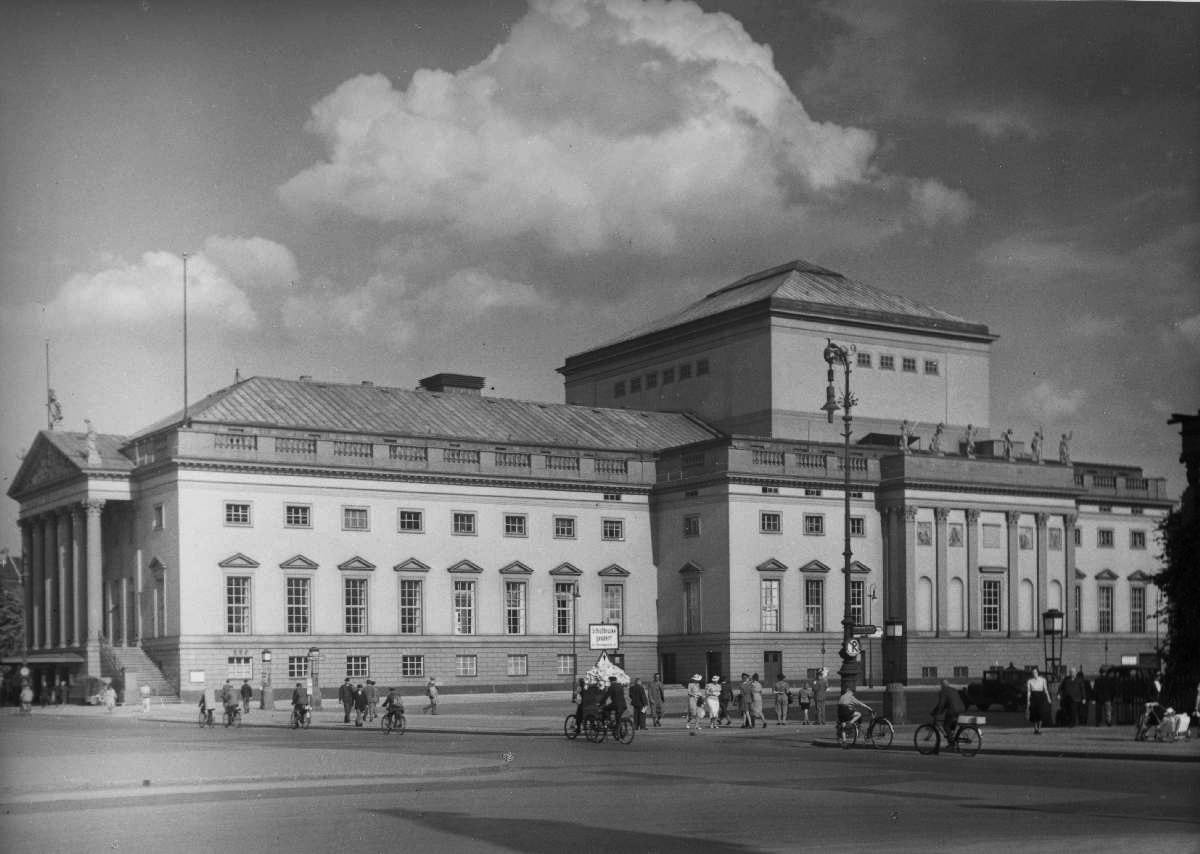
The Staatsoper was built in 1741-43 as the Hofoper (‘Court Opera’) commissioned by King Frederick II of Prussia with design by Georg Wenzeslaus von Knobelsdorff. In 1843 the building lives its first reconstruction after suffering a serious fire, supervised by architect Carl Ferdinand Langhans. A year later it was renamed Königliches Opernhaus (Royal Opera House) and took an extension of the theatre and the stage.
After the collapse of the German Empire in 1918, the Opera was renamed Staatsoper Unter den Linden, highlighting a major renovation in the twenties to adapt to the standards of the time, and with the arrival of the Third Reich lived a time full of lights and shadows: on the one hand, the glorification of the operatic work and its authors, on the other, the condemnation and expulsion of many of the best directors and musicians of the moment, for being Jewish.
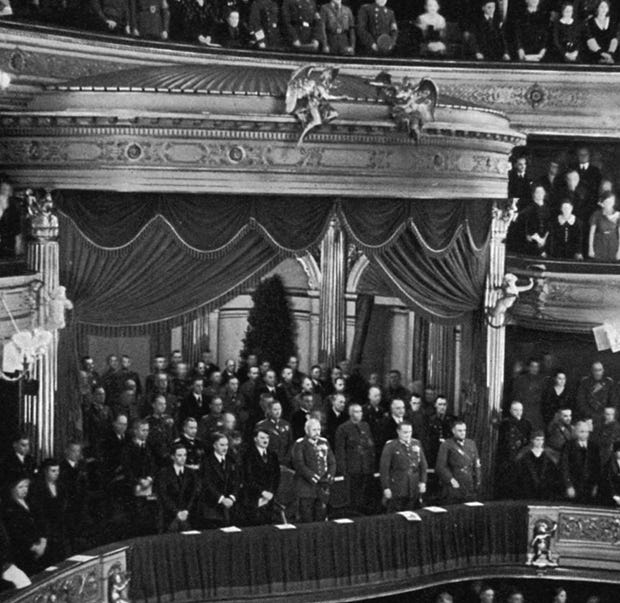
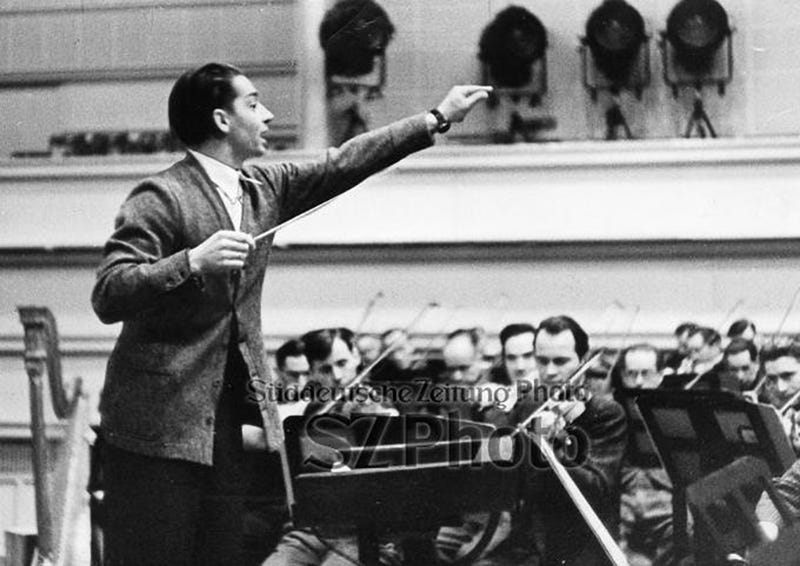
During the 1930’s, subordinated to the Preußisches Staatstheater, concerts there became major party events, due to the Nazi regime fanfare for Imperial traditions. The Führer had an almost fanatical devotion to the work of Richard Wagner, which to Hitler represented everything that was good about culture in Nazi Germany. The new regime forced that music had to conform to the Aryan ideal. Hence some composers were tolerated and even elevated to a status of pure Nazism, while other composers, frequently Jewish, were shunned and censored. During the Third Reich, Robert Heger, Herbert von Karajan and Johannes Schüler were Staats Kapellmeister (the conductor of the orchestra) at some time.
The outbreak of World War Two would cause the almost total destruction of the Opera, being one of the key-point buildings of the aerial bombing campaign suffered by Berlin, appearing in every writing of every press correspondent hosted in the city as well as in the official parts after each enemy’s raid. Destruction falling from above was a real threat since the start of the war, evidence of this is the warning text that appeared on every program (“Bei Fliegeralarm ist den Anordnungen der Logenschließer unbedingt Folge zu leisten” - In the event of an air-raid alarm, the instructions of the ushers must be followed) to alert the audience before the performance from 1940.
But the origin of the destruction of the Berlin’s Opera would be thousands of kilometers east of the Reichshauptstadt, exactly in Yugoslavia…
BRAND DER STAATSOPER - 10 April 1941
The night before RAF Bomber Command raided the city dropping several sticks of bombs at Unter den Linden and Mitte. The attack was made by 80 medium bombers (nearly half of them reached the city) with the raiding force bombing Berlin illuminated by moonlight conditions. The British lost 5 aircraft and minor damage was made to the capital.
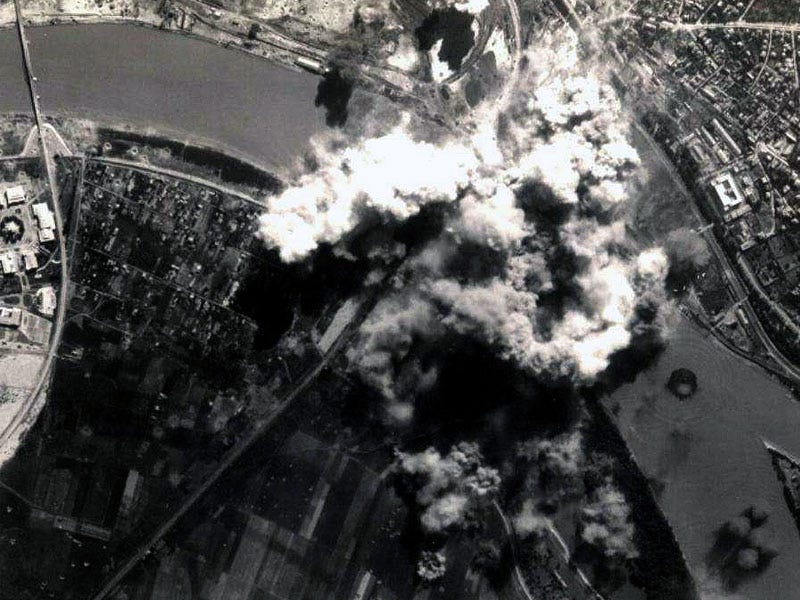
Some sources indicates this attack was ordered by Britain’s War Cabinet in retaliation for the bombing of Belgrade by the Luftwaffe on 6 April [‘Operation Retribution’ (Unternehmen Strafgericht)]. That day, 160 medium bombers dropped 215–360 tons of bombs and incendiaries in four air strikes on the Yugoslav capital. Hitler had given orders for the city to be annihilated but the order was changed in the last minute by the Air Staff into an order to attack military objectives within the city area. Prime Minister Churchill said that Germans killed twelve thousand souls in his statement for BBC London on the very next day.
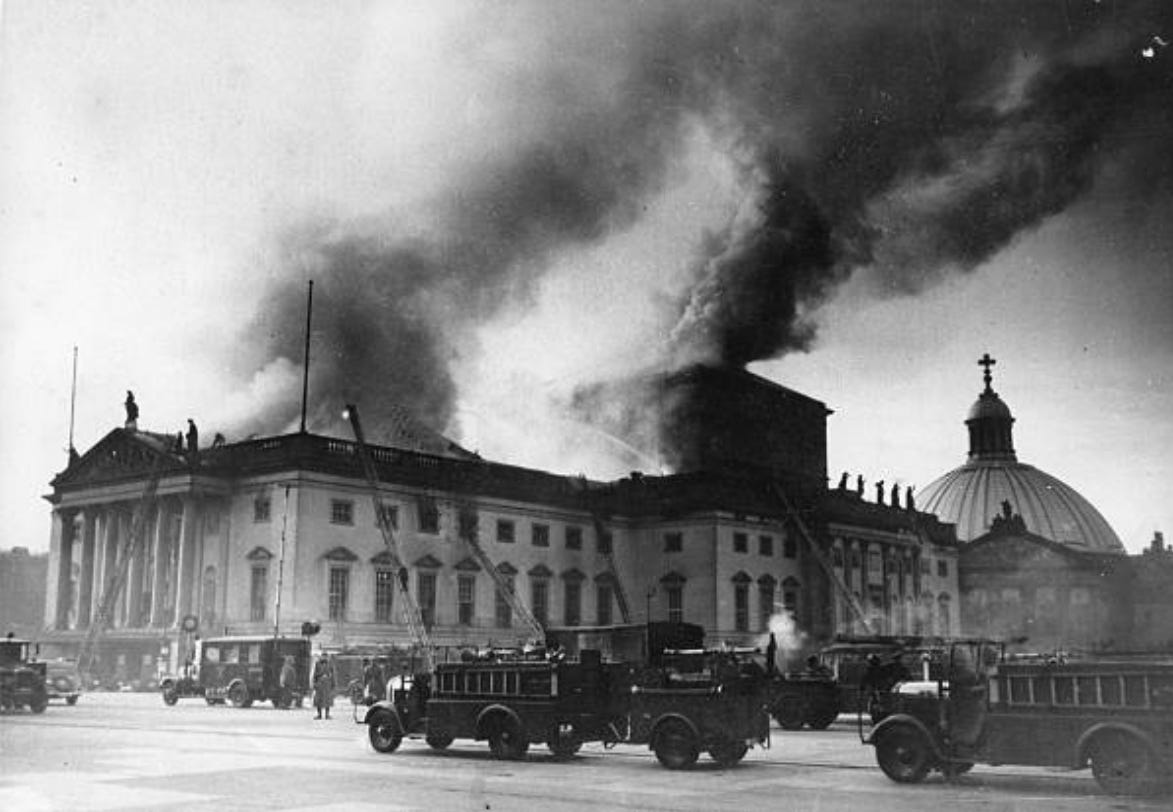
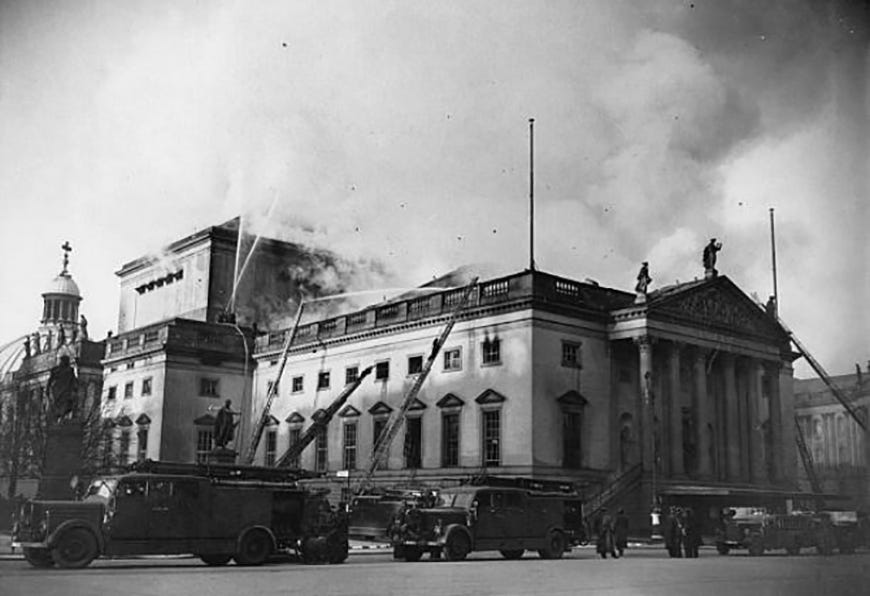
The worst part of the raid damage went to the Staatsoper theatre. The roof construction was partially plunged into the auditorium, the head building in front of the massive stage house actually ripe for the demolition. The correspondent from US news agency United Press reported to New York: “Berlin’s large opera house at Unter den Linden, in which Adolf Hitler often heard Wagner, his favorite music, today lies in smoldering ruins.”
According to the city’s municipal report, “she was hit by a large number of incendiary bombs. Burned out theatre building, stage house badly affected. Heavy property damage.” Heinrich Hoffman, Hitler’s official photographer, was there and took a series of dramatic photographies of the Opera engulfed in flames after the attack.
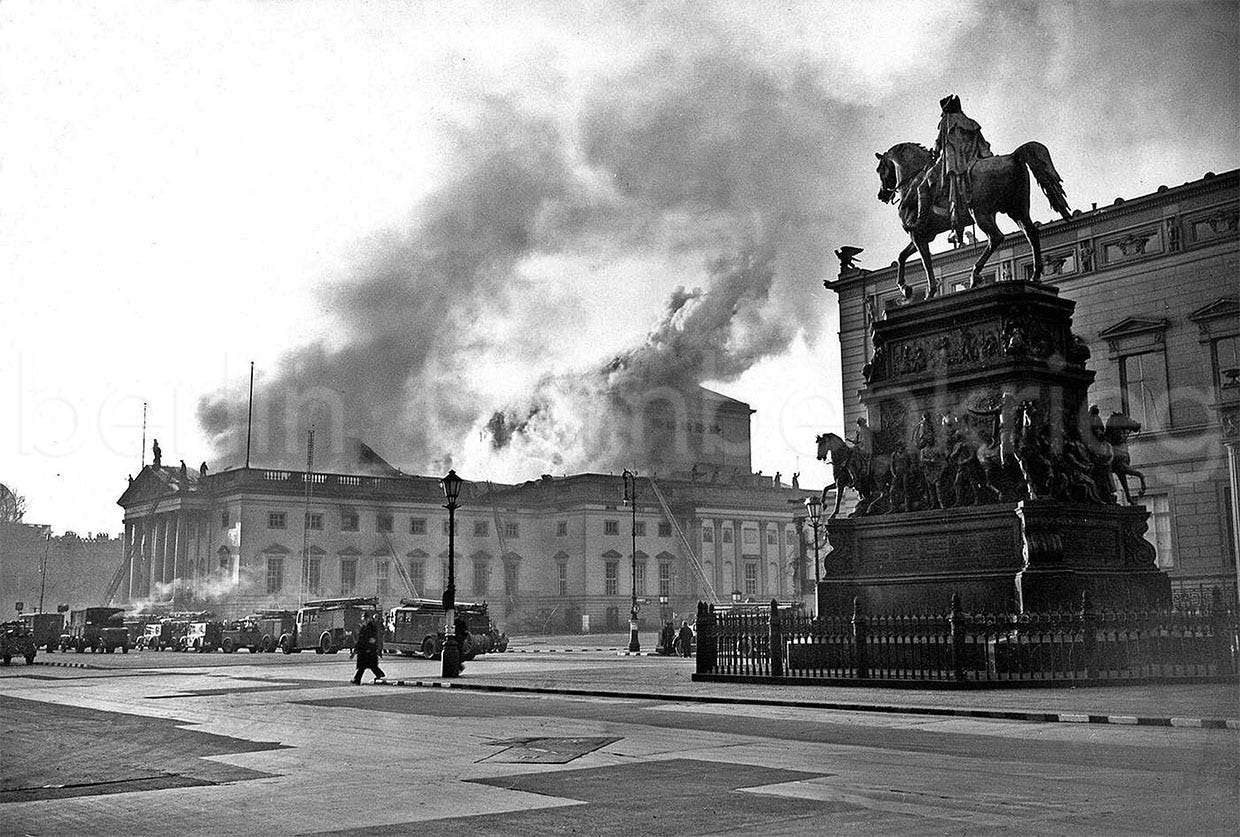
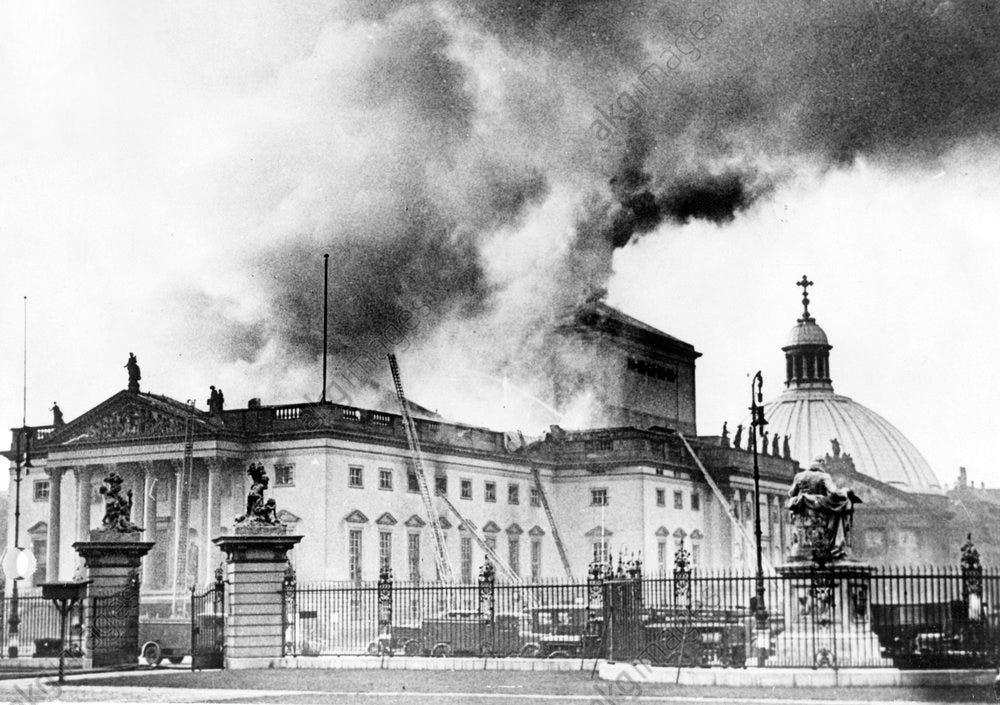
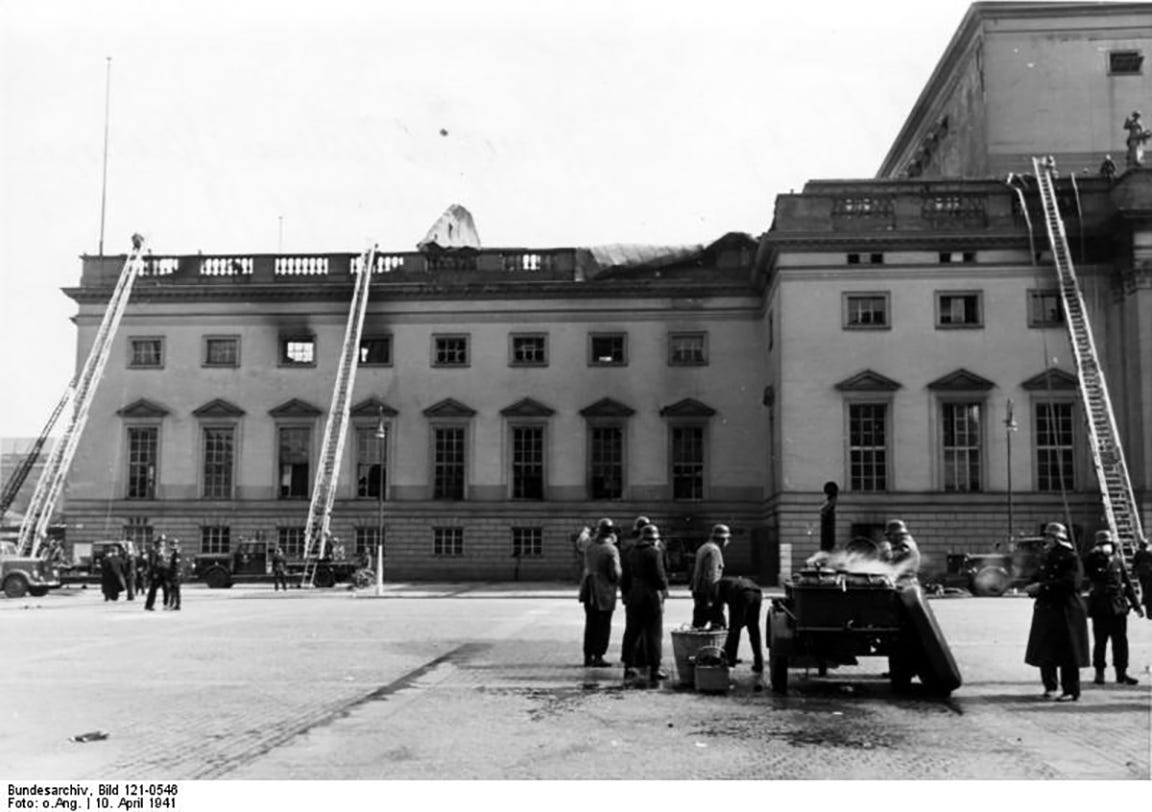
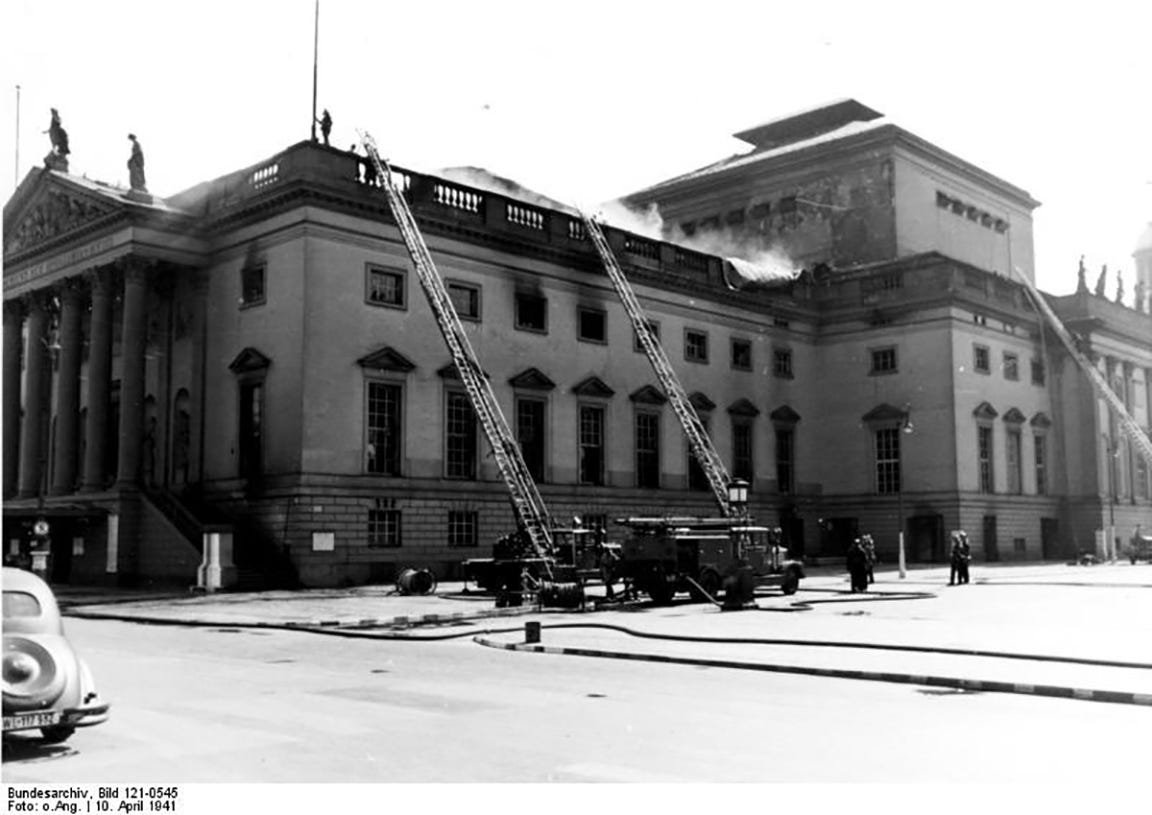
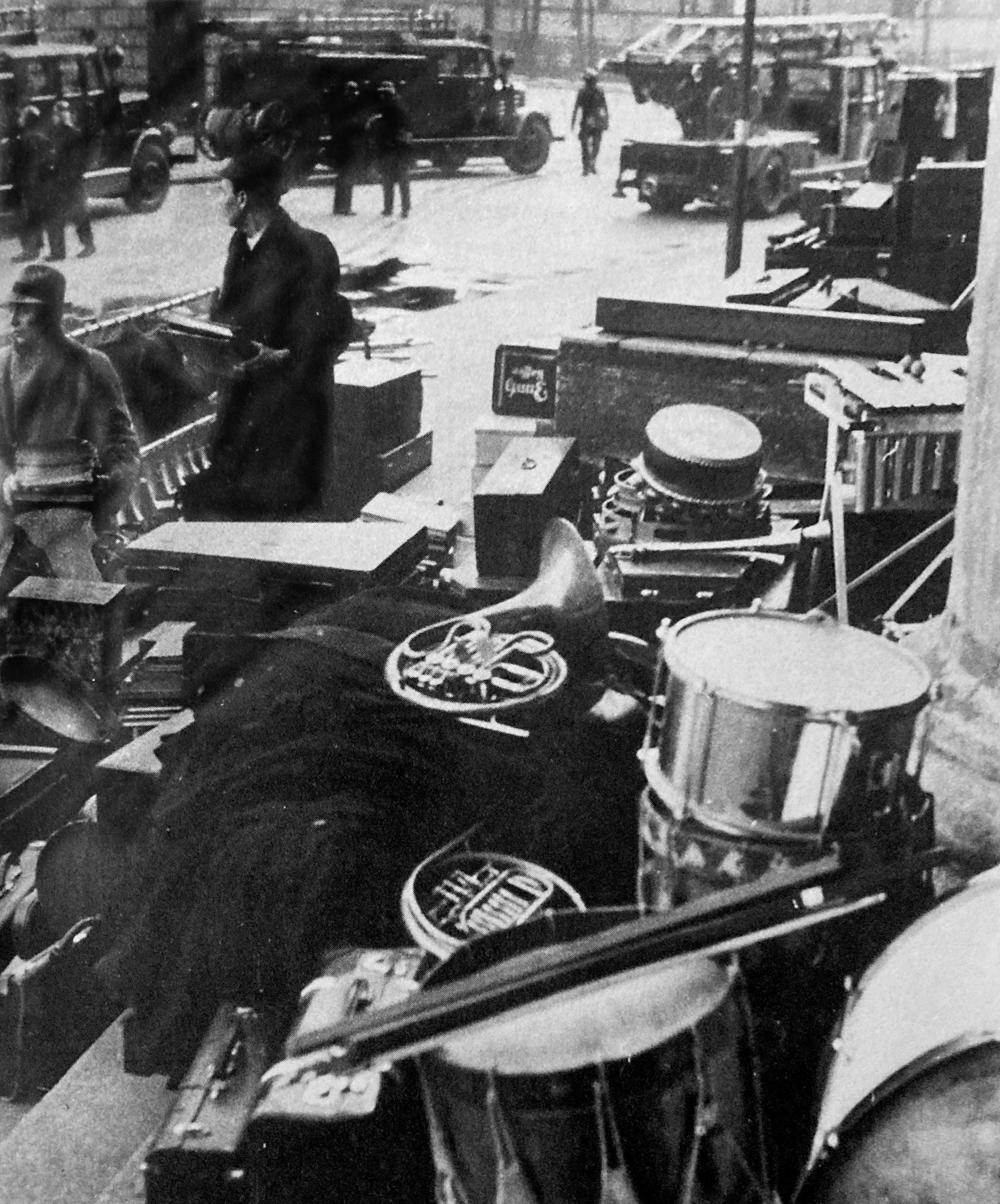
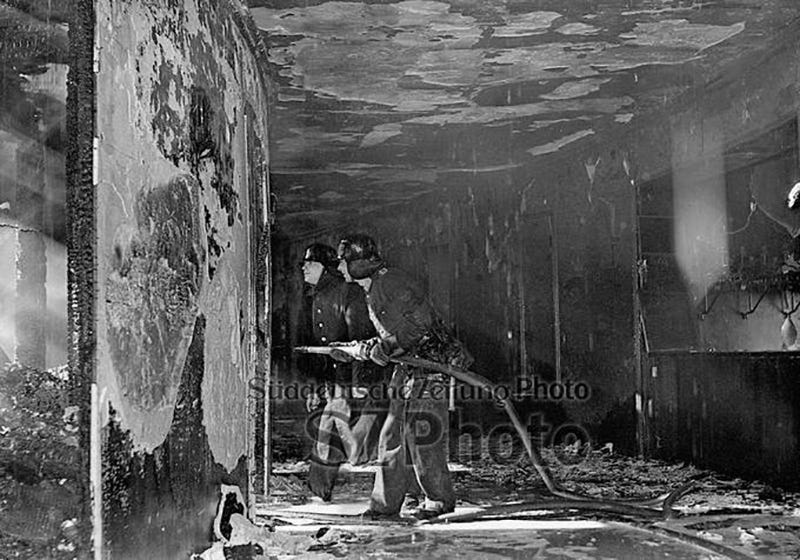
After the raid, Nazi leadership took advantage of the apparent non-military targets of this air attack. ‘Angriff auf das Berliner Kulturviertel’ was the name given to this propaganda campaign led by Propaganda Minister and Gauleiter of Berlin Joseph Goebbels. Official German agencies exaggerated the destruction and spread Goebbels’ speach throughout the world. He noted in his diary about the destruction of the Opera: “A serious loss. Apparently he actually felt struck: “I look at the damage in the Staatsoper. She is lost. The whole interior completely burned out. There is hardly anything to save… How many happy hours have I already experienced in this house. And now this ruin.”
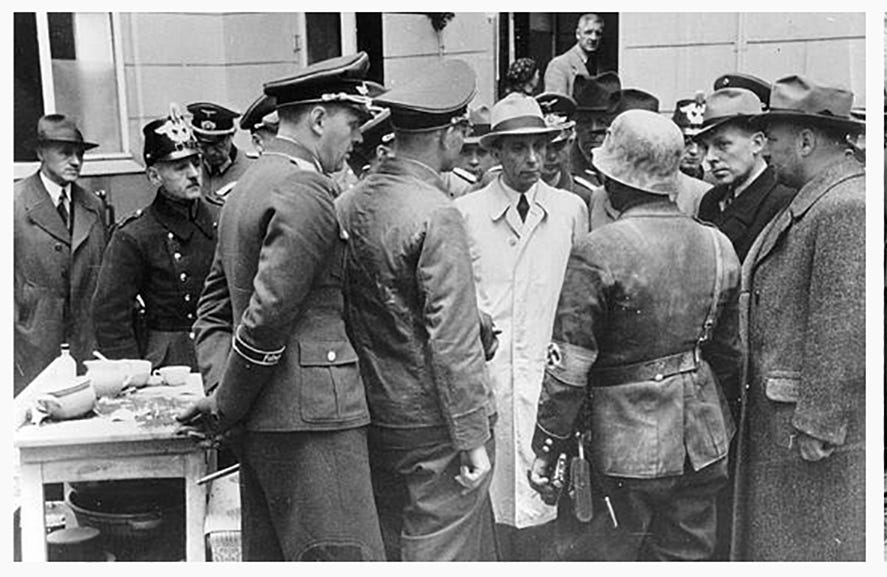
The attack on the cultural quarter of the city gave Berlin leaders a good counterargument to the bombing and destruction of Belgrade days before.
_______________
Sources:
Aster, Misha. (2017). Staatsoper: Die bewegte Geschichte der Berliner Lindenoper im 20. Jahrhundert. Siedler Verlag
Boog, H, Krebs, G and Vogel, D. (2006). Germany and the Second World War. Volume VII: The Strategic Air War in Europe and the War in the West and East Asia, 1943-1944/5. Clarendon Press
Demps, Laurenz. (2014). Luftangriffe auf Berlin. Die Berichte der Hauptluftschutzstelle. Ch. Links Verlag
Einhard, Luther. (2012). Oper in Berlin – Heiß umkämpft und stets unter Feuer. Pro Business
Freydank, Ruth. (1988). Theater in Berlin: von den Anfängen bis 1945. Berlin
Friedrich, Jörg. (2002). Der Brand: Deutschland im Bombenkrieg 1940-1945. Propylaen Verlag, Zweigniederlassung der Ullstein
Kellerhoff Sven F. (2011). Berlin im Krieg: Eine Generation erinnert sich. BASTEI LÜBBE
Middlebrook, Martin. (2014). The Bomber Command War Diaries: An Operational Reference Book. Casemate Publishers and Book Distributors
Moorhouse, Roger. (2011). Berlin at war. Life and death in Hitler’s capital, 1939-45. Vintage Books, London
Overy, Richard. (2013). The Bombing War: Europe, 1939-1945. Allen Lane
SCHLOSSDEBATE. Wie wurde die Staatsoper in der DDR rekonstruiert? <http://schlossdebatte.de/
STAATSOPER UNTER DEN LINDEN <https://www.staatsoper-berlin.de>
The Diaries of Joseph Goebbels, Part I: Notations, 1923–1941. Saur Verlag. 1998
Thank you for reading Berlin Bombenkrieg by Pablo López Ruiz.
Please subscribe, if you haven’t yet, to comment, follow and share. All images used for non profit / educational purposes.