


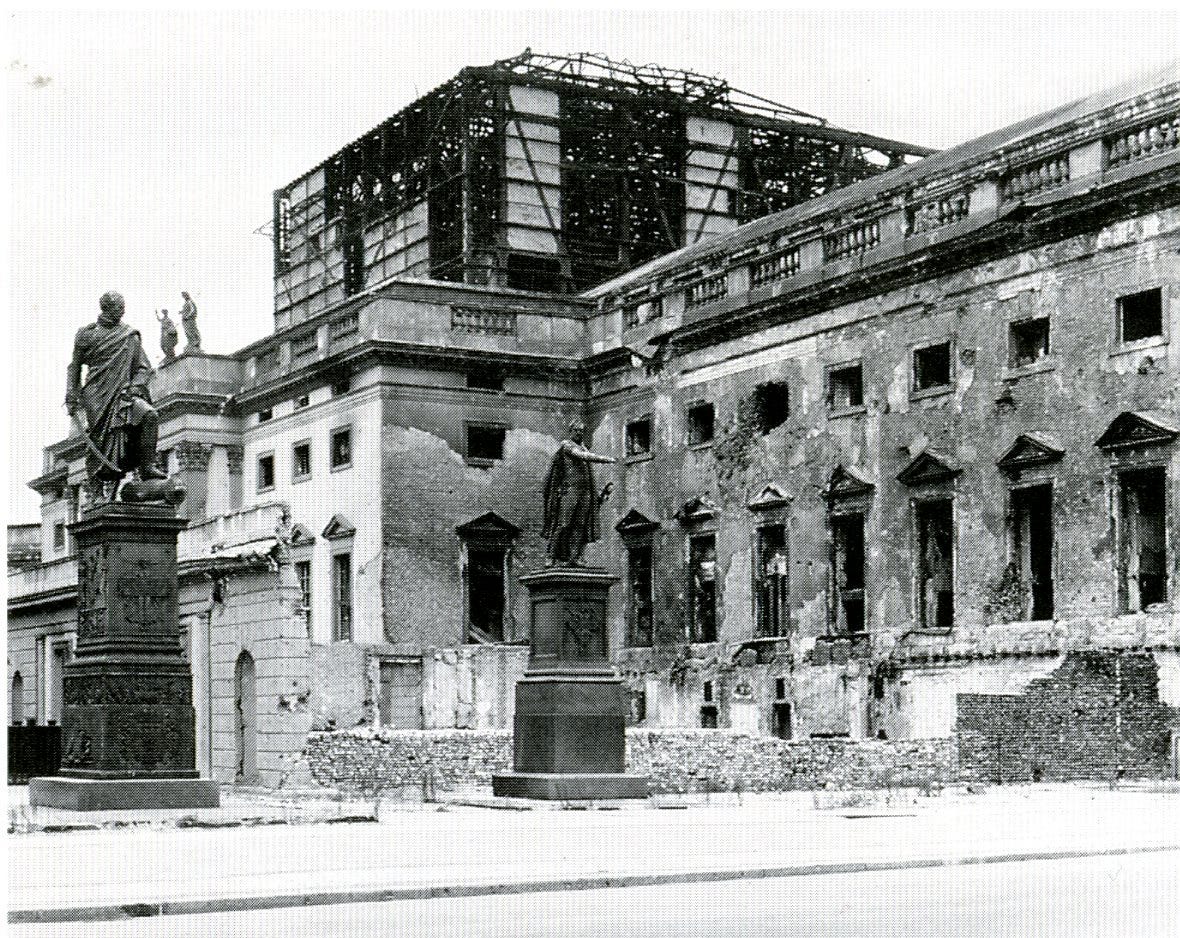
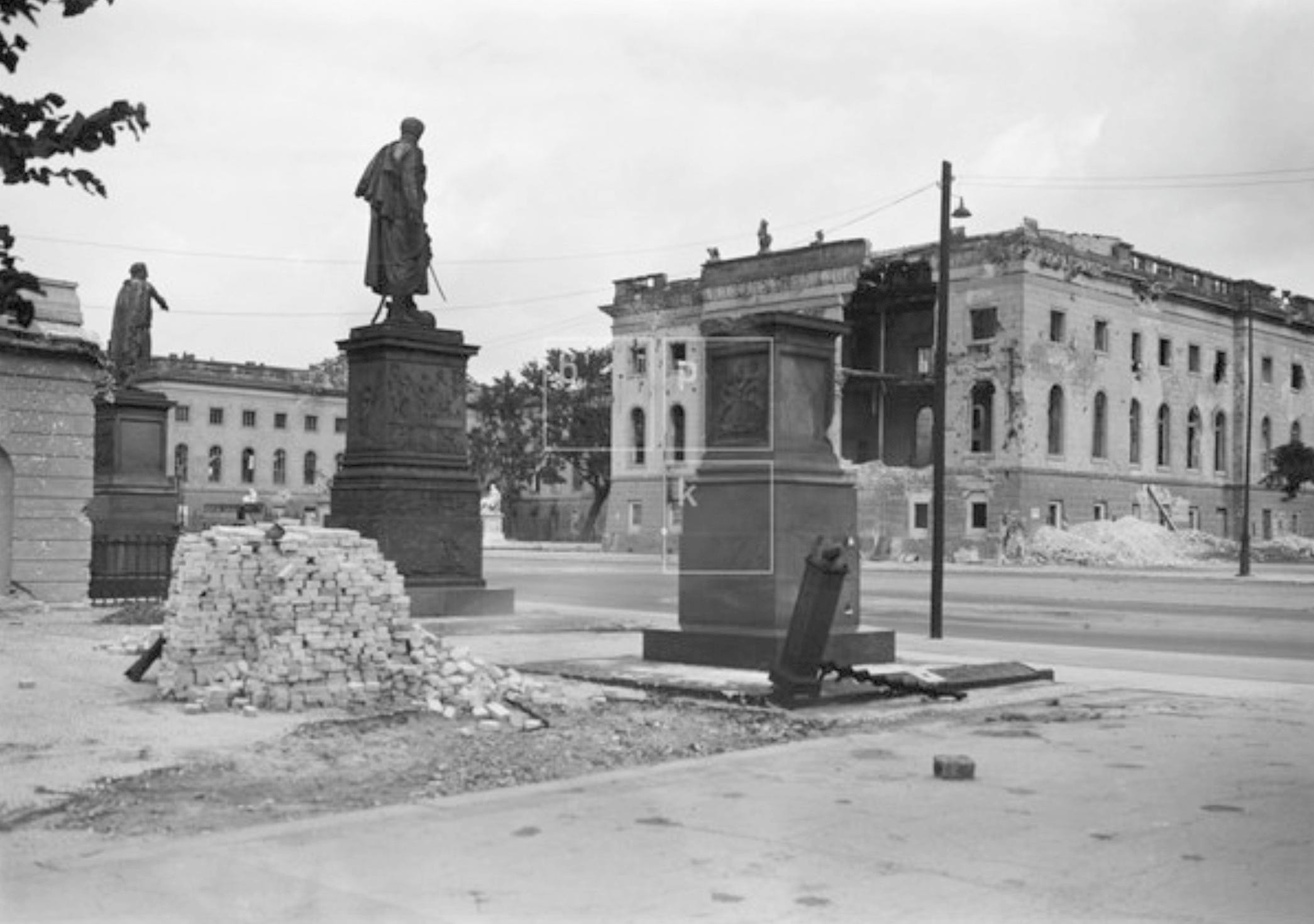
This is how the Staatsoper Unter den Linden, one of the most important cultural-landmarks of the city of Berlin looked short time after the end of the World War Two in the summer of 1945: a mass of ruin and rubble.
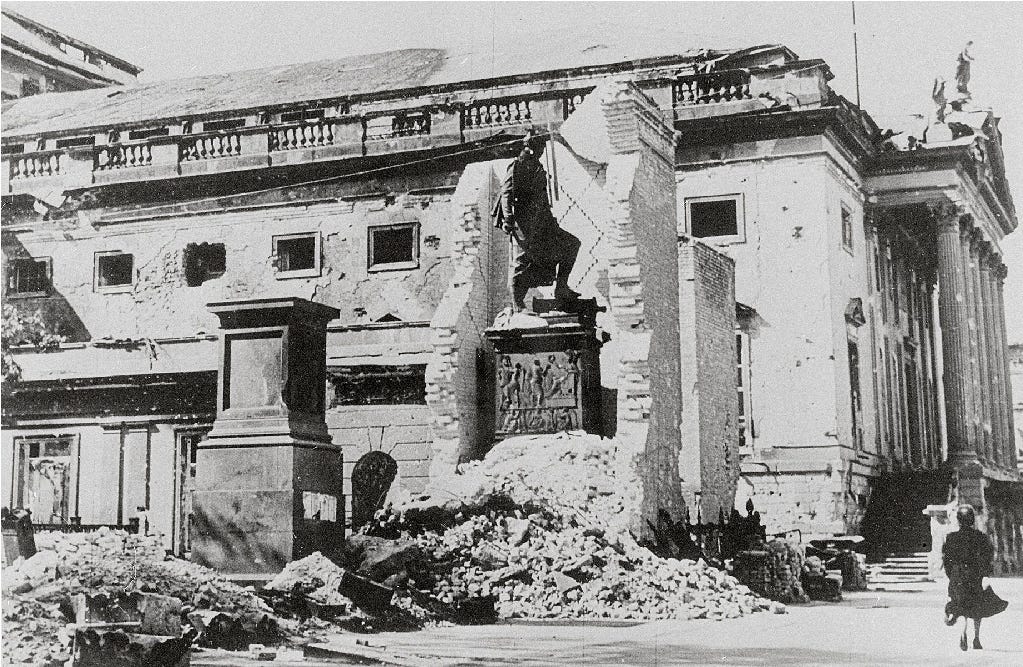
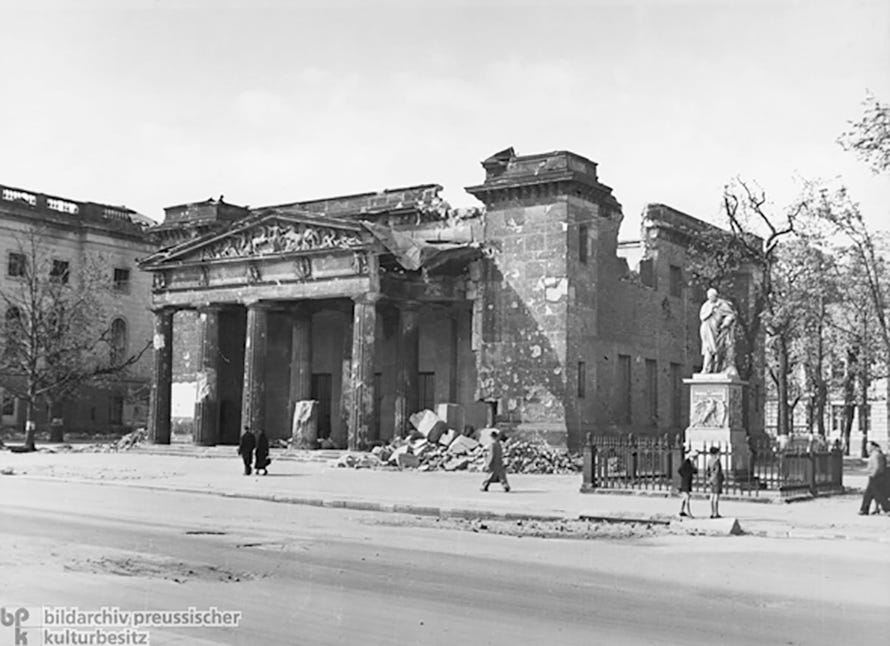
Before the end of the war, next to the main entrance of the Opera house at Unter den Linden were three statues of prominent Prussian generals in pedestals, installed in the 19th Century and commissioned by König Friedrich Wilhelm III. Today, next to the Opera portico at left we see two majestic statues again, but actually they are not the same… why is this? Here is their full story…
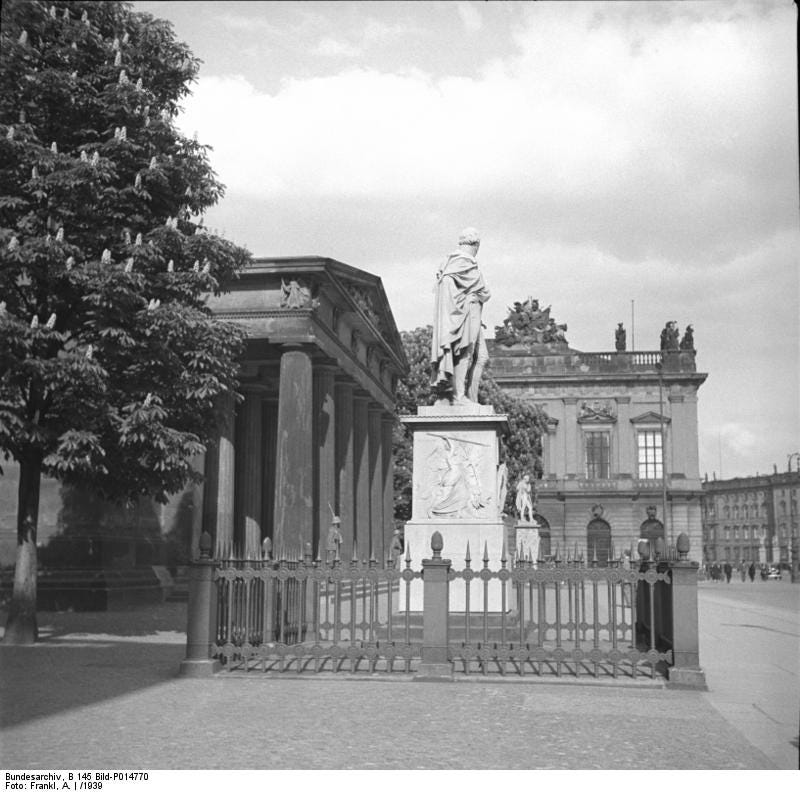
Here we see the same location before the destruction caused by bombings and street-fighting. These photos were taken in 1937 in colour film by Karl Lutz during a Wehrmacht parade at Unter den Linden. We can see a 3-statue set on pedestals, located next to the Staatsoper. Notice that the Zeughaus armoury (today the Deutsches Historisches Museum - German Historical Museum) and the Dom are at right behind the statues, this is because the images are flipped.
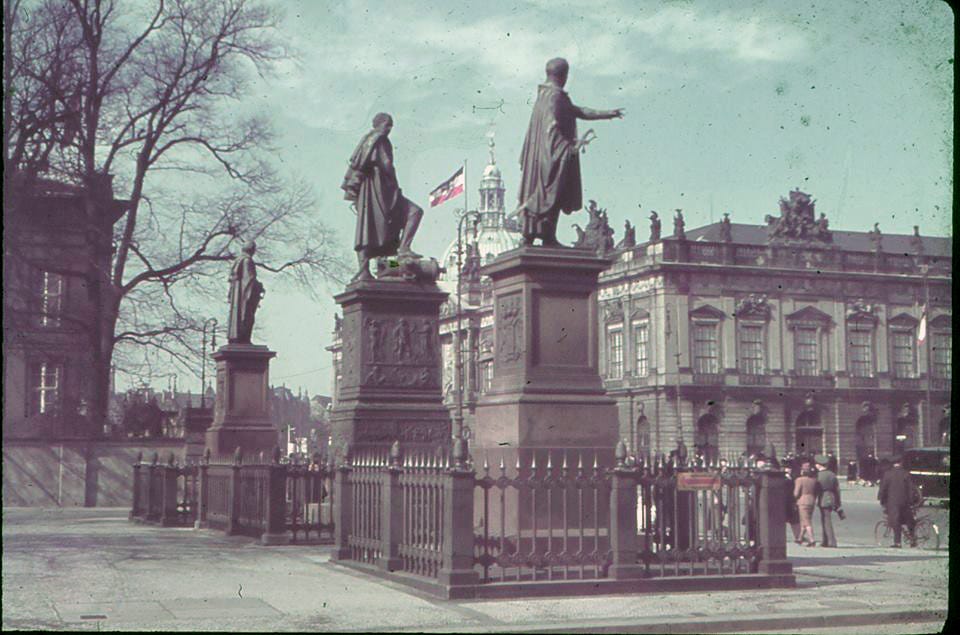
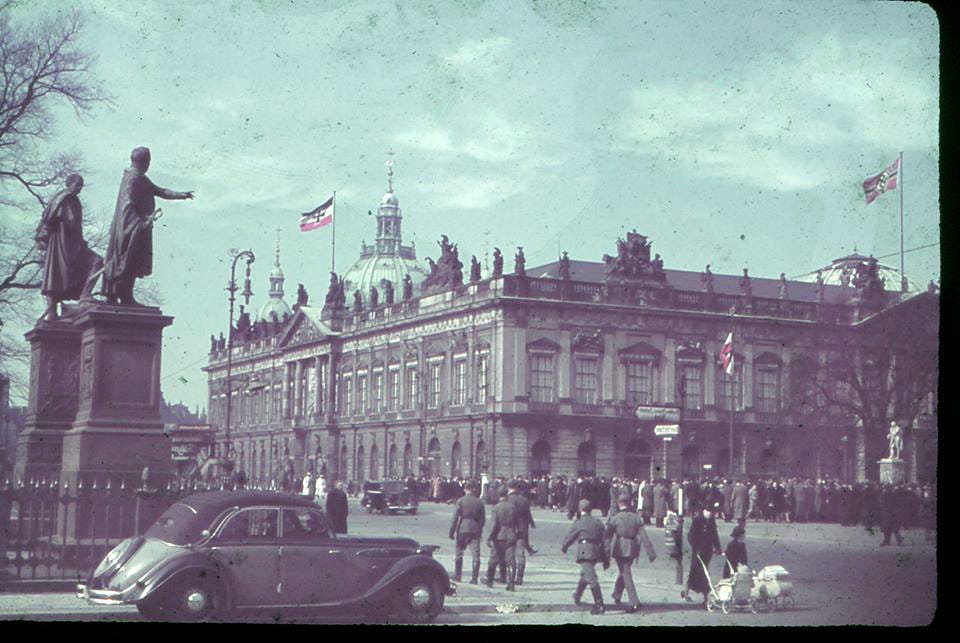
They were part of a 5-statue field commemorative monuments made in 1855. The trio of generals next to the Opera was composed by August von Gneisenau (1760-1831), Gebhard Leberecht von Blücher (1742-1819) and Ludwig Yorck von Wartenburg (1759-1830), all of them instrumental in the Prussian army during the European Napoleonic Wars. They were sculpted by Christian Daniel Rauch (1777-1857) in marble on pedestal with reliefs (these ones made by Karl Friedrich Schinkel) and a height of 2.7 metres.
Starting in August 1940, the Nazi-regime tried to protect these sculptures from the Allies’ air-bombardments by covering them with some urns made of bricks, and they got some protection during those wartime days, but following the final battle by war’s end one of the statues is missing from her pedestal, as we can clearly see in one of the accompanying images.
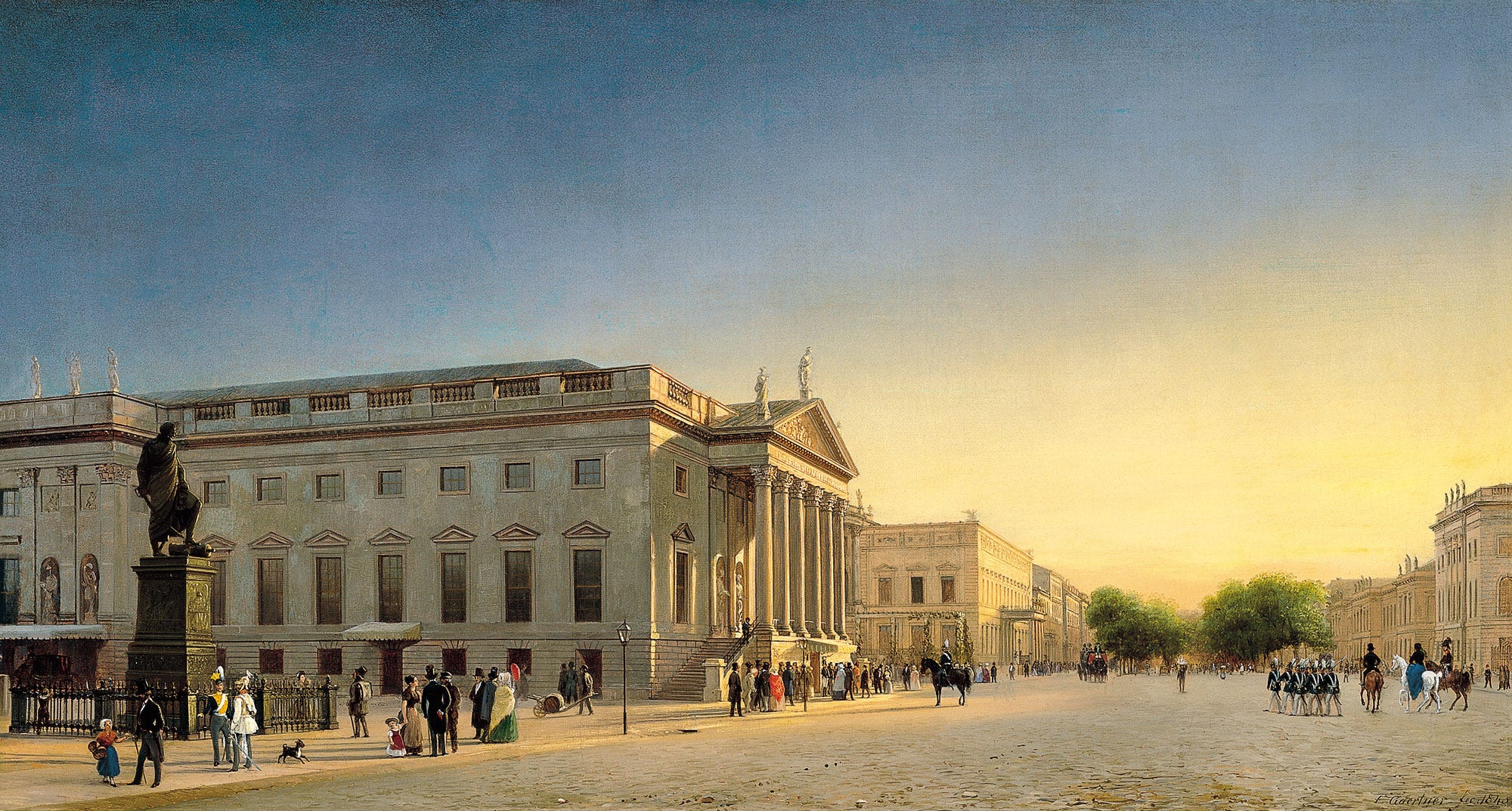
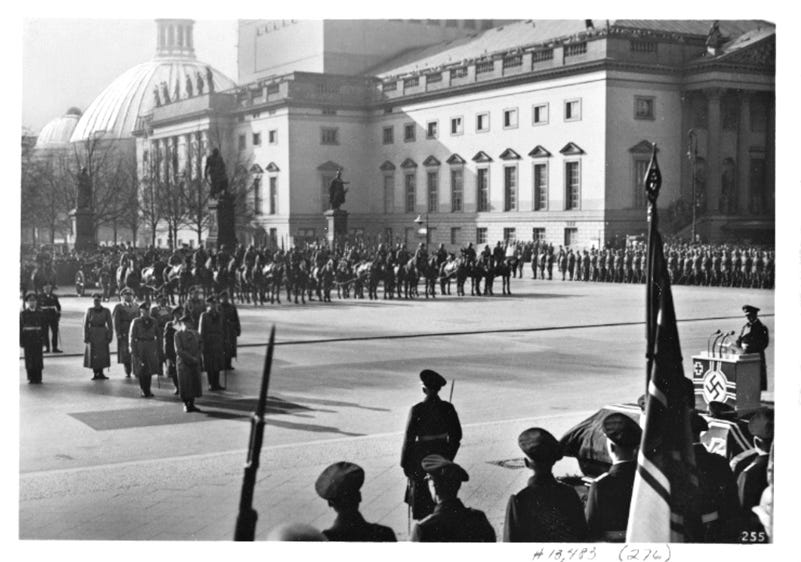
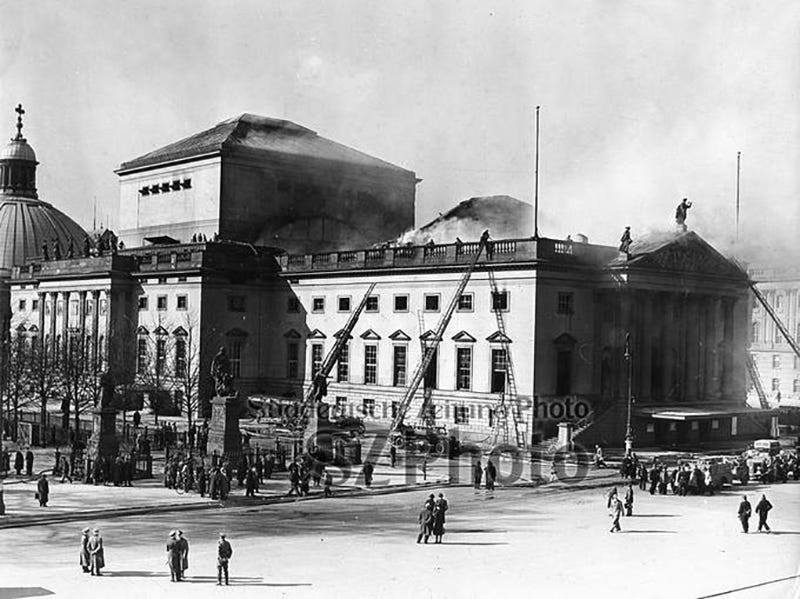
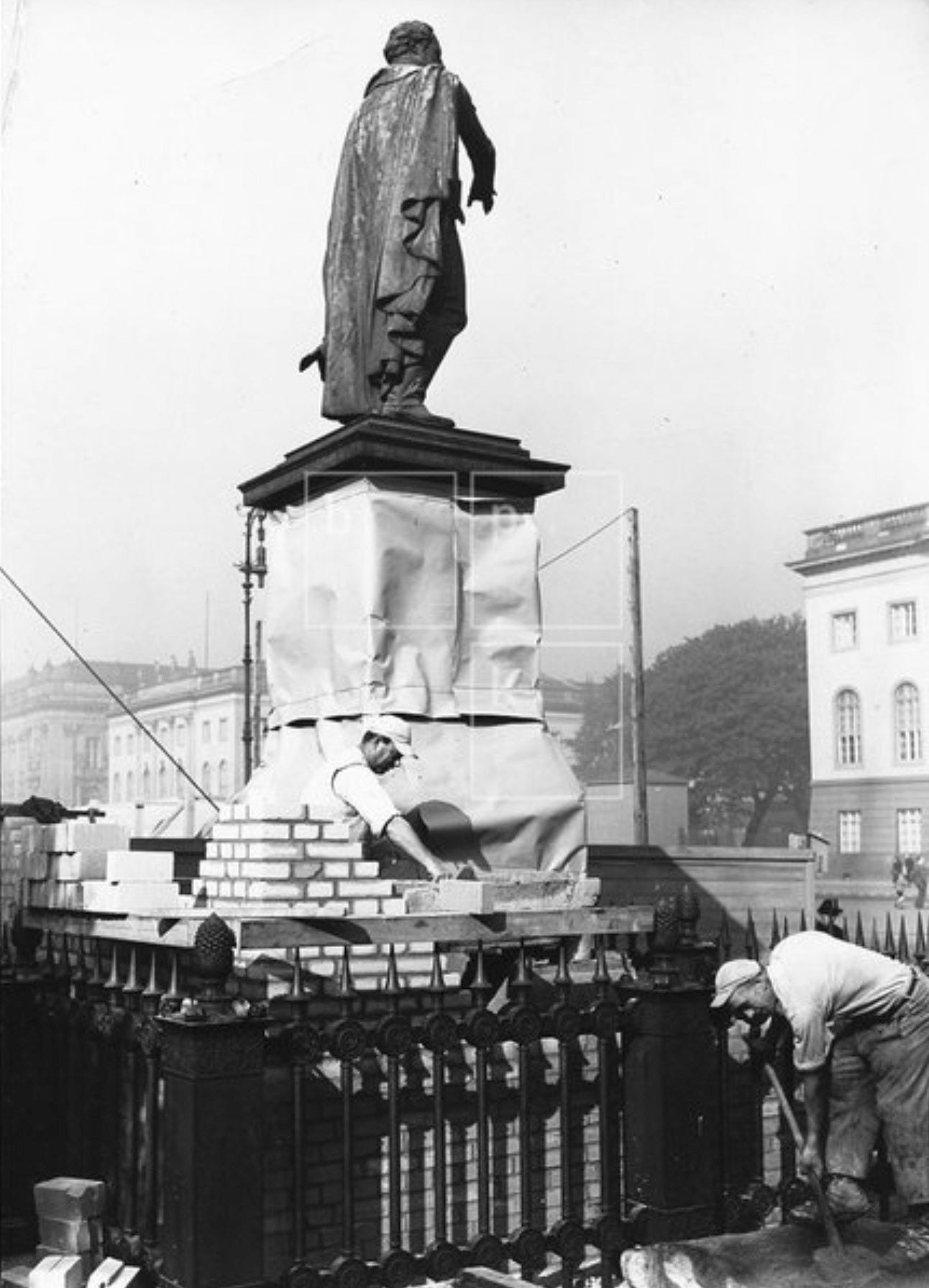
Until Cold War-year 1950, the statues of Generals von Wartenburg, von Blücher and von Gneisenau stood at this point surrounded by ruins and rubble. However, were dismantled in the postwar period by the new socialist government during the reconstruction of the theatre that year as the symbology of the war heroes did not fit with the ‘3rd World Festival of Youth and Students’ (Weltfestspiele der Jugend und Studenten), an international event that was to be held in East Berlin in 1951.
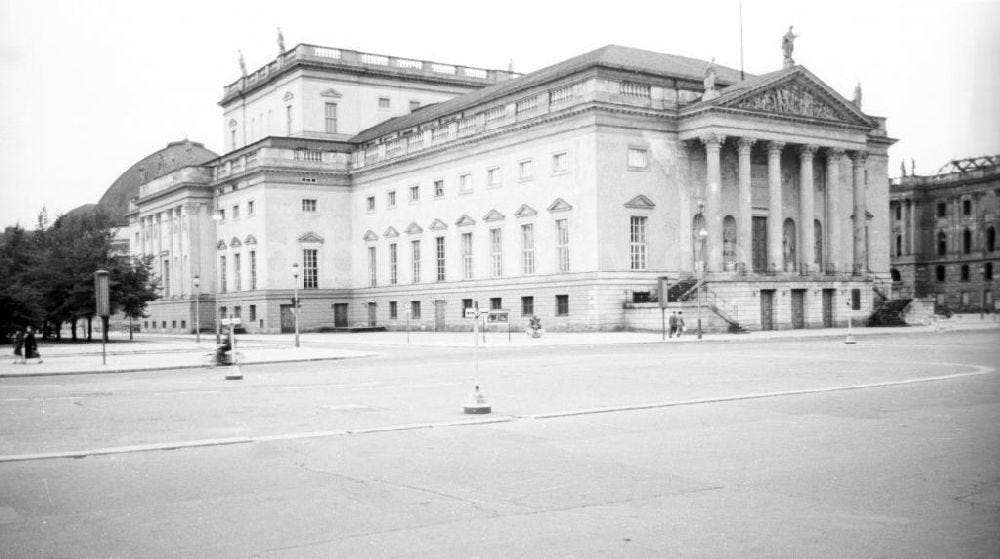
Today, next to the Opera theatre stands the two remaining statues of the 5-set, which represent General Friedrich Wilhelm von Bülow and General Gerhard von Scharnhorst. This pair is the one that was originally placed on both sides of the Neue Wache (‘New Guard House’), flanking the memorial that honored the Unknown soldier. Having survived the destruction of the battle and air-bombings, and located within the Soviet zone of occupation, the statues were dismantled from their pedestal and put into storage.
Last summer view of today’s location of Generals von Bulow (at left in the foreground) and Scharnhorst (at centre) next to the restored Unter den Linden’s Opera.
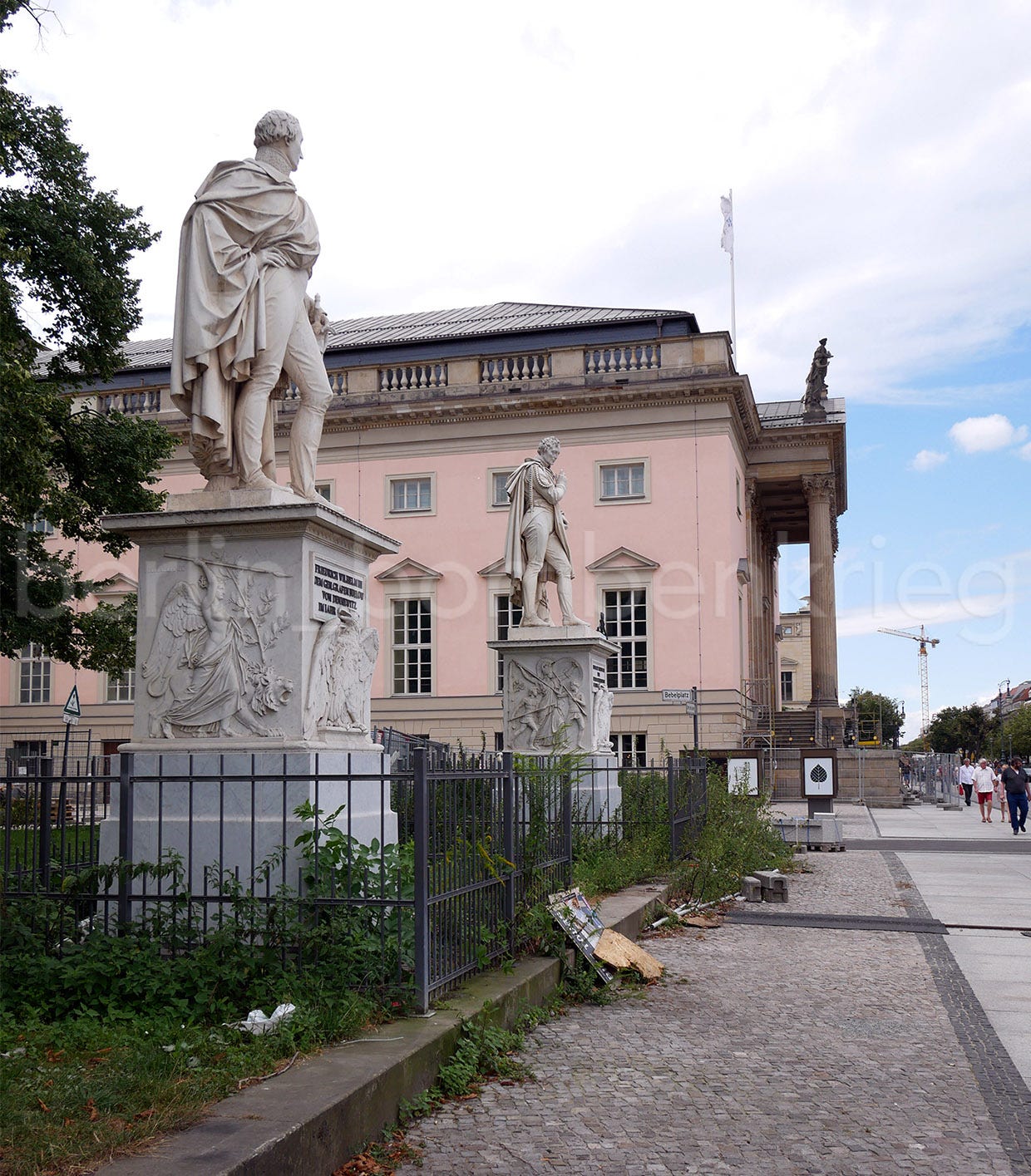
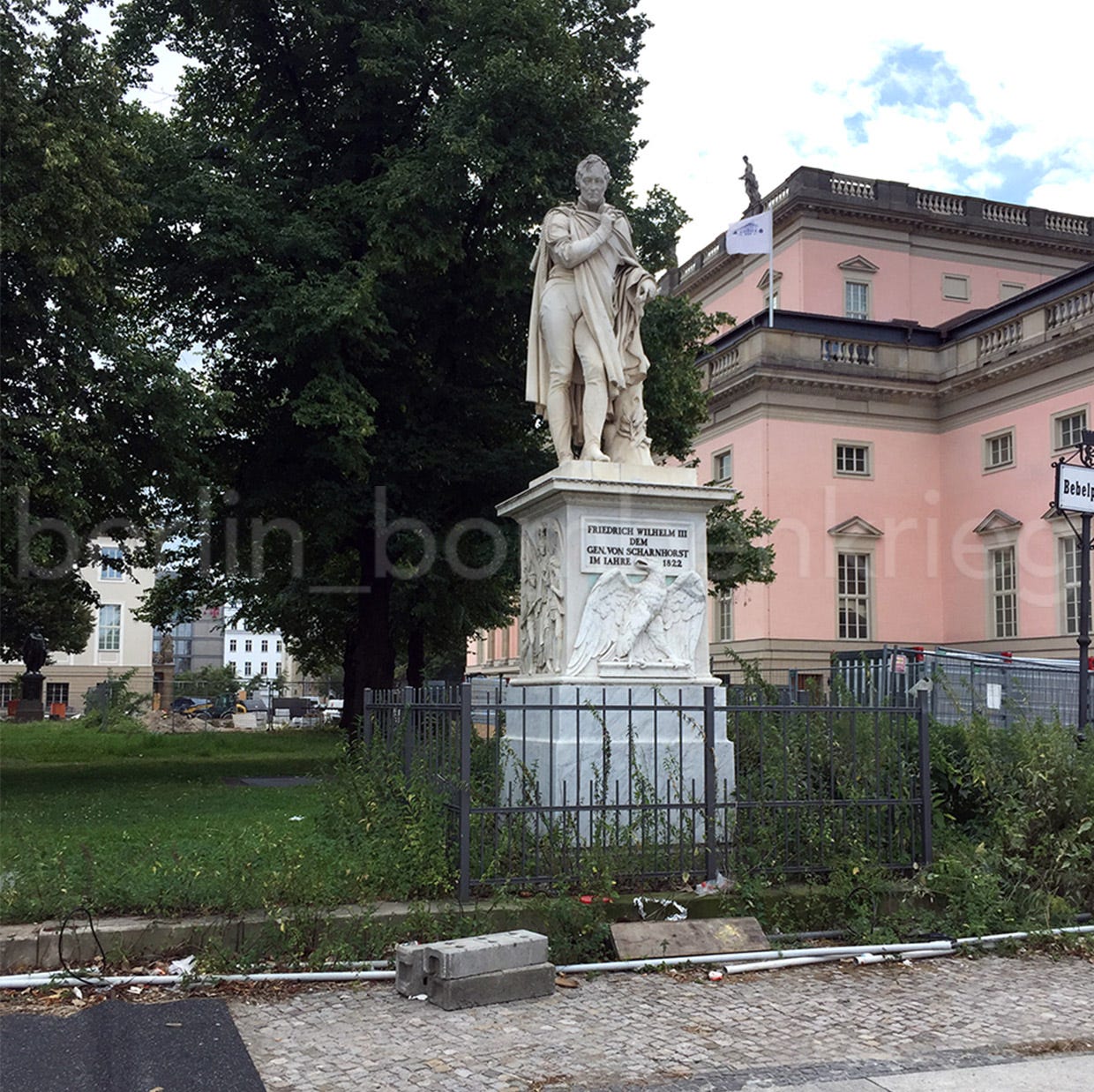
In 1961, the statue of Scharnhorst was placed in its current situation next to the Opera, re-established by the DDR government. Later, the Scharnhorst Monument was restored in 1990 after the German reunification and rebuilt in 2002, set up again with the statue of von Bülow, which has been stored since 1950. But … where did the 3 original statues on the roadside of the Opera go?
The trio of Generals von Wartenburg, von Blücher and von Gneisenau was re-established in 1961 in the back garden of the Opera: the so-called Prinzessinnengarten (‘Garden of the princesses’). Today they are still located there but in different place, recently restored after the reformation workings on the Staatsoper started in 2009 and with a new design of the adjacent area including a square and gardens.
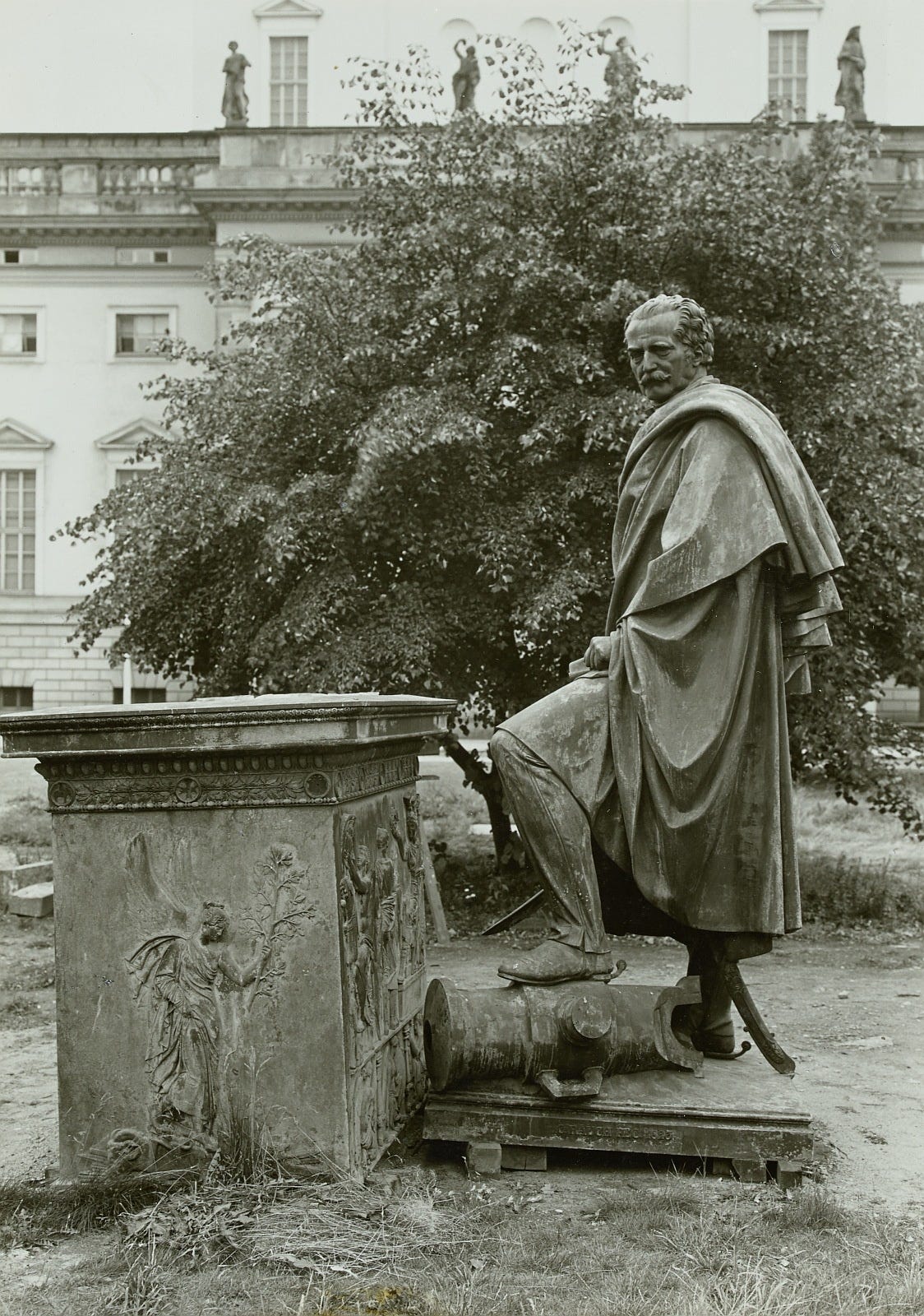
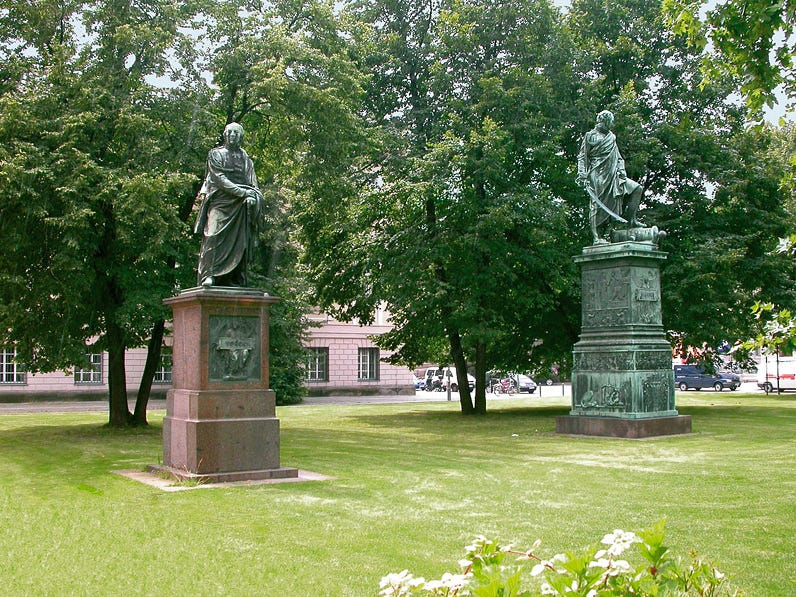
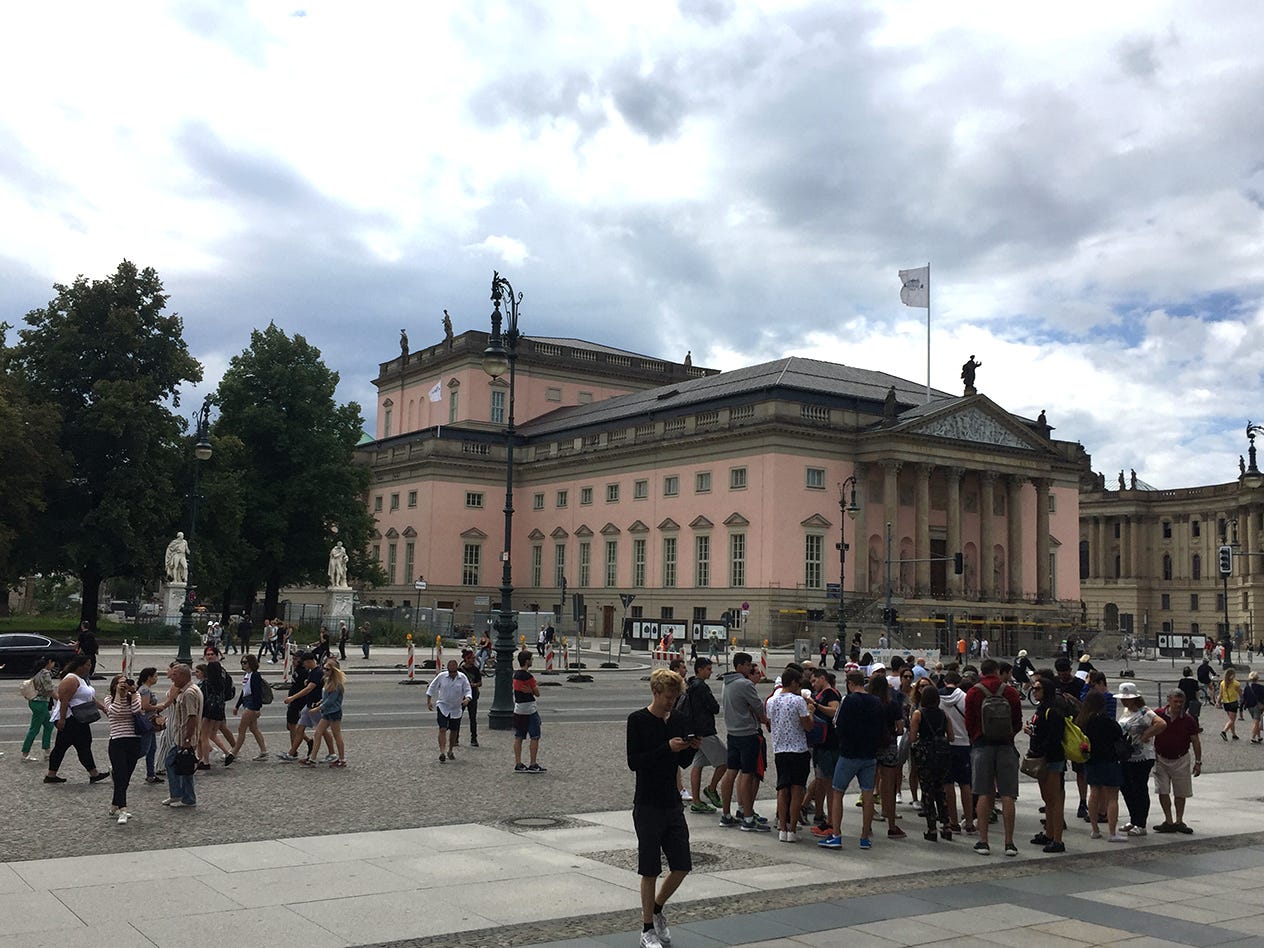
The reasons behind these statues have not been re-established at their original location by Berlin authorities are unknown, but at least they are all intact and exposed to the visitor, and not stored in an old warehouse as happened during the postwar years.
_______________
Sources:
Berlin: Staatsoper Unter den Linden. CARTHALIA - Theatres on Postcards. Andreas Praefcke’s postcard collection of theatres and concert halls worldwide
<http://www.andreas-praefcke.de/carthalia/germany/berlin_staatsoper.htm>Einhard, Luther.(2012). Oper in Berlin – Heiß umkämpft und stets unter Feuer. Pro Business
Freydank, Ruth. (1988). Theater in Berlin: von den Anfängen bis 1945. Berlin
Friedrich, Jörg. (2002). Der Brand: Deutschland im Bombenkrieg 1940-1945. Propylaen Verlag, Zweigniederlassung der Ullstein
Kellerhoff, Sven F. (2011). Berlin im Krieg: Eine Generation erinnert sich. BASTEI LÜBBE
Moorhouse, Roger. (2011). Berlin at war. Life and death in Hitler’s capital, 1939-45. Vintage Books, London
SCHLOSSDEBATE. <Wie wurde die Staatsoper in der DDR rekonstruiert? <http://schlossdebatte.de/>
STAATSOPER UNTER DEN LINDEN <https://www.staatsoper-berlin.de>
Thank you for reading Berlin Bombenkrieg by Pablo López Ruiz. Please subscribe, if you haven’t yet, to comment, follow and share. All images used for non profit / educational purposes.