


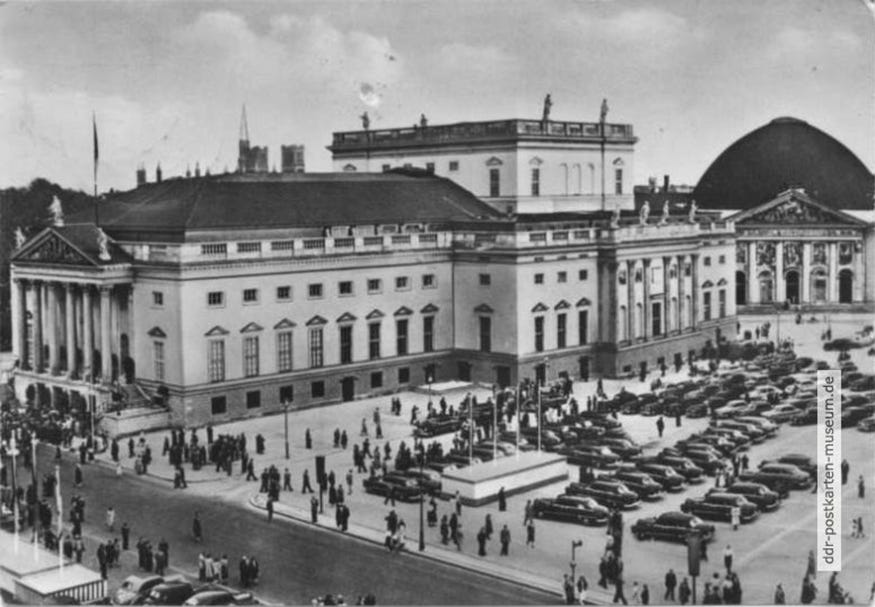
Following the fall of the Third Reich and the end of the Second World War, 1945 was ‘Year Zero’ for Berlin, and so it was for the Staatsoper. The ancient Opera, renamed at that time as Deutsche Staatsoper Berlin, was one of the first historical buildings at the German capital secured against further decay and plunder, with Unter den Linden boulevard and an important part of Mitte district being assigned to the Soviet conquerors as a war trophy.
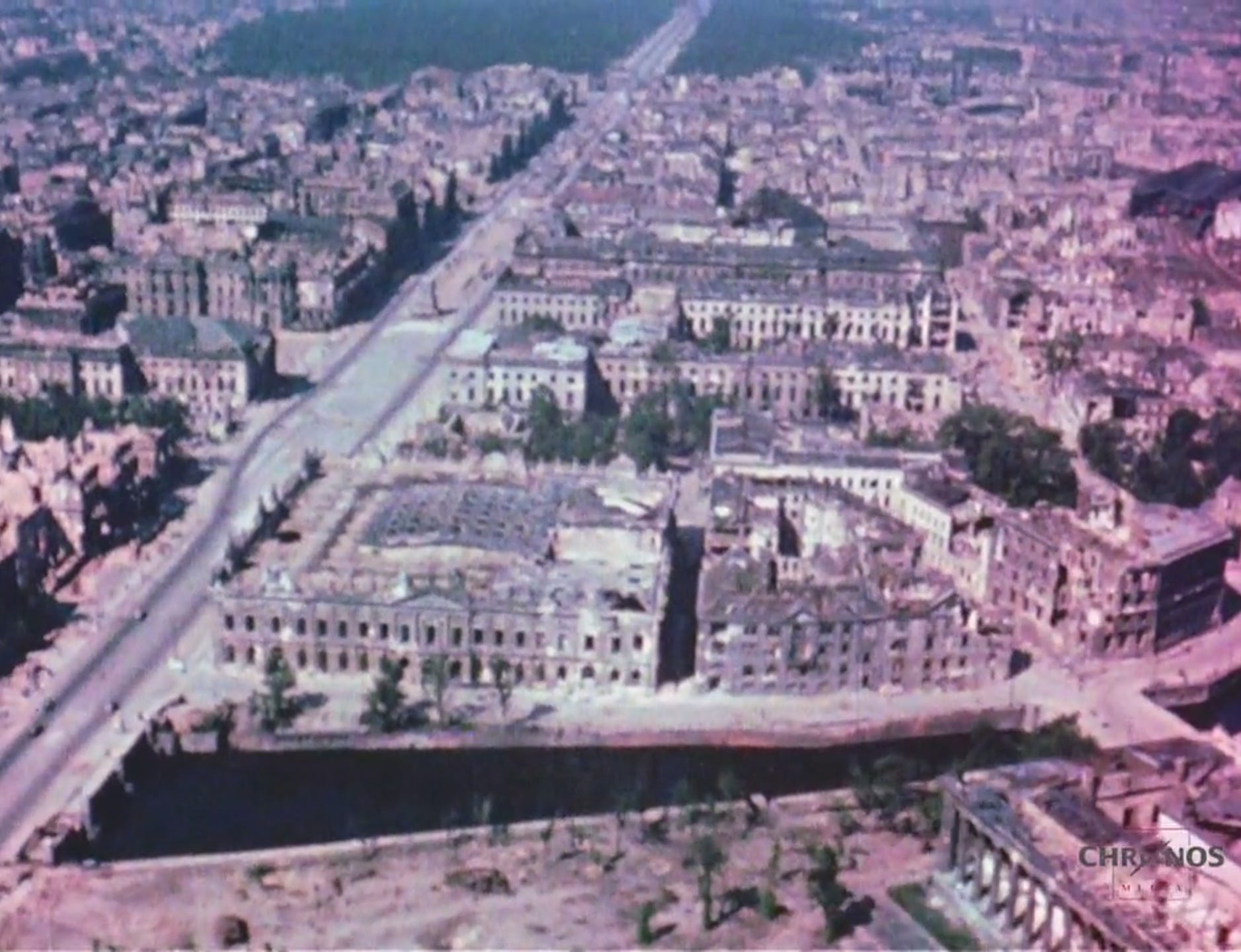
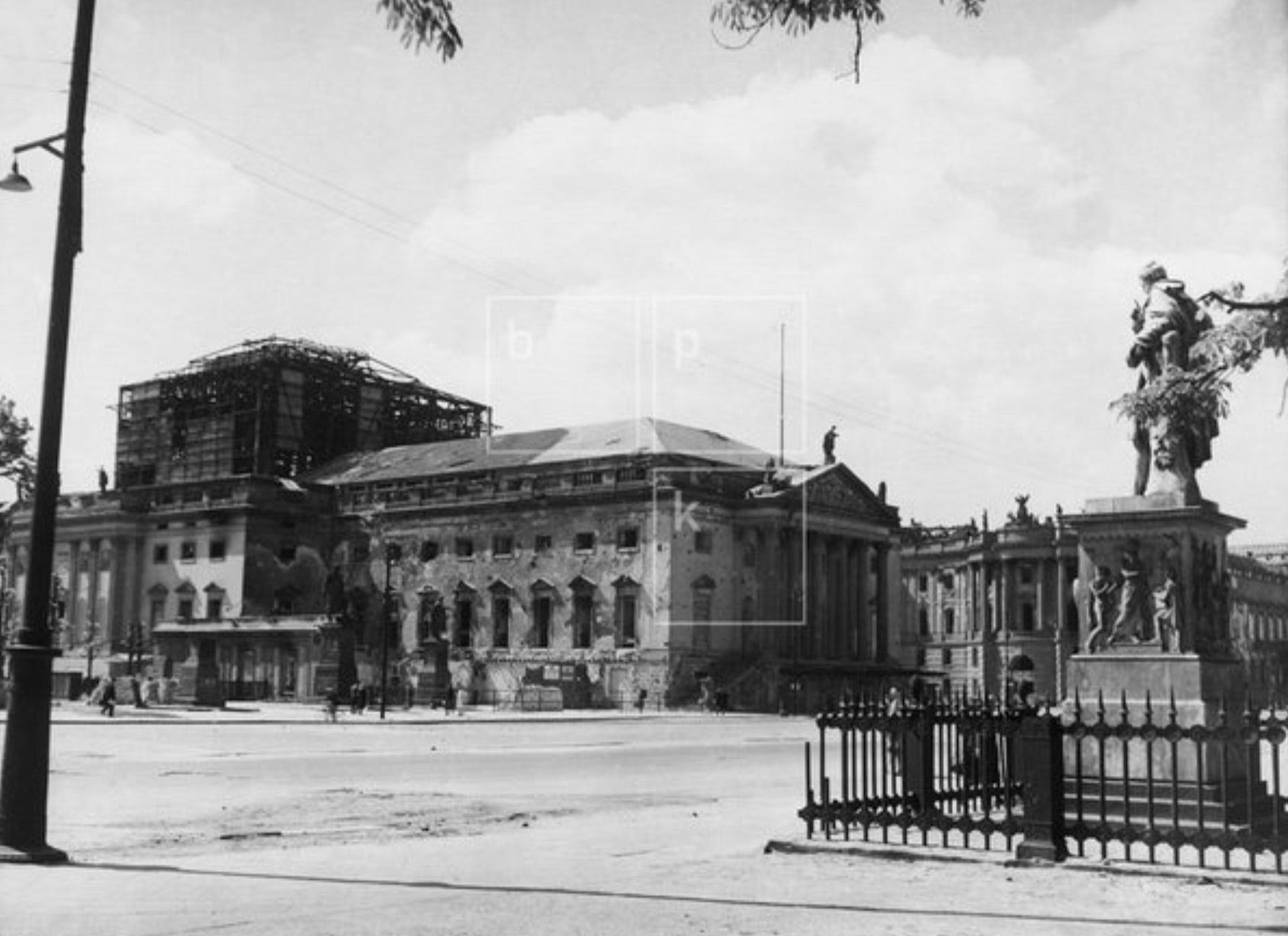
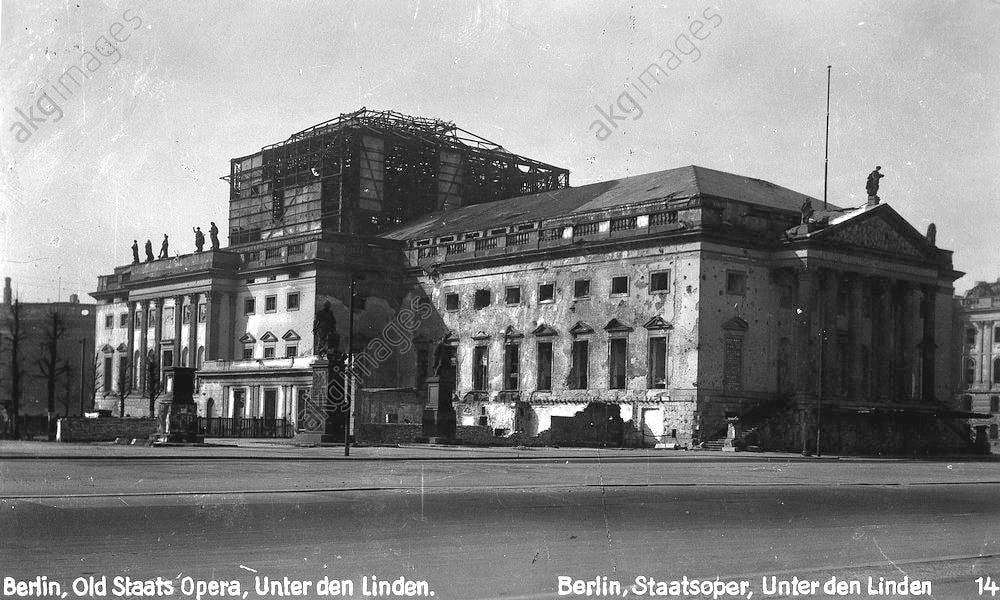
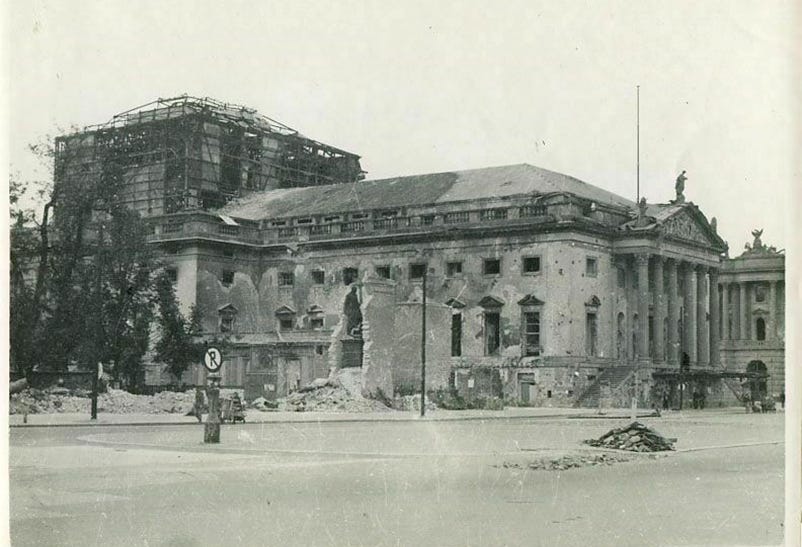
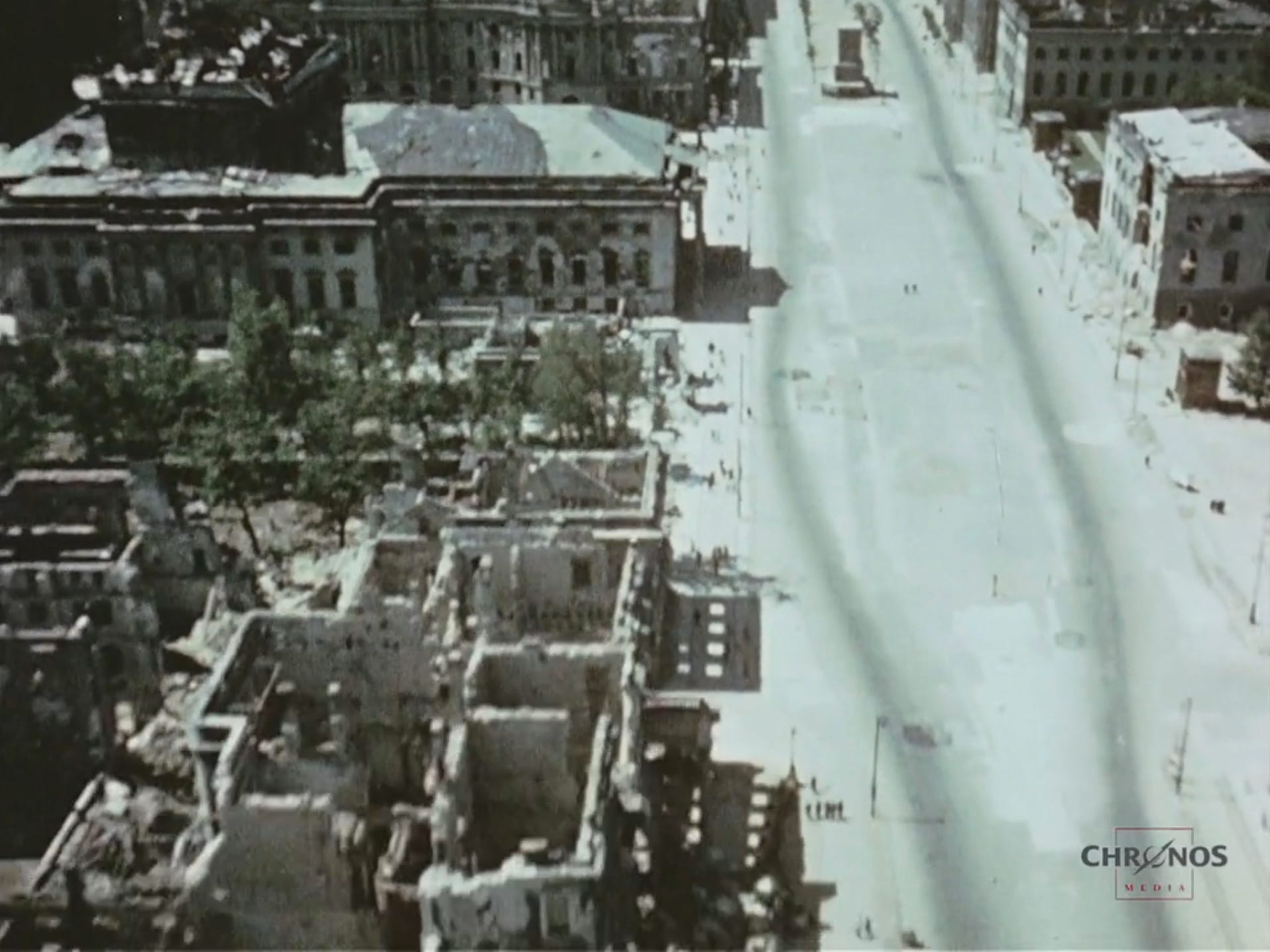
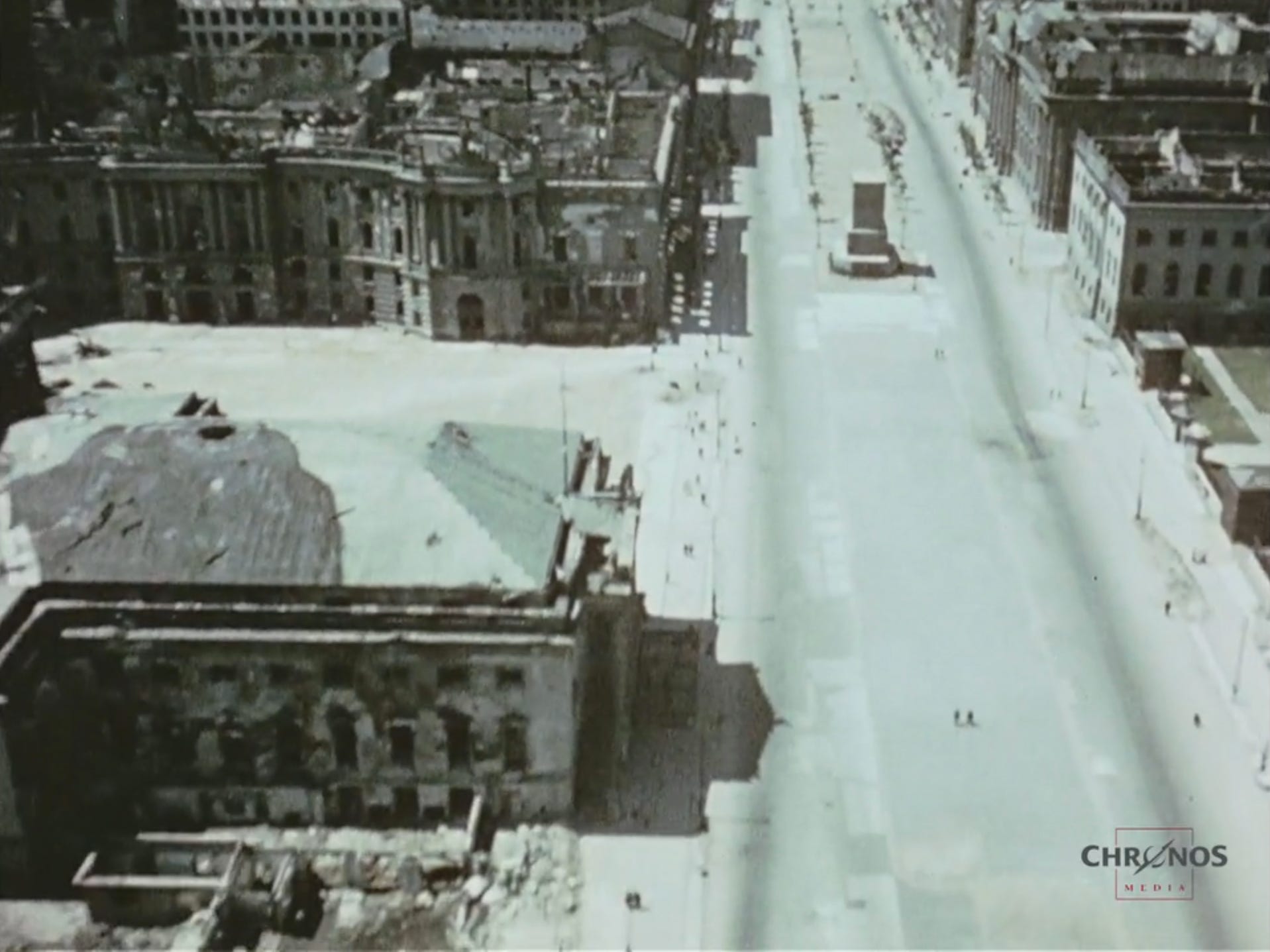
Year 1949: Destroyed north facade and eastern and western stage house of the Staatsoper after the Allied air bombing and Soviet assault. Notice shrapnel heavy damage on walls and at right the DDR East Germany slogan reading “Auf Sozialisten schließt die Reihen”, taken from the Sozialistenmarsch, a song written in 1892 for the Sozialdemokratische Partei Deutschlands (SPD).
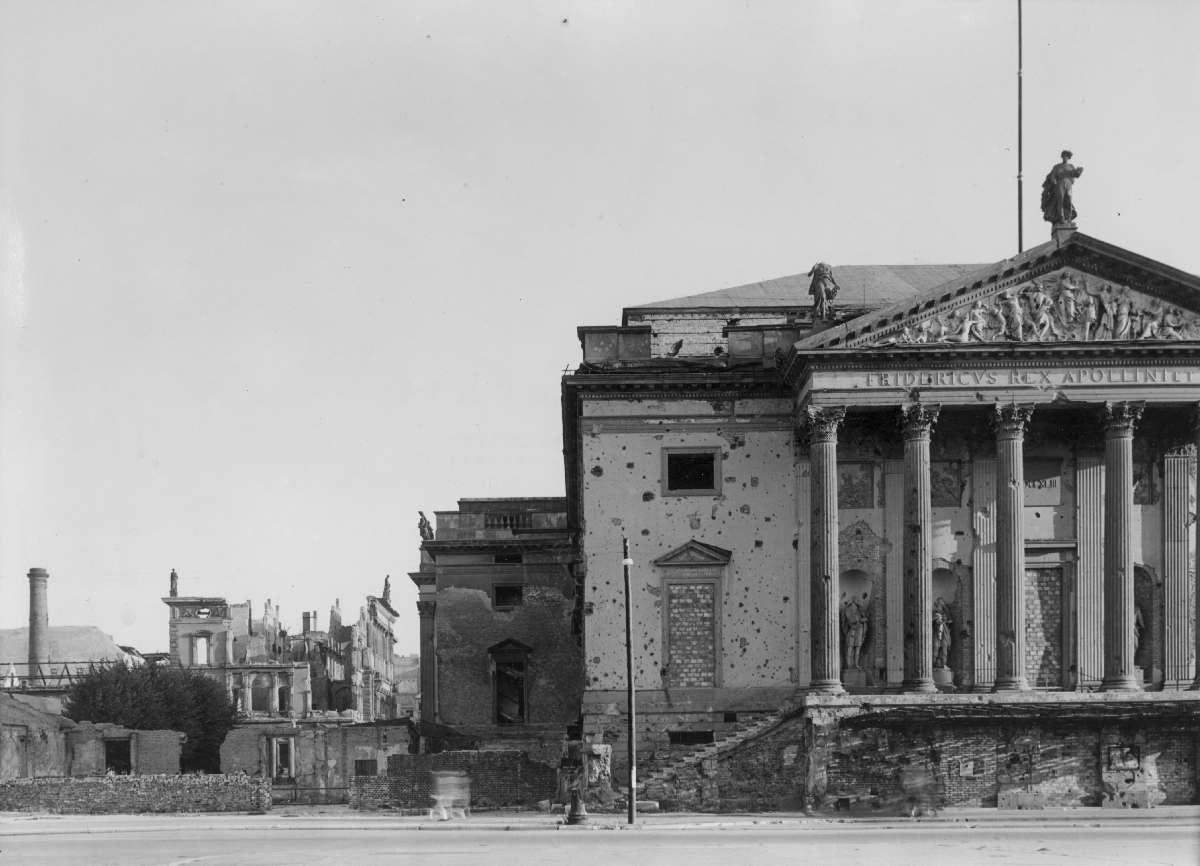
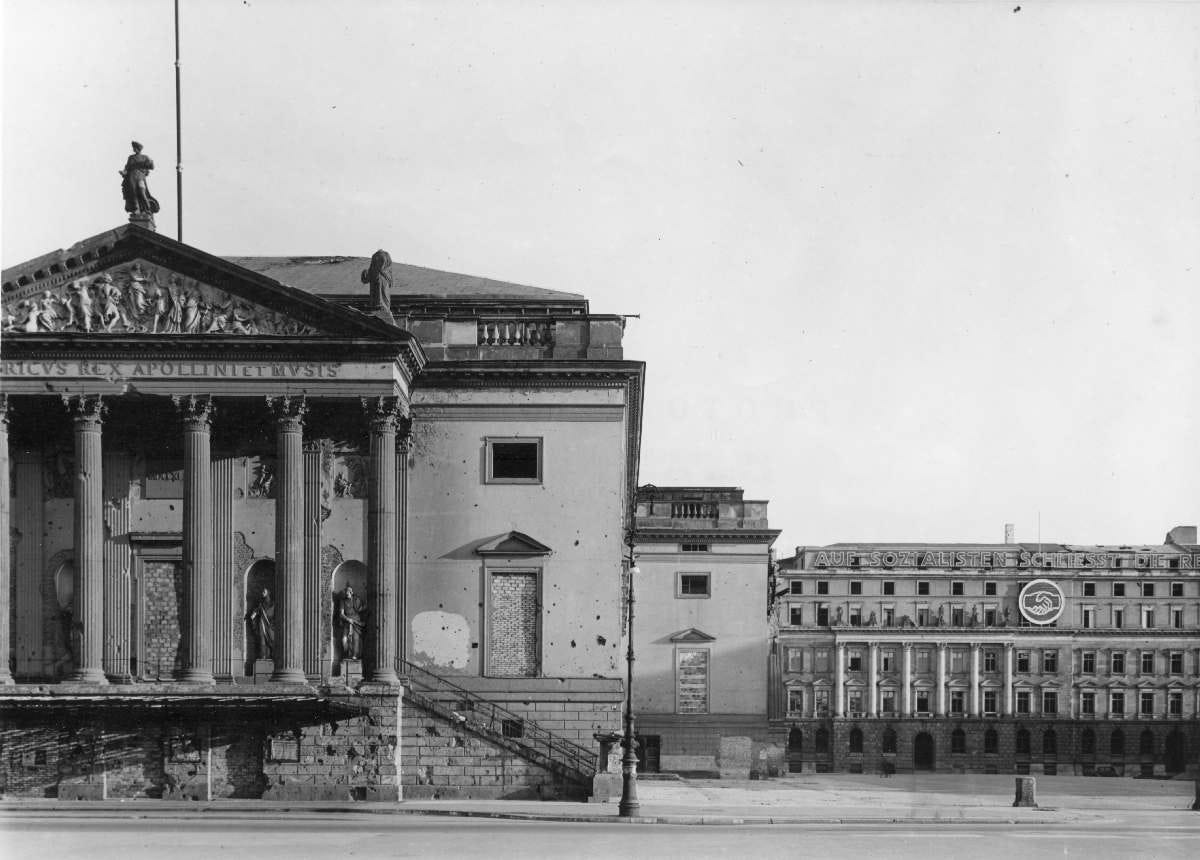
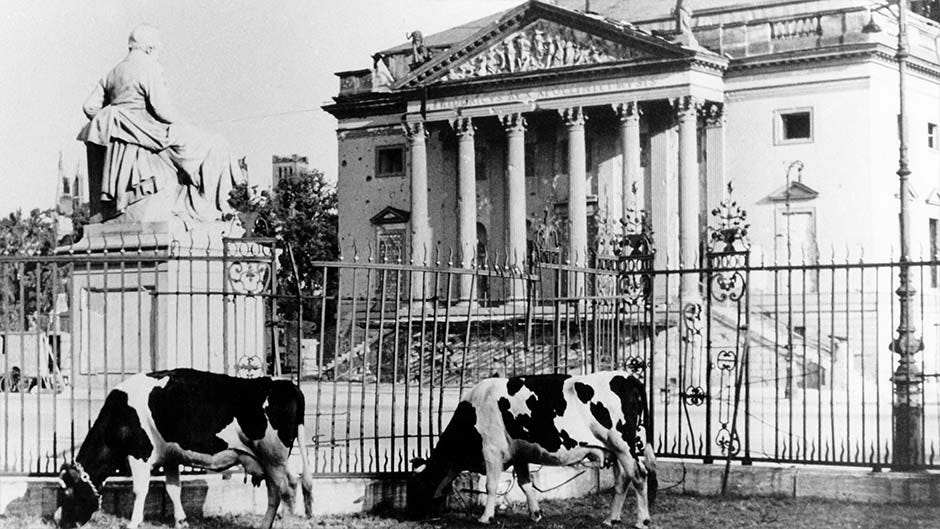
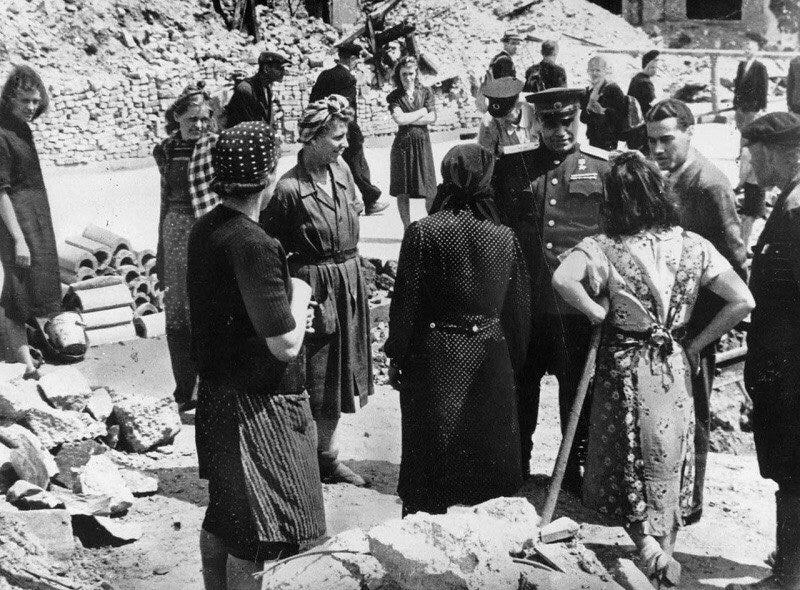
Following a large discussion by the new authorities of the city about conservation or demolition of the Staatsoper, reconstruction work started early after the end of the hostilities. At the time, Soviet city commander General Nikolai Berzarin, the first town mayor of the Soviet occupying zone (as he was commander of Soviet 5th Shock Army -the first Stalin’s army to reach the eastern outskirts of Berlin on April 21, 1945) promised that a new grand Opera would be built elsewhere, so that the one at Unter den Linden could be restored to its original form.
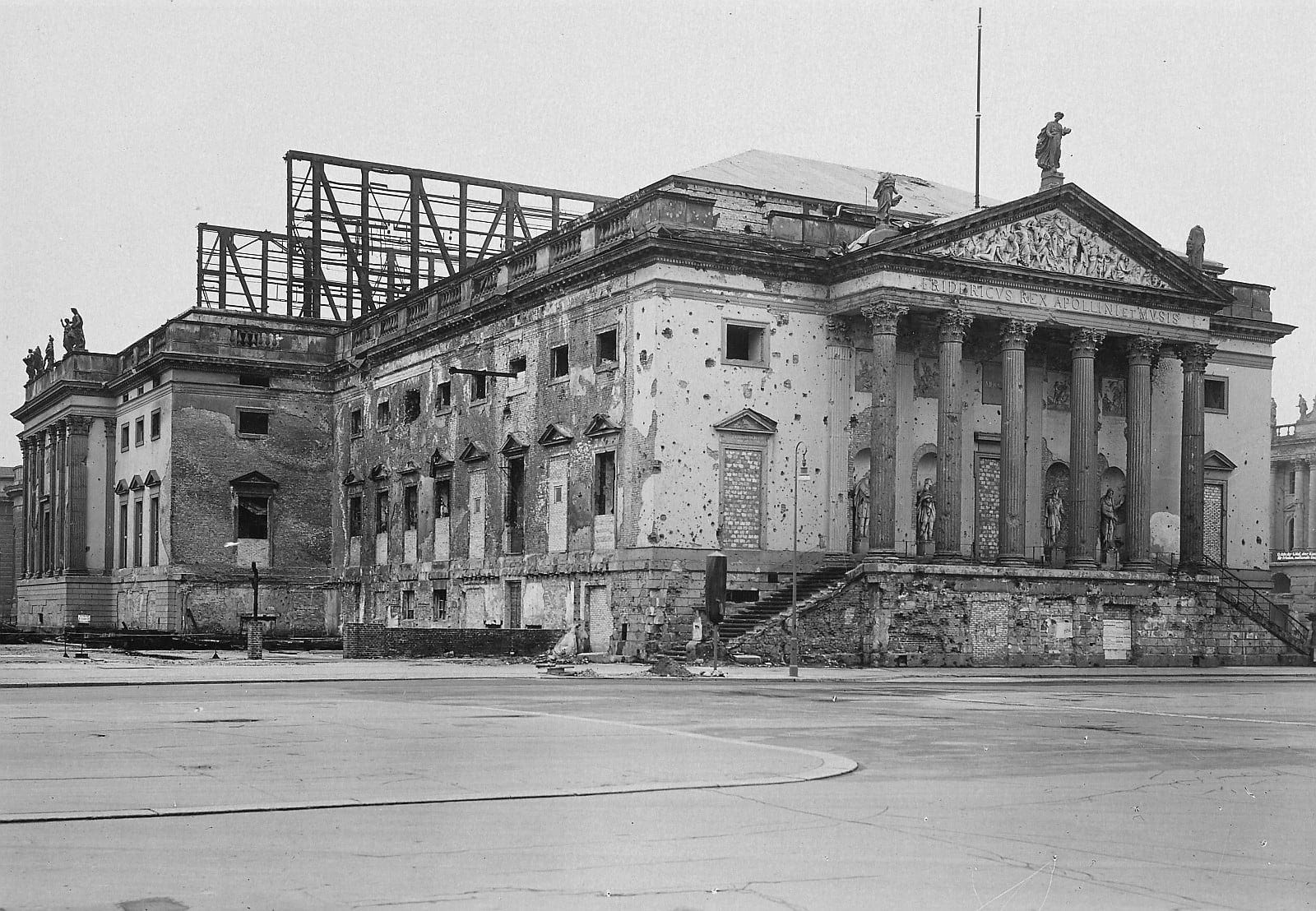
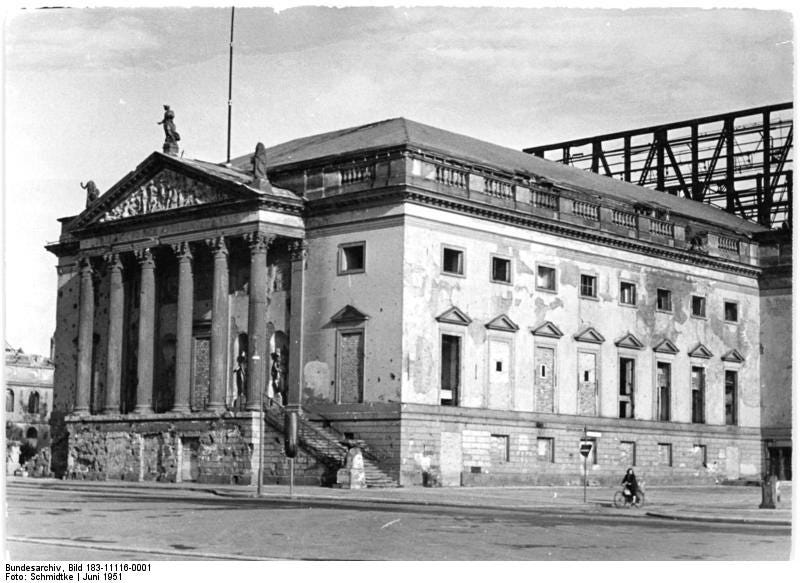
The Oper den Linden theatre as seen just prior to the start of the restoration in June 1951, the destruction caused by the air bombing raids and the war is evident.
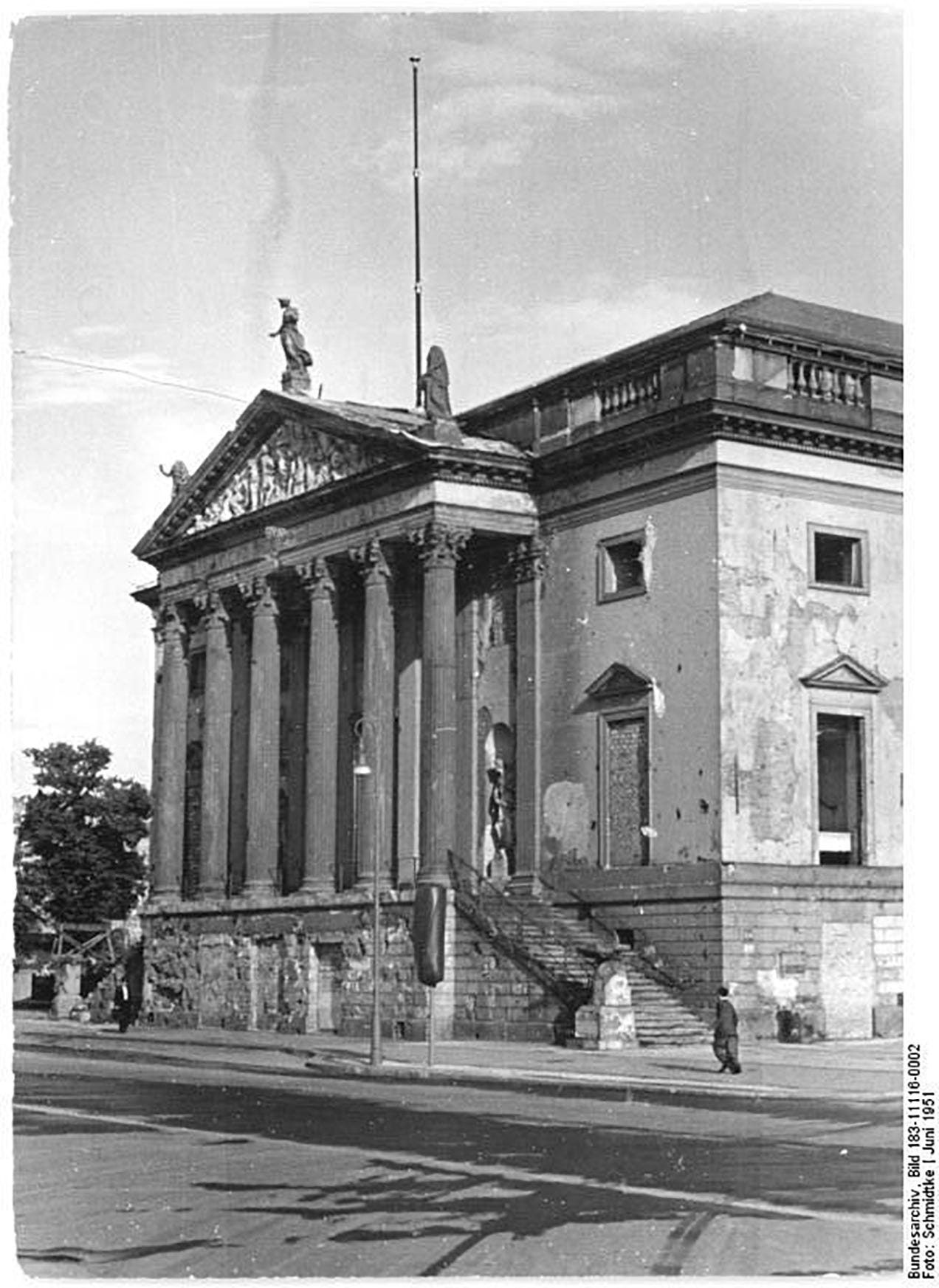
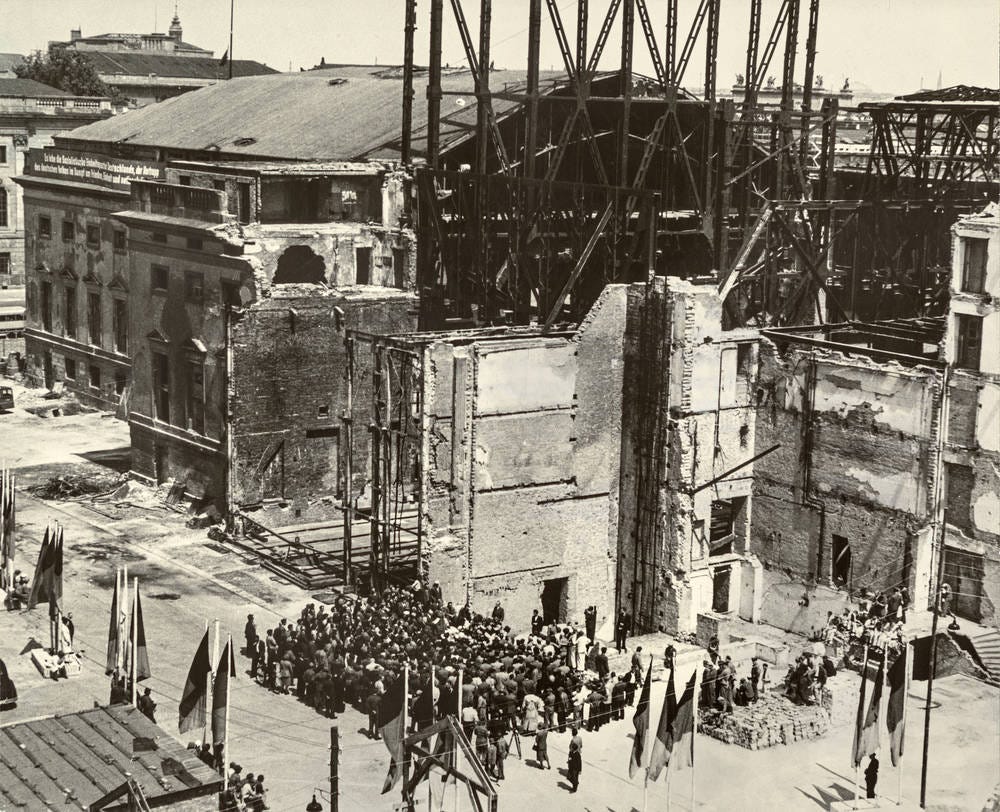
These are views of the works’ progress during 1951-52 taken from the adjacent Bebelplatz. The partly destroyed Dom can be seen behind in the first picture.
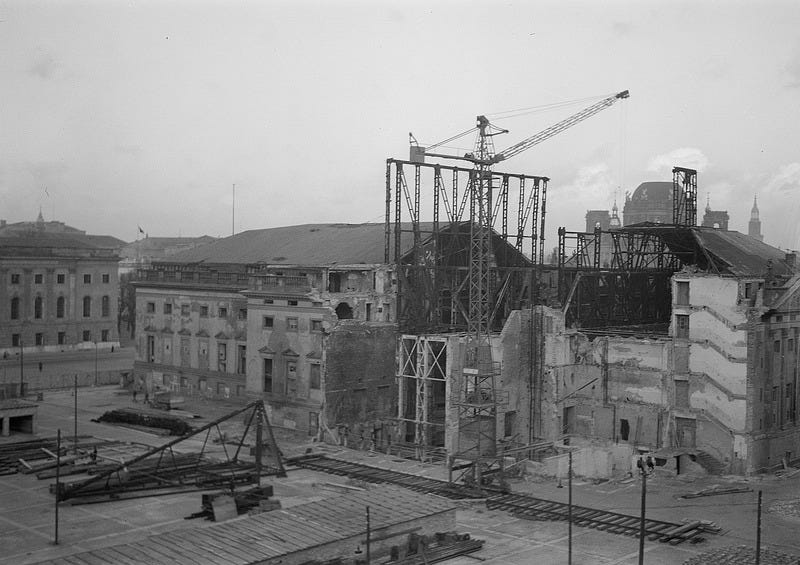
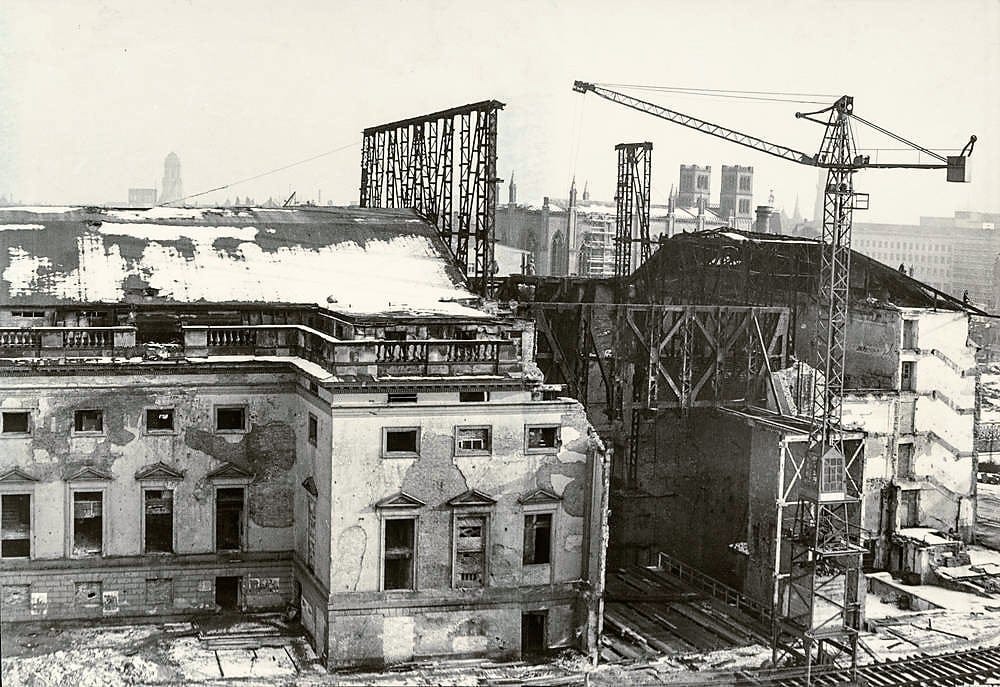
In 1951, architect Richard Paulink (the son of a SPD official and also involved in the reconstruction of Dresden) was tasked with restoring the theatre to match the original 1742-version of the building. The beginning of the reconstruction of the Staatsoper started on June 12, 1952. The result was an unusually opulent building by socialist standards - they called it “socialist rococo”.
During the close-down time (1945-1955), the Admiralpalast at Friedrichstraße hosted the Opera. The newly rebuilt opera building was reopened in September 1955, with Wagner’s ‘Die Meistersinger von Nürnberg’, the same work that in 1942 did it after the first Allied bombing. Even Hitler would have enjoyed it.
Several reconstruction works were made during the DDR-period, including a total refurbishment in 1986-87 and one more after 1990 during the German reunification process, when it recovered again its name, Staatsoper Unter den Linden.
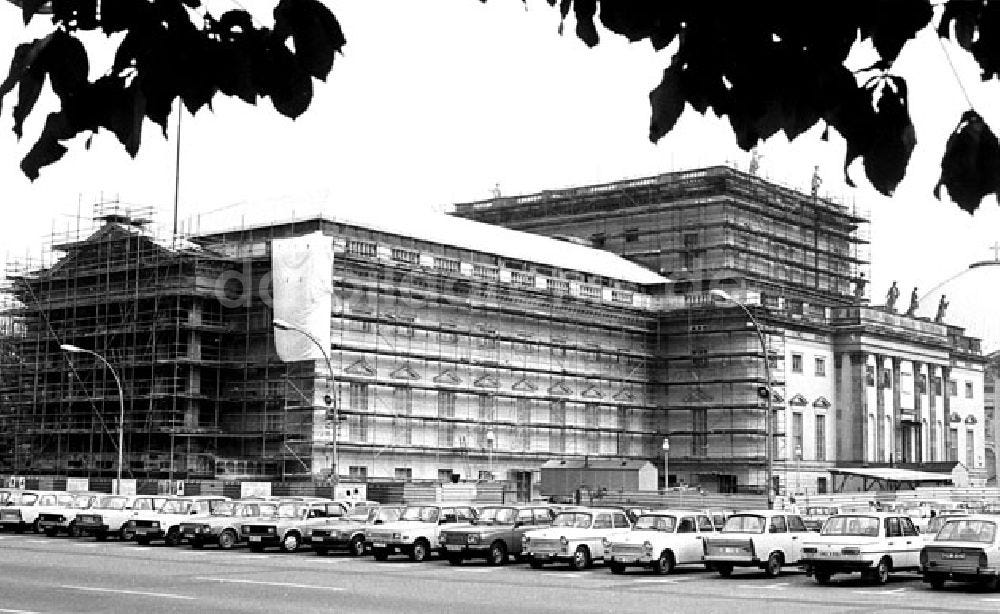
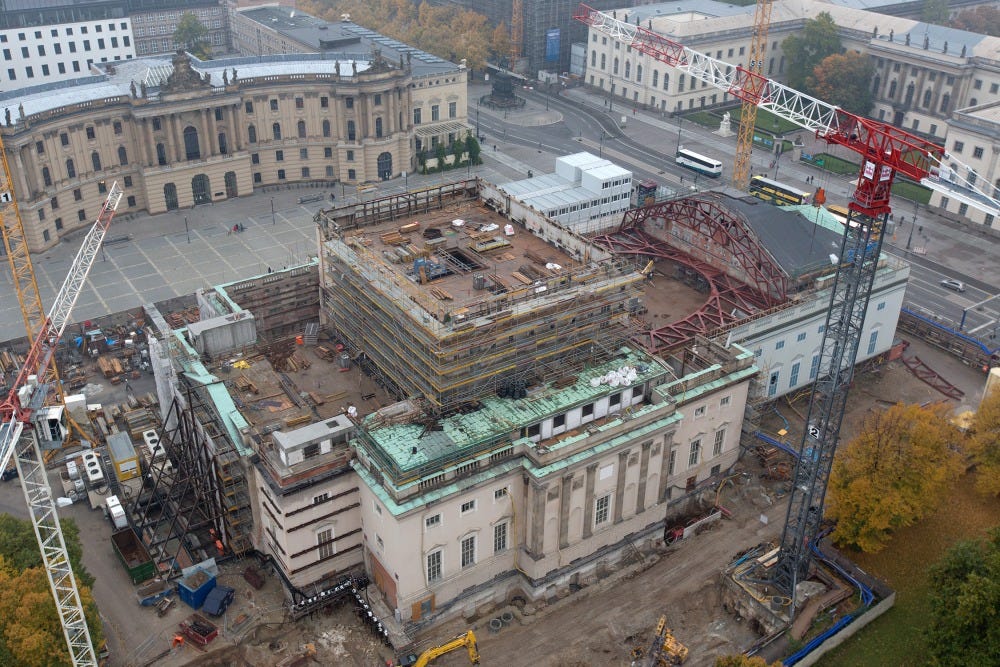
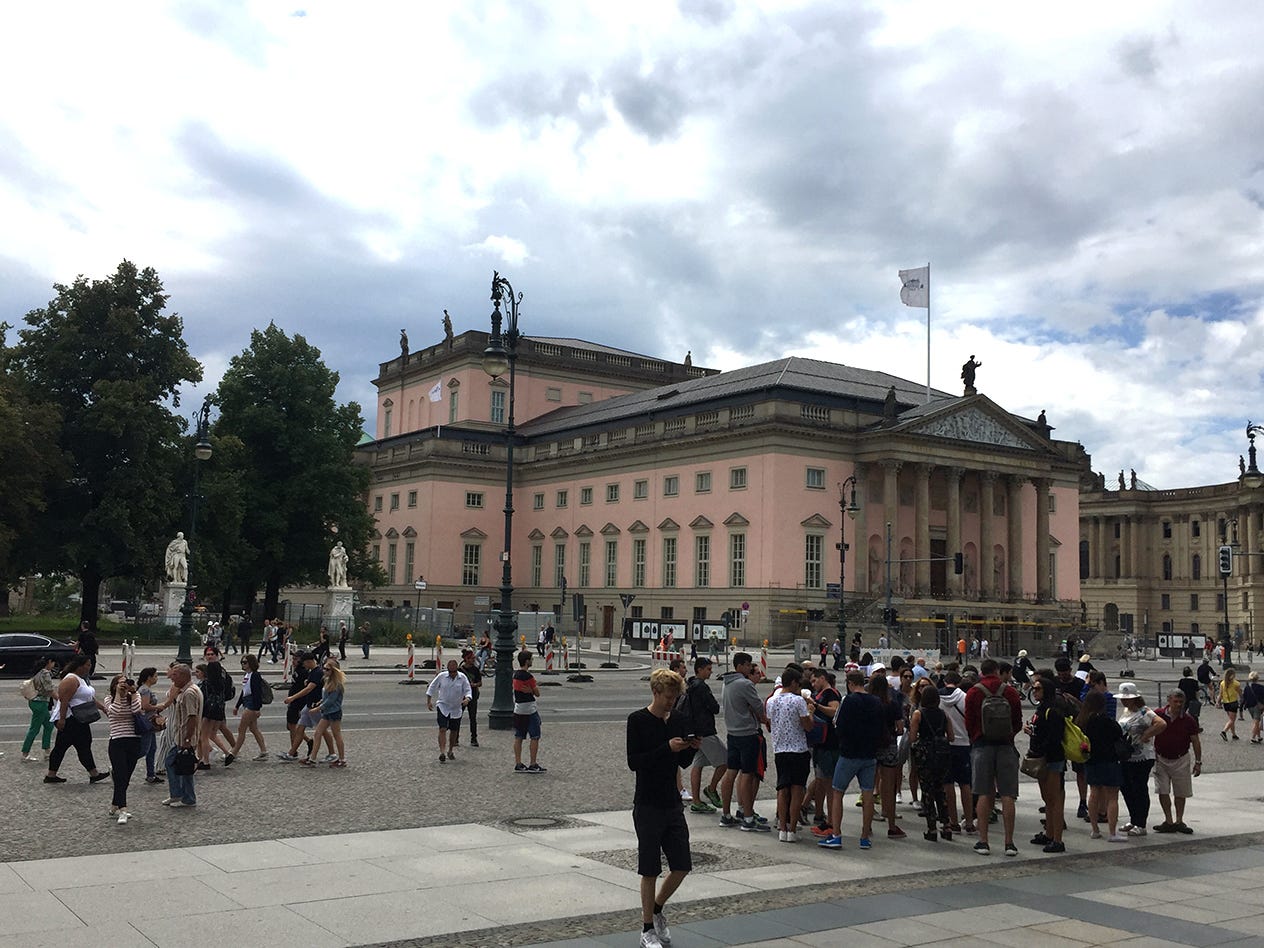
Finally, during 2010-2017, when the original Opera building at Unter den Linden was closed to the public, while undergoing extensive renovations. Aside from occasional avant-garde performances in the construction site, the bulk of the season’s offerings over the reconstruction period have taken place at the Berliner Schillertheater (Bismarckstraße) in Charlottenburg, only a block away from its main competitor, the Deutsche Oper Berlin.
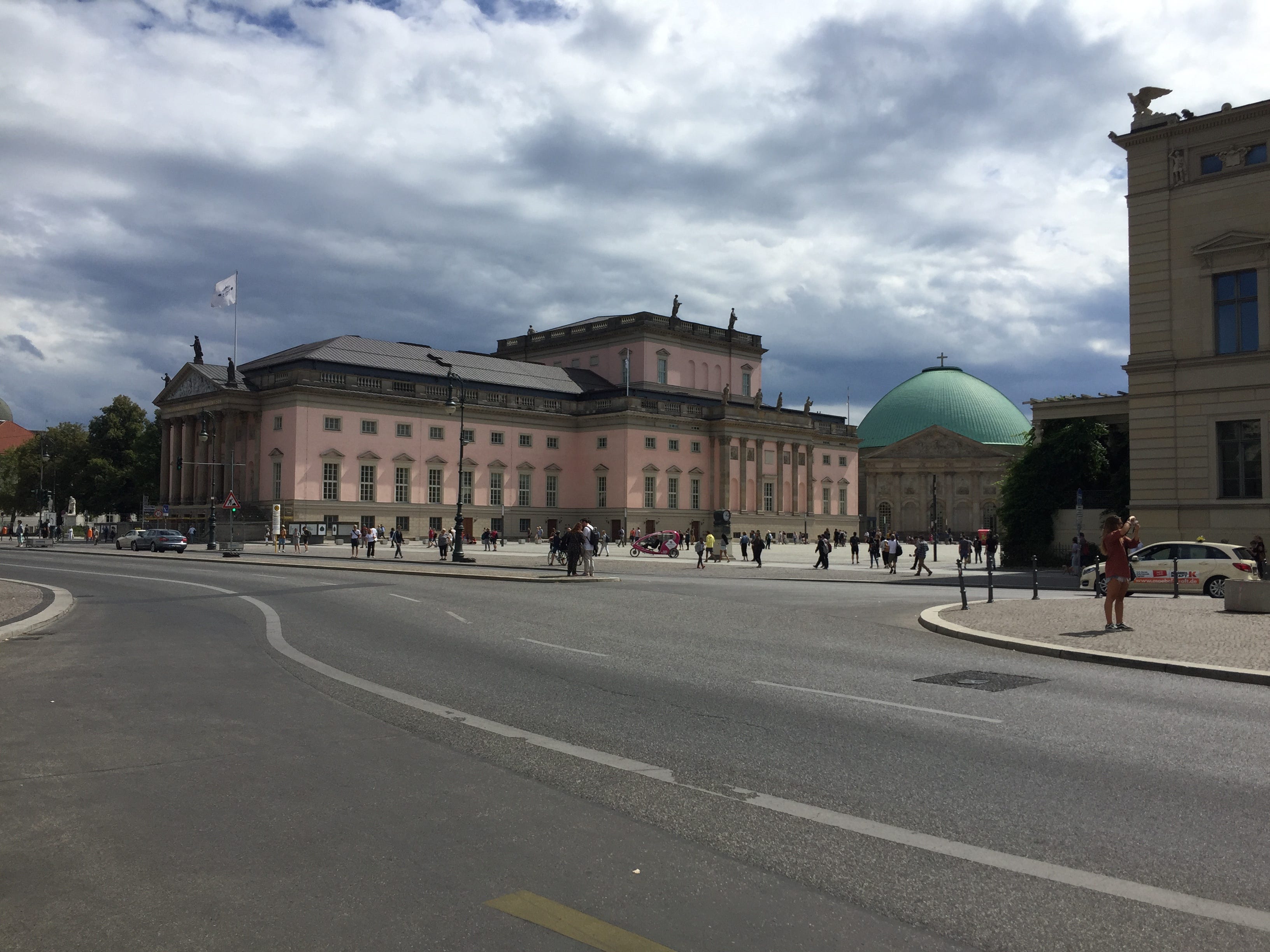
After 7 years of work, the reopening act was celebrated in December 2017, nearly celebrating its 275th birthday.
The current renovation included over 90 different companies attending to details such as the walls’ gilded ornamentation and the chandeliers, but work took much longer than expected and the renovation costs raised from an estimated 239 million euros to €400 million, half of which covered by federal funds.
_______________
Sources:
Aster, Misha. (2017). Staatsoper: Die bewegte Geschichte der Berliner Lindenoper im 20. Jahrhundert. Siedler Verlag
Berlin: Staatsoper Unter den Linden. CARTHALIA - Theatres on Postcards. Andreas Praefcke’s postcard collection of theatres and concert halls worldwide
<http://www.andreas-praefcke.de/carthalia/germany/berlin_staatsoper.htm>Einhard, Luther. Oper in Berlin – Heiß umkämpft und stets unter Feuer. Pro Business. 2012
Freydank, Ruth. Theater in Berlin: von den Anfängen bis 1945. Berlin. 1988
Friedrich, Jörg. Der Brand: Deutschland im Bombenkrieg 1940-1945. Propylaen Verlag, Zweigniederlassung der Ullstein. 2002
Kellerhoff Sven F. Berlin im Krieg: Eine Generation erinnert sich. BASTEI LÜBBE. 2011
Meffert, Erich. Das Haus der Staatsoper und seine neue Gestaltung. Dargebracht von der Generalintendanz der Preussischen Staatstheater. Generalintendanz der Preussischen Staatstheater. Leipzig, Max Beck Verlag. 1944
Moorhouse, Roger. Berlin at war. Life and death in Hitler’s capital, 1939-45. Vintage Books, London. 2011
SCHLOSSDEBATE. Wie wurde die Staatsoper in der DDR rekonstruiert? <http://schlossdebatte.de/?p=96>
Schmitz, Franz. Kleine Baugeschichte der Staatsoper Unter den Linden. STAATSOPER UNTER DEN LINDEN <https://www.staatsoper-berlin.de>
Thank you for reading Berlin Bombenkrieg by Pablo López Ruiz. Please subscribe, if you haven’t yet, to comment, follow and share. All images used for non profit / educational purposes.