


In the corner where Unter den Linden meets Friedrichstraße, there is a house with more than 85 years of history in Berlin. Today, this building stands as one of the original places of the city and a survivor of the Allied bombing raids and war fightings.
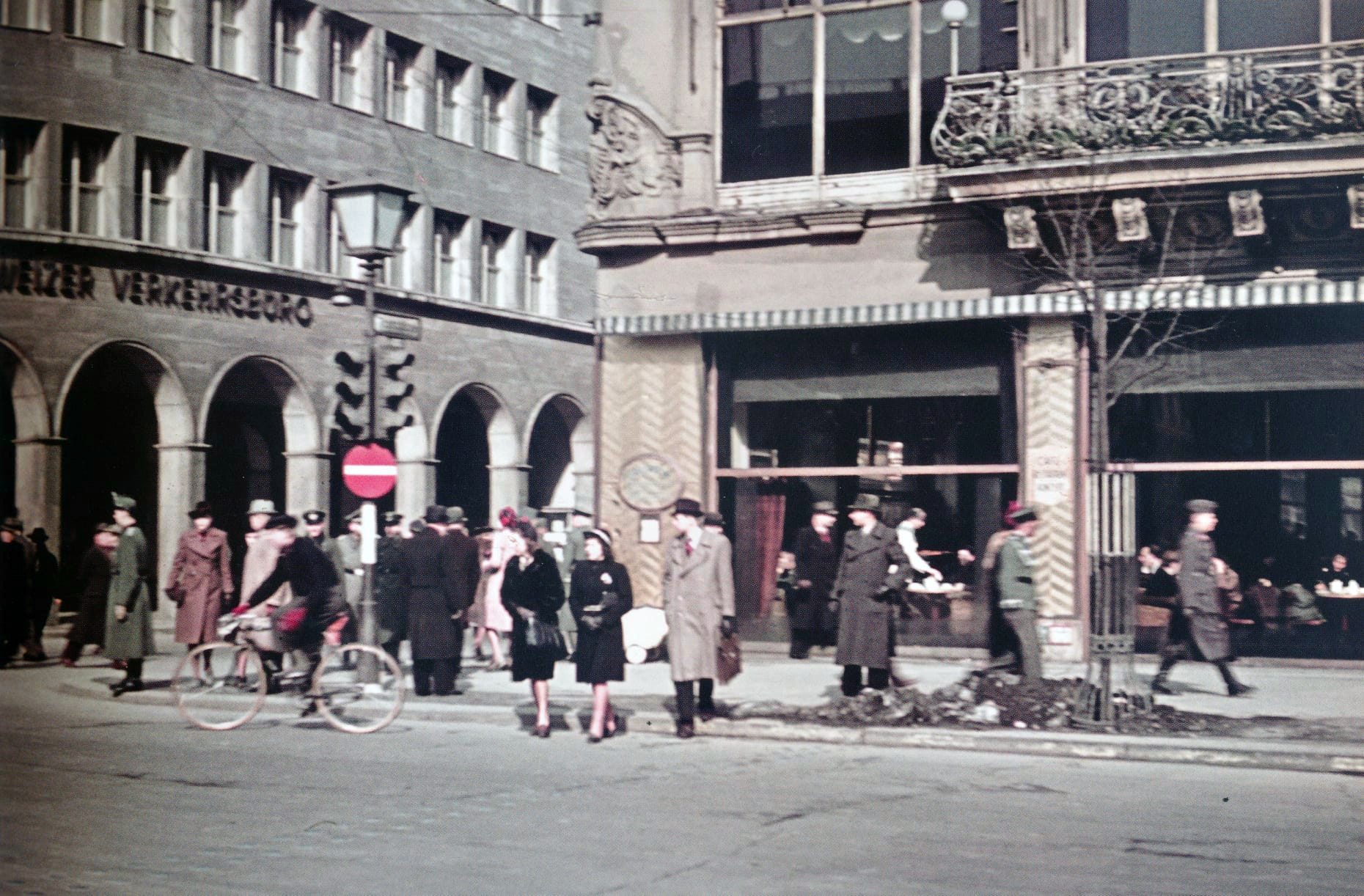
A colour 1939-40 view of Unter den Linden Nr 22 Ecke Friedrichstraße 155-156 during the days of the Third Reich. At left corner, the Haus der Schweiz. At right, the famous Viktoria Hotel and Café. Note Friedrichstr. Bhf’s railway bridge in the far background.
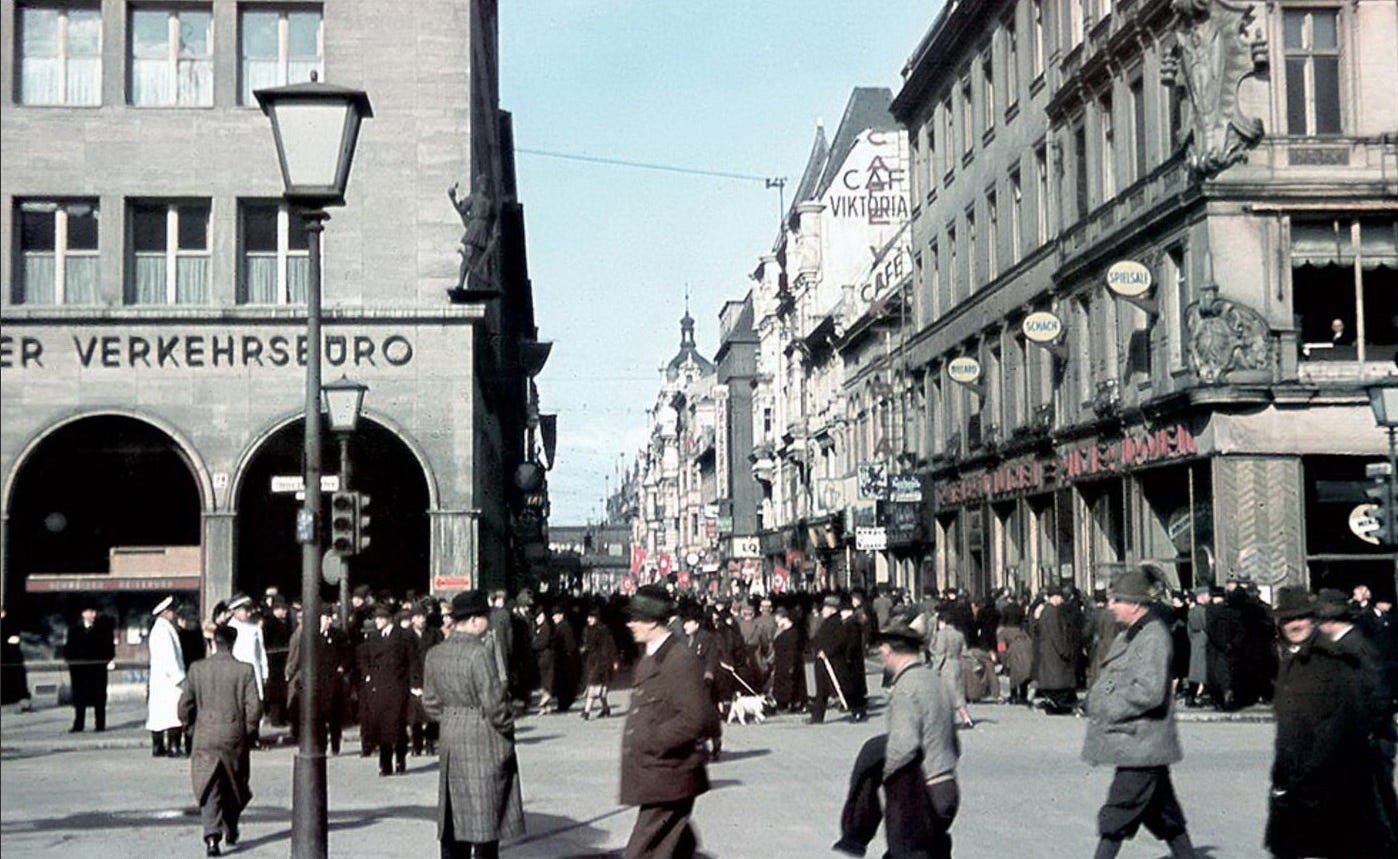
The house was built during 1934-1936 by Swiss architect Ernst Meier-Appenzell with a clean façade, an arcade and rectangular windows, in a monumental building style. The client was the “Haus der Schweiz GmbH”, to which the Swiss bank Leu, the Swiss bank and the Swiss Federal Railways had joined forces. Like many Swiss companies, they had considerable sums of German Reichsmarks.
Since these were classified by the Nazis as “Sperrmark”, however, a transfer of the money into Switzerland would have been associated with considerable price losses. Instead, the three companies bought a plot of land at Friedrichstraße corner Unter den Linden, with a six-story business and office building built there - “at the first business location of the Reich capital”. The property was intended as a financial investment, but served at the same time also quite representative purposes.
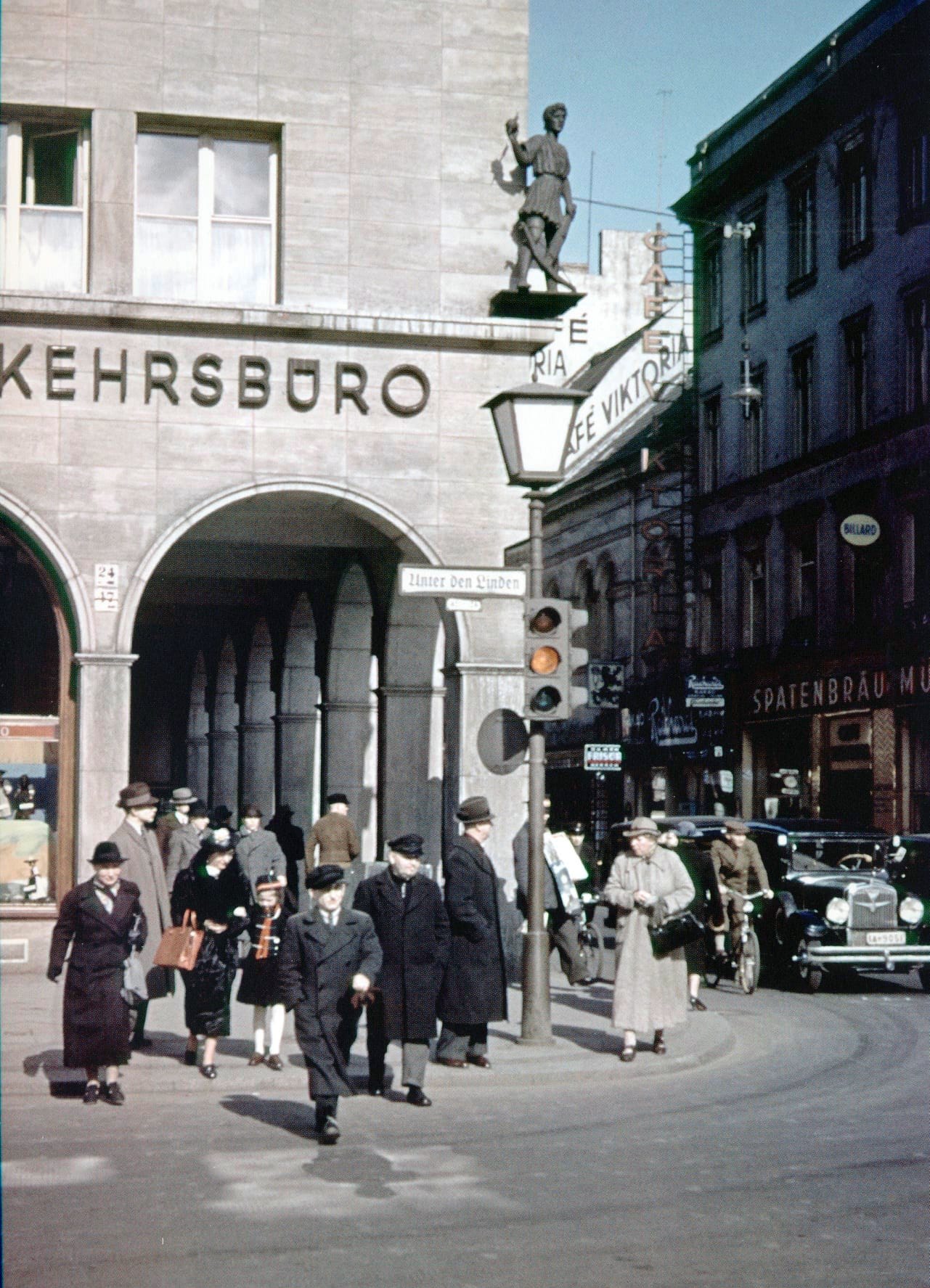
The building had the lettering ‘Haus der Schweiz’, prominently displayed on both sides of the façade, as well as a Wilhelm Tell figure. The bronze sculpture, however, is not William Tell, but his son Walther. Supposedly a trick of the builder: because the Nazis did not want to tolerate a representation of the freedom fighter and Swiss national hero himself, they trained just now his son with a crossbow and an apple. On the other hand, the Nazis could not say anything -and the Swiss national pride was still respected. In the spring of 1936, the builders themselves became the first tenants to enter the Haus der Schweiz.
In the shops on the ground floor, the Swiss Tourist Office opened a branch (Schweizer Verkehrsbüro), where citizens could book train journeys to Switzerland.
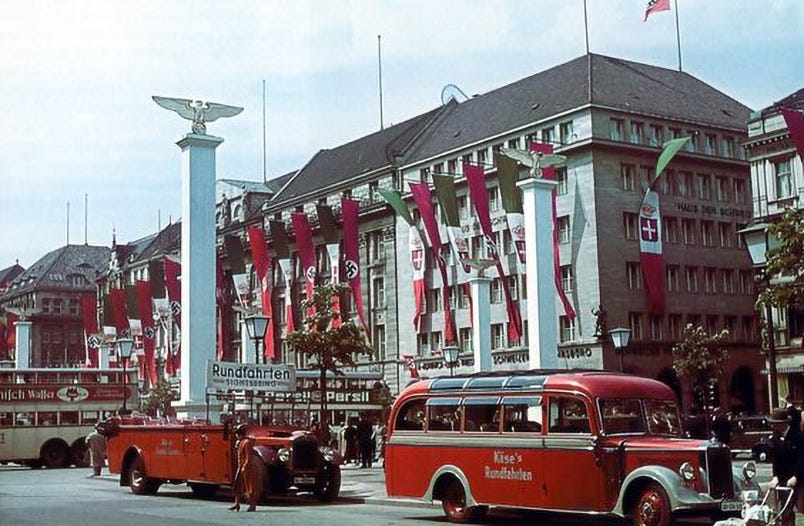
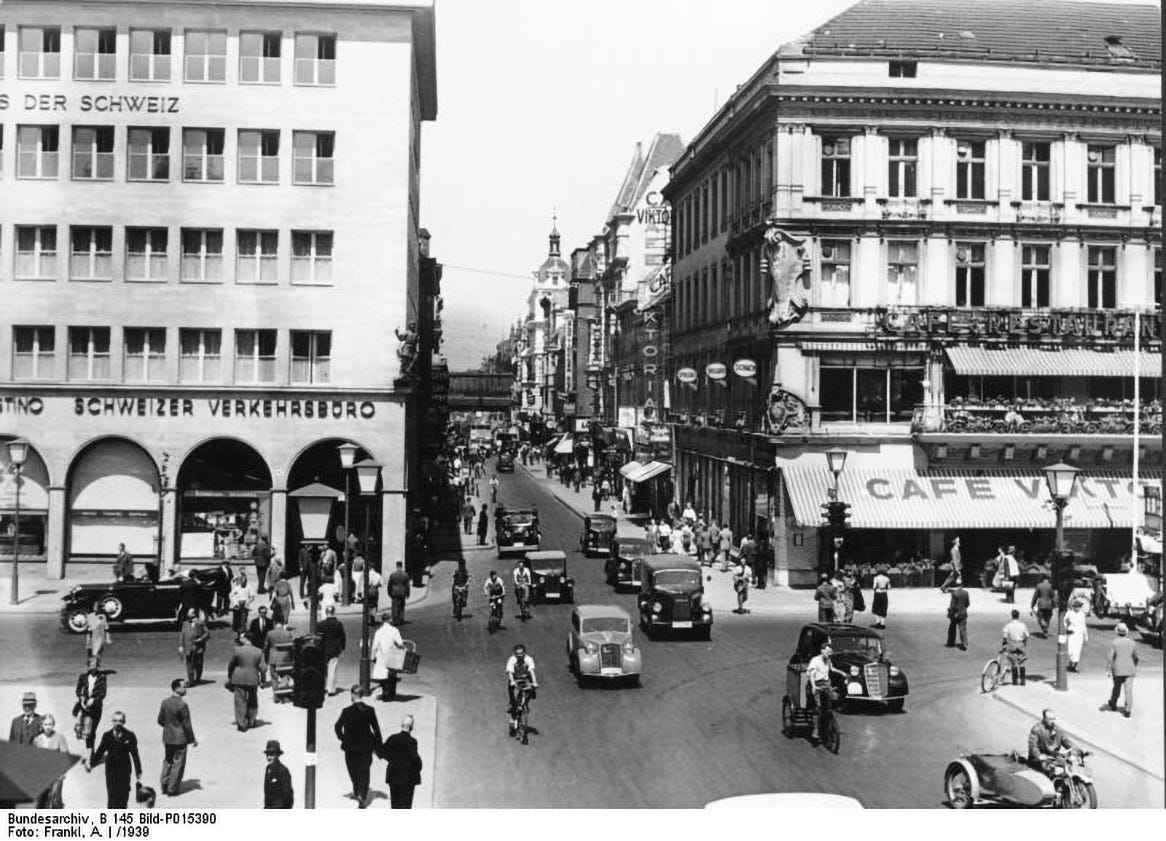
View northwards in to Friedrichstraße. Right: Café Viktoria, left: Haus der Schweiz, circa 1940. Above the arcs can be read in capital lettering ‘Schweizer Verkehrsbüro’ (“Swiss Tourist Office”).
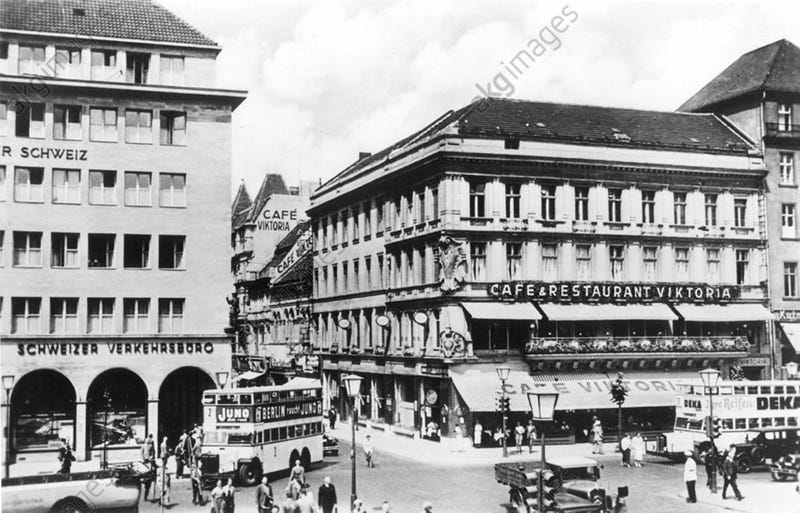
During the war, this zone was severely damaged by Allied bombings, the building was hit on the evening of 9/10 April 1941 during the raid made by RAF British bombers which affected many areas in Mitte including the famous Staatsoper den Linden. Some bombs hit this area on February 3, 1945, during the massive US air strike on Berlin, with serious damage to adjacent buildings including the famous Hotel Viktoria next to the Swiss House.
Years later, the Soviet offensive in the city inflicted more damage, but thanks to the modern construction method, this building survived the bombing of Berlin at the end of war as the only one in the area relatively intact.
[The famous corner Unter den Linden-Friedrichstraße seen in a colour picture taken in 1939.]
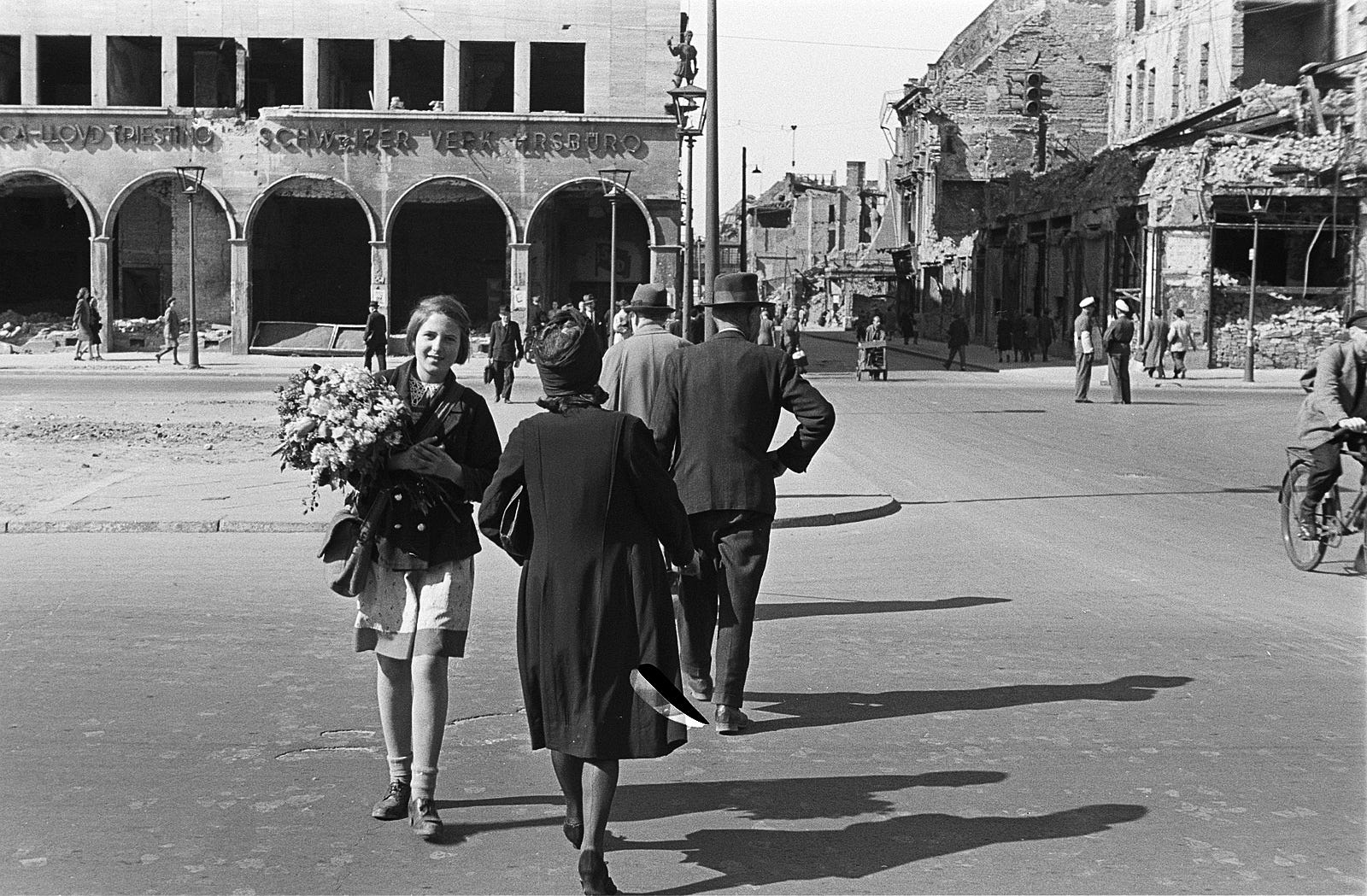
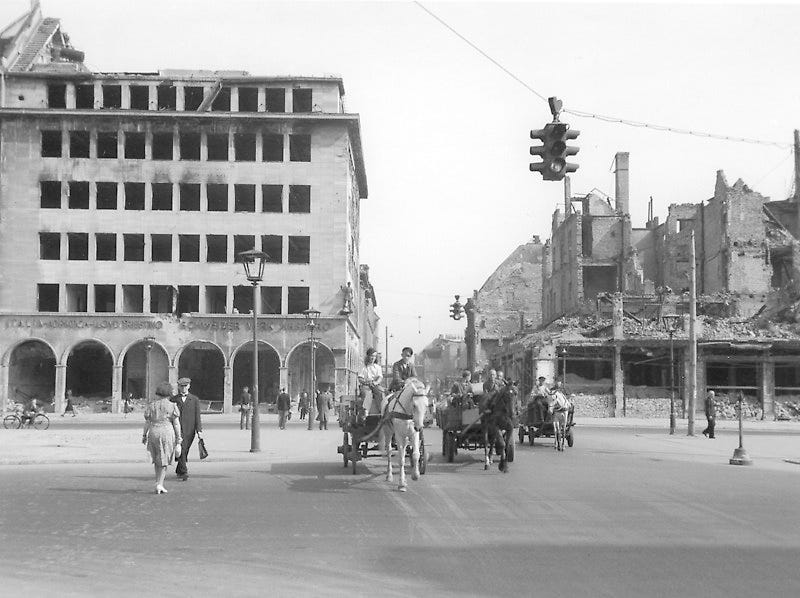
[This image shows that same corner after the war’s end. The Viktoria-Café placed at the right corner was totally wiped out by bomb damage during the final two years of the conflict, especially on February 3rd, 1945, attack. The Swiss building has survived the bombing of Berlin relatively intact.]
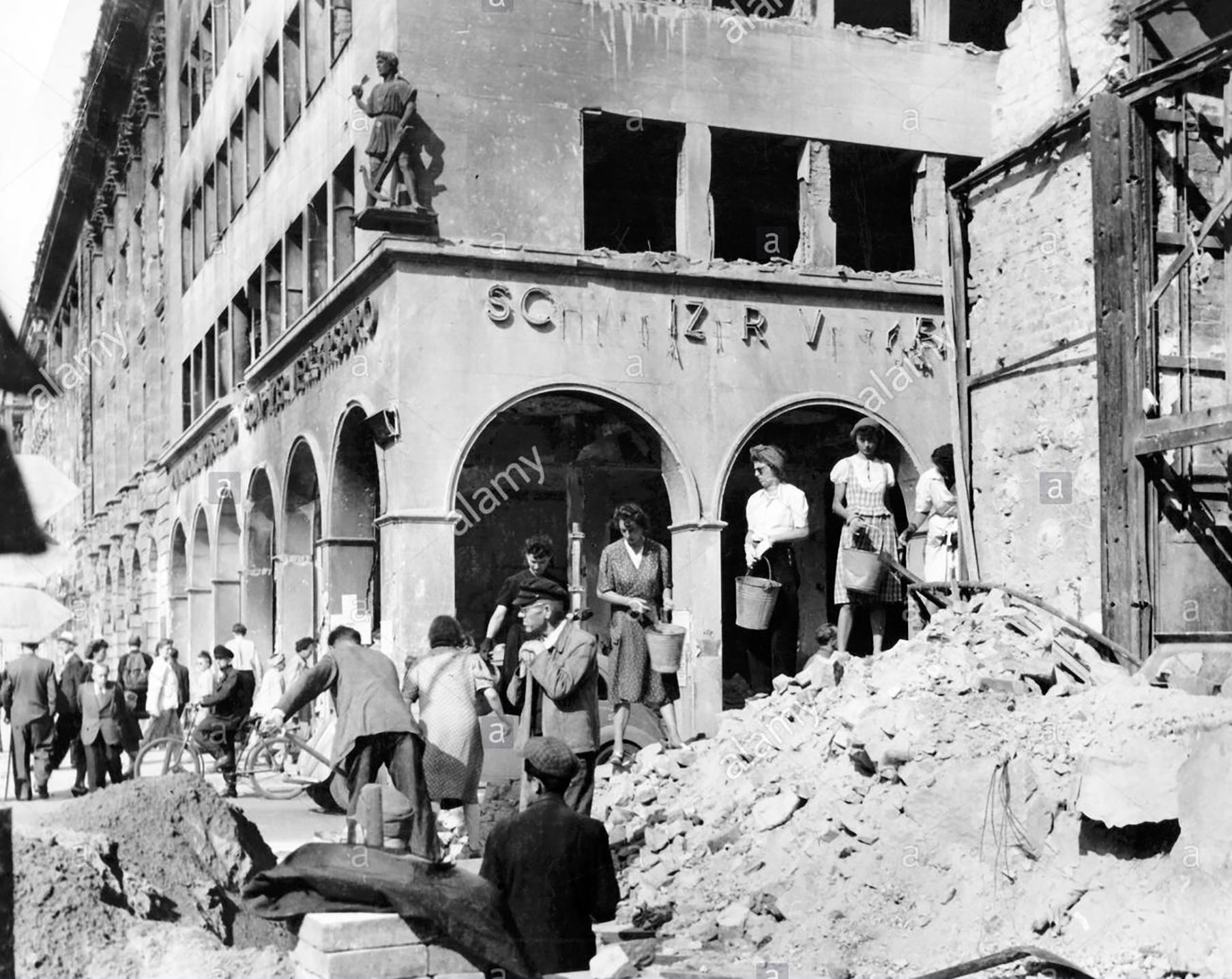
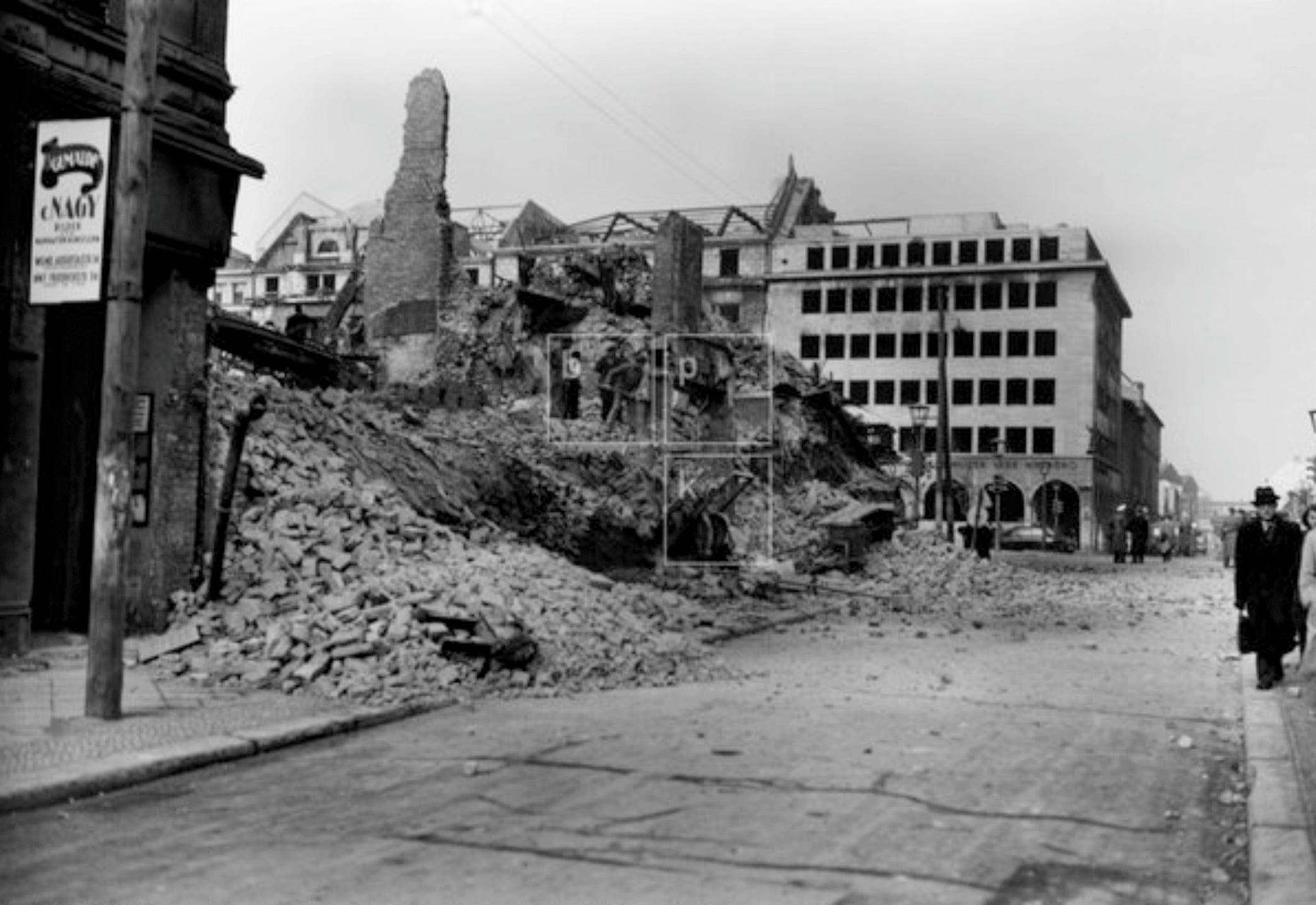
[Another view of Berliners working on the debris after the war in front of the Haus der Schweiz at Friedrichstraße/ Unter den Linden. Notice that the Tell bronze sculpture has survived barely intact.]
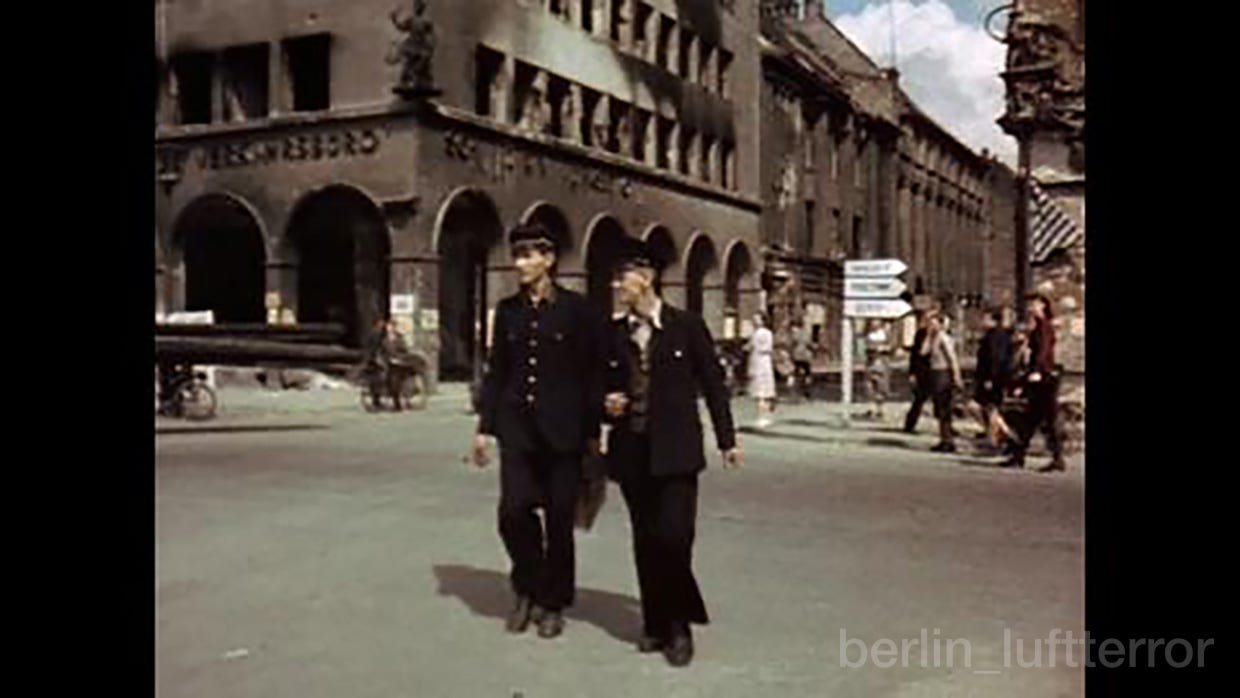
[In this colour view the blackened burned-out façade of the Swiss House after the war is evident.]
[Berlin after World War II - 1946: cars and people move again over Unter den Linden, with the ruins of the Victoria and the Haus der Schweiz as a mute reminder of the bombings and battles.]
The employees of the Swiss companies, which until 1945 had had their headquarters in the house, had largely fled in the turmoil of the last years of the war from Berlin, but the house remained the property of the “House of Switzerland GmbH”.
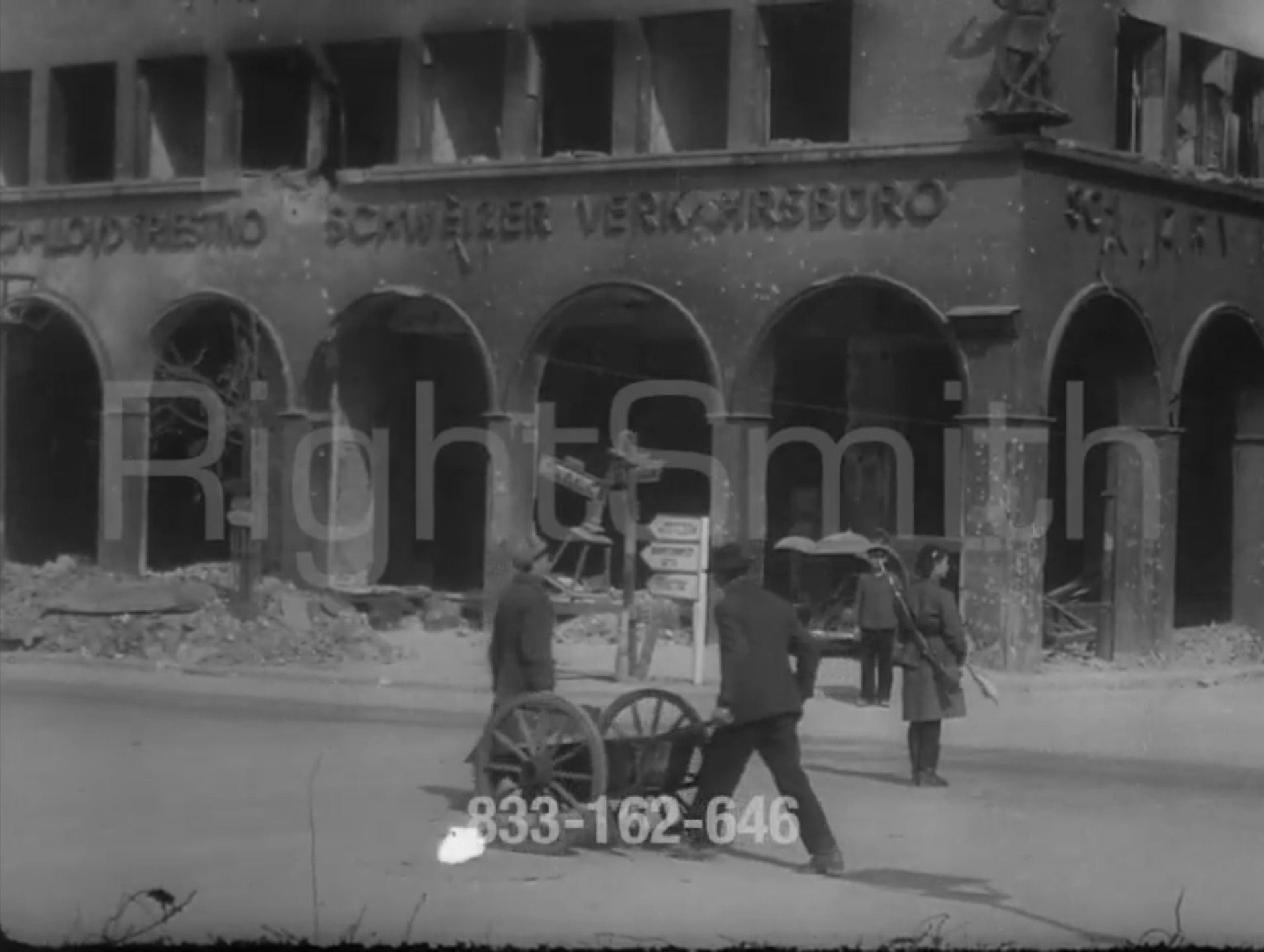
[The remains of the building just after the war’s end. Notice the splinter shells from the battle on the arcade and façade, and the Russian military police armed with rifle assigned to traffic control.]
When Berlin was divided by two, while the DDR government expropriated the owners of many surrounding buildings, the “Swiss house (…) was administered by the Berlin state housing administration (…) as a foreign property”, as can be seen from a 1952 official note. Apparently, the DDR government did not want to mess with Swiss banks. Nevertheless, they used the house for their own purposes. Among others, the Ostberliner Sparkasse, the German Foreign Trade Bank and a HO food market moved into the shops. The upper floors were rebuilt in the early 1950s for the “Coordination and Control Center for Agriculture, Forestry and Water Management”.
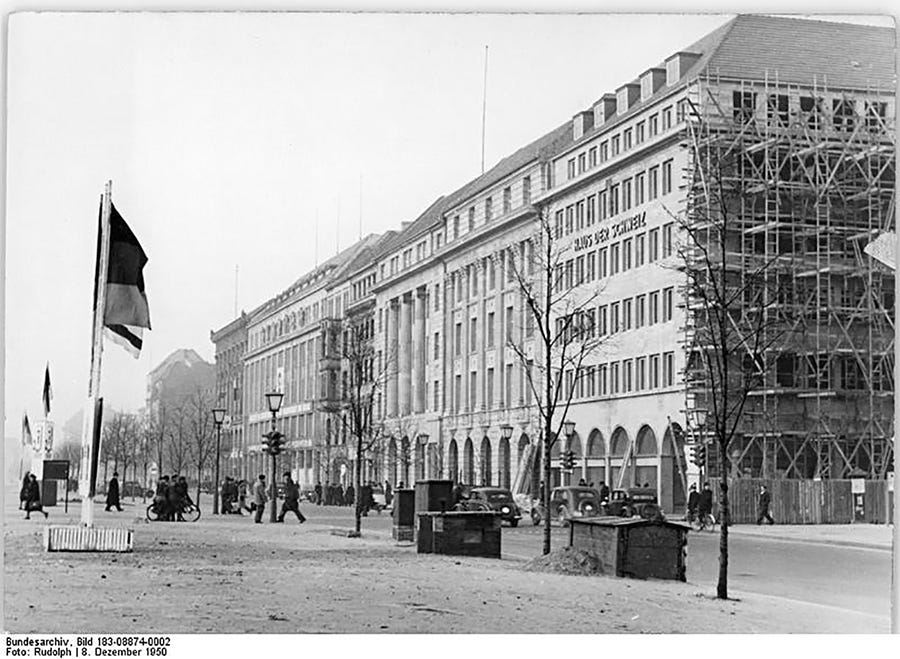
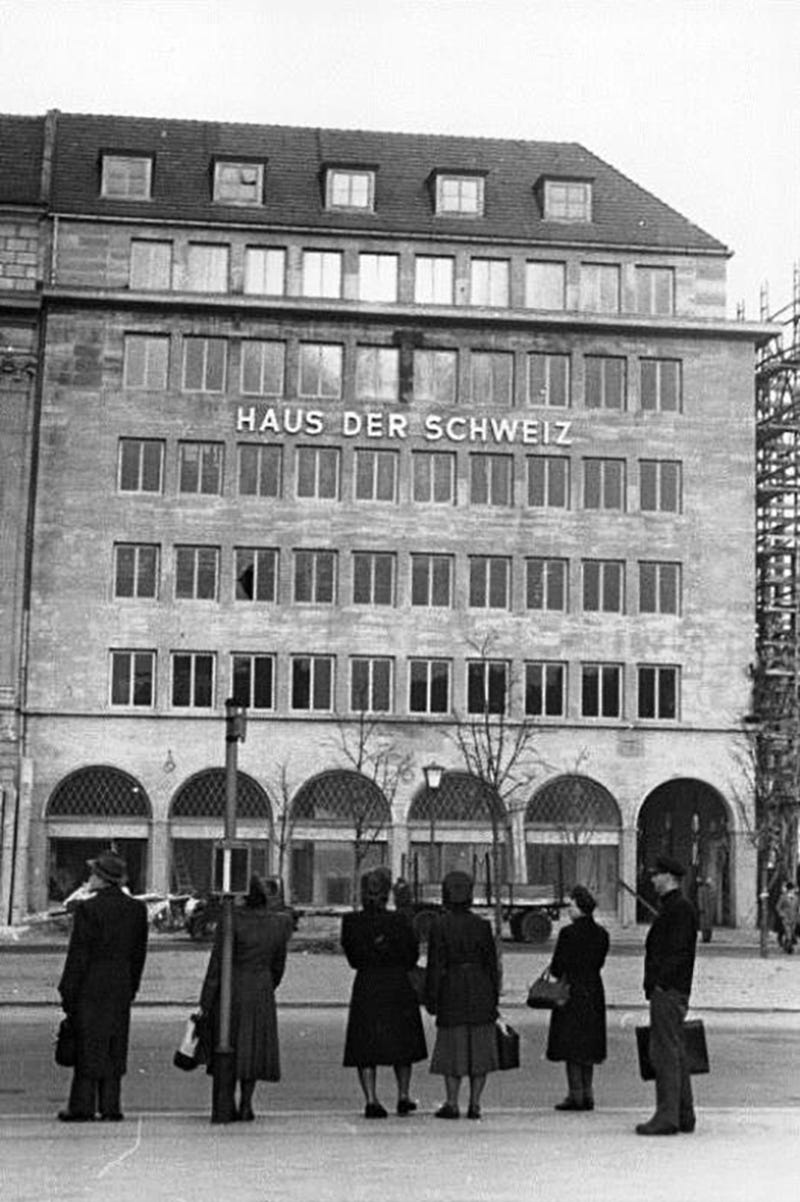
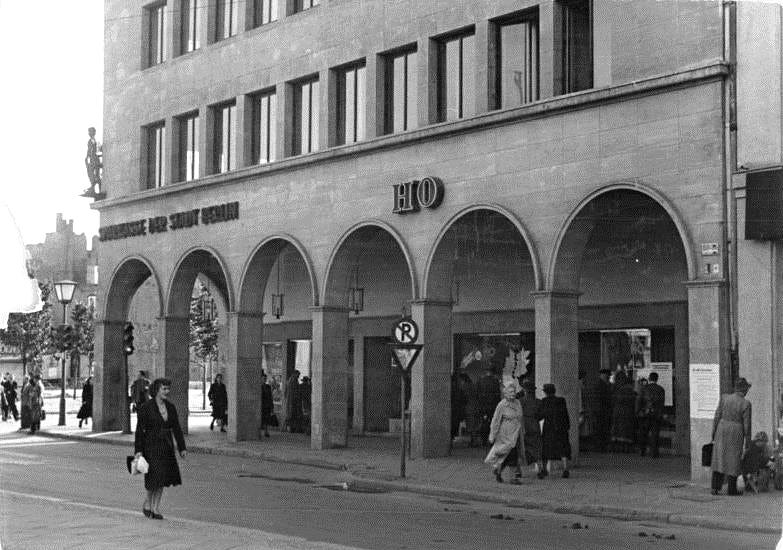
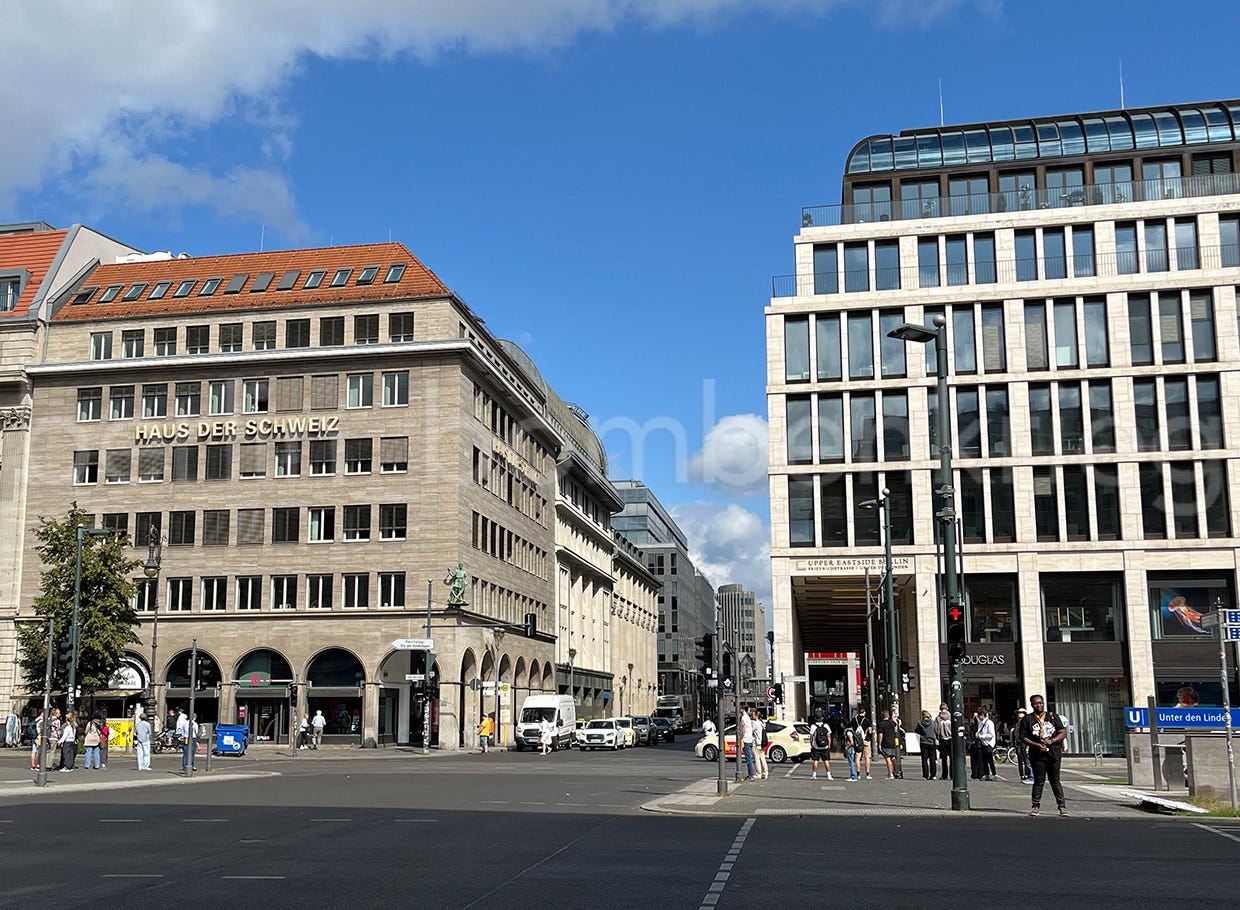
In 1994, a Swiss jeweler opened a branch in the completely renovated Haus der Schweiz, which has since been listed as a historic monument, given it an entirely new interior design.
Sources and Bibliography:
Donath, Matthias. (2006). Architecture in Berlin 1933–1945: A Guide Through Nazi Berlin. Lukas Verlag
Hailstone, Allan. (2017). Berlin in the Cold War: 1959 to 1966. Amberley Publishing
Landesarchiv Berlin. LAB, A Rep. 001-02, Nr. 698, Bl. 24 ff., s. a. Nr. 700, Bl. 171 ff
Langbein, Lena (2011). Das “Haus der Schweiz” in Berlin wird 75 Jahre alt. (accessed June 2017)
Thank you for reading Berlin Bombenkrieg by Pablo López Ruiz. Please subscribe, if you haven’t yet, to comment, follow and share. All images used for non profit / educational purposes.