


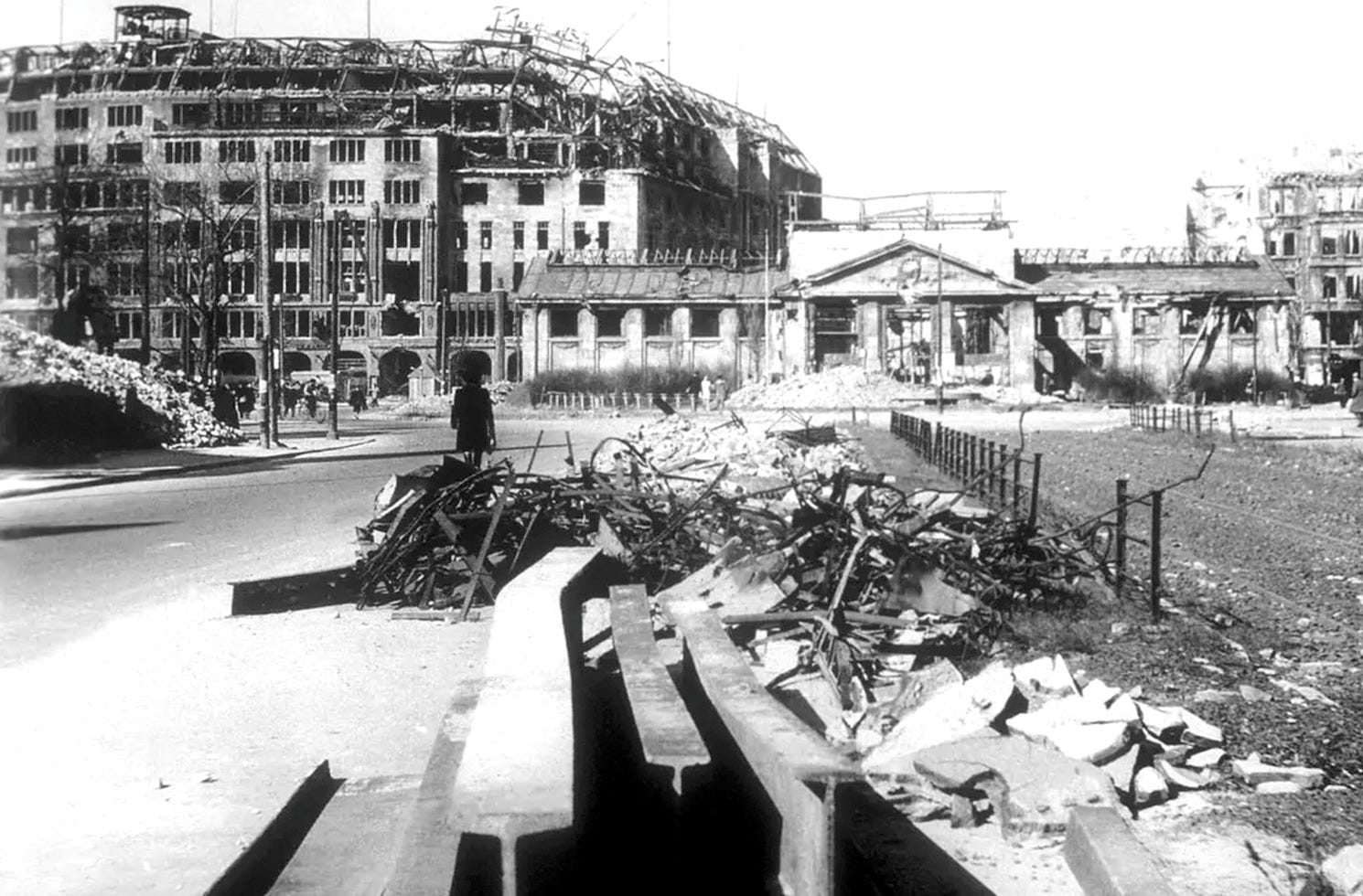
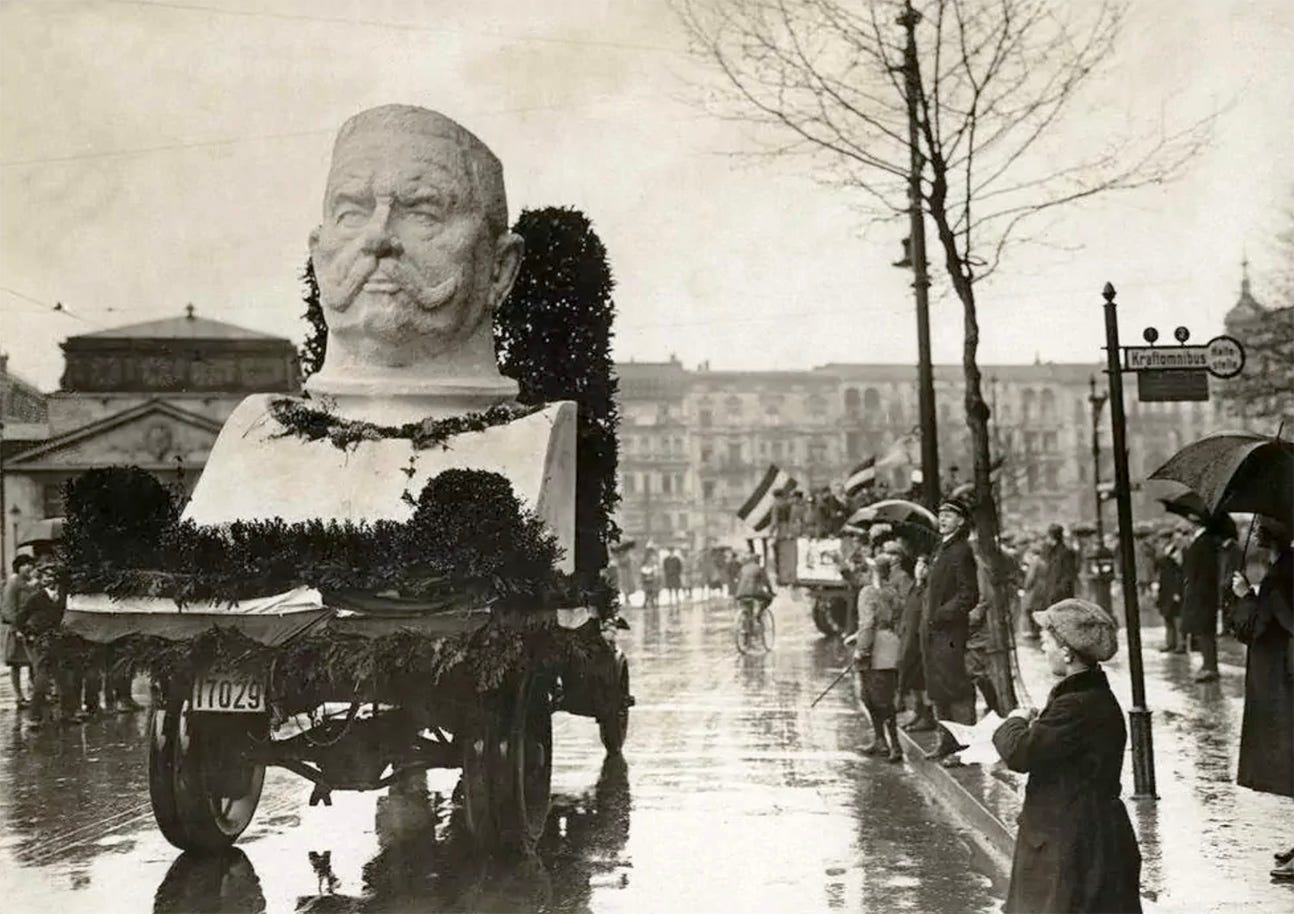
Located between Nollendorfplatz and Auguste Viktoria Platz (today’s Breitscheidplatz), Wittenbergplatz is one of the best known plazas of the city of Berlin. It was laid out between 1889 and 1892 in the course of urban development in the western suburbs of Berlin’s Wilhelmine Ring. The square was named after the adjacent Tauentzienstraße (from General Bogislav von Tauentzien) who had received the honorific title von Wittenberg after the storming of the French-occupied town of Wittenberg in February 1814. With the Berlin’s municipal reform effective in April 1938, Wittenbergplatz became part of the Schöneberg district.
The underground station U-Bahnhof Wittenbergplatz was opened in March 1902, part of the original U-Bahn Berlin network, years later it was expanded becoming a major subway connection of the western part of the city. Together with the underground station, another major landmark here is the KaDeWe (Kaufhaus des Westens), the large West-Berlin department store located at Tauentzienstraße 21-24 in the southwestern side of Wittenbergplatz. Owned by Adolf Jandorf, it opened its doors in March 1907 with five floors, the largest department store in continental Europe at the time which transformed the surrounding area into a shopping zone. Furthermore, on the north side of the square there are very popular weekly street markets.
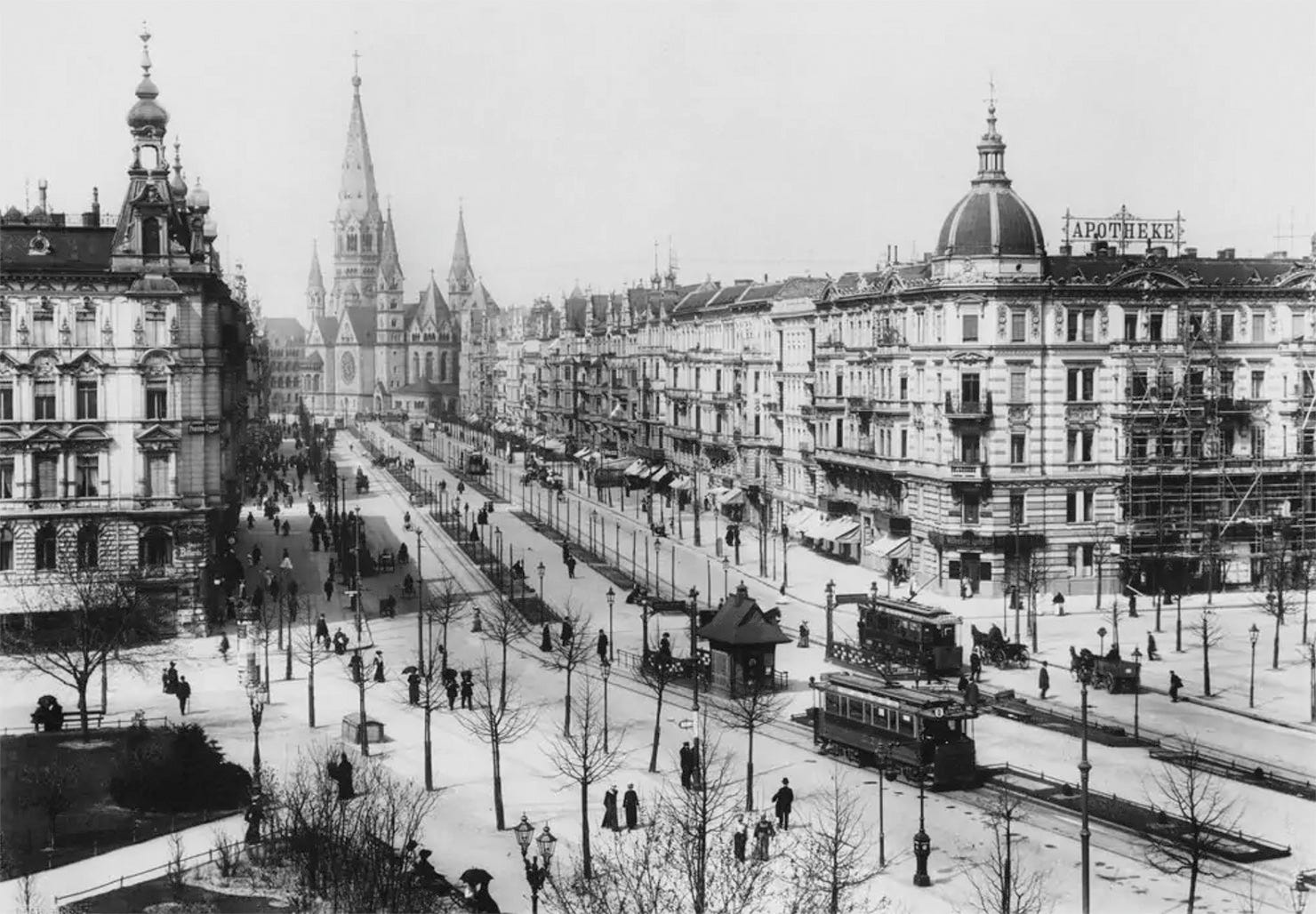
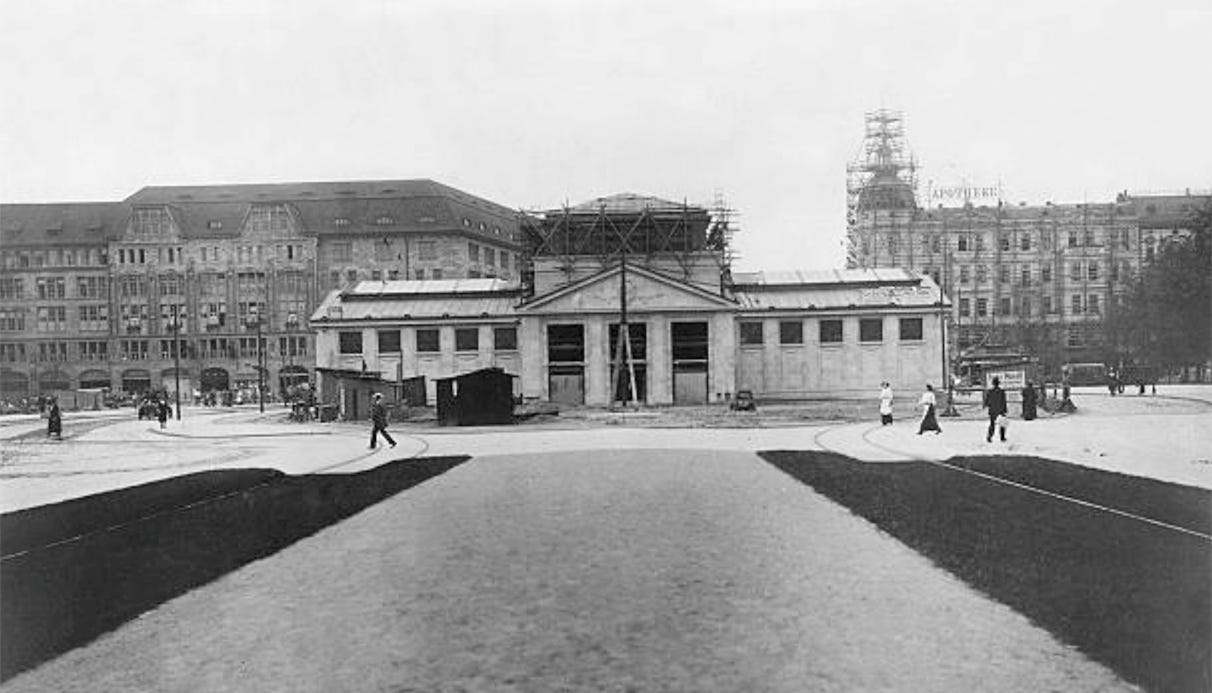
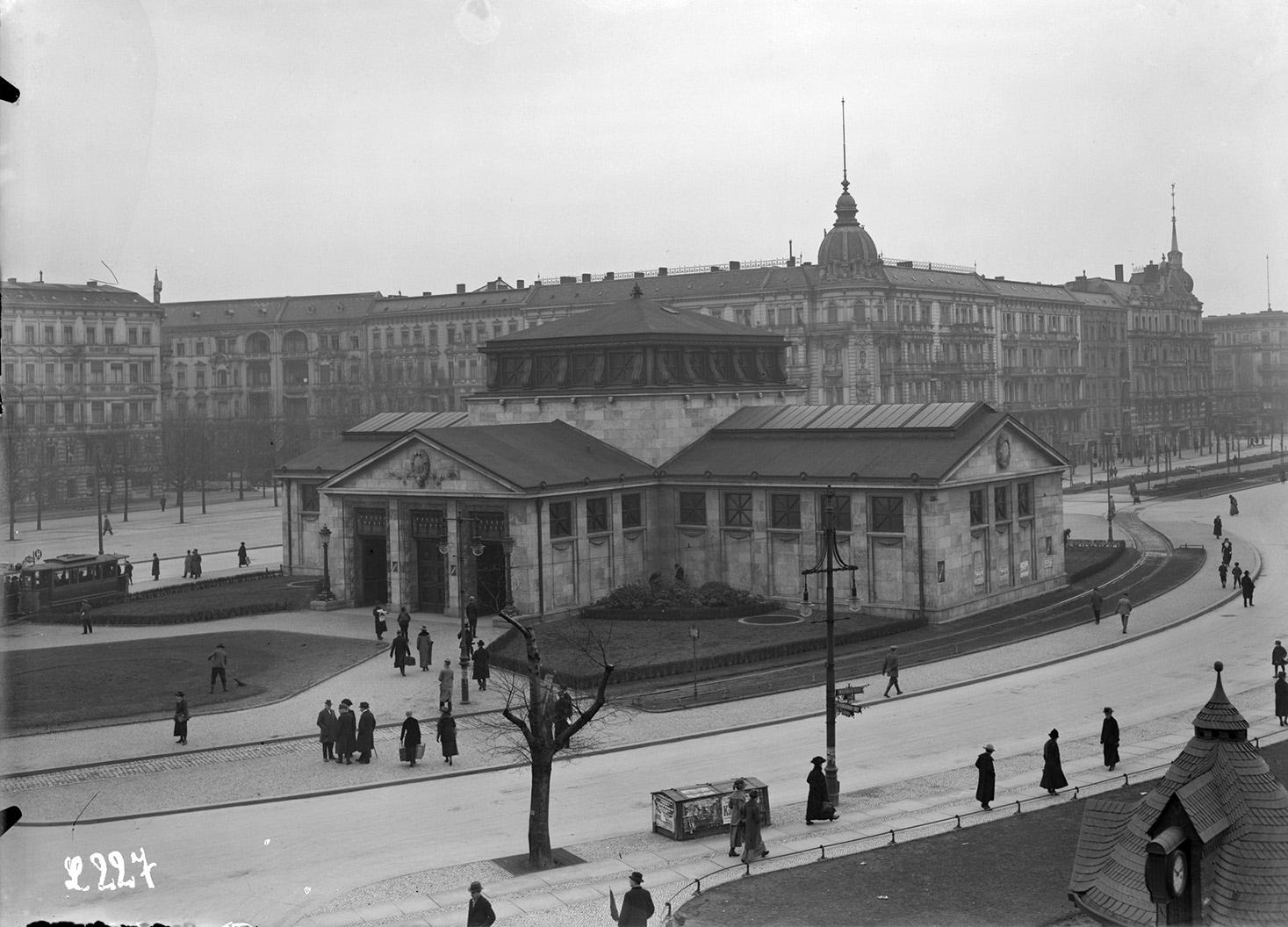
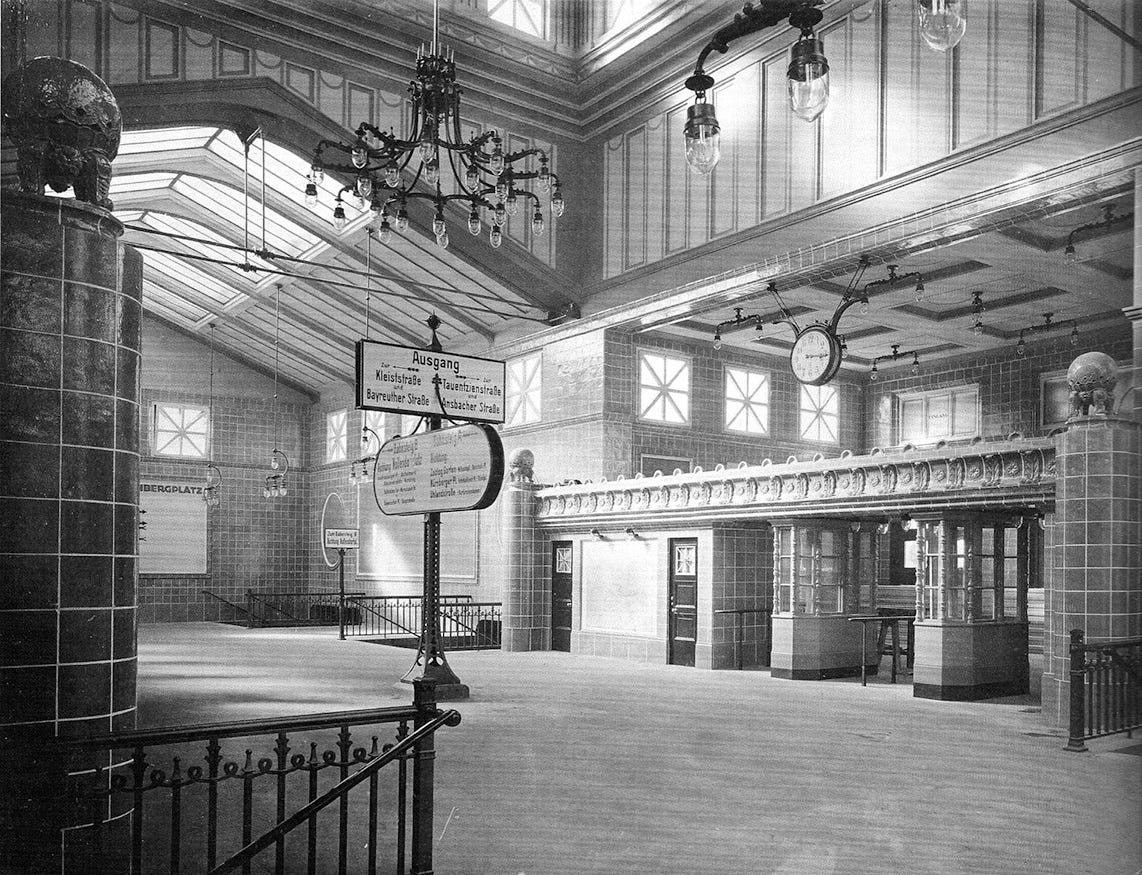
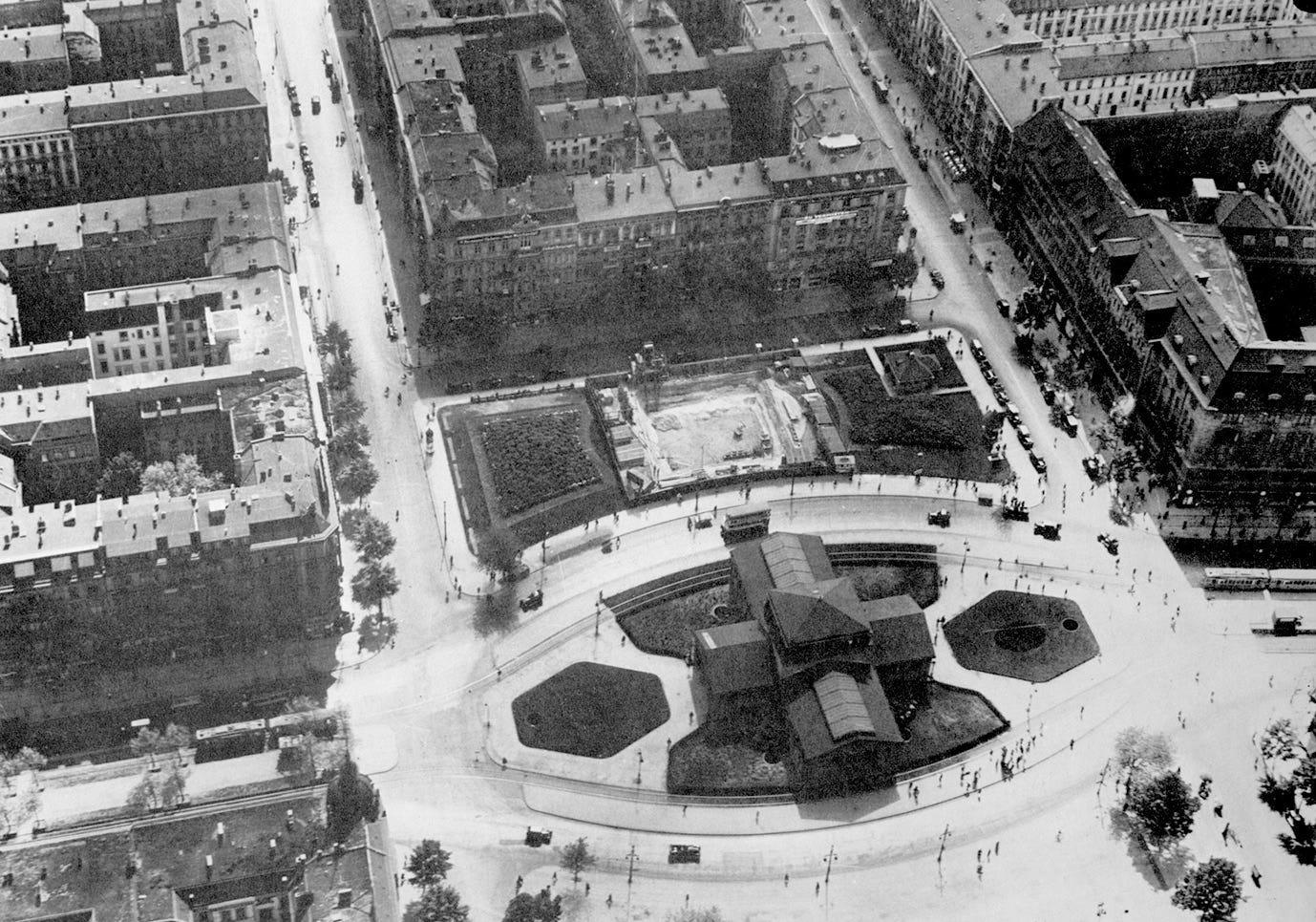
In 1912, a major redesign of the square was made, with a cross-shaped entrance building to access the U-Bhf underground station in the centre of the plaza, designed by Alfred Grenander (1863-1931) with neoclassical elements. The hall, built by Konstruktionsbüro Siemens & Halske AG, exits the underground train platforms to Tauentzienstraße and Kleiststraße both and became its most distinctive element, dominating Wittenbergplatz. A conical lantern would be added atop of the roof in the 1930s.
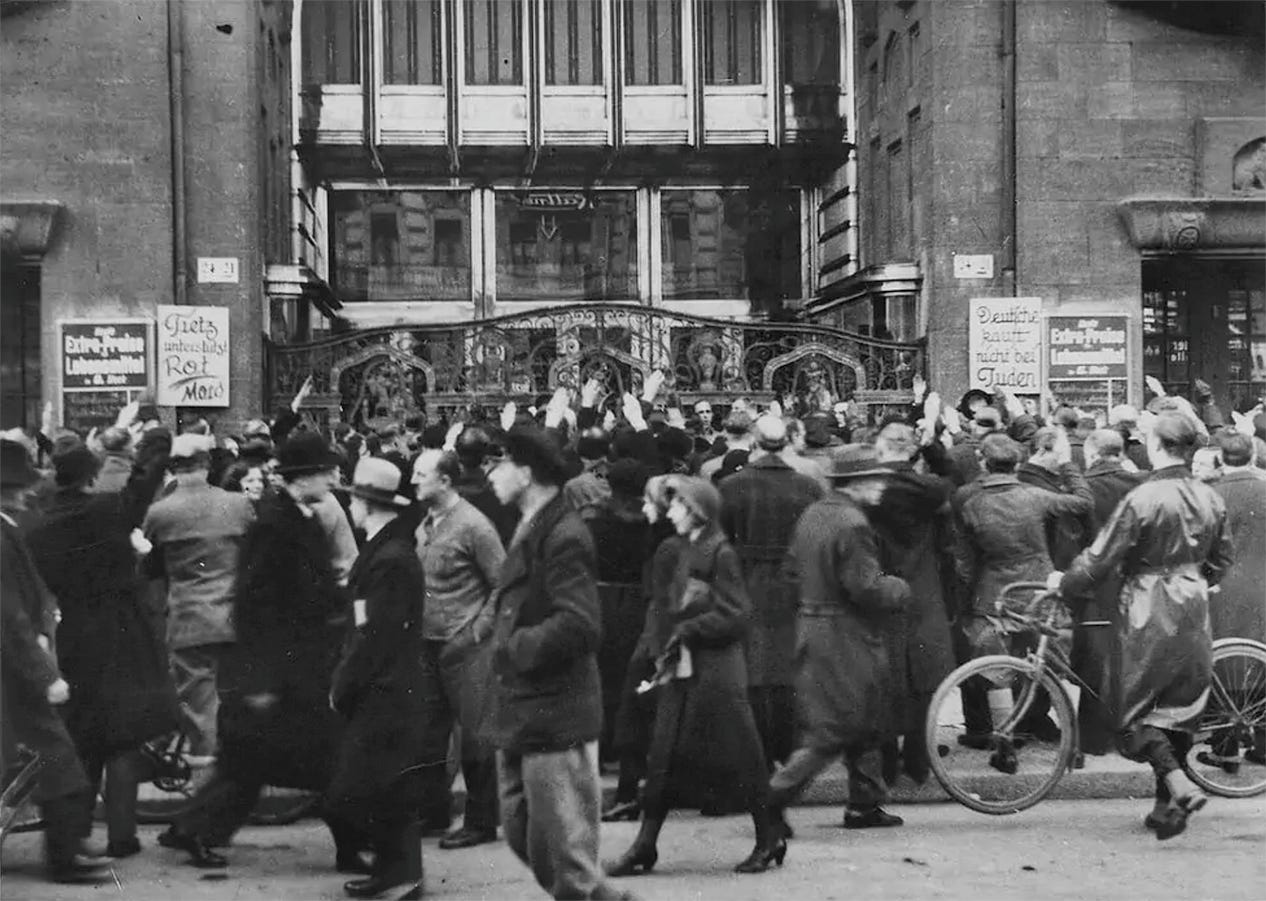
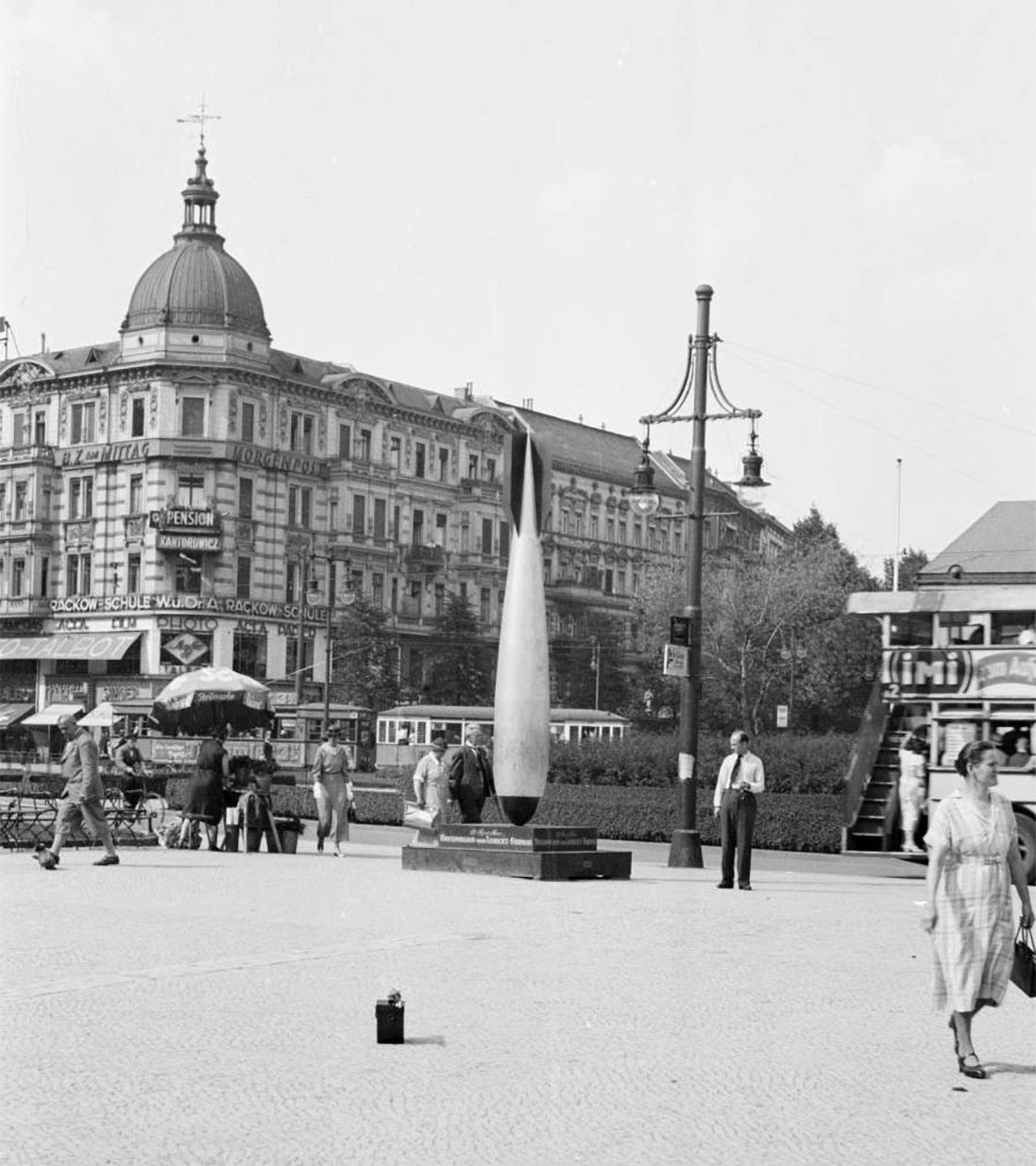
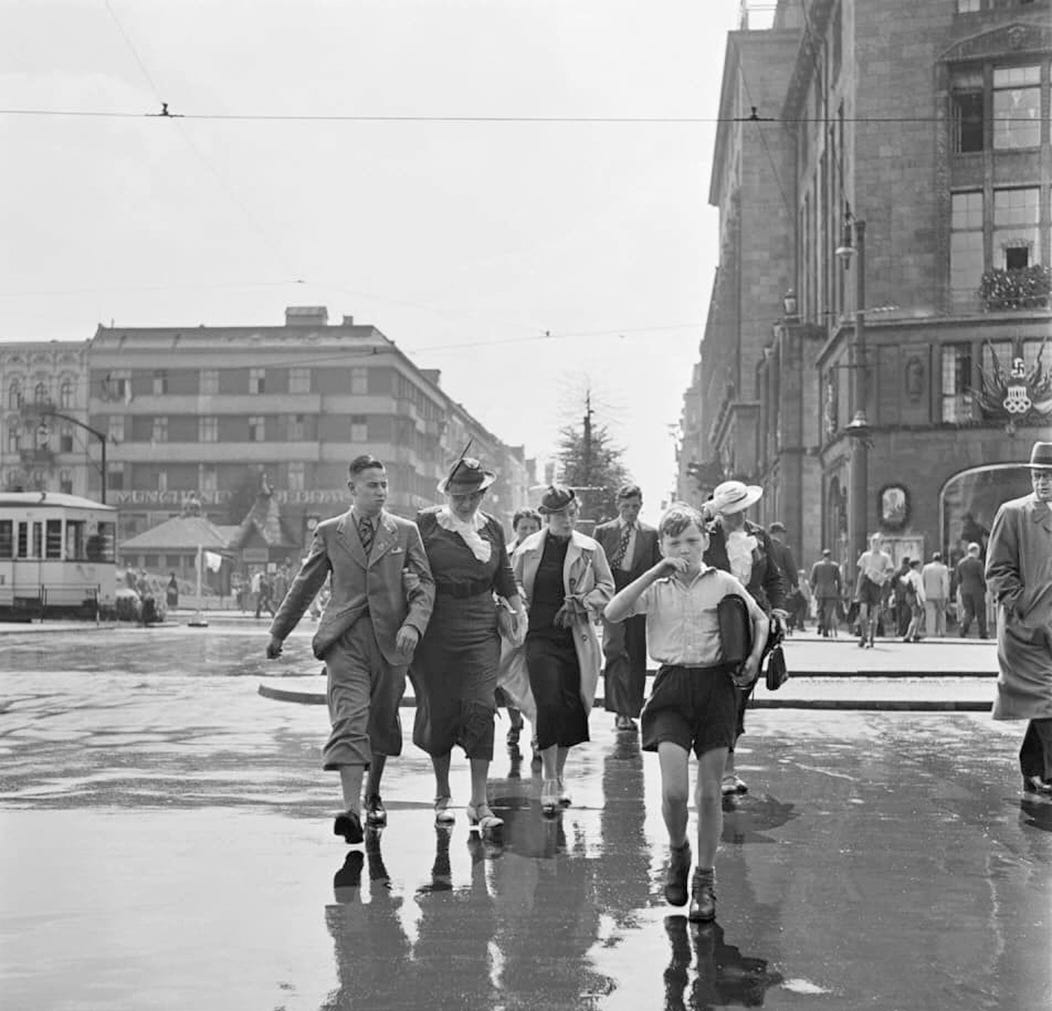
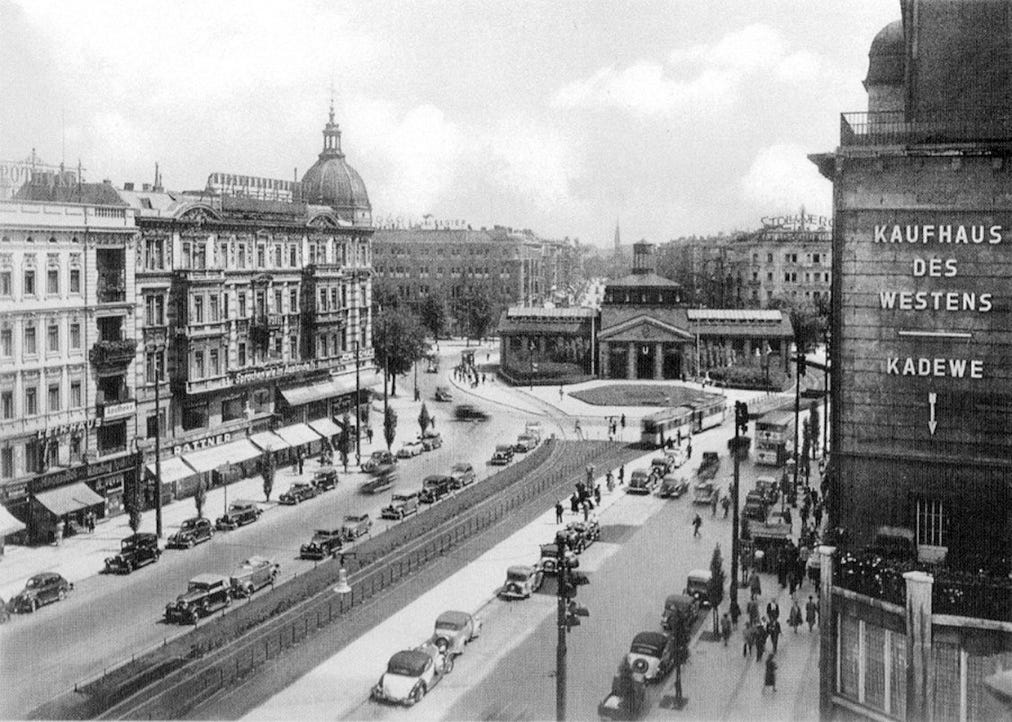
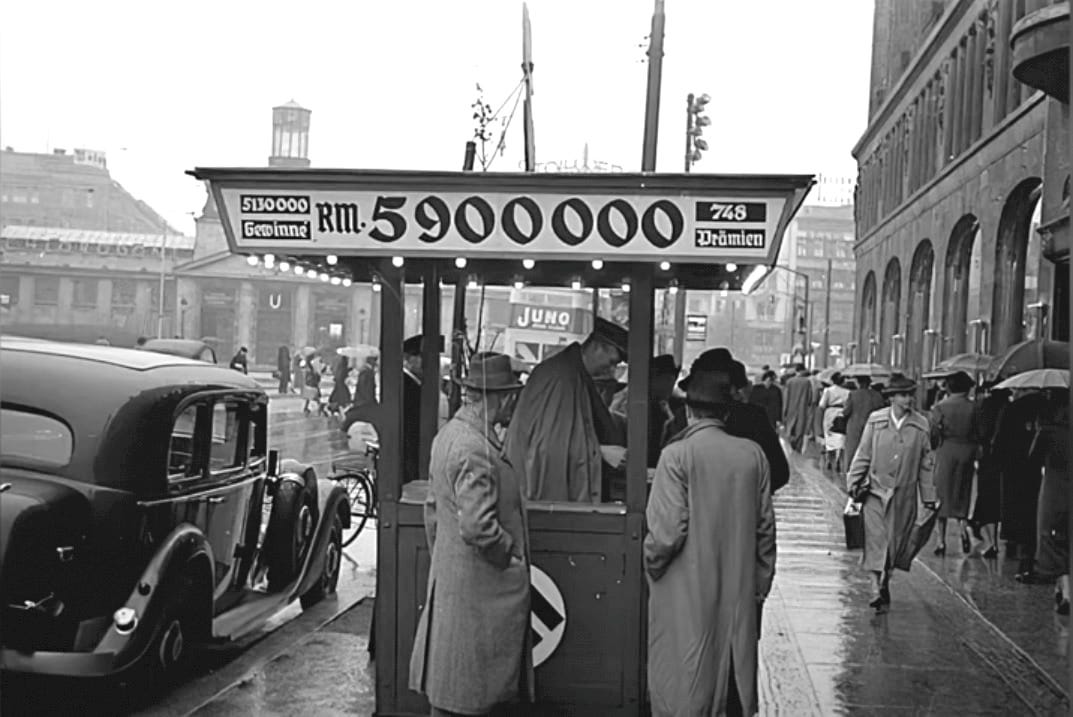
Wittenbergplatz in the Bombenkrieg, 1940-1945
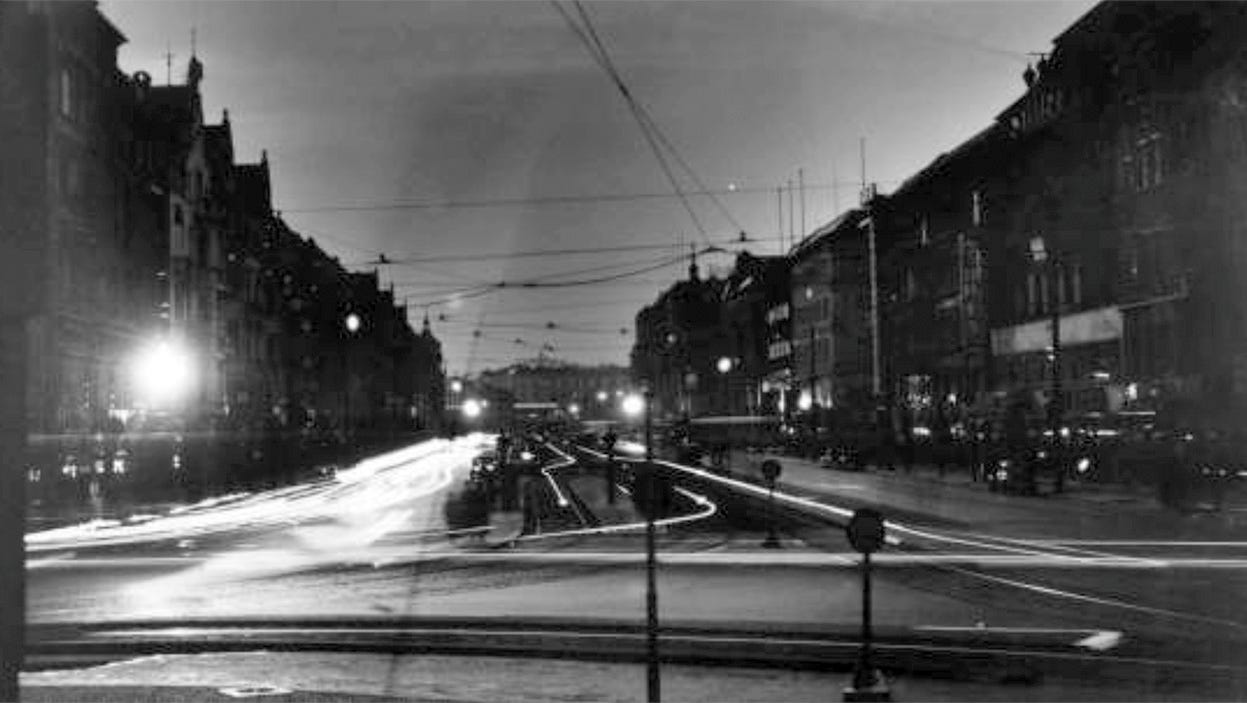
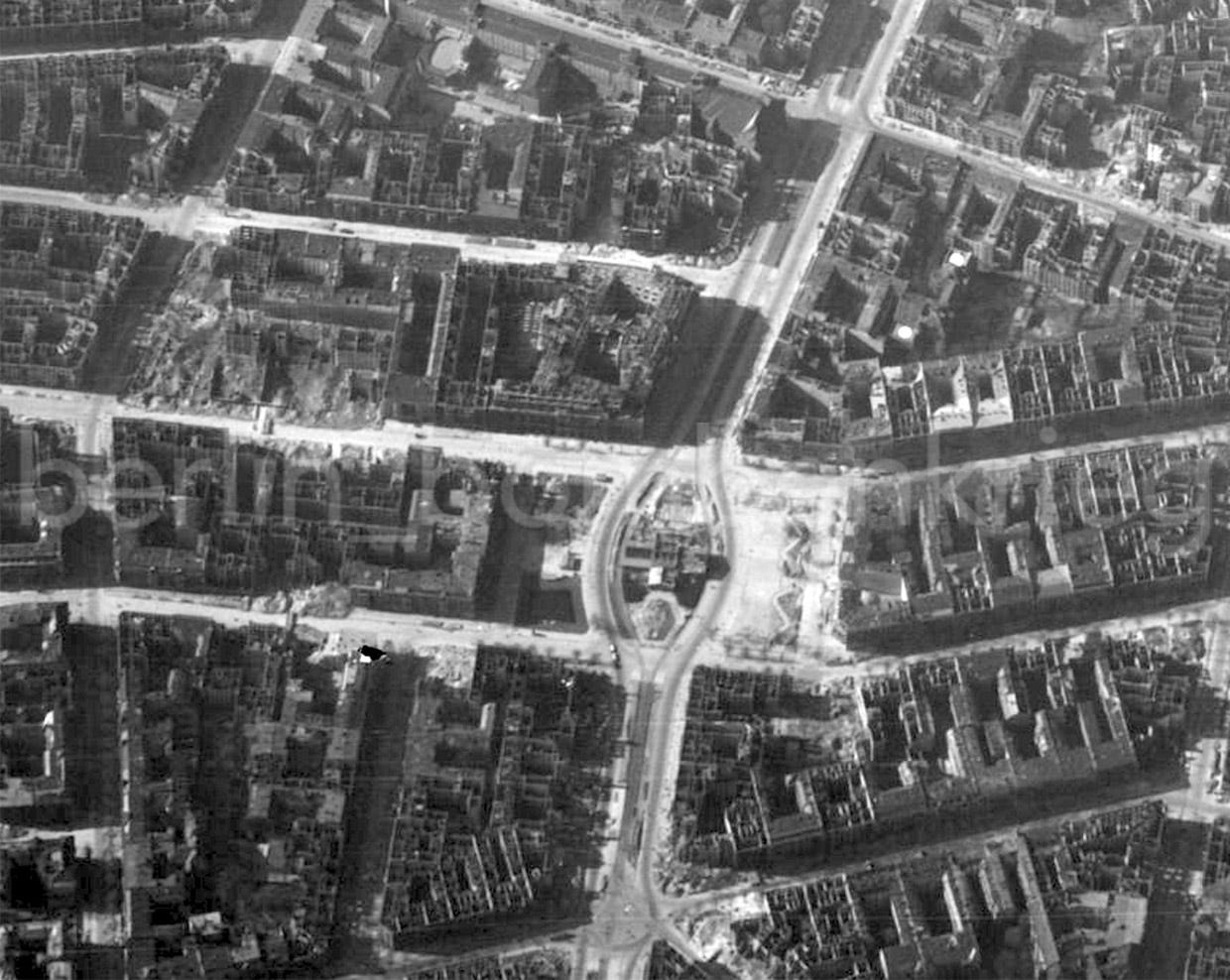
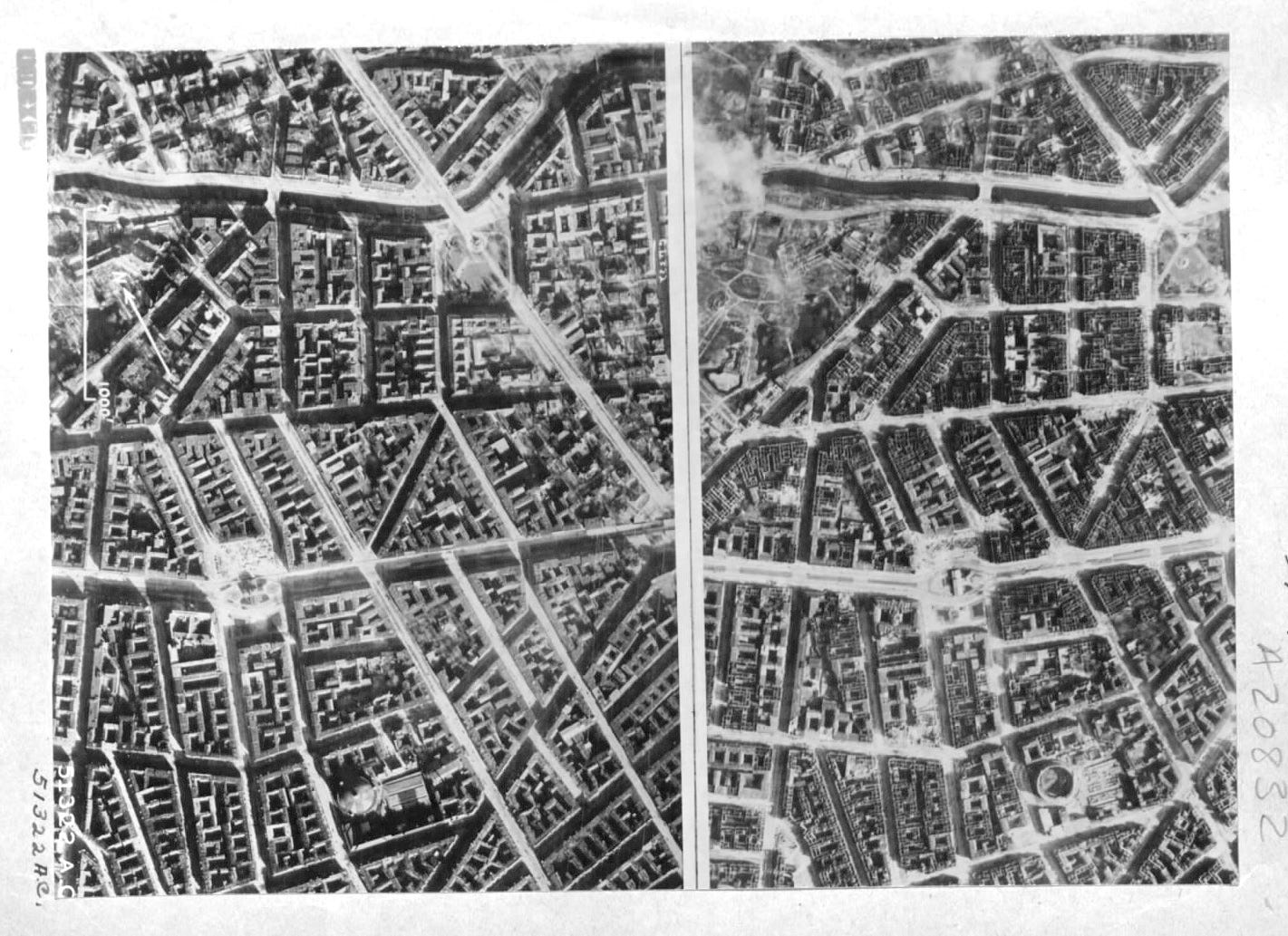
Wittenbergplatz was located in one of the most bombed areas of the German capital, between the Charlottenburg and Schöneberg districts both western zone of the city. The once highly illuminated square, main shopping area of the western part, now looks dark due to the imposing blackout regulations which already started on the first day of the conflict in September 1939. RAF’s bombing campaign hit hard the area in late 1943 and early 1944, with continuous attacks that severely damaged Wittenbergplatz and its surrounding streets too. It appears several times on the city’s bombing damage report with first one being on December 16, 1940, when a British HE bomb penetrated the tunnel between U-Bhf Wittenbergplatz and Zoologischer Garten train stations: traffic on Linie AI had to be temporarily shut down among other damage.
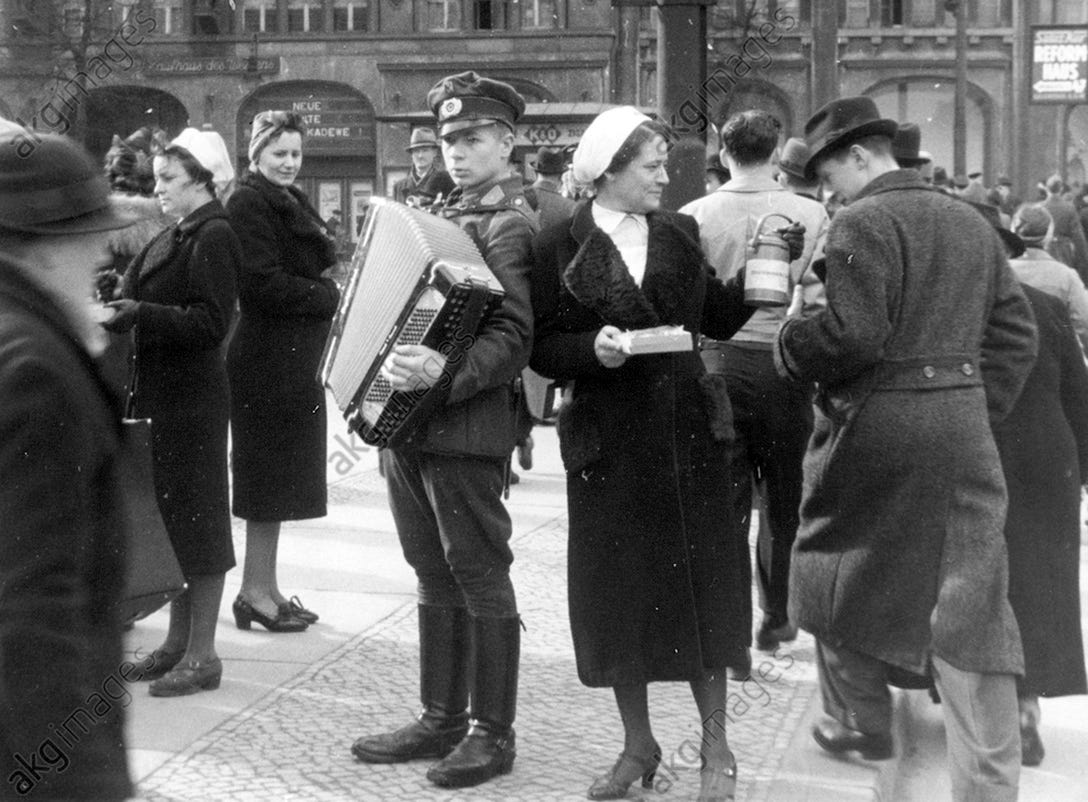
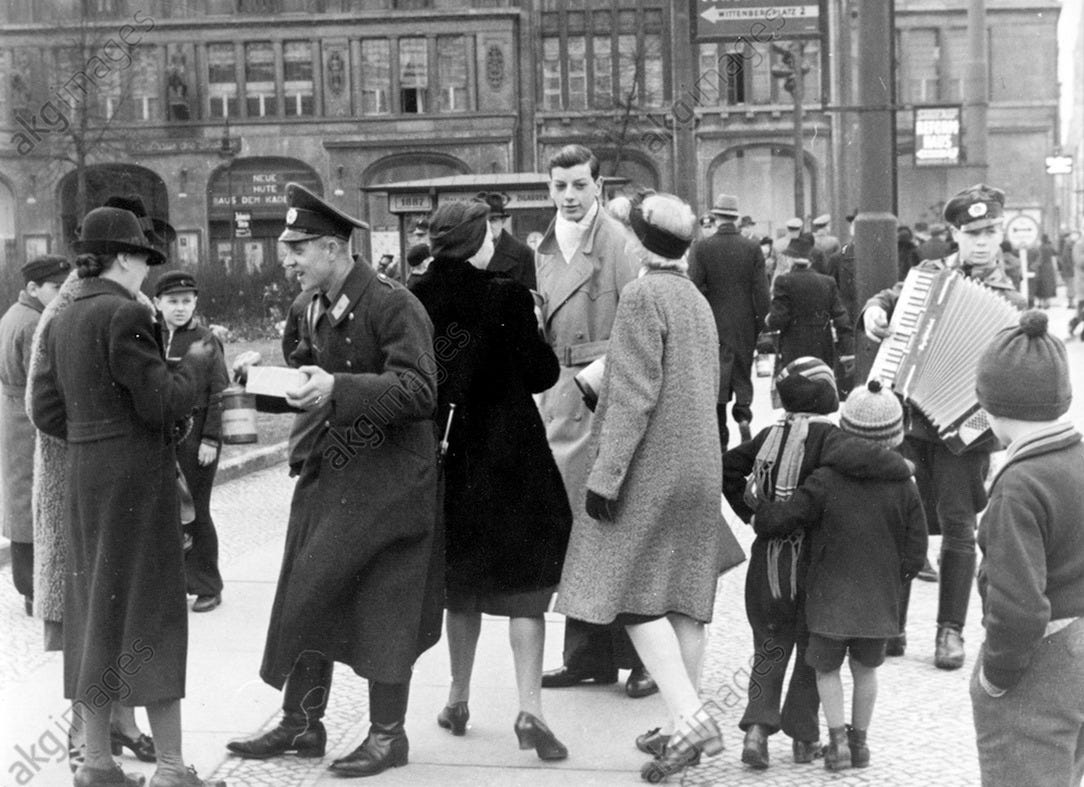
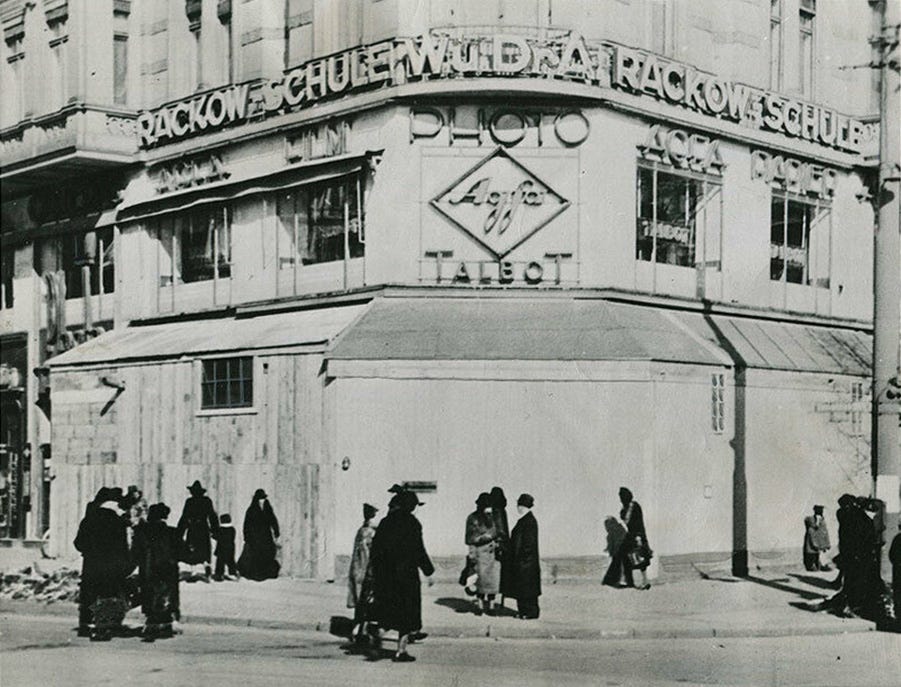
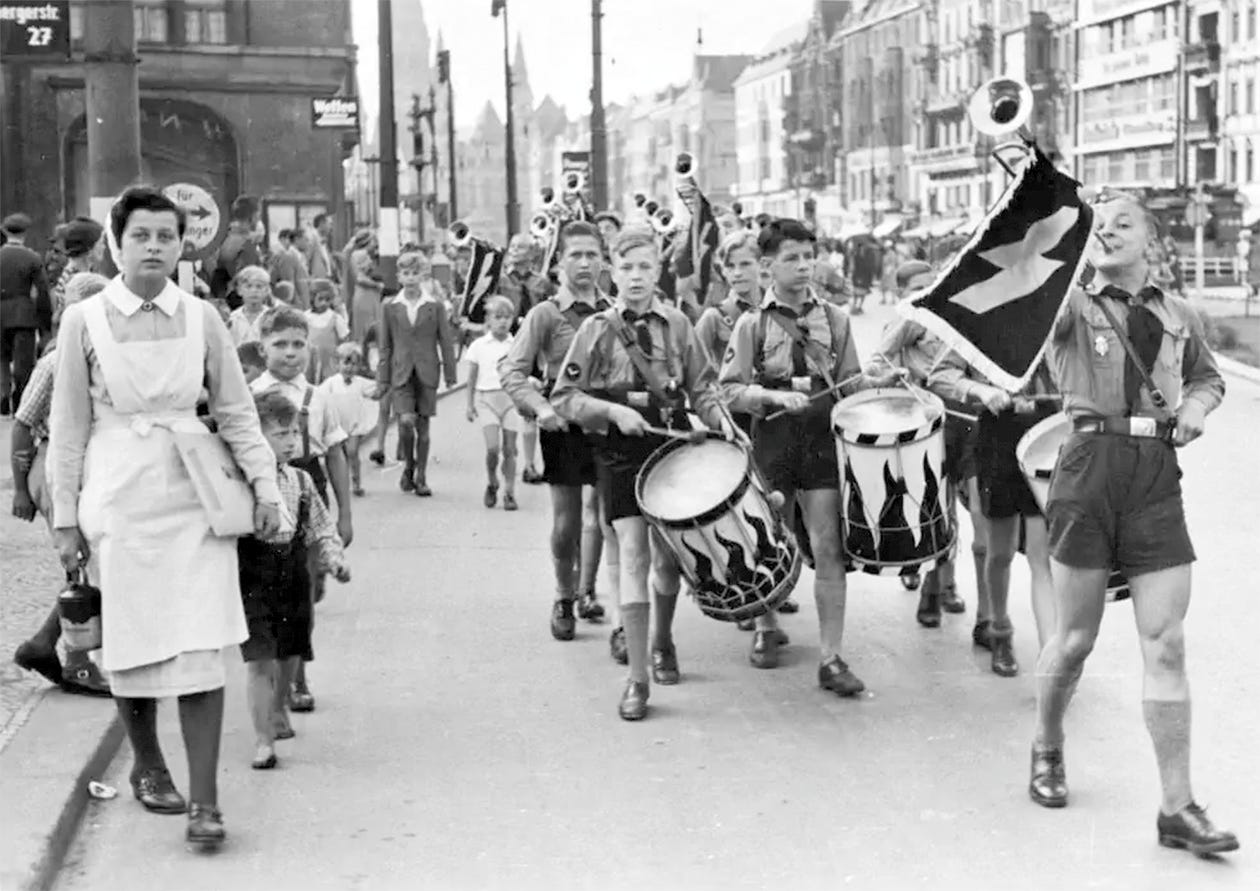
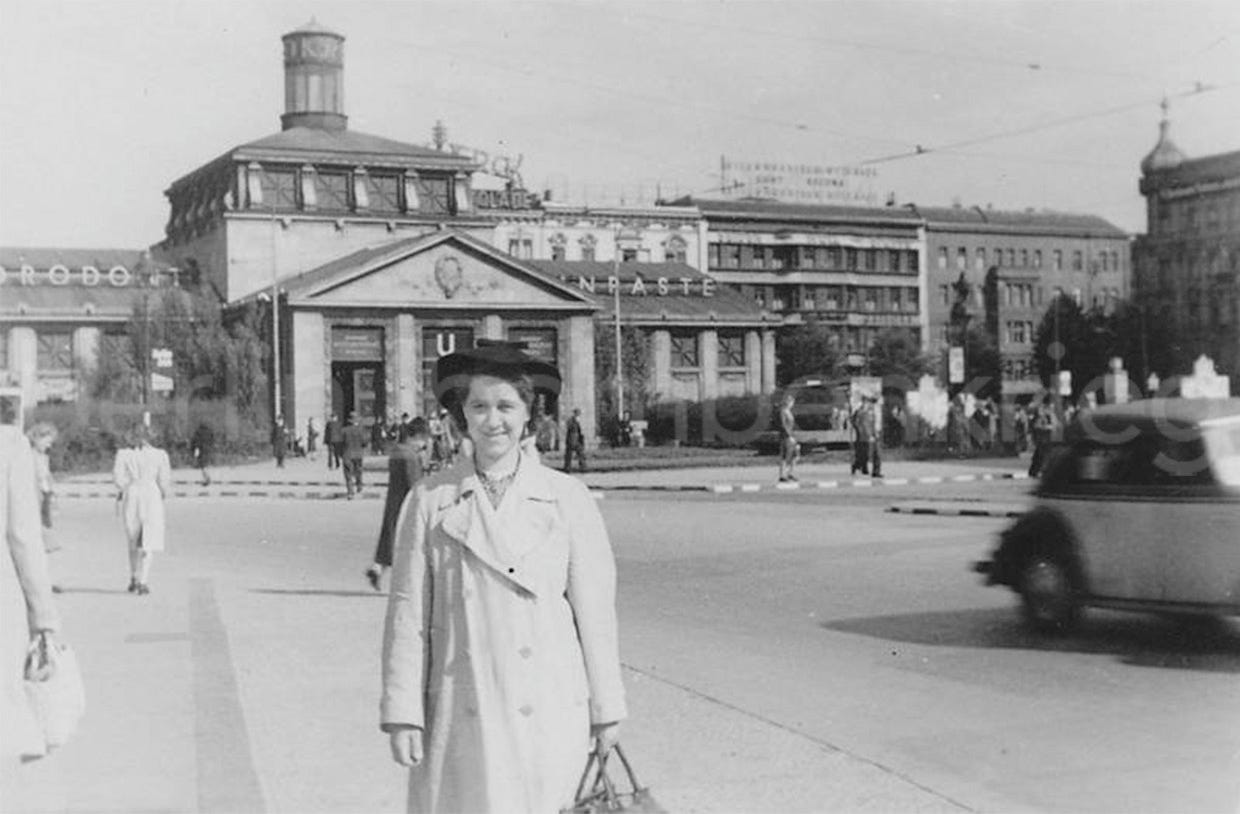
In fall 1943, British aircraft made two huge air raids which wiped out the western part of the city on the nights of 22/23 (696 RAF bombers attacked) and 23/24 November (337 bombers), part of the ‘Battle of Berlin’, the RAF’s air campaign focused on the Reich’s capital. Massive damage to the underground tunnel and tracks was reported after these attacks, some parts collapsed due to direct bomb hits and fire damage was done to the entrance hall on Wittenbergplatz. Two months later, the KaDeWe store department was badly damaged after an RAF Halifax four-engined bomber crashed onto its roof in the early hours of January 29, 1944, during another British raid, as we have researched in our previous post that describes the crash, the seven-man crew aboard were all killed.
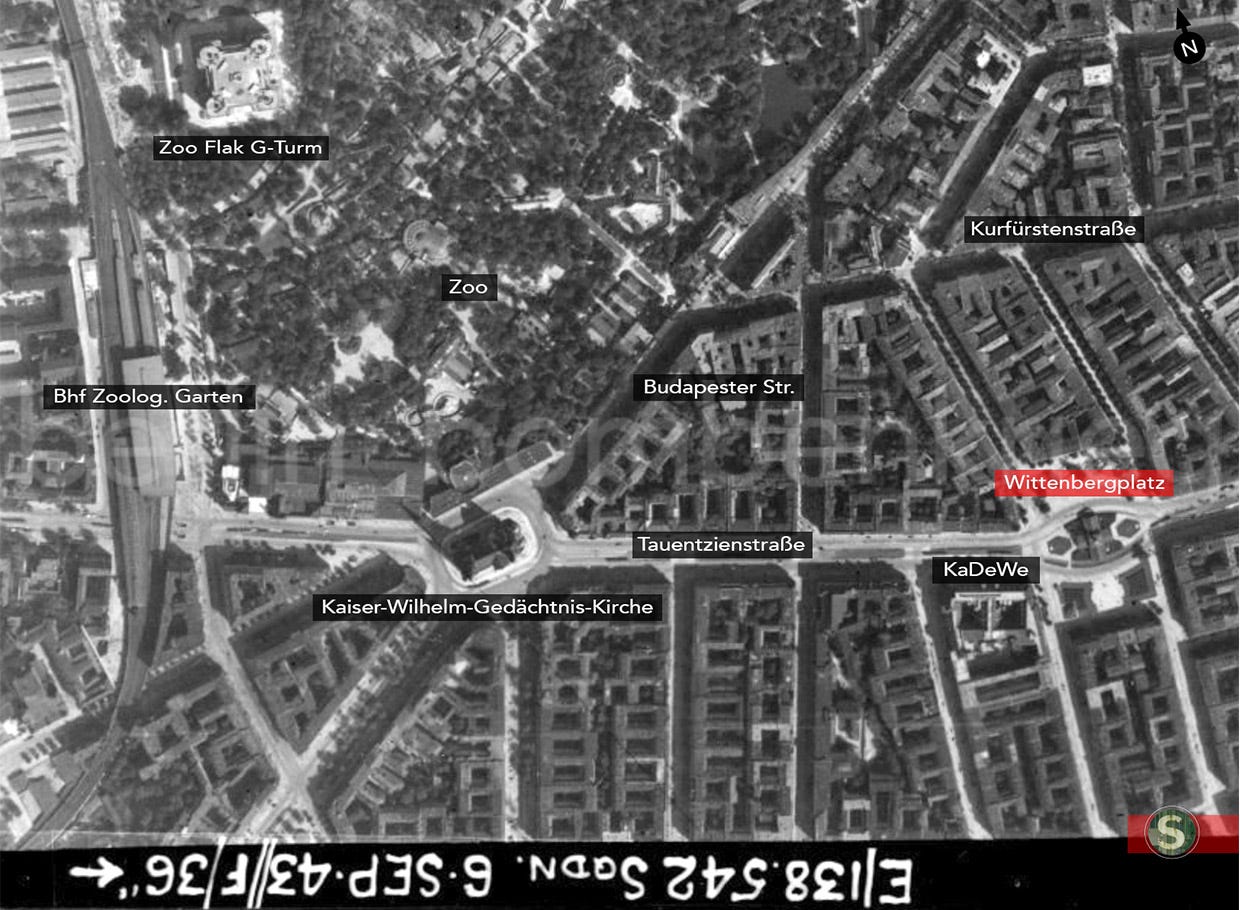
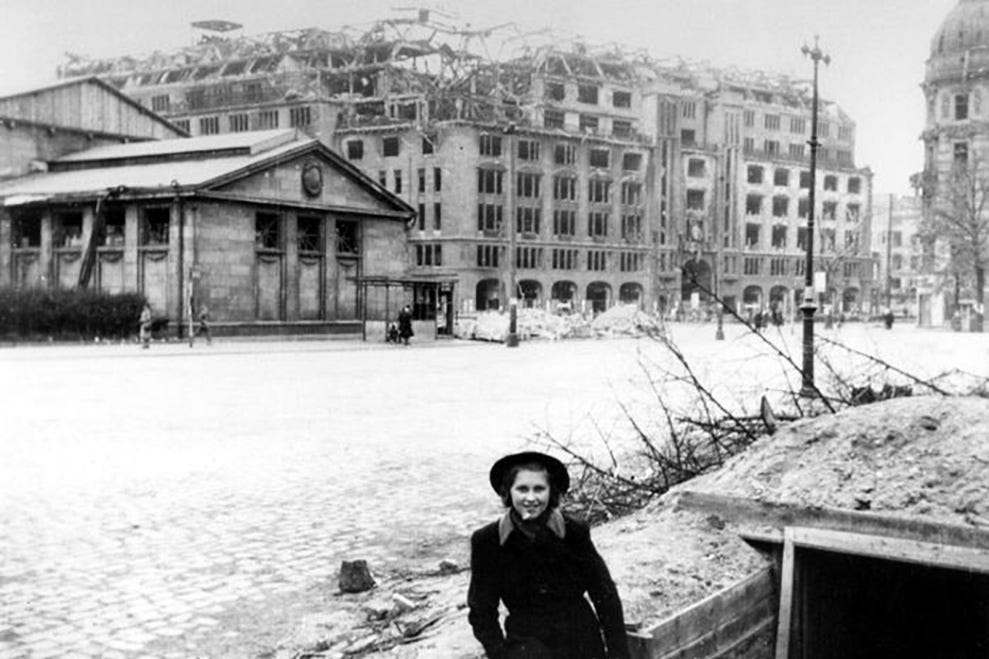
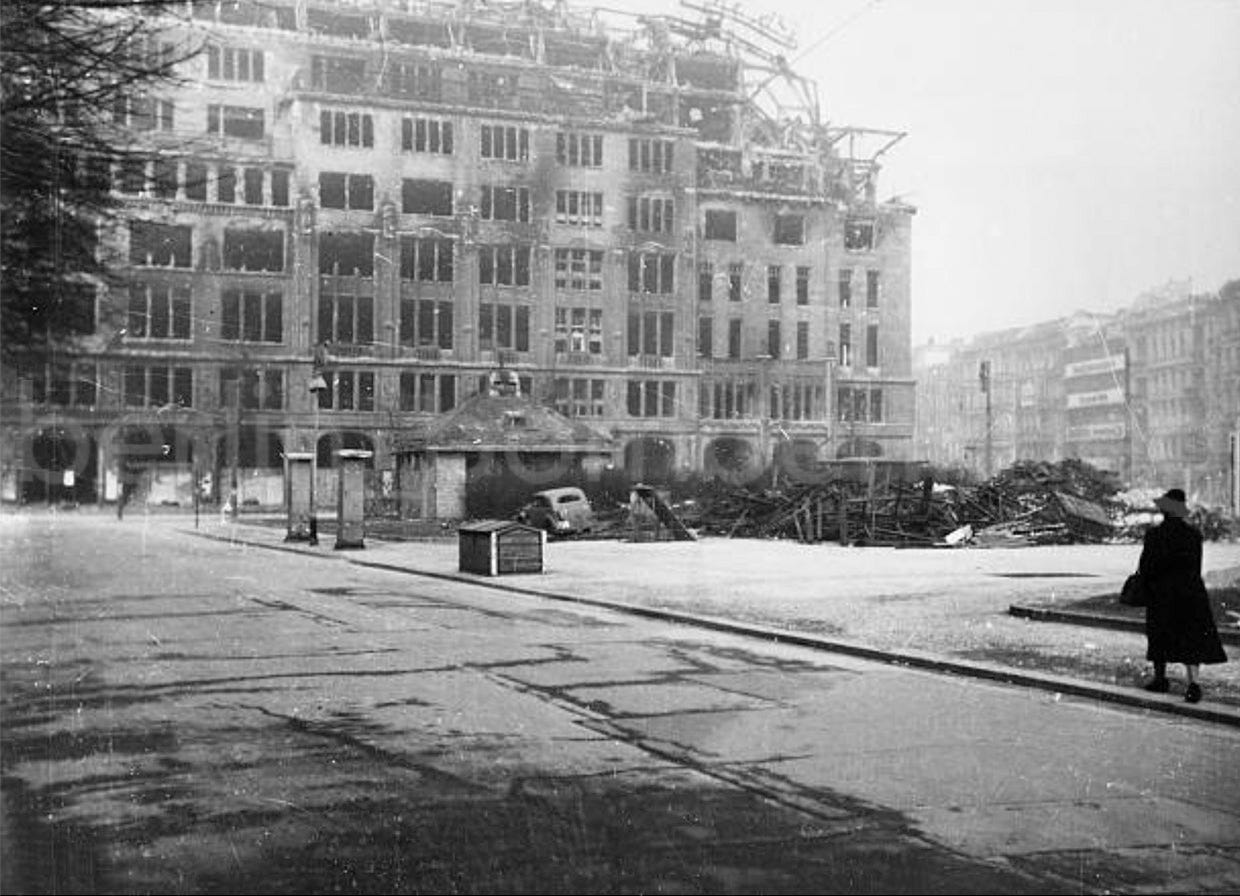
Furthermore, the square was hit by the USAAF daylight offensive too, when the underground tunnels between U-Bhf Wittenbergplatz and Zoo were penetrated by direct hits on May 8, 1944 (403 American heavy bombers attacked), which left Linie A trains out of service for several days.
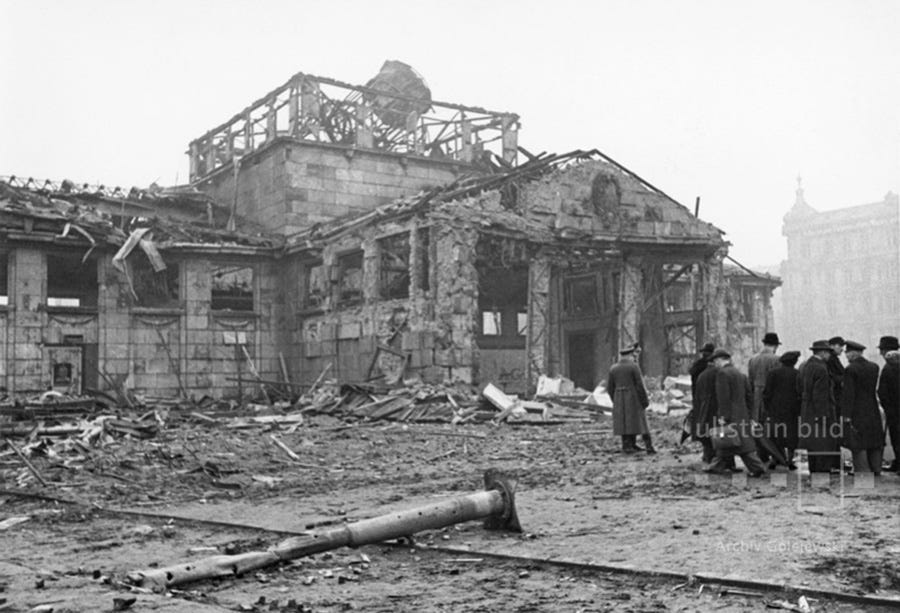
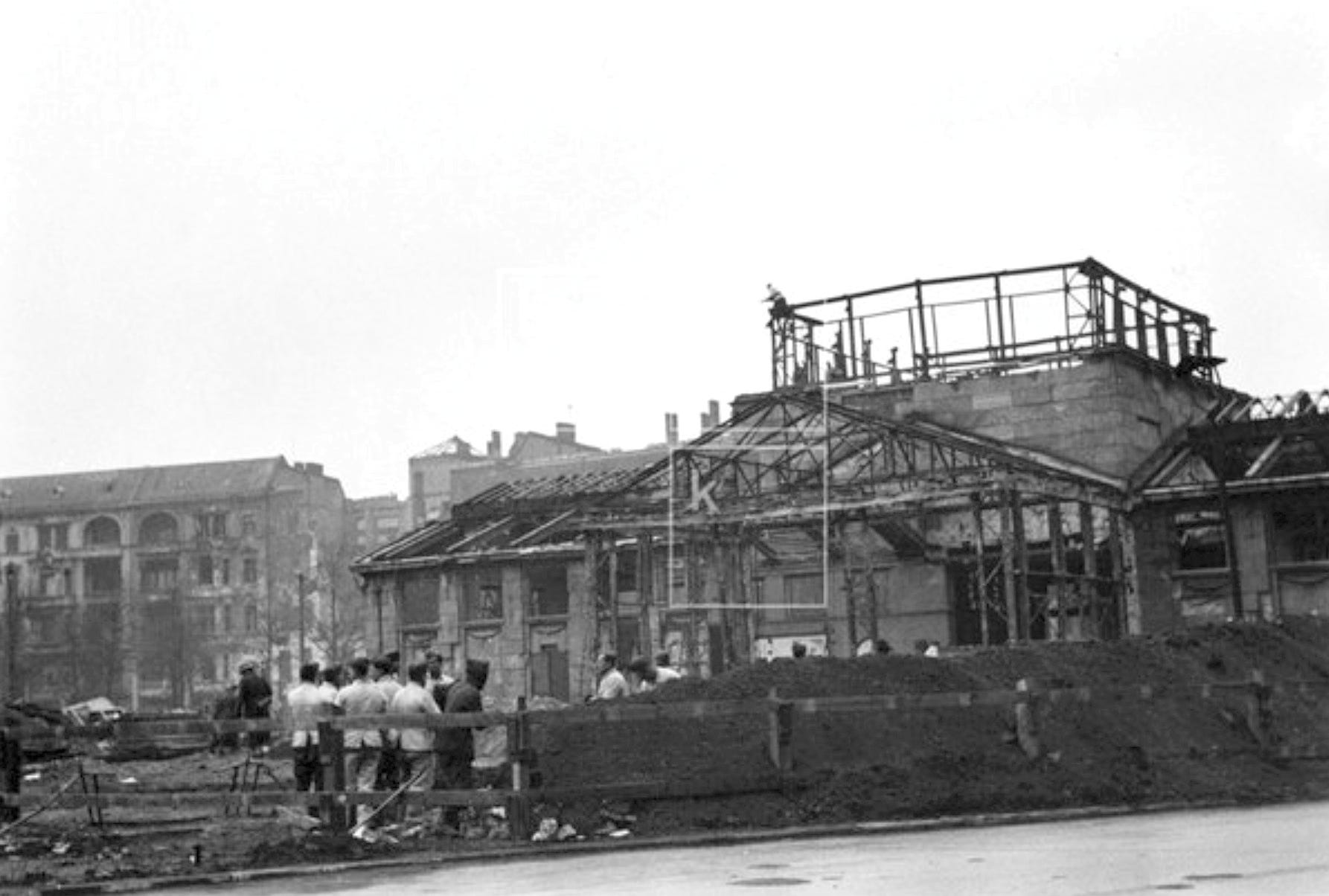
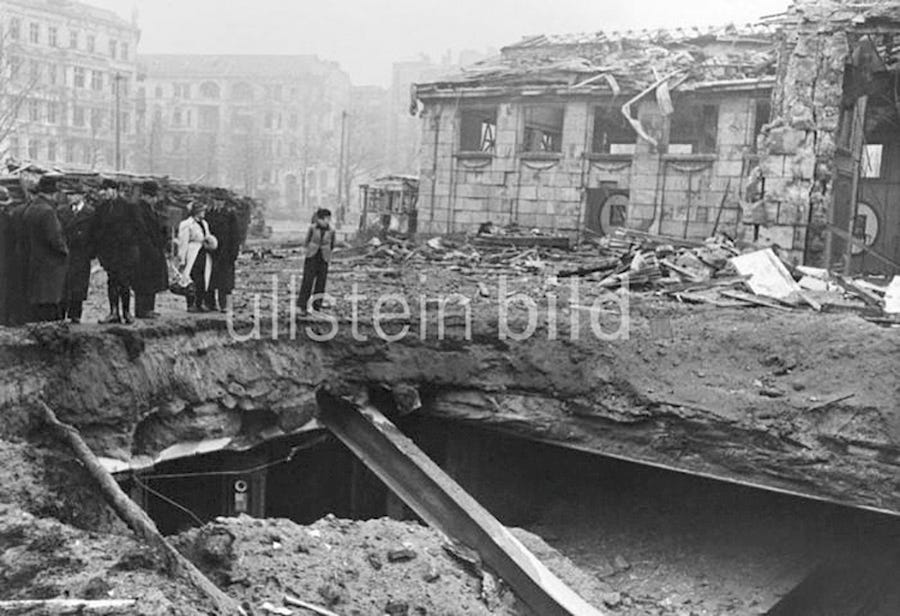
From March 1944 onwards, RAF Mosquito fast bombers of the newly created Light Night-Striking Force (LNSF) visited almost nightly Berlin to harass the capital and its citizens. Further bomb damage on Wittenbergplatz was reported on August 19, 1944, when an explosive bomb landed there bursting a pipe, and again on the night of 29/30 January 1945 when Bomber Command sent 59 Mosquitoes to attack the city. Two high-explosive bombs (most probably air-mines) landed here: one broke through the roof of the subway tunnel meanwhile the other destroyed the building at Nr. 4, on the north side of the square. Four people were injured during the attack, which also destroyed the station’s signal box and buried some of the tracks, causing the interruption of the BVG train service between Zoo and Bülowstraße. Other sources refer to a direct bomb hit which caused severe damage to the entrance hall again and to the underground platform.
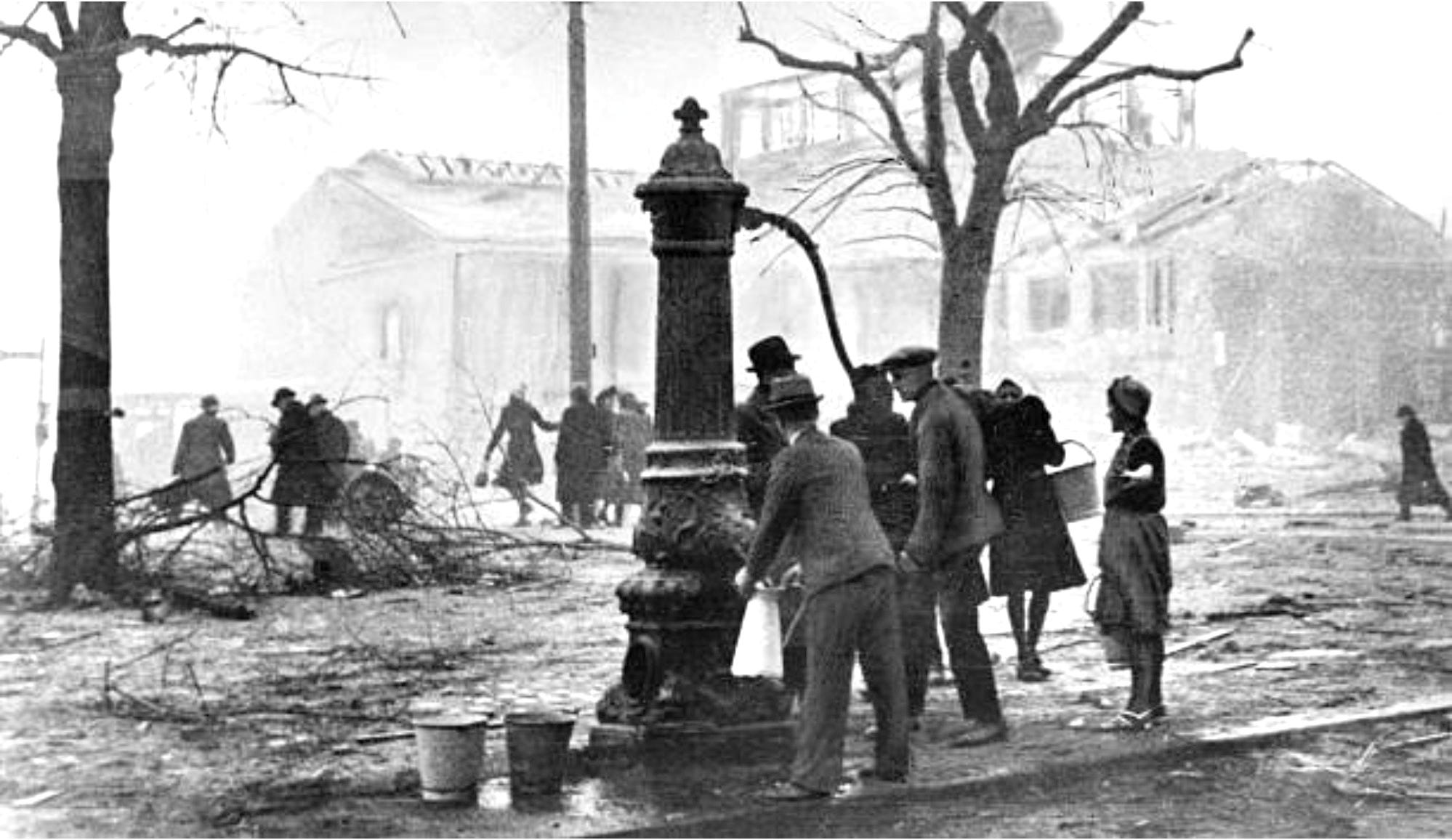
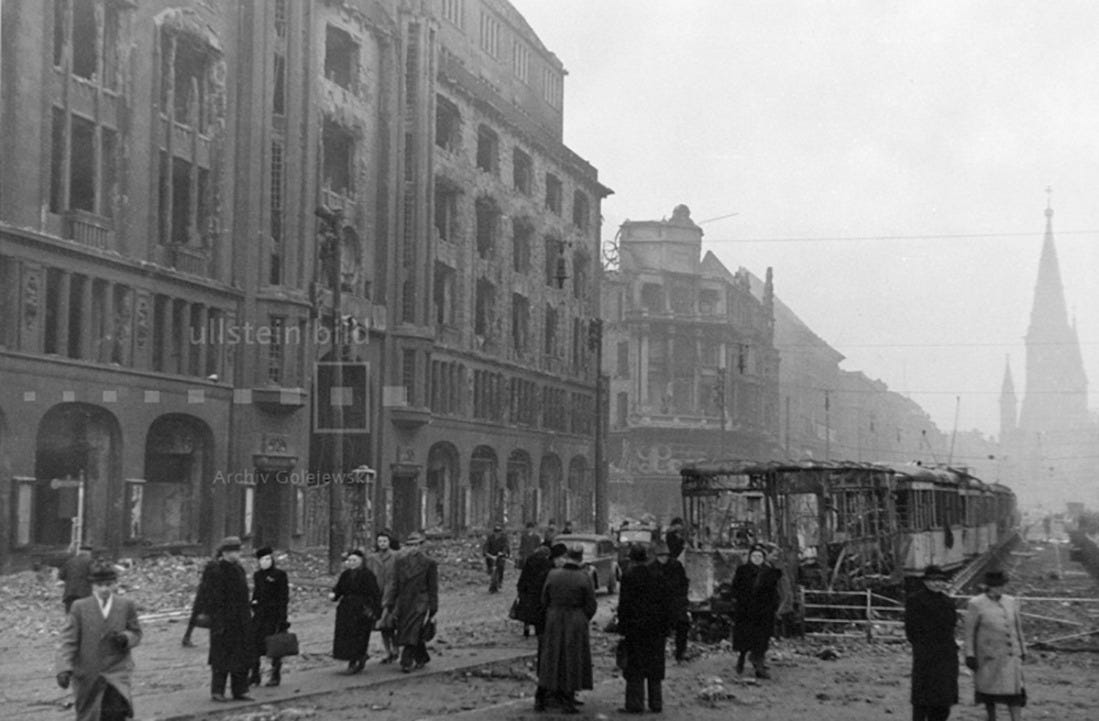
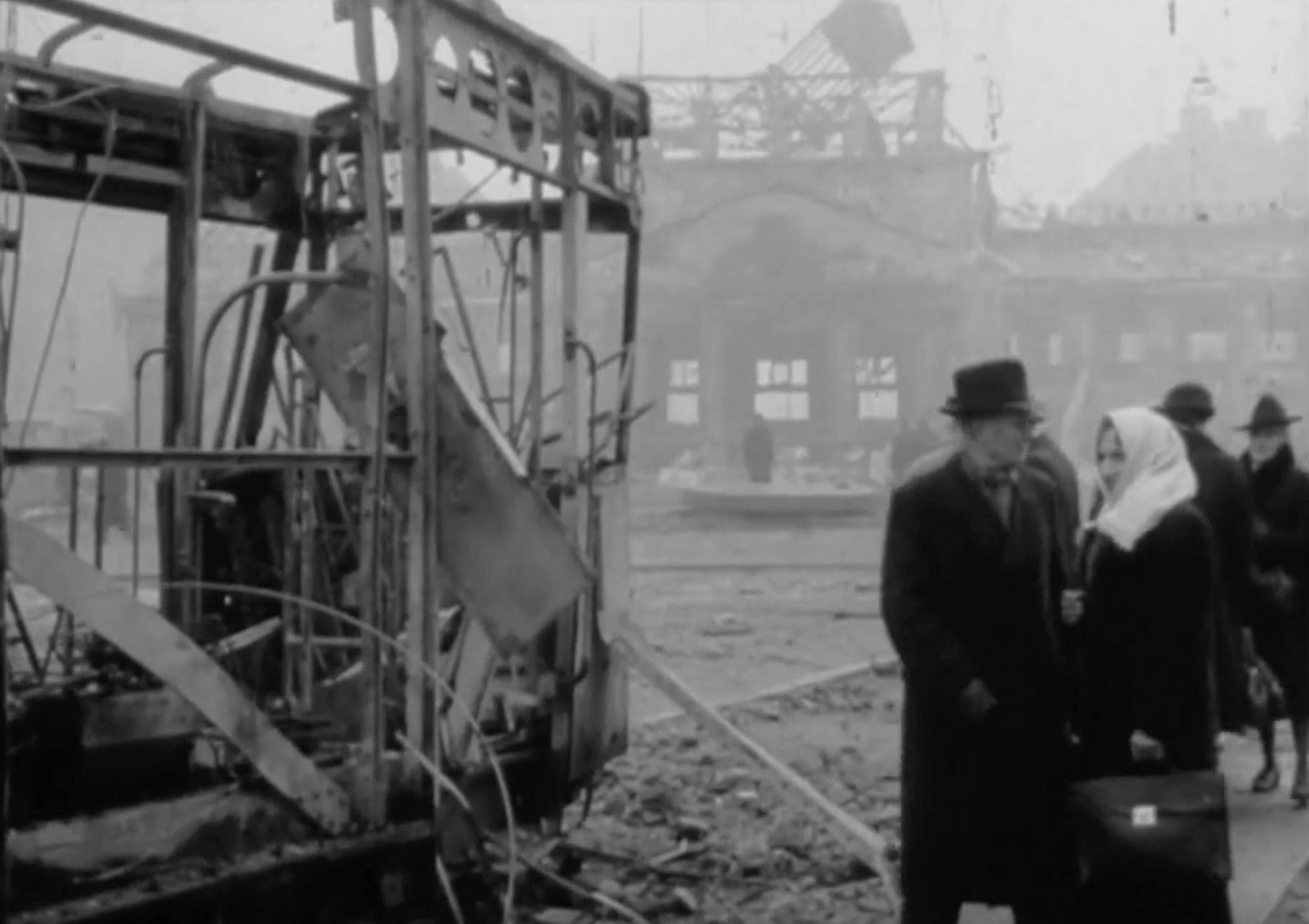
RAF’s Mosquitoes nuisance raids were made with the aim of keeping the enemy on alert for long periods of the night. In this series taken in 1945 at Wittenbergplatz, we can see the clean-up work after an air raid, some direct bomb direct hit has already destroyed the main entrance to the underground station.
The 1945 battle
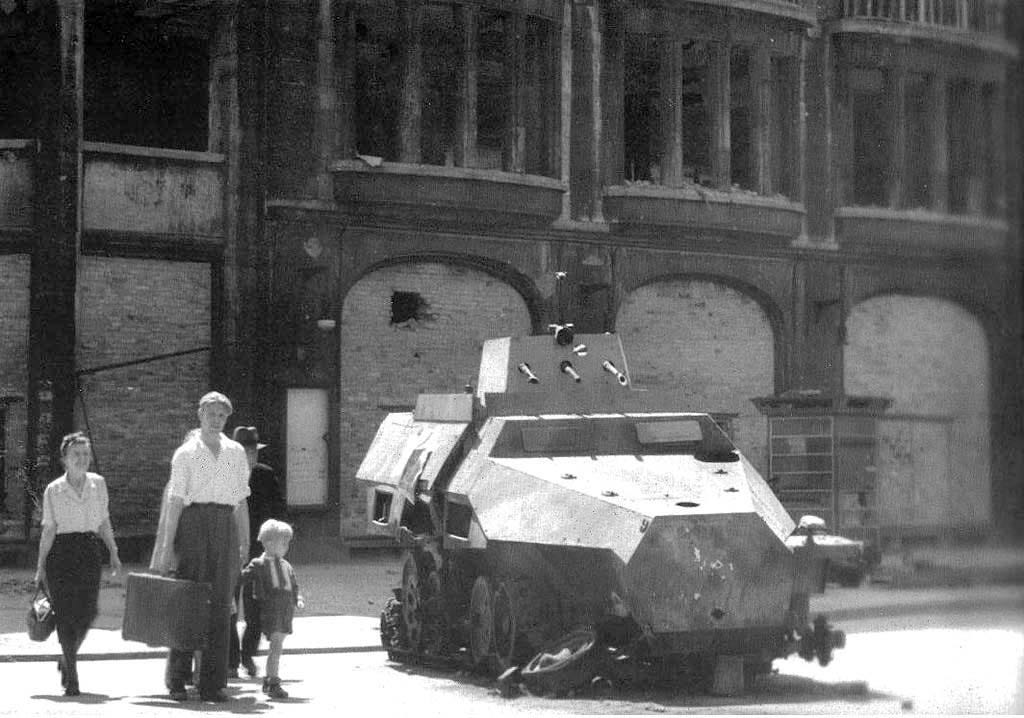
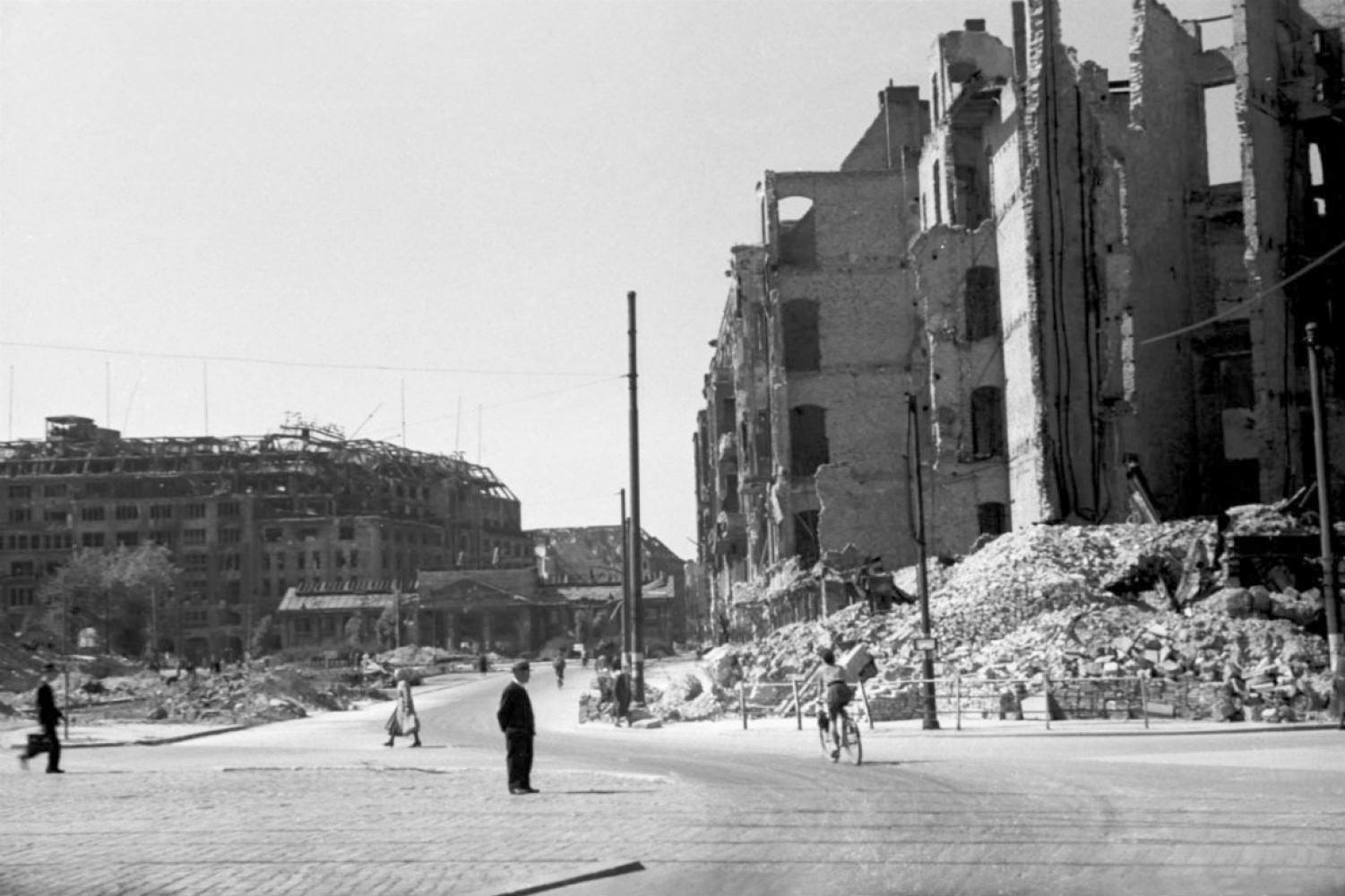
From March 1945, Berlin and its citizens prepared for the final battle with the advancing Soviet troops, strongly supported by VVS aircraft. The shelling and house-to-house street fighting would add furthermore destruction and death to the area. On April 28, 1945, a heavy fighting developed around Bayreuther Str. and Marburgerstraße, the German resistance stopped the Red Army advance through Kürfurstenstr. and Tauentzienstr. towards the Zoo area here. Soviet ground-attack planes bombed and strafed the German defenders fighting here repeatedly, and finally the Soviet 21st Guards Mechanized Brigade, part of the 8th Guards Mechanized Corps and supported by the 1st Guards Tank Brigade advanced Tauentzienstr. westwards reaching Wittenbergplatz on the 30th.
One of the last remaining subway trains ran from Wittenbergplatz to Kaiserdamm in shuttle service, until the BVG-Kraftwerk Unterspree was under fire on the 25 April afternoon and all train services were finally stopped. Small skirmishes in the area with the German garrison lasted until the final surrender on May 2nd.
Our next post will cover and describe Wittenbergplatz after the end of the Second World War, with several pictures to make sense of the damage taken by this area and its reconstruction, then part of the newly created Western occupation sectors of the divided city.
_______________
Bibliography:
Antill, Peter. Berlin 1945: End of the Thousand Year Reich. Campaign 159. Osprey Publishing, 2005.
Archer, Lee. Panzers in Berlin 1945. Panzerwrecks, 2019.
Beevor, Anthony. The Fall of Berlin 1945. Viking, 2002.
Berliner-Untergrundbahn.de. Die U-Bahn im 2. Weltkrieg. [accessed November 2022.]
Das Berliner U-Bahn-Archiv. Wittenbergplatz. [accessed November 2022.]
Demps, Laurenz. Luftangriffe auf Berlin. Die Berichte der Hauptluftschutzstelle. Ch. Links Verlag, 2014.
Hildebrandt, B and Haiger, E. Kriegsende in Tiergarten: Die Geschichte des Kriegsgräberfriedhofs Wilsnacker Straße. Lehmanns Media, 2009.
Janus, Urte. Das Kaufh aus des Westens („KaDeWe“) in Berlin. Technische Universität Berlín, Magisterarbeit, 1995.
Landesarchiv Berlin: LAB, A Rep. 001-02, Nr. 702, Bl. 79 ff.; s. a. LAB, A Rep. 005-07, Nr. 559, o. Bl; LAB, A Rep. 001-02, Nr. 702, Bl. 134; LAB, A Rep. 001-02, Nr. 703, Bl. 11 f.
Meiners, Antonia. 100 Jahre KaDeWe. Nicolaische Verlagsbuchhandlung, 2007.
Middlebrook, Martin and Everett, Chris. (1985). The Bomber Command War Diaries: An Operational Reference Book. Pen & Sword Aviation. 2014 Ed.
Wildt, Michael and Kreutzmueller, Christoph. Berlin 1933-1945 - Stadt und Gesellschaft im Nationalsozialismus. Siedler Verlag, 2013.
Thank you for reading Berlin Bombenkrieg by Pablo López Ruiz. Please subscribe, if you haven’t yet, to comment, follow and share. All images used for non profit / educational purposes.