


‘The sporadic raiding of London towards the end of August was promptly answered by us in a retaliatory attack on Berlin. The War Cabinet were much in the mood to hit back, to raise the stakes, and to defy the enemy. I was sure they were right…’
– Winston S Churchill –
As seen before, RAF Bomber Command raided Berlin for the first time on the night of 25/26 August 1940, following orders by Prime Minister Churchill and the War Cabinet. The German bombing by Luftwaffe aircraft in central London on the previous night had to be avenged and RAF bombs hit the Nazis back. On 29 August, Churchill told the War Cabinet he proposed sending a message of congratulations to Bomber Command on the bombing of Berlin.
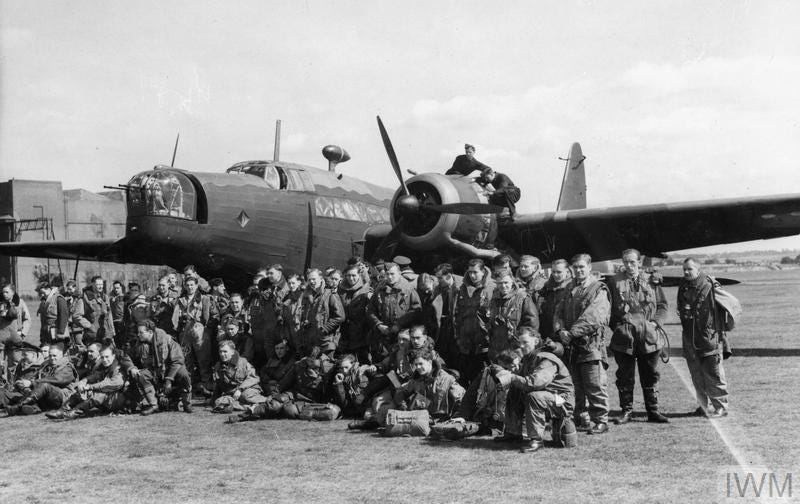
The morale and propagandist potential of the attack was evident, so a press event was mounted by the Air Staff to recreate the landing back from that historic mission soon as possible. Actually the press event happened on 30 August, the day after the second air-raid on Berlin by RAF aircraft (August 28/29th).
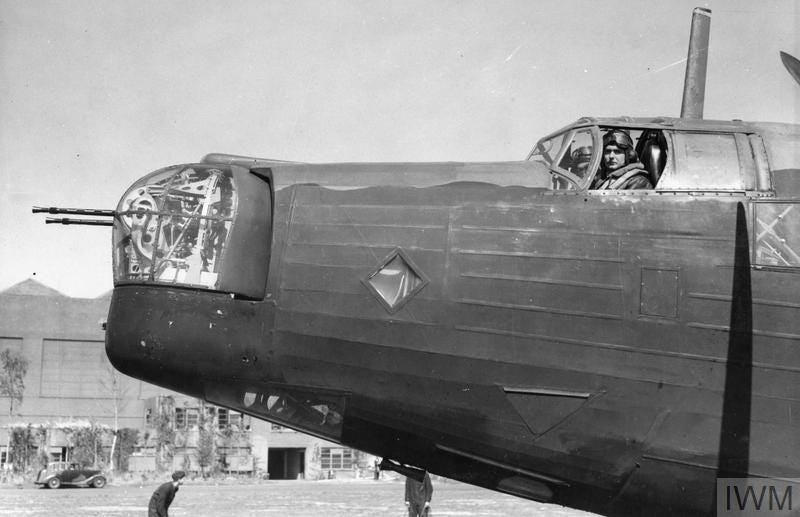
In the act took part No 115 and No 38 Squadrons’ crews, two of the six operational units flying the Vickers Wellington Mk 1C in No 3 Group. Both units were based at the time at RAF Marham air station, in Norfolk. At 12.00 hrs under blue skies, pilots and crews who went on the Berlin raid were photographed and filmed by Movietone News and Fox Photos recreating for the cameras their landing back from the previous night attack, with their Wellington medium bombers, studying maps relaxed and the post-strike debriefing with an intelligence officer. This of course was very far from war reality, tragically and deadly different.
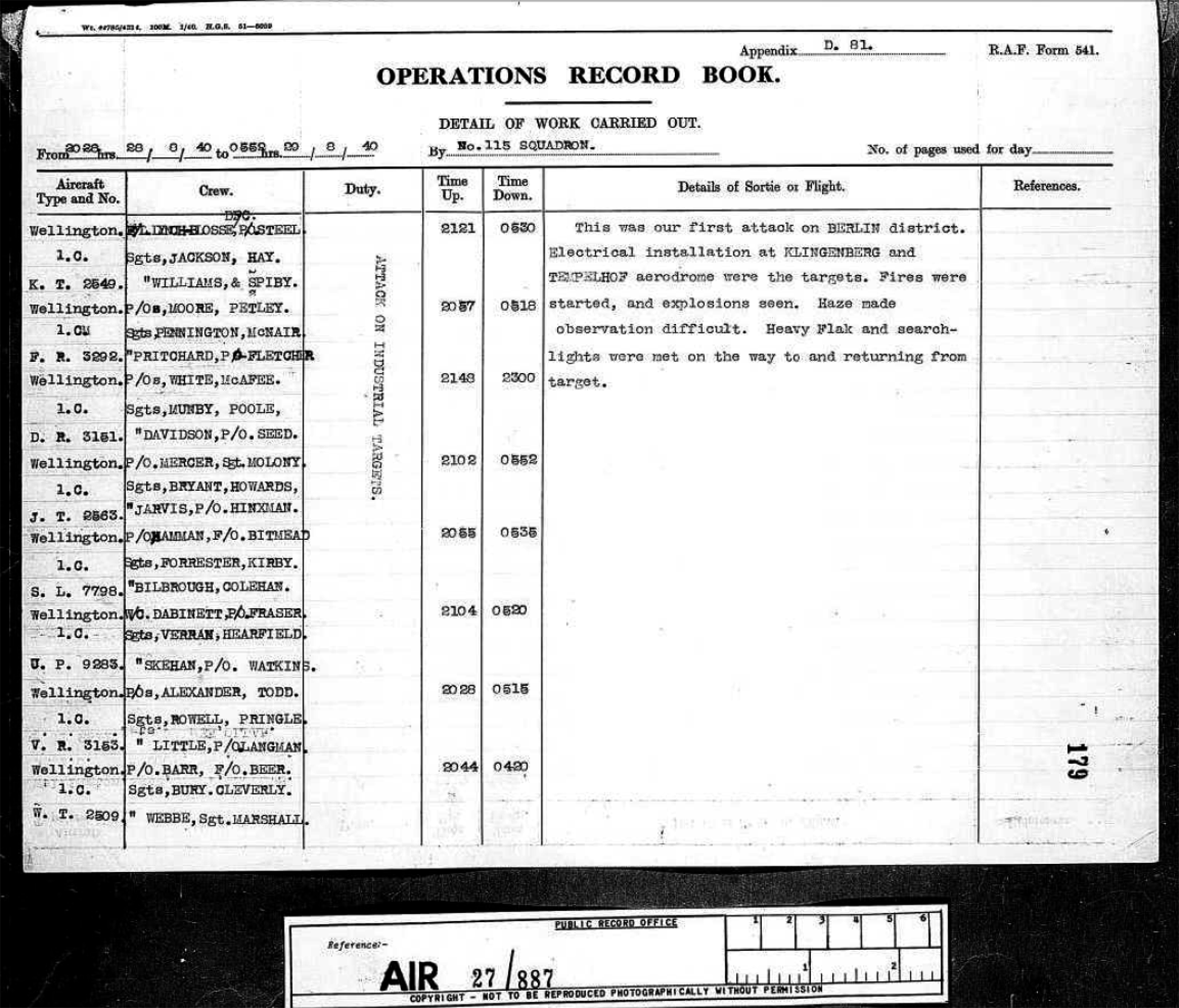
Ironically, they had missed the first raid two nights earlier. Marham’s bomber squadrons, departing that night from Norwich airfield as advanced base to conserve fuel, visited the German capital for the first time on the night of 28/29 August when 47 Hampdens and Wellingtons bombers were sent to raid Berlin. RAF Marham contribution to the raid were nine bombers from 115 Sqn and nine more of 38 Squadron. The Squadron’s ORB (Operational Record Book) recorded about this raid: ‘This was our first attack on BERLIN district. Electrical installations at KLINBERGERG and TEMPELHOF aerodrome were the targets. Fires were started, and explosions seen. Haze made observation difficult. Heavy Flak and searchlights were met on the way to and returning from the target.’ It shows that the first bomber took off at 20.28 hrs and the last landed back at 05.52.
George Bury, a navigator in a 115 Squadron Wellington, recalls (Bowman, M. 2014): ‘The target was Klingenberg Electric. Having been warned that the area was very heavily defended, we decided to fly at 15,000 feet. That was 5,000 feet higher than our normal height. At this height it was essential to use oxygen all the time, but after a few hours the masks became wet and uncomfortable to use. (…) Searchlights were very active. Although one did pick us up, he failed to keep us within his beam long enough for the others in the group to join in. When just ahead we saw a Wellington caught by two at the same time and quick as a flash many others concentrated on the same target as he was caught in a cone of a least ten searchlights. The whole area around the aircraft was as bright as day and no matter which way he turned and twisted, they easily held on to him. The last we saw of him he was in a steep dive with shells bursting all around. This was our eighth flight and the first time that we had seen another aircraft. We were beginning to think we were fighting the whole war on our own.’
Bombing pattern was poor and results unimpressive, it was a little succeed in the goal to destroy the German capital, but a tremendous impact in the moral of the British; from this point the ‘Big City’, as the Nazi-capital become known to the crews, became a regular target for small forces of Bomber Command aircraft.
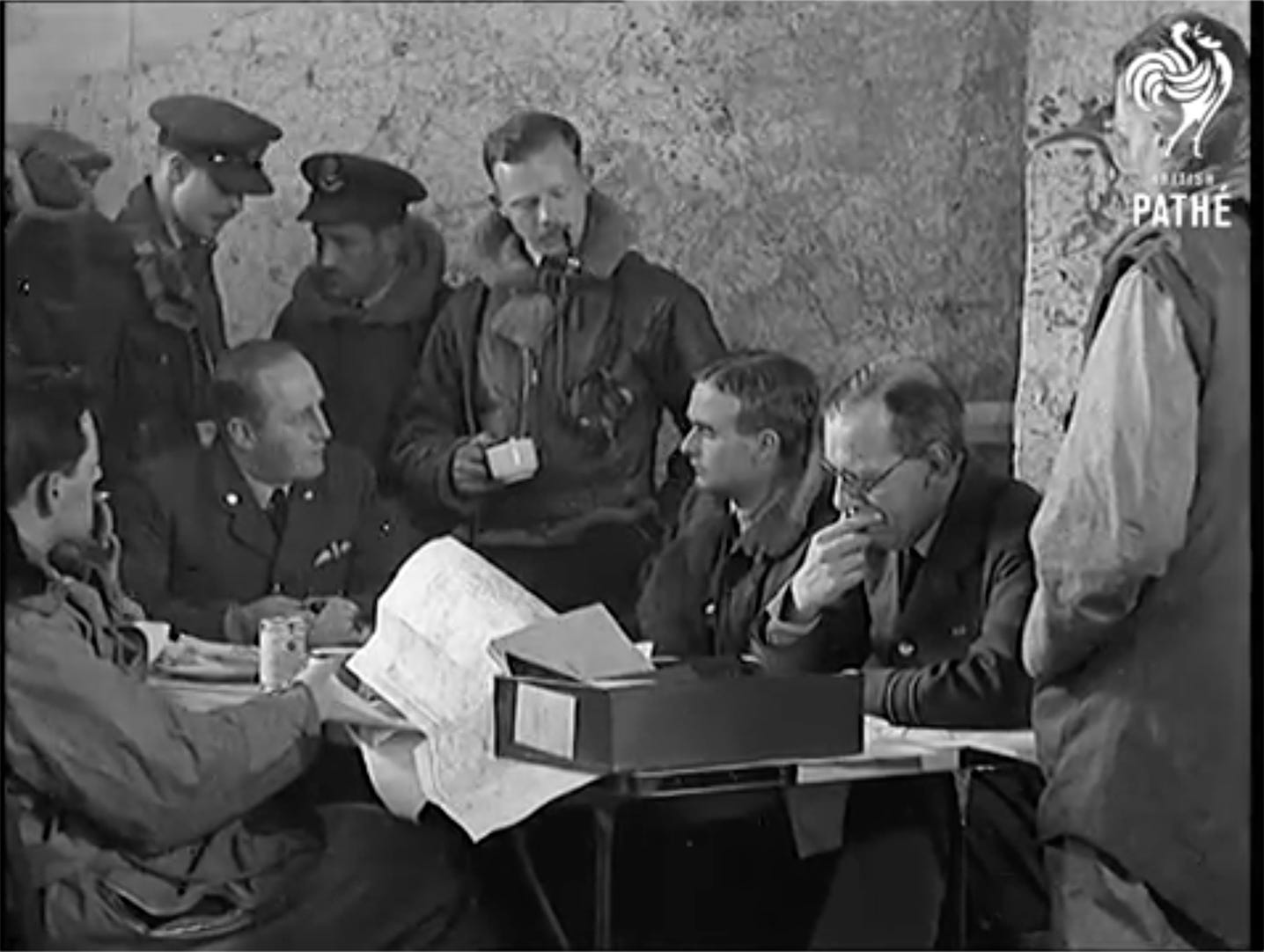
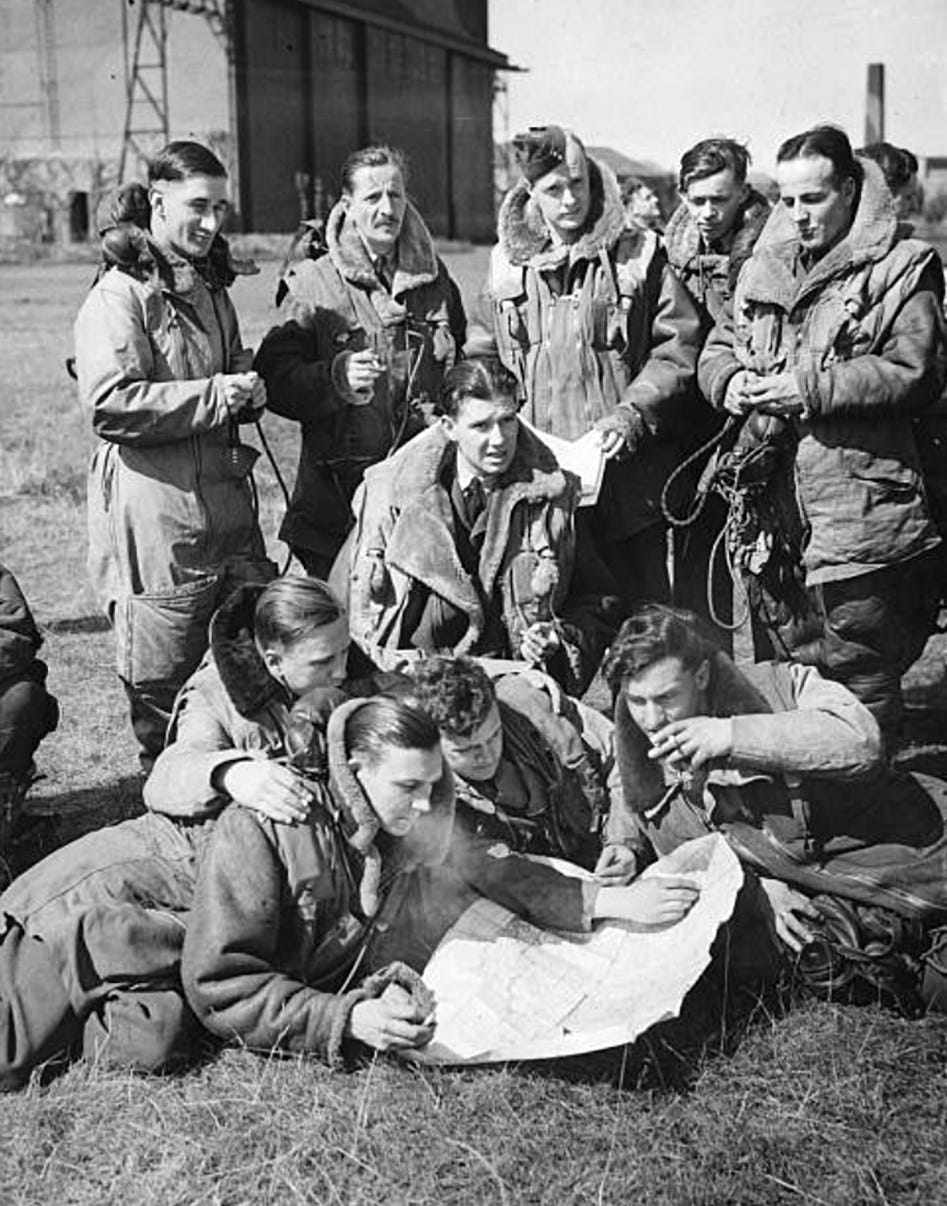
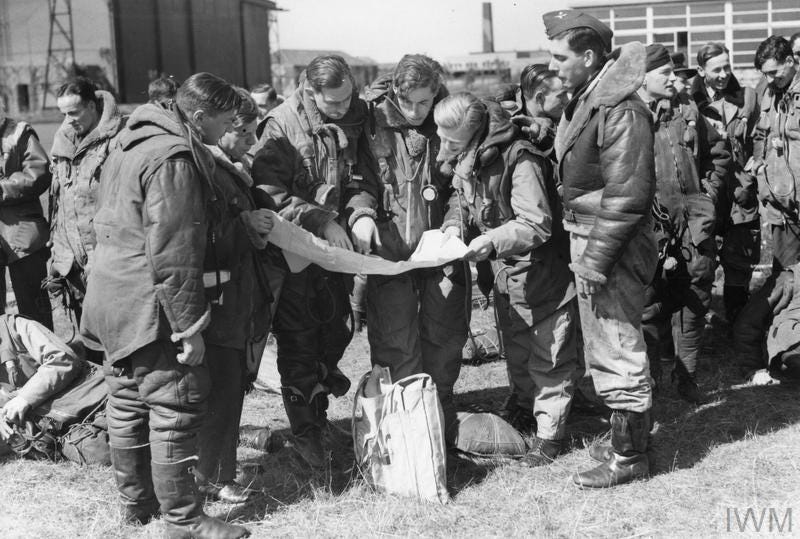
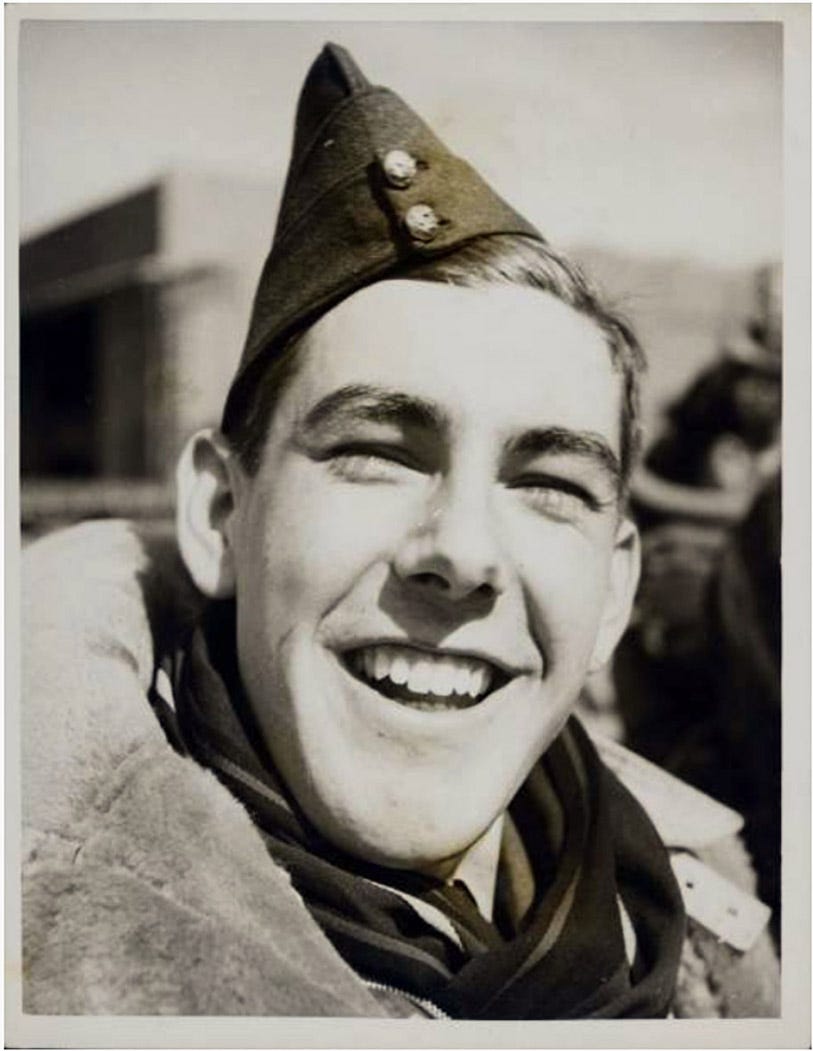
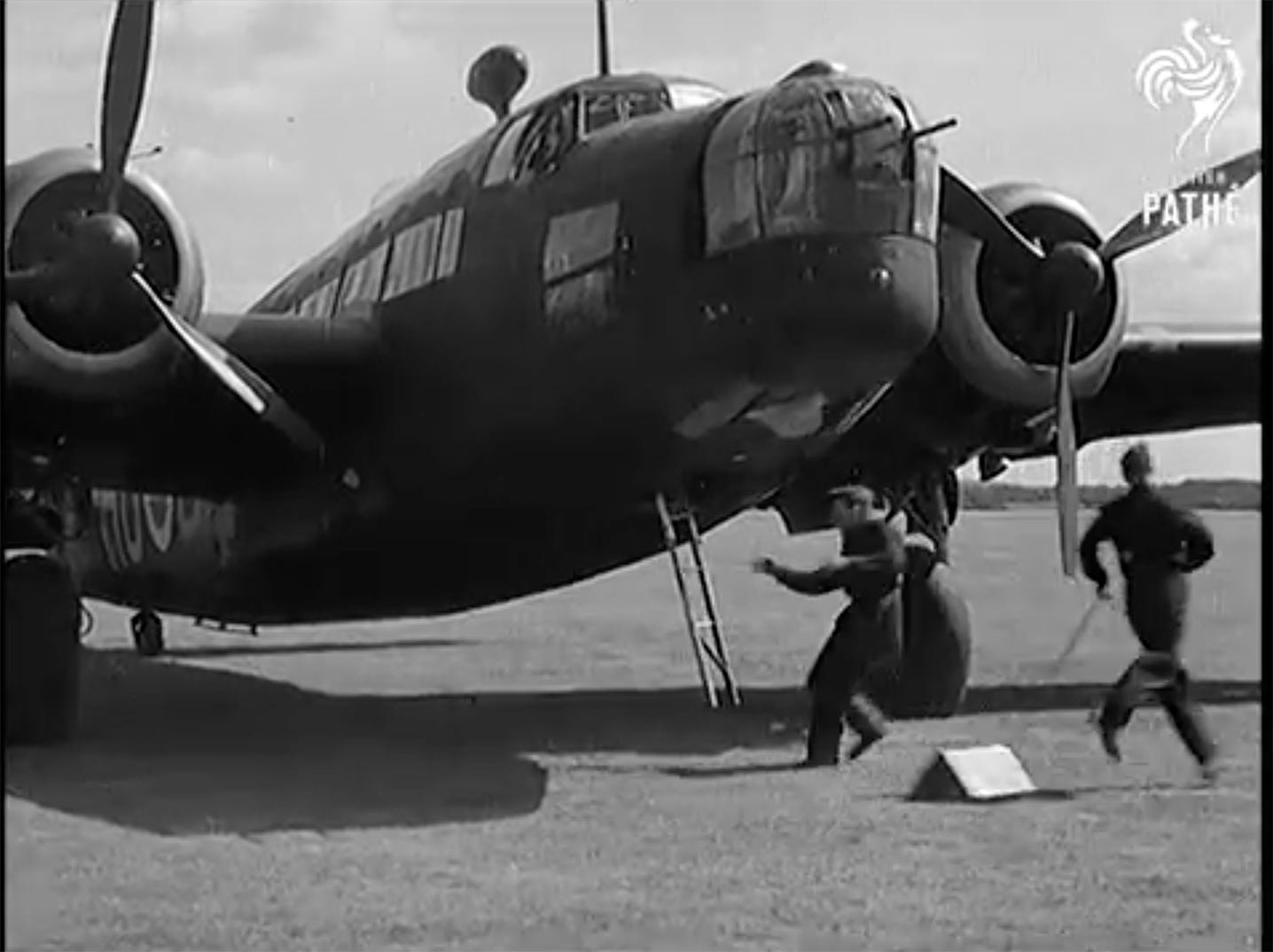
Also, British Pathé recorded the event in film too, seen later on cinema screens on Movietone News, entitled “With The Air Force - Back From Berlin”, this morale-booster footage shows the Squadron crews recreating a post-strike debriefing. Martin Pathé sent a telegram to Wing Commander Thomson, OC No 38 Squadron, RAF Marham, to advise him when the film is to be released locally. [Video credit: © British Pathé (FILM ID:1055.27).]
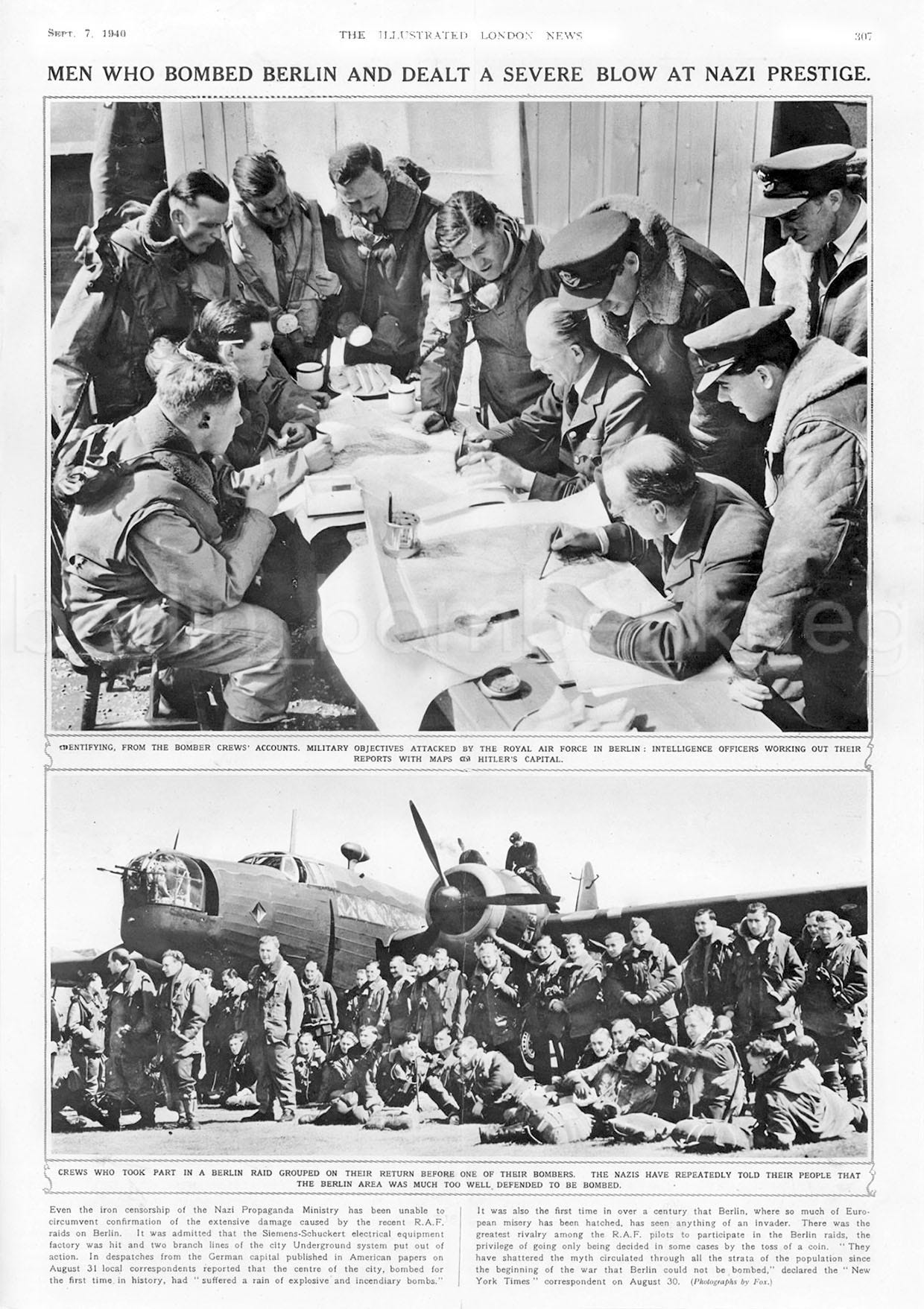
Squadron and dates info thanks to Mark Every, Marham Aviation Heritage Centre - AHC.
_______________
Sources and Bibliography:
Bowman, Martin. (2015). Voices in flight: The Heavy Bomber Offensive of WWII. Pen & Sword Aviation.
Churchill, Winston. (1949). Their Finest Hour. Houghton Mifflin.
Donnelly, Larry. (2004). The Other Few: The Contribution Made by Bomber and Coastal Aircrew to the Winning of the Battle of Britain. Red Kite / Air Research.
Middlebrook, Martin. (2014). The Bomber Command War Diaries: An Operational Reference Book. Pen & Sword Aviation.
Moorhouse, Roger. (2011). Berlin at war. Life and death in Hitler’s capital, 1939-45. Vintage Books, London.
Overy, Richard. (2013). The Bombing War: Europe, 1939-1945. Allen Lane.
The National Archives of the UK (TNA). Operations Record Books: AIR 27/887-20.
Tress HB. Churchill, the First Berlin Raids, and the Blitz: A New Interpretation. Militaergeschichtliche Zeitschrift, Volume 32, Issue 2, Pages 65–78. 1982.
Ward, Chris. (2008). 3 Group Bomber Command. An operational record. Pen & Sword Aviation.
Thank you for reading Berlin Bombenkrieg by Pablo López Ruiz. Please subscribe, if you haven’t yet, to comment, follow and share. All images used for non profit / educational purposes.