


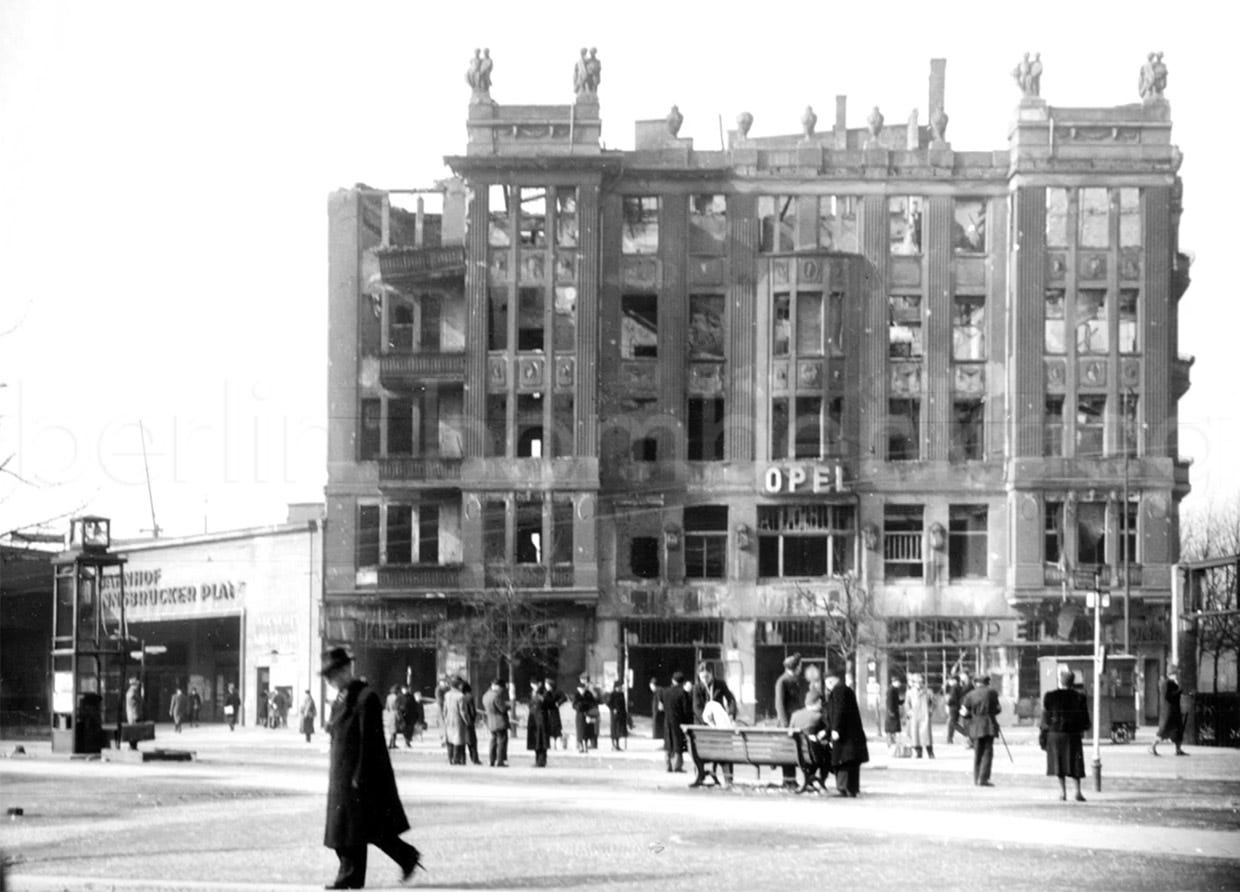
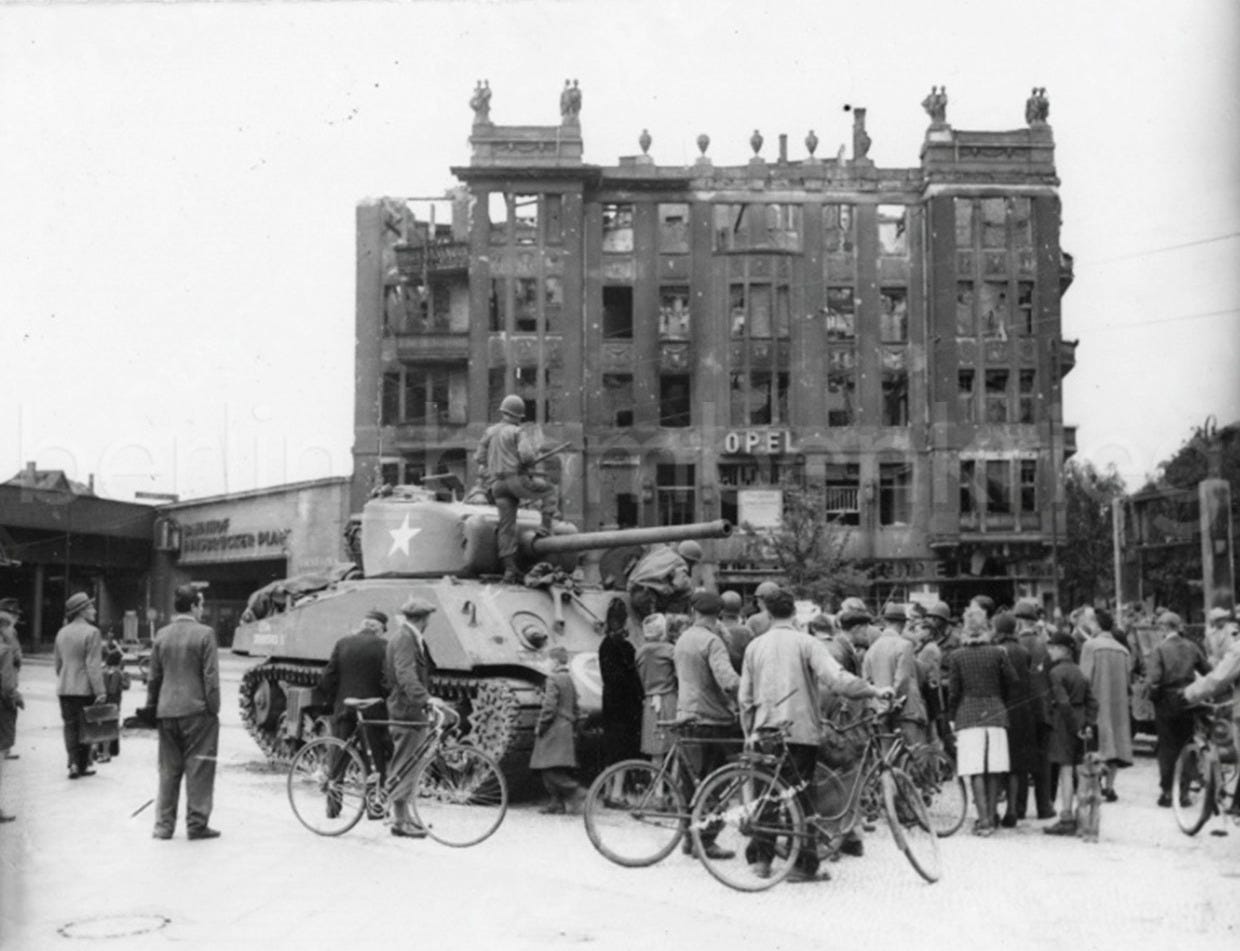
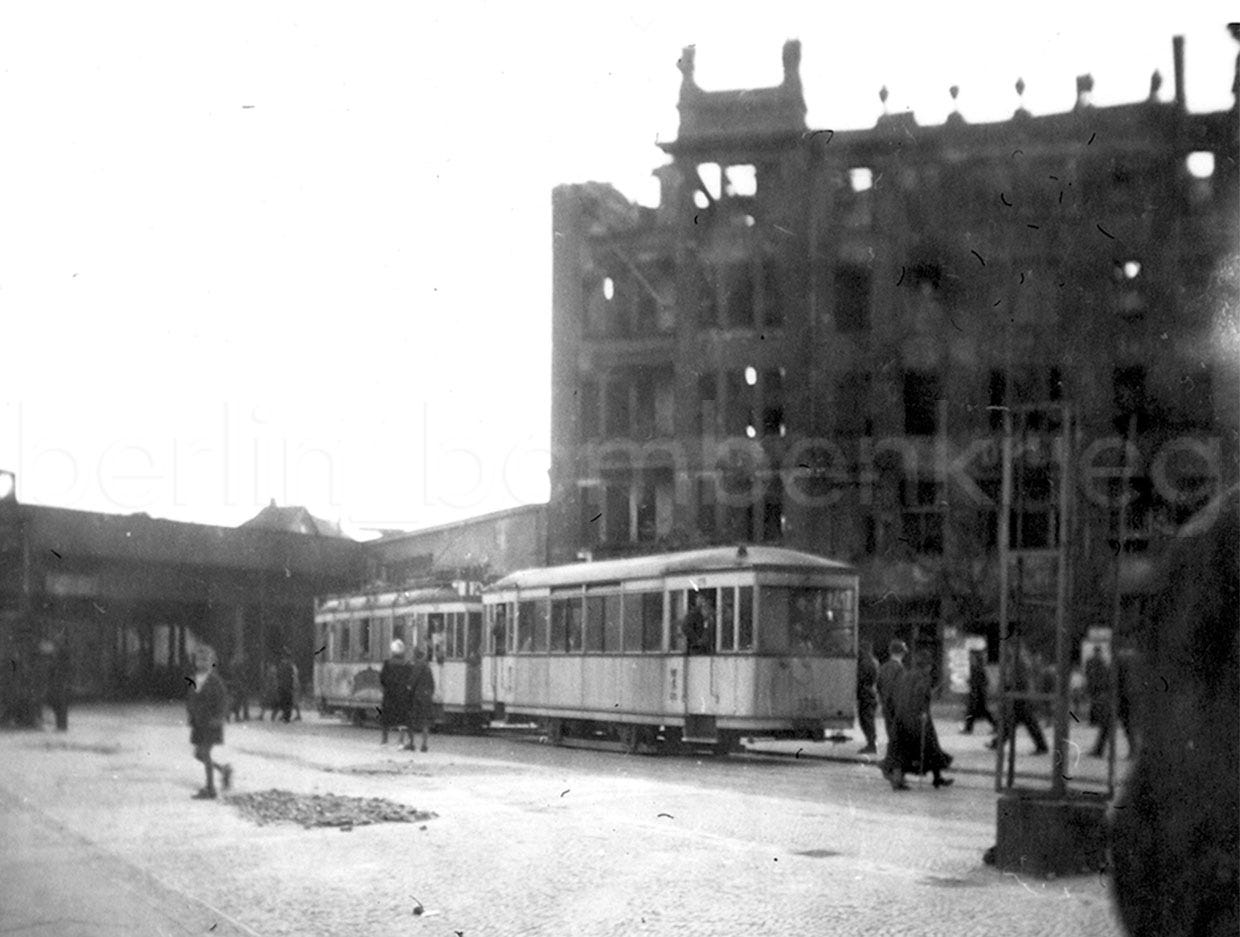
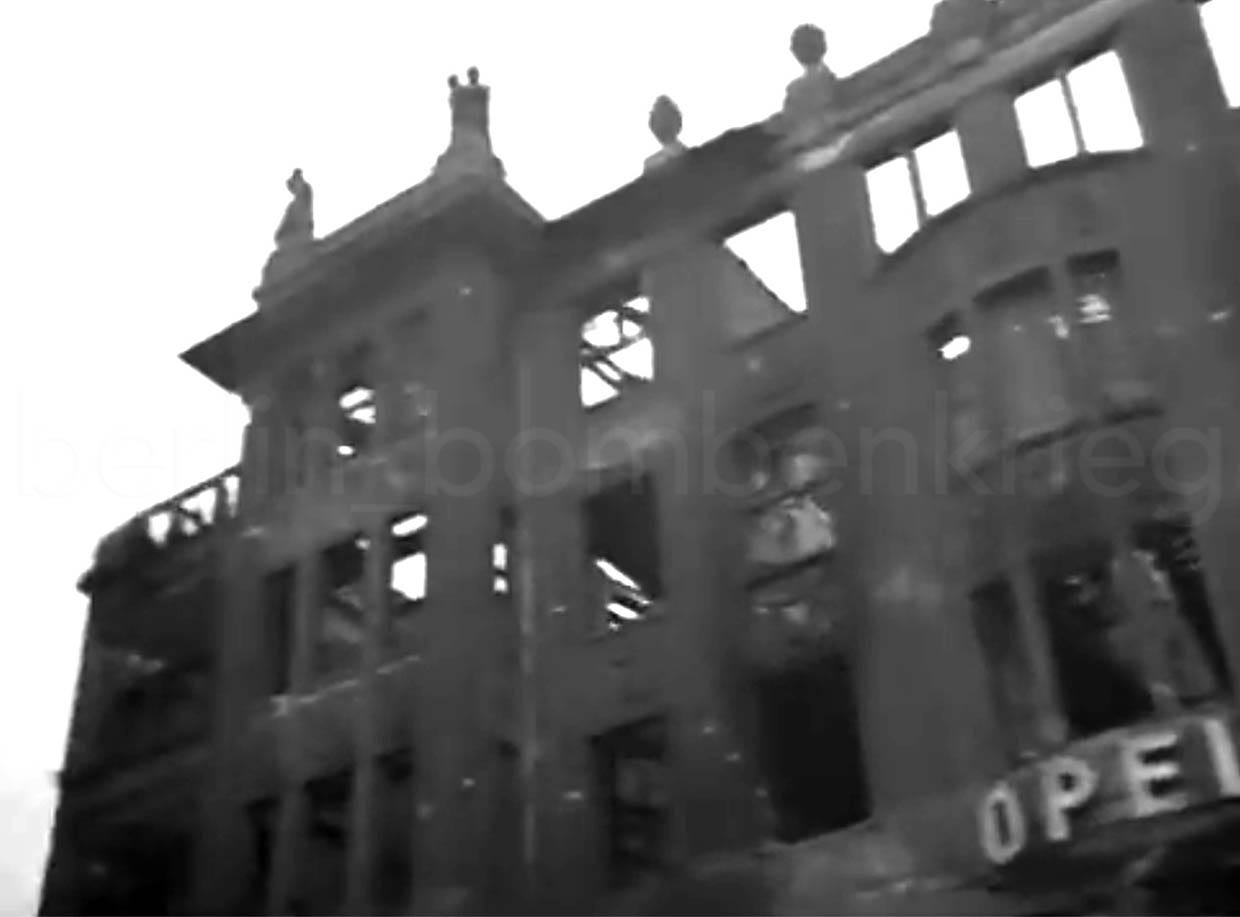
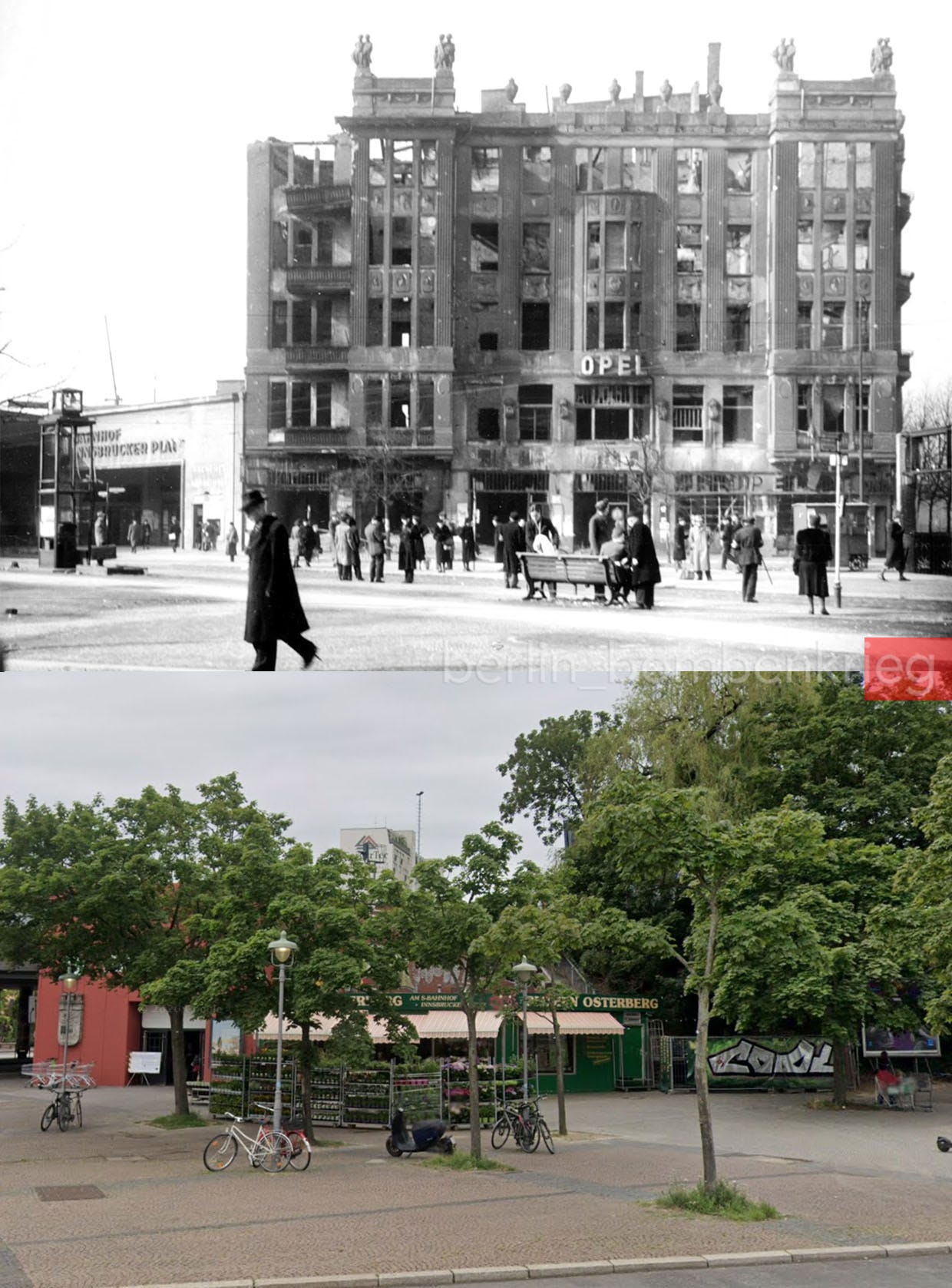
Until ww2’s destruction, this beautiful and ornamental building, seen here ruined and burned out, stood proudly at Innsbrucker Platz Nr. 1 in the Berlin-Schöneberg district. By war’s end, only its skeleton and the facade had survived.
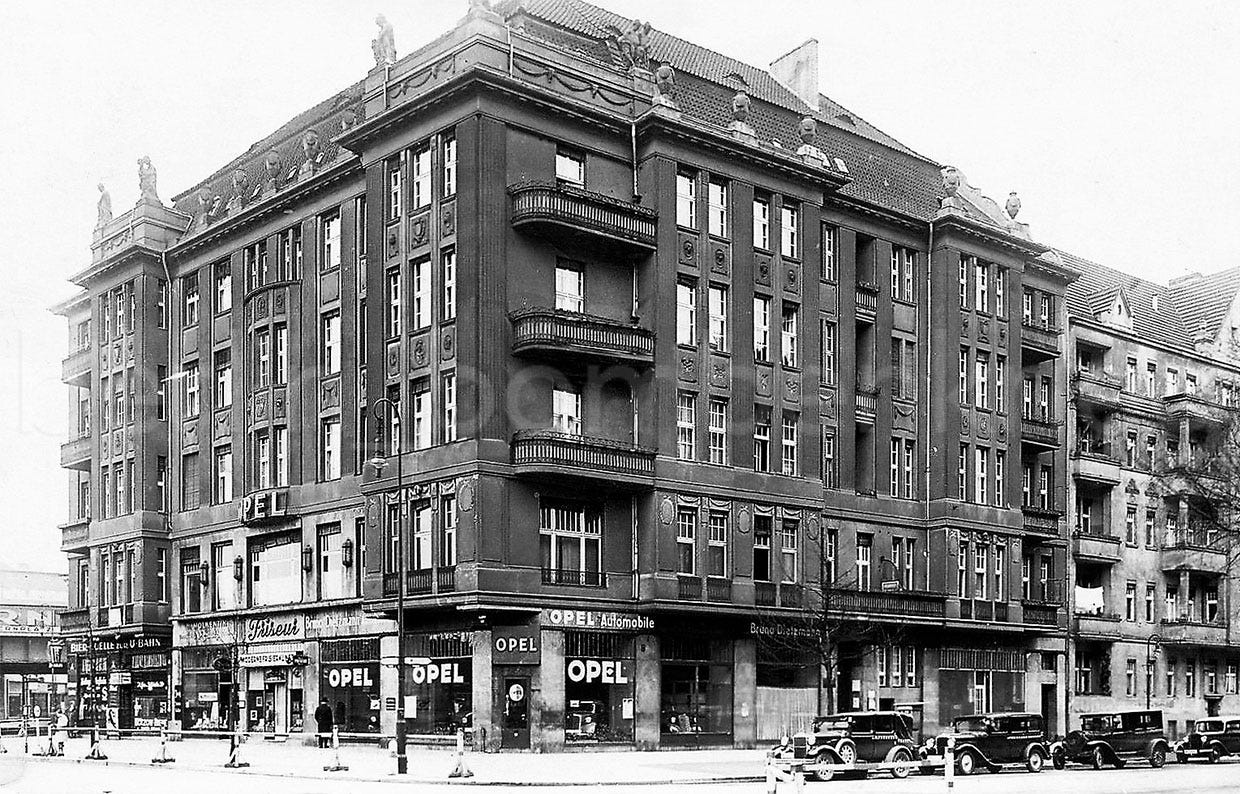
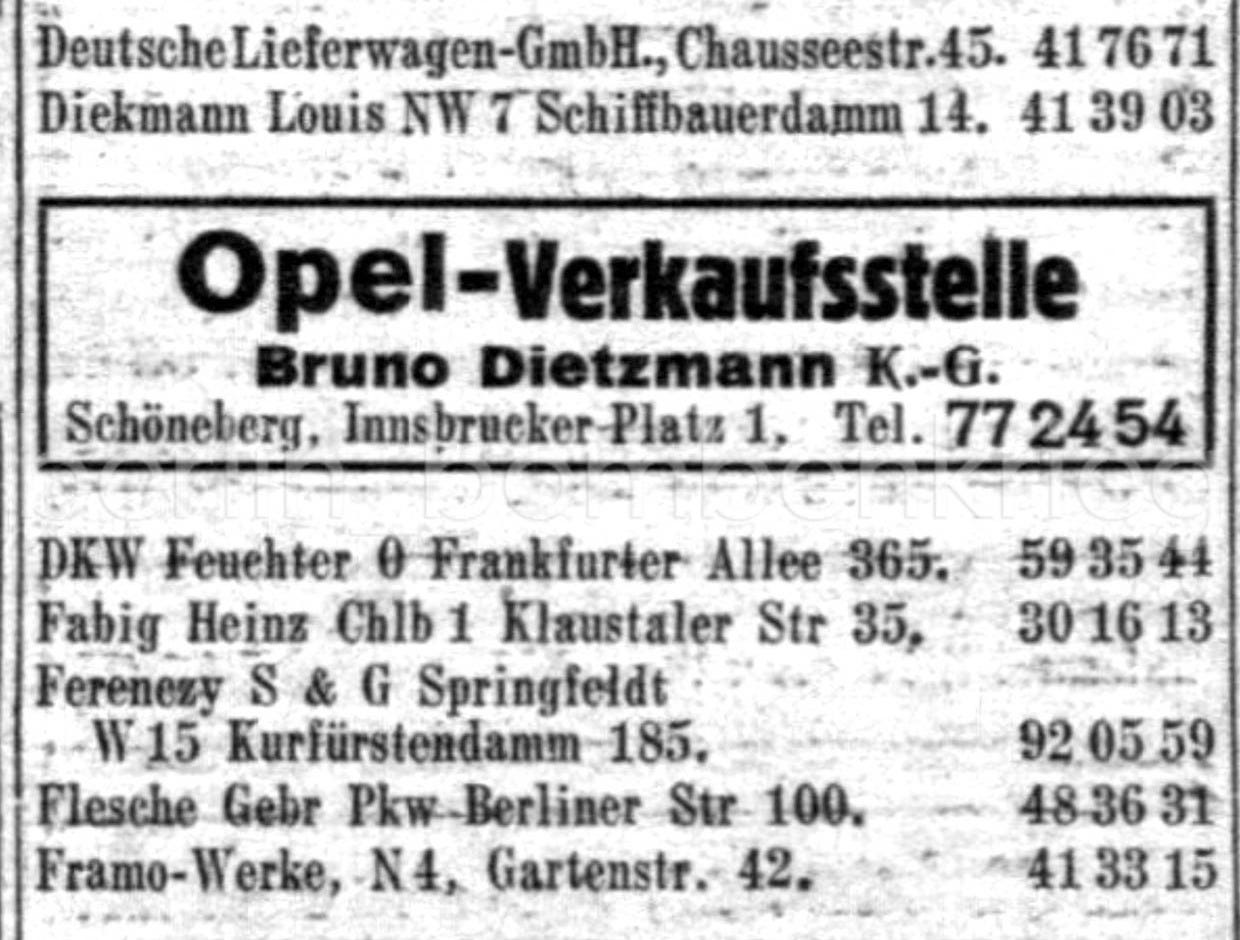
Background of the well-known US Sherman tank pictures, the Reichsbahn four-story building built in 1930 was located next to the S-Bhf and the elevated railway bridge of the Ringbahn at Innsbrucker Platz, qthen part of Schöneberg/Friedenau (now Bezirk Tempelhof-Schöneberg). At the time it housed an Opel-Automobile Verkaufsstelle (a car dealership) owned by Bruno Dietzmann on the ground floor and Café Innsbruck, run by lessee Berta Günther. The 1940-edition of the Amtliches Fernsprechbuch für den Bezirk der Reichspostdirektion Berlin (the telephone directory) confirms his store address during the war years. Notice Dietzmann’s name painted on the ground floor lettering too.
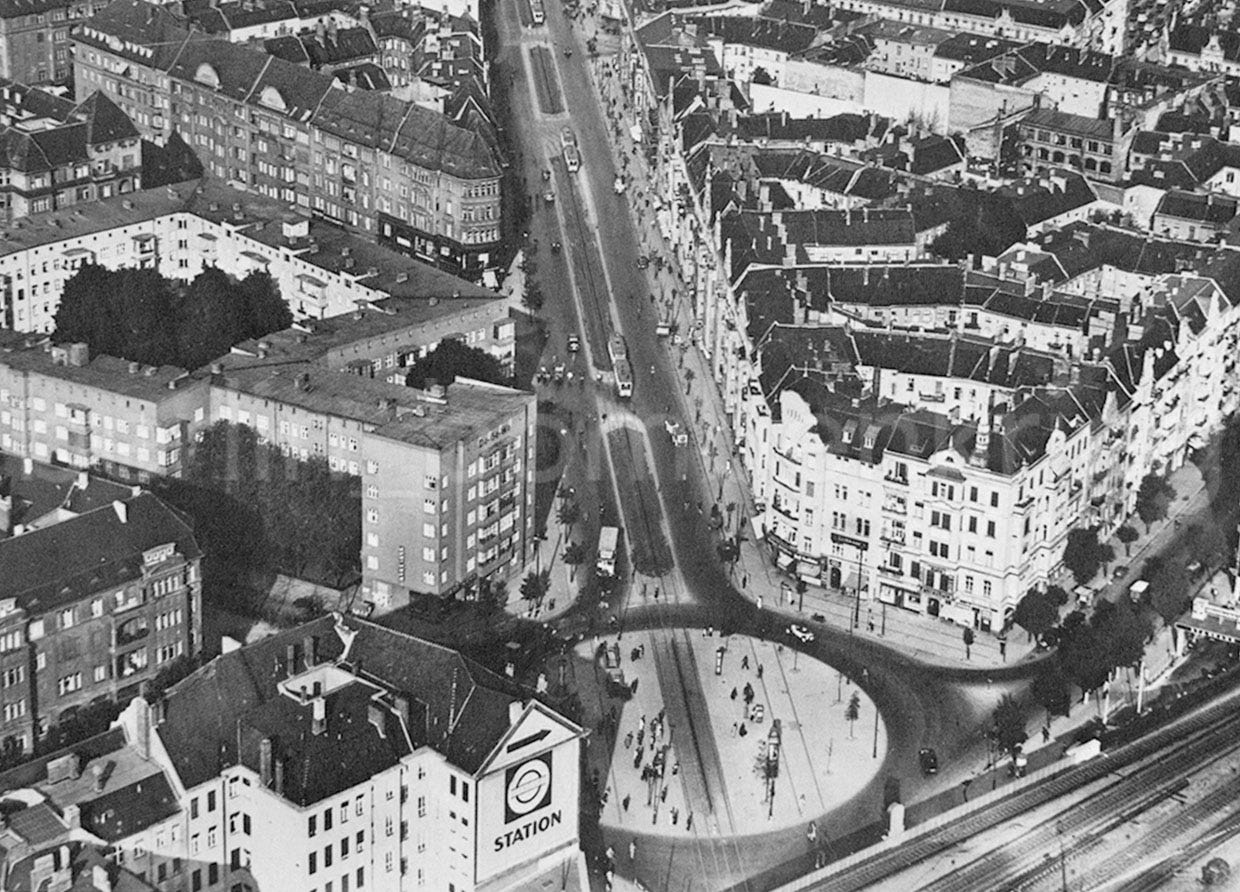
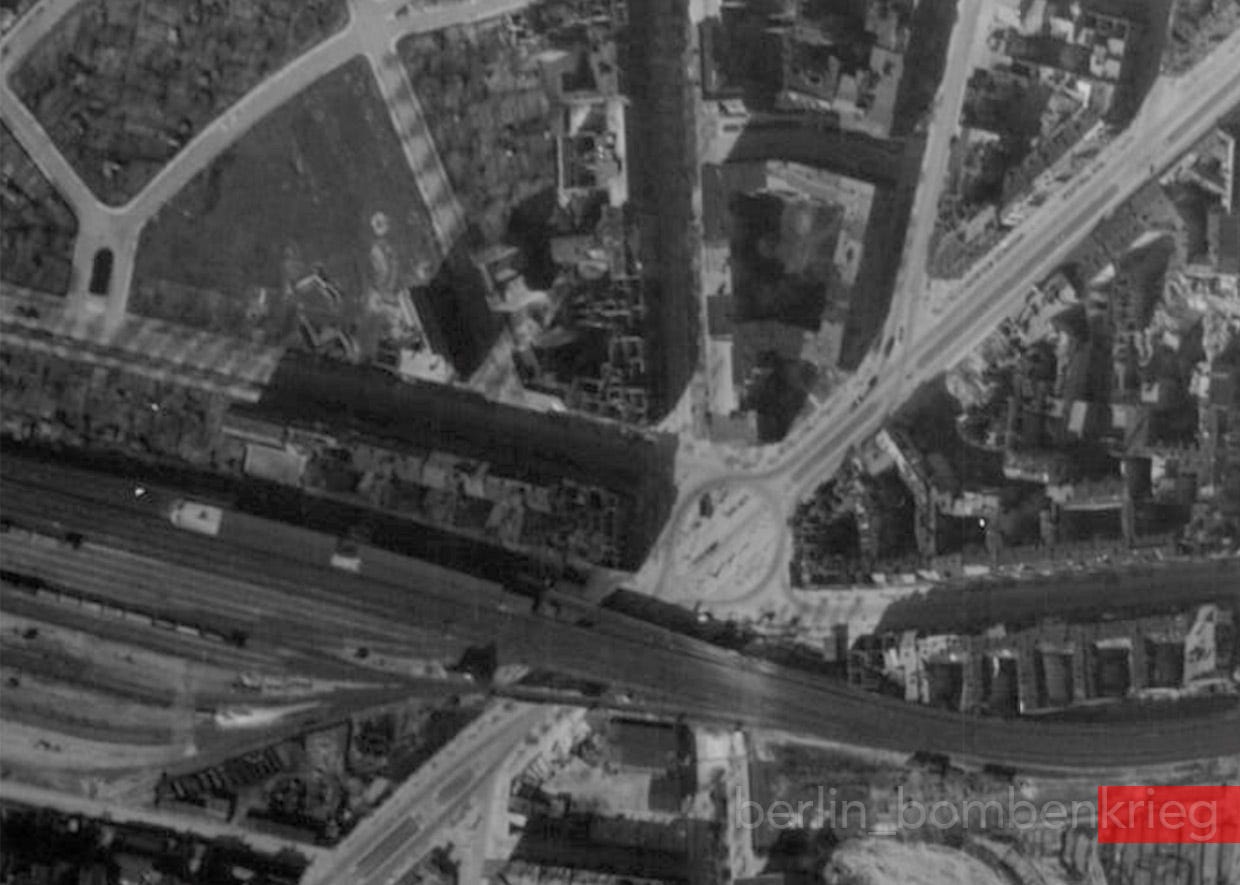
This is a 1930-aerial view of Berlin-Schöneberg district with Hauptstraße running at centre, seen from the railway at Innsbrucker Platz. Our “Opel” building can be seen at bottom, in this case from the opposite side with the huge “STATION” lettering painted on it. Note the original underground access and the “inner circle” in the middle of the square, both closed in 1954.
Bombenkrieg 1940-45
The city’s bomb damage reports show that the building was severely damaged by the Allied air raids: It was badly hit by RAF incendiary bombs during the 1/2 March 1943 air attack (251 Bomber Command bombers) with roof and upper floor gutted by fire, as well as burnt houses at Wex Str. 60/63 around the corner. This is confirmed by September 1943 aerial pictures also. Further damage was received on June 21, 1944, when American bombers hit the Schöneberg district again, some high-explosive bombs badly damaged the railway bridge next to Innsbrucker Platz, several ‘duds’ forced to temporarily close the train station too.
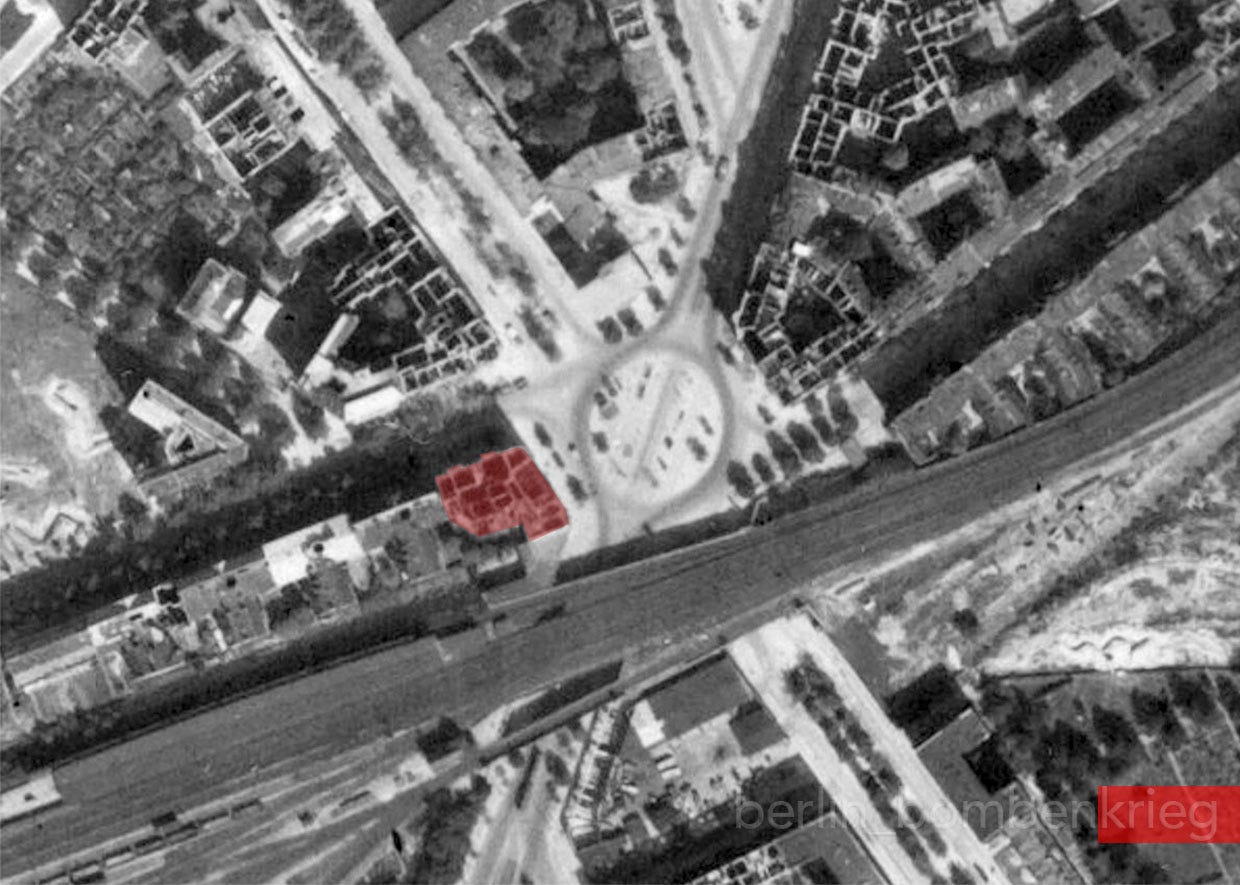
In 1945 the Soviet assault of the city caused great devastation in the area also. On April 27th, 1945, advancing troops encountered anti-tank barriers and strongpoints as the Germans set up the Ringbahn railway line as a huge defensive perimeter. Red Army’s 69th and 70th Mechanized Brigades reached the Innsbrucker Platz line at midday; heavy fighting led to the taking of the underground station by the end of the day.
Of interest, an unexploded ww2 Soviet-made 250 kg aerial bomb was found here in October 2017 at Innsbrucker Platz, during construction work at the nearby Güterbahnhof Wilmersdorf. A 500-metre exclusion zone around the site was placed, traffic tunnel was closed and nearly 10,000 Berlin residents were required to leave their homes during the defusing work by a police specialist team.
After the battle
Following the end of World War Two, the Innsbrucker Platz, severely damaged and now part of the American occupation sector of the city, was in bad shape with most buildings left in ruins and partly demolished. The intense battle left the underground train station badly damaged too and didn’t reopen until December 1945.
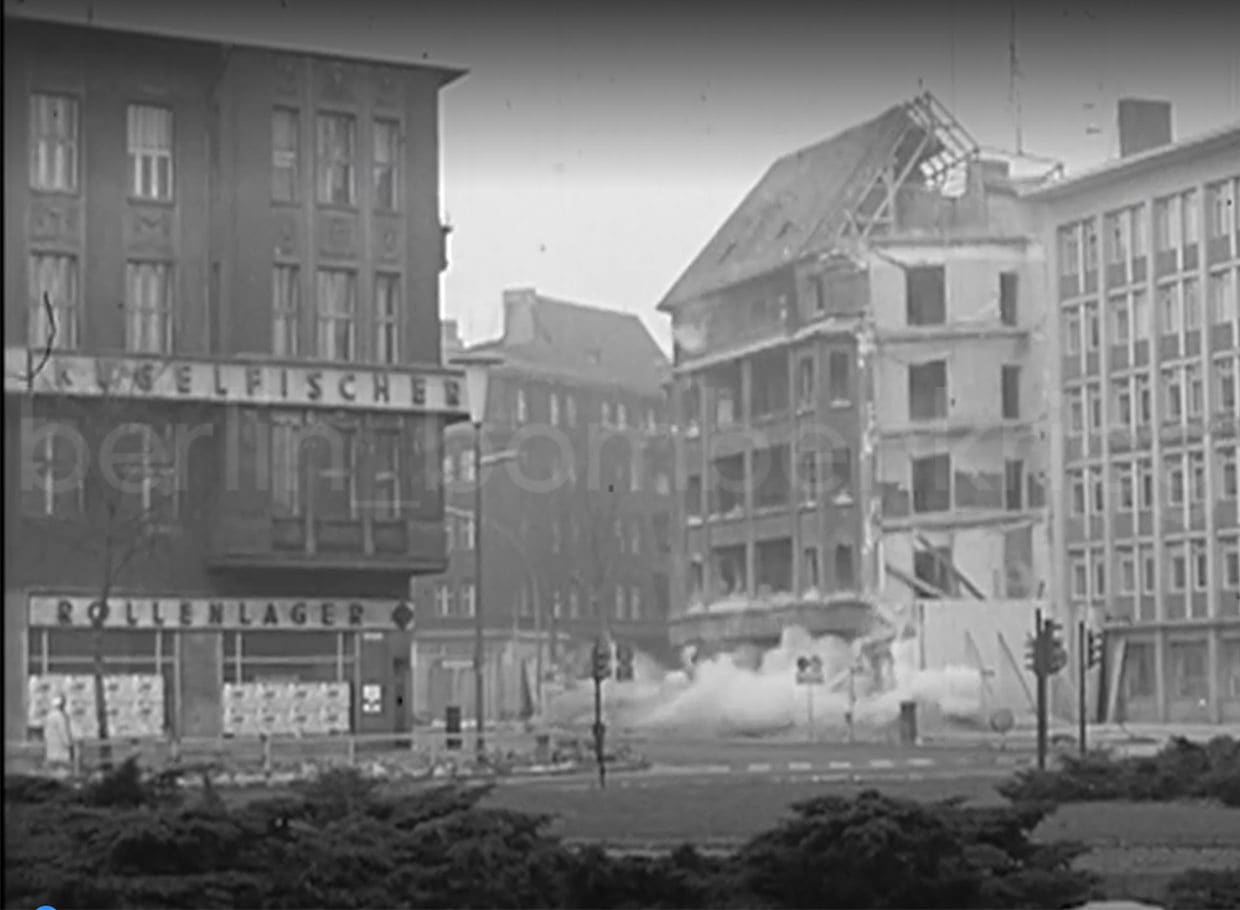
Some years later the “Opel” building - as well as the square too- was refurbished in a simply way and used for some years, this time with just three floors and some other differences: the roof sculptures and ornamental facade were dismantled also. But urban planning in the post-war era, the construction of the new Stadtautobahn A100 motorway in 1971 and the underground tunnel led to a total redesign of the square again and both train stations. Wex Str. course was greatly altered and its nearer houses being demolished too. Finally, in the 1980s both the building and the Ringbahn old entrance were demolished, today occupied by a small flower store next to a green area and a modern station entrance.
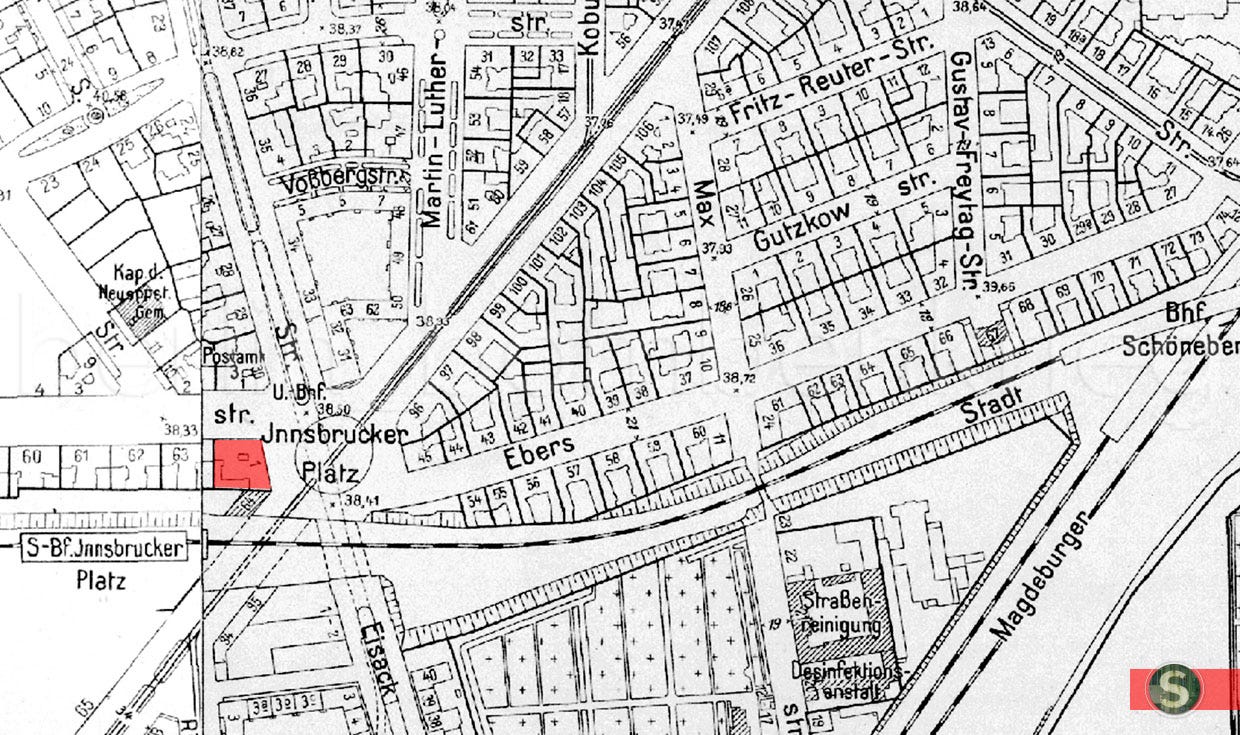
A 1941-Berlin map of this area before war’s destruction, red box marks the original Reichsbahn building location. Notice S-Bhf Schöneberg at extreme right. Southwards across Innsbrucker Platz’s railway tracks is the Friedenau district.
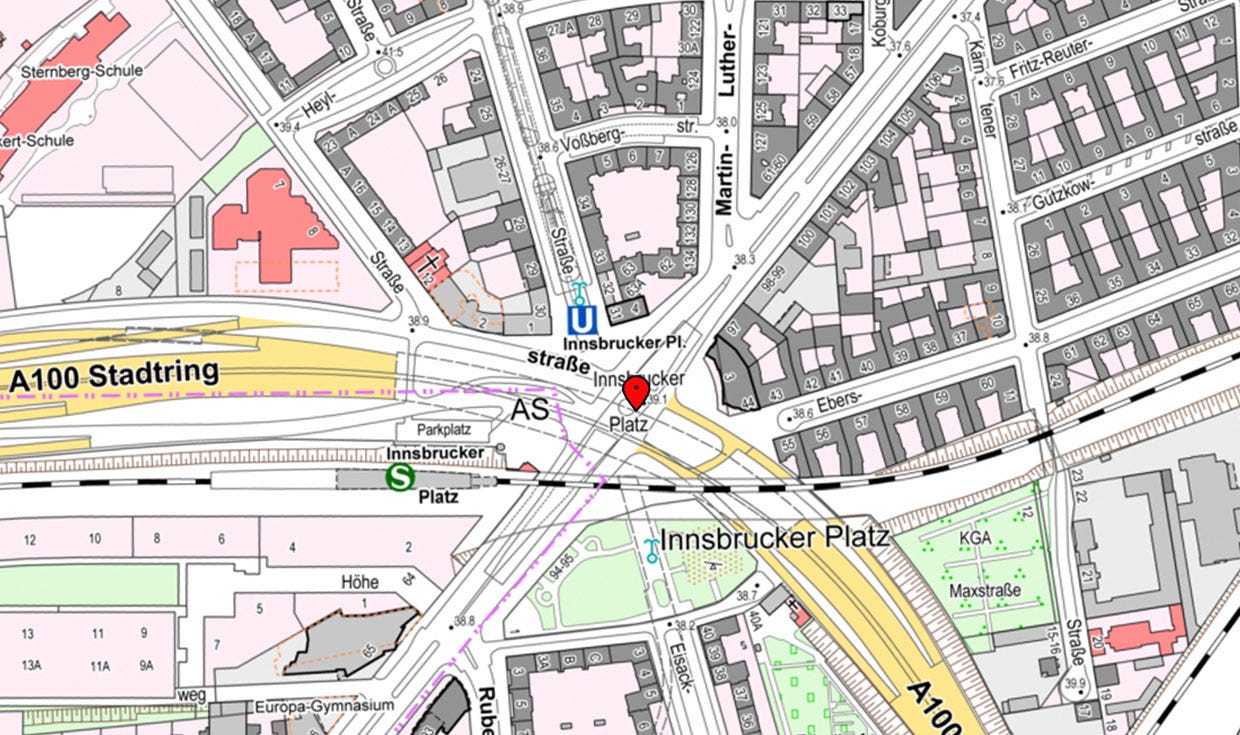
Compare that prewar’s street map with today’s plan of the area: 1970s construction of the Stadtautobahn A100 motorway and the underground tunnel led to a total redesign of the square and both U- and S-Bahn stations.
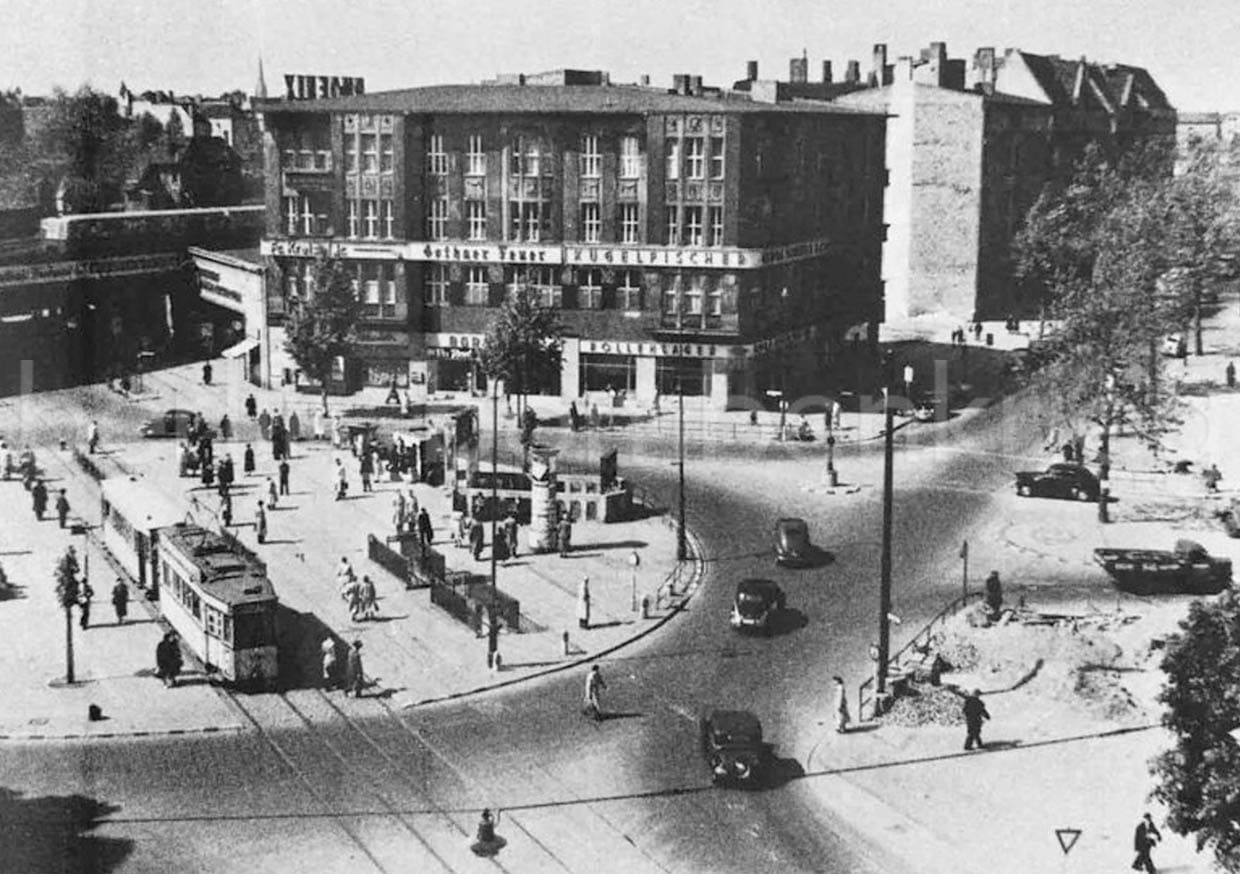
Then&Now: this photomontage allows us to see the major change suffered by this spot at Innsbrucker Platz following the war and its destruction. Notice in the below 2025-picture the modern S-Bahn entrance at left and the now empty space where the Reichsbahn “Opel” house was during the war years. The Wex Str buildings (at right) have gone too.
To conclude, remember that you can find and read also a more extensive history of the Innsbrucker Platz area during its construction, war and postwar years here:
Innsbrucker Platz

The Innsbrucker Platz in Berlin was the post-war location of our previous post Die Amis arrive!, with some Am…
_______________
Bibliography and sources:
Diefendorf, J. (ed). Transnationalism and the German City (Studies in European Culture and History). Palgrave Macmillan, 2014
Friedenau aktuell. Innsbrucker Platz (accessed July 2026)
Landesarchiv Berlin. LAB, A Rep. 001-02, Nr. 701, Bl. 34 ff; LAB, A Rep. 001-02, Nr. 702, Bl. 99 ff.; s. a. LAB, A Rep. 005-07, Nr. 559, o. Bl
Muschelknautz, Johanna. Berlin-Schöneberg: Blicke ins Quartier 1949 - 2000. Jaron Verlag, 2001
S Bahn Berlin DB. Die Historie der Berliner S-Bahn. (accessed July 2026)
Stivers, William and Carter, Donald A. (2017). The City Becomes a Symbol: The U.S. Army in the Occupation of Berlin, 1945-1949. Centers of Military History United States Army. CMH Pub 45–4. Available at: <https://history.army.mil/html/books/045/45-4/index.html> (accessed October 2021)
Sven, Heinemann. Die Berliner Ringbahn: Die Geschichte der legendären Eisenbahnstrecke 1871 bis heute. GeraMond Verlag, 2021
Wildt, Michael and Kreutzmueller, Christoph. Berlin 1933-1945 - Stadt und Gesellschaft im Nationalsozialismus. Siedler Verlag, 2013
Thank you for reading Berlin Bombenkrieg by Pablo López Ruiz. Please subscribe, if you haven’t yet, to comment, follow and share. All images used for non profit / educational purposes.