


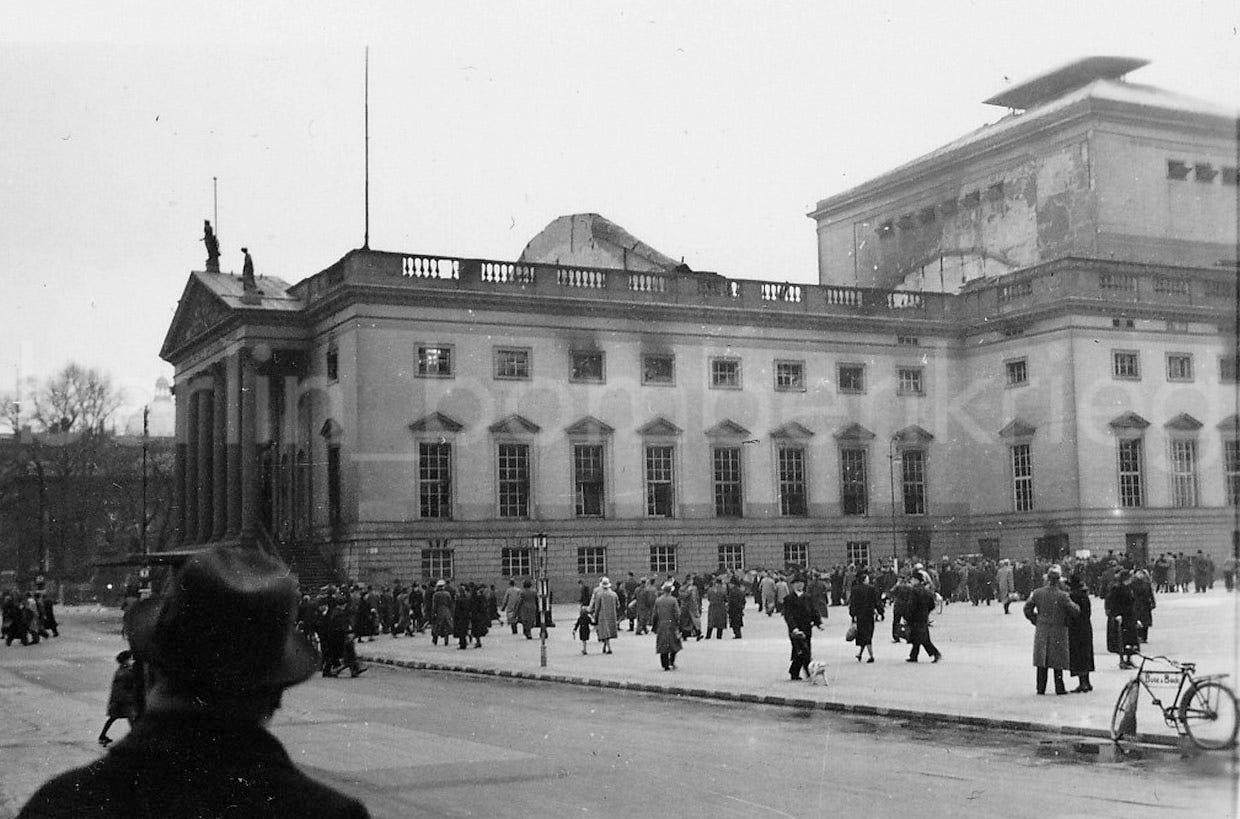
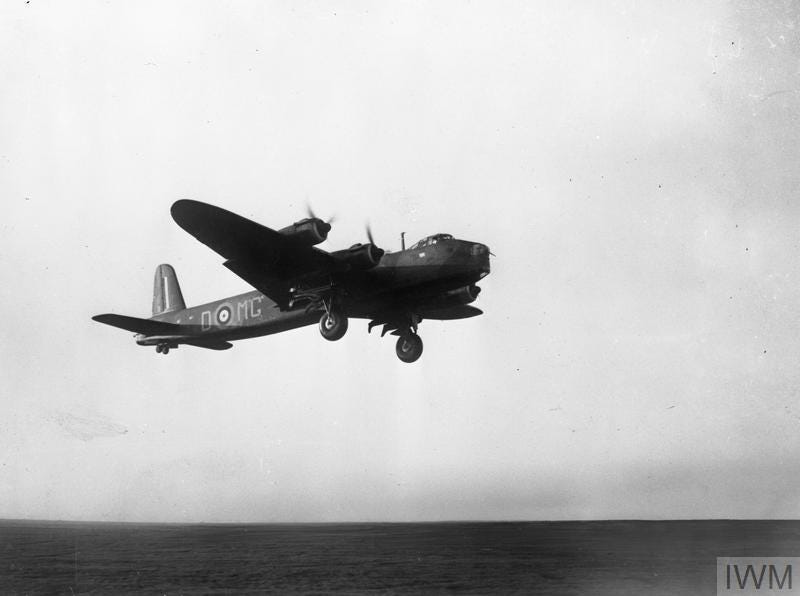
On the night of Wednesday April 9th, 1941, RAF Bomber Command launched a new raid against ‘the Big City’. The mixed attacking force comprised 80 bombers - 36 Wellingtons, 24 Hampdens, 17 Whitleys and 3 of the new Short Stirling heavy bomber. This was the first attack on Berlin to feature the big four-engined British bomber.
Some sources indicates this attack was a British retaliation ordered by Churchill after the Nazis bombed and destroyed Belgrade the week before, the most devastating attack in the history of the Serbian capital. However, a British government declaration of 8 April (Boog H, Krebs G and Vogel D, 2006. p 367) had made it clear that the British were not conducting reprisal attacks and that German cities would continue to be attacked even if the Luftwaffe no longer bombed Britain. To accept the reprisal campaign would have deprived the British of the only way of hitting back Germany bombs.
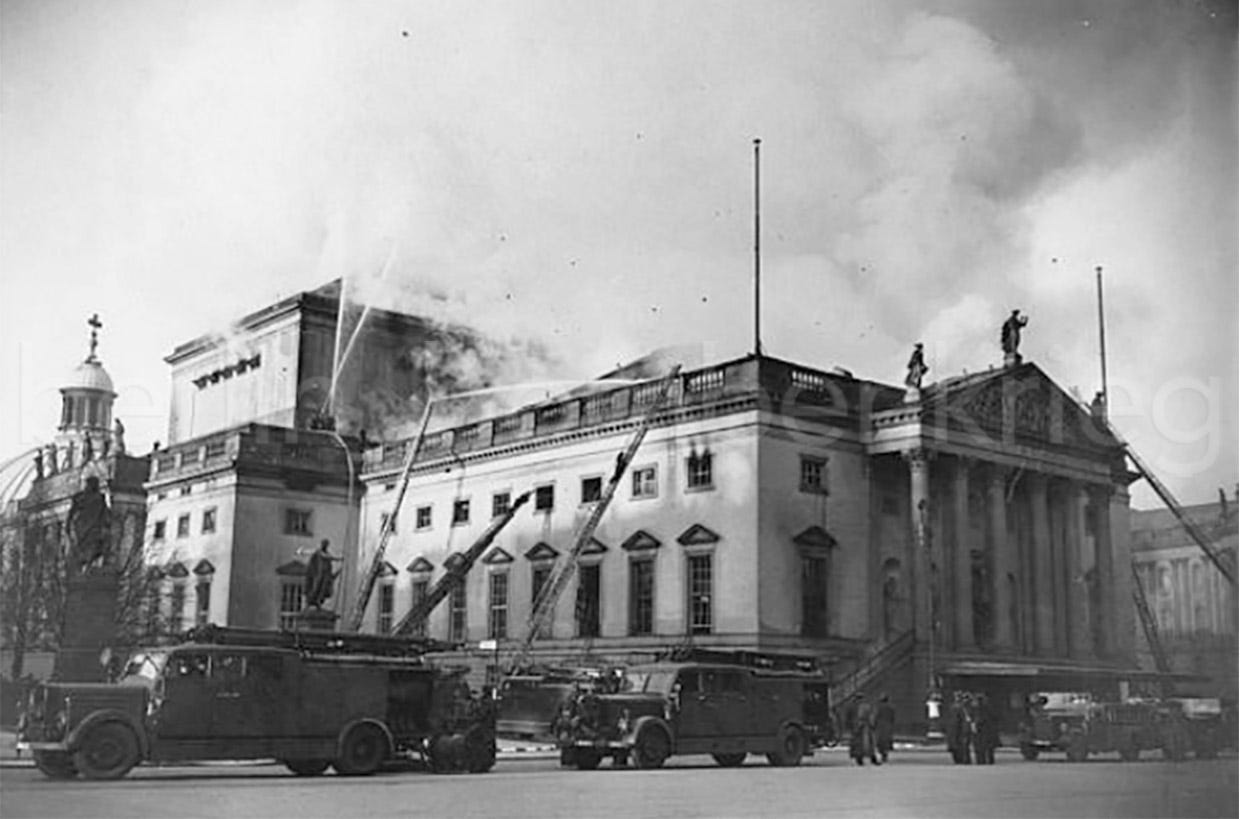
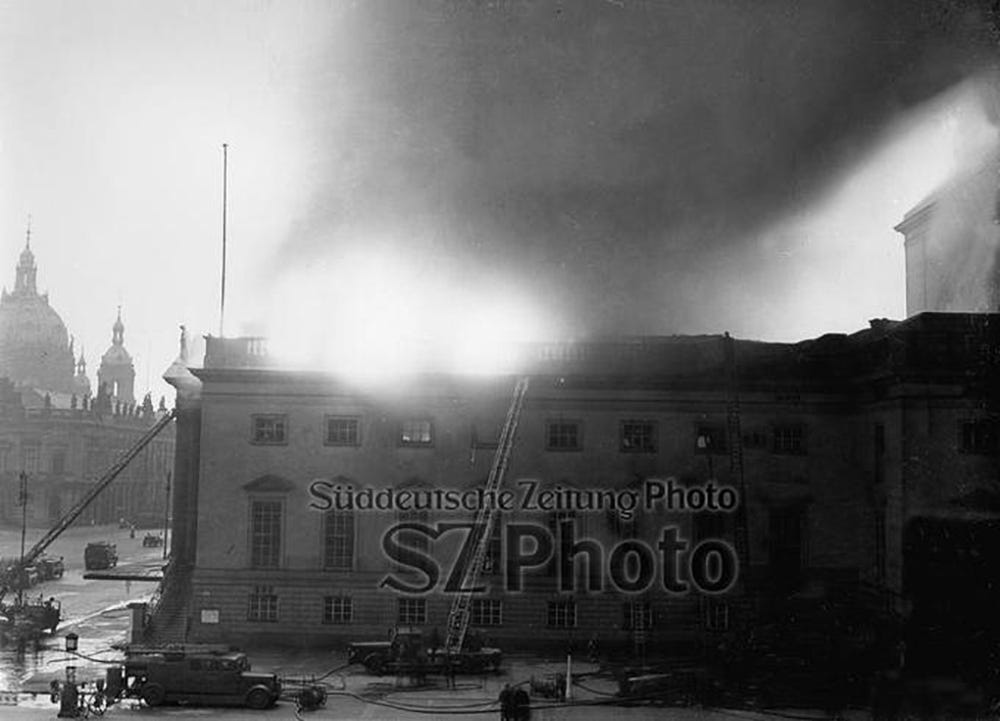
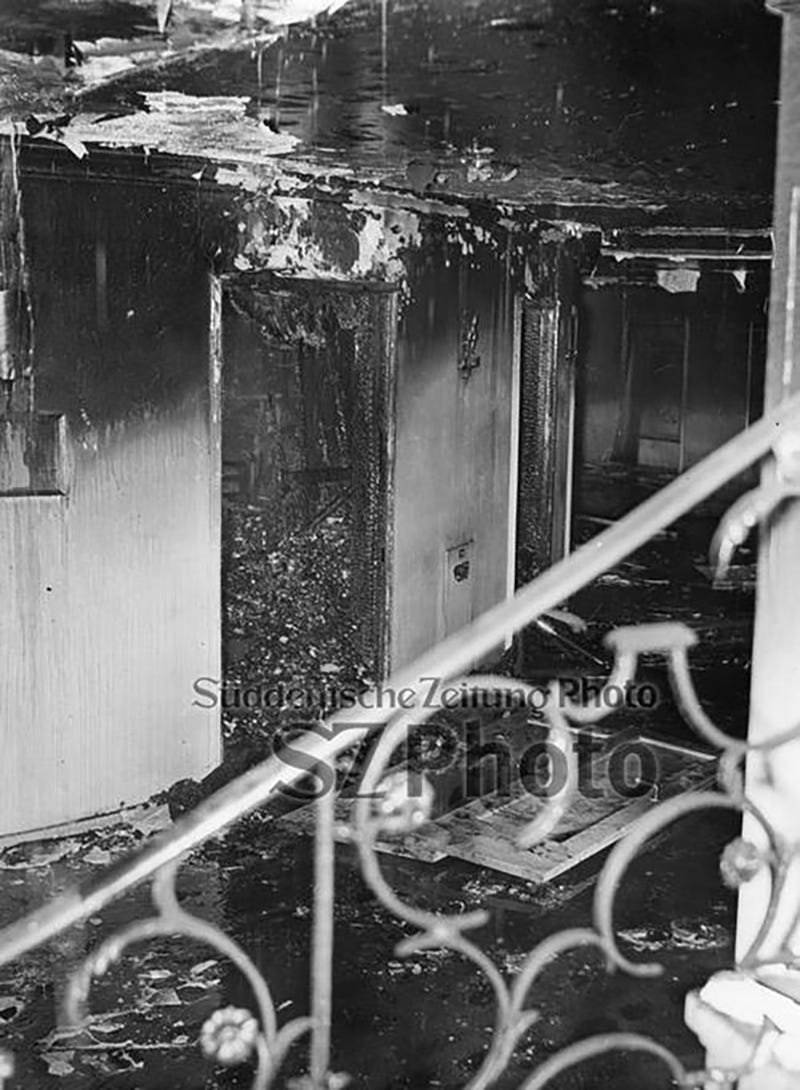
Half of the RAF bombing force reached the capital and attacked under nearly full moon conditions before midnight. Bombing pattern was poor and flak was light. Incendiary bombs fell on Unter den Linden and Mitte, and hit famous buildings like the State Opera (Staatsoper Berlin), Bebelplatz and the Humboldt-Universität and Staatsbibliothek. The Altes Palais’ roof, next to the Opera, was hit by nine fire bombs too. The raid lasted fifteen minutes and five aircraft failed to return.
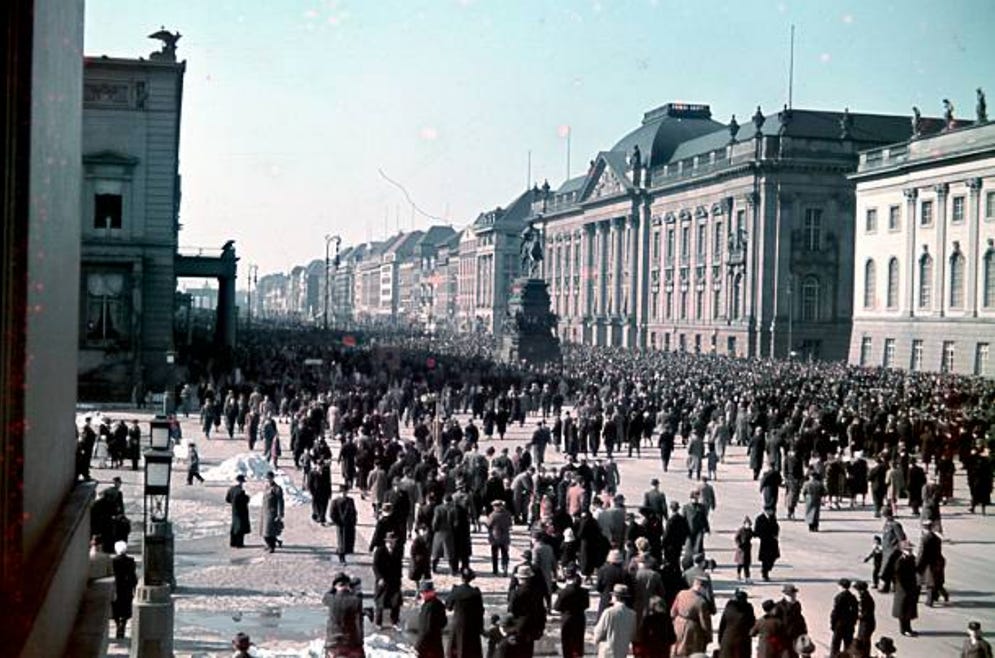
Nazi-authorities summed up the damage in a official report shortly thereafter: 90 homes and 10 public buildings had been destroyed or severely damaged, as well as several factories railway facilities, two churches and a hospital and two barracks. Six people died. RAF flyers were accused by Nazi-propaganda of attacking deliberately such cultural buildings of an European city.
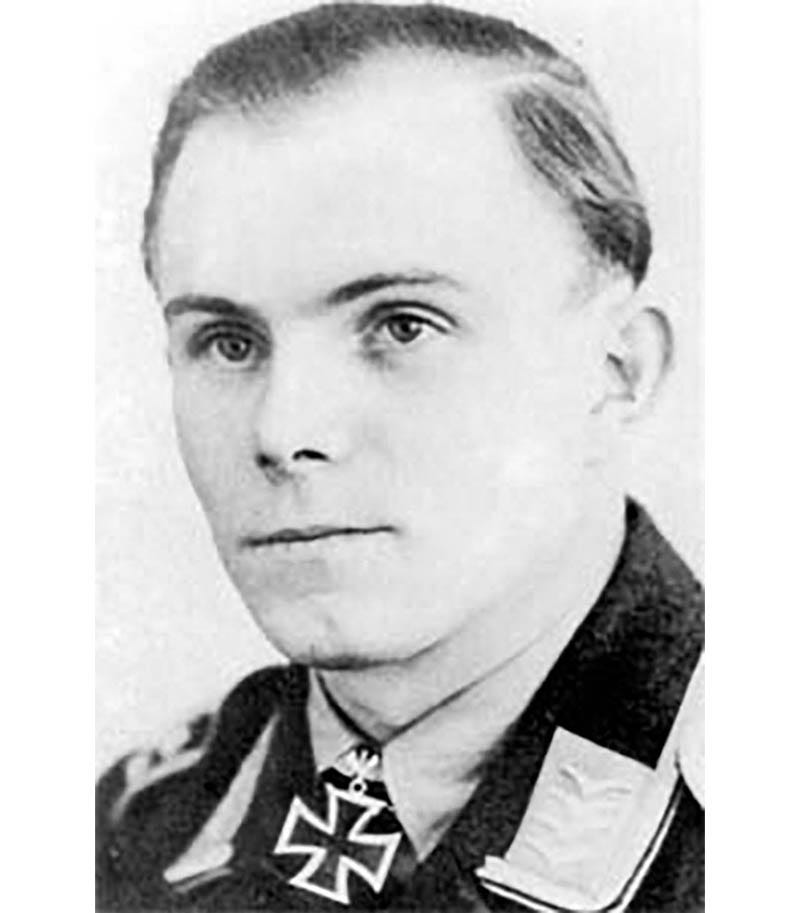
British losses included the only Short Stirling bomber that was able to reach the city, the other two aborted the mission. N6011 ‘MG-?’ of No 7 Squadron RAF was shot down by Oberfeldwebel Karl-Heinz Scherfling flying a Bf 110 night fighter of NJG1 at 23.35 hrs and crashed near Lingen, in Lower Saxony some 300 miles short of the target Berlin. This was the first Stirling lost to enemy action.
There was only one survivor between Fl/Lt. Victor Fernley Baker Pike’s crew, Sgt Charles MacDonald (POW). The six crew members killed were initially buried at the Lingen New Cemetery and reburied after the war in the Reichswald War Cemetery in 1947.
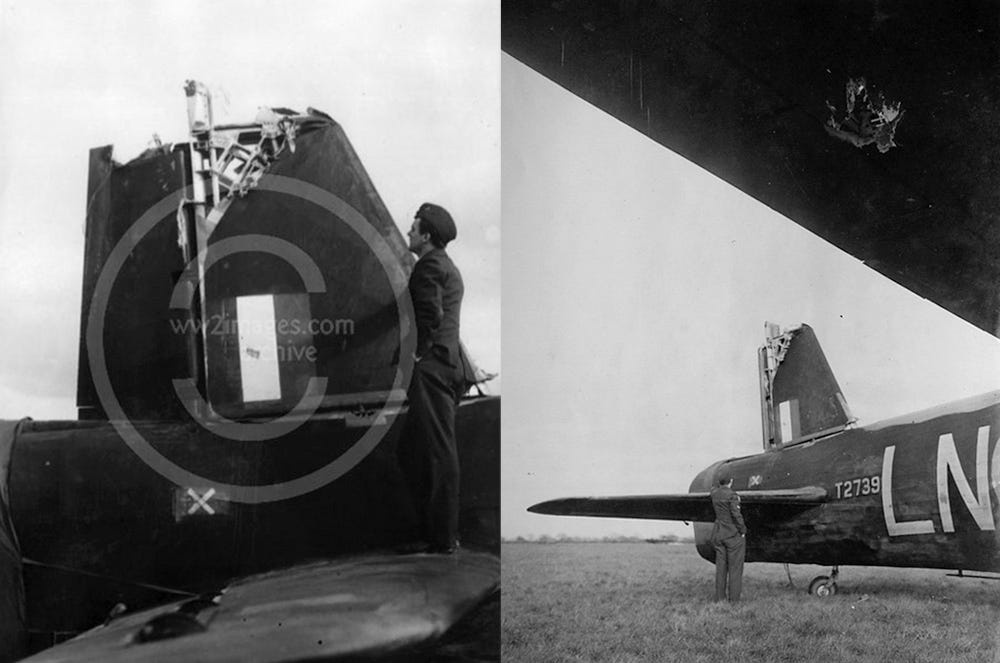
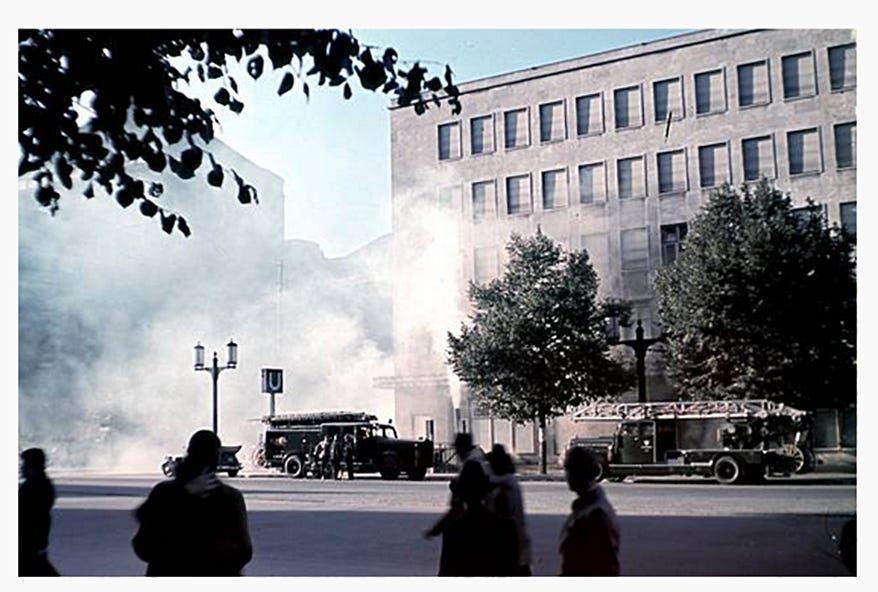
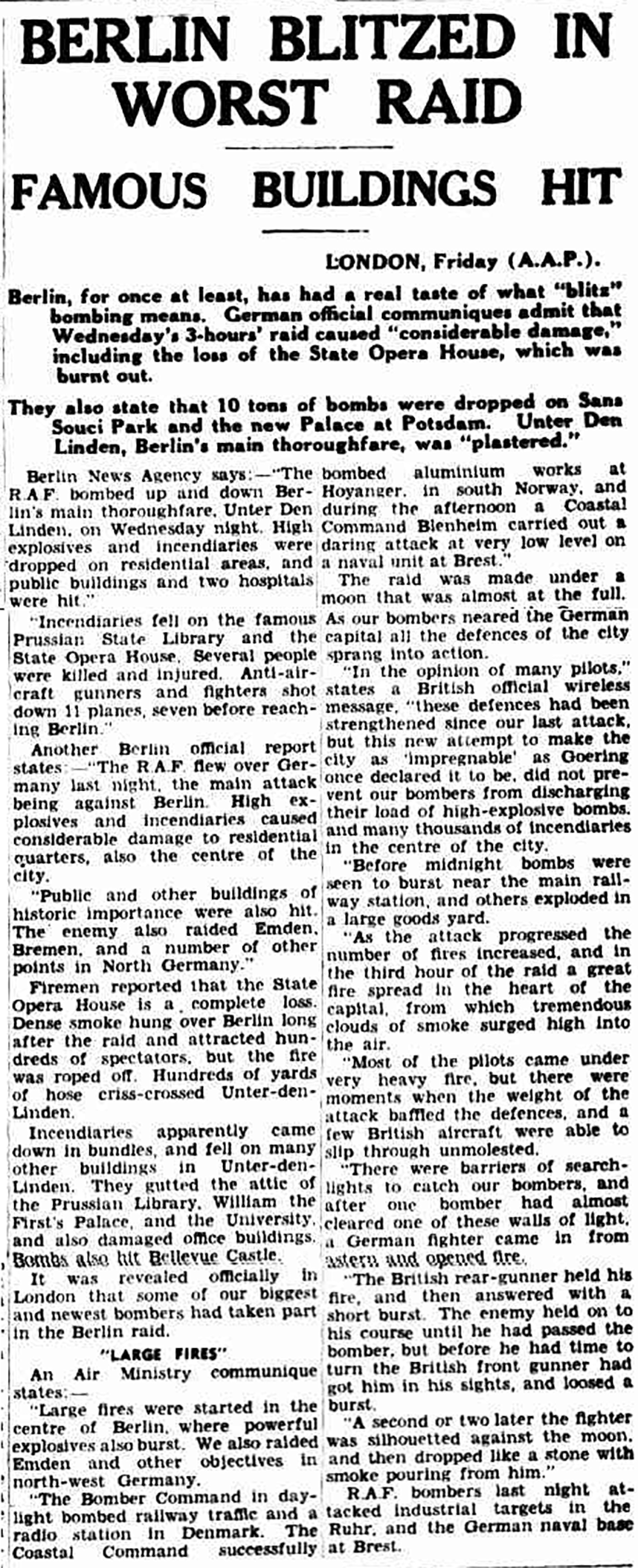
On the very next day after the RAF attack, British Empire newspapers reported the raid all around the world from London to Sydney, with great emphasis in the destruction of the Staatsoper at Unter den Linden. ”(…) Firemen reported that the State Opera House is a complete loss.” The raid lasted 15 minutes over the capital, and damage was less than severe but international press correspondents reported great destruction and large fires without regards that non military targets had been hit: “(…) High explosives and incendiaries were dropped on residential areas, and public buildings and two hospitals were hit”. This is highly remarkable, because until mid-1942 British War Cabinet didn’t shifted it’s policy to the moral bombing, but hit back hard to revenge London’s Blitz was a priority for British people in the Darkest Hour.
This original film-footage filmed on 10 April 1941 recorded the consequences of the previous night raid by British RAF bombers over Berlin Mitte. We can see the destroyed roof of the Haus der Schweiz at Friedrichstraße, and the Feuerwehr extinguishing the last fires from the enemy’s bombs at the Opernhaus as well as columns of smoke in adjacent streets. (Video credit: Worldfilmheritage)
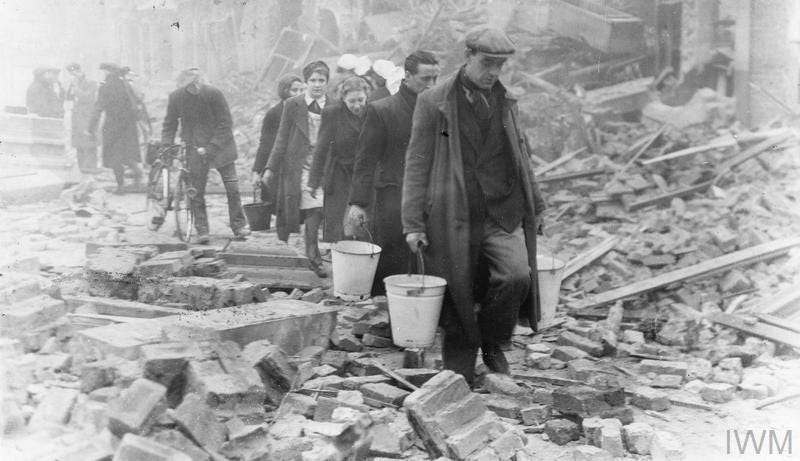
After the attack, an infuriated Hitler confronts Göring, chief of Luftwaffe, about lack of defences against RAF bombing campaign, so in revenge for the destruction of the Staatsoper, he ordered two huge raids against London to demonstrate the Führer his air force could indeed flatten the capital. On April 16th, 1940, the Luftwaffe attacked with 681 bombers (886 tonnes of bombs) with the west of London suffered the most in this bombing, Chelsea and West End, and even St. Paul’s cathedral was hit. This raid was so heavy that it became known to Londoners as ‘The Wednesday’.
Three nights later the Germans back with 712 aircraft (1,026 tonnes), the largest raid of the 1941 Blitz campaign and nearly the end of this first phase. Some sources indicates total casualties are roughly 2,300 killed and 3,000 seriously wounded between the two attacks. London firefighters lost 13 men, the most so far during the war.
_______________
Sources and bibliography:
Aircrew remembered. 9/10.04.1941 No. 7 Squadron Stirling I. (accessed January 2019)
Blitz incidents. Paddington Station 16th April 1941. (accessed January 2019)
Boiten, Theo. (2018). Nachtjagd Combat Archive. The early years Part 1. 1939-12 July 1941. Red Kite
Boog, H, Krebs, G and Vogel, D. (2006). Germany and the Second World War. Volume VII: The Strategic Air War in Europe and the War in the West and East Asia, 1943-1944/5. Clarendon Press
Borg, Lucette. (2006). Das Geschenk aus Berlin. Roman. Wallstein
Bryan, Tim. (1995). The Great Western at War 1939-1945. Patrick Stephens Ltd
Chorley WR. (1993). RAF Bomber Command losses of the Second World War, 1941. Midland
Demps, Laurenz. (2014). Luftangriffe auf Berlin. Die Berichte der Hauptluftschutzstelle. Ch. Links Verlag
Einhard, Luther. (2012). Oper in Berlin – Heiß umkämpft und stets unter Feuer. Pro Business
Falconer Jonathan. (2018). Short Stirling Units of World War 2. Combat Aircraft. Osprey Publishing
Freydank, Ruth. (1988). Theater in Berlin: von den Anfängen bis 1945. Berlin
Kellerhoff, Sven F. (2011). Berlin im Krieg: Eine Generation erinnert sich. BASTEI LÜBBE
Middlebrook, Martin. (2014). The Bomber Command War Diaries: An Operational Reference Book. Casemate Publishers and Book Distributors
Moorhouse, Roger. (2011). Berlin at war. Life and death in Hitler’s capital, 1939-45. Vintage Books, London
Overy, Richard. (2013). The Bombing War: Europe, 1939-1945. Allen Lane
The Diaries of Joseph Goebbels, Part I: Notations, 1923–1941. Saur Verlag. 1998
Thank you for reading Berlin Bombenkrieg by Pablo López Ruiz. Please subscribe, if you haven’t yet, to comment, follow and share. All images used for non profit / educational purposes.