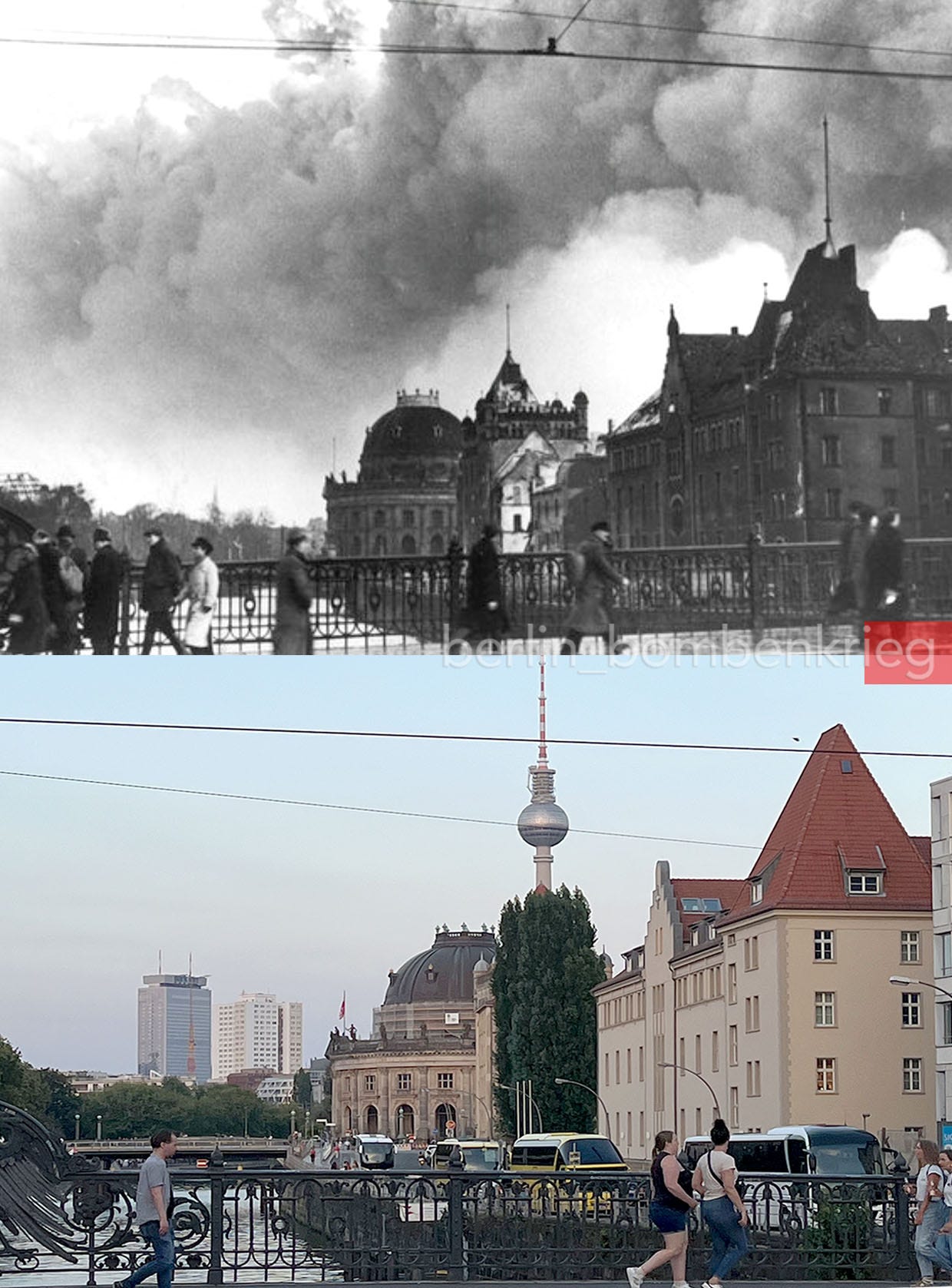
February 3, 1945: massive US air raid in Berlin-Mitte over Weidendammer Brücke in Froedrichstr., and viewed from the same spot in 2025. Photos: bpk/by the author
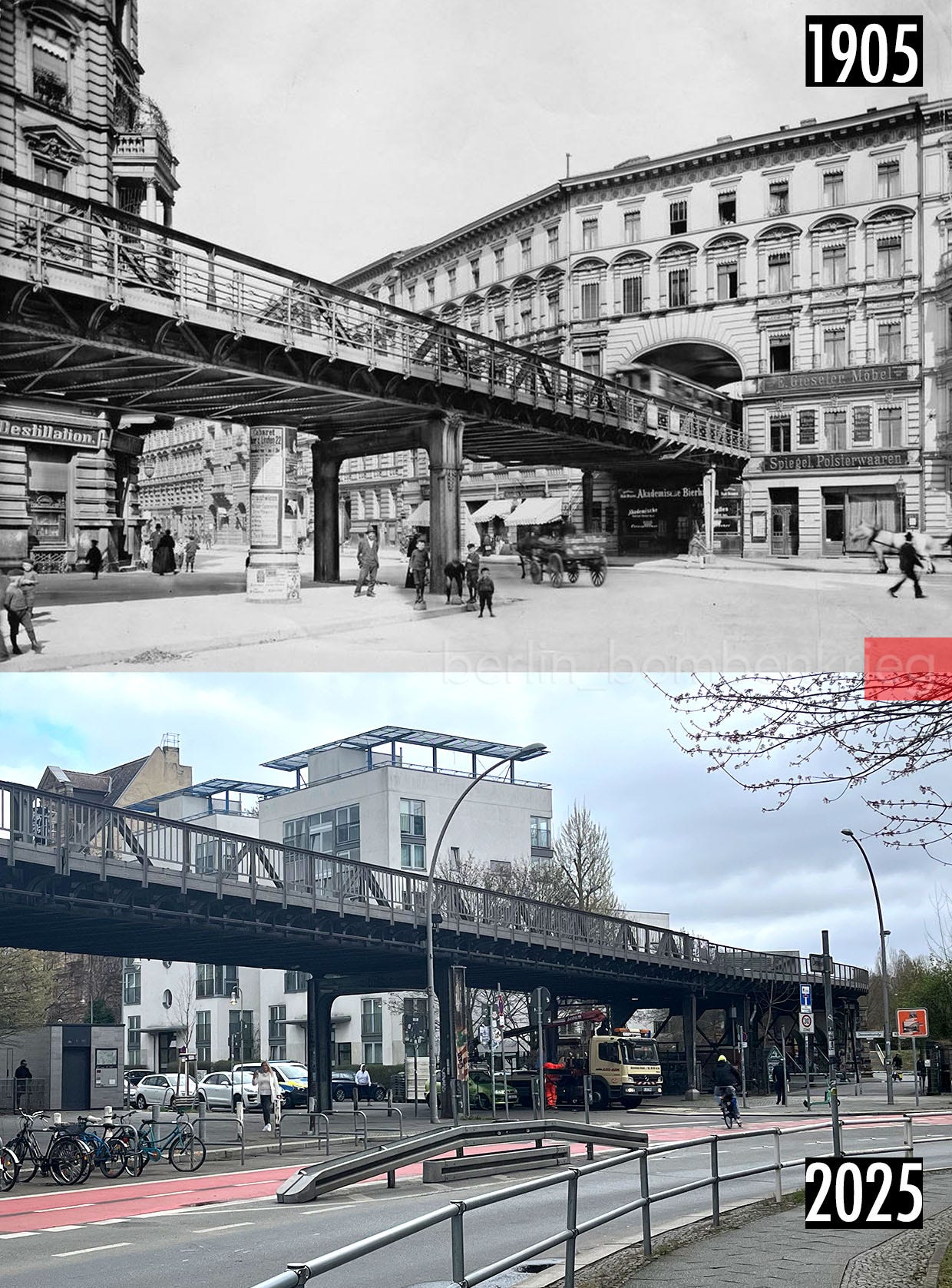
This 1905 image shows tunnel of the elevated railway line of Berlin’s U-Bahn at Dennewitzstraße/ Bülowstr. It was destroyed during the British bombing campaign in late November 1943. Below is a March 2025 photo from the same viewpoint. The elevated railway was reconstructed after the war, not the same to the buildings located in that corner. Photos: Max Missmann-Stadtmuseum Berlin/by the author, March 2025
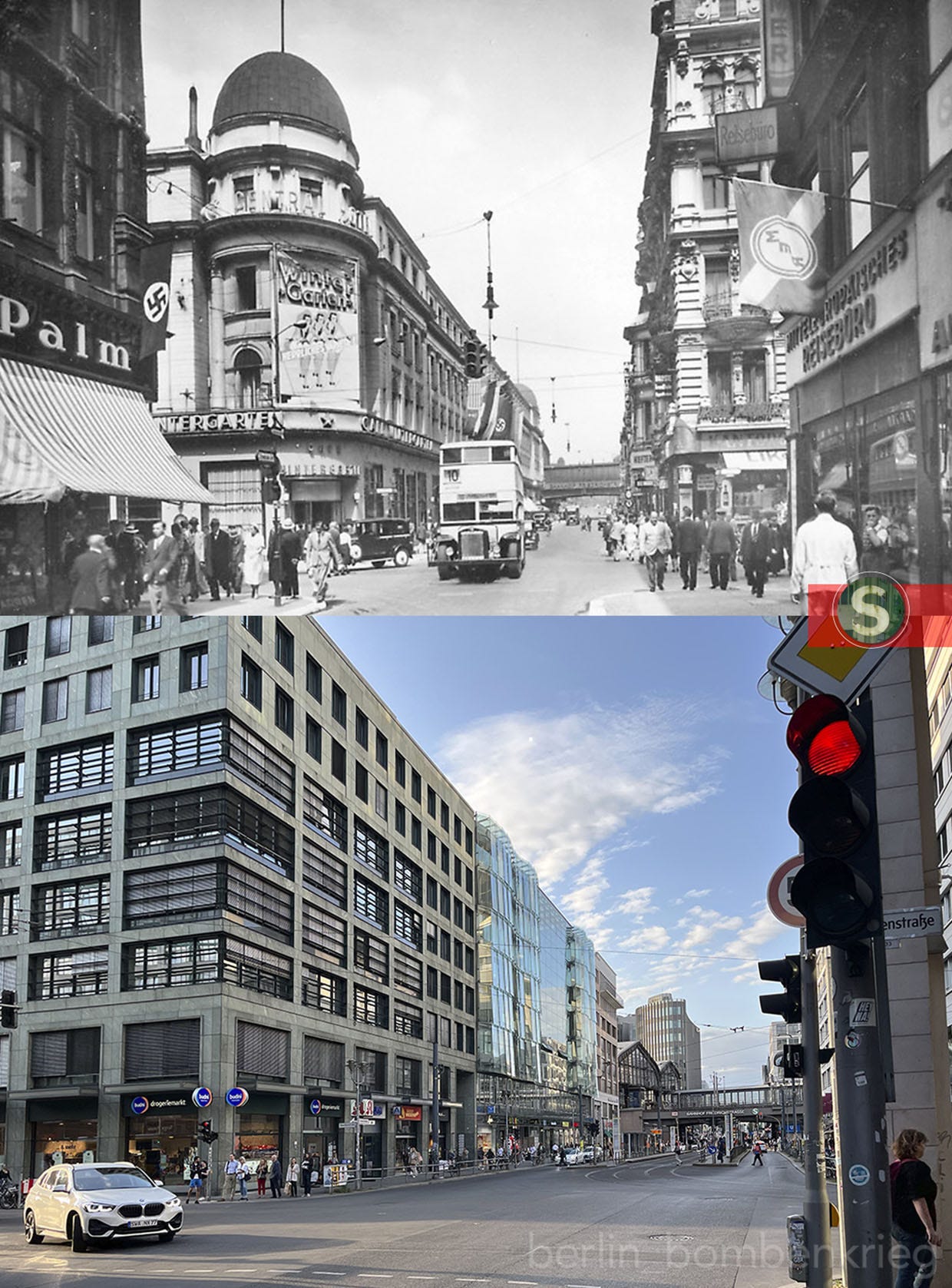
The new Berlin: modern buildings stand today where the former Central-Hotel and Wintergarten were located at Friedrichstraße (c. 1938). In the background (extreme right), the station’s railway bridge —rebuilt after the war— can be seen in its original location. Photos: LAB/ by the author 2024
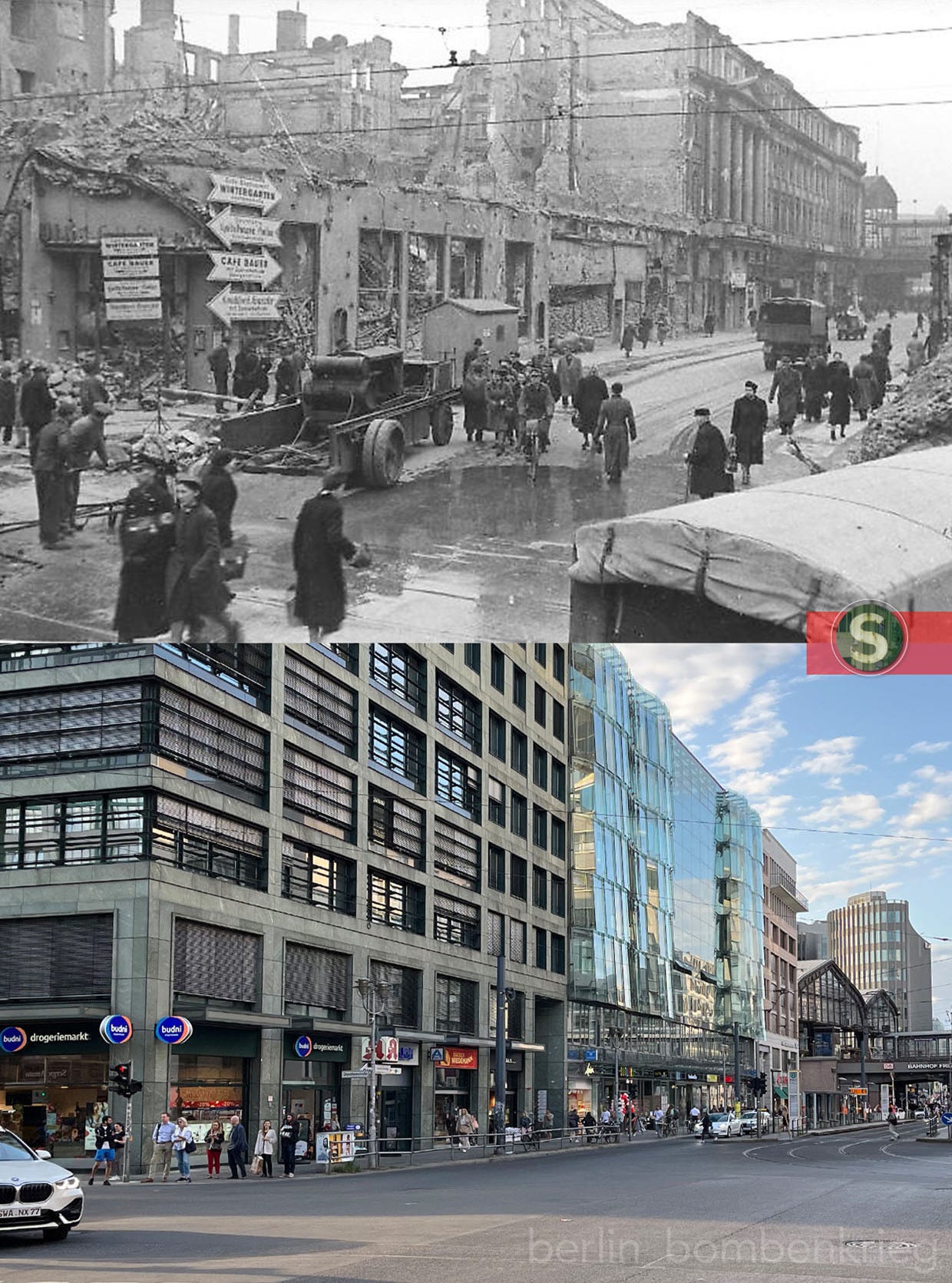
Former Wintergarten’s location at Friedrichstraße as seen today (2024), compared to the well known scene of the ruined same spot following an Allied air raid in March 1945. Photos: Bundesarchiv_Bild 183-J31405/ by the author 2024
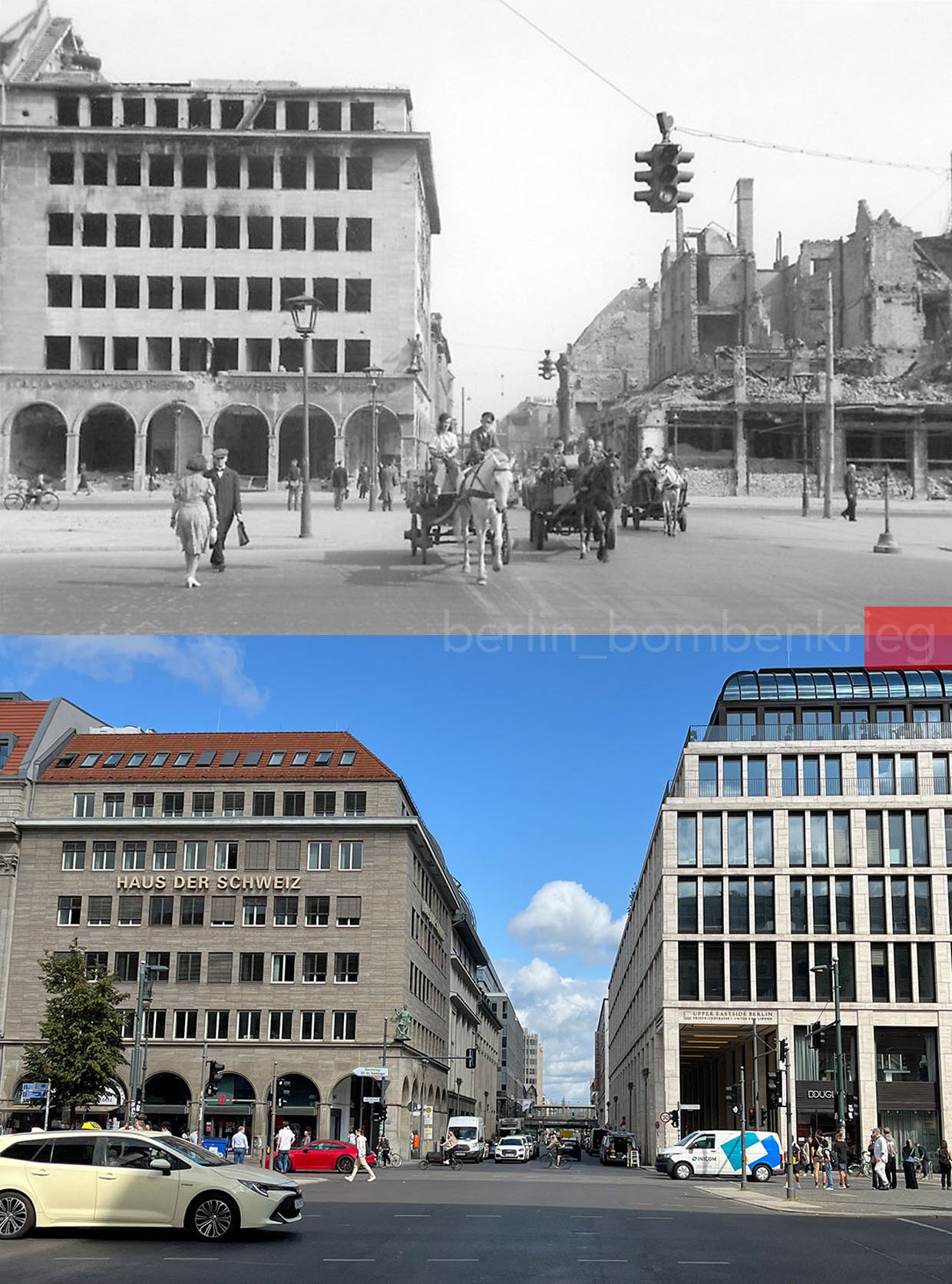
Then/Now view of Unter den Linden Ecke Fridrichstraße. The Haus der Schweiz (left) was totally rebuilt from 1950. Today, the right corner is a modern office and residential building finished in 2010 (photo taken in 2024). Not a single brick from the original ‘Café Viktoria’, destroyed by the air raids and originally located there, was left. Photo: LAB/ by the author
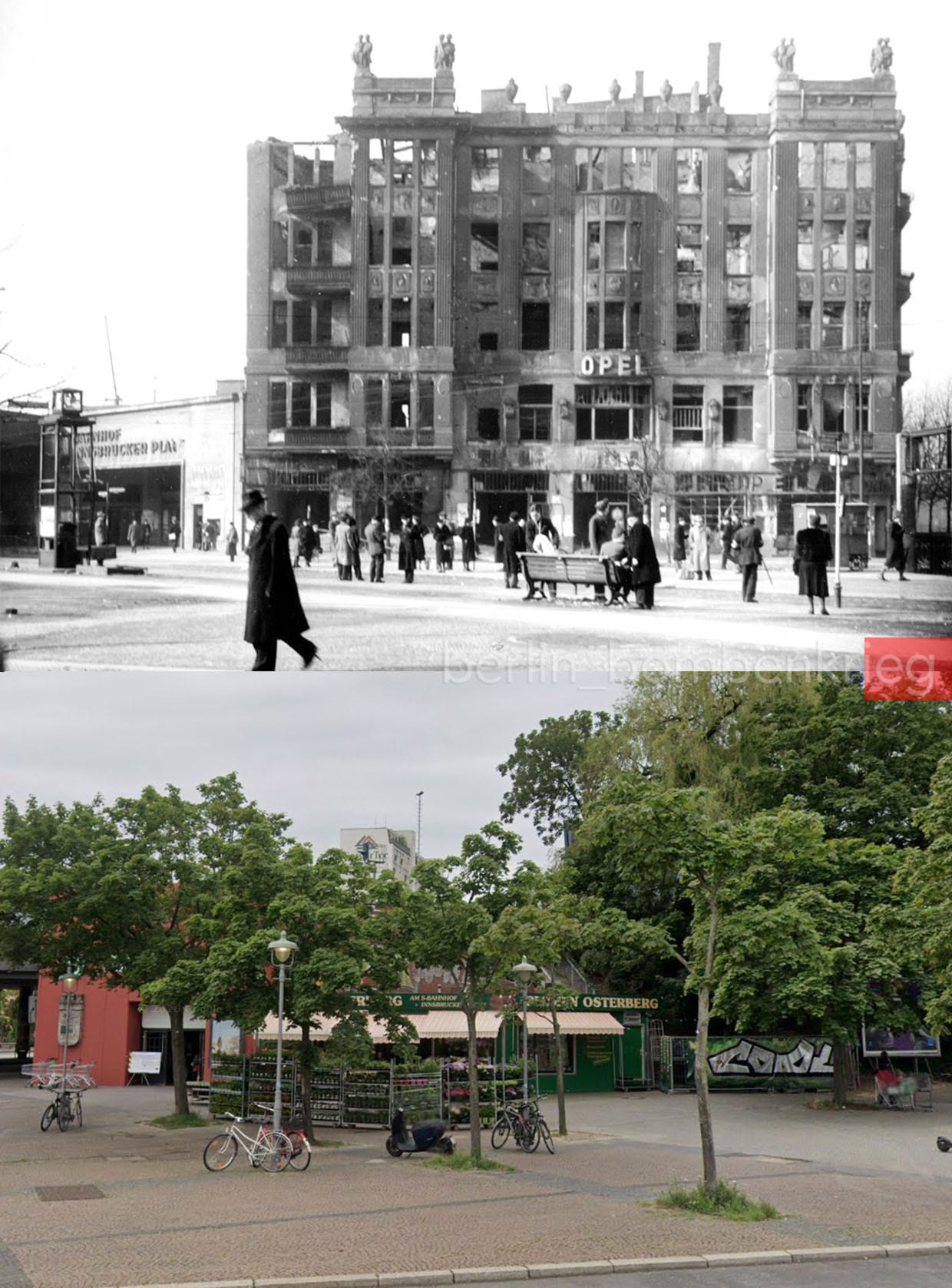
Until ww2’s destruction, this beautiful and ornamental building, seen here ruined and burned out, stood proudly at Innsbrucker Platz Nr. 1 in the Berlin-Schöneberg district. By war’s end, only its skeleton and the facade had survived. Finally, in the 1980s both the building and the Ringbahn old entrance were finally demolished, today occupied by a small flowers store next to a green area. Photos: LAB/ by the author, 2025
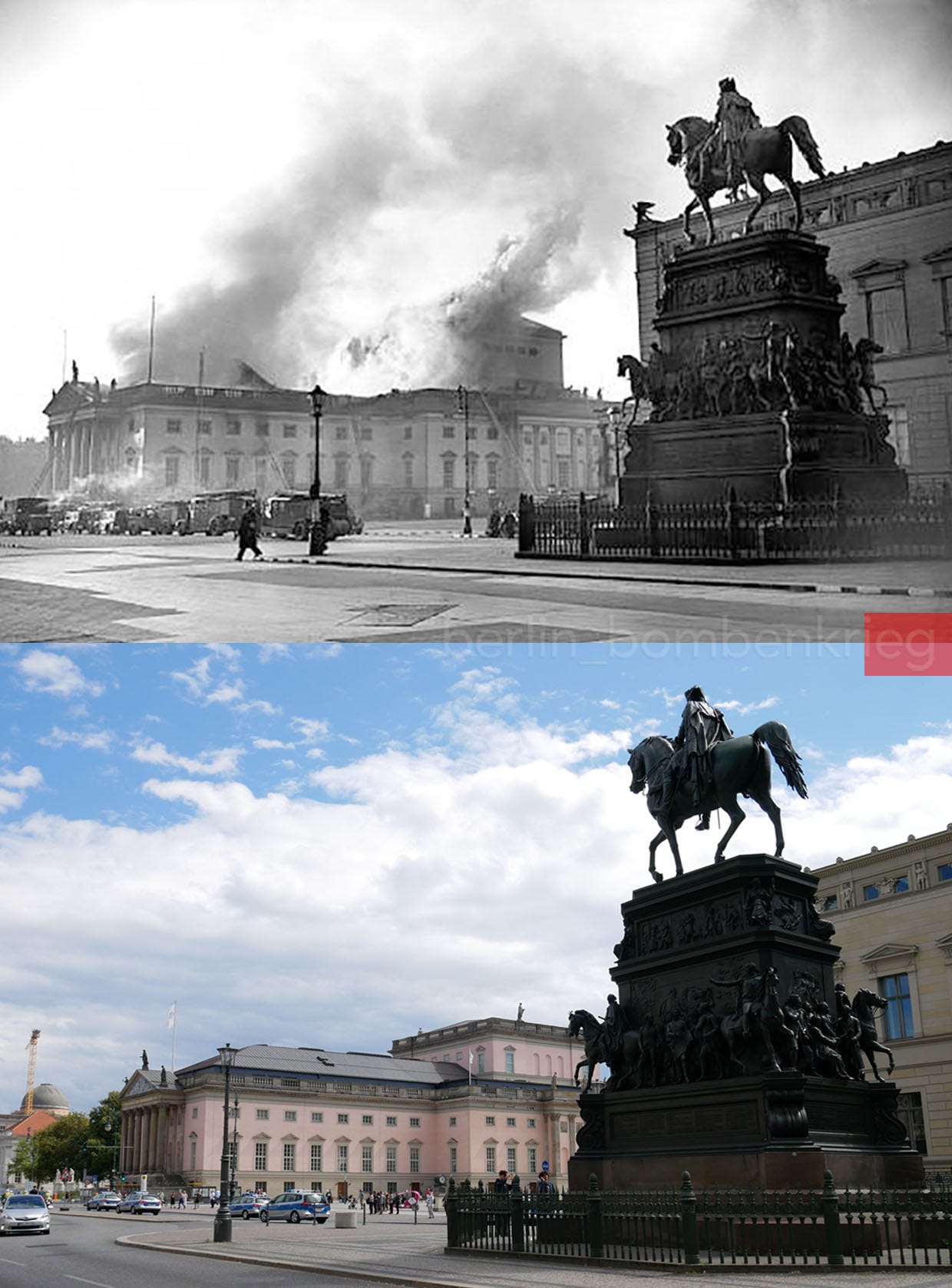
10 April 1941. Columns of smoke and fire rises from the theatre hit by bombs as seen from the equestrian statue of Frederick the Greatat Unter den Linden. Photos: Heinrich Hoffmann. Bayerische Staatsbibliothek/ by the author, 2018
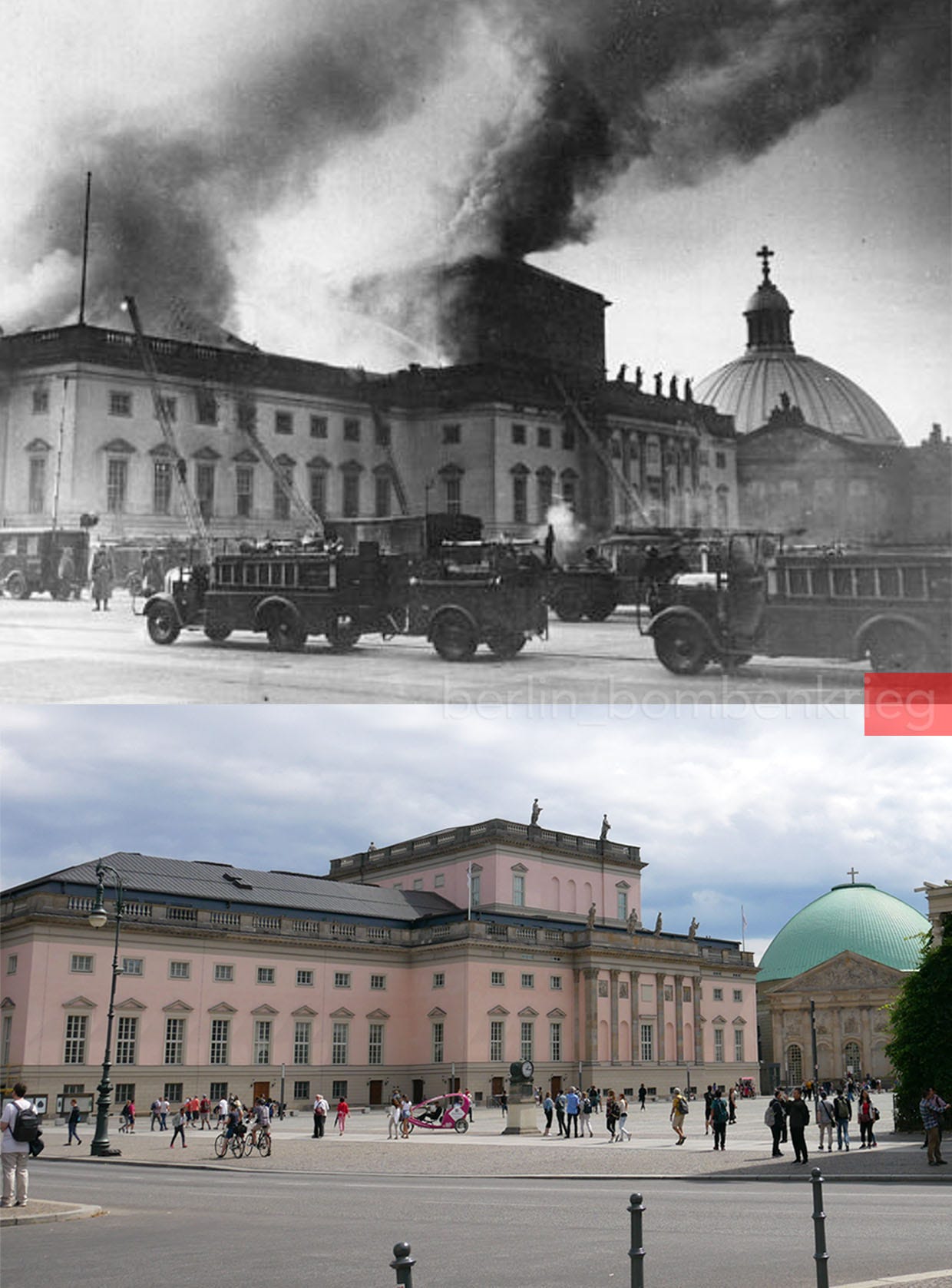
Brand der Staatsoper. 10 April 1941. Feuerschutzpolizei Berlin tries to extinguish the fire, with the roof engulfed in flames, after several British incendiary bombs targeted the building the night before. In the background can be seen the St. Hedwigs-Kathedrale with her big dome. Photos: Heinrich Hoffmann. Bayerische Staatsbibliothek / by the author, 2018
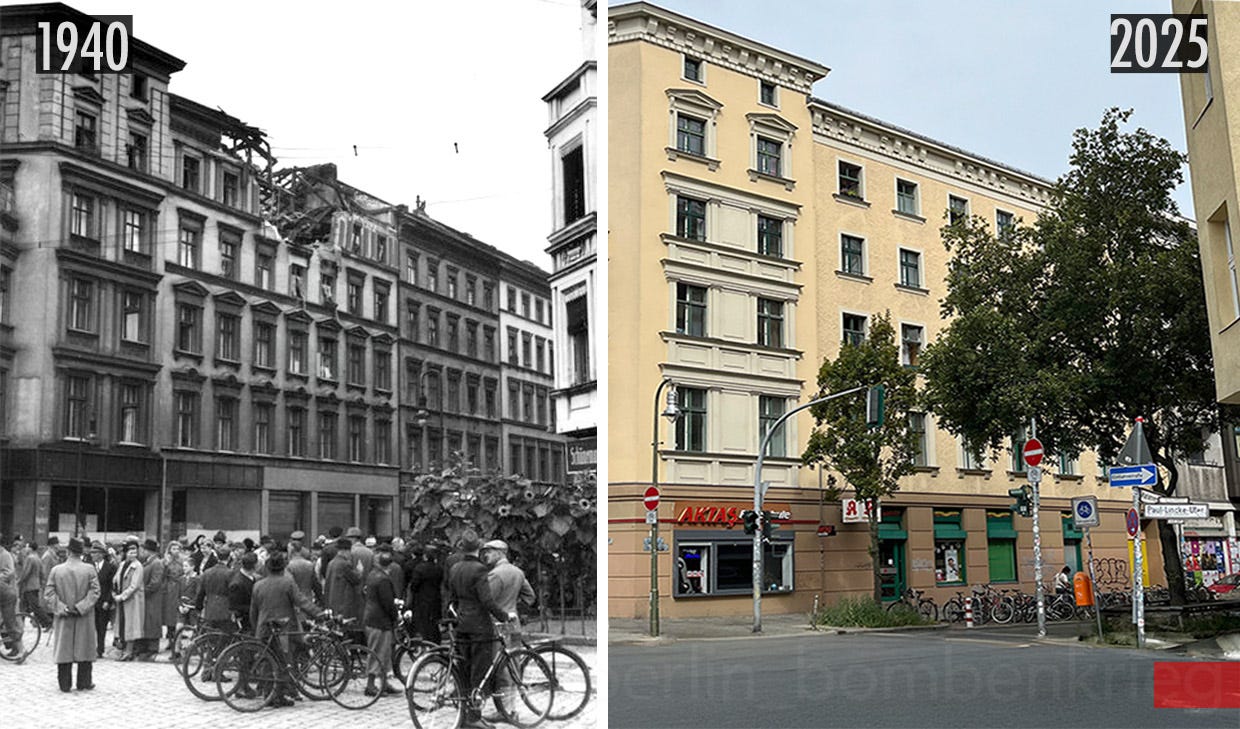
Mariannenstraße 26’s roof damage (today part of Kottbusser Str 15) in Kreuzberg, damaged by RAF bombs on August 29th, 1940. Photos: bpk/ by the author, 2025
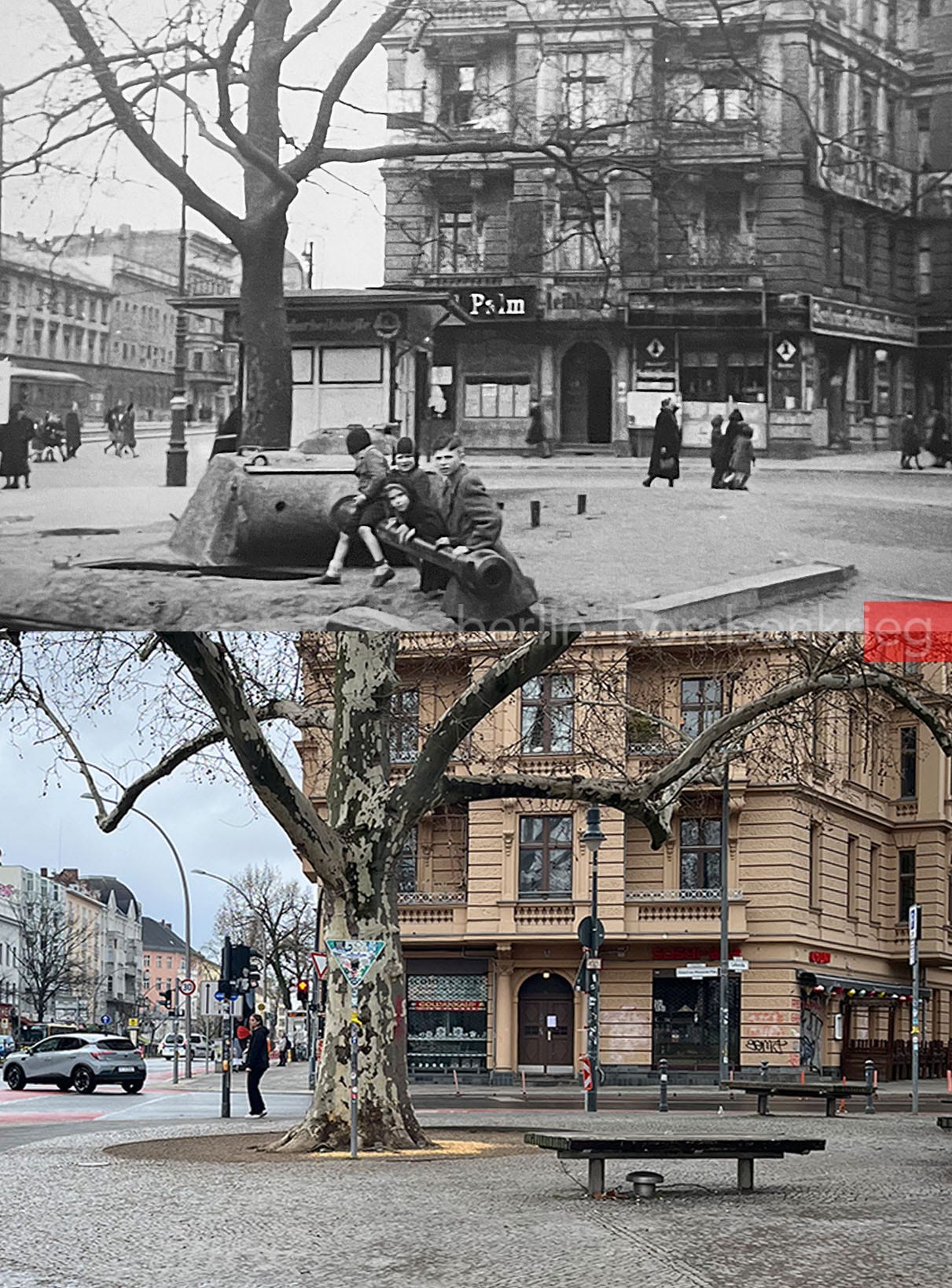
Dug-in Panther tank from Panzer-Kompanie (bo) placed there in 1945. This returned panzer was placed before the final battle at this corner to defend Hauptstrasse and Crellestr junction. The tank was buried into a large hole at the same point in 1946 and left there until the 1960s. Photos: Archiv of Modern Conflict/ by the author March 2025
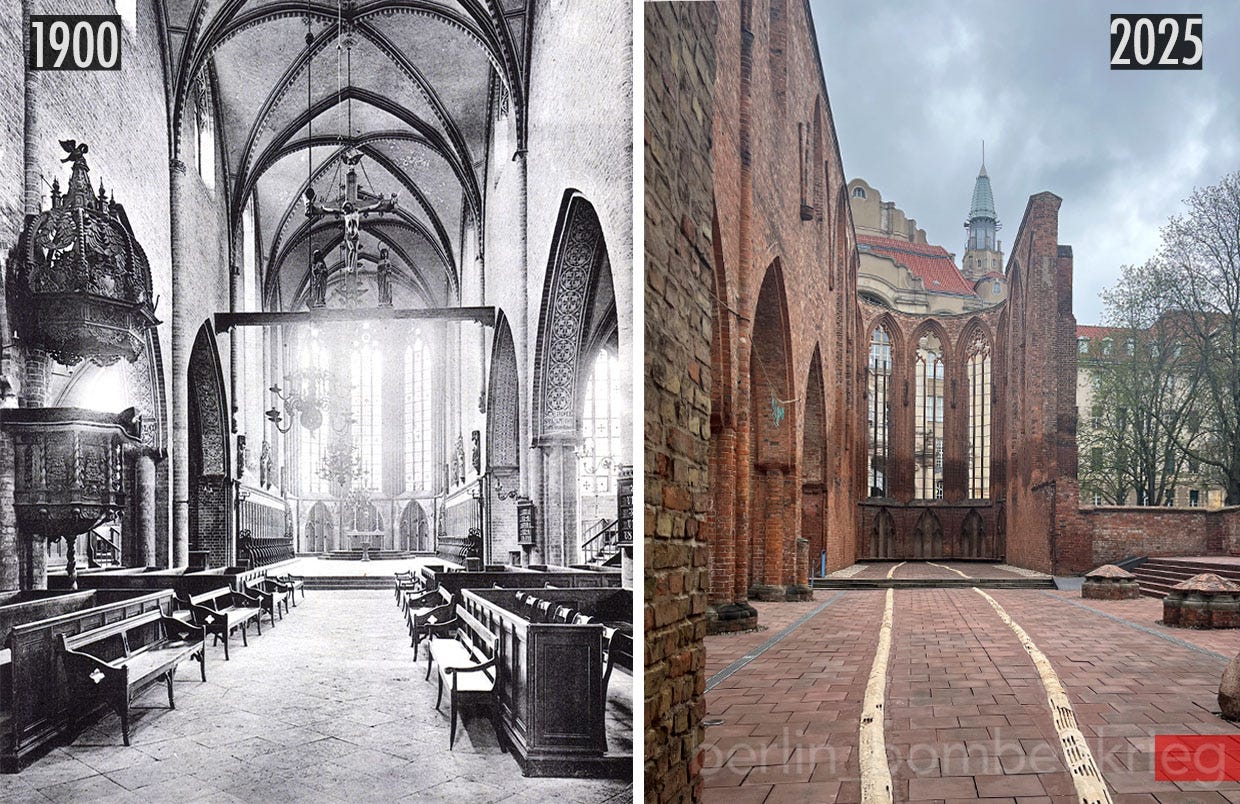
Ruins of the former Franziskaner-Klosterkirche in Berlin-Mitte, destroyed by bombs in April 1945. Photos: Berlin und seine Bauten, Verlag Wilhelm Ernst & Sohn/ by the author, 2025
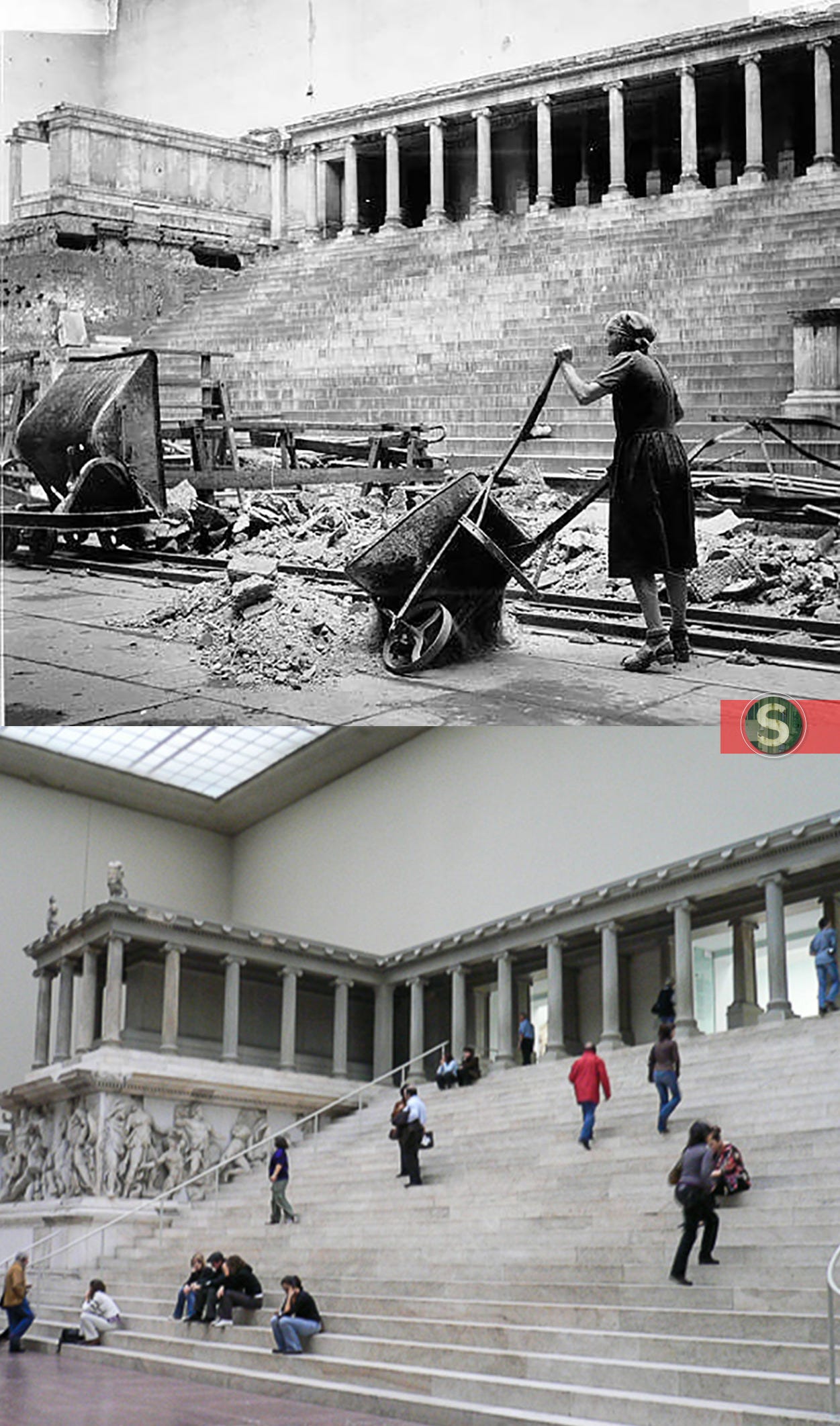
Damaged Pergamon Altar’s hall, inside the Pergamon Museum covered with debris in July, 1945. The museum was partly damaged during the Allied air attacks but some of the large exhibits were walled up in for protection. Photos: Liselotte Orgel-Köhne/by the author, 2016
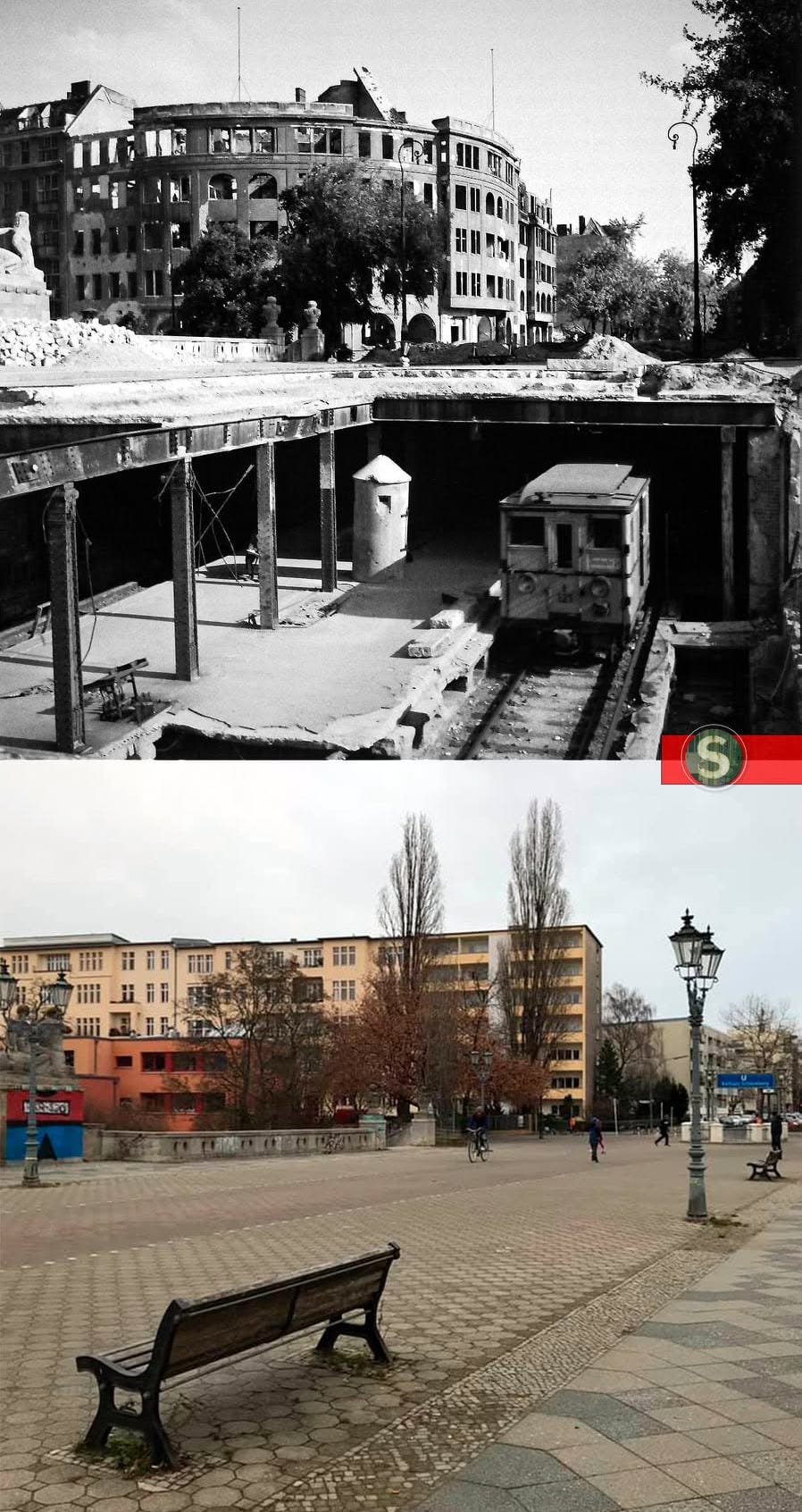
Then/Now image of the 1945 bomb damage at U-Bahnhof Stadtpark (today Rathaus Schöneberg) in Berlin-Schöneberg. Photos: Fritz Eschen. Photographien Berlin 1945-1950. Nicolai, 1996/ Berlin Battle Damage Aug 2021
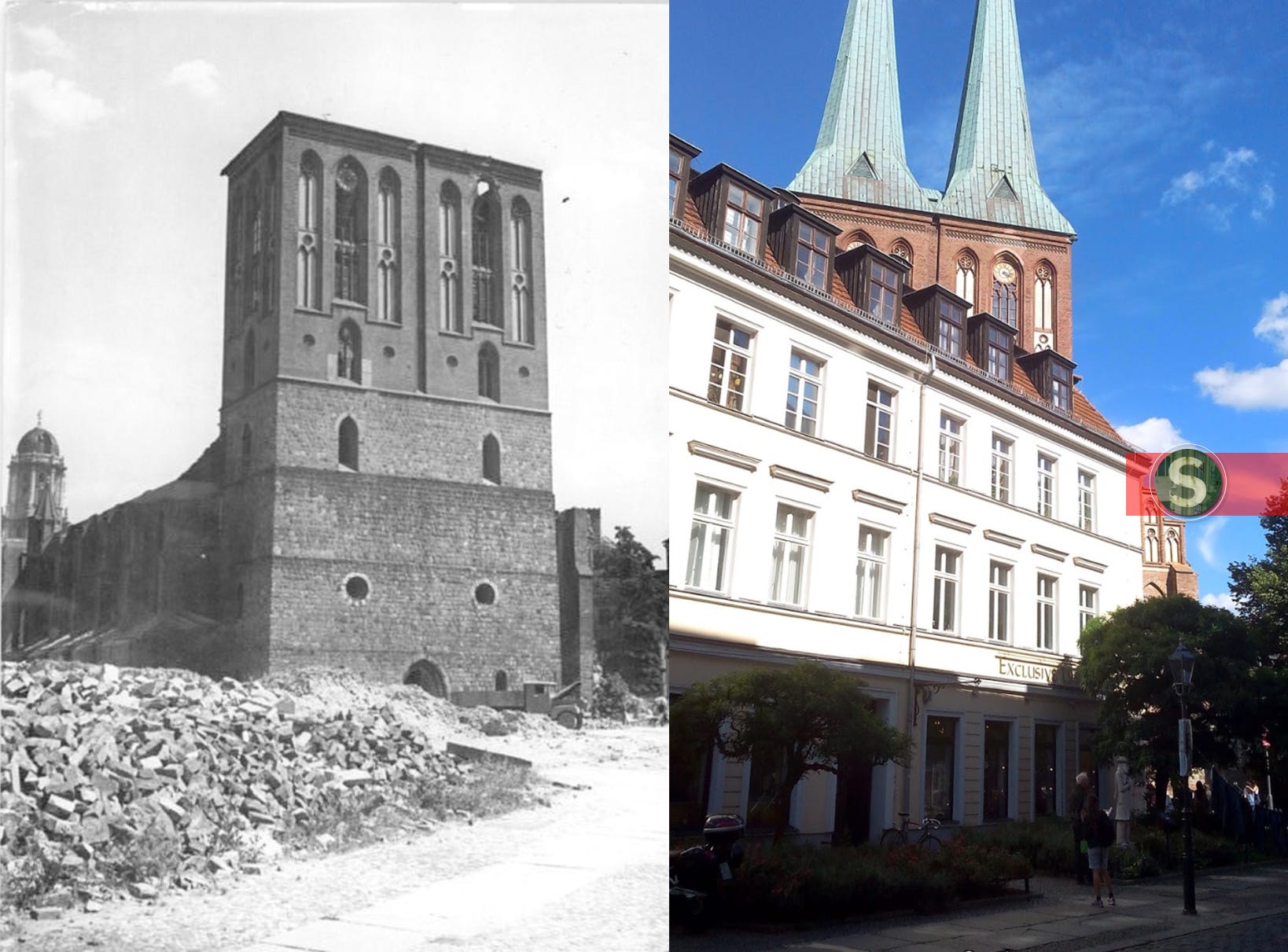
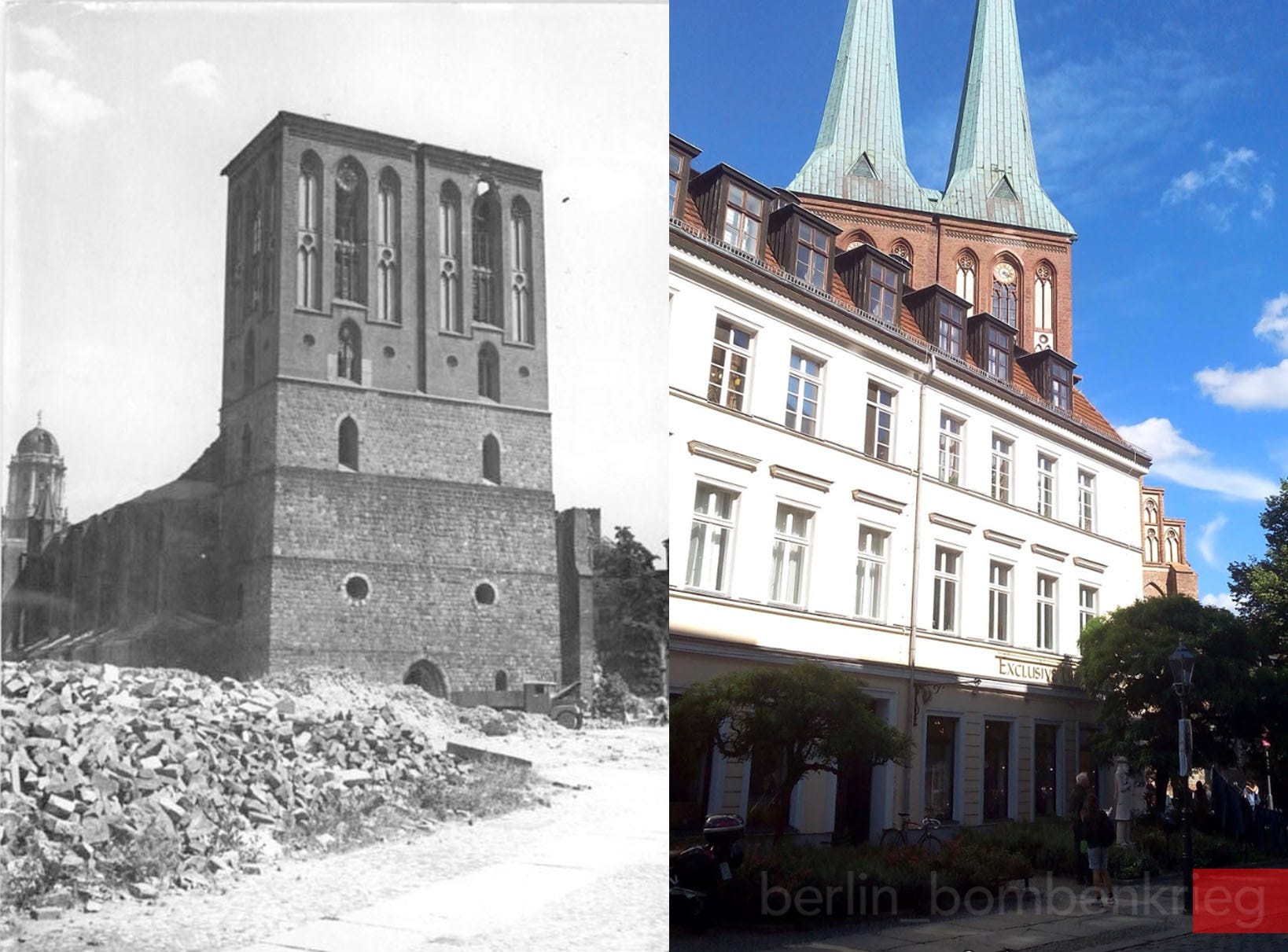
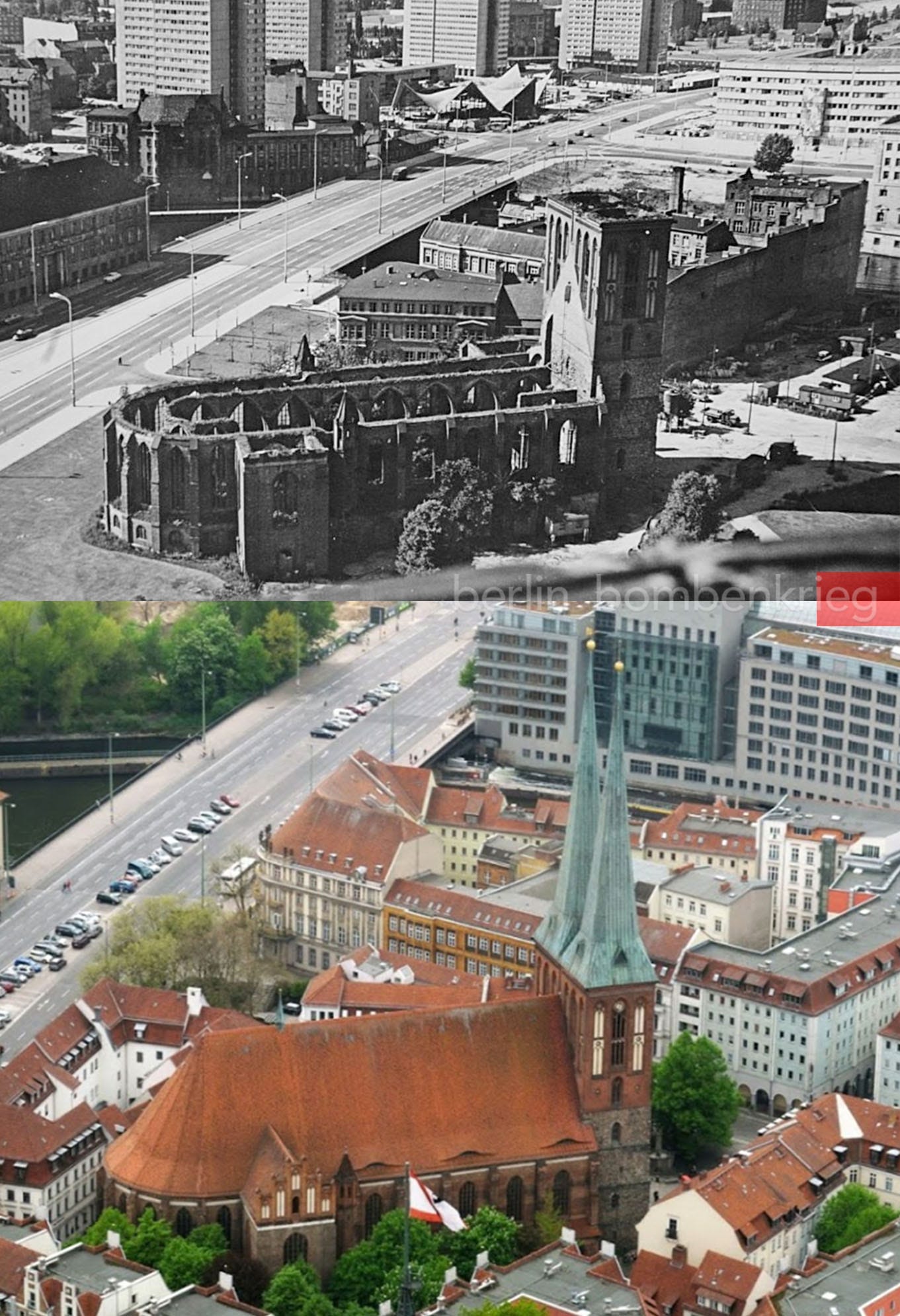
Nikolaikirche ruins, 1951: As we can see on these pictures, Poststraße buildings destroyed by war air bombings were rebuilt, covering again the vision of the main entrance of the church from this spot. Both towers were reinstalled from 1987. Photos: Horst Sturm. Bundesarchiv Bild 183-11267-0001/ by the author, 2018
Nikolaikirche ruins, 1951: As we can see on these pictures, Poststraße buildings destroyed by war air bombings were rebuilt, covering again the vision of the main entrance of the church from this spot. Both towers were reinstalled from 1987. Photos: Horst Sturm. Bundesarchiv Bild/ by the author, 2018
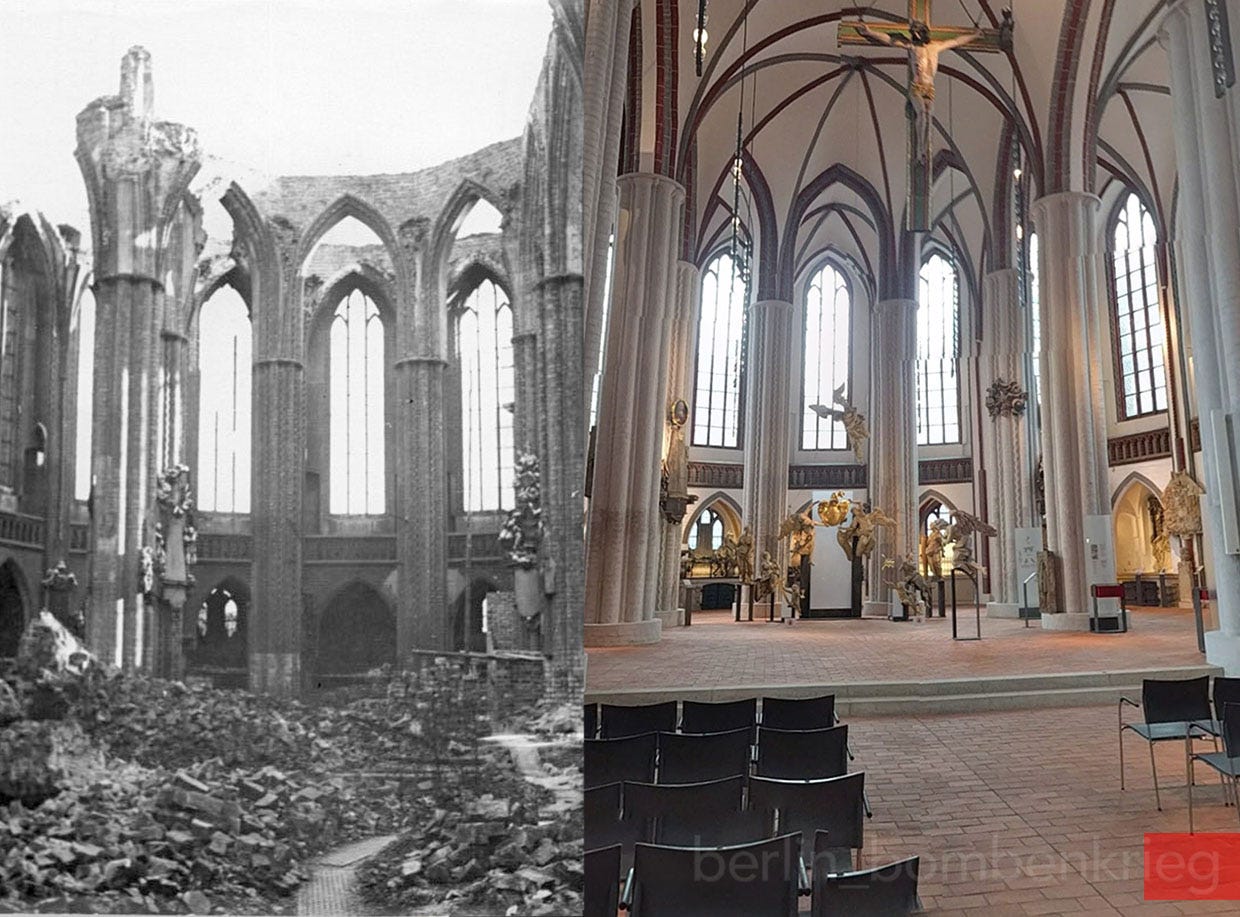
Nikolaikirche’s main hall seen in ruins following ww2. The once totally destroyed interior of the church was refurbished from 2008. Photos: Bundesarchiv / ZoltanBuzadi
The area surrounding the Nikolaikirche in Berlin-Mitte has heavily changed since the 1945 destruction, with new buildings built from 1990 with the reunification process of the country. Photos: Bundesarchiv / A.Savin. Wikimedia
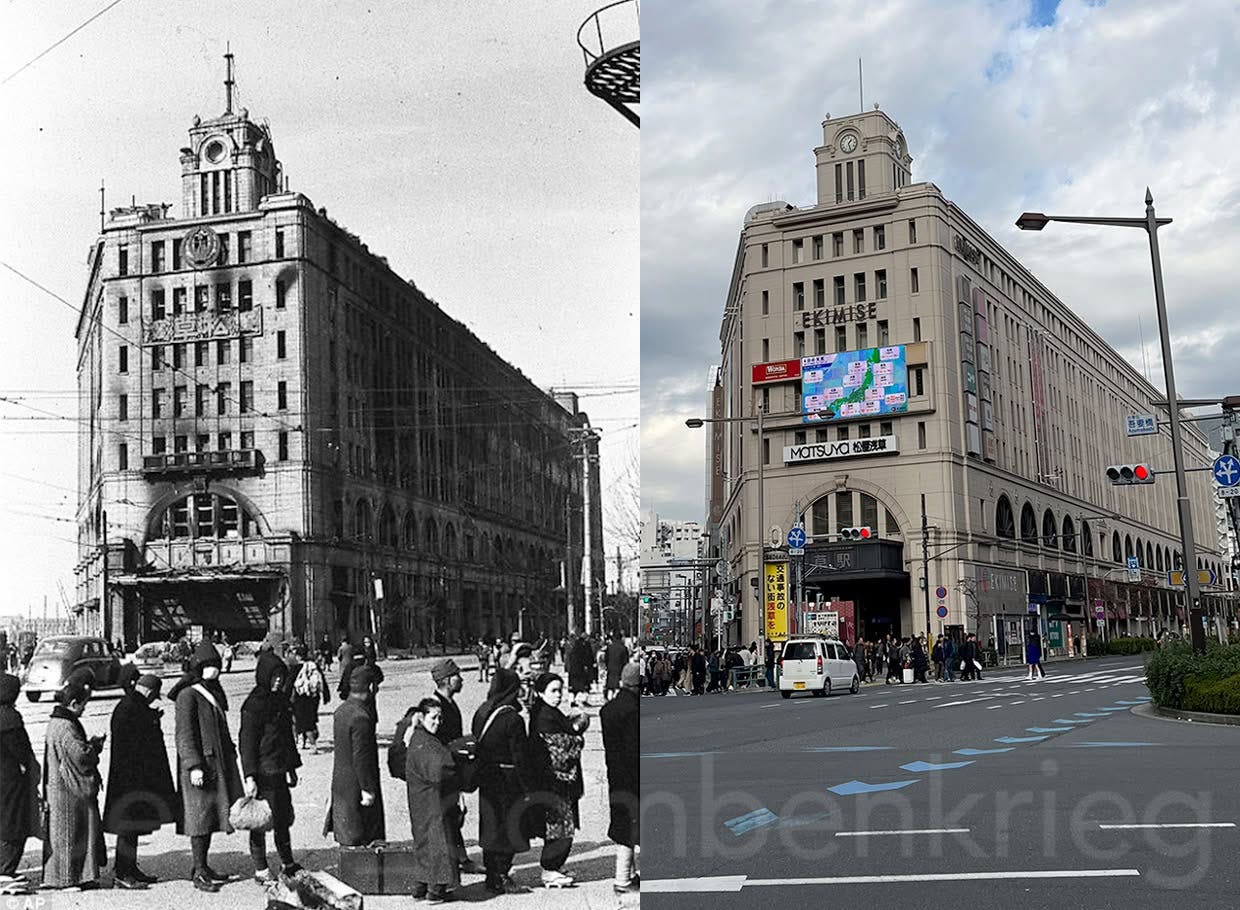
TOKYO EDITION: 80 years are between these two images of the Asakusa Tobu station building, September 1945 - December 2025. On March 9/10, 1945, the Great Tokyo Air Raid left the entire Asakusa district incinerated by US bombs. It was the deadliest air raid ever, with more than 100,000 killed, often overshadowed by the Atomic Hiroshima and Nagasaki raids. Photos: AP Photo/ by the author, 2025
Thank you for reading Berlin Bombenkrieg by Pablo López Ruiz. Please subscribe, if you haven’t yet, to comment, follow and share. All images used for non profit / educational purposes.